Hi-Fi Amplifiers
SMSL AL200 Review: A $260 Integrated Amplifier With Real Drive
A compact integrated amplifier that combines a speaker amp, DAC, and headphone output in one chassis, with clear strengths and a few practical limits to weigh first.
Introduction
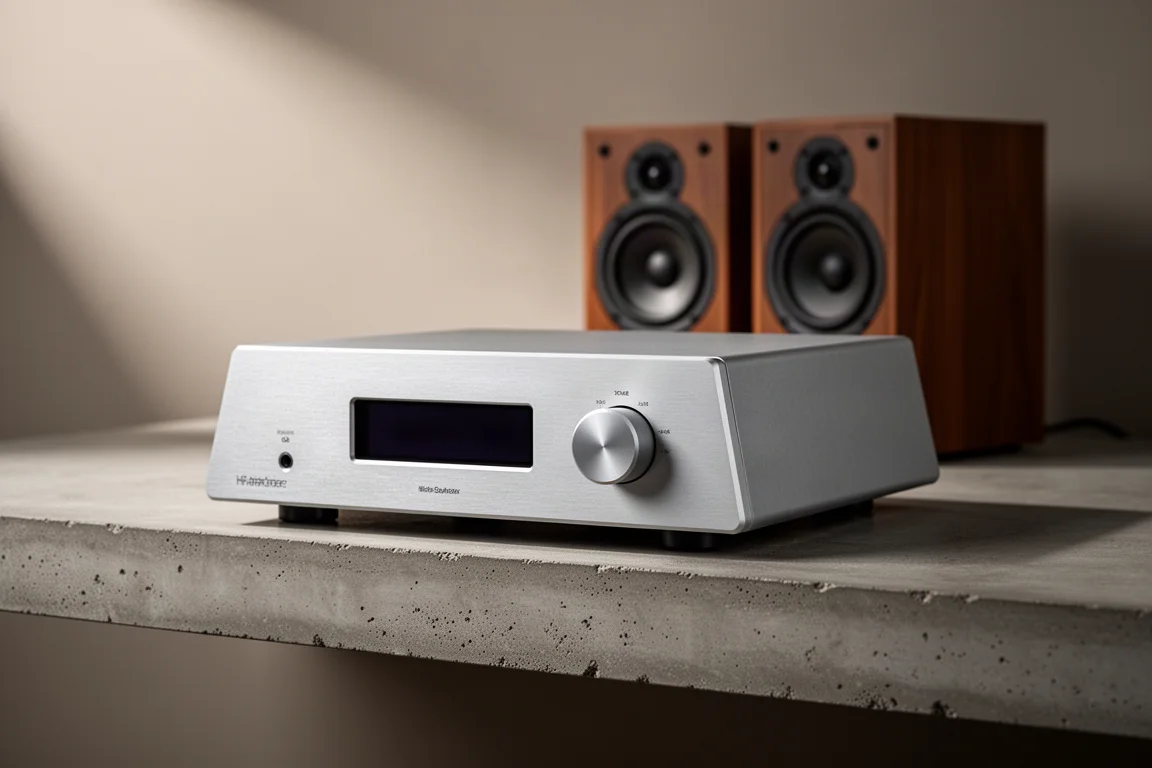
The SMSL AL200 is a compact integrated amplifier that handles three jobs in one chassis. It drives passive speakers, it converts digital audio, and it powers headphones. At around $260, it lands in a price band that has stayed surprisingly thin for years, well above entry level mini amplifiers and well below the several-hundred-dollar integrated models that usually define this category.
What makes it worth a closer look is not only the feature list. The AL200 uses an amplifier chipset that is uncommon in this class, and it keeps the power supply inside the chassis instead of relying on an external brick. That combination is what gives it a different character from the small class D amplifiers that dominate the affordable end of the market.
Who the SMSL AL200 Is For
This is an amplifier for listeners who want one box to run a simple two-channel system. You get one analog line input, three digital inputs on coaxial, optical, and USB, plus Bluetooth. That covers a turntable with a built-in phono stage, a CD transport, a computer, and casual wireless listening without adding a separate DAC.
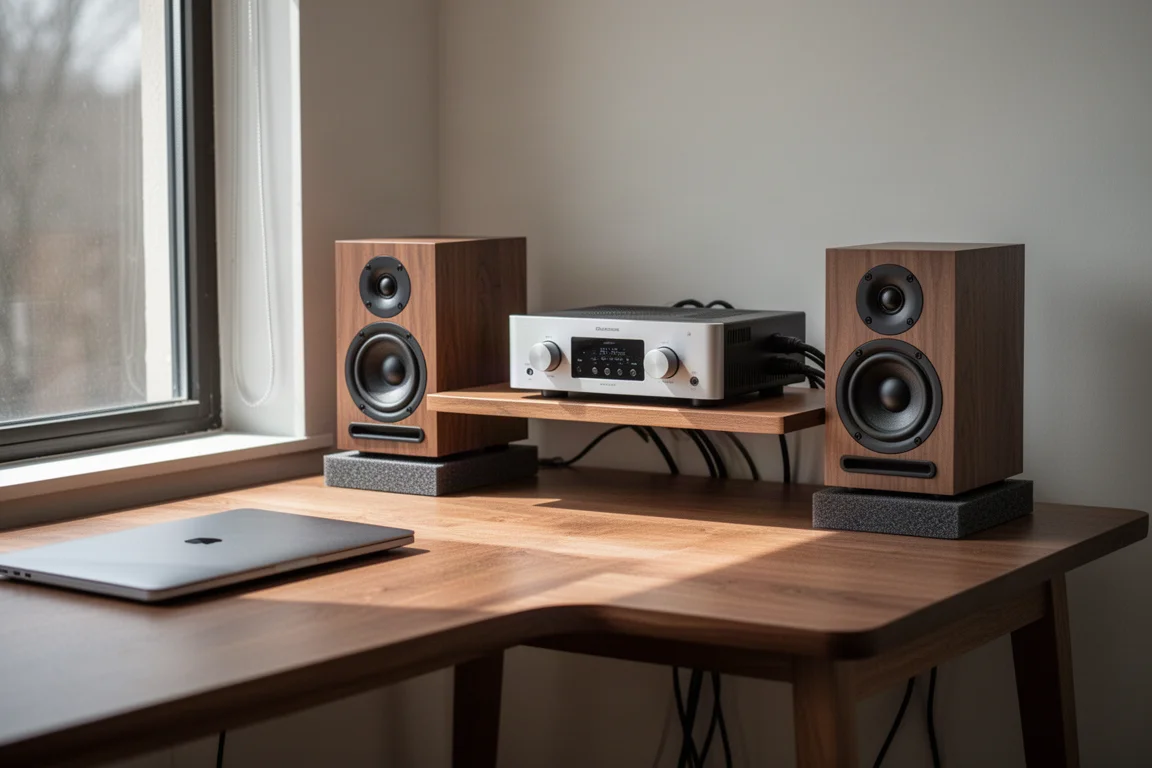
It also suits nearfield and desk setups where space is tight but the speakers are not especially easy to drive. Low sensitivity, low impedance bookshelf speakers ask for real current delivery, and the AL200 has more in reserve than its footprint suggests.
It is a weaker fit for anyone who needs a subwoofer output or a dedicated preamp output, or who expects the built-in headphone stage to drive the most difficult low impedance planar headphones.
Main Strengths: Amplifier Power and Speaker Control
The amplifier section uses the Infineon Merus MA5332MS chipset. SMSL rates it at 165 watts per channel into 4 ohms and 85 watts per channel into 8 ohms, though the published figures do not spell out the distortion conditions behind those numbers.
In practice the useful number is not the wattage but the control. Paired with a demanding, low sensitivity bookshelf speaker, the AL200 held a clean 90 dB at roughly three feet of listening distance, and the speaker ran out of headroom before the amplifier did. That is the opposite of the usual experience with compact amplifiers, where clipping tends to arrive first.
Bass is where the difference is most obvious. Fast, closely spaced bass notes stayed articulate rather than blurring together, which points to current delivery rather than a boosted low end. There is a sense of headroom on tap for tracks with heavy low frequency content.
Main Strengths: DAC, Inputs, and EQ Presets
The DAC and headphone section is built around the Cirrus Logic CS43131, the same chipset used in the SMSL M300 SE. It is paired with an XMOS XU316 USB processor that handles DSD256 and PCM, and MQA is supported over USB as well as from MQA CDs.
Volume control comes from a JRC NJW1194 electronic volume chip, included for accurate level control and low distortion rather than for show. There are also five PCM filter options for the DAC, which shift the roll-off in subtle ways.
The EQ presets are a genuine highlight. They include Direct, which is flat, along with SDB and several voicing options. On earlier chipsets these presets could be heavy handed, but here they are better judged. SDB behaves much like a loudness contour and is the one most listeners will actually use. Super Bass and Clear were the weakest of the set, pushing the extremes further than most systems need.
Bluetooth rounds out the input list, which means the AL200 can act as the only source hub in a small system without any extra boxes.
Headphone Output: What to Expect
The headphone output is convenient and sounds good with reasonable loads. Efficient planar headphones reached louder levels than needed, with no sense of strain, and the presentation matched the character of the speaker output.
Very low impedance headphones are a different story. A 13 ohm closed back planar pair ran, but it began to distort as the volume approached the top of the range. The volume taper also does most of its work near the end of the dial, so there is not much usable travel once difficult loads are attached.
Treat the headphone stage as a useful bonus for typical dynamic and efficient planar headphones rather than a replacement for a dedicated amplifier built for extreme low impedance loads.
Main Strengths: Build, Design, and Daily Usability
At around four pounds, the AL200 has real heft for a class D integrated with an internal DAC and headphone amp. The chassis wears a brushed finish and a slightly trapezoidal profile rather than squared off ends, and the overall impression is of a finished product rather than a bare board in a case.
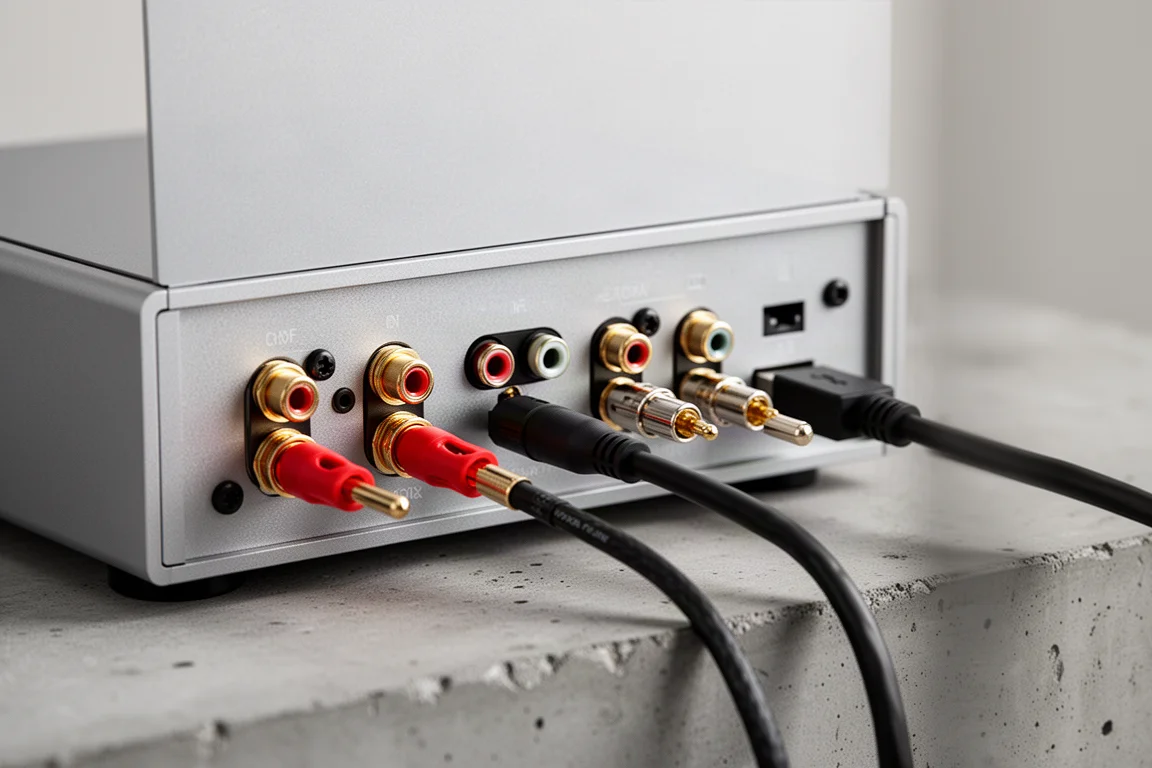
The front panel is straightforward: a 6.35 mm headphone jack, a display, and a volume control. The display is simple, but it is easy to read. Around the back you get an IEC power inlet, speaker binding posts, coaxial, optical, and USB inputs, a line input, and Bluetooth.
Because the power supply is internal, setup is just an IEC cord and a wall outlet. There is no external brick to swap later if you want the most from the amplifier.
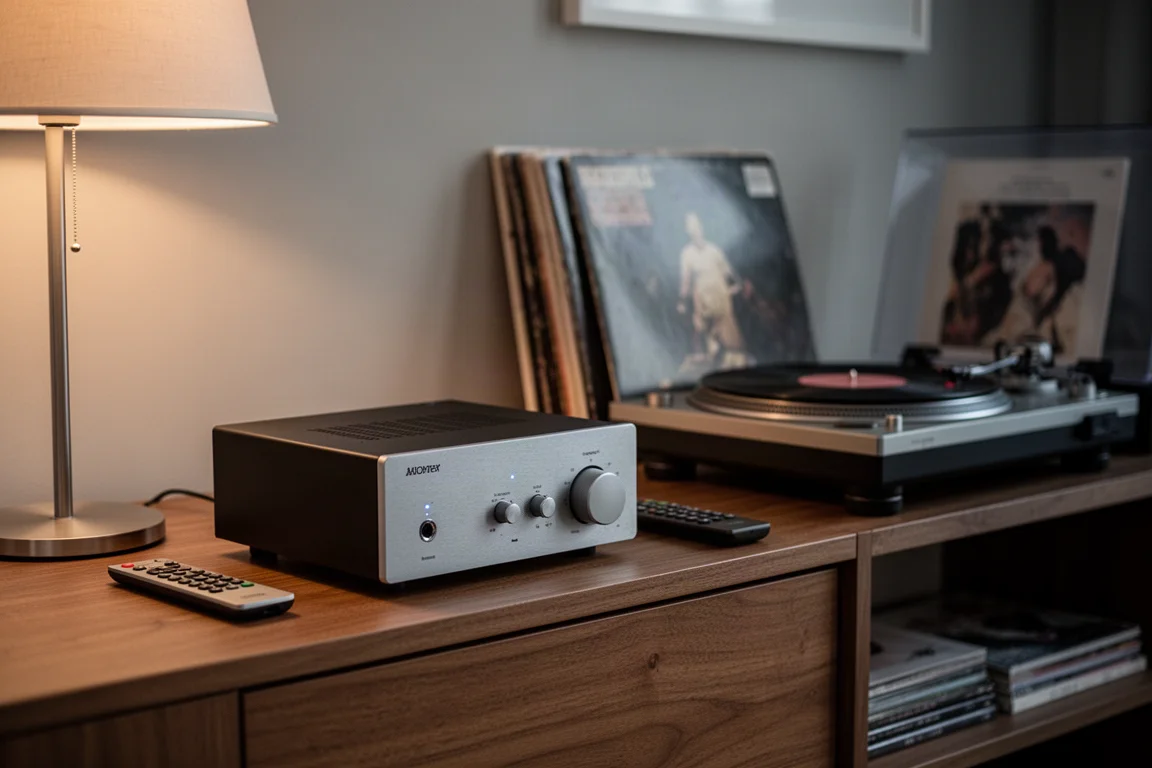
A remote control is included and works without fuss. The menu system takes a few passes before it becomes familiar, but once the EQ and filter settings are chosen, most listening does not require going back into it. Notably, the tone controls went unused in everyday listening, because the built-in presets were enough on their own.
Things to Consider Before Buying
The two real omissions are a dedicated subwoofer output and a preamp output. If your subwoofer has speaker level inputs, you can still add one, but there is no dedicated line out for it. That single missing connection is what keeps the AL200 from being a complete drop-in replacement for a soundbar or a small home theater hub.
The headphone stage carries the limits described above, and anyone with very low impedance planar headphones should plan on a separate headphone amplifier.
Menu navigation and the simple display are minor points, but worth knowing before you buy. Long term reliability is also an open question, since the platform is new and there is no long track record to point to yet.
Availability is a practical consideration as well. The AL200 has been sold through specialist retailers rather than the largest marketplaces, and support for a fault may involve shipping the unit overseas. Check the retailer’s return and warranty terms before ordering.
Buying Advice
At $260, the AL200 sits in a gap that has been awkward for years, between basic amplifiers around $150 and integrated models closer to $350. It delivers the kind of speaker control and bass articulation that usually costs more, and it does so without an external power supply or a stack of separate components.
Buy it if you have a pair of demanding bookshelf speakers, a desk or small room setup, and a mix of analog, digital, and wireless sources you want handled by one compact chassis. Skip it if a subwoofer output or preamp output is non-negotiable, or if your headphones are unusually hard to drive.
For everyone else, this is one of the strongest values in its price class, and it is worth shortlisting against anything costing meaningfully more.
Conclusion
The SMSL AL200 combines a capable speaker amplifier, a well implemented DAC, and a usable headphone output in a solid, compact chassis for around $260. Its strengths are clean power delivery, articulate bass, a strong set of EQ presets, and an input set that covers almost every common source. Its limits are equally clear: no subwoofer output, no preamp output, a headphone stage that struggles with very low impedance loads, and availability that leans on specialist retailers. If those trade-offs do not apply to your system, it is an easy recommendation at the price.
Product link
View more details for SMSL AL200
This product is mentioned in the review. Check the specifications, options, and compatibility before buying.
View more details for SMSL AL200Further reading
Related Reviews
Hi-Fi Amplifiers
Accuphase E-280 Review: Entry-Level Accuphase With Flagship Attention to Detail
A close look at the Accuphase E-280 integrated amplifier, covering its champagne build, AAVA volume control, sound quality, and the speakers and sources that suit it best.
Hi-Fi Amplifiers
Advance Paris A10 Classic vs Yamaha A-S301: Two Integrated Amplifiers Compared
A practical comparison of a $350 integrated amplifier and a $2,500 reference model, covering the differences that matter and the ones that do not.
Hi-Fi Amplifiers
Affordable Chinese Amplifiers Worth Buying: Five Budget Hi-Fi Amps Compared
A practical look at five affordable amplifiers, what each one does well, and the trade-offs to weigh before you buy.