Hi-Fi Amplifiers
SMSL A50 Review: A Tiny $60 Amplifier With a Remote and Real EQ
The SMSL A50 fits Bluetooth, a display, a remote control, and preset EQ modes into a chassis barely larger than a soda can. Here is what it does well and where it falls short.
Introduction
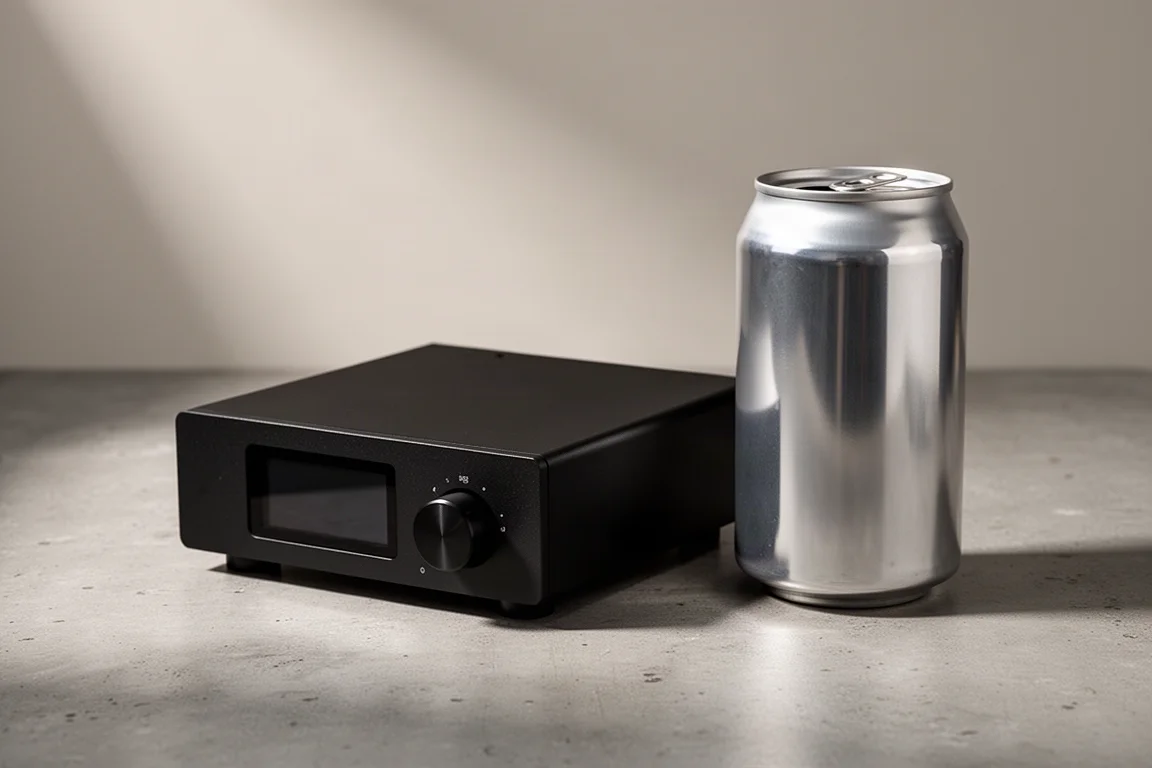
Compact amplifiers are easy to find, but most of them ask you to give something up. The SMSL A50 is unusual because it gives up very little on paper. It includes Bluetooth, a display, a remote control, and a set of preset EQ modes, all inside a chassis that is only slightly shorter than a soda can and roughly as thick as a phone charger. It also weighs very little, which makes it easy to tuck behind a television or move between rooms.
At around $60, that combination is genuinely interesting. The question is whether the small enclosure and the modest power supply hold it back once real speakers are connected.
Who This Amp Is For
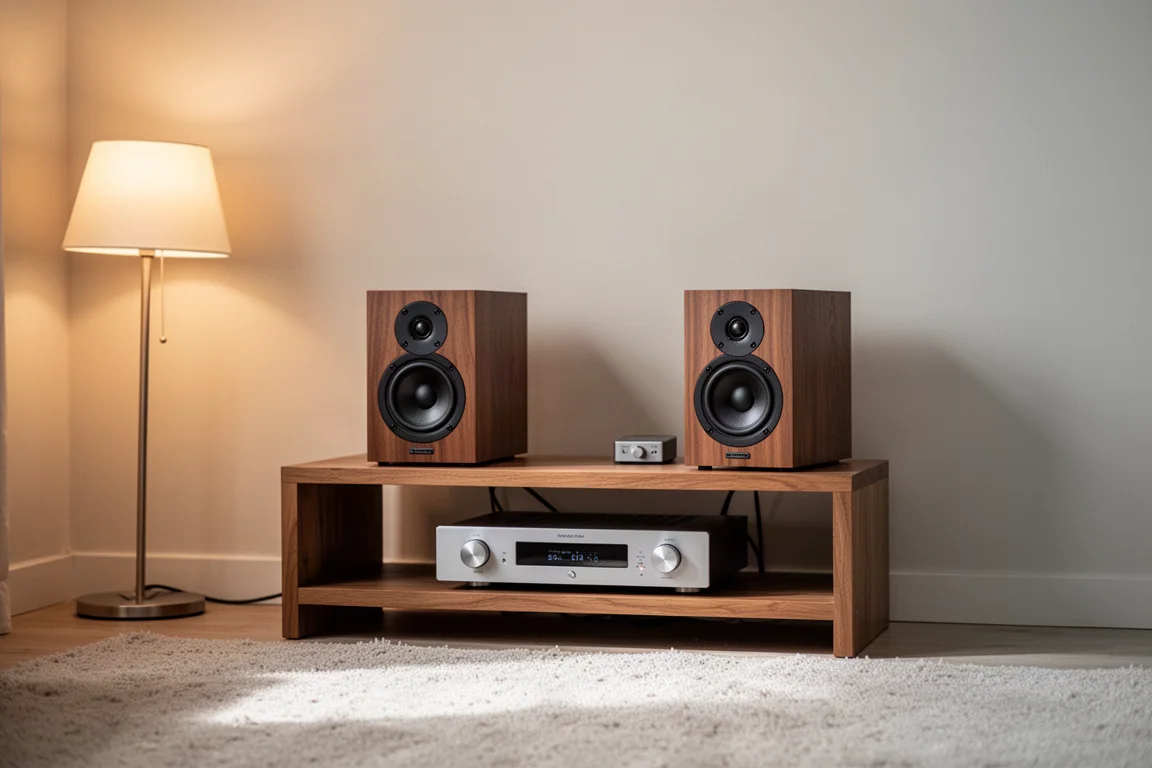
This is not an amplifier for a main two-channel system built around difficult, low-sensitivity speakers. It makes the most sense as a compact problem solver.
Think about the places where a full-size receiver is overkill: rear surround channels, height or Atmos channels, a porch setup, or a child’s room where a pair of small speakers and a phone over Bluetooth is the entire system. In all of those cases the A50’s small footprint and remote control matter more than raw output.
It is also a reasonable choice for a simple desktop setup with efficient bookshelf speakers, where a large box on the desk would be unwelcome.
Design and Build
The enclosure is the headline feature. It stands slightly shorter than a standard soda can and is about as thick as a phone charger, and it is light enough to lift with two fingers. Nothing about the build feels fragile, and the unit sits stably on a shelf or desk.
Heat is worth mentioning. The amplifier runs warm in use, which is normal for a small Class D design, but the case does not offer much in the way of ventilation. More airflow would likely let it dissipate more heat, and better heat dissipation is usually what allows a small amplifier to deliver more power without being choked down. As it stands, the enclosure sets a practical ceiling on what the internals can do.
The front panel is dominated by a small display and a single multi-function knob. The display takes a few passes to understand, though the layout becomes familiar after a short time.
Main Strengths: Sound and Power
Inside, the A50 uses two Texas Instruments 3116 amplifier chips. That chipset is extremely common in inexpensive Class D designs and it is well understood, which is part of why the price makes sense.
The published power figures deserve careful reading. SMSL claims 100 watts per channel, but the specification ties that number to a 2 ohm load and does not state the distortion level at which it is measured. The same documentation lists 50 watts per channel into 4 ohms. A distortion figure of 0.02 percent appears in the specs, though it is not clear at what output level that applies. Treat all of these as best-case numbers rather than guarantees.
In practical use with a pair of Q Acoustics 5020 speakers, which have a sensitivity of roughly 87 to 88 dB, the A50 reached comfortable listening levels in the 70 dB range with peaks into the 80s without strain.
Sound quality straight out of the box is a little thin, which is typical of budget Class D amplification. The preset EQ modes change that considerably, and the Bass preset in particular adds useful weight without smearing the rest of the range. The amplifier does not include the SDB preset that appears on several older SMSL models, which is a small loss for anyone who liked that curve.
Features and Controls
The feature set is where the A50 separates itself from the cheapest competition.
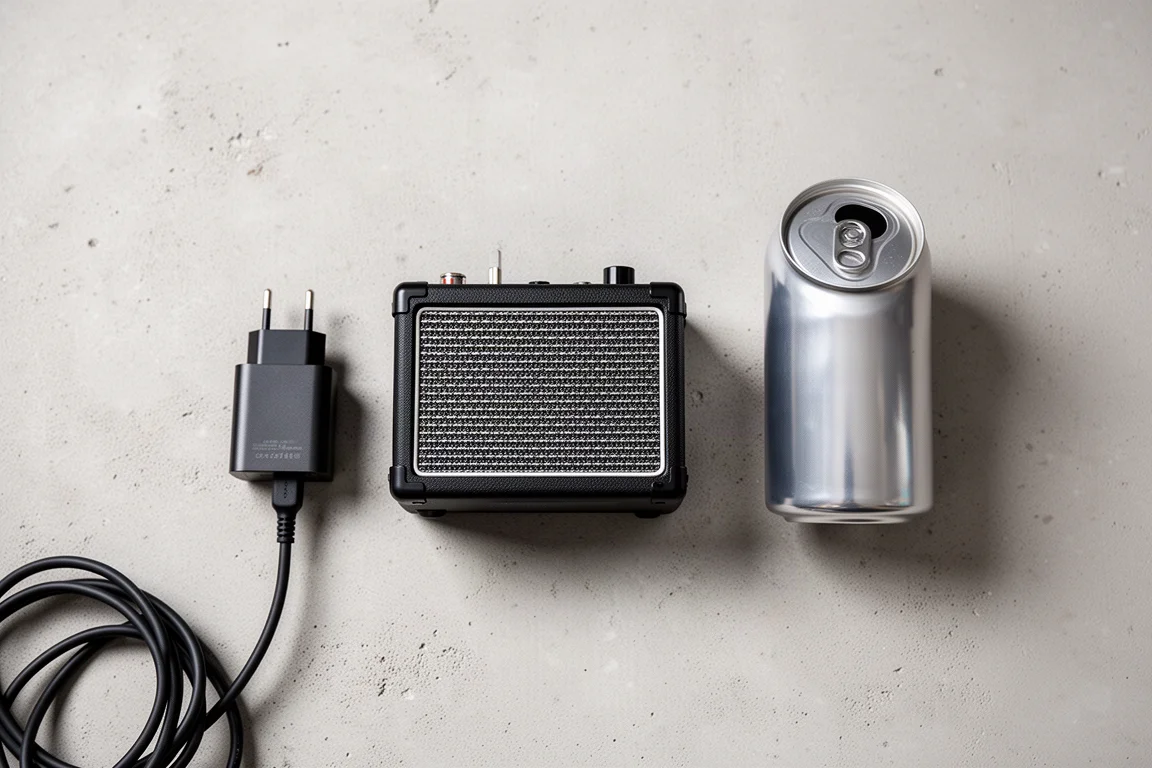
On the back you get a pair of RCA inputs, speaker outputs, a DC power input that accepts up to 24 volts, and a Bluetooth antenna. That is the entire panel, and it keeps setup simple.
Bluetooth supports AAC and SBC. As with almost any Bluetooth implementation, playback sounds noticeably thinner than a wired connection, with the bottom end trimmed back. That is a limitation of the format rather than something specific to this amplifier, and it remains perfectly usable for casual listening.

The remote control is a real advantage at this price. Input switching is the clearest example: double pressing the knob on the unit itself changes inputs inconsistently, while the corresponding button on the remote works reliably. If you plan to switch between Bluetooth and the line input regularly, the remote is the practical way to do it. It is also worth noting that the bundled remote is a specific model, and other remotes from the same family do not control this unit.
Preset EQ modes cover Direct, Tone, Bass, Super Bass, Rock, Soft, and Clear. There are also bass and treble tone controls, and they behave in a way that takes adjustment. They are digital and stepped rather than continuous, so each step is a full increment, and the range runs up to plus or minus six. Two quirks stand out. Turning the knob to the left increases bass or treble rather than to the right, and the largest steps are far too aggressive to be useful. The bass boost also sits fairly high in the range, somewhere around 150 to 200 Hz, which makes it sound chesty and boomy rather than deep. The treble control sits low enough that boosting it turns shouty.
The practical approach is to pick one of the preset EQ modes and leave the tone controls alone, or to move them by a single step at most.
Things to Consider Before Buying
The A50 is a $60 amplifier, and a few compromises come with that.
Power claims are stated under favourable conditions, so plan around efficient speakers rather than difficult ones. The stepped tone controls are coarse and the boost frequencies are not ideal. Bluetooth is convenient but thinner than a wired source. The chassis runs warm and does not have much ventilation. Input switching on the unit itself is unreliable, so the remote is effectively required.
None of these are deal breakers at this price, but together they define the situations where the A50 makes sense and the ones where it does not.
Buying Advice
At $60.72, the A50 is fairly priced. Two Texas Instruments 3116 chips, a DSP section with preset EQ, and a power supply in the box would cost close to that as separate parts, and here it all arrives assembled, with a remote and a display.
If your priority is the finest possible control over tone, a compact amplifier with an analog tone control offers more granular adjustment, though you will usually give up the remote control in exchange. If you need a remote, the A50 is the more practical pick, and that is the trade-off worth weighing before you buy.
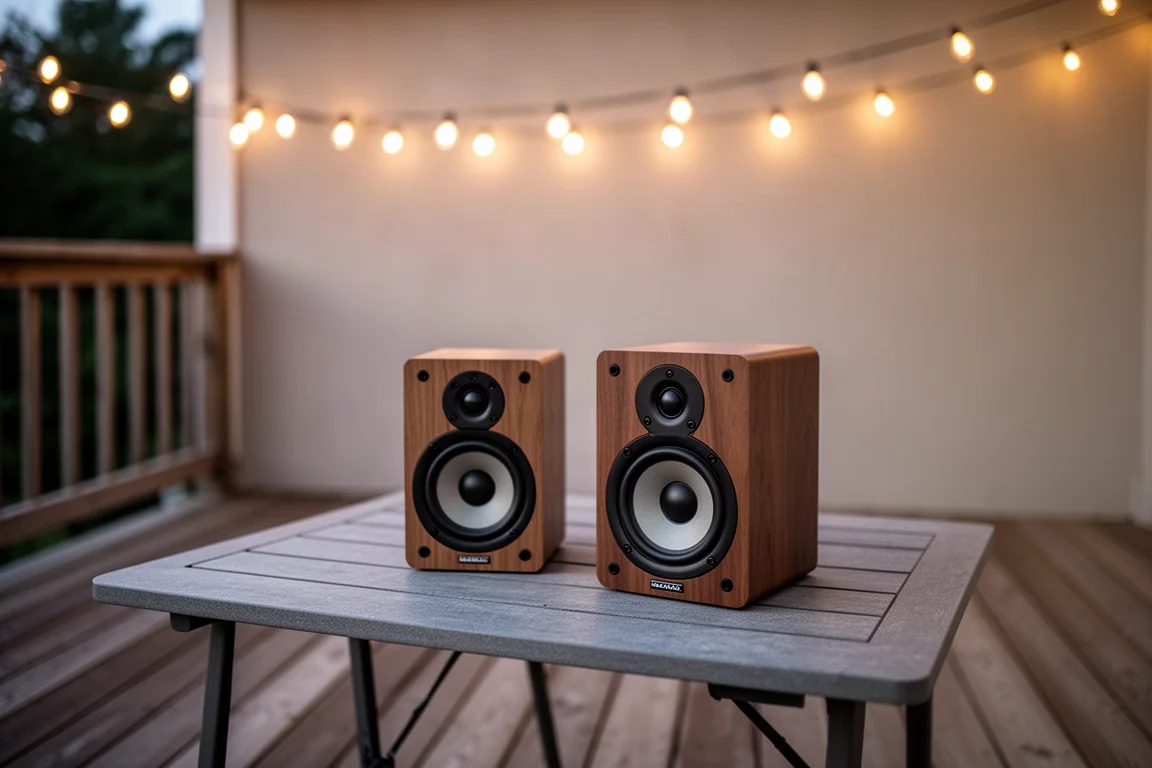
For surround and height channels, a porch system, or a child’s room, the size and the remote make the A50 easy to recommend. For a serious main system driving demanding speakers, look for more power and better ventilation instead.
Conclusion
The SMSL A50 earns its place by being small, inexpensive, and more complete than most amplifiers at its price. It sounds a little thin without EQ and its tone controls are blunt instruments, but the preset modes do the heavy lifting and the remote control makes it genuinely convenient in everyday use.
On balance it is a solid 7 out of 10. Not a component for a high-end system, but a very sensible answer for the many smaller jobs a compact amplifier is asked to do.
Product link
View more details for SMSL A50
This product is mentioned in the review. Check the specifications, options, and compatibility before buying.
View more details for SMSL A50Further reading
Related Reviews
Hi-Fi Amplifiers
Accuphase E-280 Review: Entry-Level Accuphase With Flagship Attention to Detail
A close look at the Accuphase E-280 integrated amplifier, covering its champagne build, AAVA volume control, sound quality, and the speakers and sources that suit it best.
Hi-Fi Amplifiers
Advance Paris A10 Classic vs Yamaha A-S301: Two Integrated Amplifiers Compared
A practical comparison of a $350 integrated amplifier and a $2,500 reference model, covering the differences that matter and the ones that do not.
Hi-Fi Amplifiers
Affordable Chinese Amplifiers Worth Buying: Five Budget Hi-Fi Amps Compared
A practical look at five affordable amplifiers, what each one does well, and the trade-offs to weigh before you buy.