Hi-Fi Audio
SMSL A200 Review: VU Meters and a Very Flexible Input Panel
A compact integrated amplifier at around $260 with analog VU meters, HDMI, USB-C, and Bluetooth, plus the limits worth knowing before you buy.
Introduction
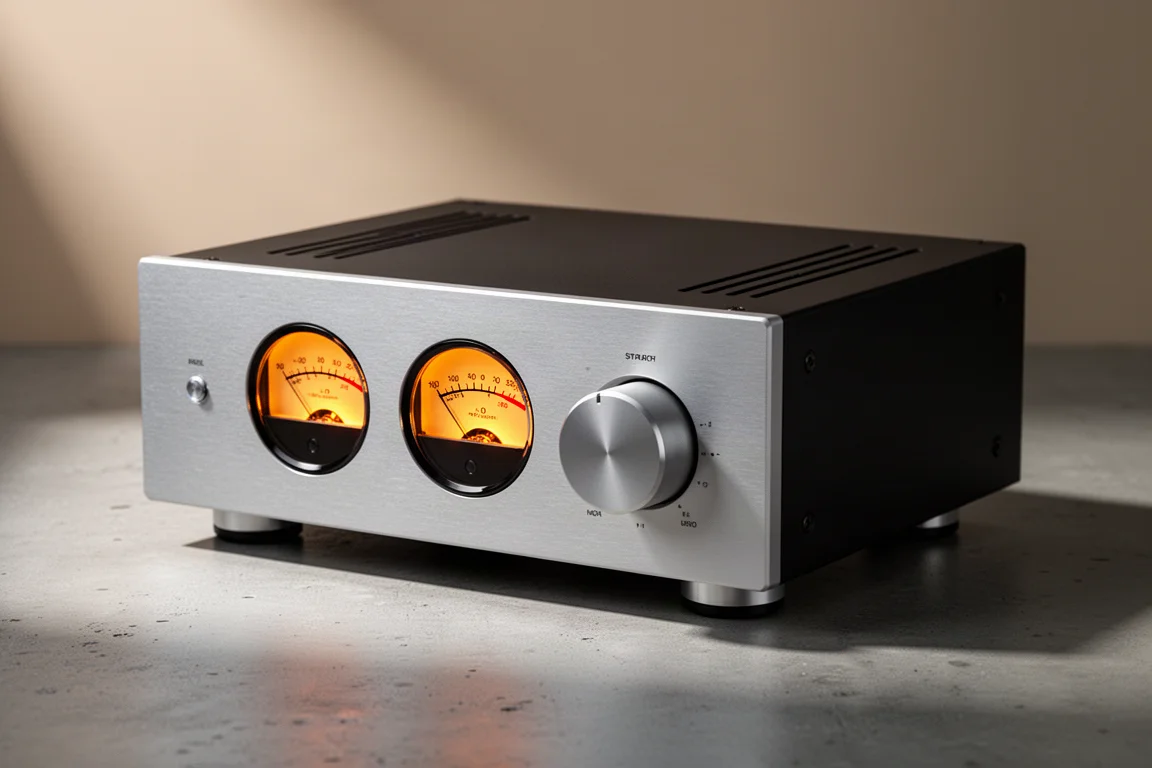
The SMSL A200 is a compact integrated amplifier that sells for around $260, and it is the first SMSL product to arrive with analog VU meters on the front panel. It pairs a Class D power stage with an internal power supply and an unusually wide input set for the money: HDMI, USB-C, optical, coaxial, analog RCA, and Bluetooth.
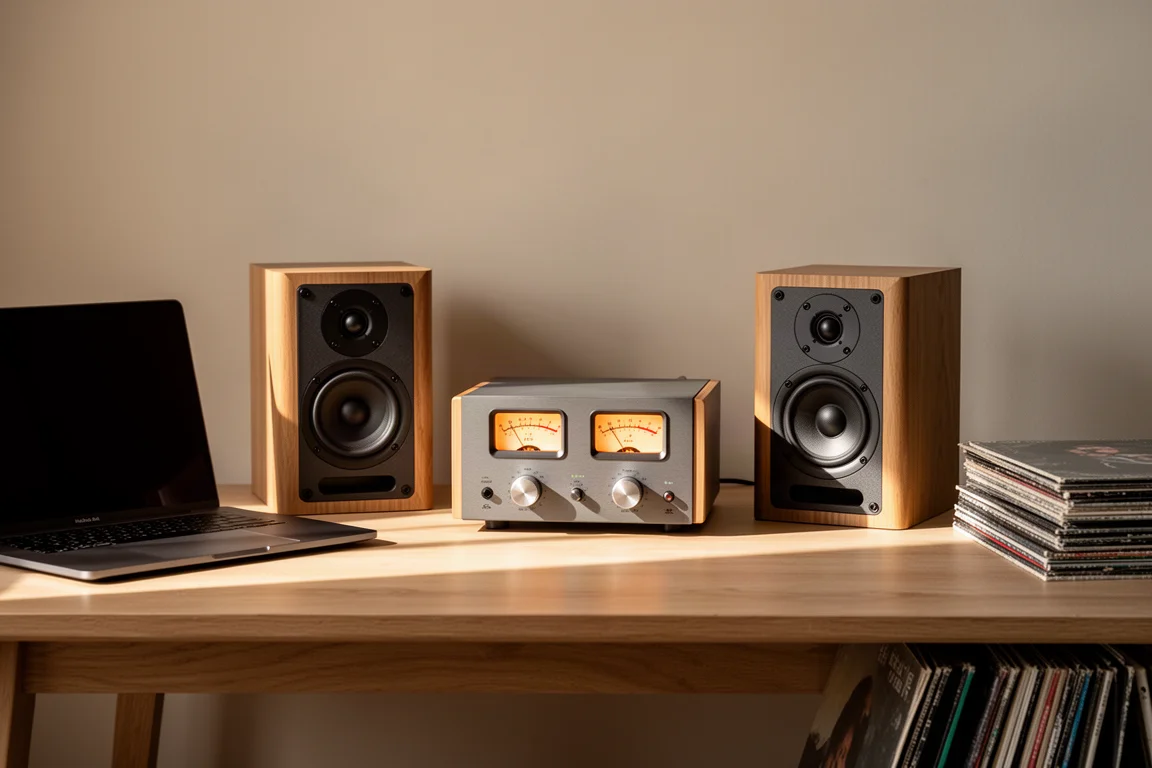
The interesting part is the direction of travel. VU meters have been a signature of several affordable amplifier brands for years, and SMSL has only now joined in. The result looks more distinctive than the company’s earlier compact amplifiers, while sitting in the same price territory as rivals with longer feature lists.
Who this product is for
This amplifier makes the most sense for listeners who want one small box to accept almost any source. A television over HDMI, a game console or CD transport over optical or coaxial, a computer over USB-C, a phone over Bluetooth, and a DAC or other analog source over RCA can all feed the same unit, and a single remote handles switching between them.
It also suits anyone building a compact desktop or bedroom system where a full-size receiver would take up too much space. The internal power supply means one power cord instead of a bulky external brick, which keeps a small shelf looking tidy.
It is a less natural fit for listeners who want a subwoofer in the chain, who own speakers with low sensitivity, or who prefer the warmer tonal character that some rival chipset designs deliver.
Main strengths
The internal power supply is the most practical advantage here. A long list of compact amplifiers in this class ship with external power bricks that can run up to 48 volts and are roughly the size of a large laptop charger. The A200 needs only a standard cord, which simplifies placement and cable management.
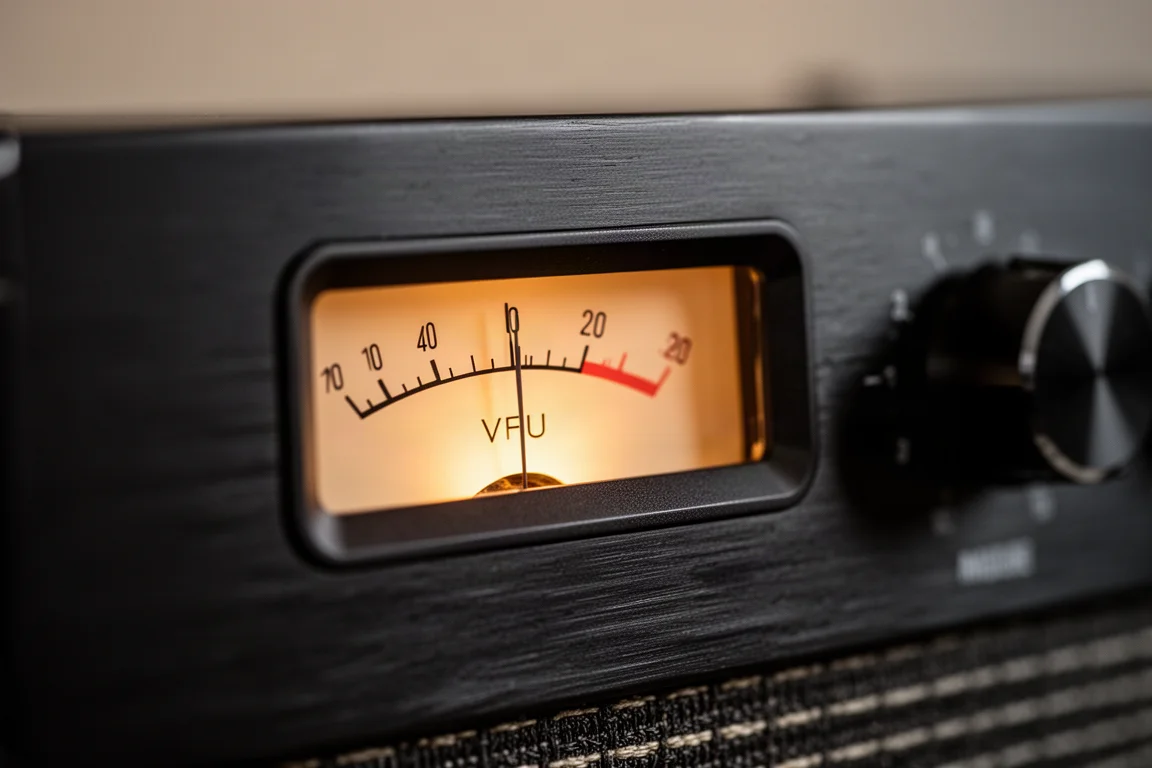
Speaker binding posts are another point in its favour. They feel more substantial than the terminals found on several competing budget amplifiers, and the overall build quality is better than average, even if the chassis does not carry much weight. Small rubber feet keep it stable on a desk or shelf. Ventilation is provided, and the unit stayed cool through extended use.
The front panel is simple and usable. A single multi-function knob handles both rotation and press, and a remote control is included and works as expected, with a function button in the middle for source selection.
Inputs, connectivity, and daily setup
The rear panel covers analog line inputs on RCA, an optical input, a coaxial input, a USB-C input, an HDMI connection, and Bluetooth. The HDMI input is the standout for most households, because it turns the amplifier into a straightforward television audio solution, while the optical and coaxial inputs cover game consoles, CD transports, and older televisions.
The optical connection is specified at up to 24-bit/192kHz. The digital to analog conversion stage is not identified in the published information, so the exact DAC in use is not something buyers can confirm from the spec sheet alone.
Daily use is straightforward. Setup with a television took very little time, source switching is quick, and the Bluetooth input is convenient for casual listening.
Things to consider before buying
There is no subwoofer output, and no low-pass or high-pass filtering. For a product in this class that is a genuine limitation, because a subwoofer is one of the easiest ways to add weight to a small system. The published power figures also deserve attention: 70 watts into 4 ohms with no THD rating stated alongside it, and a 100 watt into 2 ohms figure that is hard to put to practical use without a clear way to connect a passive subwoofer.
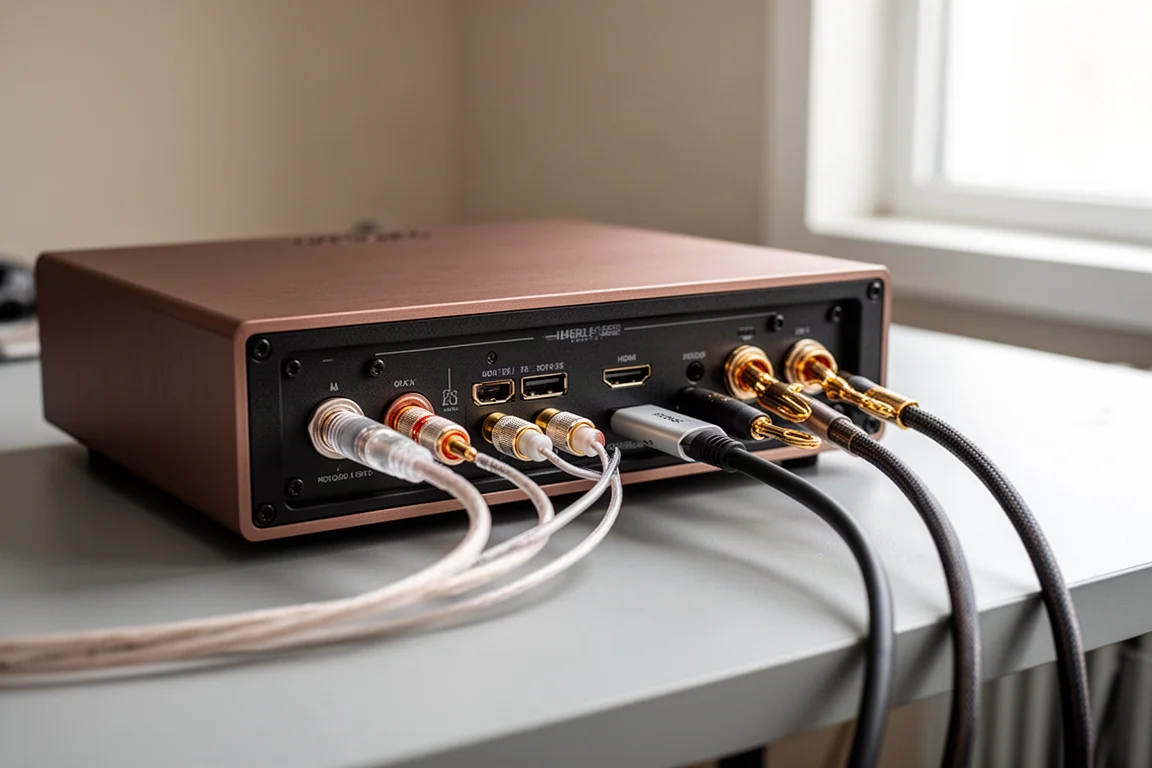
Sound quality is where the A200 asks for the most patience. In its flat setting it comes across as dry, with a slightly grainy texture and a lean bottom end. The mid-range never quite reaches the warmth and realism that some competing amplifiers deliver, and that gap does not close with equalisation. The built-in tone controls and EQ presets help: there are five or six presets, about three of which are usable, including one with a modest bass boost that will suit most listeners.
Power delivery is also modest in practice. With 85 dB sensitivity speakers the amplifier was clearly outside its comfort zone, and it is a much better match for efficient bookshelf speakers. Buyers with demanding speakers should plan accordingly.
Where it fits among compact Class D amplifiers
Inside the A200 is a newer Infineon Class D chip. Heat dissipation and power generation are the two practical constraints of Class D designs, and an internal power supply limits how much current can be delivered compared with amplifiers that use a large external brick.
Positioning is the harder question. The SMSL AL200, an earlier model from the same brand, sounds better, offers more functionality, and has a little more power. Amplifiers built around Texas Instruments chipsets, including models from Fosi Audio and Aiyima, tend to sound fuller and more organic. And just under $300 there are alternatives with a built-in streamer, bass management, a subwoofer output, a companion app, a 10-band EQ, an internal power supply, and a TI 3255 chip. Against that backdrop, the A200’s clearest differentiator is the pair of VU meters on the front.
Buying advice
Budget Hi-Fi from direct-to-consumer brands is best bought from a retailer with a clear return window and straightforward warranty handling. If something goes wrong, sending a unit back overseas is slow and expensive, so a domestic returns path is worth more than a small saving elsewhere.
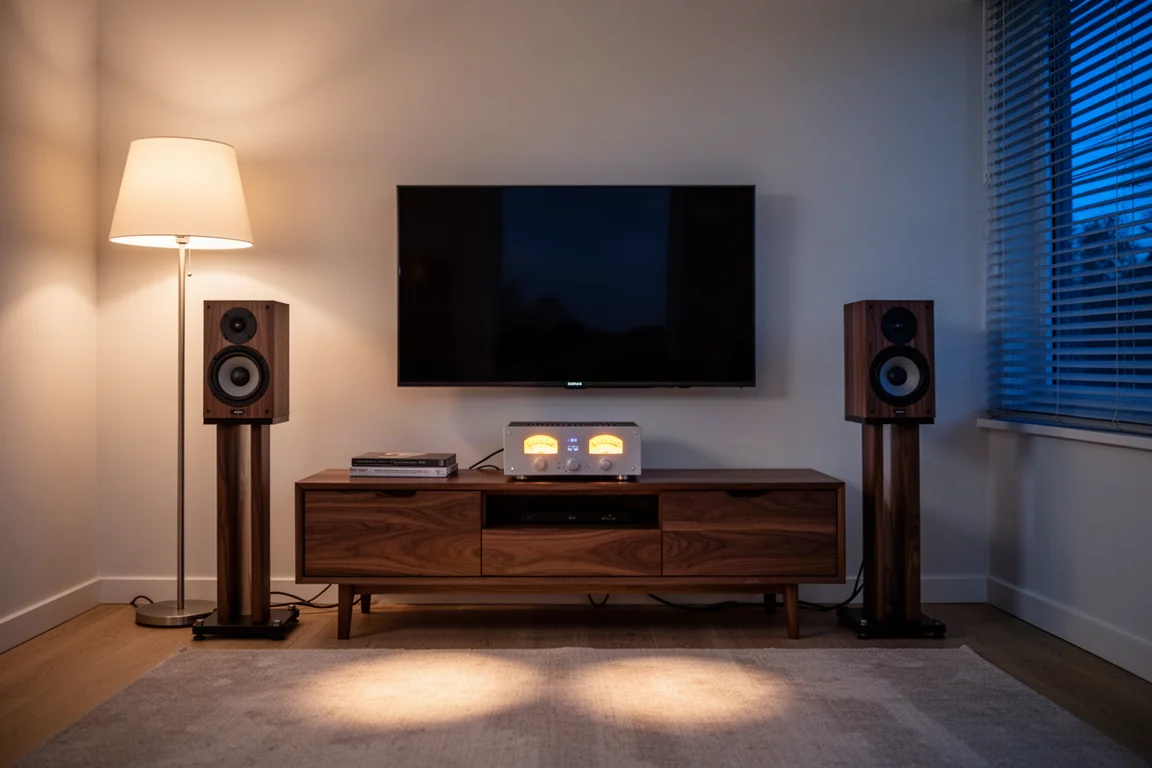
Match the amplifier to the speakers before anything else. Efficient bookshelf speakers will let the A200 play to its strengths, while low sensitivity designs will expose its limits. If VU meters are the main attraction, remember that they can also be added to an existing system through a separate meter or switcher.
If streaming, subwoofer integration, or room correction matter to you, put the money toward one of the alternatives. If you mainly want a tidy one-box solution for a television, a console, and a pair of efficient speakers, with a pair of glowing meters as a bonus, the A200 covers that ground competently.
Conclusion
The SMSL A200 is a capable, well-connected compact amplifier with genuinely useful inputs and a clean, simple control layout. Its internal power supply and solid binding posts are practical wins. The trade-offs are clear as well: no subwoofer output, limited power for demanding speakers, and a flat tonal character that leans dry rather than warm. Buy it for the connectivity and the meters, pair it with efficient speakers, and it will do its job well.
Product link
View more details for SMSL A200
This product is mentioned in the review. Check the specifications, options, and compatibility before buying.
View more details for SMSL A200Further reading
Related Reviews
Hi-Fi Audio
Accuphase C-57 vs Allnic H-7000V: Two High-End Phono Stages Compared
A fully balanced solid-state phono stage with a pitch-black noise floor meets a tube design built for well-loved records. Here is how to choose between them.
Hi-Fi Audio
Active vs Passive Hi-Fi: Five Components for a Modern System
Five components that define modern active and passive hi-fi systems, with the strengths, trade-offs and setup details worth weighing before you buy.
Hi-Fi Audio
Advance Paris A10 Apex Review: A Hybrid Integrated Amplifier That Covers a Lot of Ground
A French hybrid integrated amplifier with a class A tube preamp stage, analogue power meters, and an internal DAC and phono stage good enough to make extra boxes unnecessary.