Smart Home
Smart Sprinkler Systems 2026: Aper Irresense 2 vs Auto Lawn Smart Sprinkler
Two smart sprinkler systems with similar pricing but very different watering performance. We compare coverage, distribution, and real-world usability.
Introduction
Smart sprinkler systems promise to take the guesswork out of lawn irrigation, but not all of them deliver even coverage. Two systems currently dominate the conversation: the Aper Irresense 2 and the Auto Lawn Smart Sprinkler. Both sit at nearly the same price point, yet they take fundamentally different approaches to watering a yard.
This comparison looks at how each system maps a lawn, distributes water, and handles real-world conditions like wind and range limits. The goal is to help you decide which one actually earns a place in your yard.
How These Smart Sprinklers Work
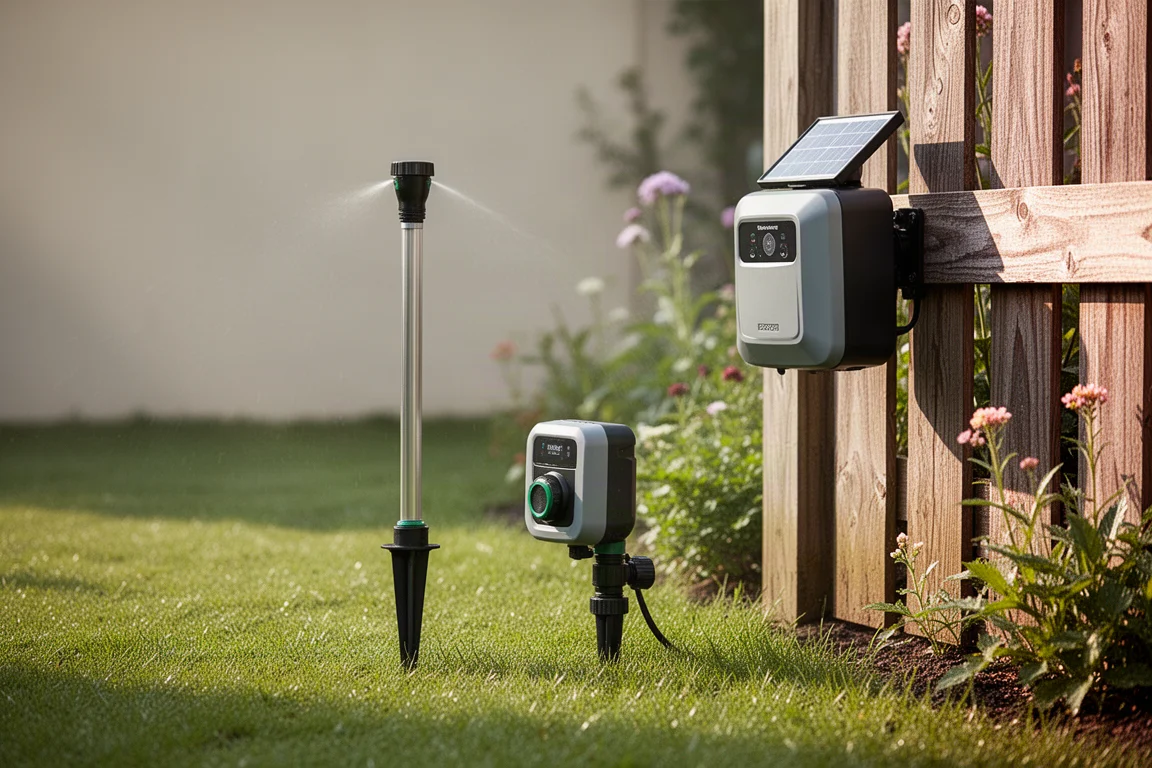
Both systems use a waypoint-based mapping approach. You set corner points in the app, and the sprinkler adjusts its spray to cover the defined area. Each unit connects to a standard garden hose and requires a nearby power source, though the Auto offers a solar option.
The Aper Irresense 2 is a tall, skinny standalone unit that stakes into the ground with lawn screws. The Auto, by contrast, mounts on a fence, deck, or wall. Mounting the Auto higher off the ground improves both range and the ability to aim over plants.
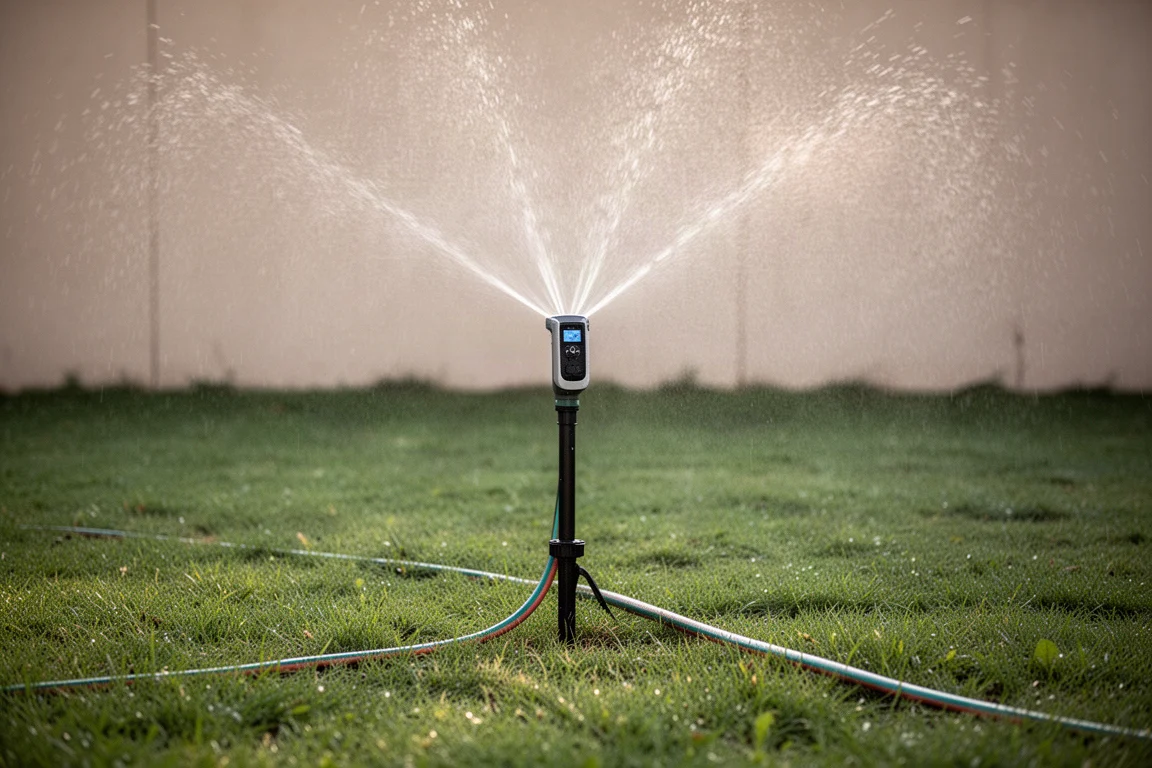
Both apps let you map multiple zones and set separate schedules for flower beds or potted plants. The key difference lies in how each unit delivers water to the lawn.
Aper Irresense 2: Standalone Ground Unit
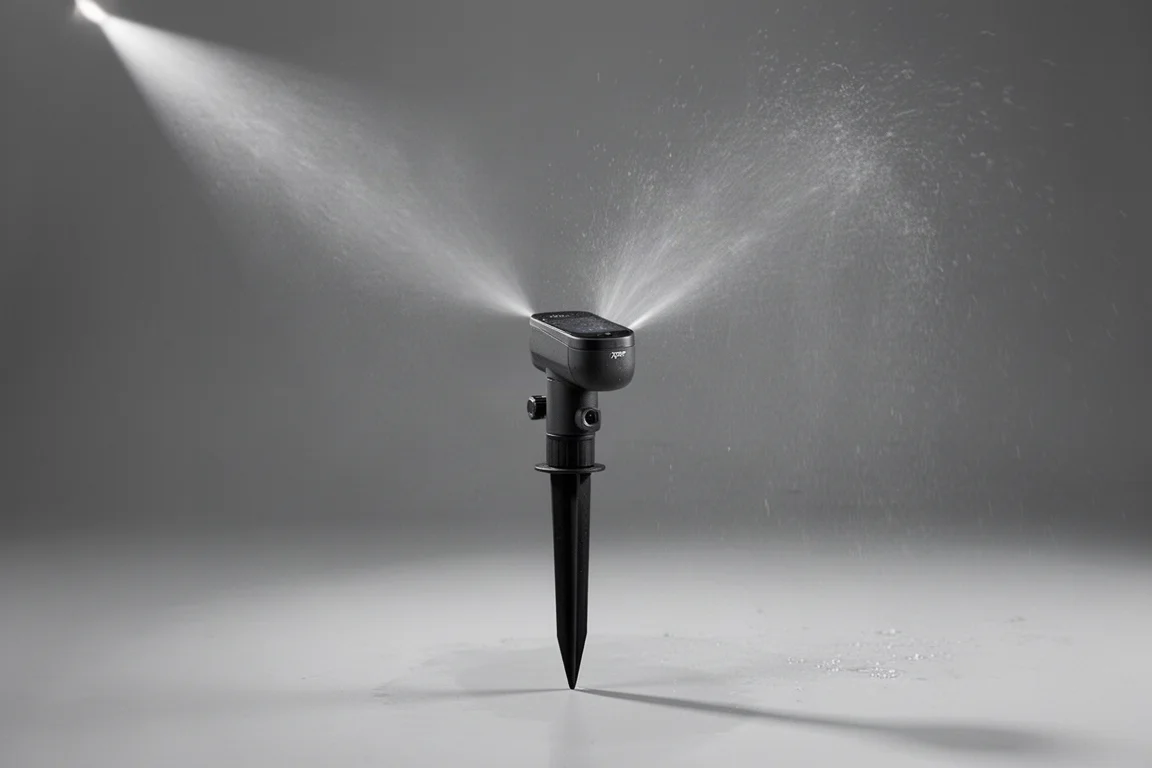
The Aper Irresense 2 uses a small piece of rubber to disrupt its main water jet, creating a fine mist across the entire watering area. This gentle misting pattern is easier on the soil, though the borders of the watering zone still experience the full force of the jet, which can cause splashing and soil displacement.
In testing, the Irresense delivered a distribution uniformity of 76% across three trials. The best result came in at 85% when the catch cups were placed well inside the unit’s range. However, the system consistently watered less than half the amount selected in the app, and it struggled near the edges of its range.
The Irresense also includes an on-unit rain sensor. In a lakeside setting with sudden gusts, the water jet occasionally pushed onto the sensor, stopping irrigation mid-cycle. Disabling the sensor resolved the issue.
Auto Lawn Smart Sprinkler: Fence-Mounted Design
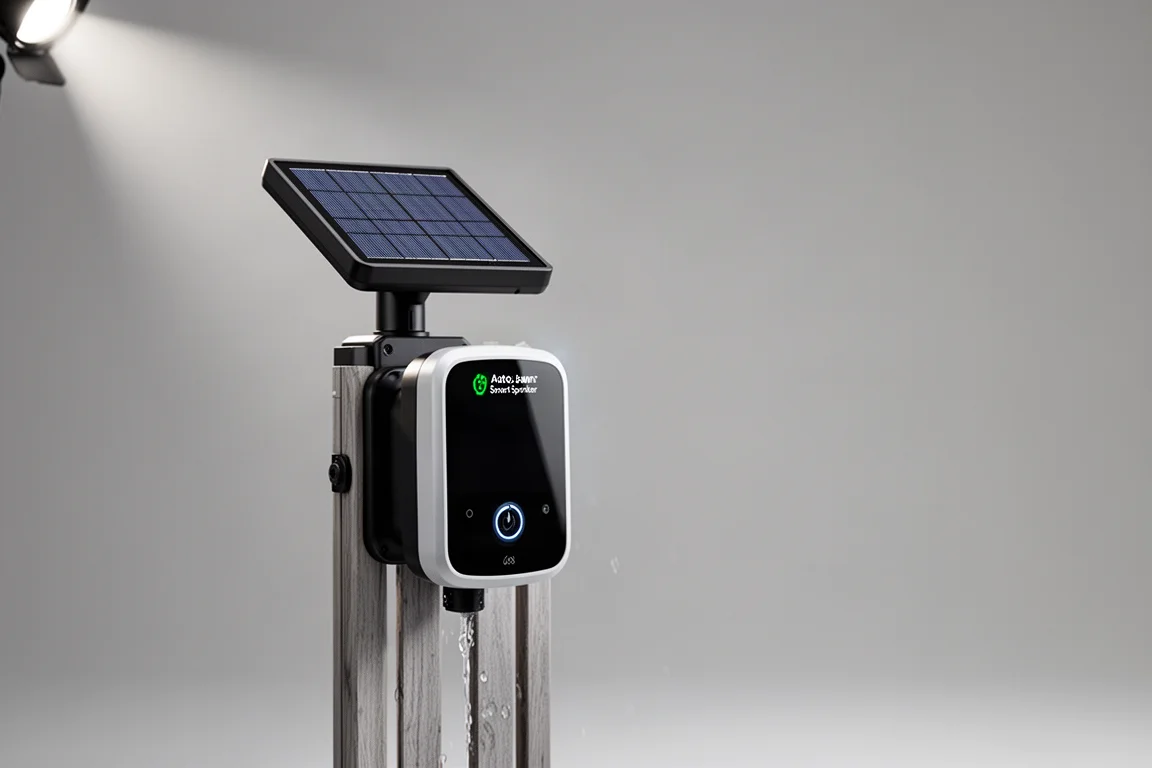
The Auto takes a different approach. Instead of a mist, it paints the lawn using two powerful full-stream jets. To reach maximum range, it increases the arc of those jets, which causes them to hit the ground with considerable force. This can displace soil, especially in bare patches.
The Auto’s solar panel keeps its battery charged with 4 to 6 hours of direct sunlight per day, making it a viable option for installations without nearby power. Its fence-mounted design also makes mowing underneath much easier compared to a ground-staked unit.
However, the Auto’s water distribution was inconsistent across all three trials. Its overall distribution uniformity came in at just 47%, with some areas receiving over four times as much water as nearby spots. Even when the range variable was eliminated, the Auto still delivered a poor distribution pattern.
Water Distribution Testing: What the Catch Cups Revealed
To measure real-world performance, catch cups were placed across the lawn in a grid pattern. The Aper Irresense 2 was set to water a quarter of an inch, but after a 37-minute run, it laid down closer to an eighth of an inch. The furthest point of the lawn stayed dry, and wind from a nearby lake reduced coverage near the seawall.
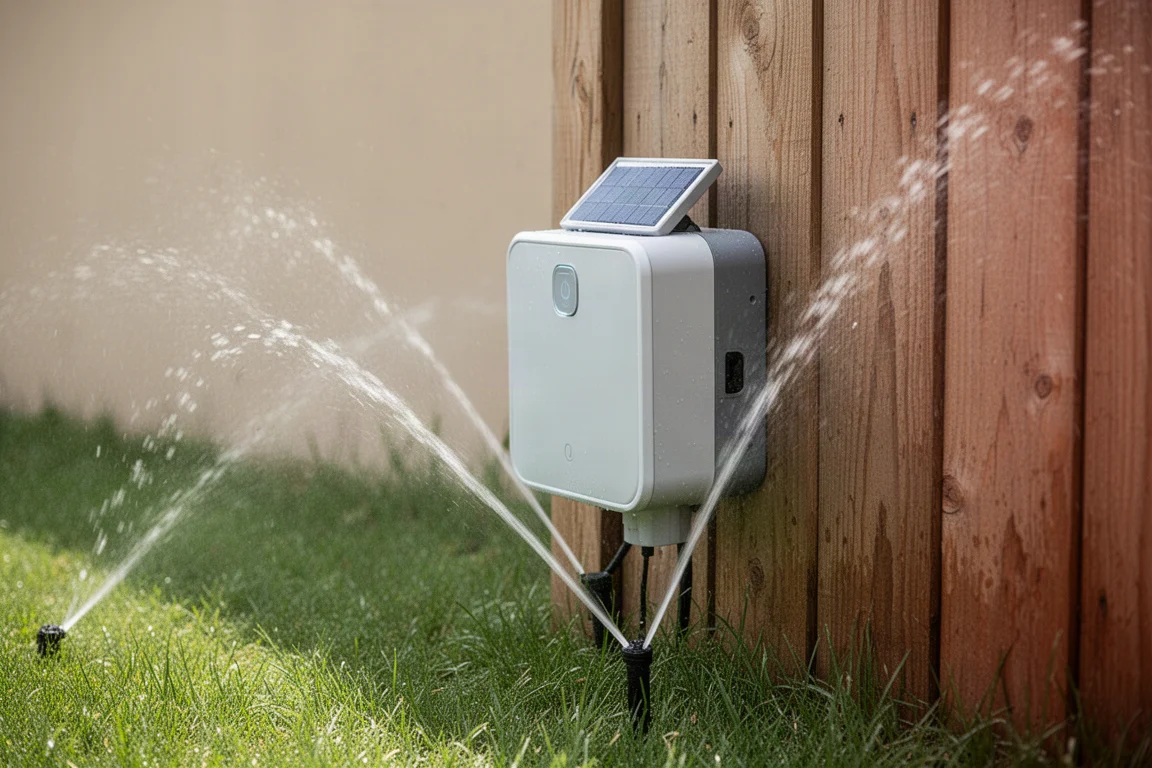
When the low measurements outside the unit’s range were excluded, the interior cups showed an 82% distribution uniformity. A second trial produced 62%, and a third trial with cups placed well inside the range achieved 85%.
The Auto’s first trial ran for 1 hour and 48 minutes, nearly three times as long as the Irresense. It applied close to the target quarter-inch of water on average, but the distribution was highly inconsistent. Some cups collected 0.4 inches while others had less than 0.1 inch. The second and third trials showed similar problems, with distribution uniformity hovering around 40% to 50%.
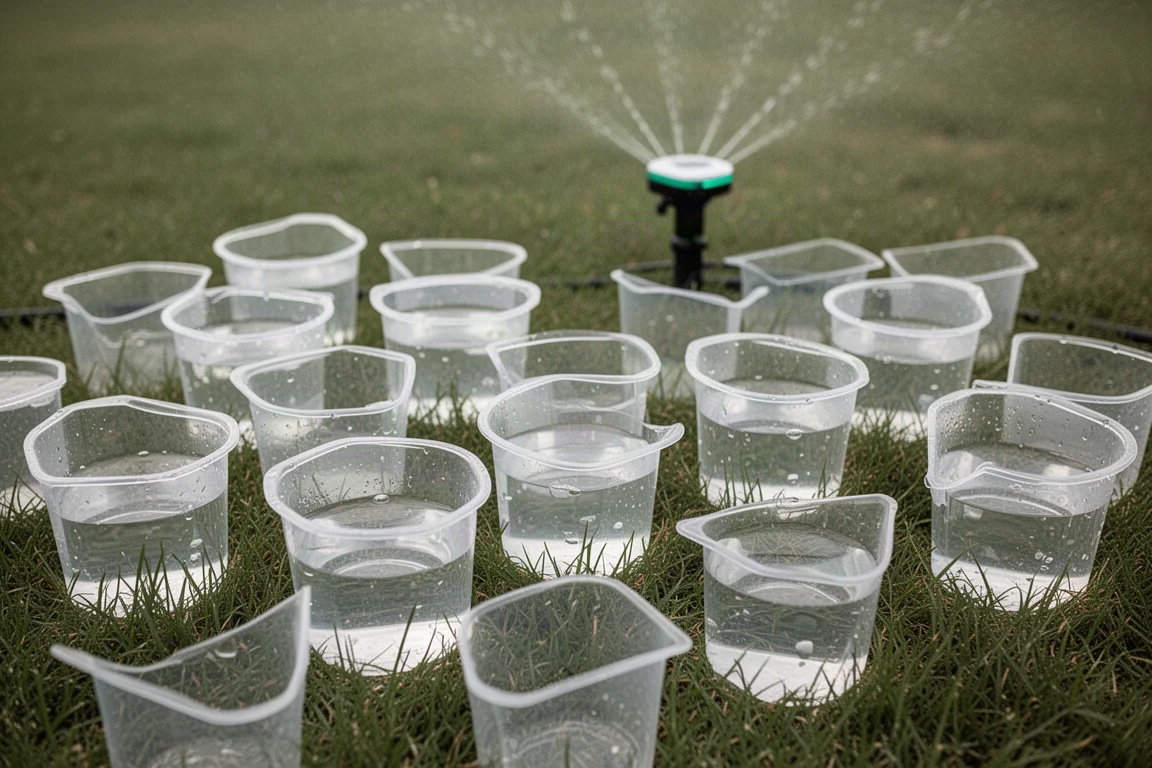
The takeaway is clear: the Aper delivers a more even watering pattern, provided you account for its tendency to under-water and avoid maxing out its range. The Auto’s inconsistencies would require massive overwatering of certain areas just to get sufficient water to the entire lawn.
Installation Considerations: Power, Water, and Placement
Both systems need a garden hose connection and a nearby power source. The Aper requires an outdoor outlet within roughly 40 feet, while the Auto can rely on solar power. Either way, you will need to run a hose to the installation location.
Garden hoses are not as leakproof as buried PVC pipe, so checking connections regularly is important. The hose and power cable also need to be routed so they do not interfere with mowing. These systems work best when installed at the edge of the yard, where the hose and cable do not cross the middle of the lawn.
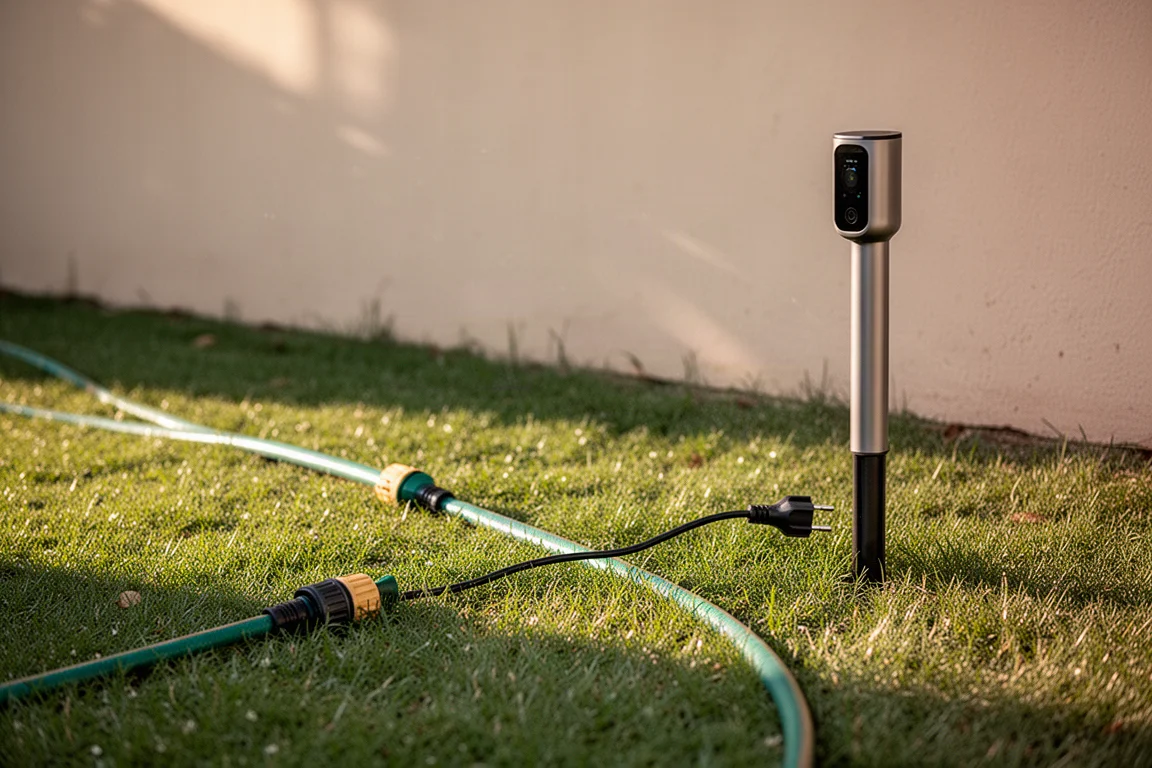
The Auto’s fence-mounted design is a clear advantage here, as it keeps the unit off the ground and makes mowing underneath straightforward. The Aper requires trimming around its base, and repeated string trimming could eventually damage the plastic housing.
Cost and Long-Term Value
The upfront cost of a smart sprinkler may seem high, but the total investment can be far less than rebuilding an in-ground system. Covering a double lot with four Aper units came in at less than 20% of an $11,000 quote for a traditional in-ground rebuild.
Installation is also much faster and causes no lawn damage. Winterizing is simpler too, since the units can be disconnected and brought indoors in freezing climates.
On the downside, above-ground hose connections are more prone to small leaks, and the units depend on the manufacturer’s servers. If a company shuts down its servers, the sprinklers could become useless. The Auto’s acquisition by Rain Bird in April 2025 provides some reassurance, while the Aper’s manufacturer offers less recourse in that scenario.
Overall Buying Advice
For actual sprinkler functionality, the Aper Irresense 2 is the stronger choice. Its misting pattern is gentler on the soil, and its distribution uniformity is significantly better. The main caveats are its tendency to under-water relative to the app setting and its weaker performance near the edges of its range.
The Auto is more convenient in some ways, thanks to its solar panel and fence-mounted design. But its inconsistent water distribution and powerful jets that can erode soil make it difficult to recommend as a primary irrigation system.
If you have power available near the edge of your yard and can make a ground installation work, the Aper is the more reliable investment. If you need a solar-powered option or prefer a fence-mounted unit, the Auto may still appeal, but be prepared for uneven coverage.
Conclusion
Smart sprinkler systems offer a practical alternative to traditional in-ground irrigation, especially for smaller yards or properties where digging is not an option. The Aper Irresense 2 delivers more consistent results and is the better choice for most homeowners. The Auto’s convenience features are appealing, but its watering performance falls short of what a sprinkler should provide.
Both systems have a place in the market, but the decision ultimately comes down to whether even coverage or installation flexibility matters more to you.
Further reading
Related Reviews
Smart Home
Amazon Echo Hub Review: A Smart Home Dashboard That Finally Gets It Right
The Amazon Echo Hub puts smart home controls front and center with a fast, simple interface. Here is how it performs as a family-friendly dashboard.
Smart Home
15 Amazon Smart Home Automations: Practical Ideas for Every Room
Fifteen practical Amazon Alexa routines and automations that solve real household problems, from pet care to security and entertainment.
Smart Home
Apple TV as HomeKit Hub: Why It's Your Best Choice for Home Automation
The Apple TV combines HomeKit hub functionality with a display, camera viewing, and local automation control. Here's what makes it stand out from iPad and HomePod Mini alternatives.