Astrophotography
Doublet vs Triplet vs Quadruplet vs Quintuplet: Four Small Refractors Compared for Astrophotography
Four compact refractors, four levels of optical correction, and one night of testing. Here is how the Askar 65PHQ, William Optics Zenithstar 61 II, Sharpstar 61 EDPH2, and Meade 70 APO stack up for deep sky imaging.
Introduction
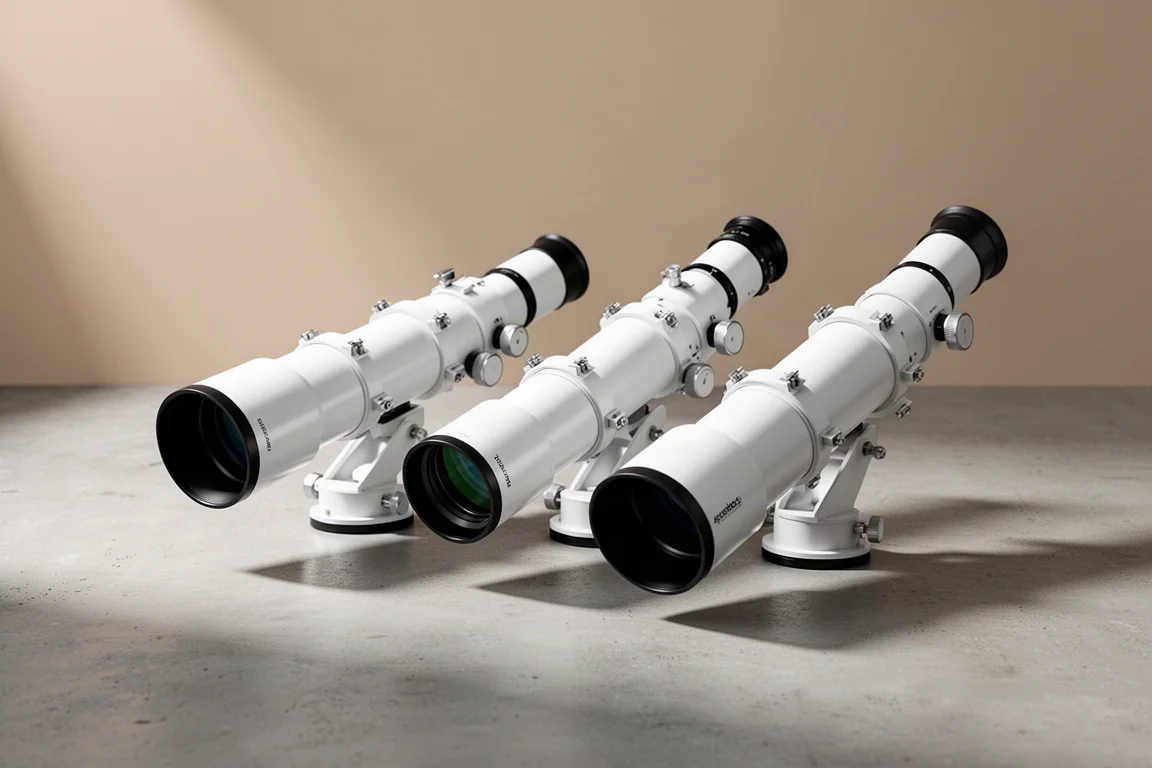
Four small refractors, four different optical designs, one question: does the number of glass elements inside the tube actually matter for deep sky astrophotography? You will often hear that a doublet is not enough for serious imaging, but side-by-side comparisons of doublets, triplets, quadruplets, and quintuplets under real night skies are rare. This comparison puts four popular compact refractors through the same imaging session to see what each one is actually capable of.
The contenders are the William Optics Zenithstar 61 II (a doublet), the Sharpstar 61 EDPH2 (a triplet), the Meade 70 APO (a quadruplet), and the Askar 65PHQ (a quintuplet).
Why glass element count matters
A single-lens refractor, like the one Galileo popularized, cannot focus all colors of light at the same point, which produces chromatic aberration. Achromatic doublets, using a crown and flint design, greatly reduced that problem starting in the 1750s. Apochromatic triplets with three glass elements reduced it further, and for visual use a high-quality triplet is still hard to beat.
For photography, though, doublets and triplets are only well corrected in the center of the field. A camera sensor is larger and rectangular, so you normally add a field flattener, which contributes another two to three glass elements. Quadruplets and quintuplets usually build that flattening into the tube itself, which is why they are called astrographs: a flat field right out of the box, and no precise back-focus spacing to chase. You may still need spacers to reach focus, but as long as you get there, you get full correction.
You might expect prices to climb with each added element, but it does not work that way. In this group, the triplet actually comes in slightly under the doublet once flatteners are included, and the Meade quadruplet costs a full $340 more than the Askar quintuplet. Brand reputation, quality control, and mechanics like focusers and rotators all factor into what people pay.
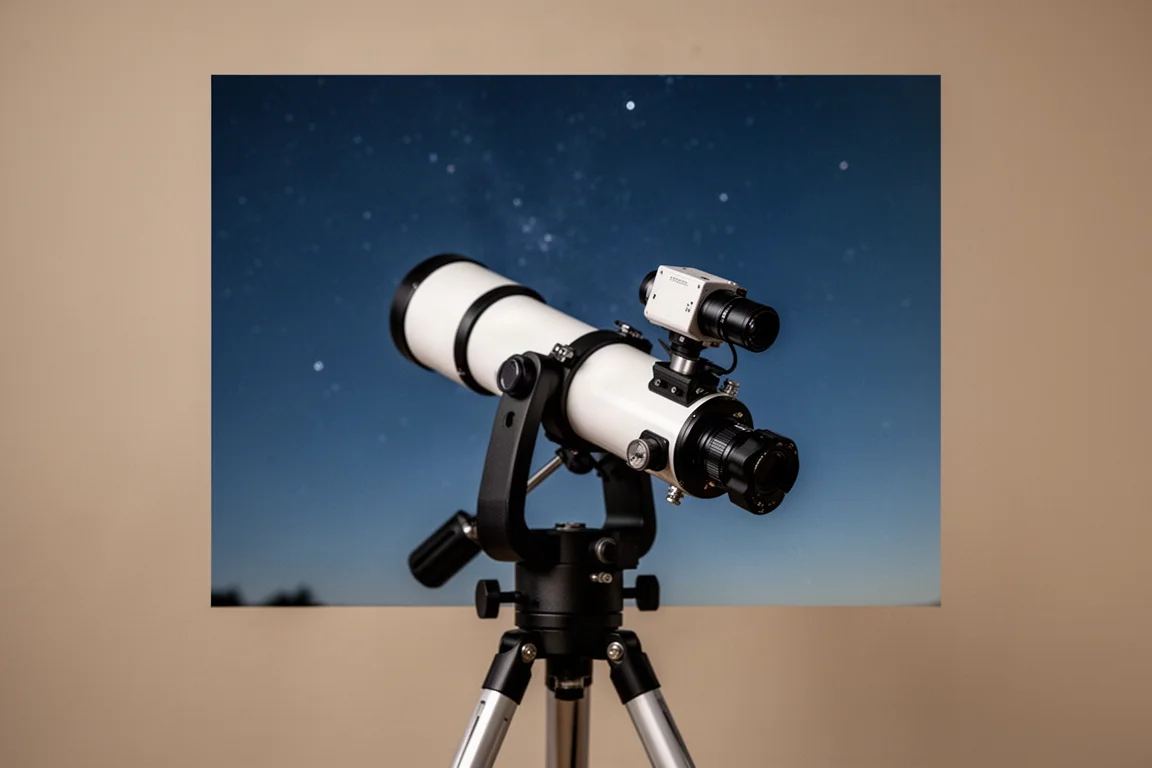
William Optics Zenithstar 61 II: the doublet
William Optics has a well-earned reputation for build quality and mechanics, and the Zenithstar 61 II shows why. The standout feature is a built-in Bahtinov mask in the dust cap: a clear mask integrated into the cap that works well for focusing, while the other three scopes here require supplying your own mask.
The tension and lock knob sits on top of the focuser rather than underneath, which is much easier to reach, and it is a big, comfortable knob. Millimeter markings along the focus travel make repeatable focus straightforward. The dedicated Flat 61A field flattener includes a camera rotator with a knurled ring and a lock knob; it takes a bit of force to turn, but that tension means it will not slip. Filters are handled elegantly: a two-inch filter screws into the back of the flattener, a cap screws back on, and standard 48mm threads sit at the rear with the usual 55mm spacing requirement.
The only real complaint is the dew shield: it extends plenty far but has no lock, which is annoying when using a flat panel that presses against it. The included top piece places a guide scope in line with the telescope rather than offset, which is a genuinely nice touch.
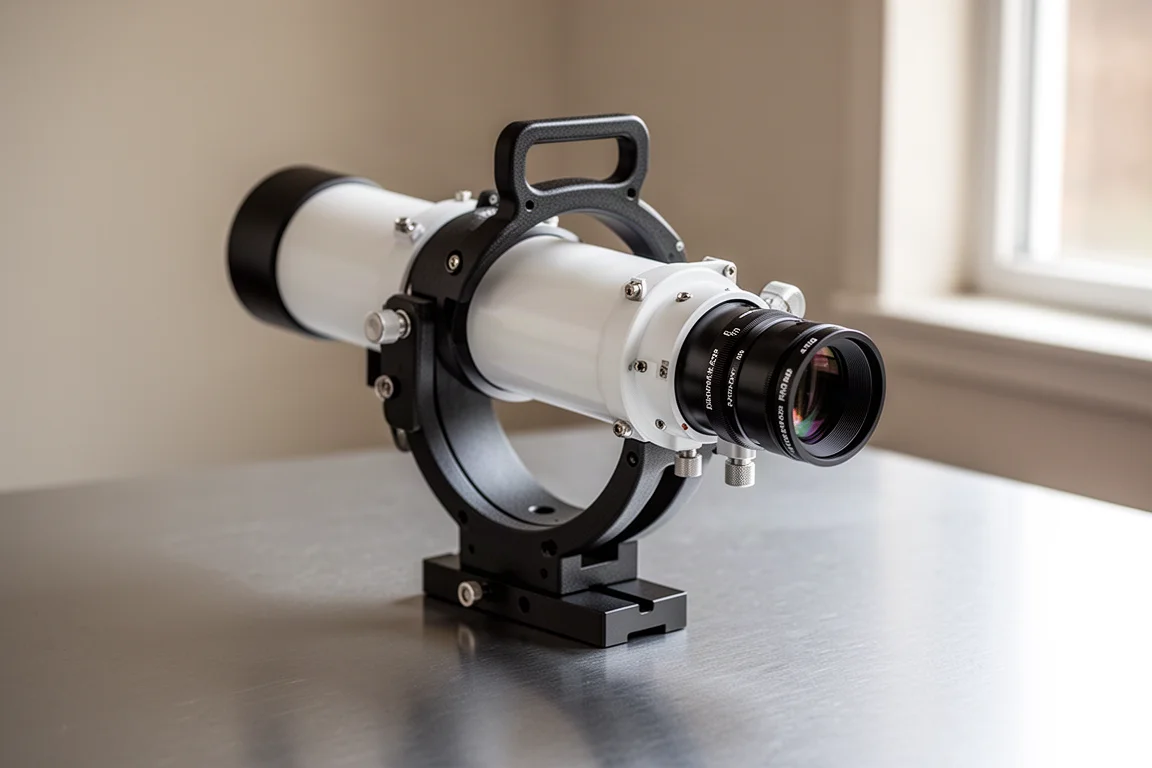
Sharpstar 61 EDPH2: the triplet
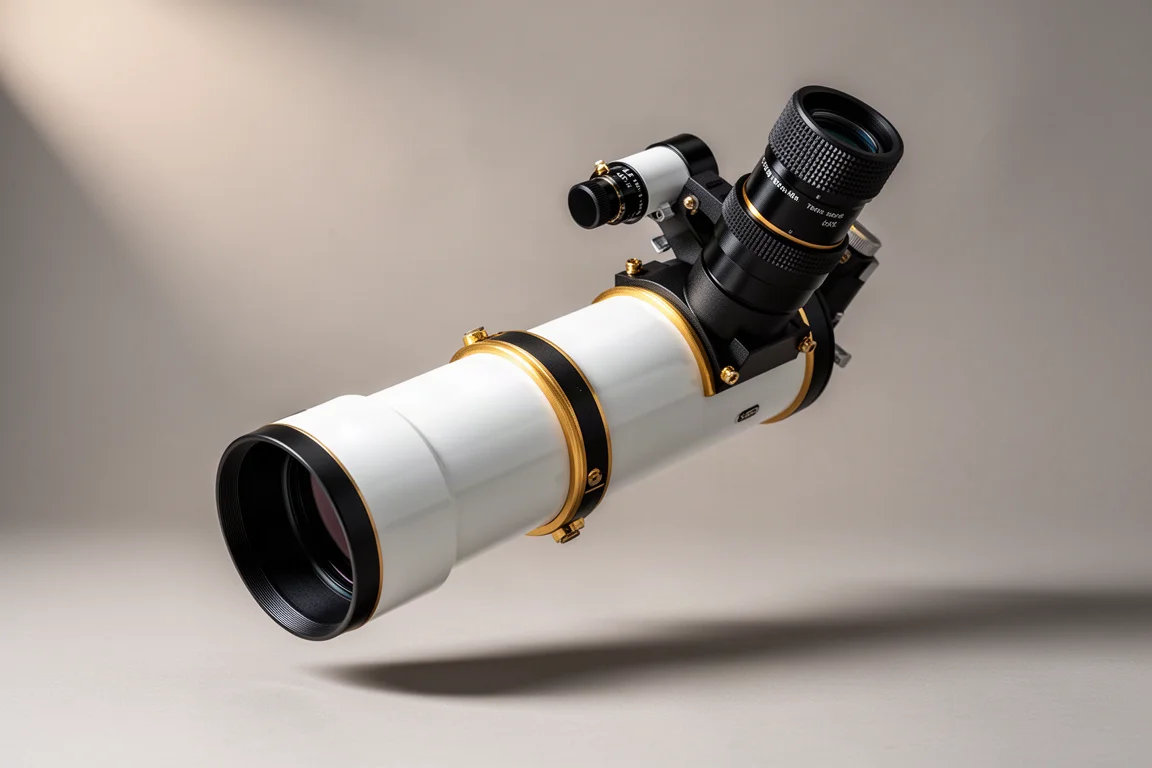
This is a very small telescope, one of the smallest around, and it was tested configured with the 0.8x reducer flattener. The trade-off for that speed is a wider field of view than the other three scopes.
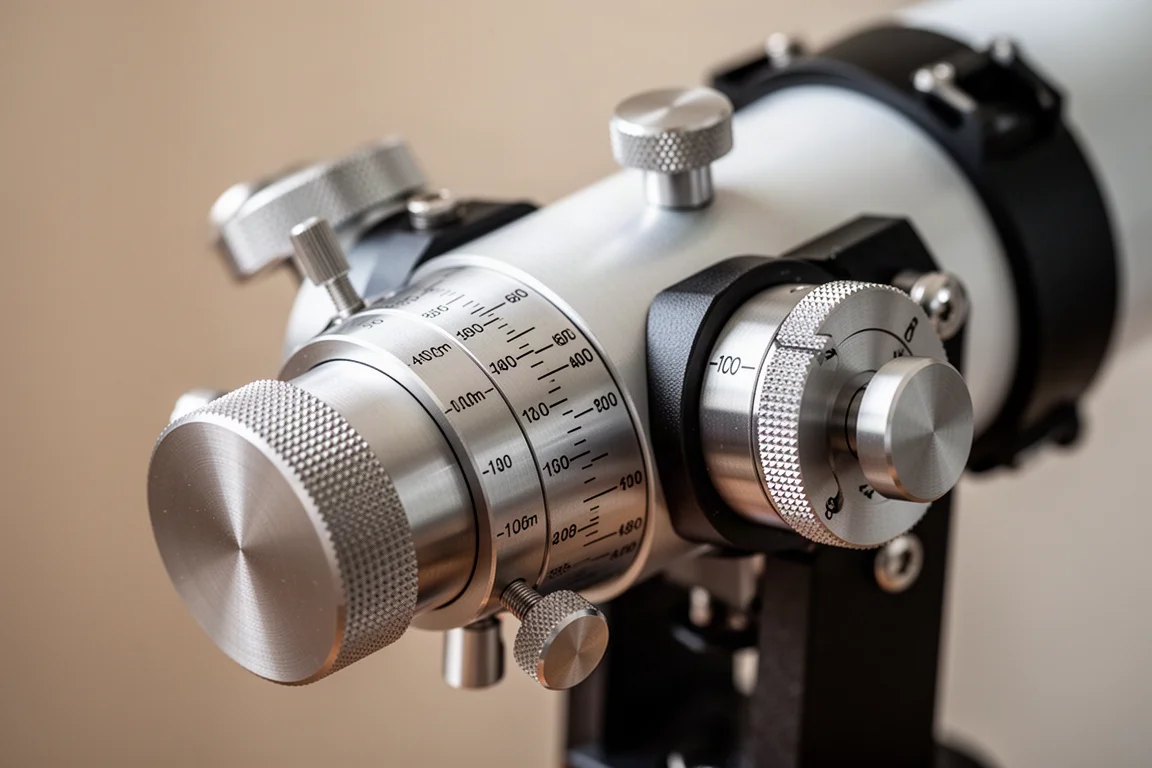
Mechanically, the biggest flaw is the included dovetail: it is comically short, so short it could not lock down with both knobs in a standard saddle. A longer aftermarket dovetail plate fixes that easily. The dew shield is also short with limited travel and no lock. On the plus side, the heavy-duty ring includes both a top handle and a Synta-style guide shoe, the focuser has clearly marked millimeter travel, and the whole focuser rotates, which is handy for framing.
There is a curious second rotation point at the rear of the focuser held by three screws. It works, but adjusting it requires a screwdriver and it is best left tightened, since the main rotator with its thumb screw does the job far more conveniently. Adding a two-inch filter is the low point: the threads sit deep inside the adapter, the little threaded insert has to be unscrewed and reinstalled, and it is easy to scuff the matte interior. The actual reducer flattener lives up inside the focuser body, and standard 48mm threads at the back accept a camera or T-ring.
Meade 70 APO: the quadruplet
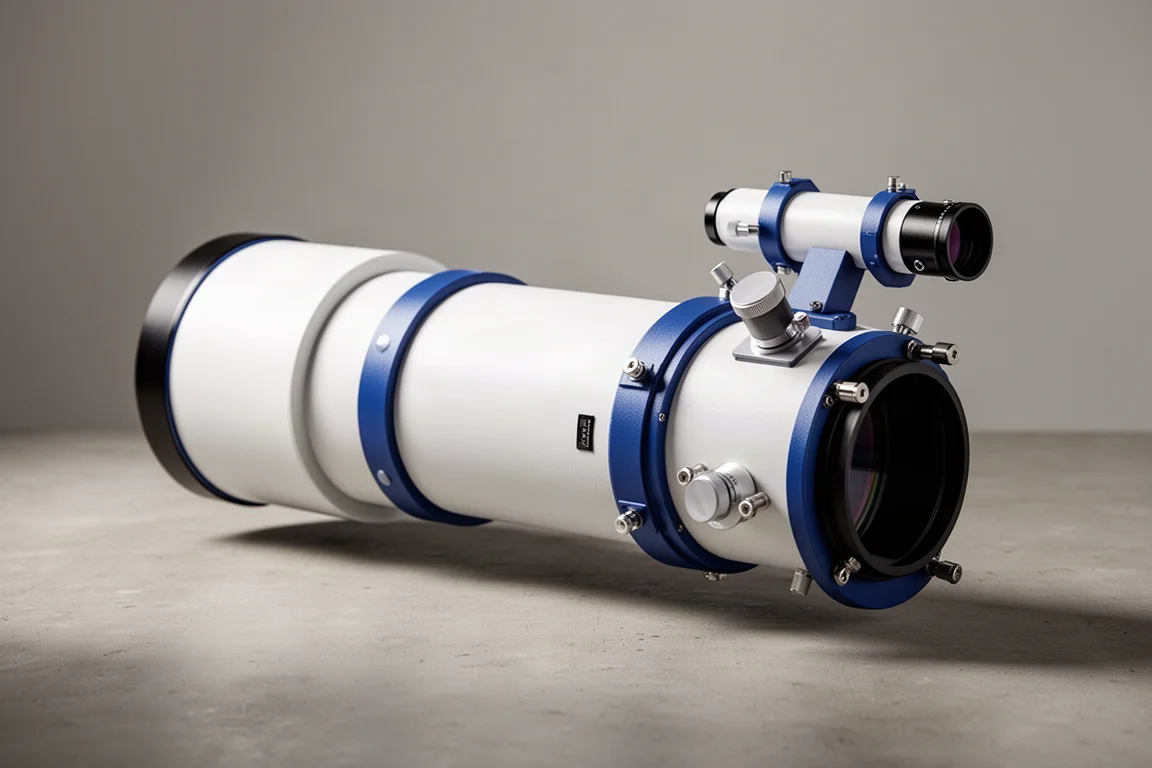
The most expensive telescope of the group, and one that seems to be discontinued but was very popular while available, so it remains findable used. Mechanically it works well: a nice two-speed focuser with millimeter markings, and a rear rotator with a thumb screw that operates smoothly.
Filter access requires patience. The entire rotation mechanism must be removed by taking out several set screws and the thumb screw before a two-inch filter can be dropped in, which means a screwdriver and keeping track of small screws. Once off, the filter swap itself is easy.
The included accessories are minimalist, just rings and a plate, but the rings carry quarter-inch-20 screw holes on top plus holes for a centring shoe, giving flexible mounting options for a guide setup. The finish is a distinctive super-matte white with blue accents, and the non-locking dew shield still extends a good distance. A thoughtful bonus: tilt adjustment screws facing rearward, which would help correct any sensor tilt issues.
Askar 65PHQ: the quintuplet
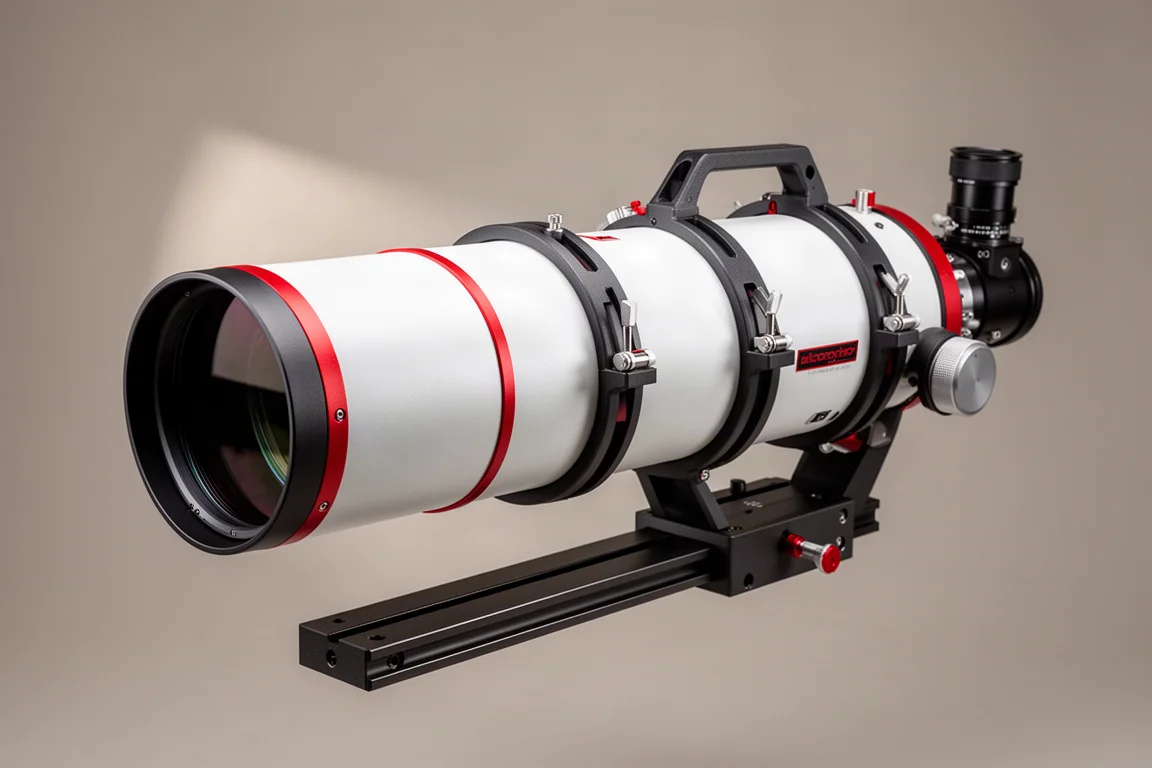
The PHQ line is Askar’s premium astrograph range, built a little slower than their FRA series for better star performance. This 65mm scope operates at f/6.4, giving 416mm of focal length, similar specs to the discontinued Astro-Tech AT65Q.
The mechanics are thoughtfully done. The dew shield extends far, takes a bit of effort to move, and has a lock, which none of the others offer. The rings include a small top handle and a Synta-style guide shoe, and the long included Vixen dovetail is genuinely valuable for mounting a guider or polar alignment tool at the front.
The focus travel carries both millimeter markings and rotation markings, the only scope here with the latter, which makes repeating framing across nights or shooting mosaics much easier. One quirk: the manual rotator with its lock is very stiff even fully loosened, stiff enough that yanking on it could disturb polar alignment on a light setup, so it needs slow, careful turning. Two-inch filters swap in easily behind the final adapter piece, much more convenient than the Sharpstar or Meade. Note that an astro camera needs additional spacers beyond the included 48mm spacer to reach focus.
How the comparison was shot
All four scopes imaged the Jellyfish Nebula on the same night, on the same AM5 mount with the same guiding system, in about two hours total. Each telescope captured five five-minute exposures for 25 minutes of integration, with guiding monitored to keep conditions consistent. Both a one-shot-color ASI 2600MC and a mono ASI 2600MM were used, both APS-C sensors with small 3.76 micron pixels, sharp enough to reveal any optical weakness. A second mono session used 3nm Antlia Ha and OIII filters, 50 minutes on each filter per telescope, with Ha shot under a full moon and OIII moonless.
Raw single frames showed no major problems from any scope: minimal vignetting on the crop sensor, and reasonably flat fields already.
What the image tests showed
Using an aberration inspector to compare center and corner crops, the William Optics doublet looked genuinely good: round stars to the corners with no visible chromatic aberration. The Sharpstar, with its wider 288mm field, showed slightly more chromatic aberration and elongation in the corners. The Meade fell a little short of the William Optics in the corners too, though the center may have been slightly sharper, with some elongation visible in all four corners that could partly be tilt. The Askar looked the most technically perfect of the four, though that level of tightness can mute star color slightly.
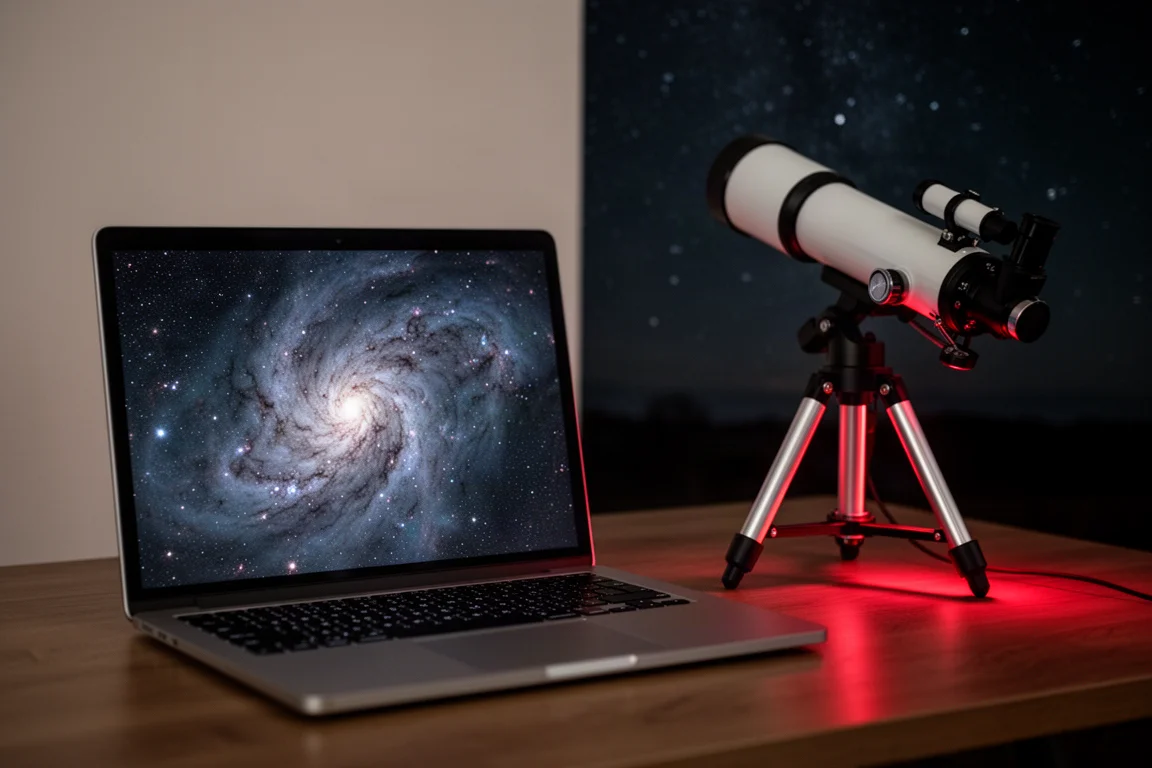
On the bright star Propus, a common troublemaker, all four scopes rendered it acceptably with an IR-cut filter, though the Askar’s slower focal ratio produced slightly tighter stars while the Sharpstar’s reducer gave brighter but slightly more bloated stars.
With narrowband mono data, differences were actually more visible than in one-shot color, which goes against the common claim that a doublet matches anything once you shoot mono. The faster scopes pulled faint structure out of 50 minutes of Ha and OIII that the f/6.4 Askar will need more integration time to match, and the combined Ha/OIII images made the speed gap obvious: the f/5 Meade and f/4.5 Sharpstar showed noticeably less noise than the slower William Optics and Askar. Interestingly, the Askar’s narrowband stars looked better than expected, while the doublet and triplet struggled a bit more with the color of Propus compared to the quadruplet and quintuplet.
Overall buying advice
The honest takeaway is that all four of these scopes, ranging roughly from around $600 to thirteen hundred dollars, will get the job done with a good camera, mount, and guiding. The differences are real but subtle. The Askar offers the tightest stars in exchange for slower speed, the Sharpstar delivers the widest field of view and the fastest focal ratio, and the doublet and quadruplet land at similar focal lengths with very similar results. Mechanics, filter convenience, and features like the built-in Bahtinov mask or rotation markings may matter as much as optics when choosing between them.
Conclusion
If you want the most technically perfect stars out of the box, the Askar 65PHQ stands out. If you want speed and a wide field, the Sharpstar 61 EDPH2 earns its place. The William Optics Zenithstar 61 II remains a superbly built all-rounder, and the Meade 70 APO, where you can find one used, holds its own. Match the scope to your targets and priorities, and any of the four will serve your astrophotography well.
Further reading
Related Reviews
Astrophotography
ASKAR FRA400C Review: A Versatile 400mm Refractor for Astrophotography and More
The ASKAR FRA400C is a compact 72mm refractor that balances reach, versatility, and portability for astrophotographers and visual observers.
Astrophotography
Askar SQA106 Review: A Premium 106mm Astrograph With Exceptional Optics
The Askar SQA106 is a premium 106mm quintuplet astrograph with impressive sharpness across full-frame sensors, though its price and weight demand careful consideration.
Astrophotography
Astro Imaging Gear 2026: Eight New Products Worth Watching
A look at the most interesting new astrophotography and astronomy products announced this year, from fast telescopes to smart cameras and wireless accessories.