Aviation
Sling TSI vs Sling High-Wing: Two Four-Seat Kits Compared After Demo Flights
We flew both Sling four-seat aircraft back to back over Catalina Island to see which one deserves a place in a future build.
Introduction
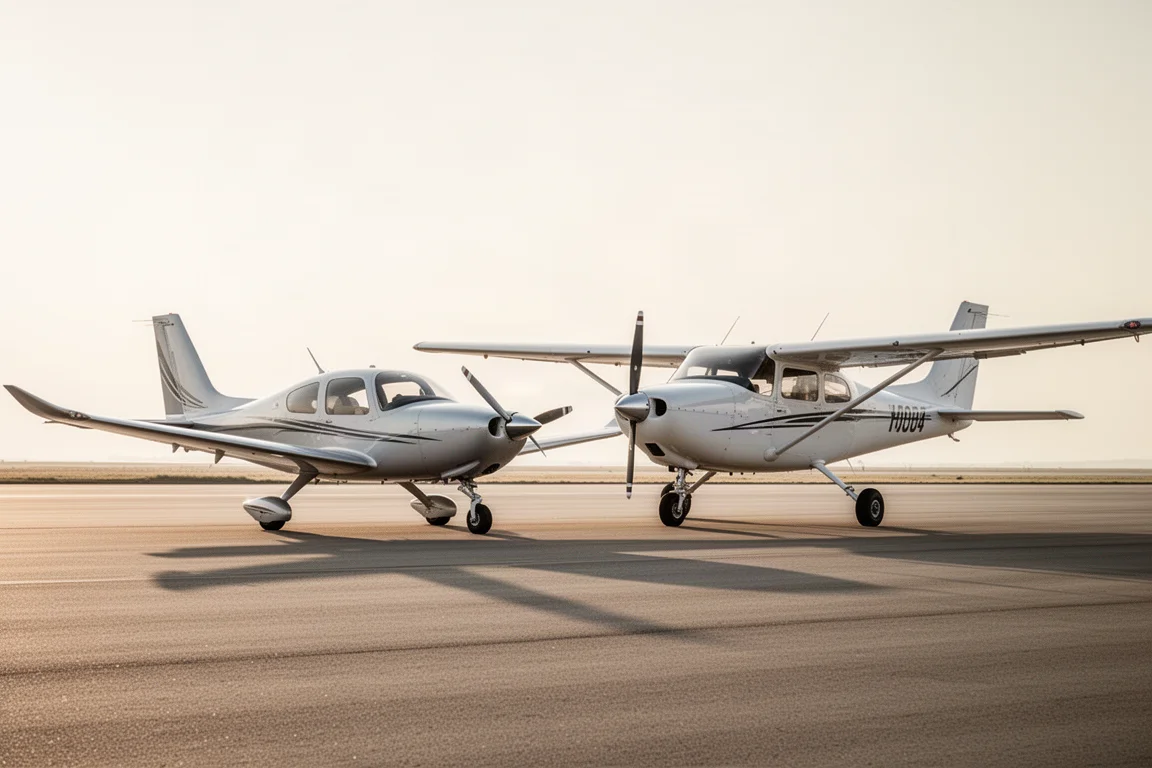
Some purchases reward research, and some reward flying the thing first. Choosing between two kit aircraft you hope to build is firmly in the second category. That is exactly what prompted a visit to the Sling facility in Torrance, California: a data-gathering mission built around demo flights in the company’s two four-seat designs, the low-wing Sling TSI and the Sling high-wing, with the goal of experiencing both back to back before deciding where a down payment should go.
The mission was simple on paper. Fly one aircraft out to Catalina Island, land, switch pilots and aircraft, and fly the other back. Two pilots, two airframes, two honest first impressions, and a debrief at the end.
Why These Two Airframes Made the Shortlist
Both aircraft started out as a search for one mission: a fast, comfortable, long-range four-seater for serious cross-country travel. When casually researching Sling, the common assumption is that these are small two-seat light sport aircraft. Digging in reveals something different: genuine four-seat airplanes with decent speed, useful range, all-Garmin avionics, and, crucially, an airframe parachute. For long cross-country flying, the parachute is the feature that matters most.
They are experimental kit aircraft, which also opens up options. You can order a flat-pack kit and build everything from raw material at home, order a quick-build kit, or join the build-assist program at the factory, where customers periodically come in and work on their own aircraft with Sling builders’ help to satisfy the 51 percent builder rule. For two people working full-time jobs, the build-assist route makes the idea of a homebuilt dramatically more realistic without giving up the major milestone moments of the build.

Under the Cowl: A Very Modern Powerplant
The preflight on these aircraft is noticeably different from legacy trainers. The turbocharged engine is liquid cooled, so there is a water radiator, an oil cooler, and an intercooler for the turbo air, plus a compressor for the air conditioner, the first aircraft the demo fleet fitted with one. There is no cylinder head temperature gauge in the traditional sense; coolant temperature effectively plays that role because everything sits in the water jacket.
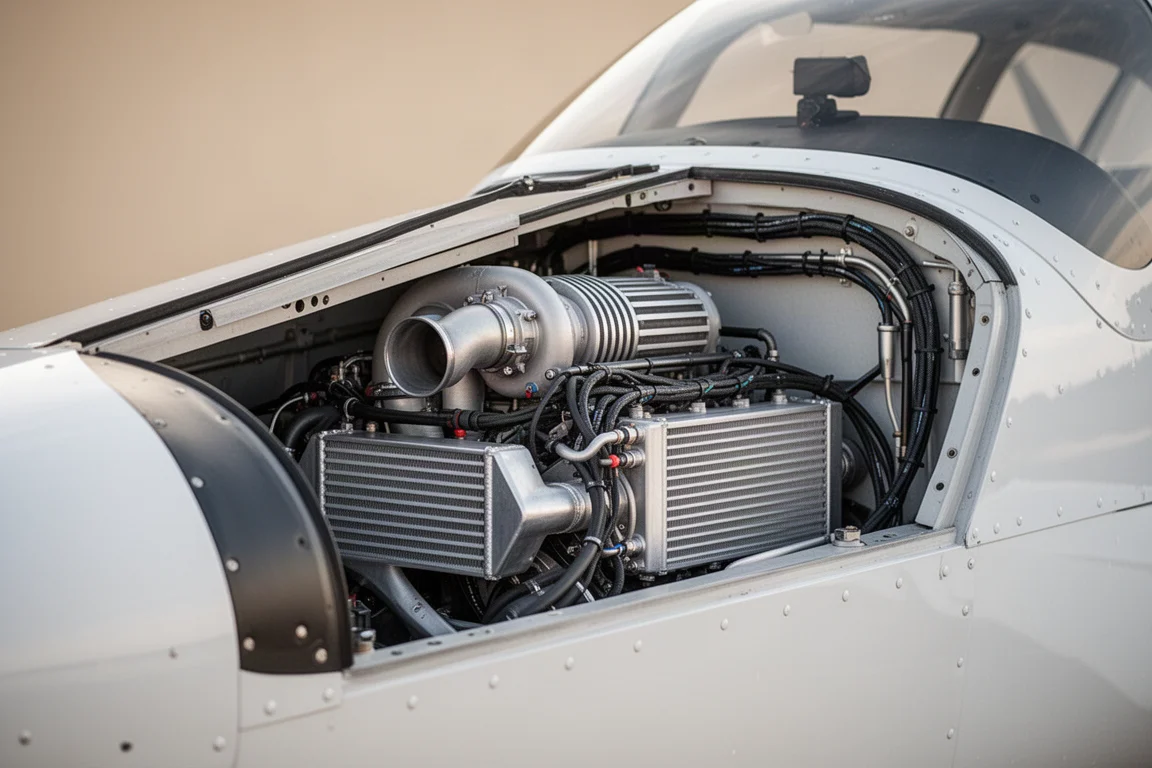
One quirky but telling procedure: because the engine is dry sump with a separate oil tank, you “burp” the engine by pulling the prop through slowly by hand before checking the true oil level. Check it cold and you would overfill. Little details like that reinforce just how modern and car-like this engine installation is compared with a typical lycoming or continental installation.
The Low-Wing TSI: Fast, Sharp and Responsive
The TSI is the faster of the pair, and it shows immediately. The controls run on push-pull tubes, which makes the airplane feel very responsive, and the climb performance is genuinely spirited, comfortably exceeding 1,000 feet per minute on the initial departure. Up high, at around 10,000 feet, the aircraft was still pushing high horsepower figures and truing out around 140 knots and climbing as speeds built, with the promise of trueing at 160 or more if you are willing to go higher.
In the pattern it is civilized too. Flap speed is 85 knots, a comfortable downwind speed is around 80, and 75 knots with full flaps makes for a stable, steep approach. The airplane is relatively light compared with something like a 182, and the big flaps let it bleed energy quickly when you pull the power back. The famous description everyone gives it turned out to be accurate: it flies on rails.
The trade-off, in the high-wing camp’s view, is the classic one: in a turn, the low wing blocks part of your downward view on that side, and there are no struts to break up the view, but the wing is simply there.
The High-Wing: Room, Visibility and Ease
The high-wing counters with practicality. There are no wing struts, so the downward view out the windows is completely unrestricted and genuinely immersive, and the familiar high-wing vantage point makes seeing everything below effortless. Getting in and out is easier, loading is easier, and the interior is noticeably bigger. Taller passengers reported leg room for days in both rows, and the seats come out easily and cannot fall down. Remove the rear seats entirely and there is room for bicycles and parachutes.
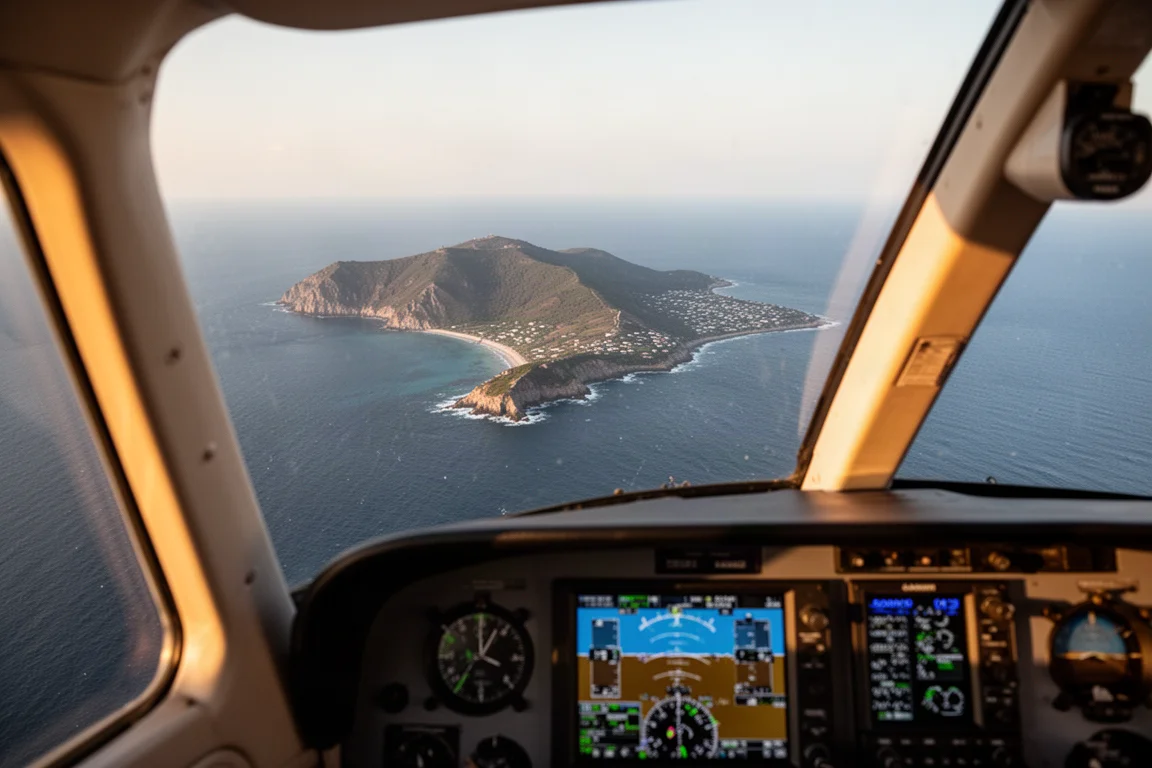
In flight it has a slightly more pendulum feel than the TSI, as low-wings and high-wings inherently do, but it is described as a civilized, gentleman’s airplane that will nonetheless yank around happily when you put real stick input in. Ground effect is more noticeable on arrival, and the handbrake-style parking brake, with a one-way valve that holds system pressure, takes only a couple of flights to feel completely natural.
One honest caveat: the high-wing came out a little heavier than expected, so the low-wing currently holds a slight payload advantage while the all-up weight is being redefined, with the limitation that a minimum percentage of the all-up weight must be fuel.
Handling, Landing and Everyday Practicality
Both aircraft landed beautifully on the island’s uphill runway and back at the home field. The high-wing produces a pronounced, cushioned ground effect on flare, while the TSI lands a little more solidly. Stalls are docile: the TSI gives a little bob and sits there thanks to its forward center of gravity, and the high-wing shakes a warning before letting go. Dirty stall speeds sit in the mid-50-knot range, and approaches in the 75 to 80 knot band are comfortable with the generous flaps.
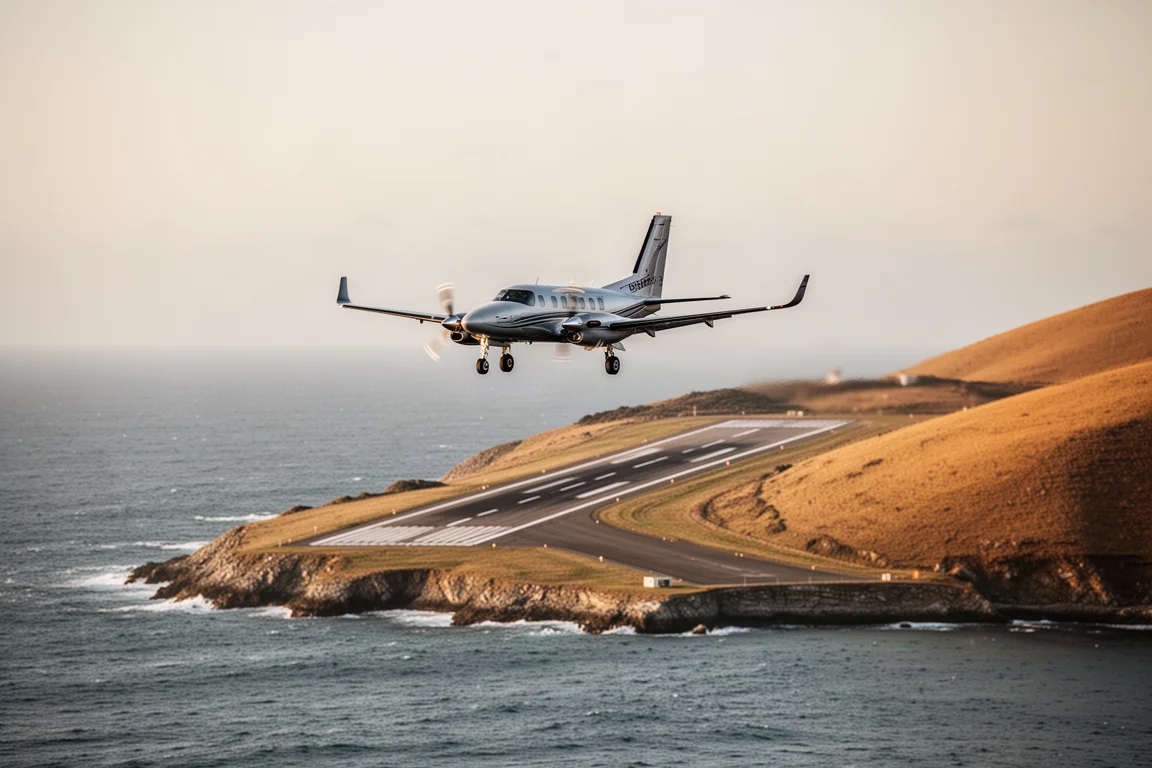
The real surprise came at the debrief. Both pilots walked in with opposite preferences, one favoring the high-wing for familiarity and view, the other favoring the TSI for speed and that low-wing look. After flying both, they switched. The unrestricted downward view won one pilot over to the high-wing; the sporty, wearable feel of the low-wing converted the other the moment the wheels left the island. Whether that is recency bias or genuine revelation is exactly what more flight time is meant to answer.
Buying Advice
For buyers whose mission is maximum cross-country speed, the TSI is the natural pick, with cruise figures that climb past 140 knots true at altitude and a claimed ability to true 160 or more up high. For buyers who prioritize visibility, cabin room, easy ingress and cargo flexibility, the high-wing makes a compelling case, and the speed difference between the two is described as marginal in real formation flying rather than decisive.
The build-assist program is worth serious consideration for anyone who wants to own an experimental without surrendering every evening and weekend to a garage. And regardless of which airframe you choose, the parachute-equipped airframe is a genuine differentiator for long cross-country flying.
Conclusion
Flying both aircraft back to back over the same route turned abstract spec sheets into real preferences, and it flipped both pilots’ initial choices. The TSI is the sharper, faster machine; the high-wing is the roomier, more practical one with unbeatable downward visibility. Either way, both are modern, well-equipped four-seat kits that make the dream of building and flying your own cross-country machine feel genuinely achievable.
Product link
View more details for Sling TSI
This product is mentioned in the review. Check the specifications, options, and compatibility before buying.
View more details for Sling TSIFurther reading
Related Reviews
Aviation
Aero Technics ACH 212 Solo Review: A Carbon Fiber Solo Kit Aircraft You Can Build Fast
A nearly 30-year-old Czech design still offered only as a kit: 90% carbon fiber, quick-release wings, a 350 to 400 hour build, and performance that surprises.
Aviation
Aeropilot: The 80% Scale Cessna-Style Light Sport Aircraft Winning Over Flight Schools
A full-carbon, two-seat light sport aircraft modeled after the Cessna 182, with a larger cabin, big climb performance, and fuel burn that flight schools love.
Aviation
Aeropro A22 and A32: Two Light Sport Aircraft Worth a Close Look
A side-by-side look at the Aeropro A22 and A32, covering performance, pricing, customization, and what buyers should know before ordering.