Sleeping Pads
Sleepingo vs Outdoorsman Lab Sleeping Pad: Two Names, One Budget Camping Pad
The Sleepingo Sleeping Pad and the Outdoorsman Lab Sleeping Pad share the same build and differ mainly in branding and price. Here is what to expect from each before you buy.
Introduction
Two sleeping pads, one build. The Sleepingo Sleeping Pad and the Outdoorsman Lab Sleeping Pad share the same construction, the same dimensions, and the same 20 denier nylon shell. The meaningful differences come down to the logo printed on the pad and the price attached to it, with the Sleepingo version selling for around $40 and the Outdoorsman Lab version closer to $32 or $33.
That makes the buying decision unusually simple: if this design suits your sleeping position, the lower priced version delivers the same pad. The harder question is whether the design suits you at all, because the marketing around these pads describes a level of comfort the physical product does not quite deliver. This guide walks through what the pad actually offers, where it falls short, and who should look elsewhere.
Design and Packed Size
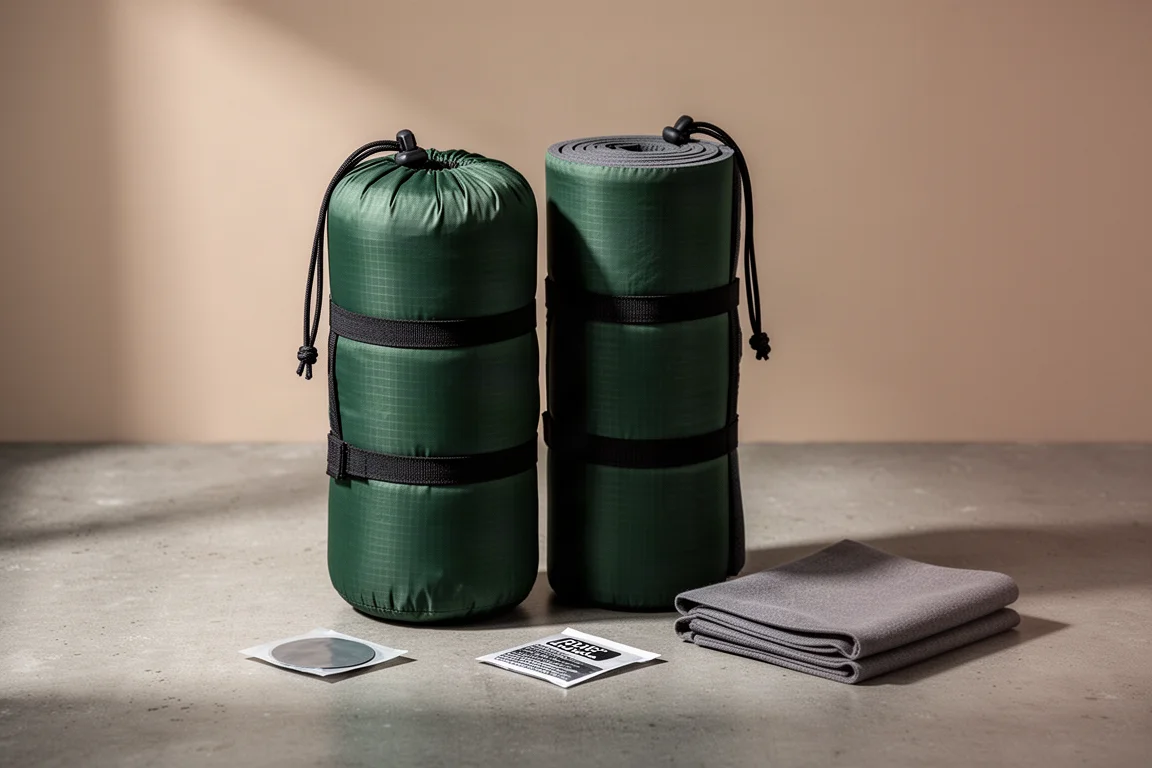
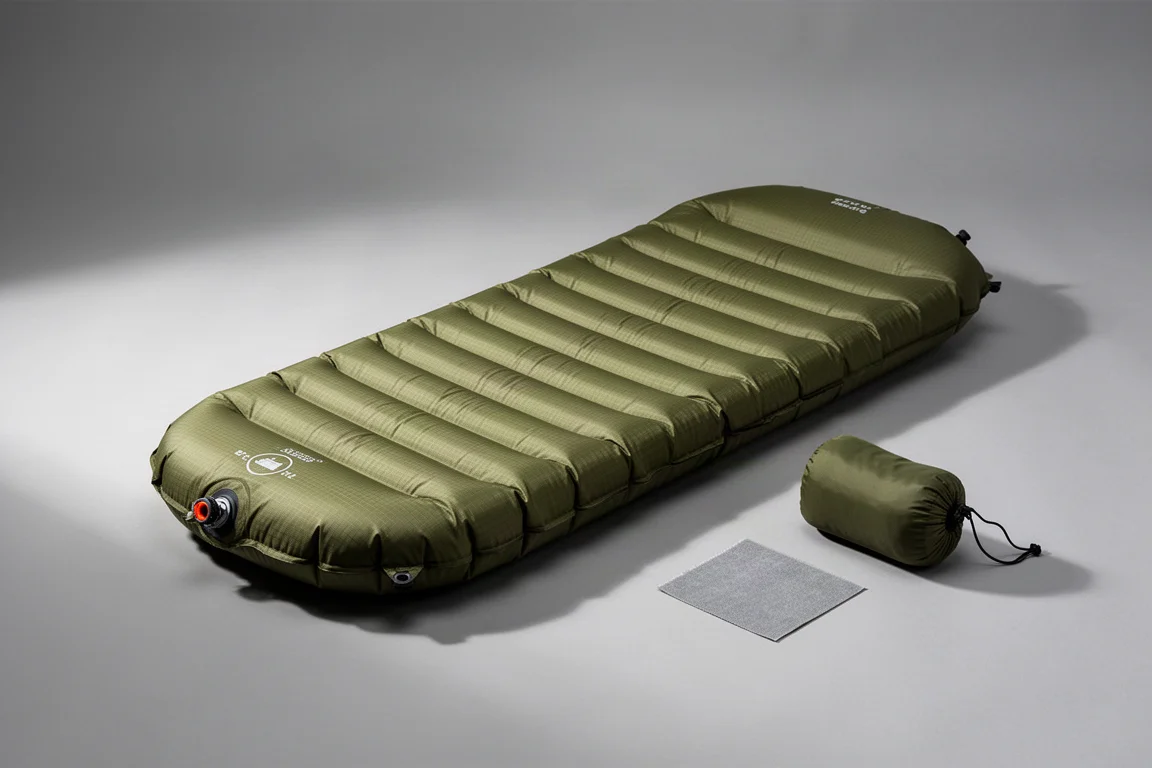
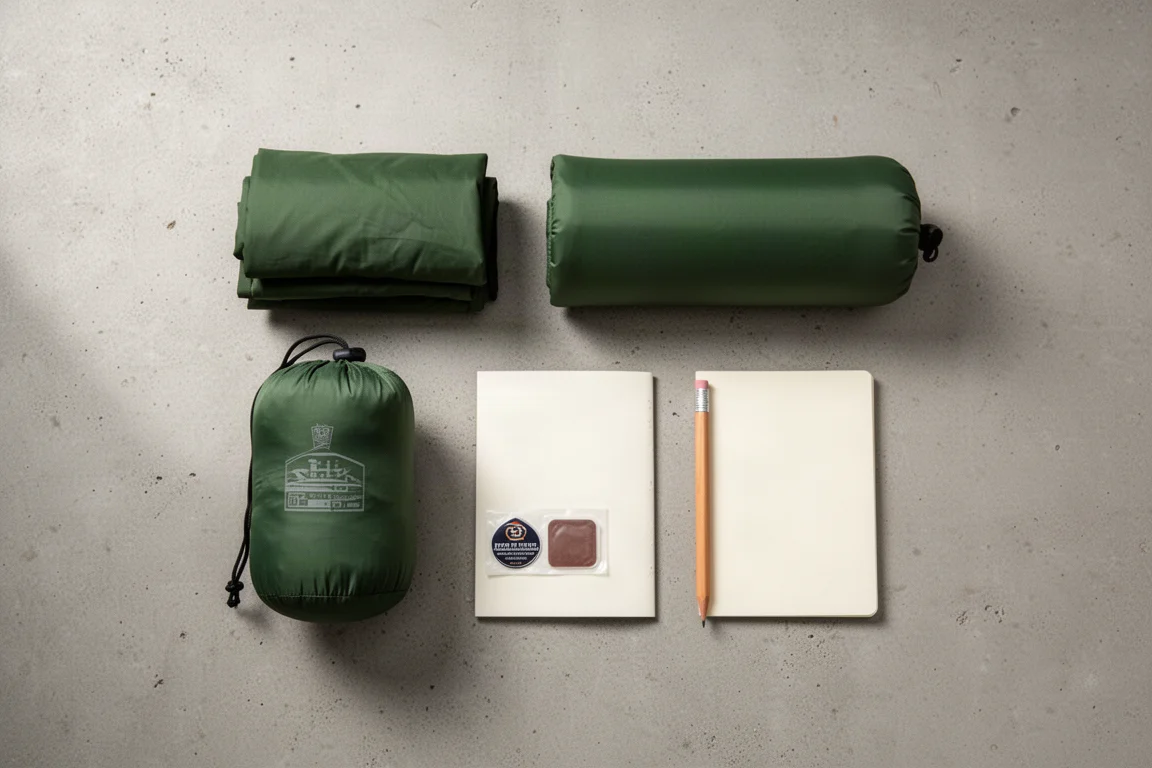
The pad is built from 20 denier nylon with a ripstop weave, and it rolls into a stuff sack measuring roughly 11 by 3.5 inches. In the hand it is genuinely compact, close to the length and diameter of a standard water bottle, which is why it takes up so little room in a backpack. The stuff sack closes with a drawcord, and a small repair kit travels inside it with sealant and two squares of fabric patch.
Weight is listed at 14.5 ounces by the company, and the pad comes in at 14.2 ounces on a scale including the storage bag, so the claim holds up. The pad itself is finished in a deep green colourway.
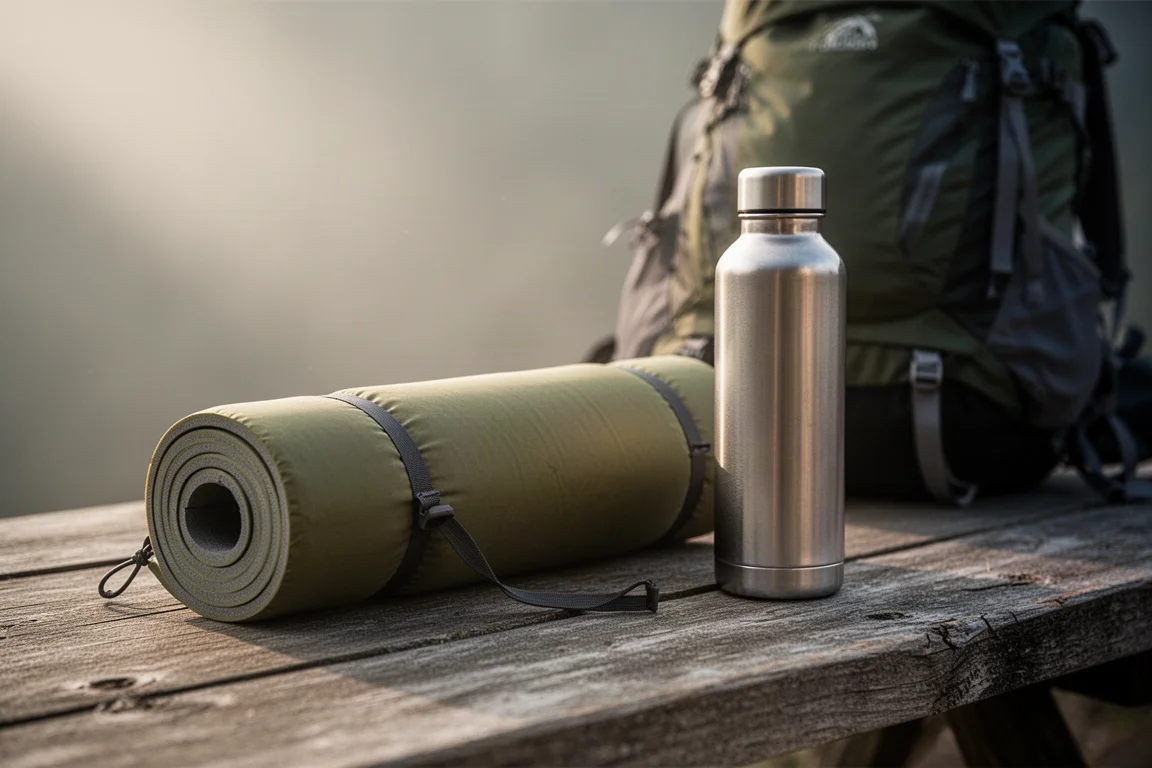
Construction quality is solid. The cuts and seams are clean, the valve sits flush without visible glue around the edge, and nothing about the materials suggests a pad that will fail early. For a budget product in this category, the finish is better than the price suggests.
Inflation and the Two-Way Valve
The valve is a two-way design with an internal stopper, which means air goes in and does not escape between breaths. Inflating the pad takes about 11 full breaths, and deflating is just as straightforward once the valve is opened. For anyone who has wrestled with a pad that needs 30 or 40 breaths at the end of a long day, this is a meaningful convenience.
Comfort, Thickness, and Sleeping Position
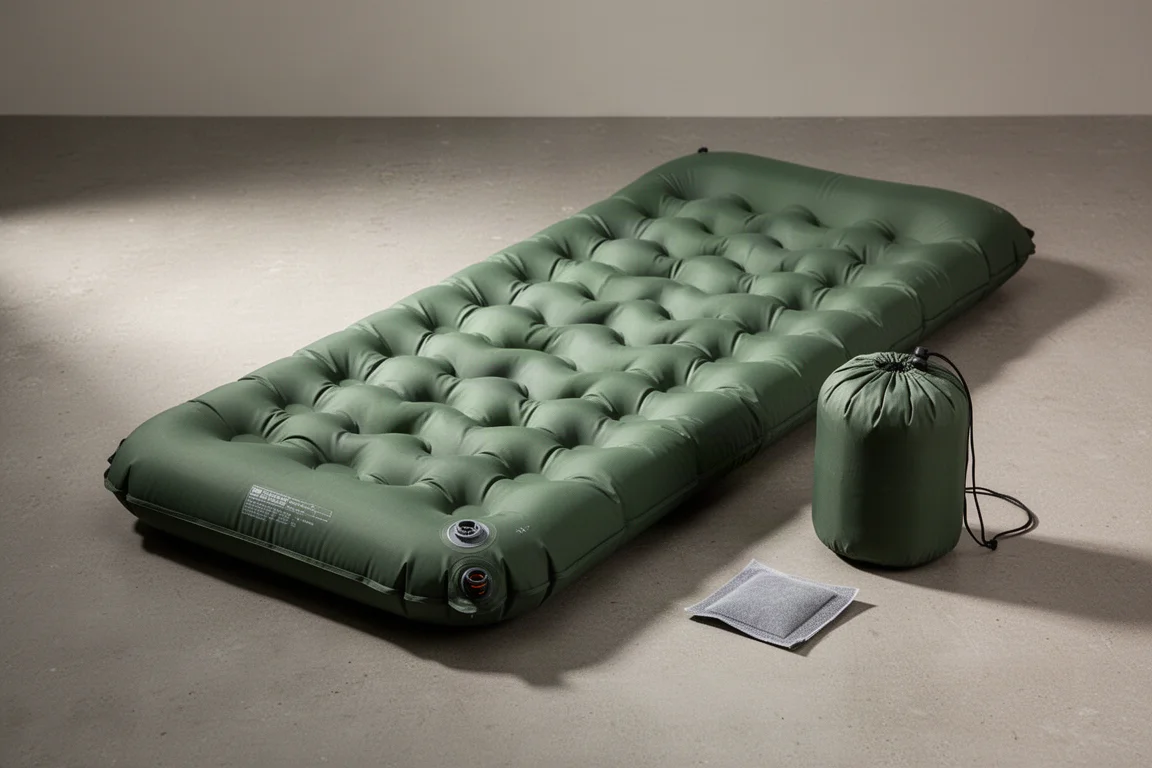
The company claims two inches of cushioning, and the reality is more complicated. The pad is built from a pattern of air pockets, and the height varies across the surface: some pockets sit above two inches, while the gaps between them sit noticeably below. The result is a pad that keeps a back or stomach sleeper just clear of the ground, but offers little support for anyone who rolls onto their side. For side sleeping, roughly three inches of cushioning is a realistic minimum, and this pad does not reach it.
Dimensions follow a similar pattern. The company states 75 by 23 inches, while the inflated pad measures closer to 74 by 22 inches and tapers toward the foot end, narrowing to roughly 12 inches. At 22 inches wide, the pad is at its limit for broad shouldered sleepers. It also suits people up to about six feet tall, and anyone taller should look at a longer option.
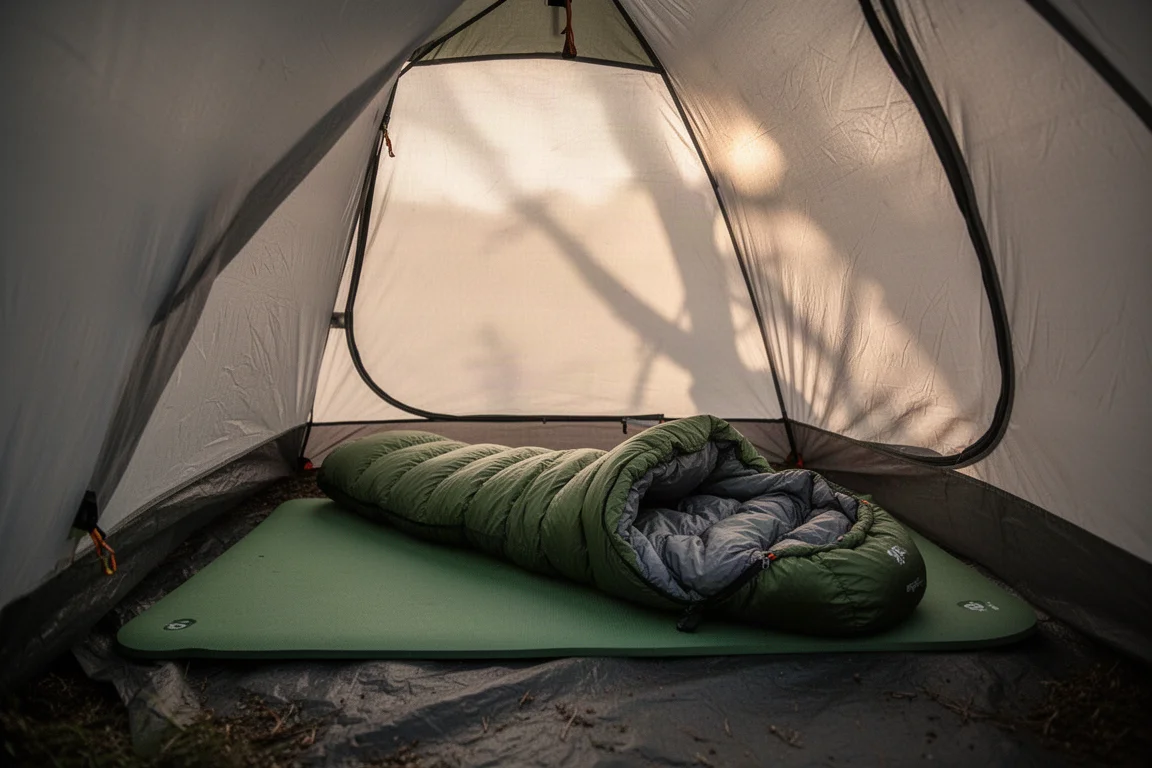
For a 160 pound sleeper lying flat, the pad barely lifts the body off the ground, and heavier users may find that it does not lift them at all. It is not the most uncomfortable pad on the market, but it is a minimal one, and the marketing language about comfort in any sleeping position oversells what the design can do.
Outdoorsman Lab Sleeping Pad: The Same Build for Less
The Outdoorsman Lab Sleeping Pad is the same product. The construction, the valve, the fabric, and the packed size all match, and the printed logo is the only difference worth mentioning. It sells for around $32 to $33, which makes it roughly $7 to $8 cheaper than the Sleepingo version for an identical pad. If the design fits your needs, there is little reason to pay more for the same build, and the same caveats apply: fine for back sleepers, limited for side sleepers, and narrow for larger frames.
What the Review Numbers Say
The Sleepingo listing carries roughly 27,000 reviews, the sort of volume that pushes a product to the top of search results and makes it look like an obvious choice. Volume, however, is not the same as reliability. An independent review analysis service rates the listing poorly and estimates that around half of its reviews are unreliable, a figure worth keeping in mind when a product’s reputation rests on star counts alone.
This is not a reason to avoid every popular budget product, but it is a reason to read reviews for specifics rather than sentiment. Look for comments about sleeping position, user weight, and pad width, because those are the details that determine whether this design will work for you.
Specs and Price at a Glance
- Claimed inflated size: 75 by 23 inches
- Measured inflated size: about 74 by 22 inches, tapering to roughly 12 inches at the foot
- Claimed thickness: 2 inches, varying across the surface
- Weight: 14.2 ounces including the stuff sack, against a company claim of 14.5 ounces
- Packed size: about 11 by 3.5 inches
- Shell material: 20 denier nylon
- Price: around $40 for the Sleepingo version, around $32 to $33 for the Outdoorsman Lab version
The company also advertises a lifetime replacement warranty with no need to return the pad, plus a refund option if you are not satisfied. Those terms are generous on paper, though they are company claims rather than guarantees you can verify before buying.
Buying Advice
This pad makes sense for a specific kind of camper: someone who sleeps on their back or stomach, weighs under about 160 pounds, stands under six feet tall, and cares more about a small packed size than plush cushioning. For a summer backpacking trip where every gram and every litre of pack space matters, it does the job at a low price.
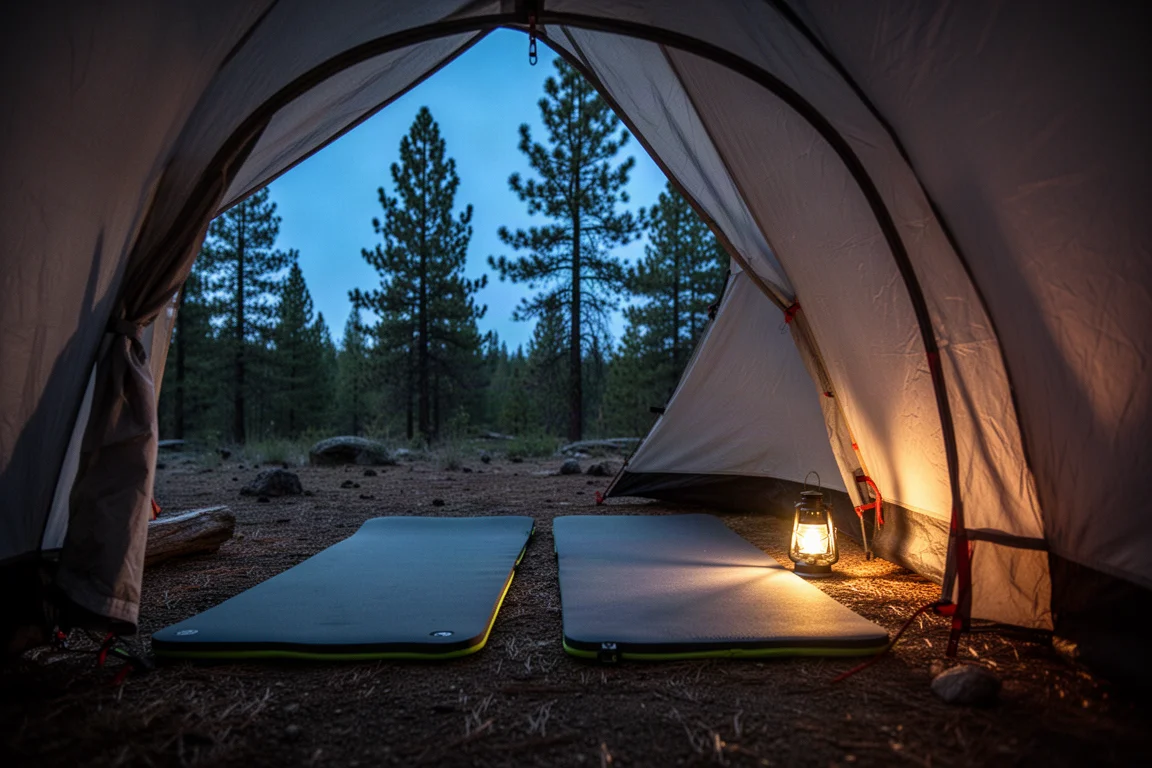
It is the wrong choice for side sleepers, for larger frames, and for anyone who wants the comfort of a thicker pad. If you are in that group, budget for a wider pad with at least three inches of cushioning instead. If you are in the first group, buy the cheaper of the two identical versions and put the difference toward a better pillow.
Conclusion
The Sleepingo Sleeping Pad and the Outdoorsman Lab Sleeping Pad are the same product sold under different names, and both deliver a compact, lightweight pad at a budget price. The catch is the comfort claim: the cushioning is inconsistent, the width is modest, and side sleepers will not be happy. Match the pad to your sleeping position and body size, choose the lower priced version, and this design can be a sensible, inexpensive part of a lightweight kit.
Further reading
Related Reviews
Sleeping Pads
Best Backpacking Sleeping Pads 2026: Nine Pads Rated on Price, Comfort, Warmth, and Weight
Nine backpacking sleeping pads compared on price, comfort, warmth, and weight, from a $65 summer pad to a year-round option rated at R-7.3.
Sleeping Pads
Best Backpacking Sleeping Pads: Comfort, Warmth, and Weight Compared
A practical comparison of the Nemo Quasar 3D, Therm-a-Rest NeoAir XTherm Max, and Big Agnes Rapide SL for backpackers choosing between comfort, warmth, and packed weight.
Sleeping Pads
Best Backpacking Sleeping Pads: Ultralight, Winter, Comfort and Budget Picks
A practical roundup of the sleeping pads that stand out for ultralight weight, winter warmth, pressure relief and value, plus three popular pads that fell short.