Sleeping Pads
Sleepingo Sleeping Pad Review: Light, Compact, and Worth a Careful Look
A close look at the best-selling Sleepingo sleeping pad: real weight, packed size, inflated dimensions, comfort limits, and the review signals worth checking before you buy.
Introduction
The Sleepingo sleeping pad has been sitting at the top of Amazon’s sleeping pad rankings, and the listing carries roughly 27,000 customer reviews. That kind of visibility raises an obvious question: is the product itself doing the work, or is the listing simply louder than the alternatives? This article works through the measured weight, the real inflated dimensions, how the pad behaves under a 160 pound sleeper, and the review signals worth checking before you add it to a cart.
Who This Sleeping Pad Is For
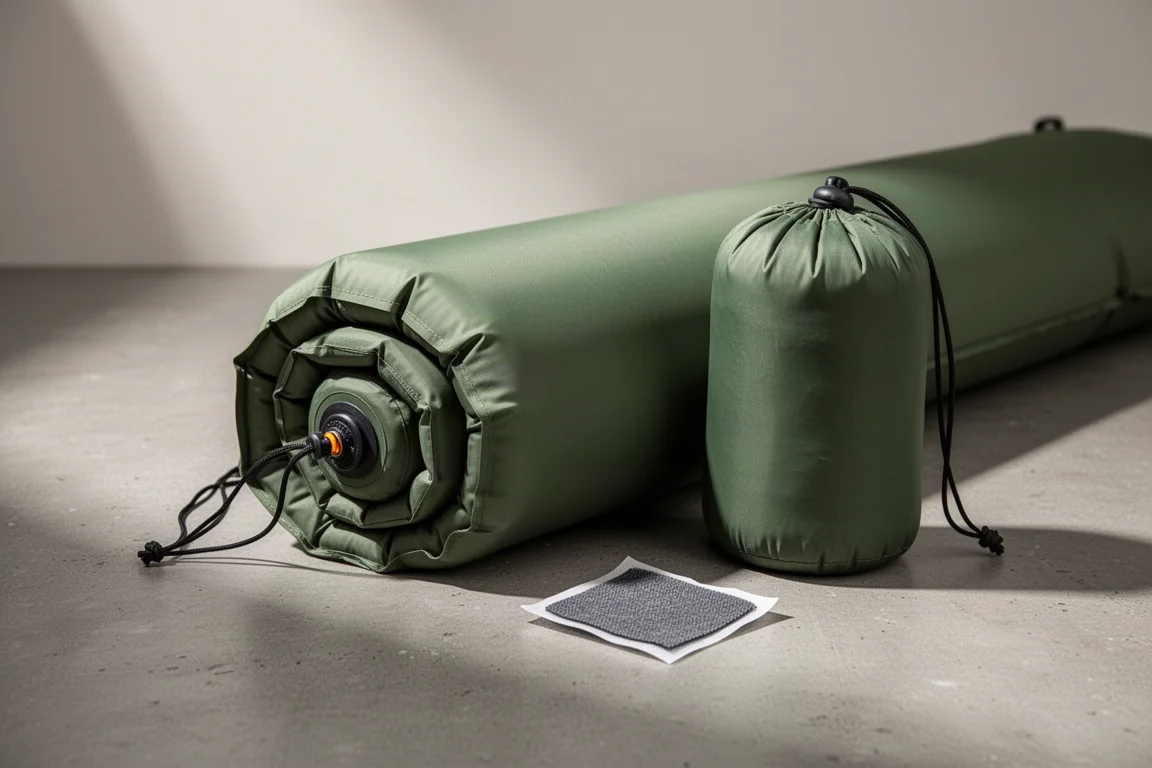
This is a pad for backpackers who count grams and pack space. At 14.2 ounces including the storage bag, and packed to roughly 11 by 3.5 inches, it takes up about as much room as a water bottle. Length is the other practical limit: it suits sleepers up to about six feet, and taller users should look at something longer.
It is also a reasonable match for back and stomach sleepers who lie flat on the pad. The design gives enough support to keep a flat-lying body off the ground, which is the use case the pad is built around.

Side sleepers are a different story. With a claimed two inches of cushion that is not consistent across the surface, the pad does not provide the clearance a side sleeper needs at the hip and shoulder. If you sleep on your side, the practical minimum to look for elsewhere is around three inches of thickness.
Main Strengths
Weight and packed size are the headline. At 14.2 ounces with the bag and a stowed footprint of about 11 by 3.5 inches, this is one of the easier pads to justify carrying on a longer trip.
Inflation is quick and simple. The two-way valve has an internal stopper that keeps air from escaping as you blow into it, and the pad filled in about 11 breaths in testing. Deflating and rolling it back into the stuff sack is just as straightforward.
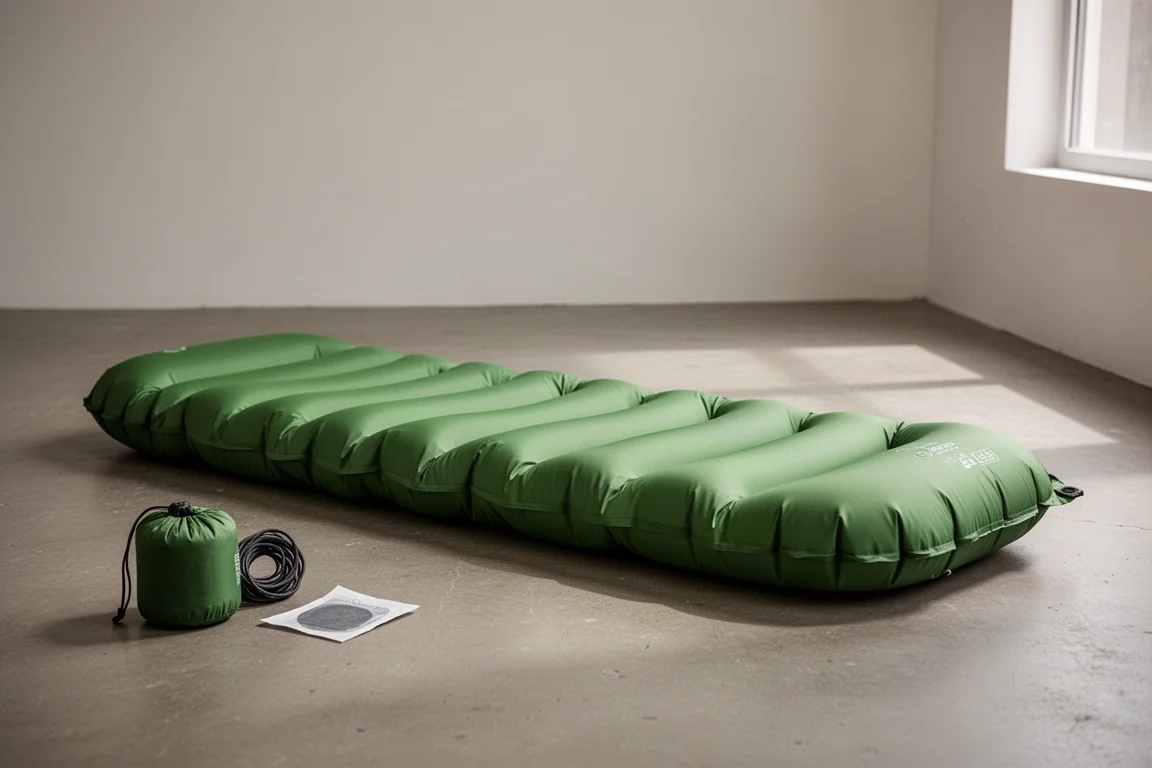
Build quality holds up on inspection. The seams, the cut of the fabric, and the valve area all look clean, with no excess glue around the valve. The package includes a small repair kit with sealant and two squares of fabric, a sensible inclusion at this price.
The company also states a lifetime warranty with hassle-free replacement and a no-questions refund. That claim could not be verified, so it is best treated as a stated policy rather than a proven one.
Inflating, Packing, and Carrying the Pad
The valve deserves a closer look, because it does most of the work in daily use. Air goes in through one path and out through the other, and the internal stopper holds pressure between breaths, so you are not fighting a losing battle with escaping air. Once inflated, the pad is firm enough to sit on and stable enough to sleep on without constant adjustment.
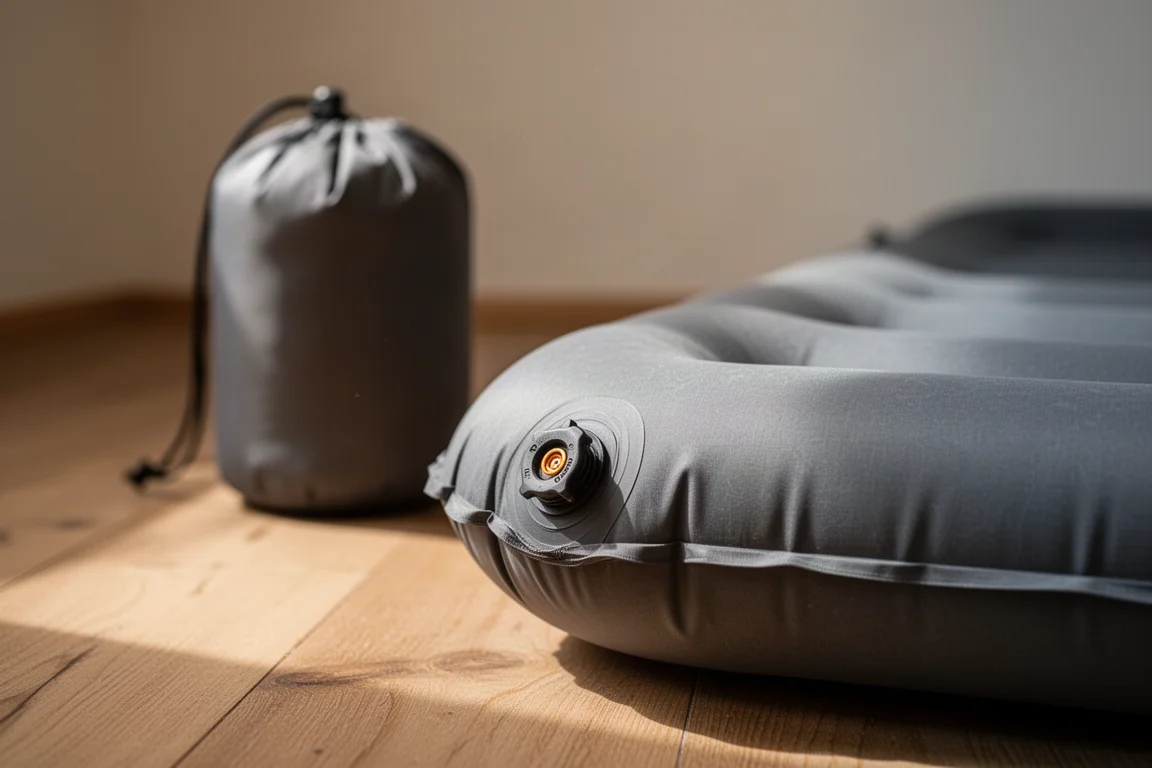
Packing is equally undemanding. The drawstring bag swallows the rolled pad with room to spare, and the whole package slides into a side pocket or straps to the outside of a pack without adding meaningful bulk. The 20 denier nylon ripstop surface has a light, slightly technical feel, and it has held up without obvious abrasion in normal use.
Comfort, Thickness, and Sleeping Position
The company claims two inches of cushion, and the reality is more nuanced. The pad is built from a pattern of air chambers, and some pockets measure over two inches while the gaps between them measure noticeably less. The result is a surface that supports a flat-lying body but does not deliver two inches everywhere.
At 160 pounds, the pad lifts a body just clear of the ground when lying flat. Heavier sleepers may find that the pad bottoms out, since effective clearance shrinks as weight increases. This is not a plush pad and it is not trying to be. It offers just enough separation from the ground to sleep, which is a fair description of what it does well.
Width matters here too. At 22 inches, the pad is narrow, and a broad-shouldered sleeper will be close to the edges and may find it tight across the shoulders.
What the Company Claims vs What You Actually Get
The listing claims 75 by 23 inches inflated. Measured, the pad comes in at 74 inches long and 22 inches wide, tapering toward the foot to roughly 12 inches. The claimed weight of 14.5 ounces also ran slightly high, since the pad weighed 14.2 ounces with its bag.
Some of the marketing language does not hold up to scrutiny. Phrases such as “camping grade” ripstop nylon are not industry terms with a defined meaning, and the claim that two inches of thickness is great for any sleeping position does not match how the pad performs for side sleepers. The core product is sound, but the copy oversells it.
None of this makes the pad a bad purchase on its own. It makes it a purchase worth evaluating on measurements rather than adjectives.
Warranty, Reviews, and Value Signals
The listing states a lifetime warranty with replacement that does not require a return, plus a no-questions refund if you are unhappy. Whether that policy is honoured in practice is not something that can be confirmed from the product alone.
The review profile is the more significant signal. Independent analysis of the listing returned a D rating and estimated that roughly half of the reviews may not be genuine, and the language flagged leans heavily on generic praise. With about 27,000 reviews attached to a $40 product, that is a lot of noise around a simple piece of gear. A high review count on a marketplace listing is not the same thing as independent confirmation.
Value is straightforward: this pad costs $40, while a nearly identical pad sold under the Outdoorsman Lab name runs about $32 to $33. The two appear to come from the same manufacturing source with different branding and different marketing claims, so the cheaper listing is worth comparing before you commit.
Buying Advice
Buy this pad if you want a genuinely light, compact sleeping pad for backpacking and you sleep on your back or stomach. It suits sleepers up to about six feet, it inflates quickly, and the construction is clean for the price. It is a sensible choice for a first backpacking pad or a spare for short trips and guests.
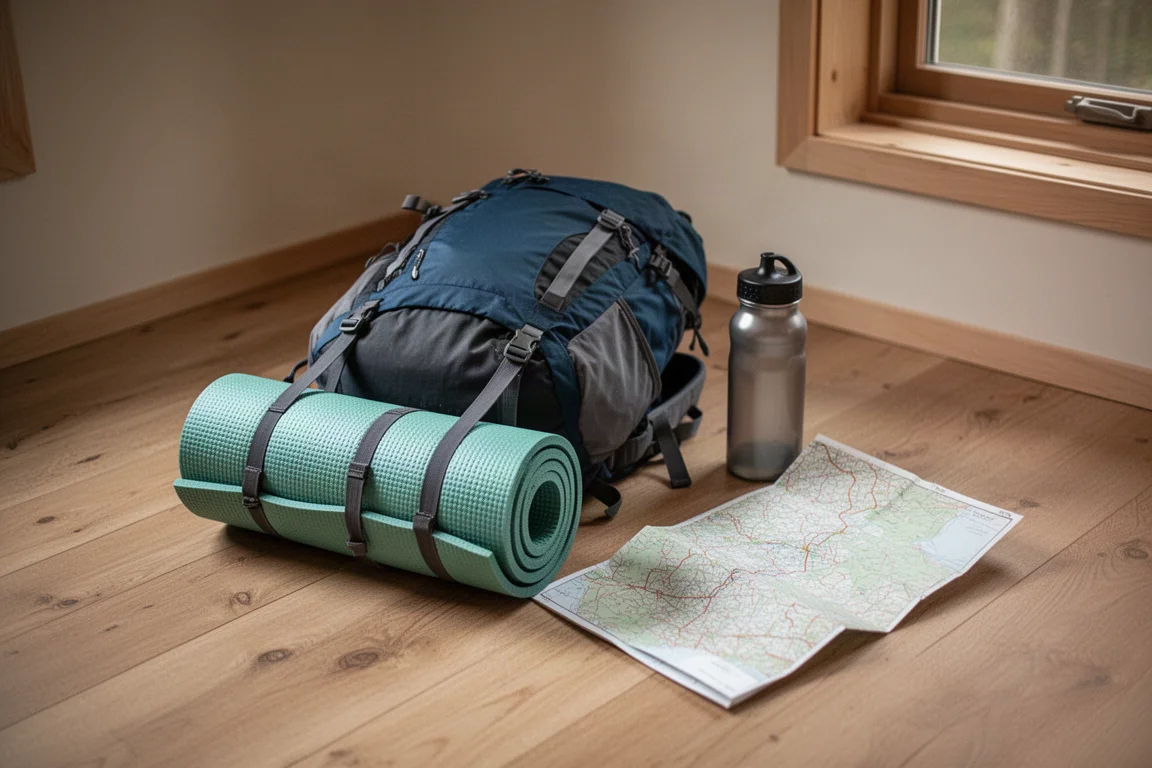
Skip it if you sleep on your side, if you are a larger or broad-shouldered sleeper, or if you want a plush surface under you. In those cases a thicker and wider pad will serve you better, even if it weighs more and packs larger.
Weigh the review signals as part of the decision. The pad itself is a decent, honestly basic piece of gear, but the review history around the listing is a legitimate reason to check the specifications yourself and compare the near-identical alternatives before buying.
Conclusion
The Sleepingo sleeping pad is light, compact, and reasonably well built, and it does a narrow job well. It keeps a flat-lying sleeper off the ground, it packs down small, and it inflates in a handful of breaths. What it does not do is deliver the universal comfort the listing promises, and the review activity around the product deserves scrutiny rather than trust. Buy it for weight and packed size, not for the marketing copy.
Product link
View more details for Sleepingo Sleeping Pad
This product is mentioned in the review. Check the specifications, options, and compatibility before buying.
View more details for Sleepingo Sleeping PadFurther reading
Related Reviews
Sleeping Pads
Best Backpacking Sleeping Pads 2026: Nine Pads Rated on Price, Comfort, Warmth, and Weight
Nine backpacking sleeping pads compared on price, comfort, warmth, and weight, from a $65 summer pad to a year-round option rated at R-7.3.
Sleeping Pads
Best Backpacking Sleeping Pads: Comfort, Warmth, and Weight Compared
A practical comparison of the Nemo Quasar 3D, Therm-a-Rest NeoAir XTherm Max, and Big Agnes Rapide SL for backpackers choosing between comfort, warmth, and packed weight.
Sleeping Pads
Best Backpacking Sleeping Pads: Ultralight, Winter, Comfort and Budget Picks
A practical roundup of the sleeping pads that stand out for ultralight weight, winter warmth, pressure relief and value, plus three popular pads that fell short.