Astronomy
Sky-Watcher CQ-350 Review: A Middleweight Mount Between the EQ6-R and EQ8
A hands-on first look at the Sky-Watcher CQ-350 equatorial mount: build quality, payload, ports, cable management, and who it really suits.
Introduction
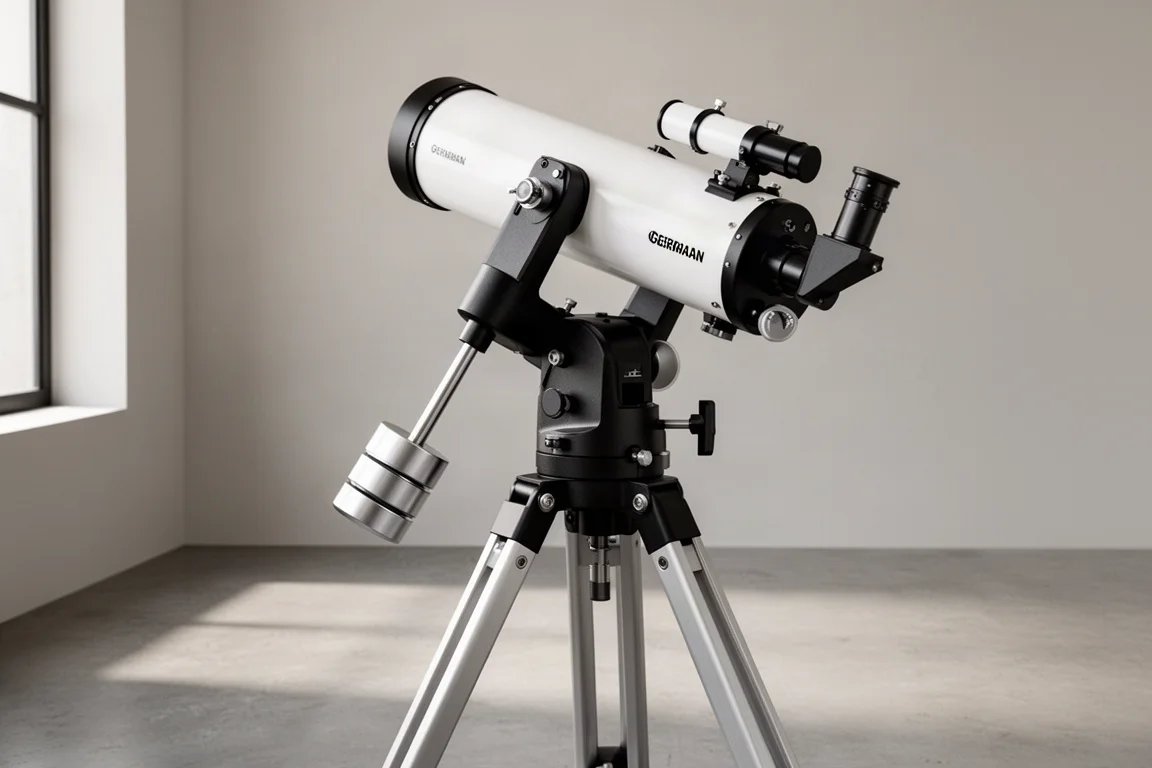
The Sky-Watcher CQ-350 occupies an interesting spot in the company’s lineup: it bridges the gap between the popular EQ6-R and the larger EQ8. This first look covers what ships in the box, the technical specifications, the balancing experience, the port layout, and the practical pros and cons that matter if you are shopping for a new imaging mount. A full performance review under real stars is still pending clear skies, so this write-up focuses on hardware, specifications, and first impressions.
Unboxing and Setup
The mount head ships with a generous accessory set: a hand controller with its cable and strap, a power cable, a USB 3.0 cable, a snap cable, a USB 3.0 repeater, two 22-pound counterweights, a counterweight bar with the matching hex bolts, hex bolts for the mount head itself, and a proper set of instructions.
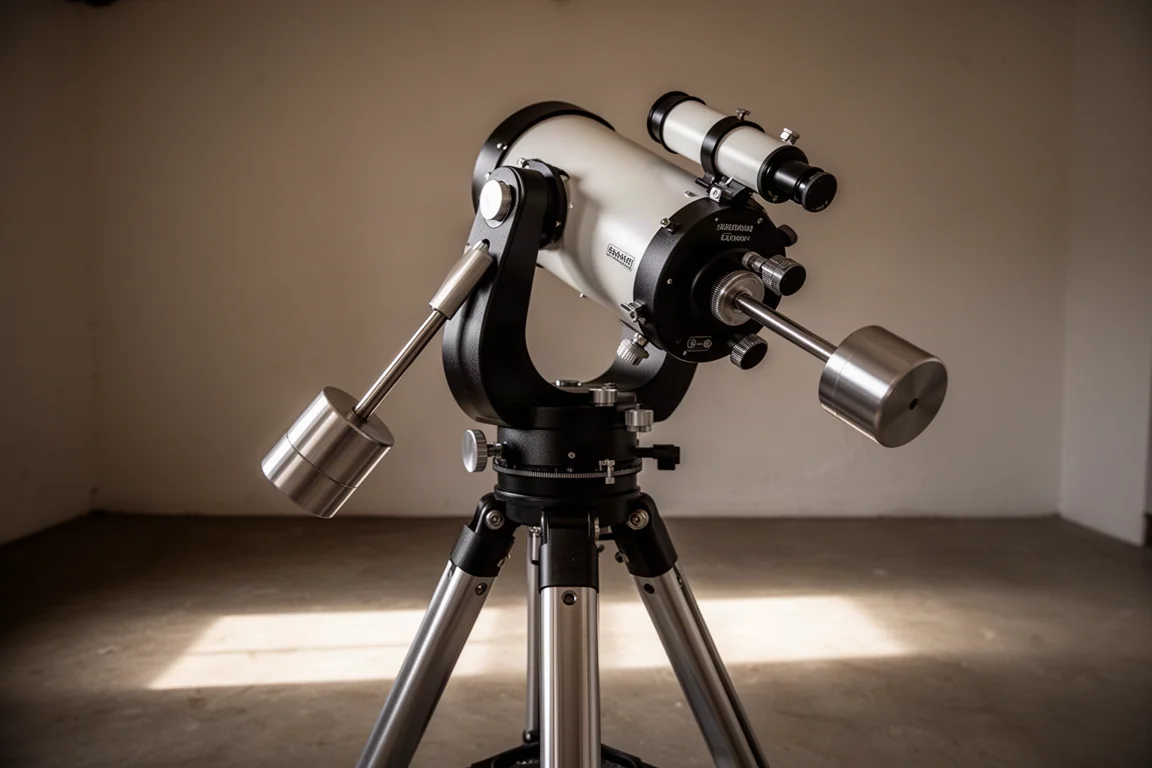
Setup is straightforward. You spread the tripod legs evenly, loosen the azimuth knobs on the mount head, and seat the head on the tripod so the post between the azimuth knobs lines up correctly. From there you thread the center shaft, tighten the side hex bolts, adjust the altitude slightly to make room for the counterweight bar, and you are essentially ready to balance.
Technical Specifications
The headline numbers put this firmly in the serious-astrophotographer category. Payload capacity is 77 pounds, and the saddle accepts both Vixen and D-style dovetails. The mount head weighs 33 pounds and the tripod weighs 34.5 pounds, so the complete package is not something you will want to carry in and out of the house every single night.
One omission worth noting: there is no polar scope included. In practice this may matter less than it once did, since the hand controller includes a polar alignment routine, and the polar alignment wizard in Sharpcap is highly recommended as an alternative method.
Balancing and Motion Feel
To get a feel for the mount, a 32-pound 10-inch Newtonian was moved over from a CEM-60 and balanced on the CQ-350. Both the RA and declination axes are exceptionally smooth, with no stiction and no tension during balancing. The motion quality is directly comparable to the CEM-60, which is high praise in this weight class.
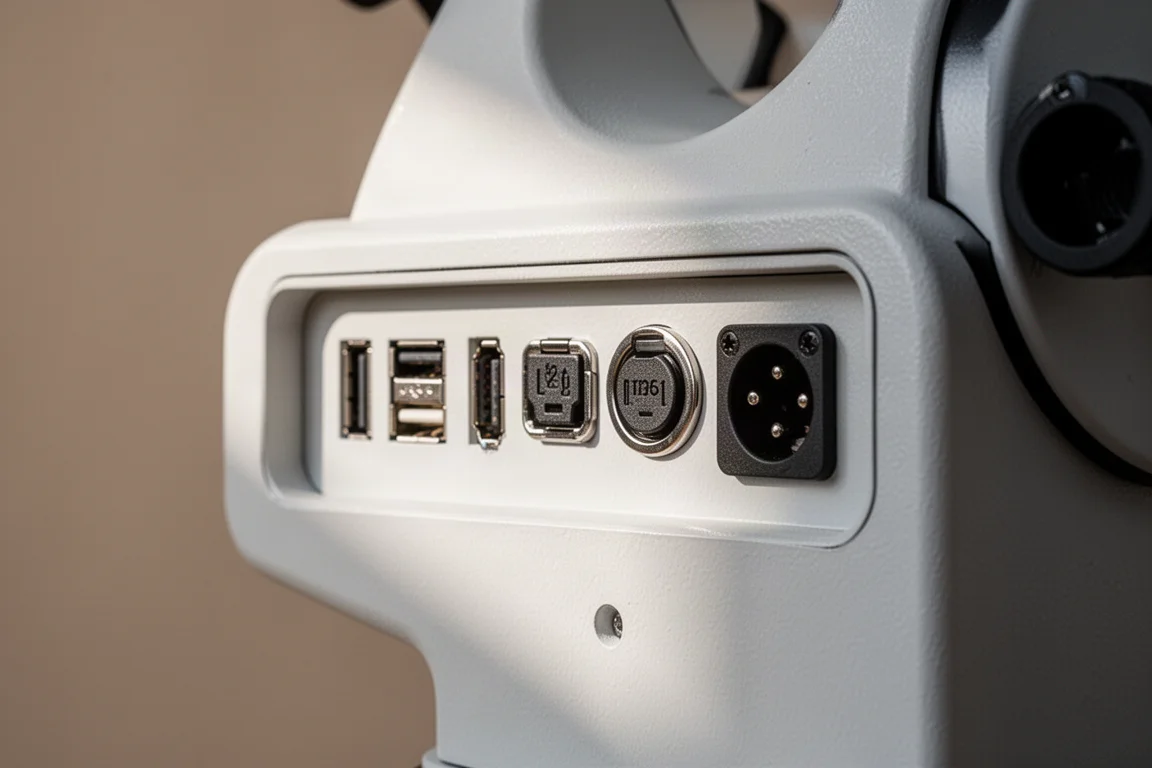
For anyone who has wrestled with sticky, notchy axes on cheaper mounts, this kind of buttery motion makes the balancing process genuinely pleasant rather than a fight.
Ports and Cable Management
Cable management is where this mount makes a strong case for itself. The CQ-350 includes an onboard USB hub with auxiliary and 12-volt power ports, letting you streamline the wiring running to your camera and other imaging gear. If round stars are the goal, tidy cables that do not drag during slews are a close second.
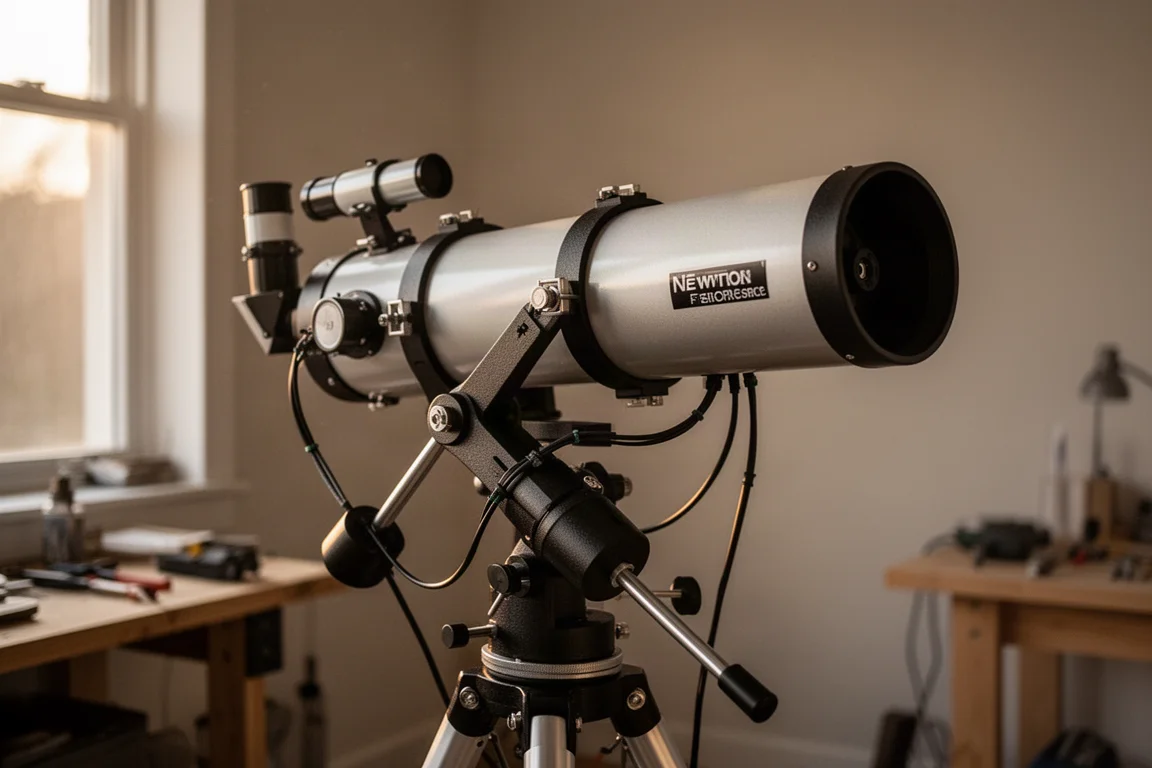
The input panel sits on the side of the RA axis: the USB 3.0 port there is the one to use for connecting your camera and imaging equipment. A USB 2.0 port on the front is intended for PC control, and the left side of the declination saddle carries additional auxiliary output ports.
There is one caveat on power. The 12-volt port on the side powers the declination hub rather than the mount itself, and that hub is limited to 5 amps. Running dew heaters alongside your camera from that hub is not recommended, though one or two dew heaters should be fine if you are shooting with a DSLR, as long as you stay under the 5-amp draw.
First Impressions, Pros, and Cons
The overall build impression is very positive: the mount is well made and the tripod is extremely stable. The large azimuth adjustment knobs used for polar alignment are a standout. They are big, buttery smooth, and will save real frustration when you are aligning in the field on a cold night. The USB hub is the second clear pro, especially the USB 3.0 ports on the declination axis for streamlined cable runs. Setup time is the third: despite the weight, assembly is simple and fast, which matters if you transport the mount to a dark sky site.
On the downside, the declination hub is mounted on the front of the saddle rather than the back. Refractor users and those with Schmidt-Cassegrains or RCs, whose gear hangs toward the rear, may wish the ports were positioned there so cables did not need to wrap around to the front. Newtonian users can route cables directly down to the declination axis, which works well.
Second, the input cables on the RA axis move with the axis as it slews and performs meridian flips, which could potentially cause snags around the counterweights. Whether this is a real problem in the field remains to be confirmed under actual use. Finally, the missing polar scope may be a moot point for many buyers given how capable the hand controller routine and Sharpcap alignment have become.
Buying Advice
This mount suits serious astrophotographers carrying substantial glass: a large 5- or 6-inch refractor, a 10- to 12-inch Newtonian, or an 11- to 14-inch Schmidt-Cassegrain are all sensible pairings. Given the combined weight of the head and tripod, keeping the assembly permanently set up on a pier, protected with a Telegizmos-style cover, or permanently stationed on the tripod is highly recommended rather than breaking it down nightly.
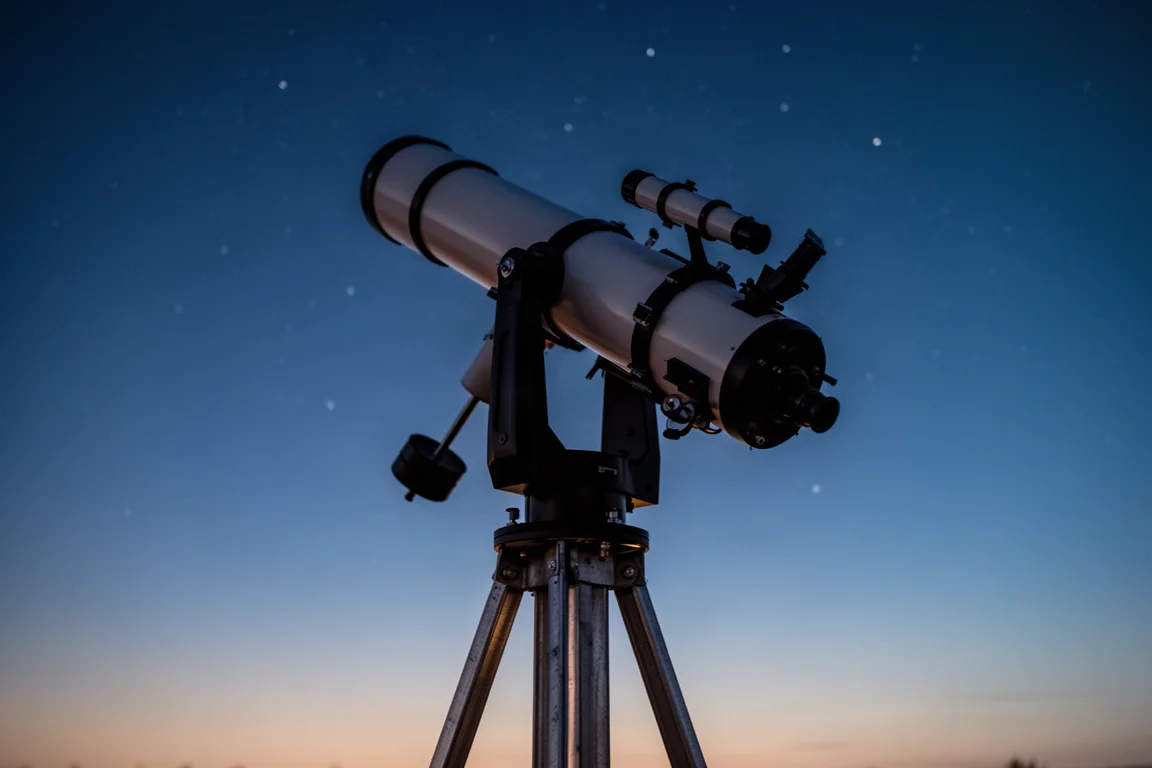
If your goal is producing high-quality astro images from a stable, well-equipped platform, and you can accommodate a semi-permanent setup, the CQ-350 fits that profile well.
Conclusion
The Sky-Watcher CQ-350 makes a strong first impression as a well-built middleweight between the EQ6-R and EQ8. Smooth axes, a 77-pound payload, thoughtful USB and power provisioning, and quick setup are the highlights; the front-mounted declination hub, RA-axis cable routing question, and absent polar scope are the small trade-offs to weigh. Once a full performance review under clear skies is possible, the picture on tracking behavior will be complete. For now, the hardware itself earns confident marks.
Product link
View more details for Sky-Watcher CQ-350
This product is mentioned in the review. Check the specifications, options, and compatibility before buying.
View more details for Sky-Watcher CQ-350Further reading
Related Reviews
Astronomy
Astronomy Gifts for Dads: Binoculars, Telescopes and Accessories Worth Giving
A practical gift guide covering stargazing binoculars from around $50, beginner telescopes under $500, and accessories under $100.
Astronomy
Best Filters for EAA in Light Pollution: What Short-Exposure Testing Actually Showed
Five astronomy filters and two noise reduction tools tested under light polluted skies for electronically assisted astronomy, with practical results for broadband and narrowband targets.
Astronomy
Six Premium Eyepieces That Transform a Beginner Telescope
A hands-on comparison of Tele Vue Panoptic, Tele Vue Nagler, and Baader Hyperion eyepieces, and why upgrading the stock eyepieces is the best first move in stargazing.