Hi-Fi Speakers
Six Standout Speakers for Every Budget: A Practical Roundup
From a $995 planar magnetic pair to a $36,000 flagship horn system, six very different speakers and what each one asks of your room, your amplifier, and your music.
Introduction
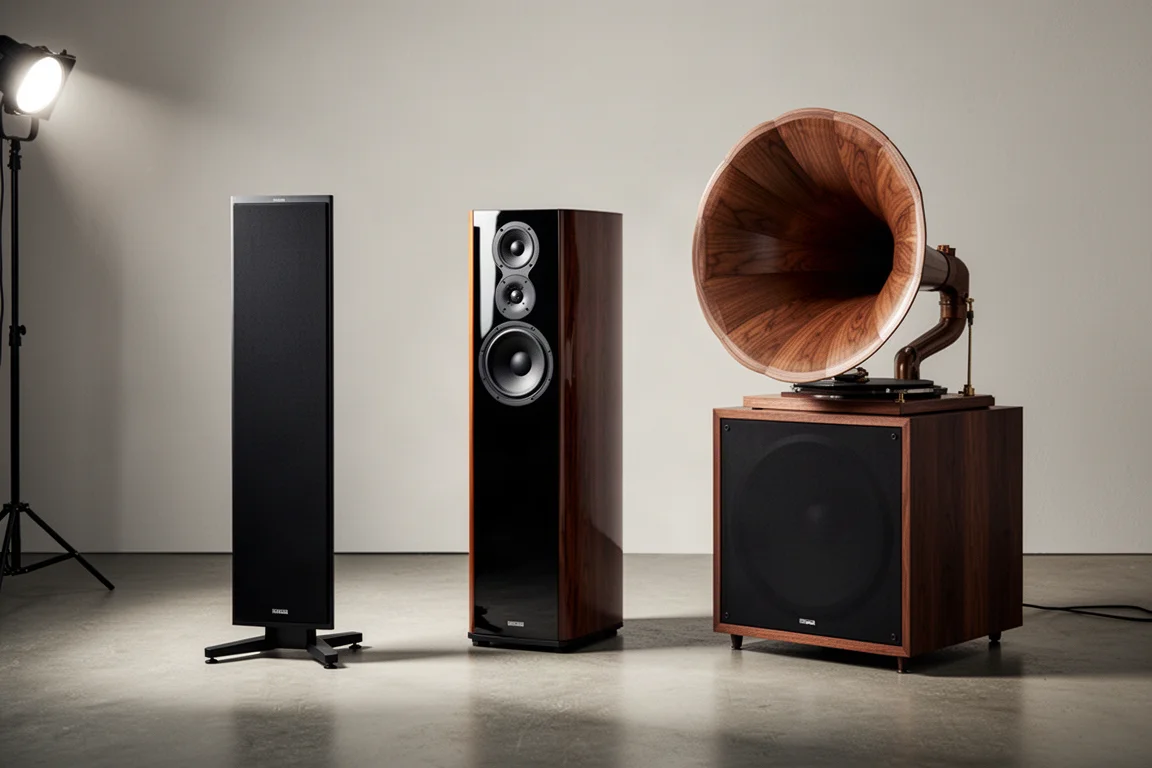
Choosing a loudspeaker is less about finding the single best model and more about finding the one that suits your room, your amplifier, and the music you actually play. The six speakers gathered here span an unusually wide range, from a $995 pair of planar magnetic panels to a $36,000 flagship horn system, and each one solves a different problem.
They are not ranked. Each has a distinct character and a distinct set of demands, and understanding those demands is the fastest way to work out whether any of them belongs in your listening room.
How These Six Speakers Differ
The designs here represent genuinely different approaches to moving air. One is a thin planar magnetic panel, one is omnidirectional and radiates in roughly 360 degrees, one is a narrow floorstander built around a coaxial driver, one is a high-sensitivity two-way with a large full-range driver, one is a horn-loaded flagship, and one is an open baffle dipole with no box at all.
Those choices shape everything that follows: how much amplifier power you need, how far the speakers must sit from the wall behind them, how large the soundstage feels, and how forgiving the setup is to live with day to day.
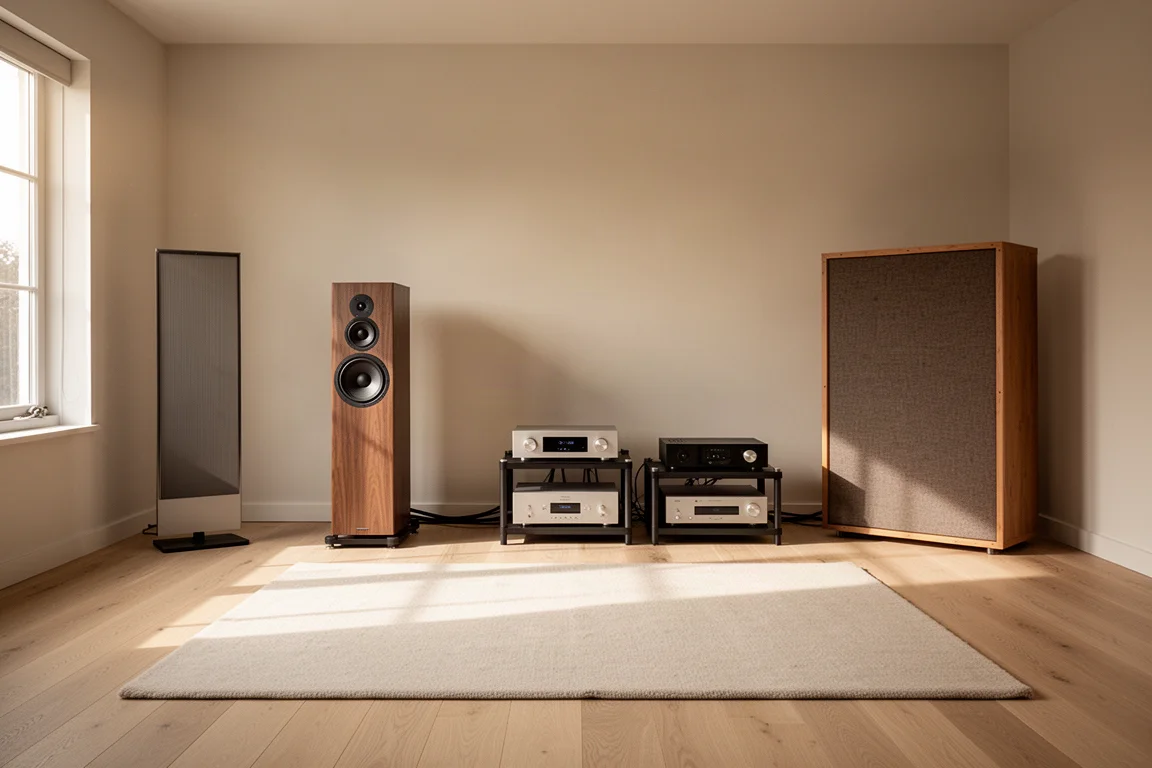
Price is the other obvious dividing line. The range runs from $995 a pair at the entry point to $36,000 a pair at the top, and the middle of that range holds several very different propositions, including a high-sensitivity design and an omnidirectional one.
Magnepan LRS Plus
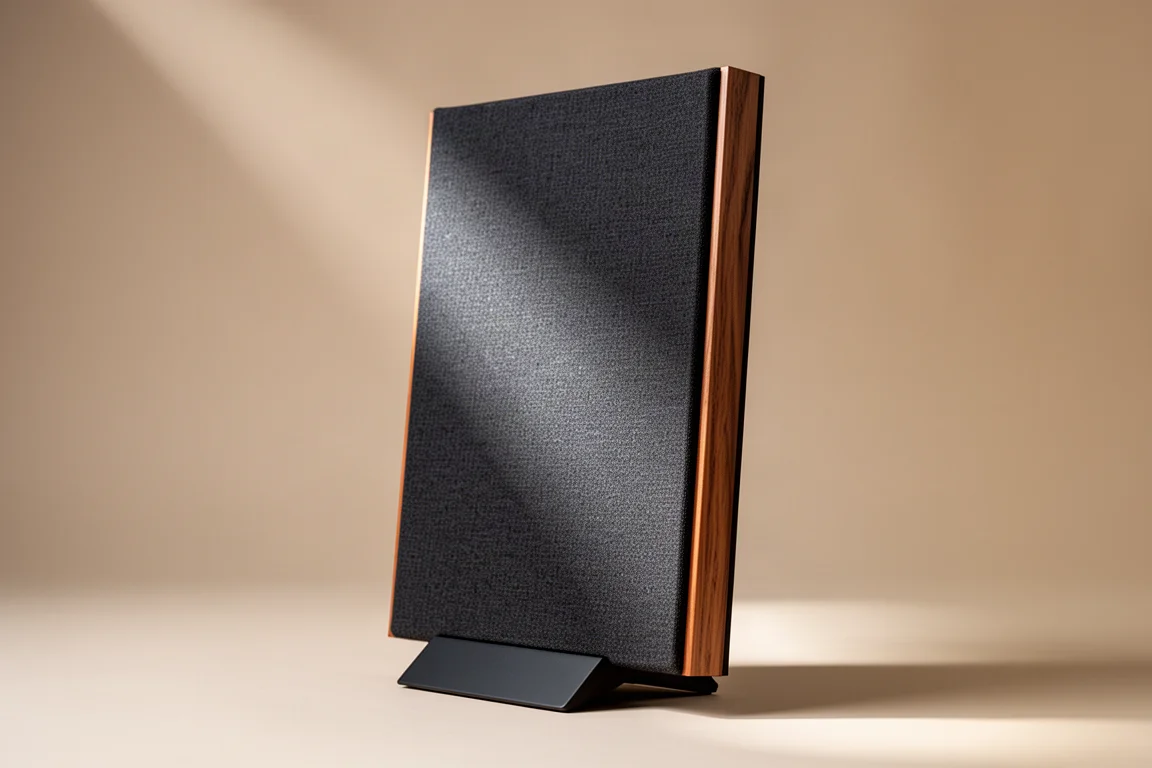
The Magnepan LRS Plus starts at $995 a pair and is made in the United States. It is a planar magnetic design, and transparency is the quality that stands out first. At two or three times the price it would still be a remarkable speaker.
It does ask things of you. The load is demanding and sensitivity sits on the low side, so it needs an amplifier with real output to come alive, and finding that kind of power anywhere near this price is difficult. It is also very revealing of the sources feeding it, so a weak link upstream will be audible. Placement matters as much as power: give it roughly three feet or more of space from the wall behind it, though the sidewalls are less critical. It is light enough to move easily, so pushing it back between sessions and pulling it out for serious listening is a practical workaround.
One more thing to know: this is not a hard-hitting, high-impact speaker, and adding a subwoofer is not the recommended path. Taken on its own merits, it is excellent.
Ohm Walsh 1000
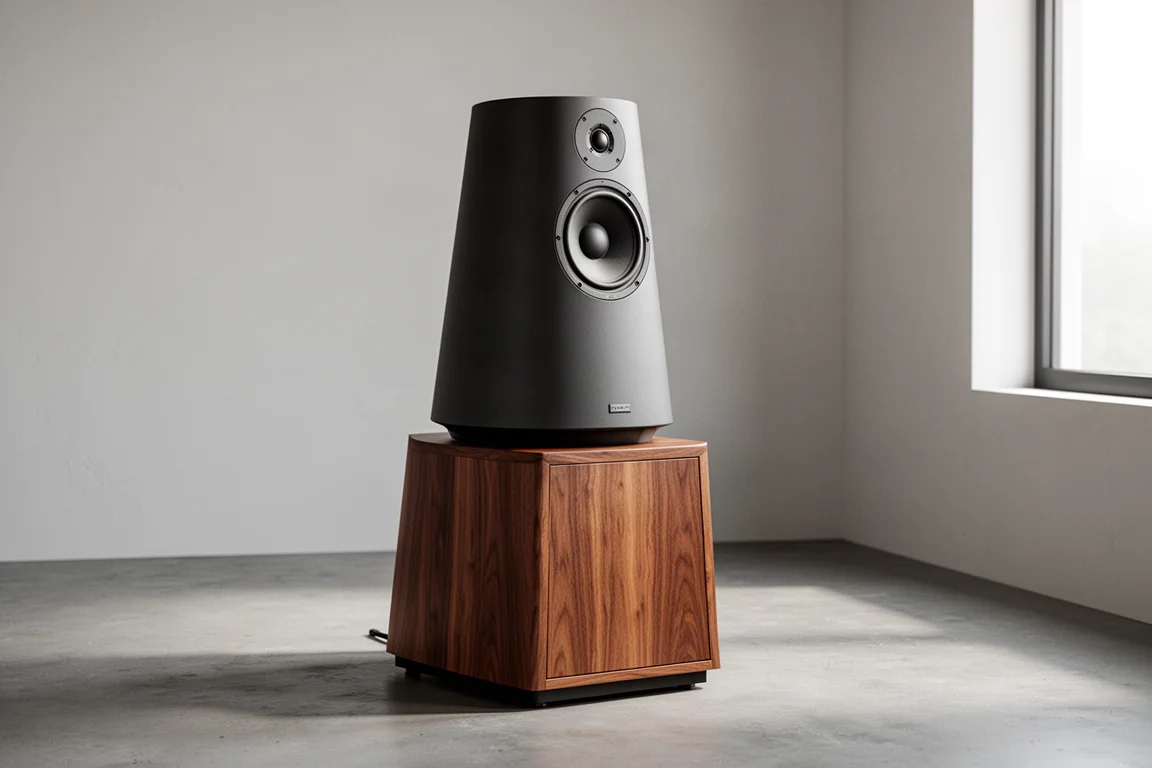
The Ohm Walsh 1000 takes the opposite approach to placement. It is an omnidirectional speaker that radiates sound in roughly 360 degrees, and it is designed to sound its best near walls. Six inches to a foot from the wall is comfortable, and it will tolerate being pushed closer still.
The result is a huge, spacious presentation, and the imaging does not collapse when you move away from the sweet spot. This is a room-filling sound rather than a pinpoint one. The speaker is priced at around $2,700 a pair and is made to order, with veneer options available. The company has a long history, a loyal following, and a reputation for standing behind its products.
If you want to move further up the range, there is a larger model in the region of $10,000 to $12,000 a pair.
KEF Reference 3 Meta
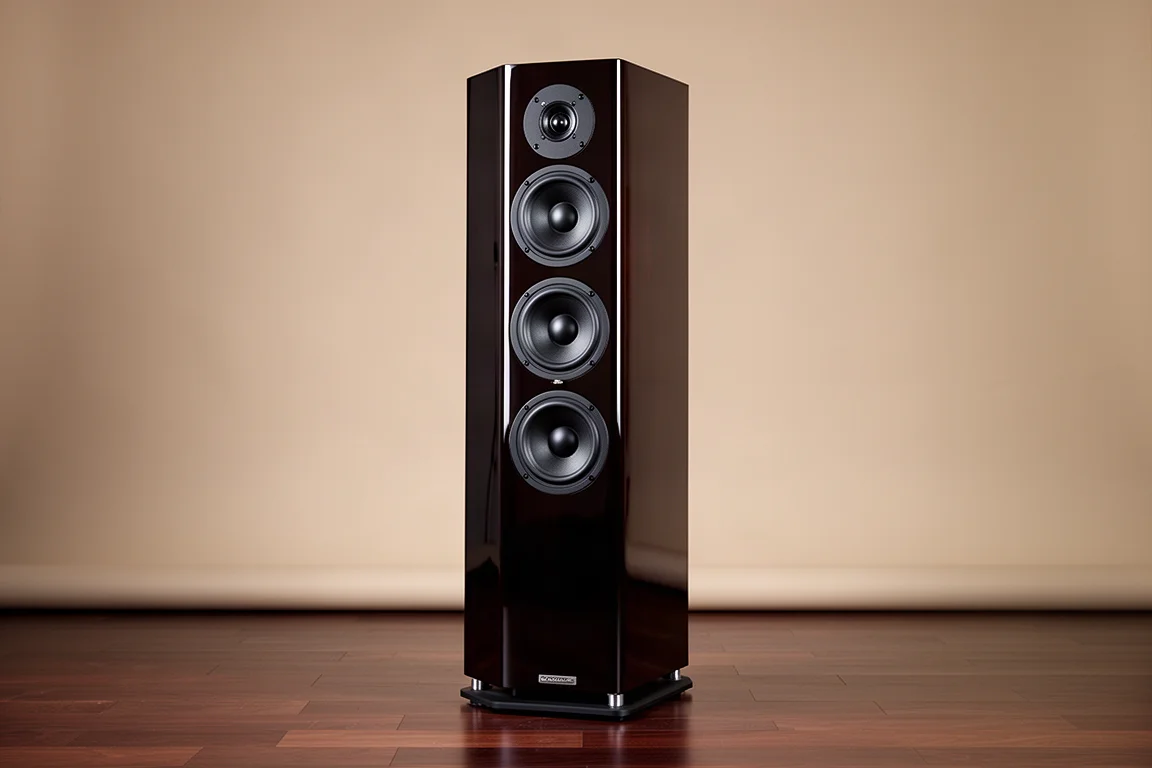
The KEF Reference 3 Meta is a narrow but tall floorstanding speaker built around a Uni-Q driver with two 6.5-inch woofers. The Reference line is designed and made in the United Kingdom.
What surprises here is presence. Despite the slim footprint, it fills a large room with an authority that is unusual for the brand. In a direct comparison against a large horn speaker with a 15-inch woofer, the Reference 3 Meta came out ahead on midrange quality, imaging, and bass definition and clarity.
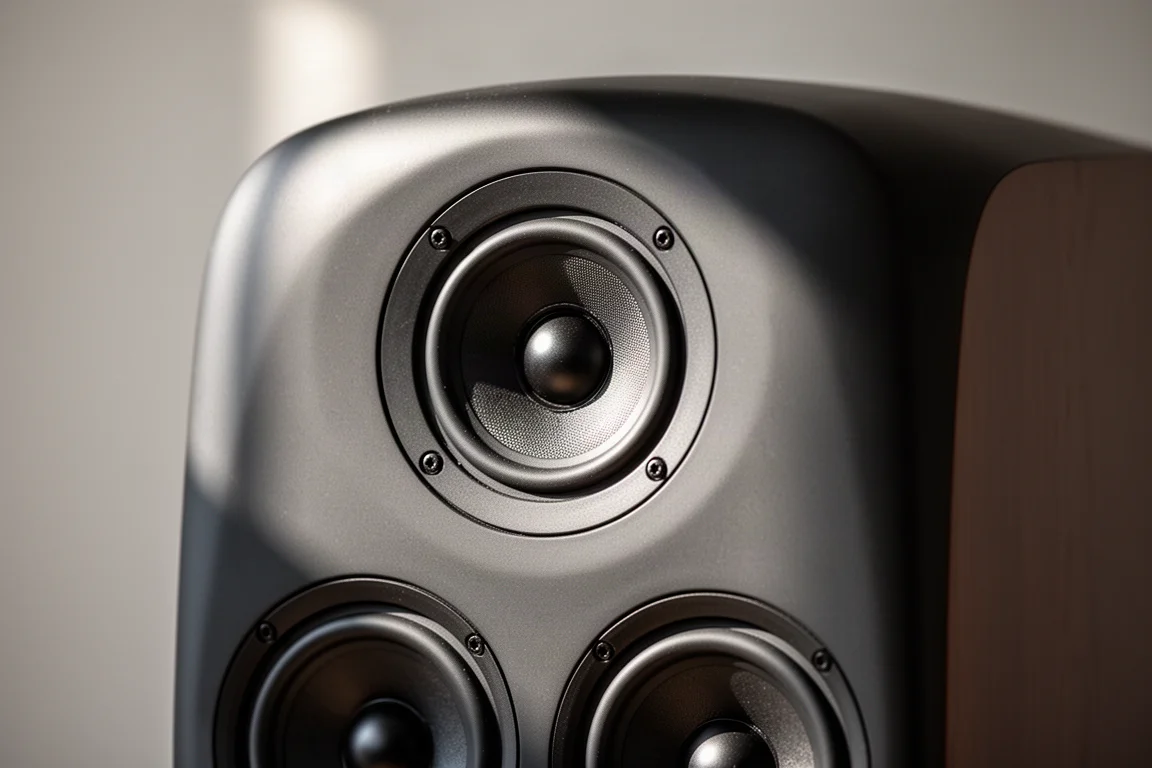
That combination of a compact cabinet and a big, controlled sound makes it an unusually capable option, provided the rest of the system is built to the same standard. It is also a physically substantial speaker, and it can feel oversized even in a room that is already large.
Zu Audio Dirty Weekend 6
The Zu Audio Dirty Weekend 6 starts at $1,599 a pair and is made in the United States. That starting figure is worth noting, because finish, trim, and crossover options can each add to the price.
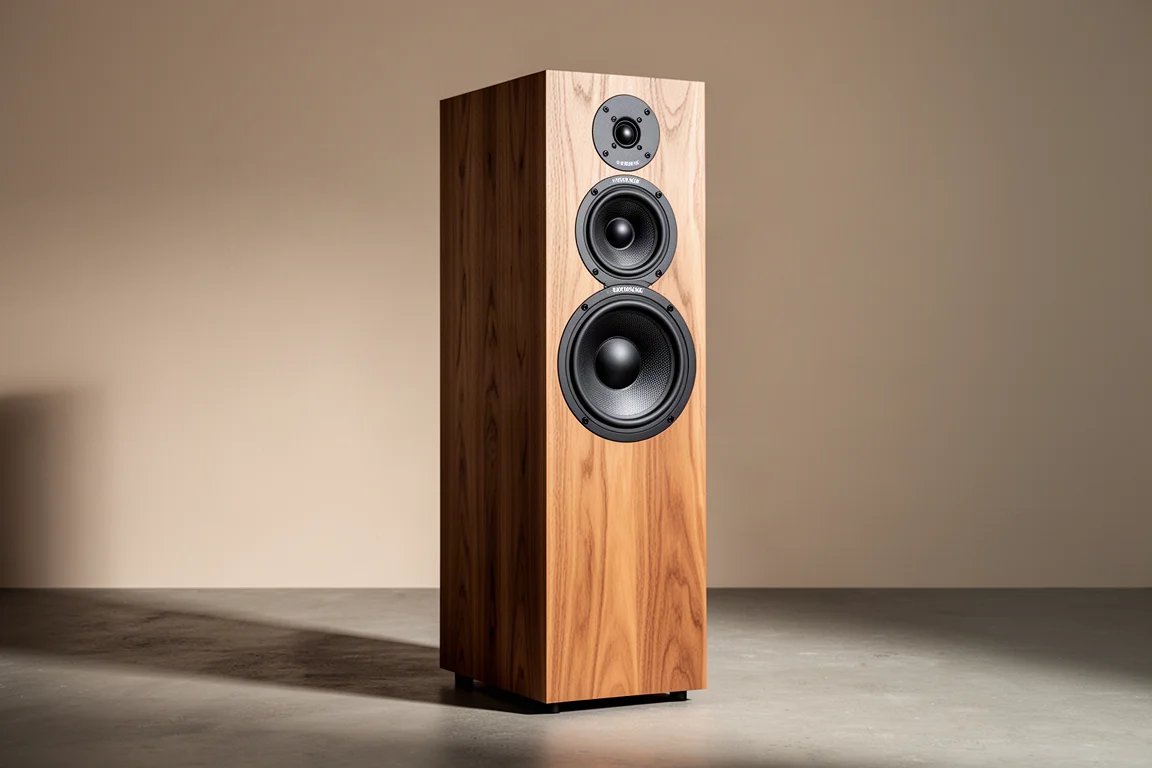
The design pairs a 10-inch full-range driver with a separate super tweeter that comes in around 12 kHz, which means that for most of the music you hear, you are listening to that single large driver. The result is a warm sound with fuller bass than this brand’s speakers usually deliver, and it is an easy sound to keep listening to.
Because it is a high-sensitivity design, it works happily with low-powered amplifiers, whether tube or solid state, and even a 30-watt-per-channel receiver from 1975 is welcome. Imaging from a point source is big, spacious, and nicely focused. It is dynamic enough to reward turning the volume up, and it also holds together beautifully at late-night levels.
Klipsch Jubilee
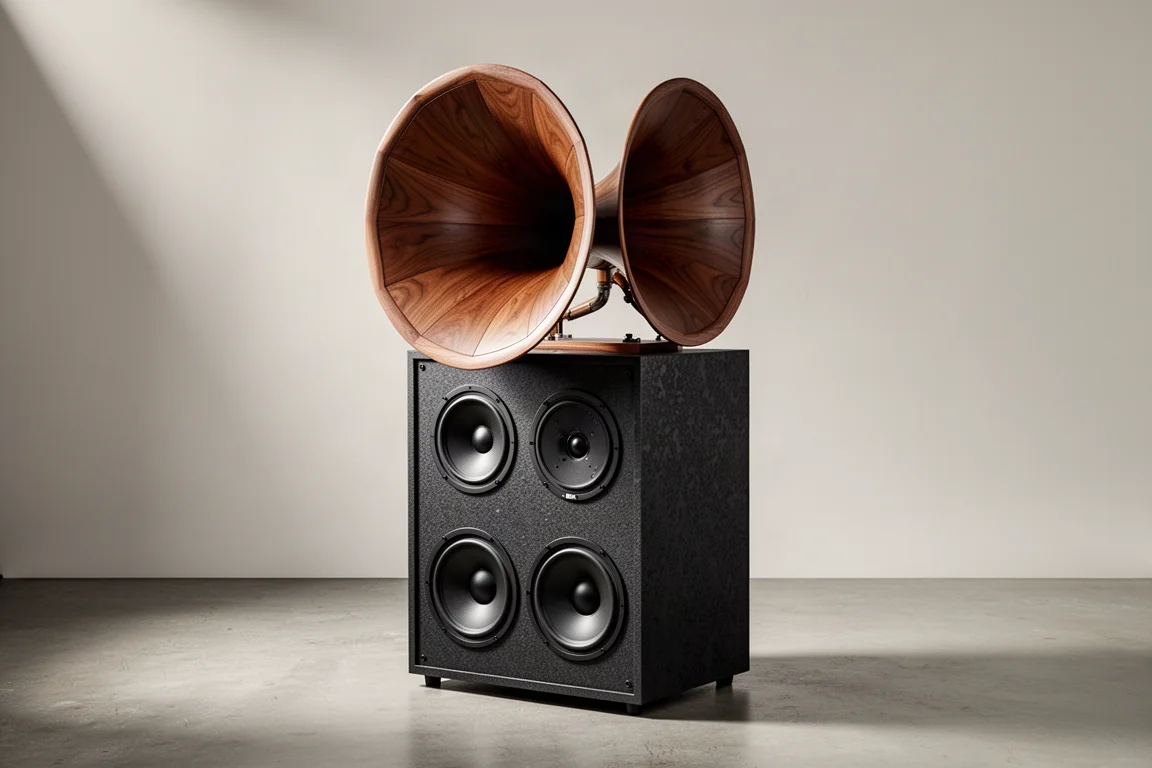
The Klipsch Jubilee is the flagship of the Heritage line and is made in Hope, Arkansas. At $36,000 a pair it sits at the top of this group, and it is the one speaker here that must be bi-amplified, since no single-amplifier option is offered.
A DSP crossover corrects phase and time, and the coherence that produces is immediately apparent. The large horn on top uses a 7-inch compression driver with a 5-inch voice coil, and that horn reaches all the way down to 340 Hz. Below it, two 12-inch woofers use a patented loading system, with bass extending down to 18 Hz at the minus 3 dB point. The midrange does not sound like a horn speaker.
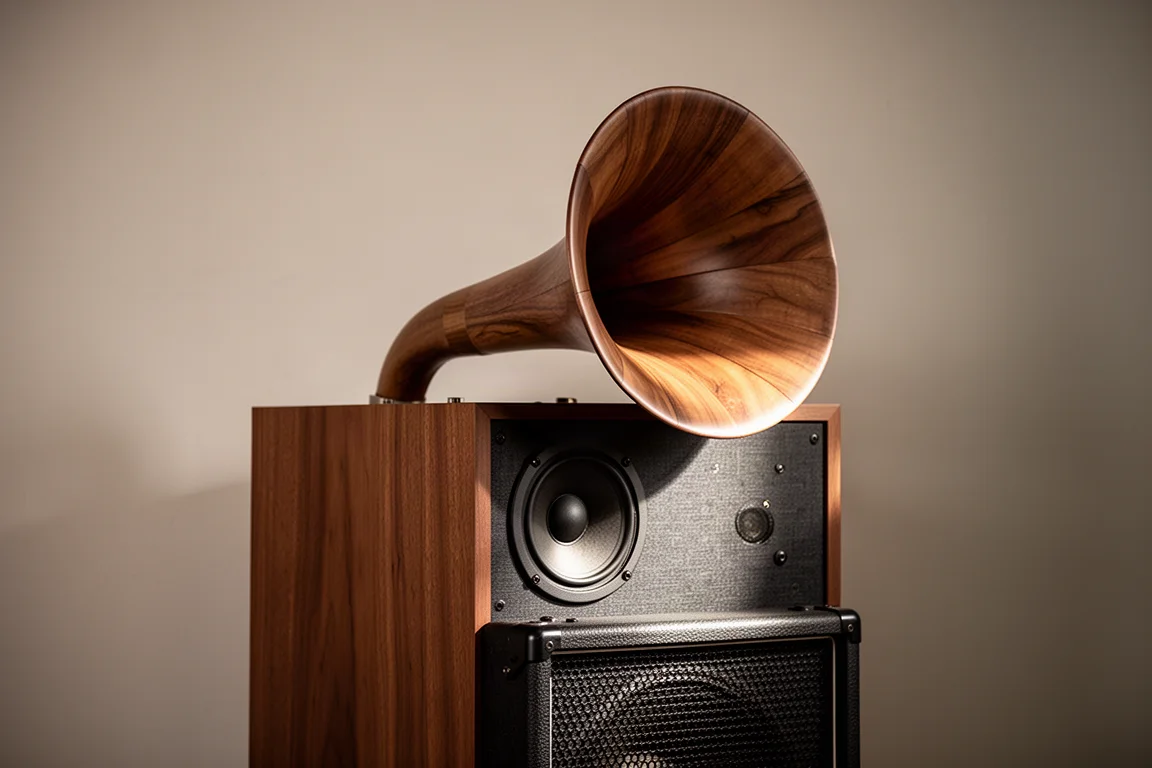
This is a big, physically imposing system, and the scale of the sound matches the scale of the cabinets. It is a genuinely memorable listening experience, and the bi-amplification requirement is part of what makes it possible.
Pure Audio Project Duet 15 Prelude
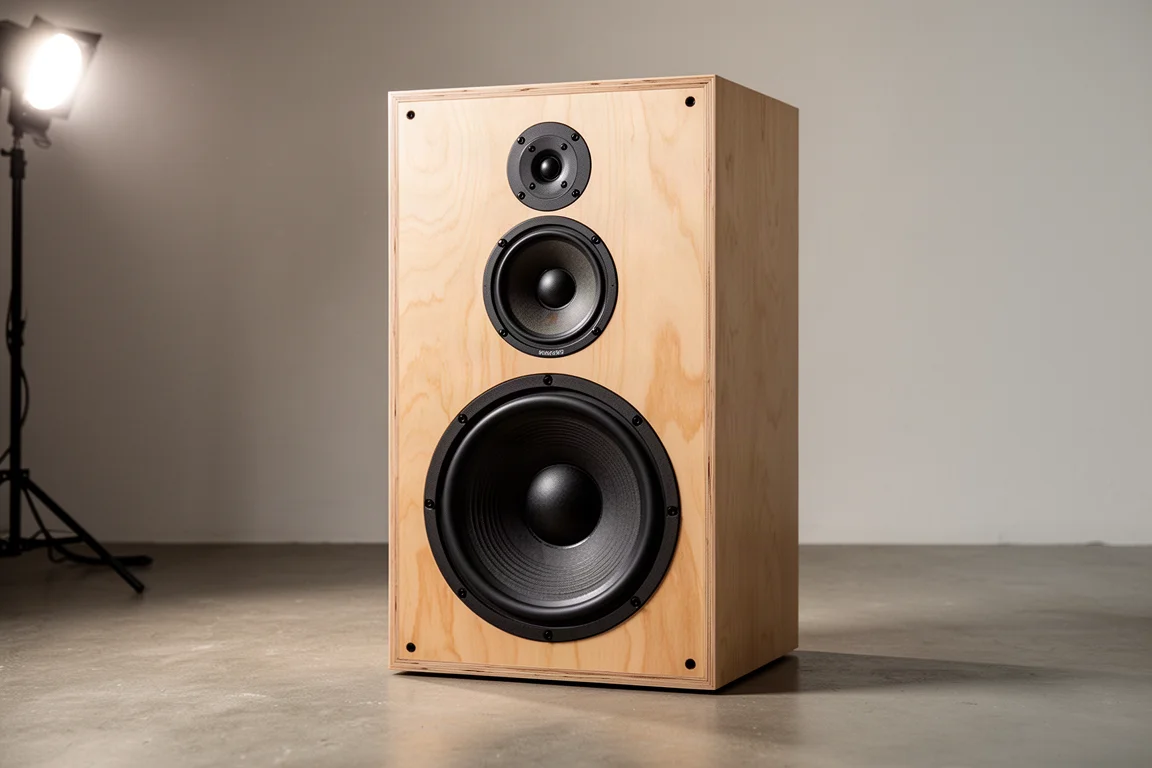
The Pure Audio Project Duet 15 Prelude is an open baffle dipole rather than a box speaker or a planar magnetic panel. It radiates as much energy from the rear as from the front, which changes how it interacts with the room, and it is priced at around $6,450 a pair.
The baffle is birch ply and is made in Upstate New York. The 15-inch woofer is built by Eminence in California, while the 8-inch full-range driver is a Voxativ made in Germany, and the crossover network is made in Germany as well. It now serves as a reference point in this group.
Buying Advice: Matching a Speaker to Your Room and Amplifier
Start with the amplifier and the room, not the speaker. Two of the models here are unusually demanding in different ways: the Magnepan LRS Plus wants a powerful amplifier and several feet of space behind it, while the Klipsch Jubilee requires bi-amplification and a DSP crossover to work as intended.
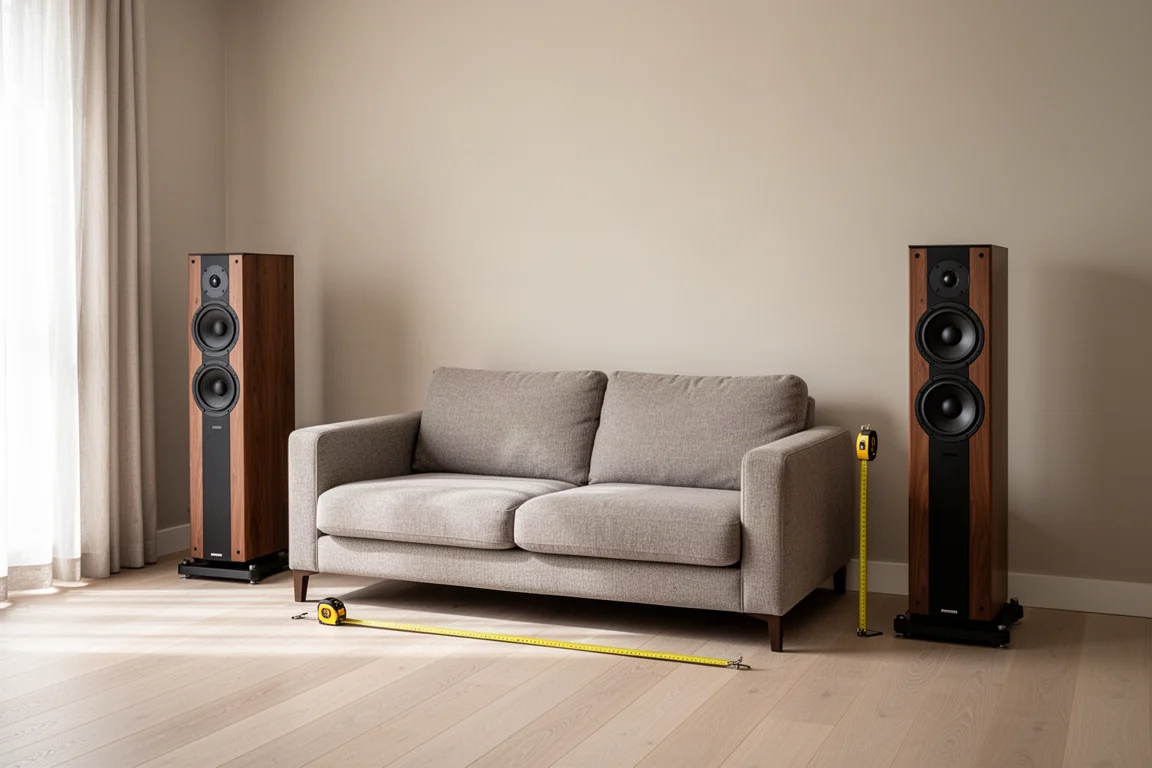
Placement distance from the wall behind the speakers is the second practical filter. The Ohm Walsh 1000 is designed to sit close to a wall and sounds happy there, while the Magnepan LRS Plus needs real clearance. Room size, listening level, and the kind of music you play most will settle most of the remaining questions.
Then consider the price ladder itself. At the entry point, $995 a pair buys genuine transparency if you can supply the power and the space. In the middle, $1,599 to $2,700 a pair covers both a high-sensitivity, high-dynamics design and an omnidirectional one that is simple to place. At the top, $6,450 to $36,000 a pair buys open baffle purity or a flagship horn system with its own amplification requirements.
Conclusion
Six speakers, six different sets of priorities. The Magnepan LRS Plus rewards a capable amplifier and careful placement with transparency that belies its price. The Ohm Walsh 1000 makes placement easy and fills a room with spacious sound. The KEF Reference 3 Meta delivers real authority from a slim cabinet. The Zu Audio Dirty Weekend 6 offers warmth, sensitivity, and dynamics from a modest starting figure. The Klipsch Jubilee is a flagship statement with its own amplification demands, and the Pure Audio Project Duet 15 Prelude brings open baffle dipole character to the group.
The right choice is the one that fits your amplifier, your room, and the way you listen.
Further reading
Related Reviews
Hi-Fi Speakers
1723 THX Tower vs 1528 Bookshelf: Which Speaker Fits Your Room?
Two speakers at roughly the same price, built very differently. How the 1723 THX tower and the 1528 bookshelf compare on construction, bass, power needs, and sound.
Hi-Fi Speakers
Acoustic Energy AE 300 Review: Deep Bass From a Compact Standmount
A two-way standmount with real wood veneer, surprising low-end weight, and a warm, easygoing character. Here is what to know before buying.
Hi-Fi Speakers
Acoustic Energy AE1 40th Anniversary Review: A Modern Take on a British Classic
A compact standmount that revives a 1980s favorite with all-new parts, a warm mid-centric balance, and a price of £1,499 per pair.