Audio Amplifiers
Six Compact Budget Amplifiers Compared: What to Know Before You Buy
A practical guide to six compact amplifiers under $200, where near-field listening helps, where the power claims need fine print, and which trade-offs matter most.
Introduction
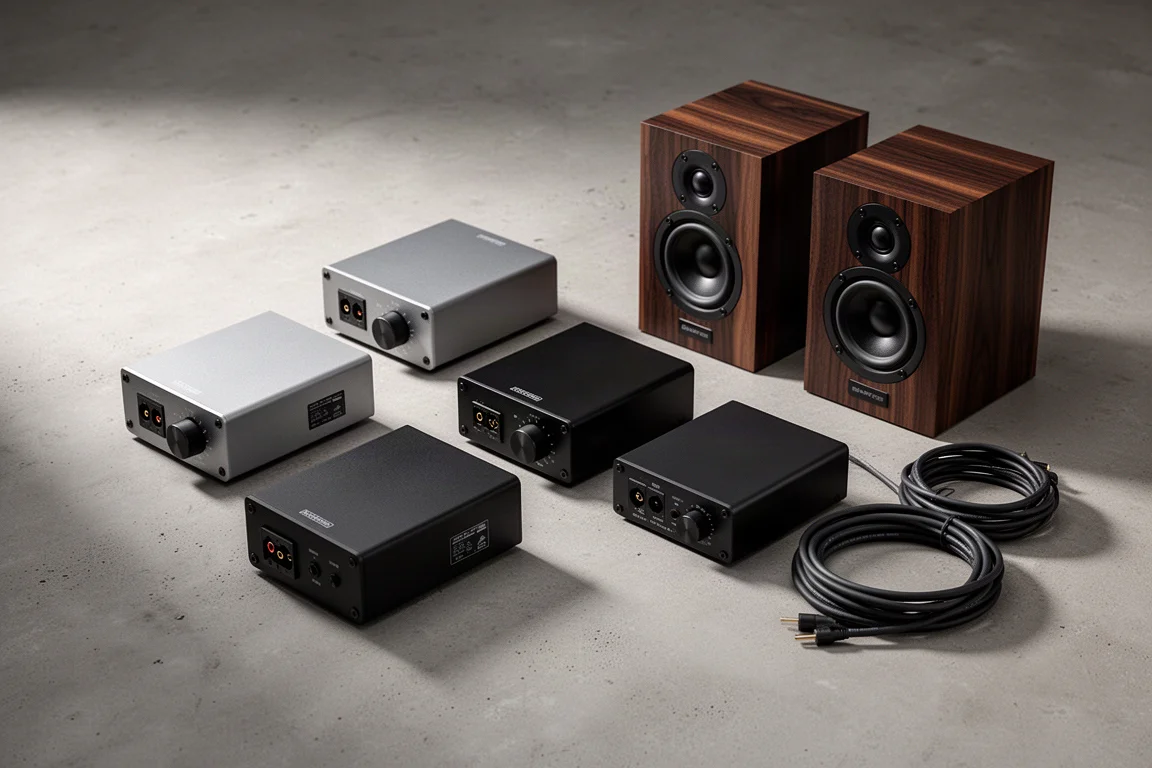
Compact amplifiers priced well under $200 have become a crowded category. Arylic, Fosi Audio, and AIYIMA are among the brands filling shelves with palm-sized units that promise surprising power and modern connectivity for very little money. The pitch is easy to like, and in the right setup these amplifiers can genuinely make sense.
The catch is that the right setup is narrower than the marketing suggests. Across six popular models, the same themes kept appearing: power figures that depend on fine print, a tonal signature that differs from traditional Class AB designs, and audible high-frequency noise that shows up once the volume rises. None of that makes these amplifiers useless. It does make it worth knowing what you are buying before you buy it.
What These Compact Amplifiers Are Actually Built For
The first thing to understand is that amplifiers like these are best suited to near-field listening. Near-field listening simply means sitting physically closer to your speakers, typically closer than around five feet. That can be a desktop setup, or a smaller space such as an office or a bedroom.
There is nothing wrong with listening this way. It is a genuinely good way to enjoy music, especially when space is tight. Because you sit so close, room interactions happen outside your listening window, which can reduce the need for room treatment or room correction. It can also make it easier to enjoy listening at lower volumes, and it can reveal details in a mix that go unnoticed further away.
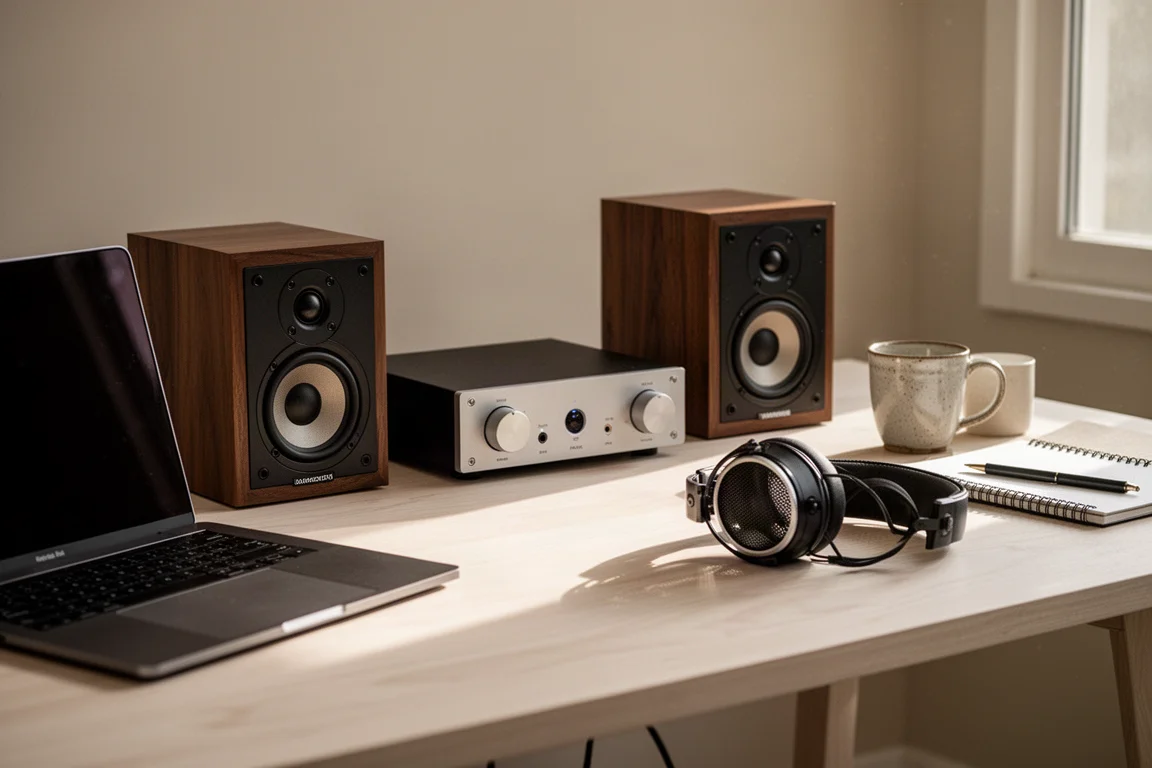
That closeness cuts both ways. Sitting near your speakers can make an amplifier or a DAC seem more revealing than it actually is, simply because you are hearing the speakers more directly. Lower-power amplifiers can also feel more powerful than they are, or at least appear to have better dynamic range, when the listening distance is short. It is also worth remembering that while 75 dB or higher is common in a typical living room, 75 dB in the near field is loud and can risk hearing damage.
If near-field listening is the plan, these amplifiers may serve you well long term, depending on your speakers. Take them out into a larger room and their limitations become much easier to hear.
Power Ratings and the Fine Print
One of the biggest selling points of this category, beyond price, is the promise of seemingly endless power. An amplifier that fits in the palm of your hand, costs less than $100, and claims extraordinary output is an appealing idea. The manufacturer’s own materials usually tell a more complicated story.
The AIYIMA A08 Pro is the clearest example. To reach that amplifier’s advertised maximum of 300 watts, you need to buy a third-party linear power supply using DC 48 volt current rated above 10 amps. Power supplies that meet that requirement retail for roughly the cost of the AIYIMA itself, which means you are not buying a $139 amplifier, you are buying a $240 one. And that $240 buys fewer features than a traditional amplifier at the same price, with a larger power brick hanging off the back.
Other clauses appear in the fine print too. A power rating may be valid only when running one channel, or the maximum figure may be a short-term number rather than a sustained one. In some cases this is normal practice, but it is misleading when an amplifier is marketed on the power it delivers out of the box.
Volume, Headroom, and What the Wattage Numbers Miss
Power ratings only mean something in context, and the context here is speaker sensitivity and room size.
The Arylic B50 reports 50 watts, which should be enough to drive most loudspeakers, including in a living room. Connected to a pair of Klipsch RP-8000F Mark II speakers rated at 98 dB sensitivity in room, the B50 at 100 percent volume left those speakers straining to reach 85 dB.
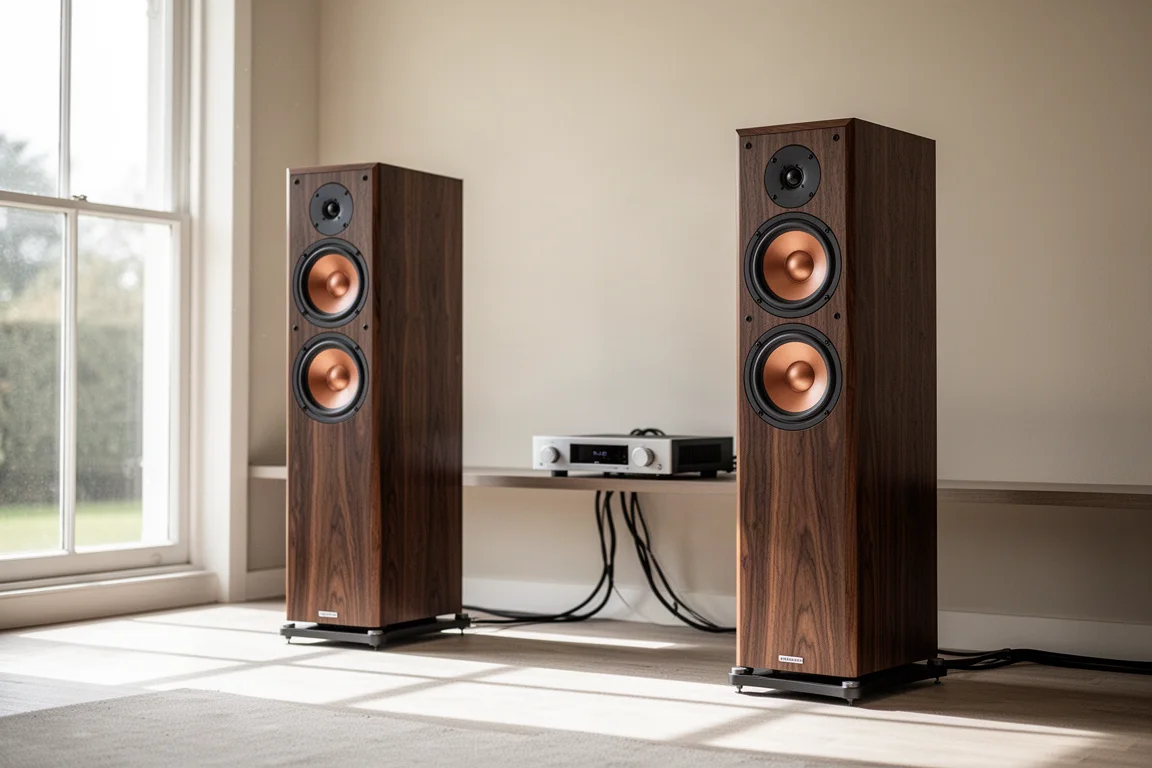
For comparison, the Cambridge Audio AXA25 reports just 25 watts of Class AB power and drove the same Klipsch speakers well into the hundreds with far more composure and control. The gap between the two is not explained by the wattage figures on the boxes.
Part of the explanation may simply be room size, since a larger space asks more of any amplifier. Part of it may be the speakers themselves. Either way, the takeaway is that the advertised number is a starting point, not a guarantee.
Frequency Response, Noise, and Speaker Pairing
Signal accuracy is the other area where this class of amplifier diverges from traditional designs. In frequency sweeps using two very different pairs of speakers, a pair of Klipsch RP-8000F Mark II and a pair of Revel M16, every one of the compact budget amplifiers produced a frequency response that differed from reference amplifiers. All of them showed an upper mid-range and treble bias, some as much as +3 dB in places.
The AIYIMA A08 Pro was the most erratic. It produced a different frequency response on every run, delivering three different measurements of the same speaker within a span of less than 30 seconds. That makes consistent judgement difficult and raises questions about unit-to-unit consistency.
A high-pitched ringing or whine was also audible from the tweeters of both speaker pairs at idle and during playback, and it became noticeable above 60 dB. This was not ordinary speaker hiss. It points to high-frequency noise that can affect plosives and sibilance, and it can contribute to listener fatigue, particularly with brighter speakers. Because the change appears to happen at the signal level, tone controls are unlikely to correct it. There is also a possibility that this kind of noise could stress a speaker over time, so it is worth treating as a real consideration rather than a curiosity.
Arylic B50
The B50 is Arylic’s newest integrated amplifier and the most feature-rich option in this group. Its reported 50 watts are modest compared with some of the claims in this category, but the feature set is not: HDMI input, a phono preamp, and more, at a price where many higher-priced products claim they cannot include HDMI at all. For around $140, that combination is genuinely remarkable.
Compared with the older A50, the B50 is the better user experience. It uses proper binding posts instead of a Phoenix connector, it has a slightly larger form factor, and it looks nicer. Sonically, the two measured the same.
There are small annoyances. The black finish is difficult to keep free of fingerprints, the volume knob spins endlessly without a hard start or stop, and the remote is identical to the A50’s, to the point that the A50 remote will operate the B50. More importantly, volume headroom was limited with less sensitive floorstanders. If you are choosing between the two Arylic models, the B50 is the one to take.
Arylic A50
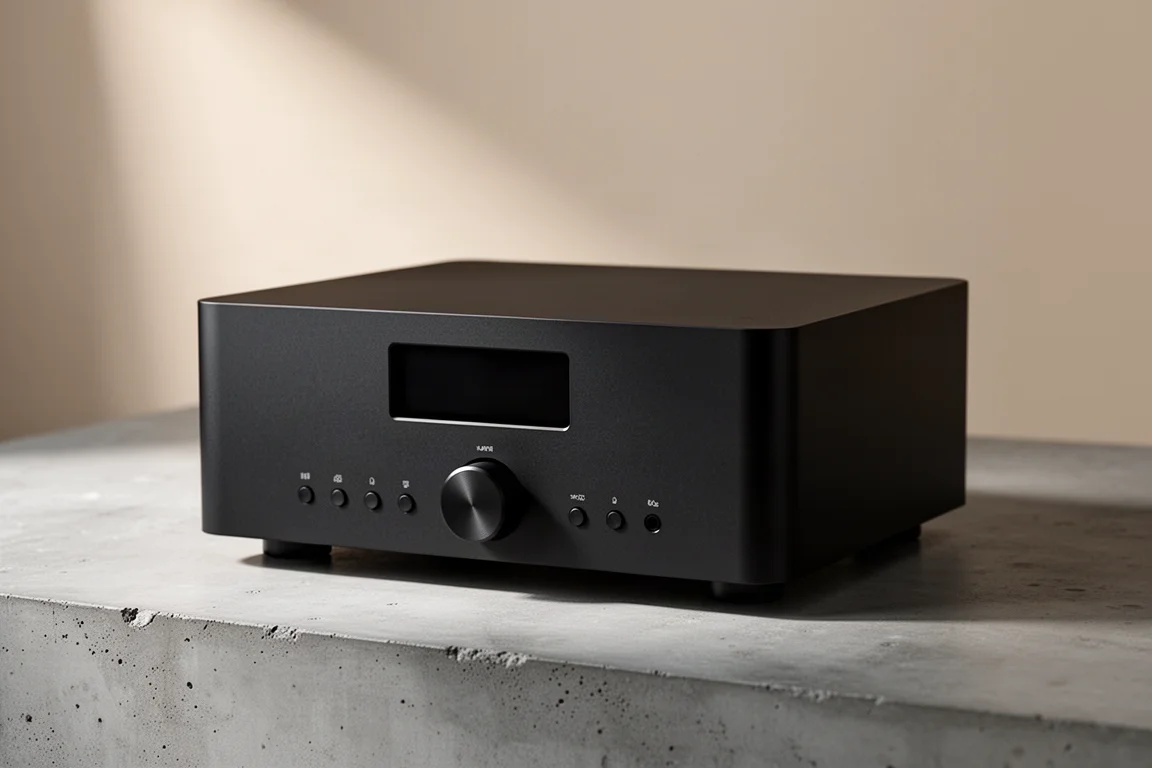
The A50 is the older of the two Arylic amplifiers and has been a long-standing recommendation for listeners on a tight budget who want something in the spirit of a Bluesound Powernode without the roughly $800 outlay. It worked reasonably well with Klipsch Heresy speakers in a smaller setup, though volume concerns were noted even then.
Its strengths are the same as the B50’s: a rich feature set for the money and a compact footprint. Its weaknesses are practical rather than fundamental. The Phoenix connector is less convenient than binding posts, the form factor is smaller, and the measurements match the B50 exactly, so there is little reason to choose it over the newer model unless the price difference is significant.
Used in a near-field or small-room system at moderate levels, the A50 remains a sensible budget option.
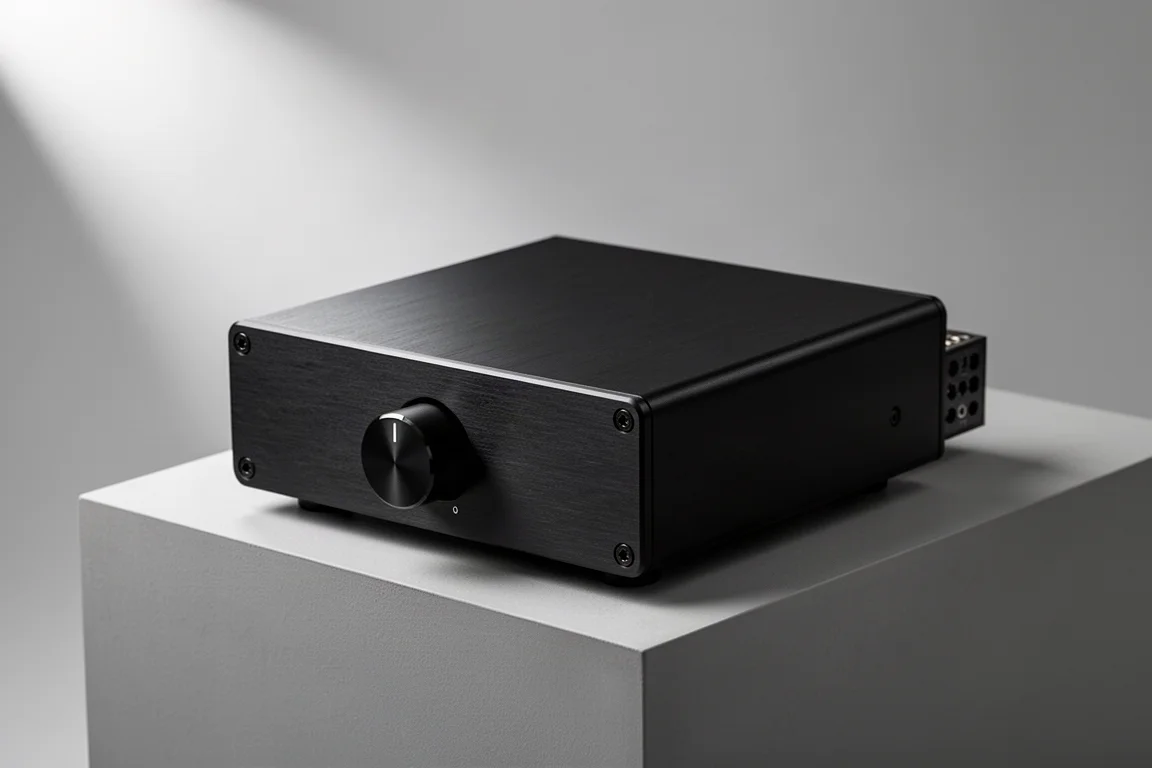
Fosi Audio BT20A Pro
Of the six amplifiers here, the Fosi Audio BT20A Pro came closest to the performance of the Cambridge Audio AXA25 and other Class AB designs. It is not perfect and not neutral, but within this group it was the most convincing.
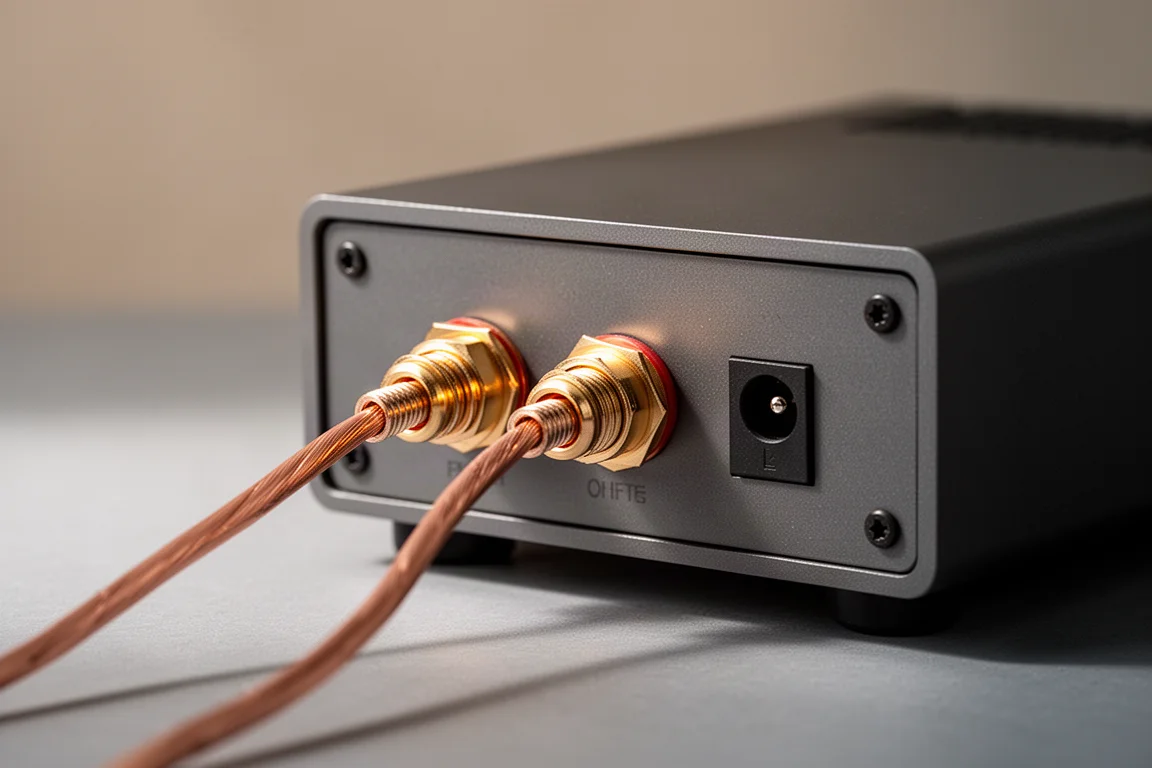
Two caveats stand out. In frequency response measurements with the same two speaker pairs, the BT20A Pro was down about 1 dB in the low bass, which lines up with the slightly lean bass character heard in listening. It is also a minimal product: essentially an amplifier with a volume control, so anything else you want in your system has to be added separately.
If you are set on a compact budget amplifier and you want the one that behaves most like a conventional amplifier, this is the model to consider.
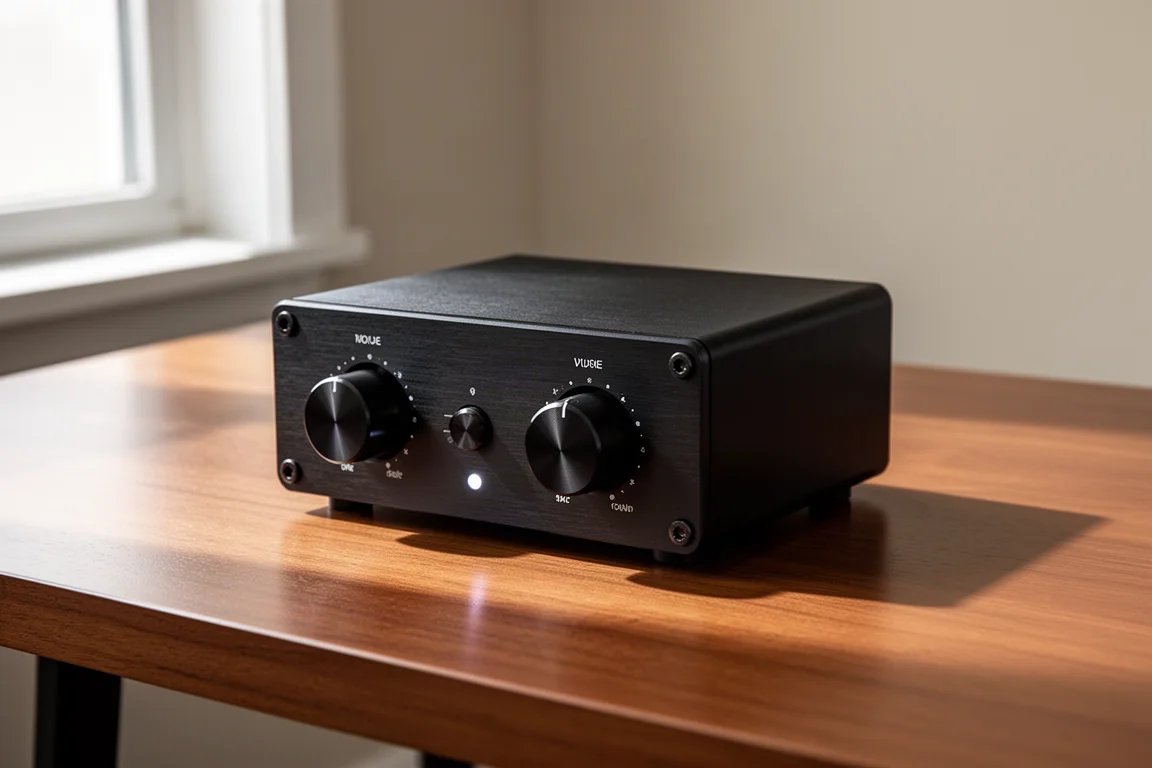
Fosi Audio TB10D
The TB10D sits in the same family as the BT20A Pro and shares the general characteristics of this class. Its measured frequency response differed from reference amplifiers, with the same upper mid-range and treble bias, and it exhibited the high-frequency ringing that was audible through both speaker pairs above 60 dB.
None of that rules it out for quiet, close-up listening. It does mean the TB10D makes most sense as a low-volume desktop amplifier paired with reasonably sensitive speakers, rather than as the heart of a larger system.
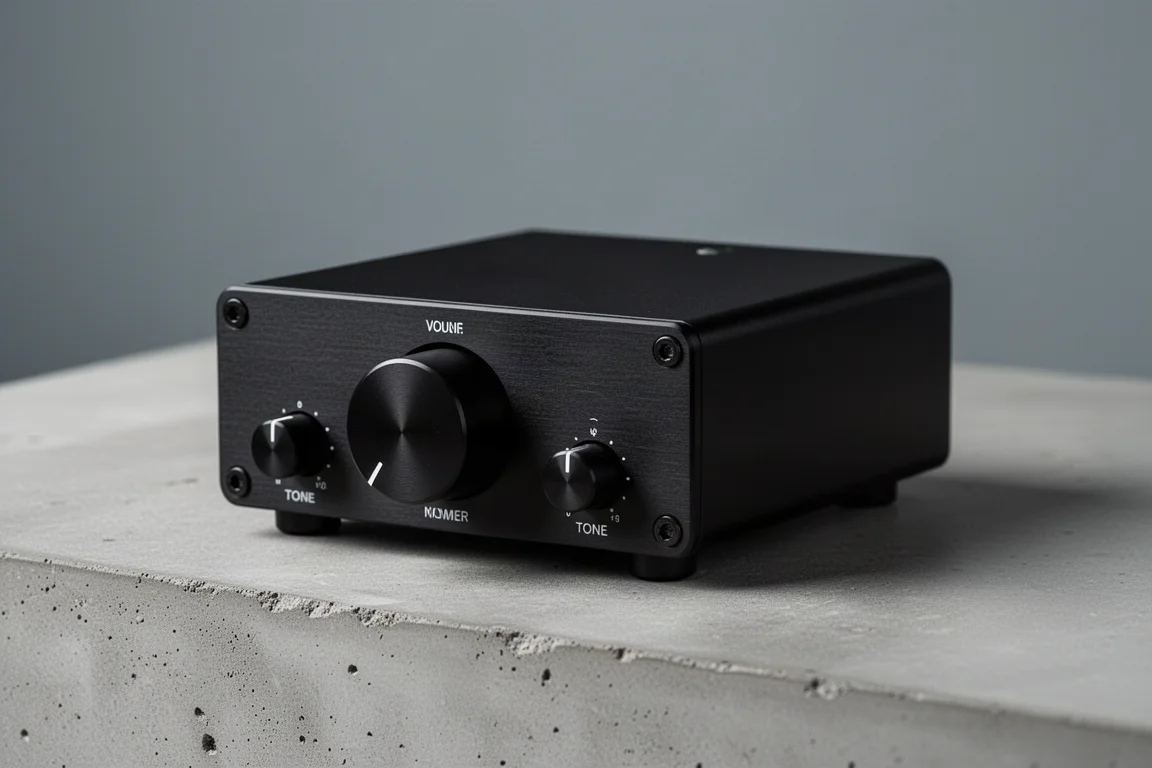
AIYIMA A08 Pro
The AIYIMA A08 Pro lists at $139, and the headline number is 300 watts. Reaching that figure requires a third-party DC 48 volt, above 10 amp linear power supply that costs roughly as much as the amplifier, which turns a $139 purchase into something closer to $240 without adding the features a traditional amplifier at that price would include.
Measurement consistency was the bigger problem. The A08 Pro gave three different frequency response results for the same speaker within 30 seconds, which made it difficult to evaluate consistently and suggests wide unit-to-unit variation. Combined with the power supply requirement, that is enough to make this one hard to recommend.
Cambridge Audio AXA25
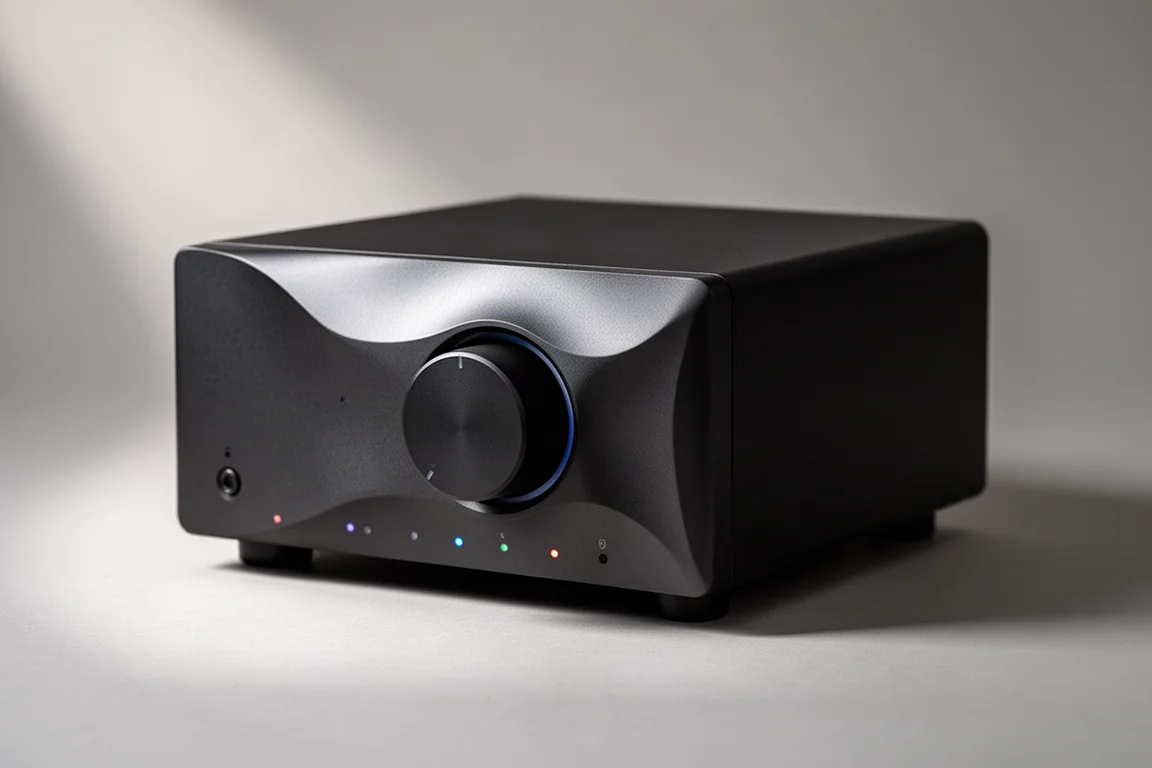
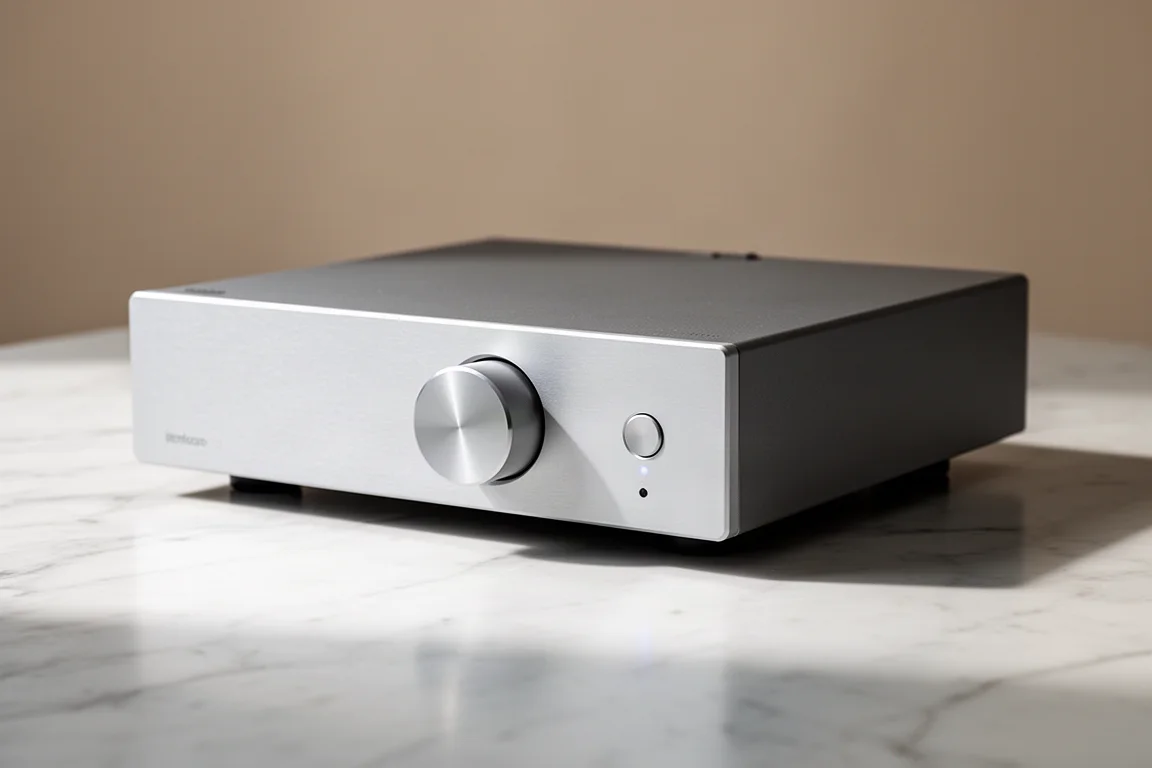
The Cambridge Audio AXA25 costs just over $200 and reports 25 watts of Class AB power. On paper it looks like the least powerful amplifier here. In practice it drove the Klipsch RP-8000F Mark II speakers well into the hundreds with composure and control that none of the compact amplifiers matched, and it did so without the caveats, fine print, or audible high-frequency noise.
Its frequency response measured the same as a reference amplifier costing around $1,700 across both speaker pairs. That is not a claim that the two sound identical, and frequency response is only one part of what makes an amplifier sound the way it does. It does mean that a $200 amplifier produced the same frequency measurement as a far more expensive one, which is not something that could be said for any of the compact models here.
Buying Advice: Matching the Amplifier to the Listener
The honest conclusion is that these compact amplifiers are situational. If you are considering one, the conditions that make it work are fairly specific.
Restrict it to a desktop or near-field setup where you sit no more than five or six feet from your speakers. Keep listening levels at or below around 60 dB, which means treating these amplifiers as tools for lower-level or ambient listening rather than for loud playback. Pair them with higher-sensitivity speakers, and be careful about speakers with a reputation for brightness, including Klipsch, Sony, Sonus Faber, Focal, and B&W, unless a brighter presentation is what you actually want.
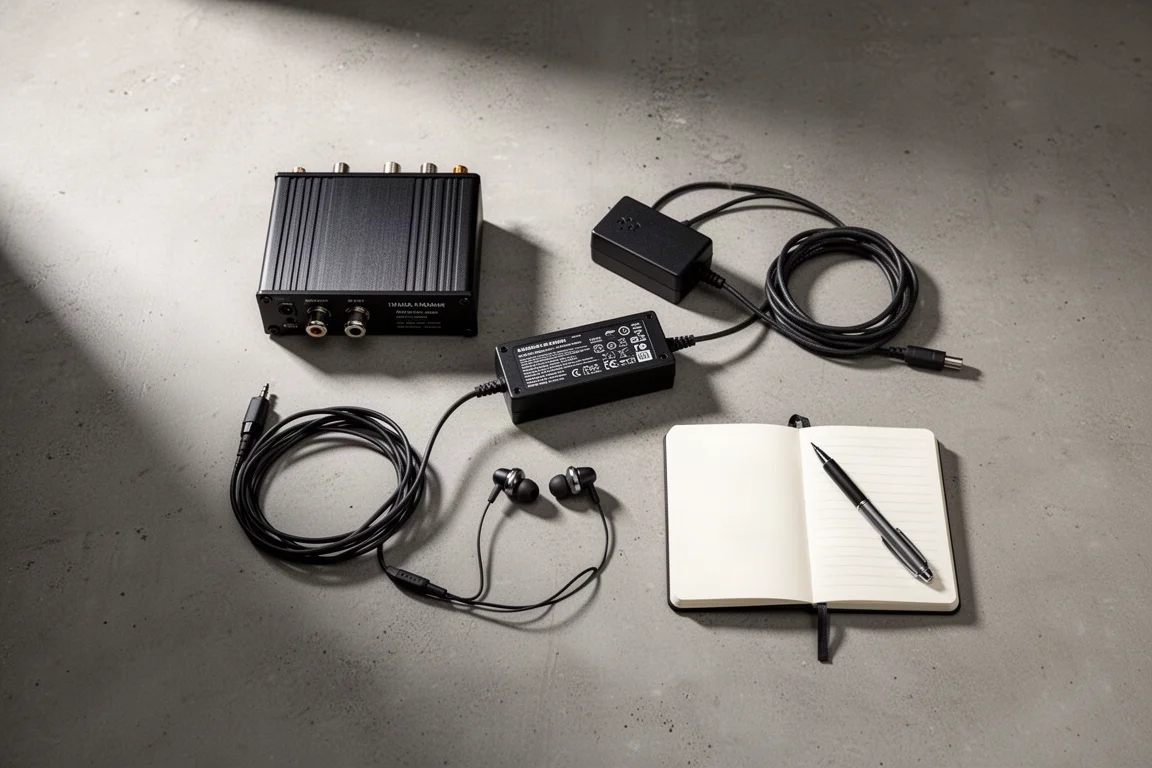
There is also a budget argument worth making. Building a system from a string of very cheap parts rarely works out. Pair a $100 amplifier with a $100 accessory and then chase it with a $100 power supply and you have spent $300 quickly. Saving for another month or two to reach a $400 budget, even if it means listening through earphones or laptop speakers in the meantime, is usually the better long-term investment.
With the exception of the Arylic B50, whose HDMI and phono inputs give it genuine value, none of the compact amplifiers here look like strong value next to the Cambridge Audio AXA25 at just over $200. If you like a brighter, more articulate presentation, or you have some high-frequency hearing loss and appreciate extra articulation for dialogue, one of these amplifiers may still suit you. Just go in knowing which trade-offs you are accepting.
Conclusion
Compact sub-$200 amplifiers can be enjoyable, and in a near-field setup they can be a practical, space-saving way to build a small system. The important thing is to match the amplifier to the way you actually listen.
If your listening happens at a desk, at low volume, with sensitive speakers, several of these models can work. If you want an amplifier that behaves predictably in a larger room, at higher volumes, and with a wider range of speakers, the extra spend on a conventional Class AB design is the safer choice.
Further reading
Related Reviews
Audio Amplifiers
AGD Audion Mark III Review: A Compact Class D Amplifier With Tube-Like Musicality
A gallium nitride Class D amplifier that delivers tube-like midrange warmth, serious bass grip, and a modular upgrade path in a very small chassis.
Audio Amplifiers
Best Class D Amplifiers Under $100: Douk Audio A5 vs Fosi Audio V3
Two sub-$100 Class D amplifiers built on the same 3255 chipset, compared on bass weight, midrange body, treble presence, and real-world speaker matching.
Audio Amplifiers
Best Power Amplifiers Under $500: Six Stereo Amplifiers From $74 to $579
A practical roundup of six stereo power amplifiers under $500, covering real-world power, connectivity, cooling, and which kind of system each one suits.