Backpacking Tents
Sierra Designs Mojo UFO Review: The 1.66 lb Two-Person Tent That Still Stands Alone
A rare ultralight two-person freestanding tent built from Cuben fiber and Easton carbon fiber poles, reviewed on weight, weather protection, and real trade-offs.
Introduction
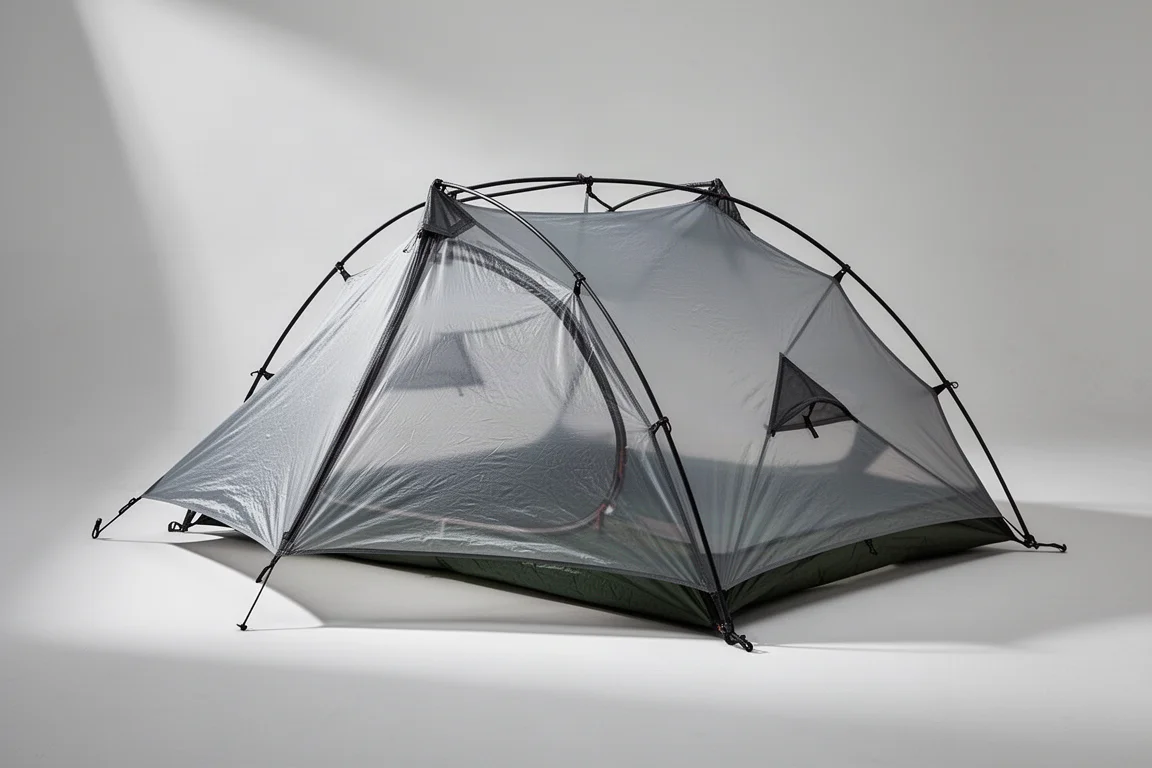
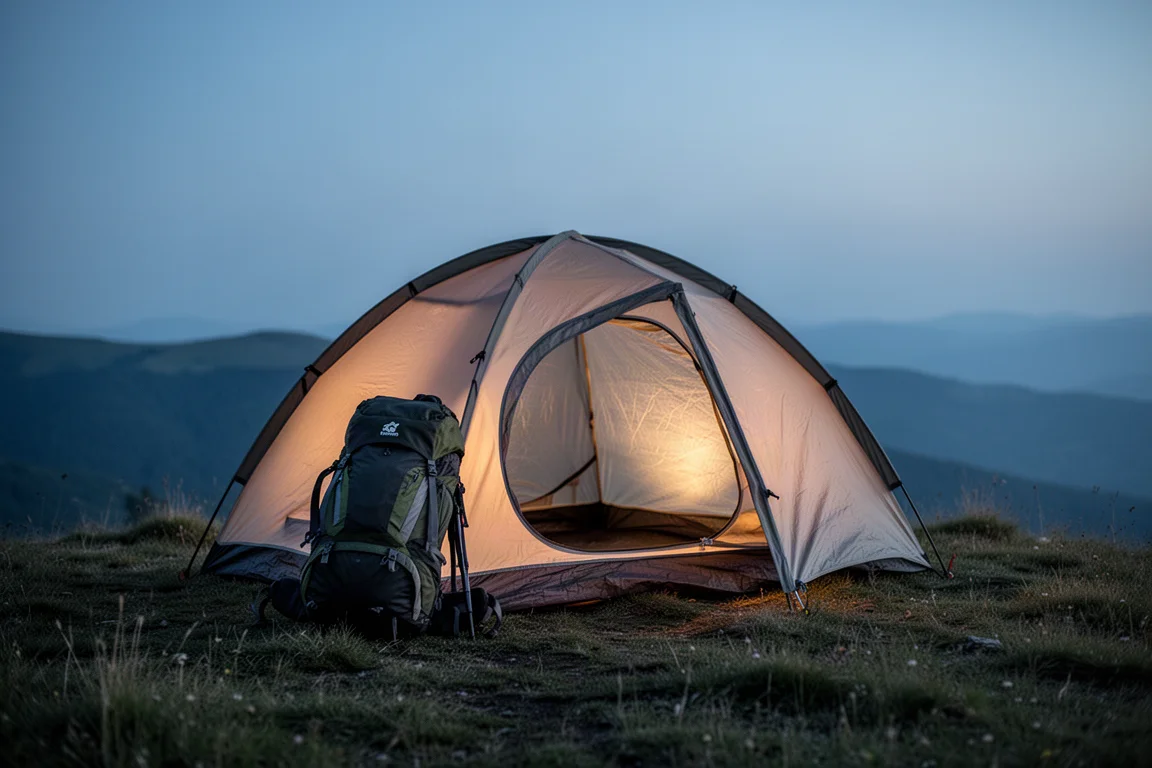
Only 50 examples of the Sierra Designs Mojo UFO were ever produced, which makes it one of the hardest tents to encounter in the wild. It debuted more than a decade ago with materials and a form factor that were remarkable at the time, and the headline number still holds up today: this is a two-person freestanding tent that comes in at 1.66 lb with every component included.
That figure covers the body, the fly, the Easton carbon fiber poles, and the stakes. Very few two-person tents sold today dip below two pounds, and most of the ones that do are trekking pole shelters, where the real carry weight climbs once the poles themselves are counted. The Mojo UFO does not need that accounting.
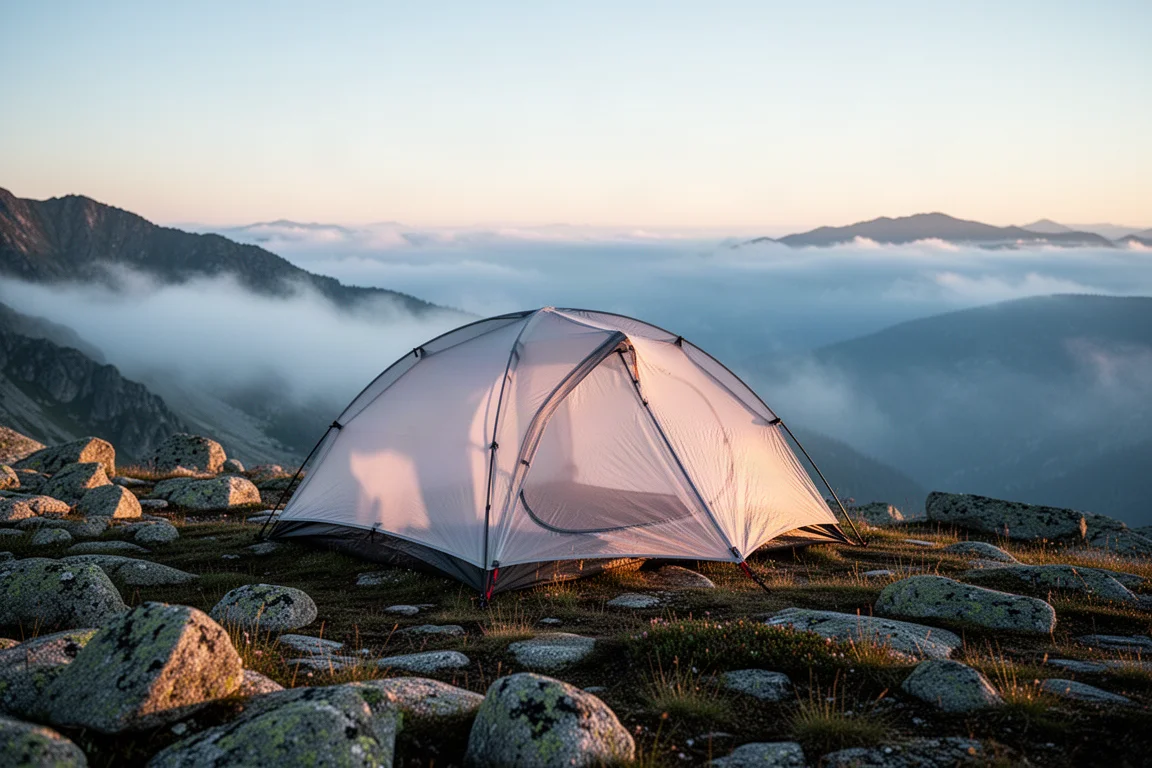
What keeps this tent interesting so long after launch is the pairing of that low weight with genuine weather protection. It is built as a hybrid four-season shelter, so it can be pitched through the year rather than being tied to one narrow weather window. The trade-off is that it behaves differently from a conventional ultralight tent in almost every respect, and that is exactly what makes it worth understanding before you decide whether it belongs in your pack.
Who This Product Is For
This tent suits backpackers who count grams but still want a freestanding structure and a full fly. Anyone who has wrestled a trekking pole shelter in wind or wet weather will recognise the appeal of a design that pitches fly first, stands on its own, and keeps the interior dry during setup.
It also makes sense for hikers who move through mixed conditions across a season. Because the Mojo UFO is a hybrid rather than a dedicated summer or winter shelter, it can cover late spring snow, wet autumn trips, and warm summer nights with the same footprint and the same pack weight.
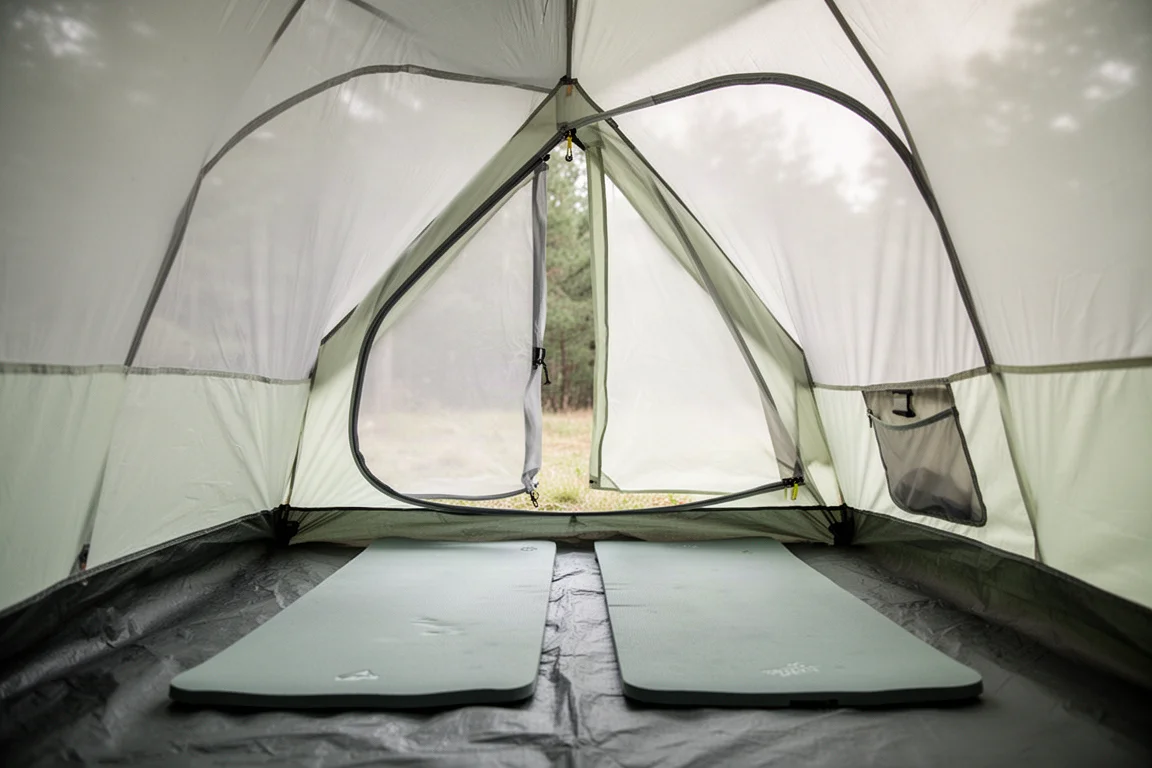
Finally, it appeals to backpackers who value interior room. Two people fit side by side on sleeping pads with enough space left to change clothes, and the vestibule holds two backpacks or a pair of boots without feeling cramped.
Design, Materials, and Setup
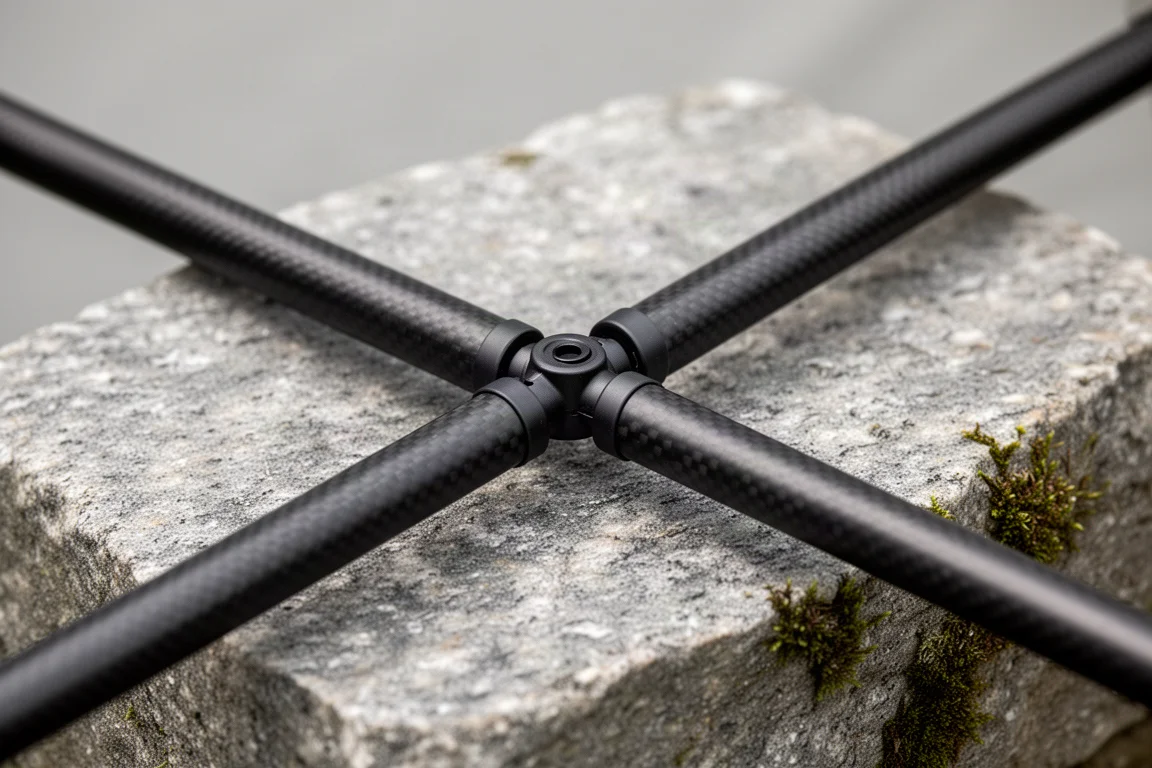
Two materials define this tent. The body and fly use Cuben fiber, a fabric known for exceptional strength to weight. The same class of material is used for sails on sailboats, which gives a sense of the forces it is expected to withstand. The frame is Easton carbon fiber, split into four sections: two short poles and one long pole that connect into a central hub and then clip over the body.
Setup is straightforward. Lay the body out, place the pole structure over the top, clip it on, and stake it out. Because it is a fly-first pitch, the interior stays dry while the shelter goes up in rain. Once the pole is connected and the body is clipped, the tent is technically freestanding and can be moved into position before pegging. Staking it out properly is still worth the extra minute, since it delivers the best structure and the strongest airflow.
The fly is the most unusual part of the design. It is interconnected with the body, but the way it drapes over the top of the tent is unlike most shelters, and that geometry is what produces both the protection and the ventilation. The fly pulls away from the body on the sides and extends that gap to the rear, so air moves through the shelter even when the weather is closed down. A storm flap covers the zippers, there are two guyline placements on the door side, and a vent sits under that section.
Packed away, the tent lives in an envelope-shaped storage bag, a shape that is genuinely uncommon in tents. A single button and strap hold the centre closed, with a velcro section sealing the fold. Packed carefully, the tent lies almost flat inside it. The bag carries a printed line noting the design origin in Boulder, Colorado.
Main Strengths
The complete weight is the obvious strength. At 1.66 lb for the tent, poles, and stakes, this is the lightest freestanding two-person tent ever made, and it was already an outlier when it launched. Replacing the aluminium stakes with titanium ones would drop the number further.
Weather protection is the second. The fly and its geometry give strong coverage, and the shelter has a long field record that includes snowstorms with heavy accumulation, ice, and extended rain without reported failures.
Ventilation is the third. The gap between fly and body, the side vent, and the extensive mesh in the interior keep air moving, which matters in warm conditions and in humid weather where condensation builds quickly in tighter shelters.
Then there is the usable space. Two sleeping pads fit side by side, each occupant has room to move and change, two interior pockets keep small items off the floor, and the vestibule is large enough for two backpacks, footwear, or cooking under cover when the door is open.
Things to Consider Before Buying
The hybrid design is a deliberate compromise, and it shows at both ends of the temperature range. In summer the tent runs a little warm, and in winter it runs a little cold, particularly in wind. Hybrids tend to be competent at everything rather than exceptional at one thing, and that describes this shelter well.
Part of that warmth issue comes from the fabric. The materials are somewhat translucent, so sunlight passes through and heat comes with it. There is very little in the construction to block or insulate against that, so the interior can heat up on a bright day and offers limited warmth retention on a cold one.
Feature count is intentionally lean. There are two interior pockets, one per side, and not much else in the way of storage or organisation. The rear guyline placement sits very low at the bottom of the tent, which is an unusual position and worth noting during pitching. The aluminium stakes also feel disproportionately heavy next to the shelter itself, which makes an aftermarket titanium set an obvious upgrade.
Price is the other consideration. At launch in 2012 the Mojo UFO cost $1,800, and adjusted for inflation that works out to roughly $2,417 today. With only 50 ever made, this was never a mainstream purchase and it is not a value proposition now.
Availability is the practical constraint. A tent produced in such small numbers rarely appears on the secondhand market, so anyone interested in this design should expect a long search rather than a straightforward purchase.
Hybrid Performance and Field Use
The Mojo UFO is at its best when conditions are mixed. The fly’s separation from the body creates airflow on warm nights, while the same structure closes down to shed snow and resist wind when the weather turns. A side vent sits beneath the door guyline placements, and the fly’s standoff continues to the back of the tent, so ventilation does not stop when the shelter is fully guyed out.
Entry is through a single large mesh door with one zipper, which keeps the design simple and reduces weight. Inside, the mesh coverage is extensive, and the vestibule doubles as a sheltered spot for gear or for cooking with the door rolled back.
The long-term record is what gives this design its credibility. A 34-mile route from Grayson Highlands down to Damascus, Virginia ended with heavy rain arriving overnight and 17 miles of walking in pouring rain, and the tent handled the conditions as expected. Across years of use in snow, ice, and sustained rain, the shelter has held up without issues, which says a great deal about how well the Cuben fiber and carbon fiber construction age.
Buying Advice
Buy the Mojo UFO if low pack weight and a freestanding structure matter more to you than a long feature list, and if you want one shelter that can be pitched in most conditions across the year. The combination of 1.66 lb complete, a fly-first pitch, and room for two people is genuinely rare, and nothing in the design feels like a shortcut.
Be realistic about the compromises before committing. Expect a warm interior on sunny days, limited insulation in cold wind, minimal internal storage, and a stake set that deserves replacing. None of these undermine the tent, but they shape who will be happy with it.
The bigger question is price and scarcity. With a launch price of $1,800 in 2012, an inflation-adjusted equivalent of roughly $2,417 today, and a production run of only 50 tents, this is a collector-grade shelter as much as a backpacking one. If you find one and the numbers work for you, it is a tent that will keep earning its place in the pack.
For most buyers, the honest conclusion is that the Mojo UFO is a benchmark rather than a default recommendation. It shows what an ultralight freestanding two-person shelter can be when weight and materials are pushed hard, and that standard is worth keeping in mind when comparing anything else in the category.
Conclusion
The Sierra Designs Mojo UFO remains the lightest freestanding two-person tent ever made, at 1.66 lb with poles and stakes included, and it does it with a fly-first pitch, a hybrid four-season build, and enough interior room for two people to live comfortably. Its weaknesses are the natural consequence of that design: a hybrid temperature compromise, translucent fabric that lets heat through, a lean feature set, and a price that has always been out of reach for most backpackers. With only 50 produced, it is a rare tent by any measure. For the right buyer, one who prioritises weight and freestanding simplicity above all else, it is still a compelling answer more than a decade on.
Product link
View more details for Sierra Designs Mojo UFO
This product is mentioned in the review. Check the specifications, options, and compatibility before buying.
View more details for Sierra Designs Mojo UFOFurther reading
Related Reviews
Backpacking Tents
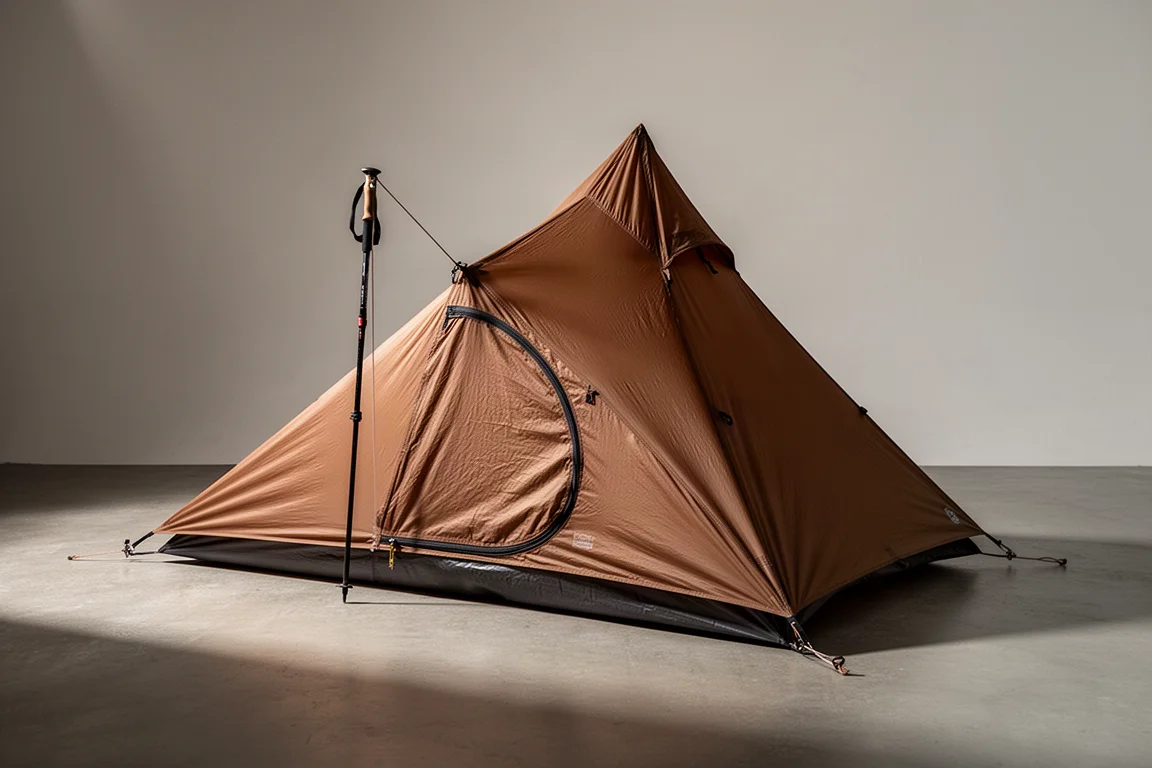
3F UL Lanchan Pro 1 Review: A 1 lb 8 oz Single-Wall Trekking Pole Tent
A practical look at the 3F UL Lanchan Pro 1, a single-wall trekking pole shelter with a 1 lb 8 oz weight, 20D silnylon fabrics, and a roomy 90 x 31 x 49 inch interior.
Backpacking Tents
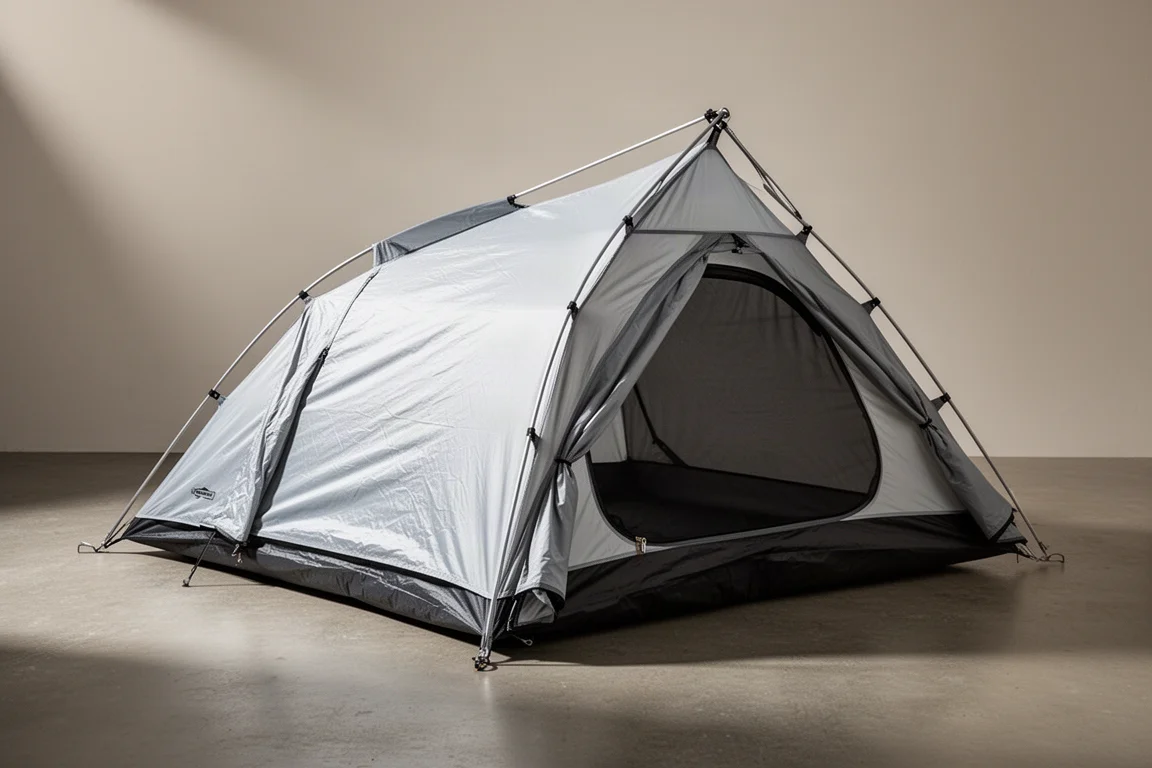
3F UL Taiji 2-Person Tent: A Convertible Backpacking Shelter Worth a Closer Look
A practical look at the 3F UL Taiji two-person tent, covering its materials, true two-person interior, fly-first pitching, and the seasonal inner swap that lets one shelter cover more of the year.
Backpacking Tents
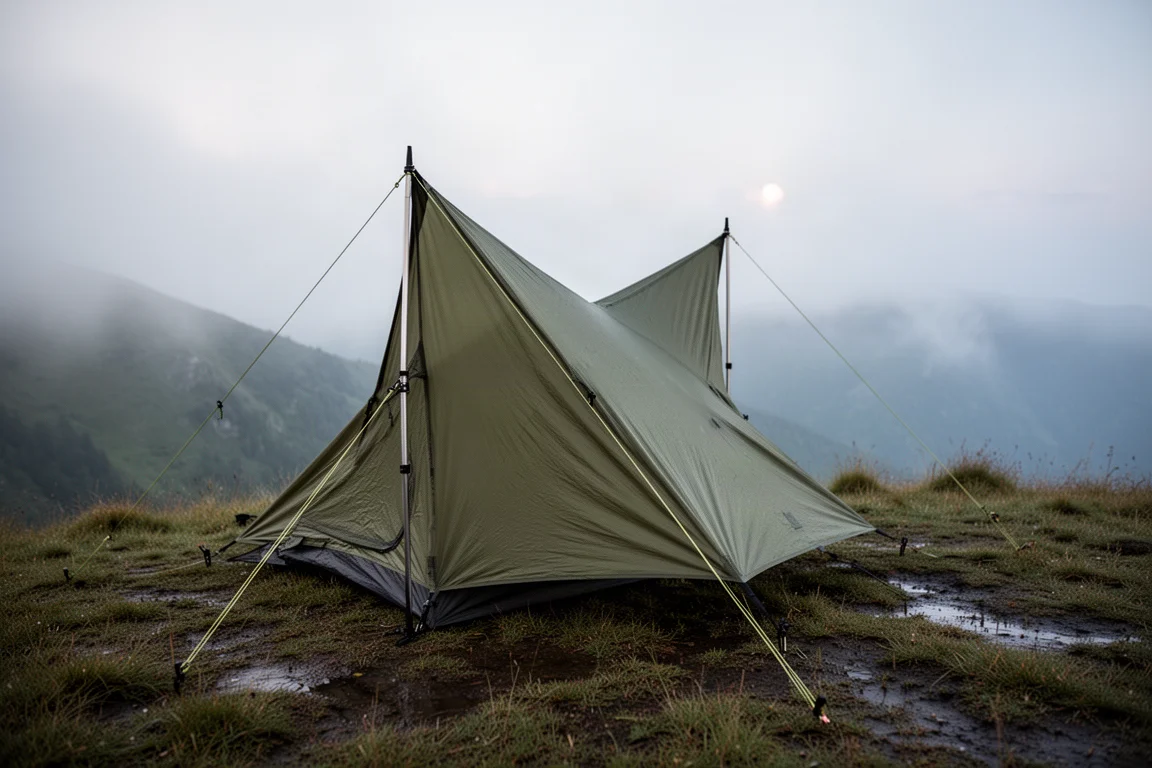
3FUL Lanshan Twoerson Pro Review: A Light Trekking Pole Shelter That Struggled in Rain
A two-person trekking pole shelter with a 2026 redesign, pitched with sticks and put through a night of steady rain. Here is what worked, what did not, and what to check before buying.