Ultralight Tents
Sierra Designs Mojo UFO Review: A 1.66 lb Two-Person Tent That Only 50 People Can Own
A rare ultralight two-person shelter built from Cuben fiber and carbon fiber poles, weighing 1.66 lb complete. Here is what it does well and what it costs.
Introduction
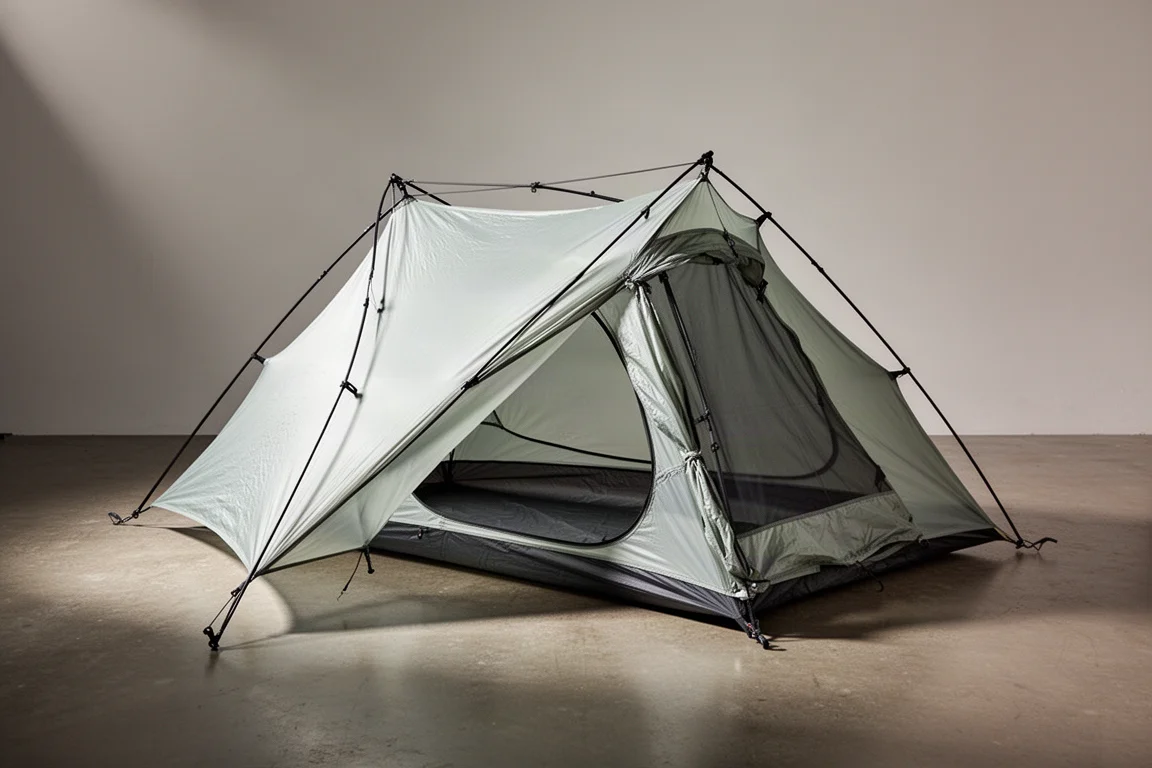
The Sierra Designs Mojo UFO is one of the most unusual two-person shelters ever built: a freestanding tent that weighs 1.66 lb with the body, poles, and stakes all included. It launched in 2012 and only 50 were ever made.
It arrived at a time when sub-2 lb two-person tents were close to nonexistent, and that remains largely true today. Most shelters that dip below that mark are trekking pole tents, where the body may weigh around 1.5 lb but the poles add enough back to push the complete system past 2 lb. The Mojo UFO sidesteps that trade entirely because it carries its own structure.
For backpackers who count every gram, that combination of low weight, a freestanding pitch, and premium materials is the entire argument. What follows is a closer look at how the tent is put together, where it performs well, and what a buyer should weigh before hunting one down.
Who This Tent Is For
This is a shelter for backpackers who place weight and packed volume above almost everything else and who want a freestanding design rather than a trekking pole tent. It suits two people travelling together, since the interior fits two sleeping pads side by side with enough room for each person to change clothes.
It is also a hybrid four-season design, intended for year-round use. That makes it relevant for anyone who wants one tent for summer trips and cold-weather trips alike, rather than two specialised shelters.
It is not aimed at value shoppers. The launch price and the rarity of the tent put it firmly in collector territory, and anyone shopping on budget will find far cheaper ways to sleep outdoors.
Main Strengths
The case for the Mojo UFO rests on three things: how little it weighs, how it is built, and how it handles weather while still breathing.
A Genuinely Ultralight Two-Person Shelter
The headline number is 1.66 lb for the complete package, which covers the tent, the poles, and the stakes. The stakes are aluminium and feel heavier than the tent itself, so swapping them for titanium would drop the total even further. Very few two-person tents land under 2 lb, and almost none of them are freestanding.
Pitching is quick and simple. Lay out the body, place the pole assembly over the top, clip it on, and stake it out. The tent is technically freestanding once the pole is connected and the body is clipped, but staking it out is what unlocks the best shape and the best ventilation.
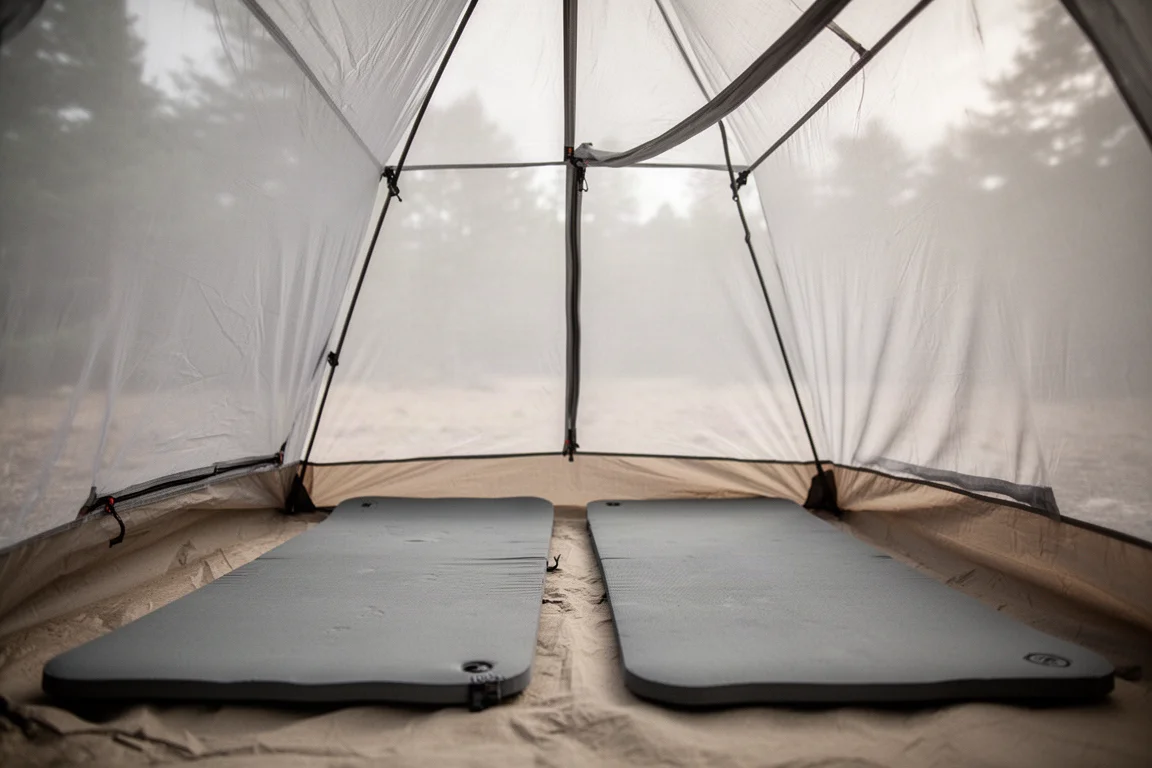
Inside, the layout is deliberately spare. There are two pockets, one on each side, and that is essentially the full feature list. The payoff is a two-person interior that still leaves room to move, sit up, and organise gear without feeling like a bivy.
Materials and Pole System
Two materials define the build. The first is Cuben fiber, the ultralight laminate now widely known as Dyneema, chosen for its exceptional strength-to-weight ratio. The same class of material is used for sails on sailboats, which gives a sense of the loads it can tolerate. The second is a set of Easton carbon fiber poles.
The pole system is split into four sections: two short poles and one long pole that connect into a central hub. From there the assembly sits over the body and clips into place. It is an elegant solution that keeps the structure rigid without adding bulk.
Packing is just as distinctive. The tent ships in an envelope-shaped storage bag, a form factor that is almost unheard of in tents. A single button with a wrapping strap holds the centre closed, with a velcro section securing the flap. The label reads Sierra Designs Mojo UFO Top Secret, Designed in Boulder, Colorado. Packed carefully, the tent sits remarkably flat inside it.
Weather Protection and Ventilation
The fly is permanently connected to the body and drapes over the top in a way that is genuinely hard to compare to anything else. It delivers strong protection while still allowing air to move.
The details support that. A storm flap covers the zippers, two guyline placements sit beneath the fly edge, and a vent on the side lets air escape. The fly pulls away from the body along the sides and continues that separation at the back, so airflow runs around the shelter rather than trapping against it. The entry is a large mesh door with a single zipper, and the interior is almost entirely mesh.
The vestibule is generous. It swallows two backpacks, boots, and assorted gear, and it is deep enough that cooking under the door is realistic in poor conditions.
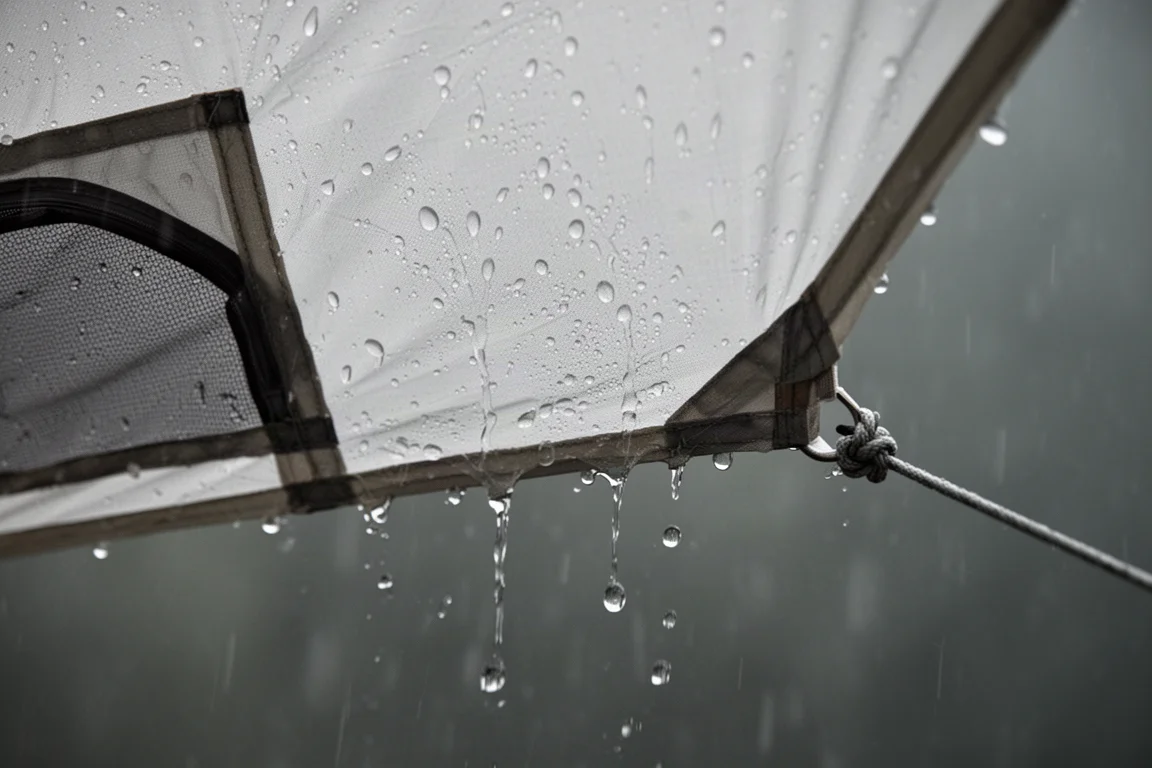
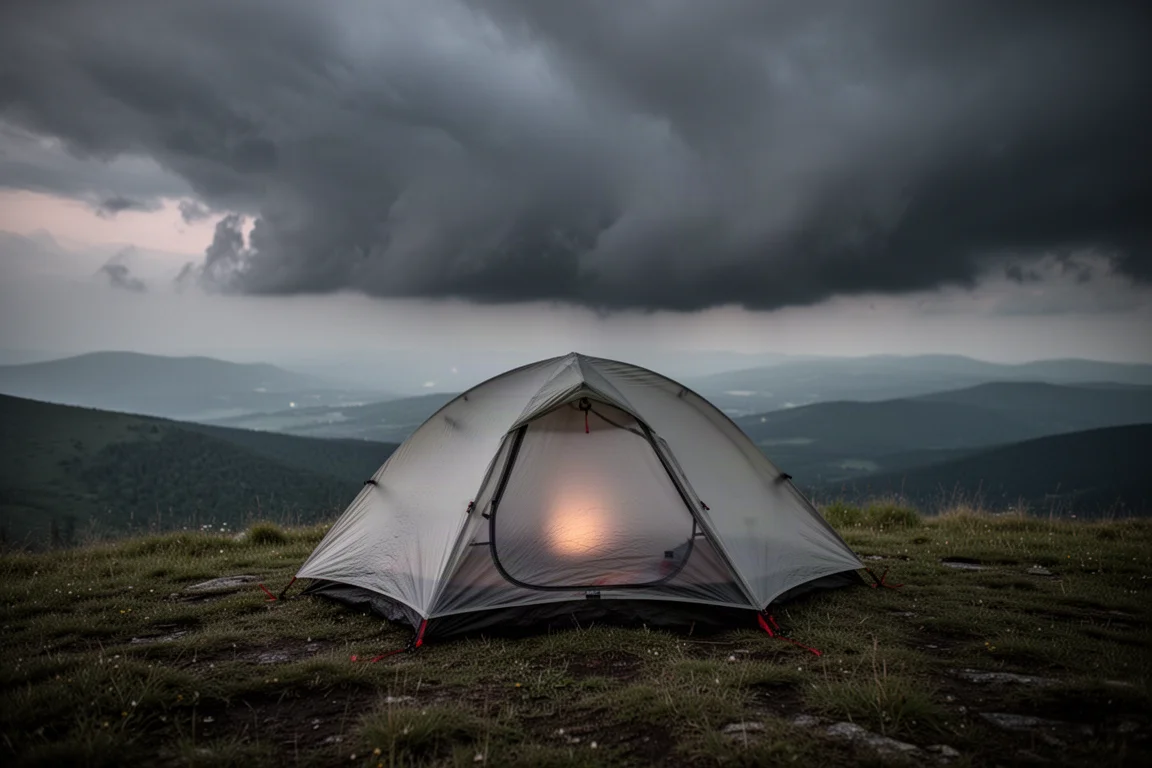
Because this is a hybrid, it is competent across the board rather than dominant in any single season. In summer it runs a little warm, and in winter it runs a little cold. The fabric is translucent, so sunlight passes through and there is little insulation to hold heat in. Over years of use in snowstorms, ice, and sustained heavy rain, including a two-day, 34-mile route from the Grayson Highlands down to Damascus, Virginia that finished in a downpour, the tent has held up without failures.
Things to Consider Before Buying
The first consideration is price. In 2012 the Mojo UFO cost $1,800, and adjusted for inflation that works out to roughly $2,417 in today’s money. It was expensive when it launched and it would still be expensive now.
The second is availability. Only 50 were produced, so this is not a tent anyone can simply order. Finding one depends on the secondhand market and on patience.
The third is the hybrid compromise. A shelter designed to work all year will not match a dedicated summer tent for airflow or a dedicated winter tent for warmth and wind resistance. Buyers should expect a tent that is good at everything rather than exceptional at one thing.
Finally, the interior is minimal by design. Two side pockets are the extent of the storage, so anyone who likes built-in gear lofts or extensive organisation will need to adapt. Ventilation also depends on staking the tent out properly, since the freestanding pitch alone does not create the same airflow. One design detail worth noting is the guyline placement low on the back of the tent, which is unusual compared with the rest of the layout.
Buying Advice
This is a tent to buy with clear eyes. If the goal is the lightest possible freestanding two-person shelter for year-round use, the Mojo UFO delivers on that brief in a way very few designs ever have, and the materials and construction have proven durable over more than a decade of hard use.
If the goal is simply to sleep two people comfortably on a budget, there are far more practical routes. The rarity and the inflation-adjusted price mean this purchase is as much about owning a piece of ultralight history as it is about the specification sheet.
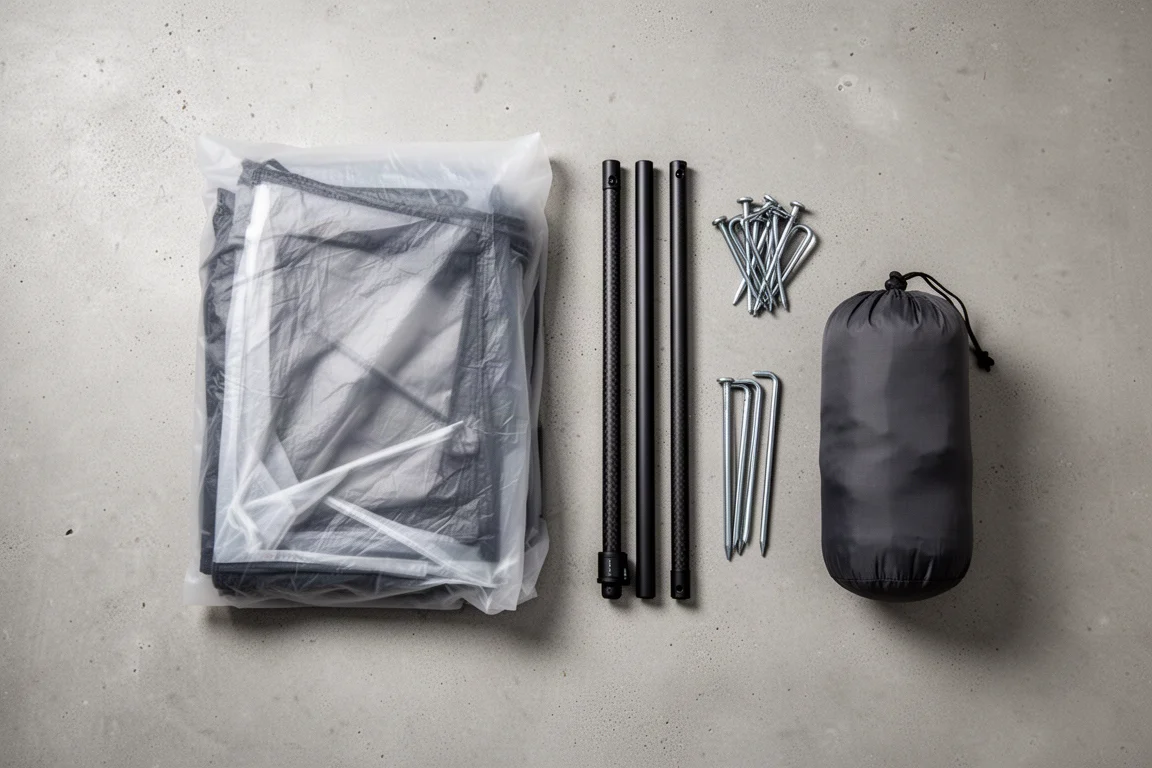
For anyone who does track one down, a few practical notes help. Stake it out fully rather than relying on the freestanding pitch, since that is what unlocks the ventilation and the taut fly shape. Consider replacing the aluminium stakes with titanium to shave a little more weight, because the stock stakes are the heaviest part of the package. And pack it deliberately into the envelope bag, where a careful fold keeps the bundle flat and compact.
Conclusion
The Sierra Designs Mojo UFO is a remarkable piece of gear: a 1.66 lb, two-person, freestanding, hybrid four-season shelter built from Cuben fiber and carbon fiber poles, produced in a run of just 50. It was ahead of its time when it launched and it remains difficult to match on weight today. Buy it for the engineering, the rarity, and the year-round versatility, and accept the price and the hybrid compromises that come with it.
Product link
View more details for Sierra Designs Mojo UFO
This product is mentioned in the review. Check the specifications, options, and compatibility before buying.
View more details for Sierra Designs Mojo UFOFurther reading
Related Reviews

Backpacking Gear
Building a 10 lb Base Weight: An Ultralight Backpacking Gear List
A practical walkthrough of the ultralight pieces behind a 10 lb base weight, from a 765 g pack and a roomy one-person tent to a full camp chair and a dependable water filter.

Backpacking Gear
A 15-Pound Lightweight Backpacking Gear List for Solo Trips
A beginner-friendly 15-pound backpacking setup built from easy-to-find gear, with notes on what each piece does, how it packs, and where to spend your attention.
Trail Running Gear
28-Mile Trail Run Pack Loadout: Ultralight Gear for High Alpine Self-Supported Running
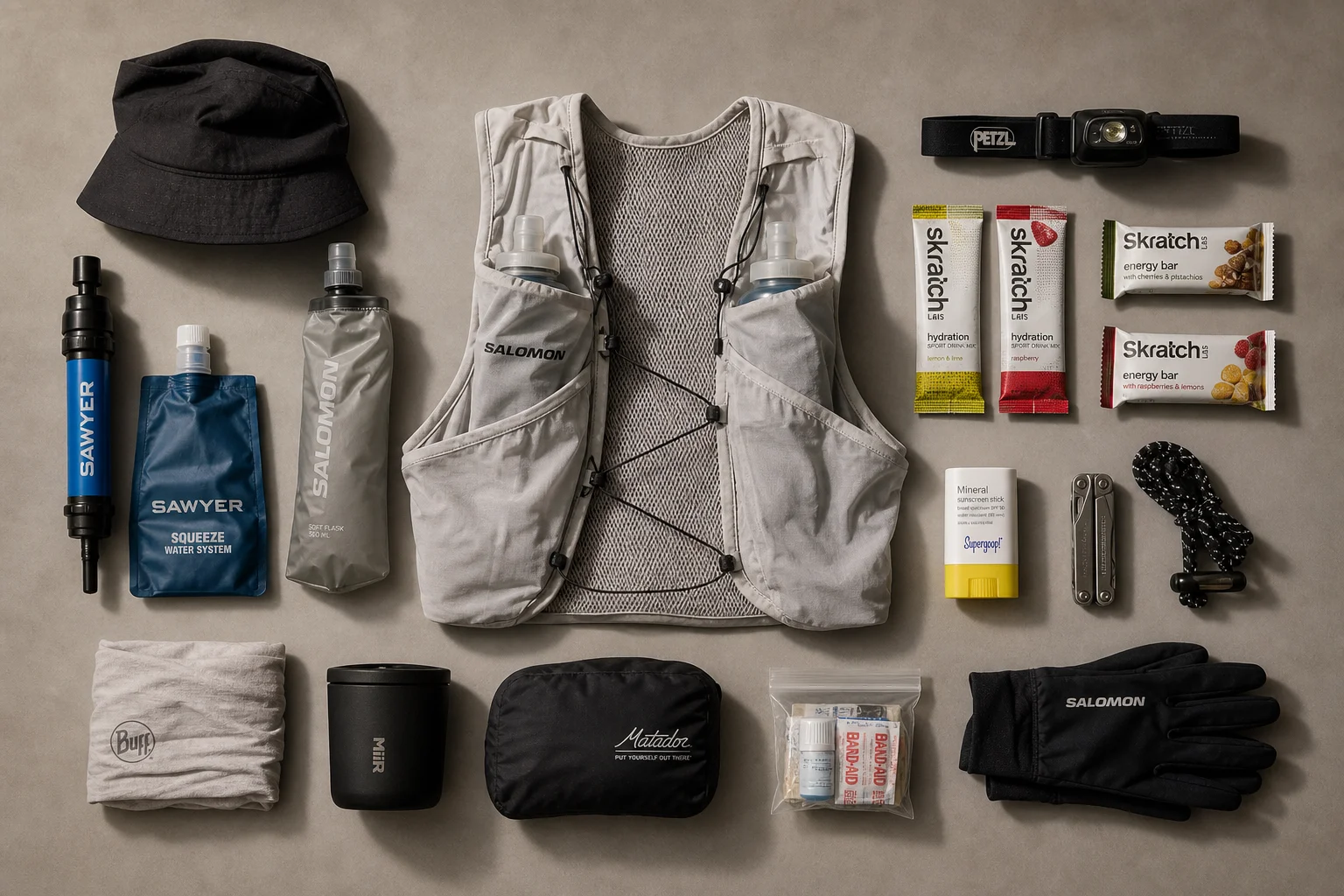
A complete breakdown of gear, clothing, hydration, nutrition, and safety equipment for a 28-mile high alpine trail run with 7,800 feet of elevation gain.