Ultralight Tents
Gossamer Gear The Two Review: An Ultralight Shelter That Pitches Fast
A practical look at the Gossamer Gear The Two, an ultralight single-wall shelter with two doors, factory-taped seams and a packed weight under 900 g.
Introduction
Ultralight shelters are a study in trade-offs. Every gram removed has to come from somewhere, and the real question is whether the finished tent still does the job you need it to do. The Gossamer Gear The Two is an American ultralight tent built around exactly that question, and it has become a familiar sight on long-distance routes such as the Appalachian Trail, the Pacific Crest Trail and the Continental Divide Trail.
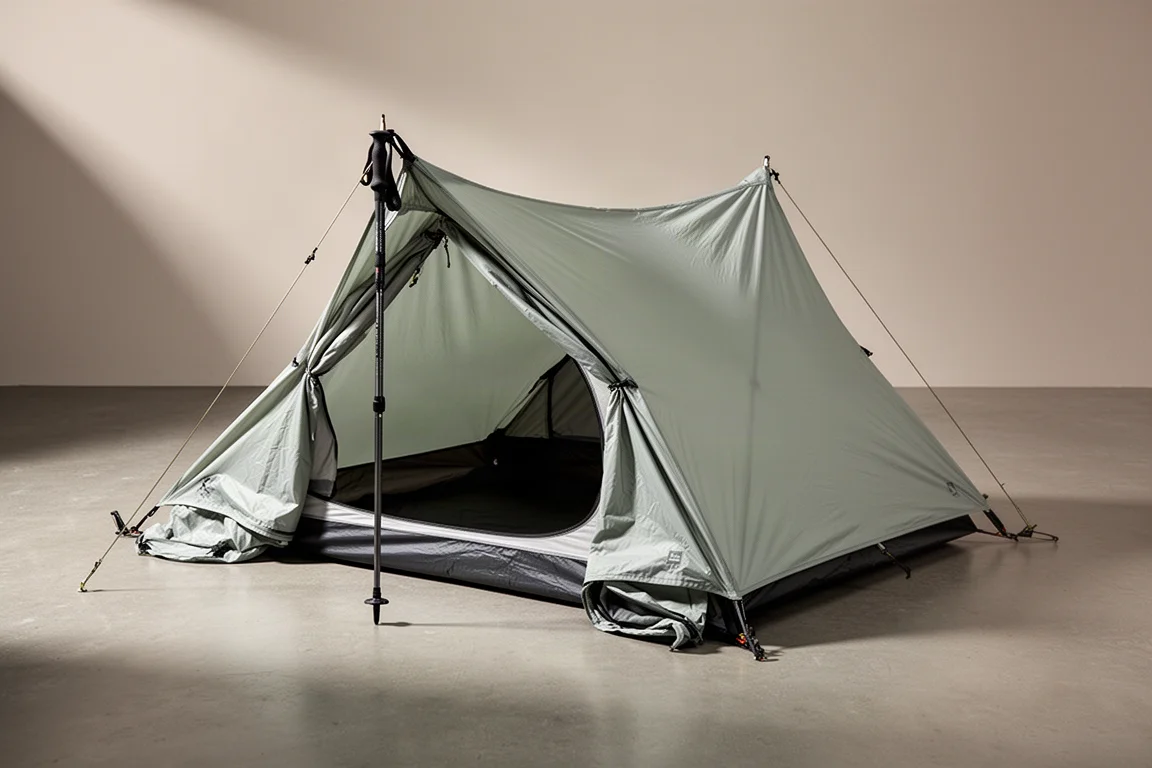
It is a single-wall design, which means the shelter is essentially one piece of fabric rather than an inner tent suspended inside a separate fly. It pitches with two trekking poles, or with two dedicated three-fold poles that are sold separately, and it is aimed at anyone who needs to keep carried weight down, whether that is long-distance backpacking, bicycle touring or horse trekking.
This guide covers how the tent is put together, what it does well, and where a single-wall shelter asks you to adapt.
Who This Tent Is For
The Two makes most sense for people who count base weight. If your trips involve long days and repeated pitching, the difference between a shelter like this and a conventional double-wall tunnel tent is something you feel every evening.
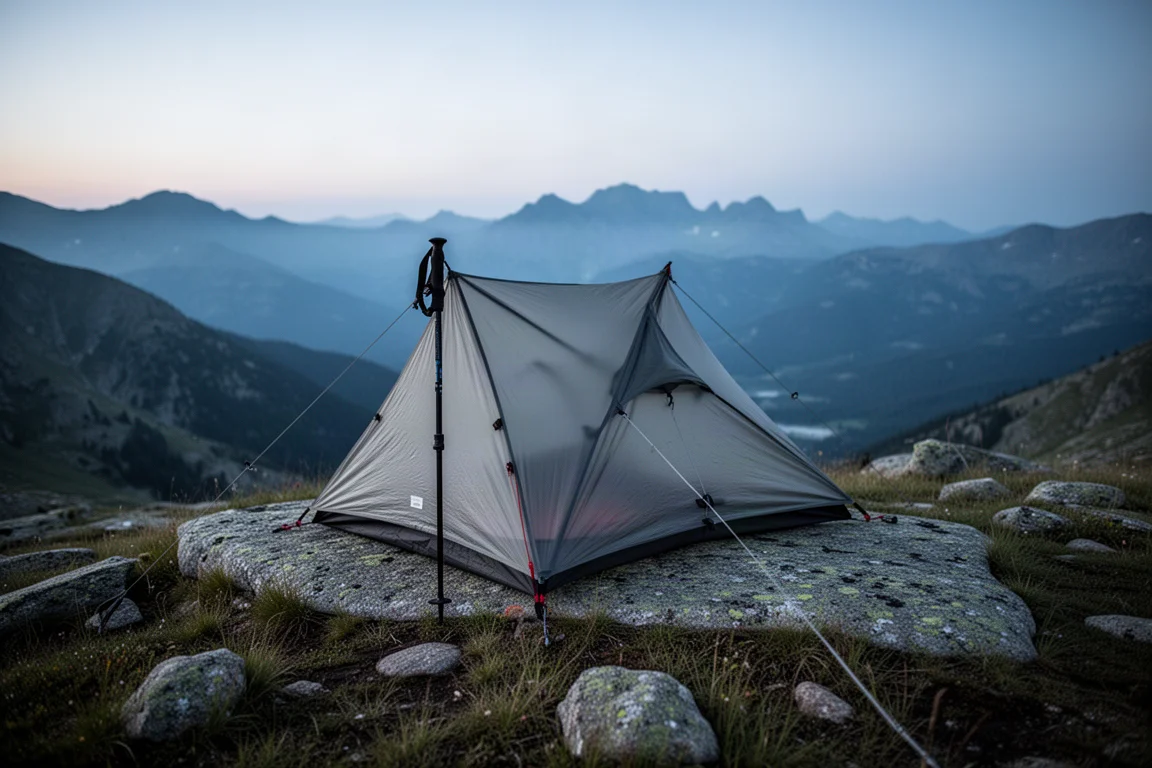
It is a two-person tent, but the layout is generous enough that a solo camper can lie diagonally without pressing against the walls, even when wind pushes the fabric inward. That extra room matters on longer trips, and it means there is space to keep a few items inside rather than leaving everything in the porch.
It also suits riders and travellers who cannot rely on trekking poles. Two optional three-fold poles turn it into a freestanding-style setup for bicycle touring or any trip where poles would be awkward to carry. Those poles do not fit in the main stuff sack and come in their own small bag.
Main Strengths
Lightweight and Quick to Pitch
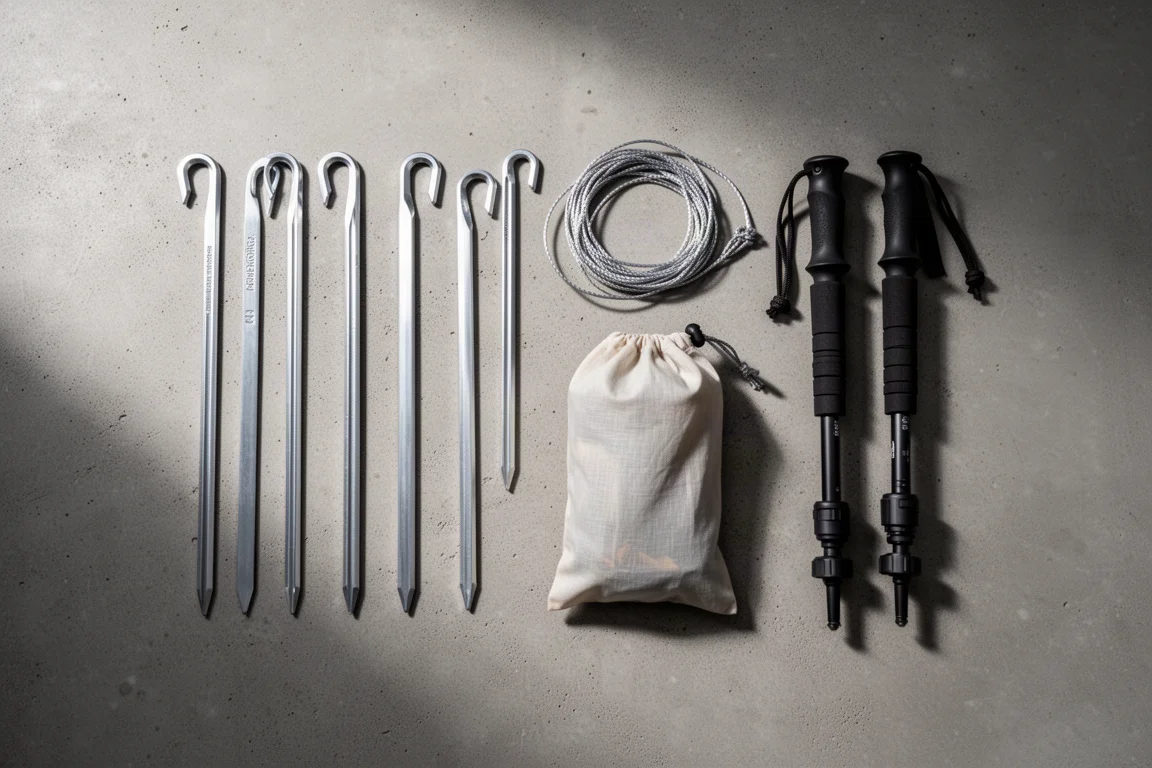
Gossamer Gear quotes 667 g for the tent itself, and the figure climbs to roughly 900 g once guy lines, stuff sack, pegs and poles are added. Even at the top of that range it remains a very light shelter, and the low weight does not come at the cost of a complicated pitch.
The tent goes up with a minimum of six pegs, though using all eight supplied pegs gives a tighter, more stable shape. Those pegs are V-shaped and very light. Even lighter stick pegs are available if you want to shave more weight, with the caveat that they bend or snap easily.
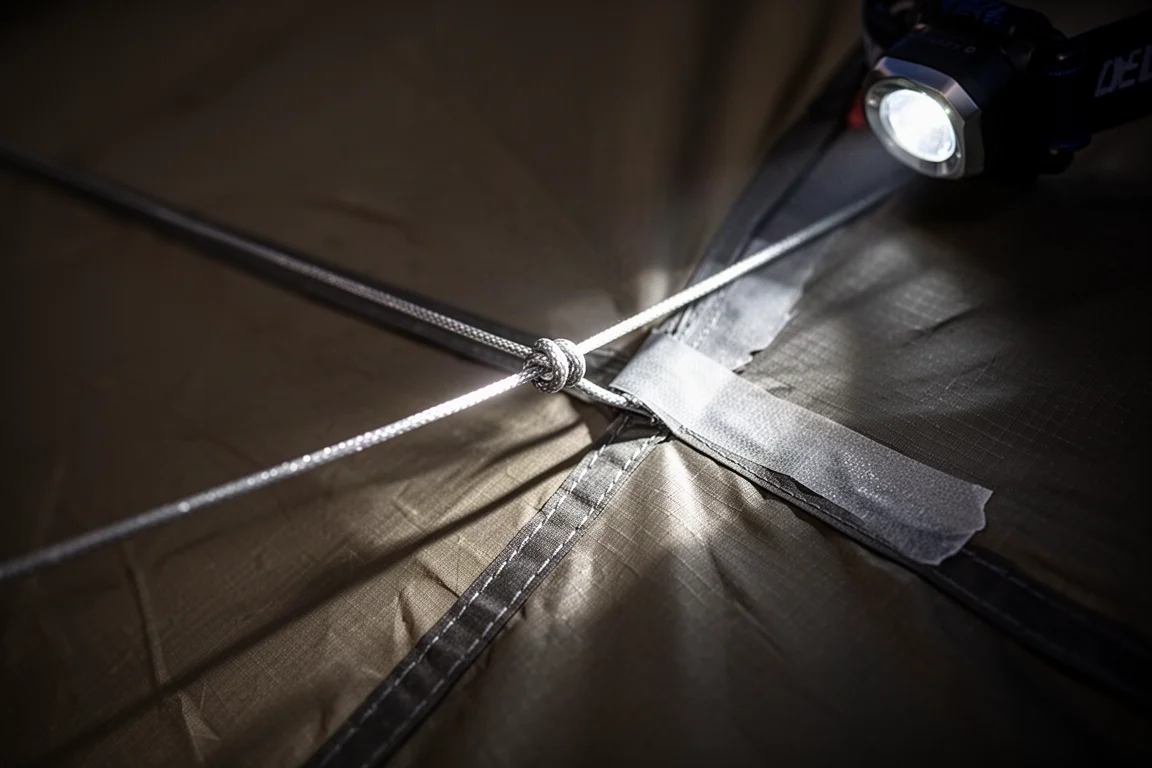
Guy lines are 1.8 mm reflective nylon with a 1 mm Dyneema core, and each line has a tensioner. The two front lines and the four main corners use plastic ITW LineLoc adjusters: pull them tight and they hold. Setup is simple enough that it becomes quick with practice, which matters when you are pitching in poor weather at the end of a long day.
Two Doors and a Genuinely Usable Porch
Two doors is a feature worth highlighting. Each occupant gets their own entrance and exit, which removes the clambering over sleeping mats and knocked-over kit that comes with a single-door two-person tent, and it improves ventilation at the same time.
Each door has elastic tie-off points, with two on one side and a single point on the other, and they are easy to handle with gloves on. A guy line runs inside each door and the door clips to it to stop it fluttering. Each door can also be clipped out on one side to block wind, creating a sheltered porch that can double as a cooking space when the weather turns. The zips are fully taped and waterproof.
The porches themselves are sizeable, which matters when you are trying to keep wet gear outside and dry gear inside over a multi-day trip.
Interior Comfort and Pitching Versatility
Inside, the sleeping area is a bathtub design, with the floor fabric rising up the sides to keep running water out. The inner doors are made from a very fine insect-proof mesh, which helps breathability and keeps biting insects out.
Above head height there is a small carabiner and a clothesline, useful for hanging damp items out of the way rather than across your face. There is one pocket on either side of the doors, so two occupants can each have their own storage.
The pitch itself is adjustable. You can pull the fly right down to the ground to keep spindrift out in snow, or pitch it longer and lower rather than tall. Pulling it into a more triangular shape raises head height. That flexibility lets the same tent work in a hot climate where ventilation matters and in a cold one where protection matters.
Design Details and Durability
The main fabric is 10 denier nylon with an 1,800 mm hydrostatic head, and the bathtub floor is 15 denier. Denier describes the density of the weave, and 10 denier is very fine indeed; for comparison, waterproof jackets commonly sit between 50 and 100 denier. The upside is low weight. The trade-off is that the fabric needs care, so choose your pitch carefully, because rocky or abrasive ground raises the risk of a snag or tear.
Seams are factory taped, so the tent is ready to use straight out of the stuff sack rather than requiring a home waterproofing job. That is a genuine convenience at this price point, and it is not something every ultralight tent offers.
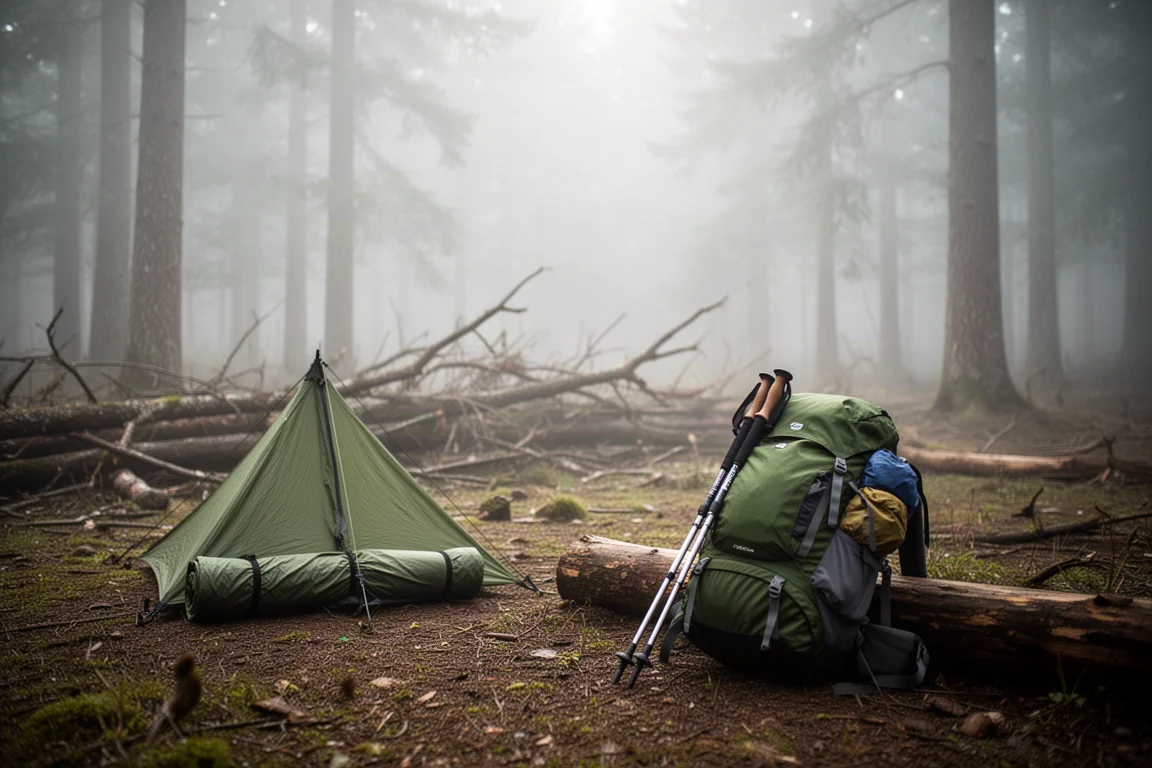
The floor is thin, and in cold conditions you can feel the chill of the ground through it. A footprint is available separately to add protection underneath. One thing to watch over time is the taping itself: on a well-used example, some taped seams had begun to loosen where the tape holds stitching and fabric together. It is repairable, but worth knowing before you commit.
The fabric is also not fully translucent, which gives noticeably more privacy than the see-through flys found on some ultralight tents.
Things to Consider Before Buying
Condensation is the main thing to plan for. Single-wall tents are prone to it, and this one is no exception: moisture gathers on the inside of the fabric even in moderate conditions. Wind is your ally here, since airflow carries condensation away, and a breezy pitch is much drier than a sheltered one.
The knock-on effect is that a single-wall tent is often packed away wet, especially when rain on the outside meets condensation on the inside. Day after day of wet pack-ups is where the design asks the most patience. A double-wall tent lets you keep the inner dry and pitch it separately, which is harder to replicate here.
The doors are compact, and getting in and out involves a bit of ducking. The manufacturer positions the tent as suitable for all people, but if you are tall it is worth trying one before committing.
Finally, consider the terrain you camp in. The tent feels confident in mixed conditions, but in genuinely harsh environments, very windy, very wet or very rocky ground, the combination of a very fine fabric, a thin floor and a single-wall design is where you will want to weigh the trade-offs carefully.
Buying Advice
At $320, The Two sits at roughly half the price of one of its best-known competitors, the Zpacks Duplex, which is around $699. For a shelter with factory-taped seams, two doors, two porches and a packed weight under 900 g, that is a lot of tent for the money.
It makes the most sense if your trips are long and your priority is carrying less, and if you are willing to manage condensation as part of your routine. It is also a natural fit for bicycle touring or any trip where trekking poles are not part of the kit, provided you budget for the optional poles.
If you mostly camp on exposed, wet and rocky ground, or you dislike the idea of packing a wet tent most mornings, a double-wall shelter may suit you better even at a higher weight and price. Trying before you buy, even by borrowing one for a single night, is the fastest way to know which side of that line you fall on.
Conclusion
The Gossamer Gear The Two is a well-considered ultralight shelter. It is light, quick to pitch, quiet in the wind, and unusually liveable for a single-wall tent thanks to two doors, two porches and a roomy interior for one person. Its compromises are the familiar ones: condensation, a thin floor and very fine fabric that rewards careful pitching. If those trade-offs match how and where you camp, this is an easy tent to feel confident about.
Product link
View more details for Gossamer Gear The Two
This product is mentioned in the review. Check the specifications, options, and compatibility before buying.
View more details for Gossamer Gear The TwoFurther reading
Related Reviews
Ultralight Tents
Sierra Designs Mojo UFO Review: A 1.66 lb Two-Person Tent That Only 50 People Can Own
A rare ultralight two-person shelter built from Cuben fiber and carbon fiber poles, weighing 1.66 lb complete. Here is what it does well and what it costs.
Ultralight Tents
Durston X-Mid Pro and Zpacks Offset Duo: Two Ultralight Trekking Pole Shelters Compared
A practical look at two trekking pole shelters with very different priorities: the compact Durston X-Mid Pro and the roomy Zpacks Offset Duo.
Ultralight Tents
Tarptent Double Rainbow DW Ultra vs Double Rainbow Lithium: Which Ultralight Shelter Fits Your Trip?
A practical comparison of the double-wall Double Rainbow DW Ultra and the single-wall Double Rainbow Lithium, covering fabric, weight, space, ventilation, and price.