Backpacking Gear
Sierra Backpacking Gear List: 10 Essentials From a 32-Pound Loadout
Ten core pieces from a 32-pound, five-day Sierra backpacking loadout, with the real strengths, trade-offs, and use cases worth weighing before you buy.
Introduction
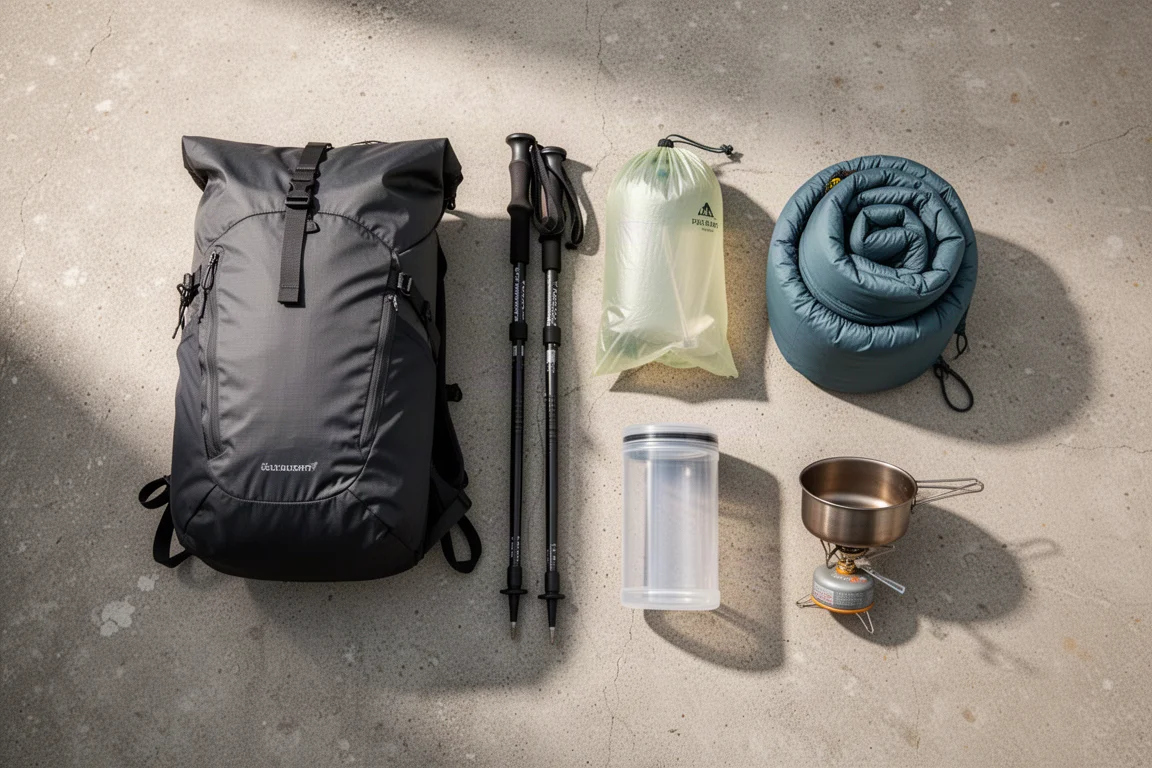
A five-day, 60-mile point-to-point walk on a section of the John Muir Trail in the Sierra Mountains of California is a fair test of any gear list. This particular kit weighs 32 pounds with food and water included, and several of the items had never been used on trail before, which makes it a useful snapshot of what a modern lightweight loadout looks like when it is packed for real rather than for a photo.
What follows is not an exhaustive packing list. It is the ten pieces that carry the most decision weight: the pack, the food storage, the shelter, the sleep system, the layers, the footwear, the watch and the safety link. Each earns its place for a specific reason, and each has a trade-off worth understanding before you spend.
How This Loadout Was Chosen
The brief was simple. Stay as light as possible without giving up comfort, and build in enough versatility for terrain that does not cooperate. The planned route includes stretches where stakes will not drive easily into rock, so the shelter has to pitch in more than one way. Nights are expected to sit somewhere in shoulder-season territory, so insulation leans warmer than a summer setup.
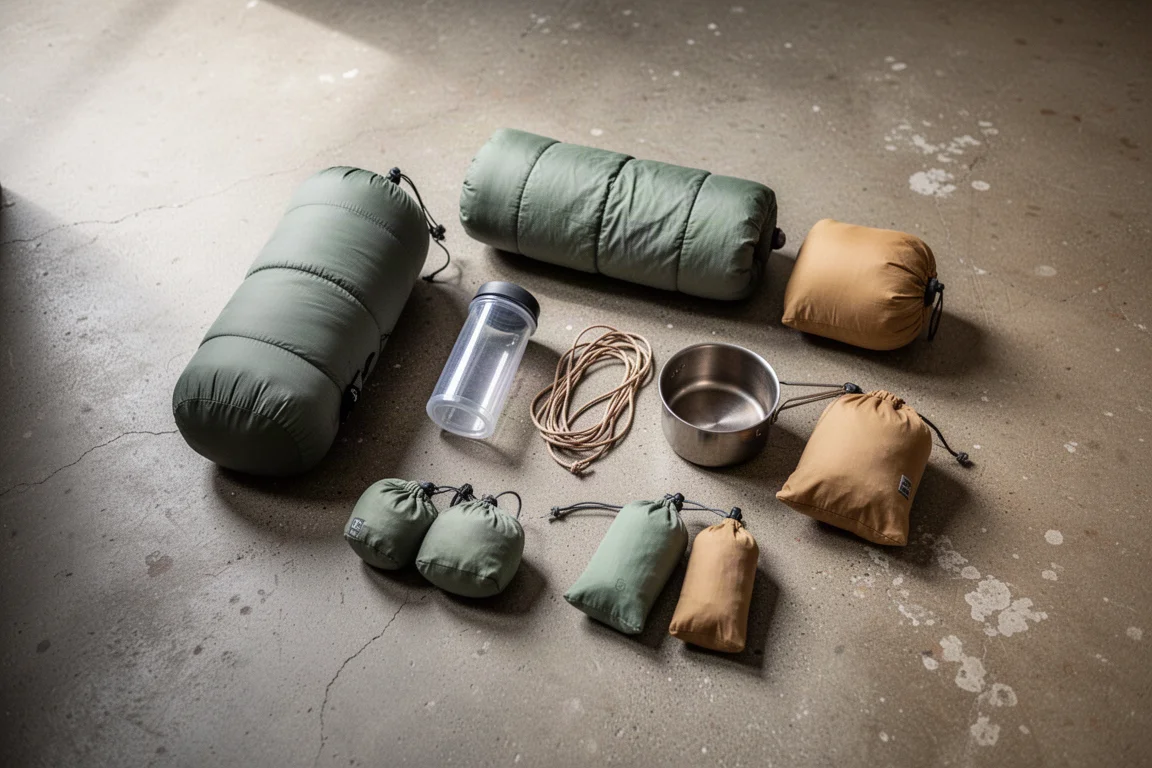
The trip itself replaced a cancelled thru-hike after a fire closure took the intended route off the table, which is a reminder that a gear list is built for conditions, not for a fixed itinerary. Capacity mattered just as much: a hard-sided food container now travels inside the pack, and everything else had to fit around it.
The Pack: Hyperlite Mountain Gear Unbound 40
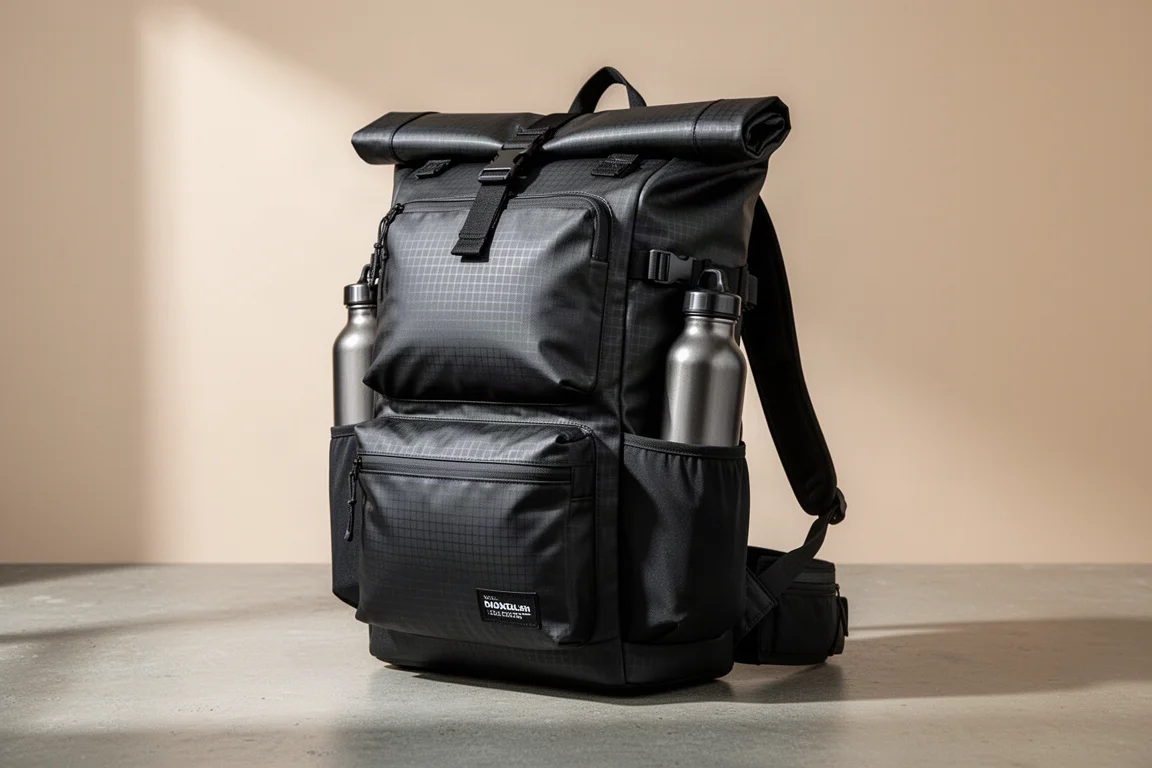
The Unbound 40 is a 40-litre pack that weighs around 30 ounces in a size medium. The real test was whether a full five-day load plus a bear canister would fit inside, and it does, with a little room left over. That is the whole argument for this pack in one sentence: ultralight weight without strapping a canister to the outside.
It is also a pack with a few unusual design choices that reward a closer look before buying, and those details are a large part of why it stands apart from the generic ultralight crowd.
The Bear Canister: BearVault 475
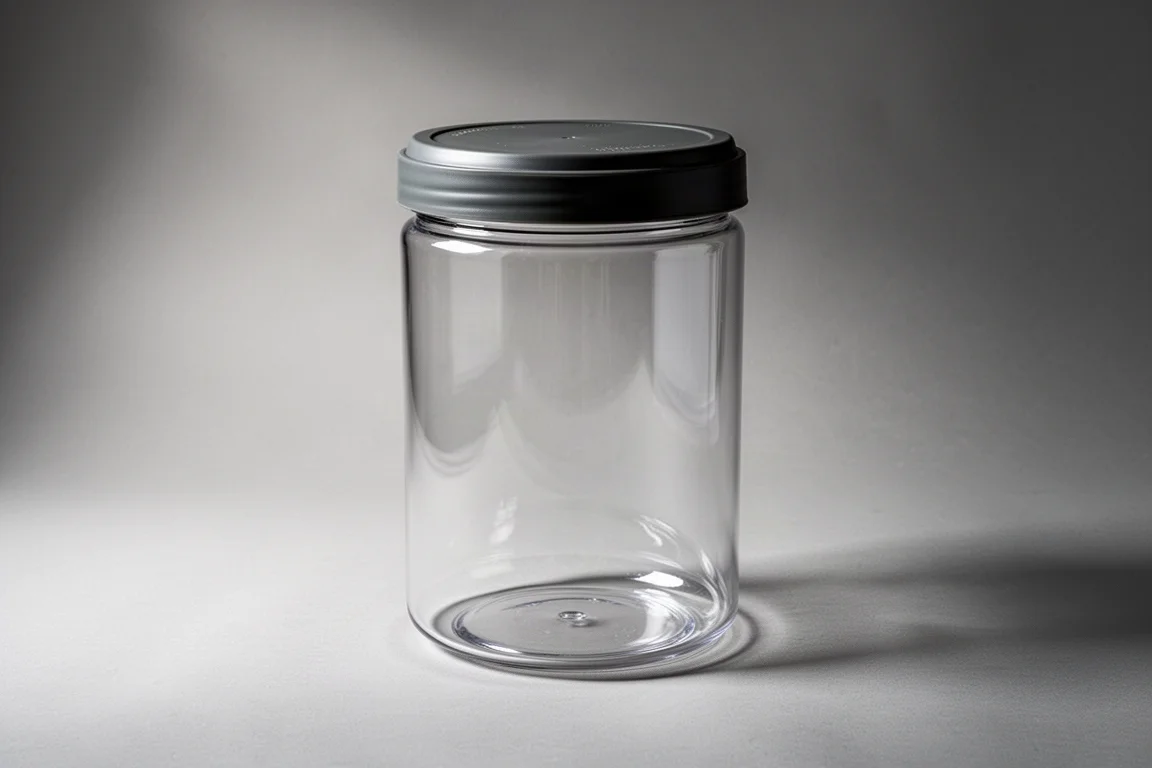
Hard-sided food storage is the least glamorous item in any loadout and often the heaviest. The BearVault 475 accounted for roughly 10 pounds once packed, split between about 8 pounds of food and about 2 pounds of canister. Filling it was a puzzle rather than a pleasure, and not every meal fit, which is why day-one food travelled separately.
The consolation is versatility. Topped with an 8-inch foam pad, the canister doubles as a camp stool, which removed the need to carry a chair at all. For anyone considering a canister for the first time, that is a genuine offset against the weight.
The Shelter: Tarptent Rainbow Lithium
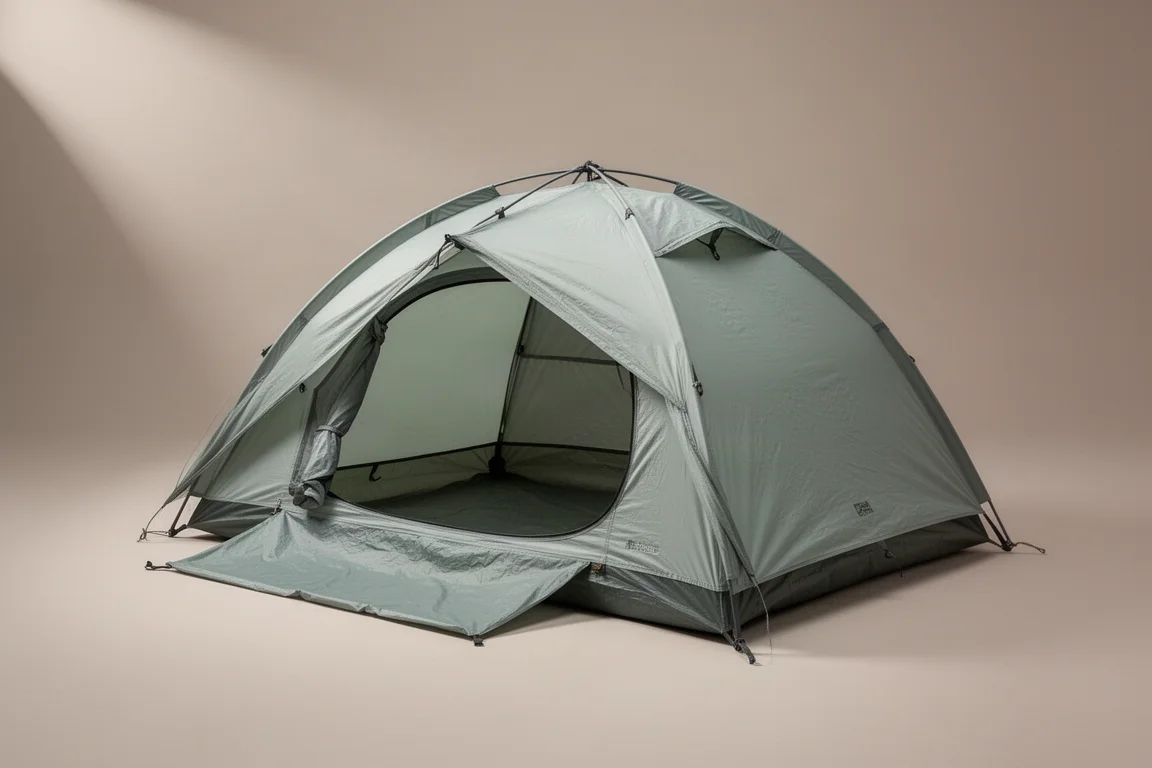
At roughly 26 ounces, the Rainbow Lithium is a single-wall, one-person ultralight tent that pitches quickly and handles awkward ground better than a fixed-pole design. Stakes come with it, but extra cordage went into the pack for pitches where nothing will drive into the ground and lines have to be anchored around rocks instead.
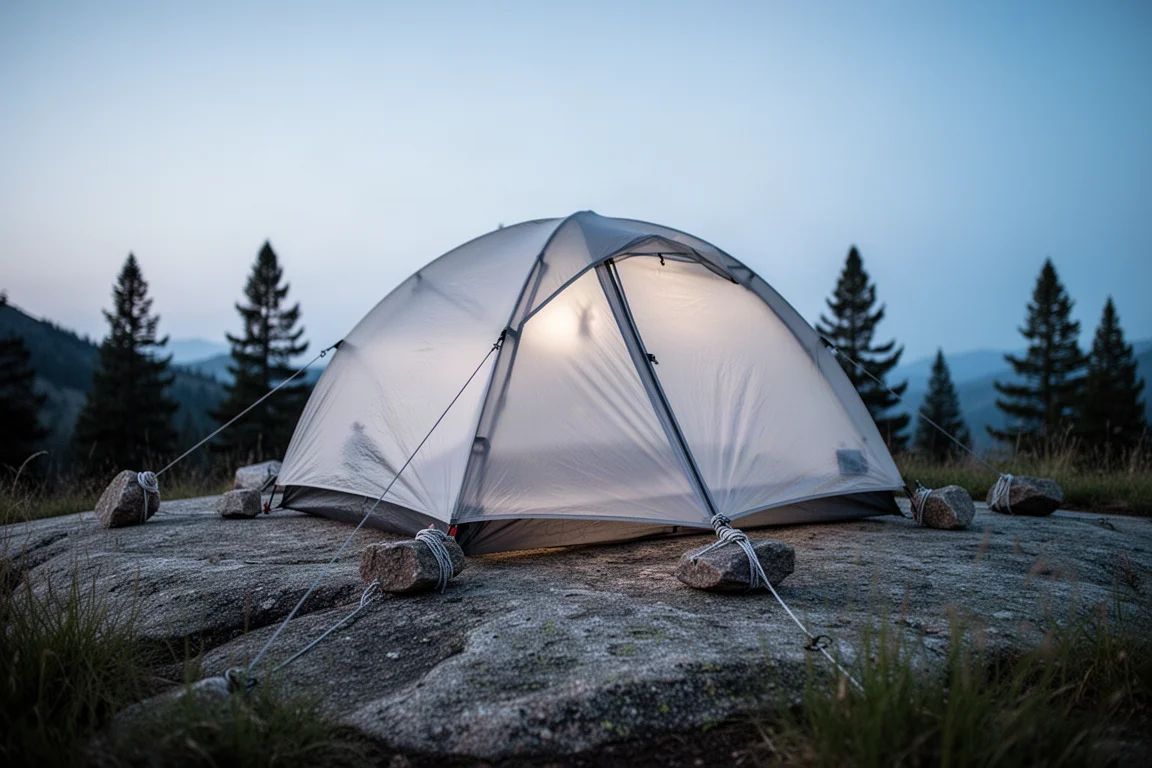
The other option is to pair it with trekking poles and use the fully freestanding setup, a decision worth making before the trip rather than on the first evening. Either way, the appeal is low weight and a lot of pitching flexibility in one package.
The Sleep System: Katabatic Sawatch 15
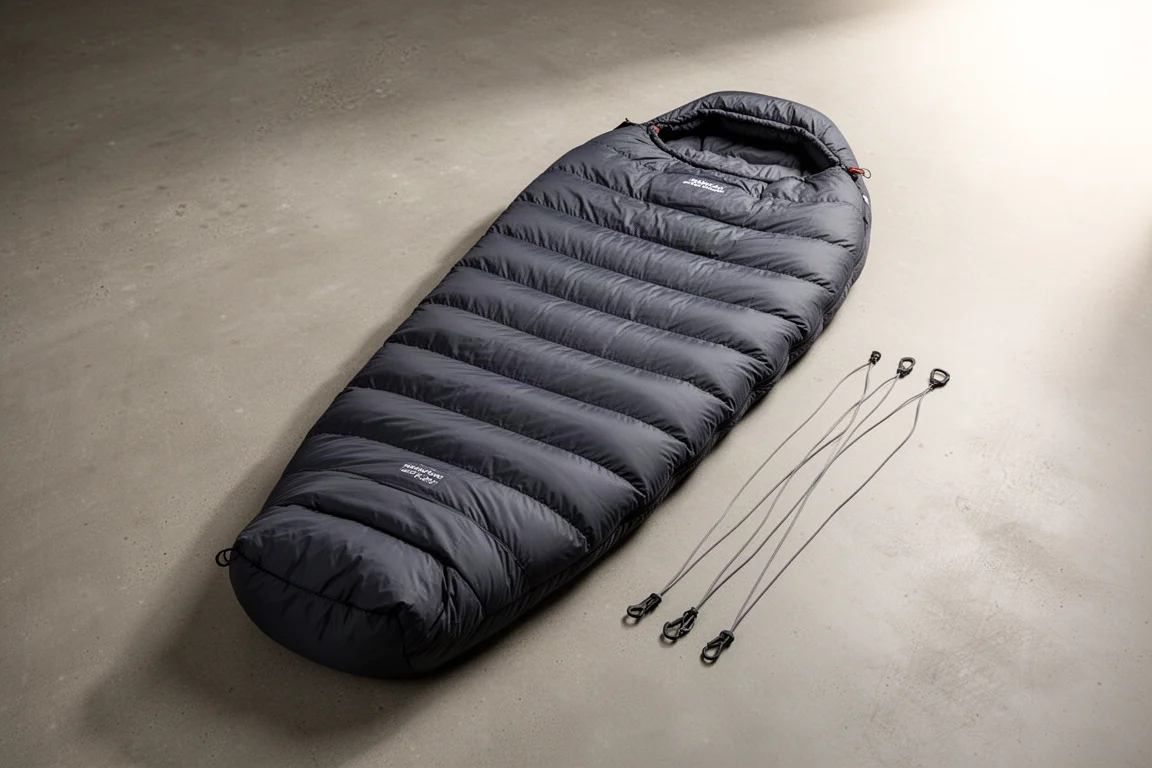
The Sawatch 15 is a quilt rated to 15 degrees Fahrenheit comfort that weighs around 27 ounces and compresses into an 8-litre stuff sack, which is a serious amount of warmth for the space it occupies. Five consecutive nights in shoulder-season conditions is the ideal way to find out whether a comfort rating holds up in the field.
Quilts depend on the pad and pillow underneath them to deliver their rating, so the rest of the sleep system has to be dialled in before the first night. This is also the one item in the kit with no trail time behind it, which is exactly why a five-night trip is the right test.
The Sleeping Pad: Nemo Tensor All-Season
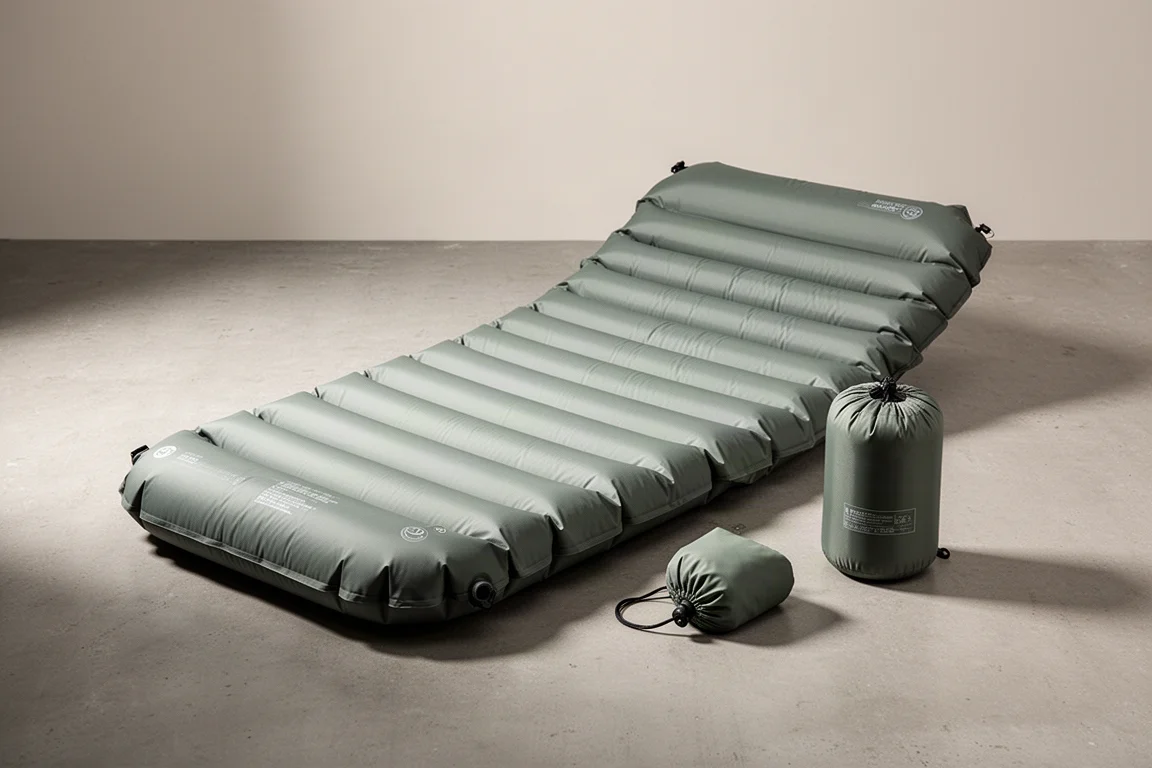
An R-value above 5 is the number that matters here. The Tensor All-Season delivers that warmth while staying lighter than many other pads in the same insulation class, and it packs down small enough to leave room in a 40-litre pack that already has a canister in it.
Comfort is the honest caveat. It is not the plushest pad on the market, but it does the job it was bought for, and the weight and packed size savings are the reason it made the cut.
The Sun Hoodie: Outdoor Vitals Altitude Hoodie
Long days on exposed trail call for one layer you can wear all day, and this is it. The Altitude Hoodie is a lightweight sun hoodie that stays comfortable across many hours of walking and has become the default base layer for this kind of trip.
The trade-off is that a hoodie worn every day for five days will not stay fresh, which is why a separate sleep shirt earns its place in the pack on a longer itinerary.
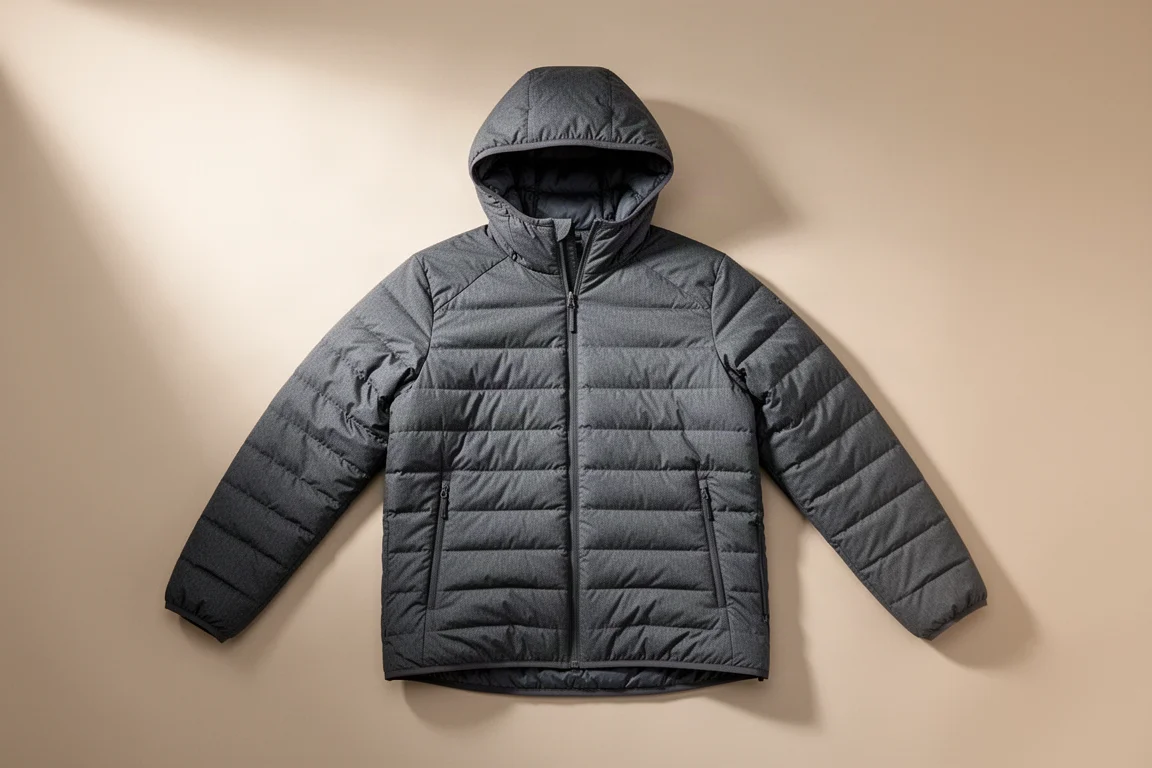
The Mid Layer: Outdoor Vitals Pursuit Hybrid Hoodie
At around 9 ounces in a size medium, the Pursuit Hybrid Hoodie is the active insulation piece in this kit. It is a mid layer, so it sits under the shell on wet days and does the work of holding warmth on cool mornings and long descents.
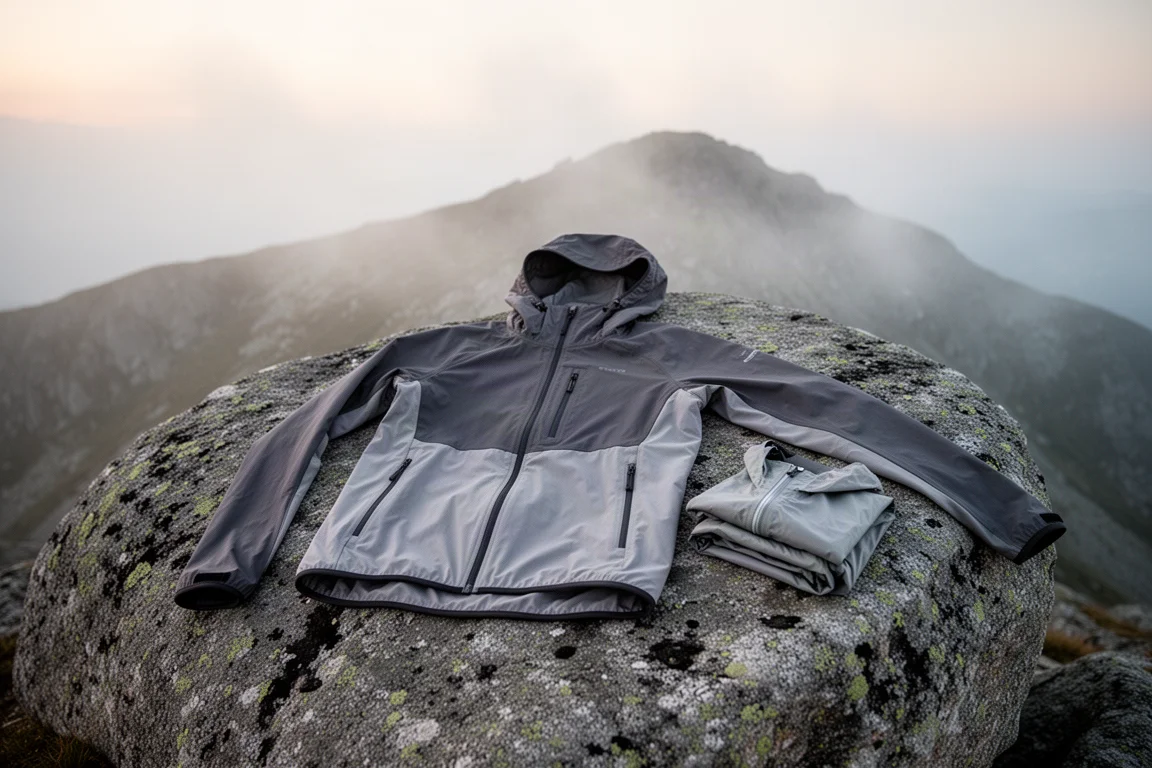
Because it is now in production and available to order, it is a realistic option rather than a prototype to admire from a distance. That matters if you are building a shoulder-season kit and want a light mid layer you can actually buy.
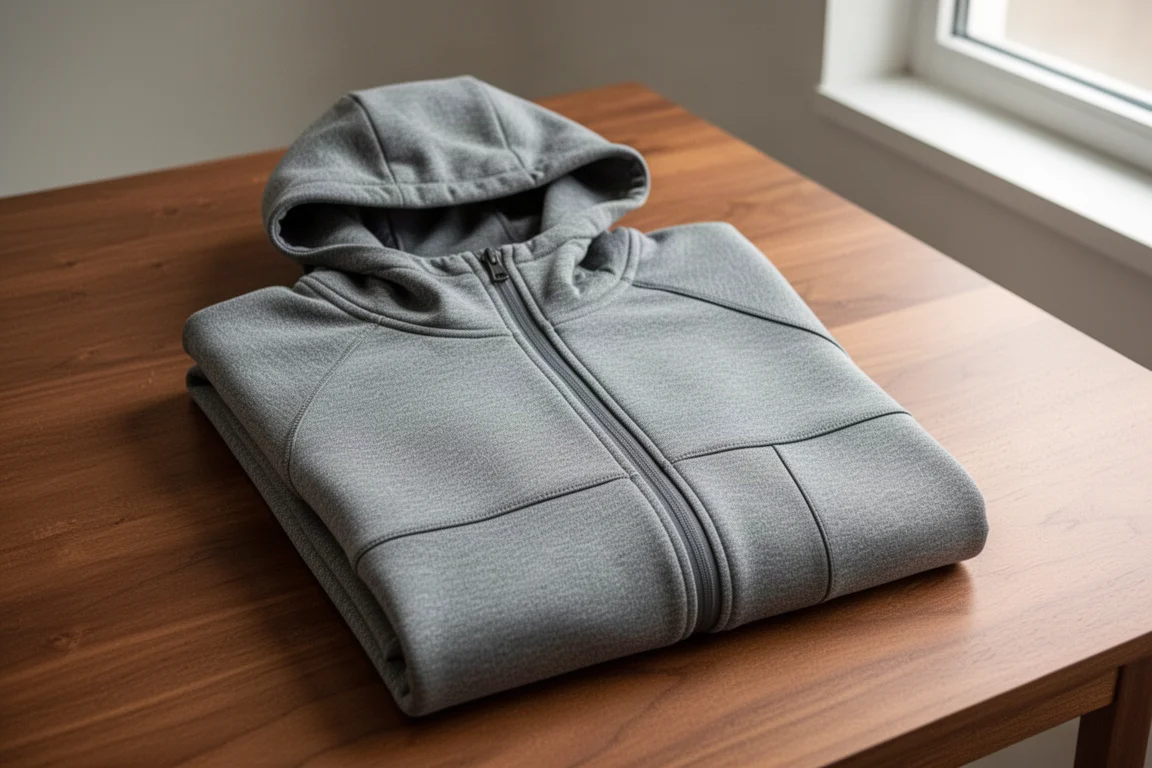
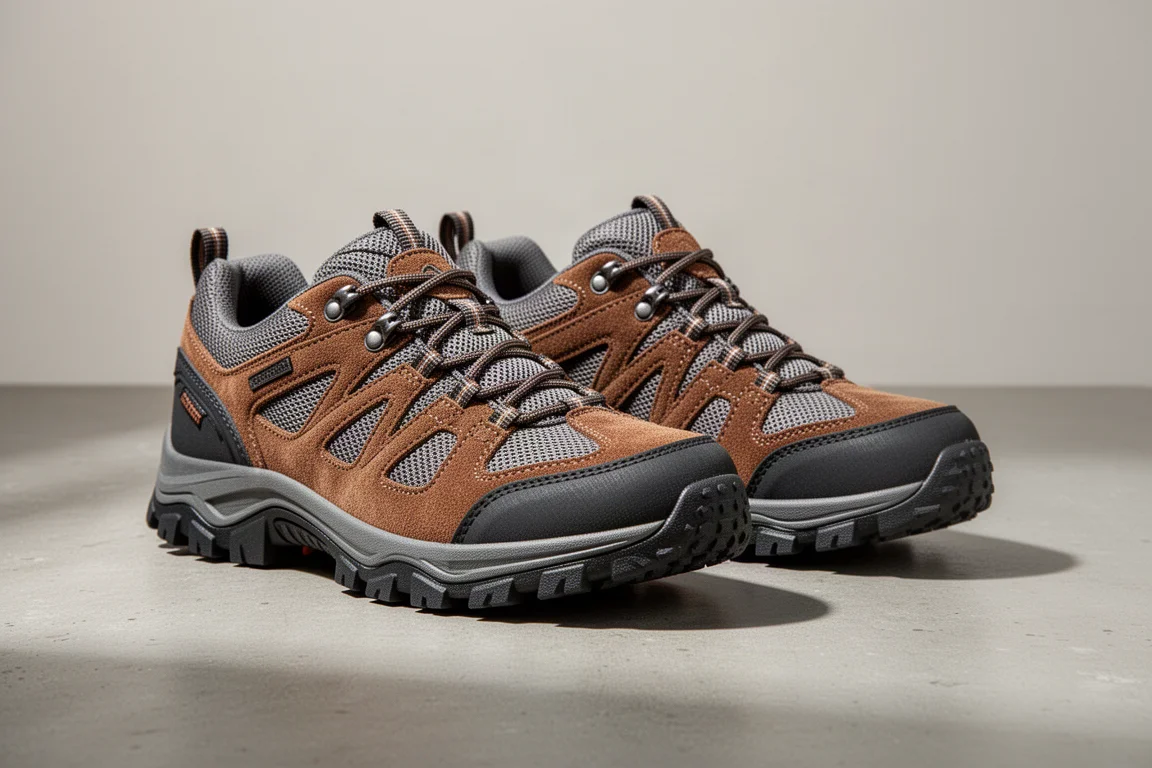
The Footwear: Danner Trail 2650
Five years of use is a strong endorsement for any hiking shoe. The Trail 2650 has been the go-to for that long, and this pair is a mesh build that breathes better over longer days.
The mesh choice is deliberate: more airflow for long, warm afternoons on trail, and a lower weight on the feet. Pair it with a proven trail sock and the combination covers a lot of miles without drama.
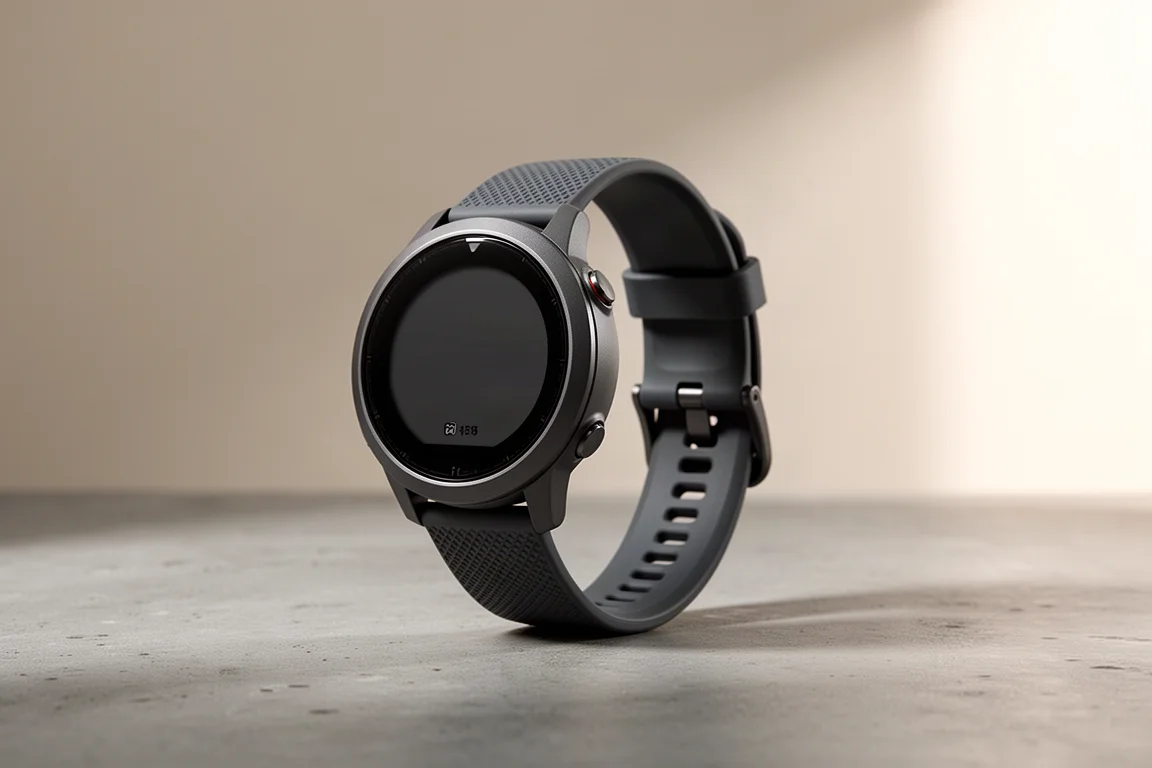
The Trail Watch: Coros Apex 2 Pro
A watch worn daily for close to a year has already passed the comfort test. The Apex 2 Pro covers the essentials on trail: heart rate, barometric pressure, altitude, calories and steps, plus GPS mapping and route tracking.
Battery life is where it pulls ahead. Close to three weeks of everyday use per charge, and up to 50 hours of GPS tracking, means a long weekend of route logging never comes close to emptying it. A more rugged, outdoor-focused model in the same family adds a little bulk over the Apex without going dramatically larger.
The Safety Link: ZOLEO Satellite Communicator
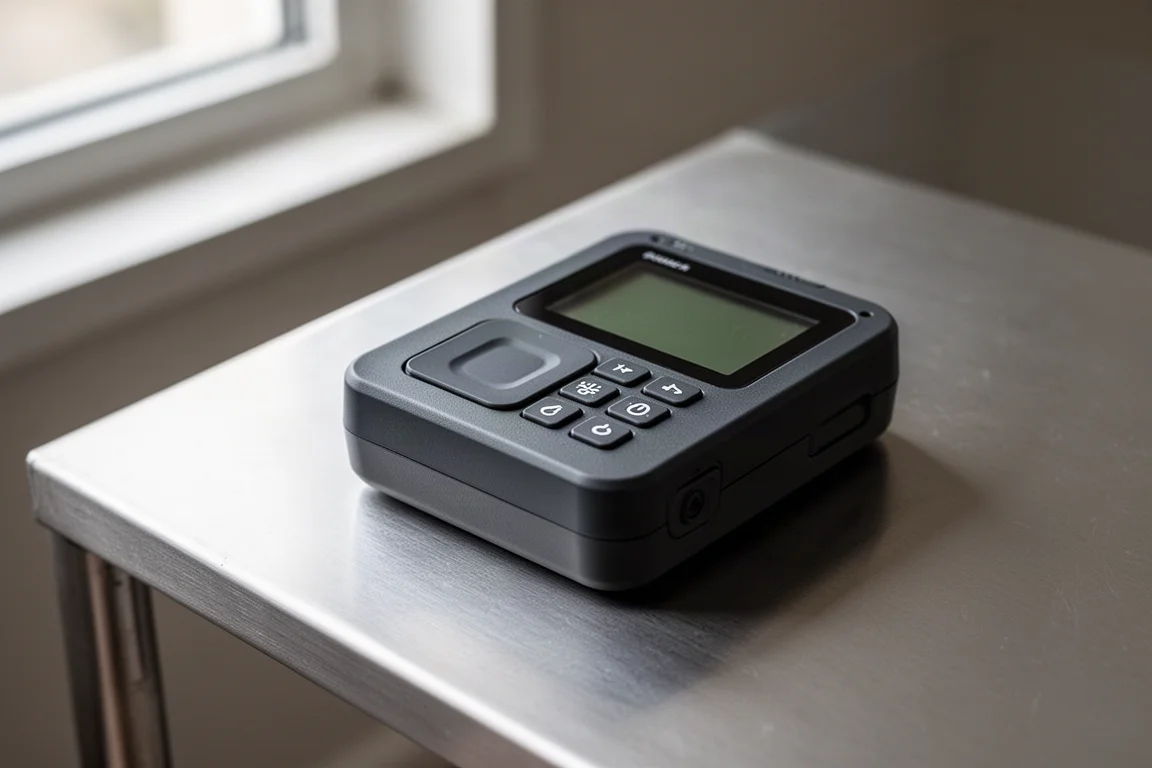
Five and a half years of trouble-free use is the reason the ZOLEO stays in the kit. It is the piece of gear you hope never has to do anything interesting, and that reliability is the whole point.
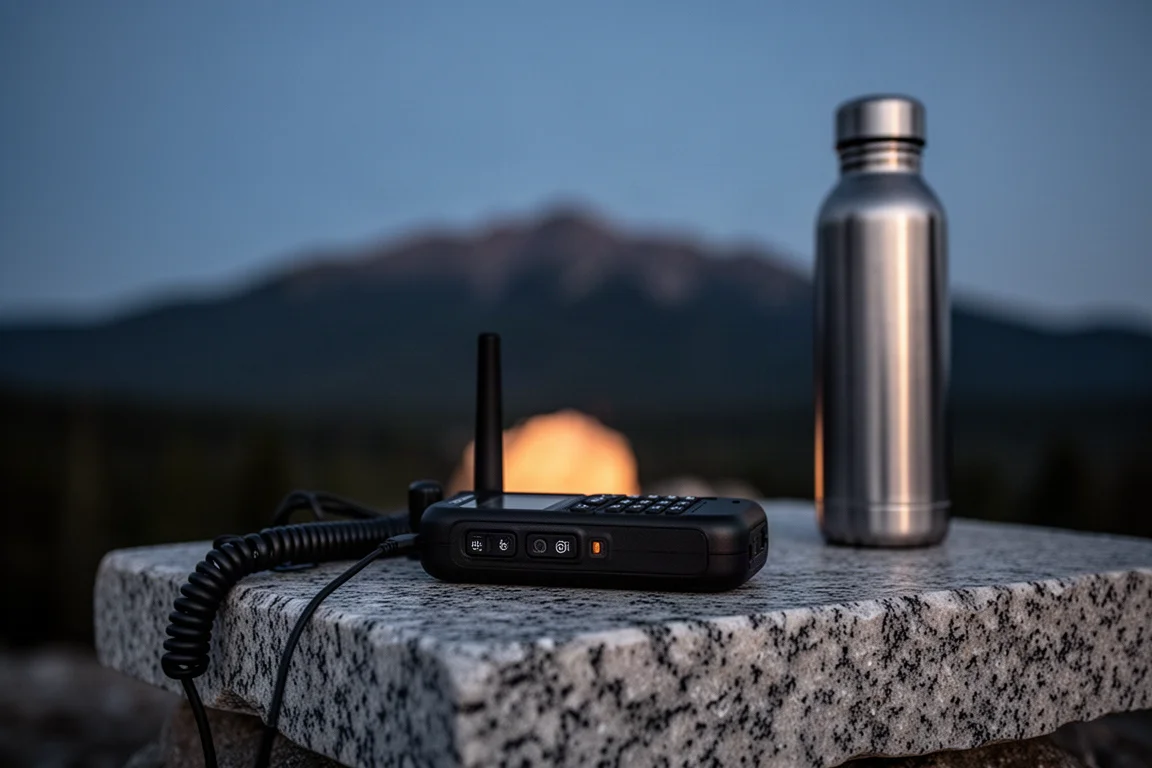
It now works alongside a search-and-rescue expense coverage service that connects through both the communicator and a phone, which adds a second layer of help if something goes wrong far from a trailhead. Between the two, there is a clear path to calling for help when there is no phone signal.
Overall Buying Advice
Start with capacity, not features. If a hard-sided canister is required where you are going, the pack has to swallow it, and the canister itself has to swallow your food. Those two constraints decide more of a loadout than any specification sheet does.
From there, prioritise the items that fail loudly. A shelter that will not pitch on rocky ground, a pad that will not keep you warm, or a communicator that will not send a message are all problems you cannot work around at camp. Saving a few ounces on a quilt or a sun hoodie is pleasant. Saving ounces on safety gear is not worth the risk.
Finally, treat new items as tests. A quilt with no trail nights behind it, a first canister, or a mid layer you have never worn in the rain all deserve a shakedown trip before they carry a five-day itinerary.
Conclusion
A 32-pound Sierra loadout is a useful reminder that lightweight backpacking is a set of trade-offs rather than a single number. The pack, shelter, quilt and pad do the heavy lifting on weight. The canister, communicator and layers do the heavy lifting on confidence. Match those priorities to the trip you are actually taking, and the kit stops feeling like a compromise.
Further reading
Related Reviews

Backpacking Gear
Building a 10 lb Base Weight: An Ultralight Backpacking Gear List
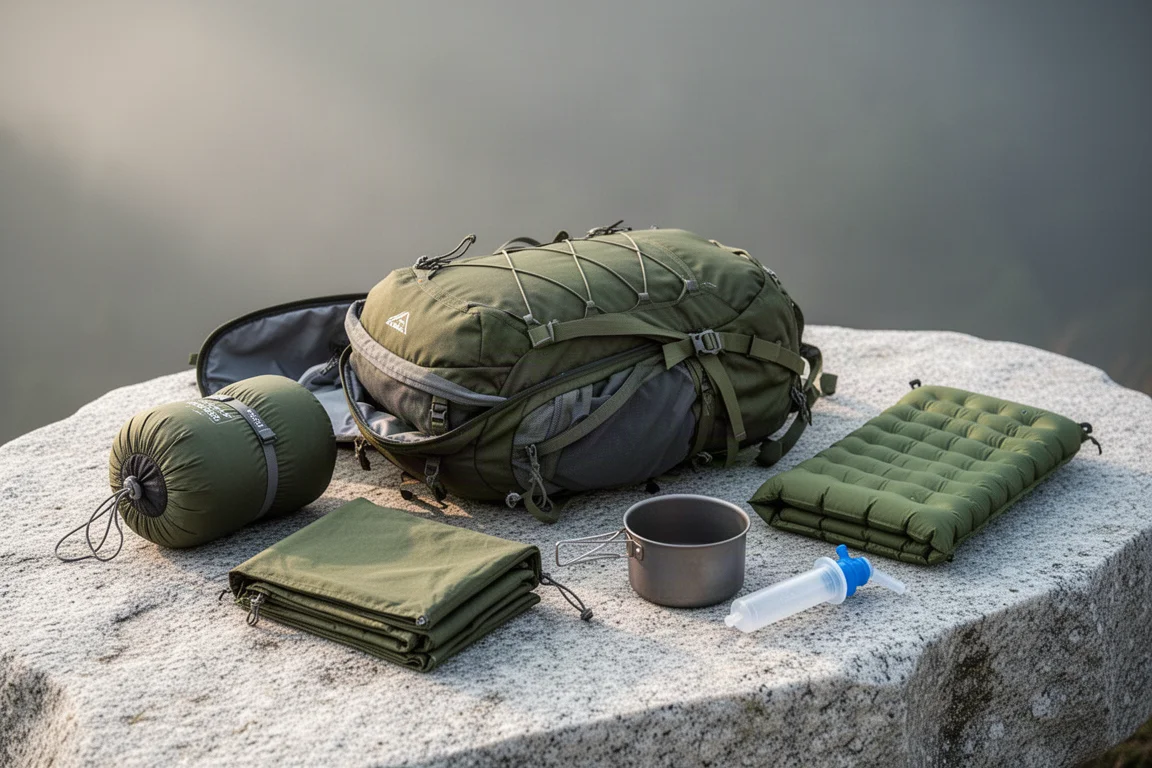
A practical walkthrough of the ultralight pieces behind a 10 lb base weight, from a 765 g pack and a roomy one-person tent to a full camp chair and a dependable water filter.
Backpacking Gear
A 15-Pound Lightweight Backpacking Gear List for Solo Trips
A beginner-friendly 15-pound backpacking setup built from easy-to-find gear, with notes on what each piece does, how it packs, and where to spend your attention.
Backpacking Gear
8 Ultralight Backpacking Gear Upgrades Worth Carrying
Eight small, affordable backpacking upgrades that solve real trail annoyances, from a pillow that stays put to a fuel valve that rescues leftover canister gas.