Cycling Components
Shimano GRX Di2 RX825 Review: 12-Speed Electronic Gravel Shifting
A close look at Shimano's 12-speed GRX Di2 RX825 gravel groupset, covering semi-wireless shifting, measured weights, gearing options and who it suits.
Introduction
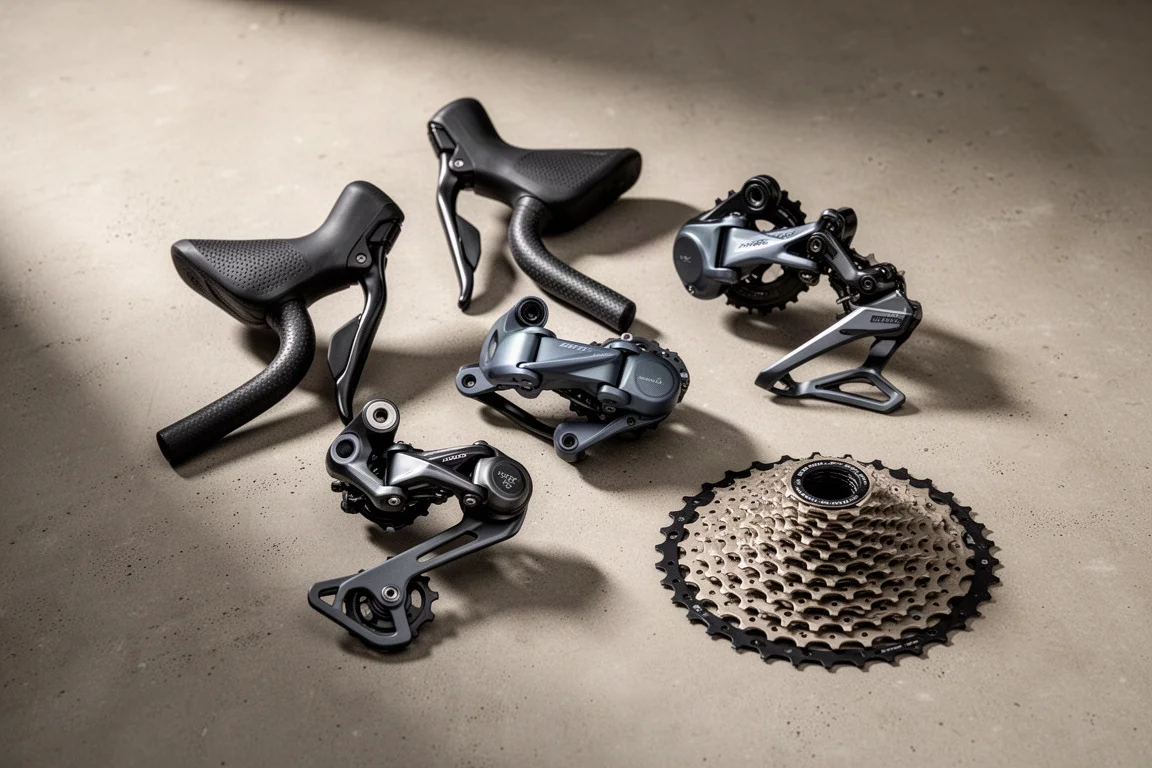
Shimano’s 12-speed GRX Di2 has arrived, and the headline is simple: the electronic gravel groupset now adopts the semi-wireless architecture used across Shimano’s latest 12-speed Di2 road groupsets. Shifter wires and the separate junction box are gone, the rear derailleur handles wireless communication and charging, and the system moves to 12 speeds.
It is not a straight carry-over, though. The new groupset is two-by only, the front derailleur does not share the compact form factor of the newest road units, and the overall build is not lighter than the 11-speed version it replaces. Here is what matters if you are considering an electronic gravel setup.
What’s New: 12-Speed and Semi-Wireless
The core change is the shift to 12 speeds combined with a semi-wireless layout. Each shifter is wireless and powered by its own pair of CR1632 coin cell batteries, which Shimano says should last around three and a half to four years. The front and rear derailleurs remain semi-wireless: they still draw power from a central Di2 battery, typically housed in the seatpost or seat tube, but the connection is reduced to a single wire run.
Because the rear derailleur now contains the brains of the system, along with wireless connectivity and the charging port, there is no need for a junction box anywhere on the bike. It can also talk to compatible bike computers and smartphones running Shimano’s E-TUBE Project app, where you can update firmware and customise shifting settings.
Shimano has also introduced a new shifting mode called Front Shift Next. It lets you assign any single button in the system to actuate a front shift, and the derailleur will shift up or down depending on which chainring you are currently using.
One practical consequence of the move to 12 speeds is compatibility. The new battery, wires and charging cable are carried over from Shimano’s latest electronic road groupsets, which means the 12-speed GRX Di2 system is not compatible with older 11-speed parts. Anyone upgrading from 11-speed GRX Di2 needs to start again with the electronic components.
Who This Groupset Is For
This groupset makes most sense for riders on two-by gravel bikes who want electronic shifting without moving to a road-oriented setup. The shifter shape has been updated with flared handlebars in mind, the Di2 button layout is unchanged from the previous generation, and the system integrates with compatible bike computers and the E-TUBE Project app for customisation.
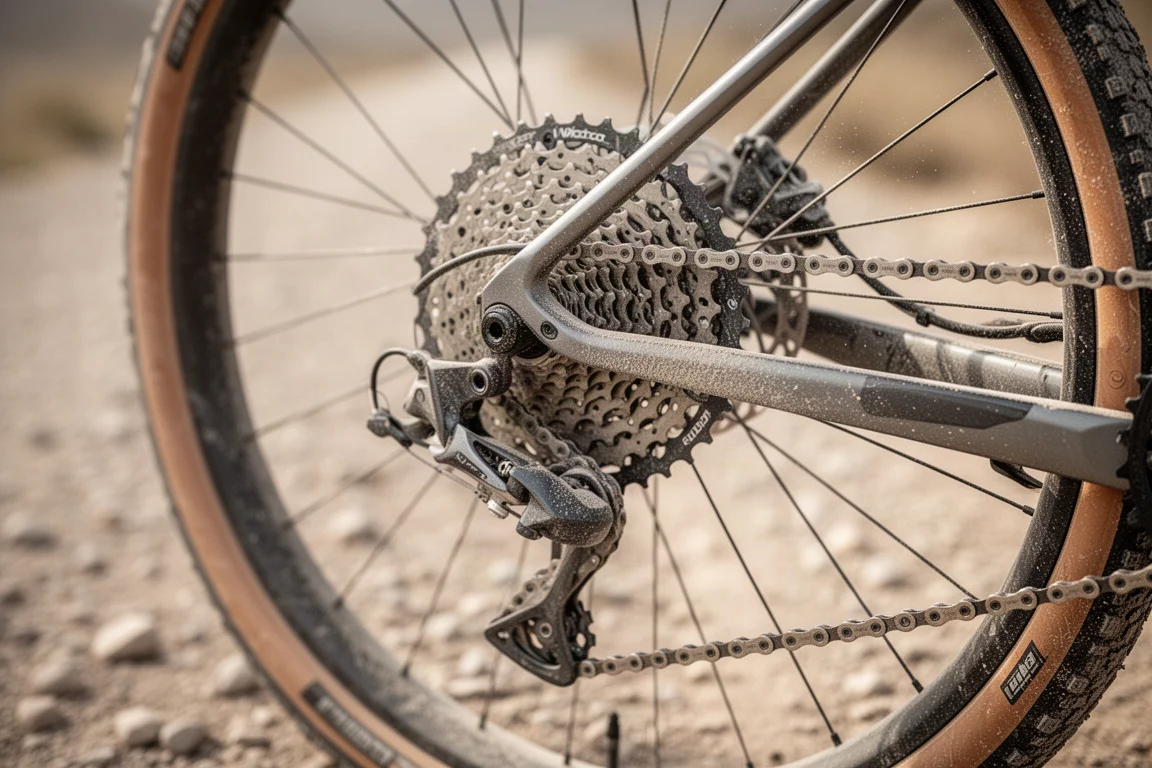
It also suits riders who want a wide gear range with chain security on rough terrain. The rear derailleur can now handle cassettes up to 36 teeth and retains Shimano’s Shadow Plus clutch, which helps keep the chain in check when the surface gets loose.
It is a less obvious fit for two groups of riders. Anyone committed to a single-ring setup will have to wait, because there is currently no one-by version; Shimano has said one-by is coming but has not given any detail on timing. Riders who want a native power meter will also be looking elsewhere, since GRX still has no first-party power meter option. Third-party crank and pedal based meters remain the route for wattage on a gravel bike.
Main Strengths
The most useful upgrade is gearing flexibility. Where the previous two-by GRX Di2 rear derailleur had a maximum cassette size of 34 teeth, the new one shifts up to 36 teeth. There are two cassette choices: an Ultegra-level 11-34 option or a slightly wider 105-level 11-36 cassette, and both work with Shimano’s standard Hyperglide and Hyperglide+ freehubs.
Cranksets are available with 48/31 or 46/32 chainrings and crank lengths from 170 mm to 175 mm, so it is possible to tune the setup around your terrain and riding style.
The braking side is carried over from the mechanical 12-speed GRX group, which is no bad thing. The calipers use the same 10% greater pad clearance, the updated bleed port location and Shimano’s Servo Wave technology. Rotors are Shimano’s latest RT-CL800 models, which use a more robust carrier and a redesigned braking surface intended to deliver quieter and more consistent braking. In practice these rotors are a genuinely worthwhile upgrade, and riders still running the first-generation rotors would notice the difference even without changing anything else.
The new shifting mode adds another layer of convenience. Front Shift Next means a single assigned button can handle front shifts in either direction, which is handy when your hands are already busy on a rough descent or a steep ramp.
Ergonomics have been revised as well. The shifters are slightly rounder on top than the outgoing 11-speed units and better optimised for flared handlebars, and the brake levers gain an anti-slip coating that improves grip and braking confidence in wet conditions.
Shifters and Ergonomics
The new GRX Di2 shifters keep the familiar Di2 control layout: two buttons on the outside of each brake lever, plus an additional button on the inside of each hood. The overall shape stays close to the outgoing 11-speed design, with a slightly rounder top section and a profile tuned for flared bars.
Power comes from two CR1632 coin cell batteries per shifter rather than a wired connection to the main battery, which is what removes the cables running from the bars into the frame. Shimano’s claimed weight for a pair is 415 g, which is 42 g more than the previous generation, although losing the junction box and the extra wires offsets some of that. Actual measured weight for a pair comes in at 440 g.
Derailleurs and the Rest of the Groupset
The rear derailleur, the RD-RX825, is the control centre of the system. It houses the wireless connectivity and the charging port, communicates with bike computers and the E-TUBE Project app, and still runs a single wire to the central battery. It is a compact unit with a single cage length available, a maximum cassette capacity of 36 teeth, and the Shadow Plus clutch for chain retention. The finish is a more uniform dark grey, similar in tone to Shimano’s Ultegra Di2 group. Claimed weight is 310 g, an increase of 23 g over the previous 11-speed version, and measured weight lands exactly on that 310 g figure.
The front derailleur, the FD-RX825, uses a revised cage and a slightly updated main body. It works with chainrings up to 48 teeth and has a total capacity of 17 teeth, which refers to the maximum difference between the small and large ring. Notably, it does not adopt the smaller form factor of Shimano’s latest Ultegra and Dura-Ace Di2 front derailleurs and looks closer in size to the 105 Di2 unit. Shimano says this derailleur uses a stronger motor than its road equivalent because of the more challenging conditions it is used in, and confirms there have been internal design changes for this generation, but it does not claim specific front shifting improvements. Claimed weight is 142 g, up 7 g on the previous version, with measured weight slightly under at 139 g.
Everything else in the groupset comes from Shimano’s existing 12-speed road and gravel range. That includes the cranksets, cassettes, chain, brake calipers, rotors, Di2 battery, wires and charging cable. The chain is a 12-speed Ultegra and XT level model, and lighter or more affordable alternatives can be swapped in if you prefer.
Adding it all up, the measured build comes to 2,892 g, which is a little heavier than the roughly 2,679 g claimed for the comparable 11-speed groupset. Because the new system needs fewer wires, the real-world gap should be smaller than those numbers suggest, but the previous generation can still come out lighter overall, particularly if you fit the newer, lighter brake rotors.
Things to Consider Before Buying
The biggest limitation is drivetrain configuration. This is a two-by groupset only. If you ride single-ring gravel, there is nothing here for you yet, and Shimano has not indicated when a one-by version might appear.
Weight is worth thinking about too. The 12-speed system is not lighter than the 11-speed it replaces in a comparable specification, and the difference narrows but does not disappear once you account for the missing wires.
Upgrading also means committing to a full system. Because the new battery, wires and charging cable are not compatible with 11-speed Di2 parts, moving from 11 to 12 speeds means replacing the electronic components rather than reusing them.
There is no native power meter option for GRX, so riders who want wattage data will need a third-party crank or pedal based solution. And while the front derailleur has been updated, Shimano makes no specific claims about improved front shifting speed for this groupset.
On price, individual component prices have risen, but the total cost of the groupset works out quite similar to the previous 11-speed version at around £2,100. That is largely because fewer wires and no junction box are needed, and the latest Di2 charging cable is significantly cheaper at £45 compared with just over £100 for the older one. The exact figure depends on the configuration you choose, and real-world prices vary.
Buying Advice
If you already run a two-by gravel bike and want electronic shifting, this is the current option from Shimano, and the semi-wireless layout makes for a cleaner build with less cabling to route and maintain. The wider 36-tooth cassette capacity, the clutch-equipped rear derailleur and the app-based customisation cover the practical needs of most gravel riders.
Budget for the full electronic system if you are coming from 11-speed, and decide your configuration before you buy, since crank length, chainring pairing and cassette choice all affect the final price. The 48/31 chainset with an 11-34 cassette suits riders who spend more time on smoother surfaces, while the 46/32 pairing with the 11-36 cassette gives more room on steep, loose terrain.
Riders who prefer the feel and simplicity of mechanical shifting still have the mechanical 12-speed GRX option, and anyone set on a single-ring drivetrain is better off waiting until Shimano confirms a one-by version.
Conclusion
Shimano’s 12-speed GRX Di2 RX825 brings the electronic gravel groupset up to date with a semi-wireless design, 12 speeds, a wider cassette range and a genuinely useful new front shifting mode. It is not a straight carry-over from the road groupsets, and it is not lighter than the 11-speed version it replaces, but for two-by gravel riders who want electronic shifting with a clean build and app-based tuning, it is a coherent and well-considered package.
Product link
View more details for Shimano GRX Di2 RX825 Groupset
This product is mentioned in the review. Check the specifications, options, and compatibility before buying.
View more details for Shimano GRX Di2 RX825 GroupsetFurther reading
Related Reviews
Cycling Components
A 20,000-Mile Budget Race Bike Build: Five Parts Worth Knowing
A rim brake race bike assembled from low-cost components and ridden for 20,000 miles. Here is what delivered real speed, what caused problems, and what to weigh before copying the formula.
Cycling Components
7 Bike Fit Products Fitters Avoid: What to Check Before You Buy
Seven bike components that regularly cause knee, foot and saddle problems, with the specific concerns behind each one and what to look for instead.
Cycling Components
Four Affordable Bike Upgrades That Improve Ride Feel
Four low-cost cycling products that make a real difference to ride feel, plus the free setup changes worth trying first.