Cycling Components
Shimano Dura-Ace Di2 vs 105 Di2 vs Ultegra Di2: Which Groupset Is Worth It?
A practical look at how Shimano's three 12-speed electronic road groupsets differ in braking feel, shift smoothness, gearing, weight, and price.
Introduction
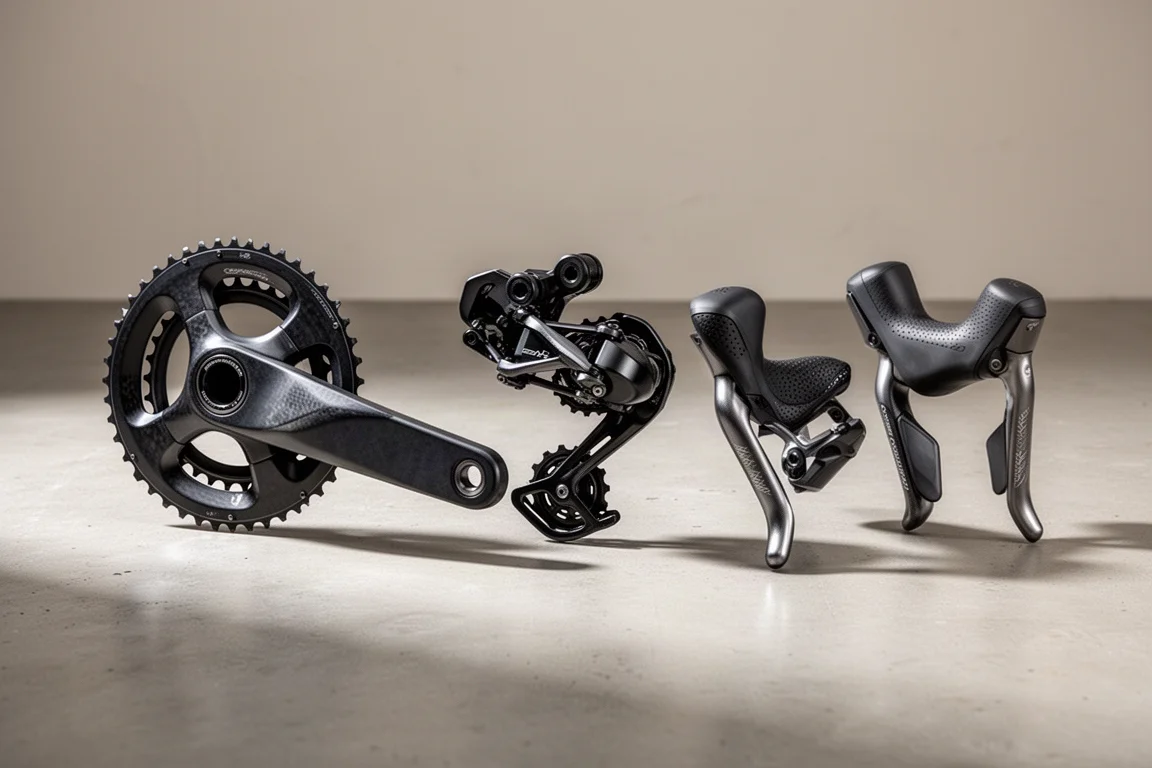
Shimano’s road groupset range is now entirely 12-speed and entirely electronic. Dura-Ace Di2 led the way in 2021, 105 Di2 arrived in 2022 with the same broad philosophy at a much lower price, and Ultegra Di2 sits between them. That leaves a genuine question for anyone speccing a new bike or building one up: how much of the Dura-Ace experience do you actually get with 105 Di2, and is Ultegra Di2 the smarter compromise?
The short version is that all three groupsets shift well and feel remarkably close under the hand. The meaningful differences show up in braking feel, smoothness when shifting into harder gears, gearing range, weight, and price.
How These Groupsets Compare
All three groupsets share the same battery platform and the same wireless technology, and they can be fitted to otherwise identical frames and builds. That makes a direct comparison unusually clean: the same wheels, tyres, bars, and geometry, with only the drivetrain changing.
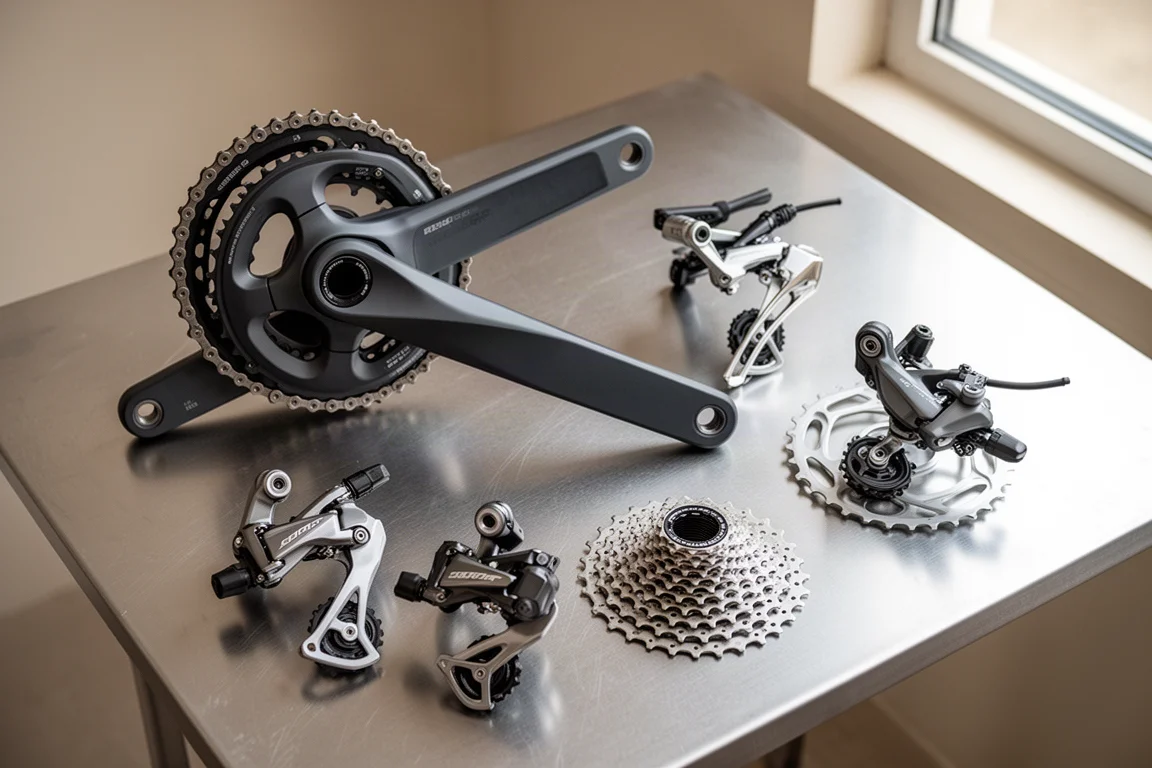
The differences that survive that setup are the ones worth paying attention to. Braking hardware varies between 105 Di2 and the two higher groupsets, the derailleur motors are not identical, and the cassette technology differs. Weight is the other headline number, with 105 Di2 carrying roughly 630 g more than Dura-Ace Di2.

Riders who swap between the groupsets on the same circuit tend to notice the brakes first, then the shift quality into harder gears, and only later the weight. That order of priority is a useful guide when deciding how much of your budget belongs in the drivetrain.
Shimano Dura-Ace Di2: The Benchmark
Dura-Ace Di2 is the reference point: 12-speed, fully electronic, and built with the lightest components in the range. It carries two features that do not appear lower down the line.
The first is Hyperglide+, a cassette design in which the ramps help the chain move up into harder gears, smoothing and speeding up shifts under load. The second is Servo Wave brake technology, which changes the leverage curve at the lever so the brakes feel progressively squeezable rather than wooden. Both Dura-Ace Di2 and Ultegra Di2 use it; 105 Di2 does not.
Dura-Ace Di2 also brings a hidden top button on the lever body, which can be used to scroll through gears or programmed to control a cycling computer instead. The front derailleur has a smaller, more aerodynamic profile than the unit below it, and cassette options include 11-34.
Shimano 105 Di2: Electronic Shifting for Less
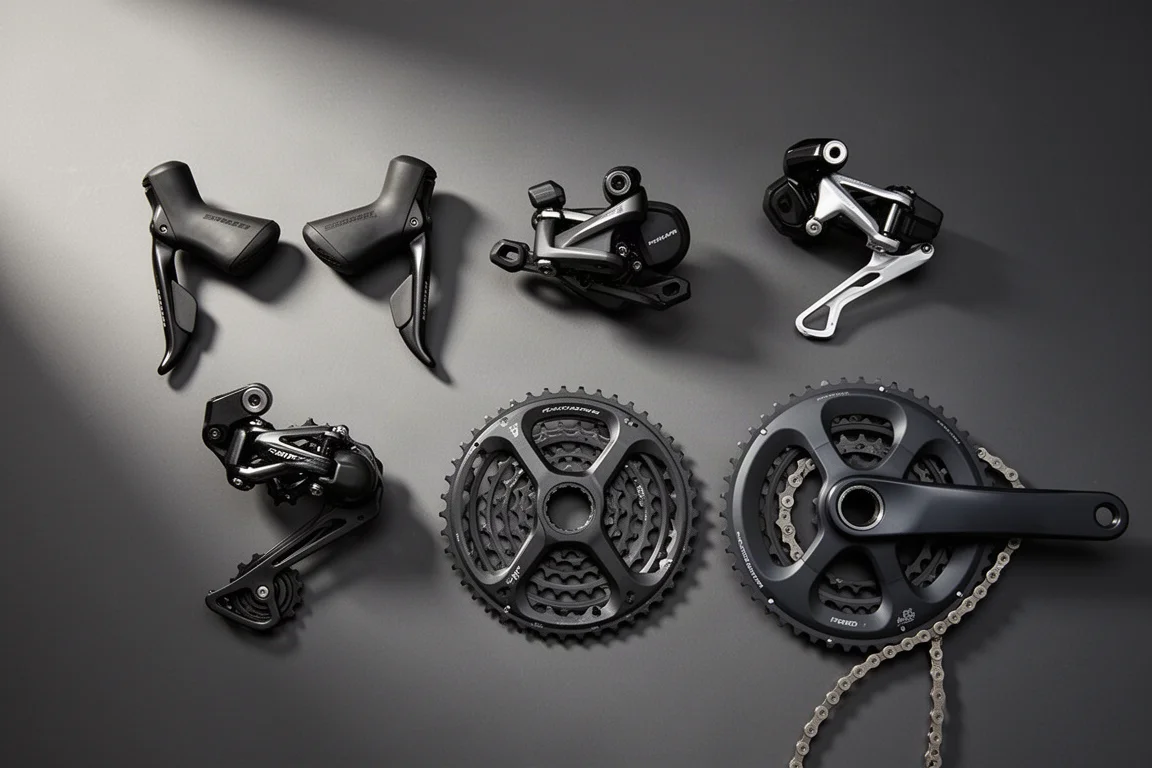
105 Di2 is the groupset Shimano once said it would not build. Launched in 2022, it brings 12-speed electronic shifting to a far broader audience while sharing the battery and wireless architecture of the higher groups.
It gives up a few things. There is no hidden top button on the lever, no Servo Wave brake technology, and no Hyperglide+ cassette. The front and rear derailleur motors are different units, and the front derailleur runs with a noticeably different sound. Those internals, however, are the same ones used in the previous generation of Dura-Ace Di2, which means the technology has already proven itself at the top level of racing.
In practice, the lever shape and the tactile feel of a shift are extremely close to Dura-Ace Di2. Where 105 Di2 gives something back is gearing: it accepts a cassette up to 11-36, a wider range than the 11-34 maximum on Dura-Ace Di2, which is genuinely useful for riders who want easier climbing gears.
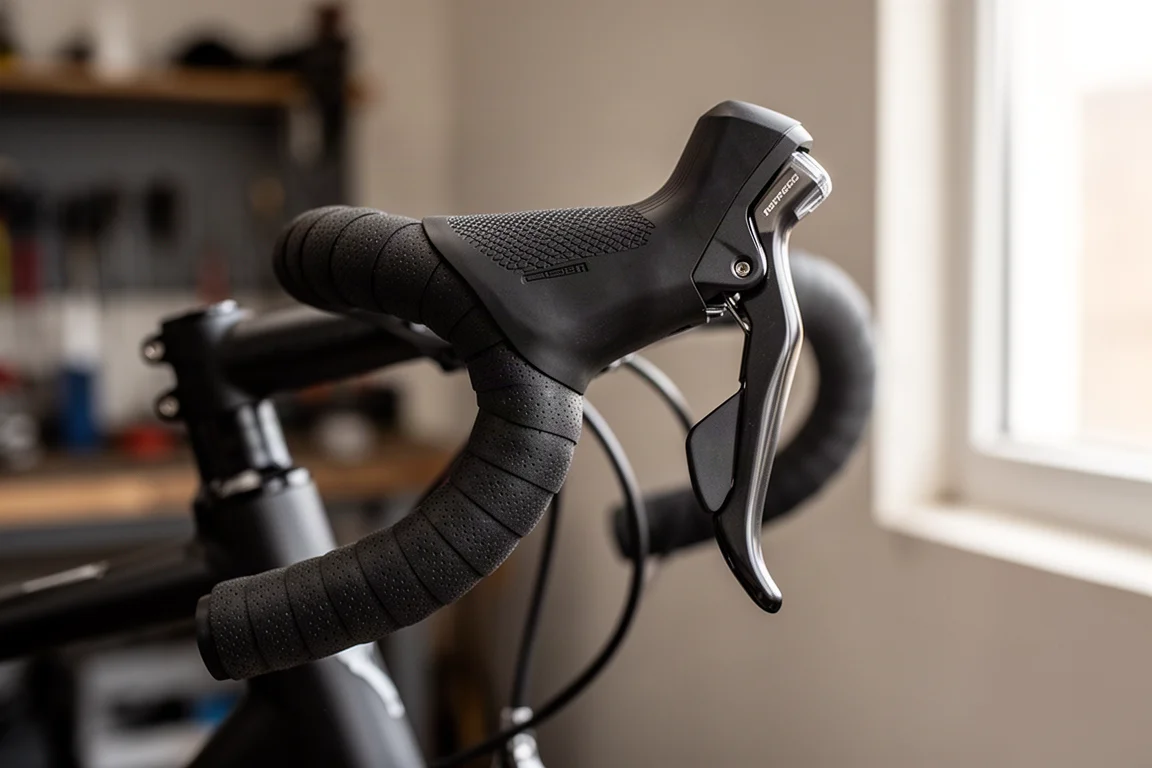
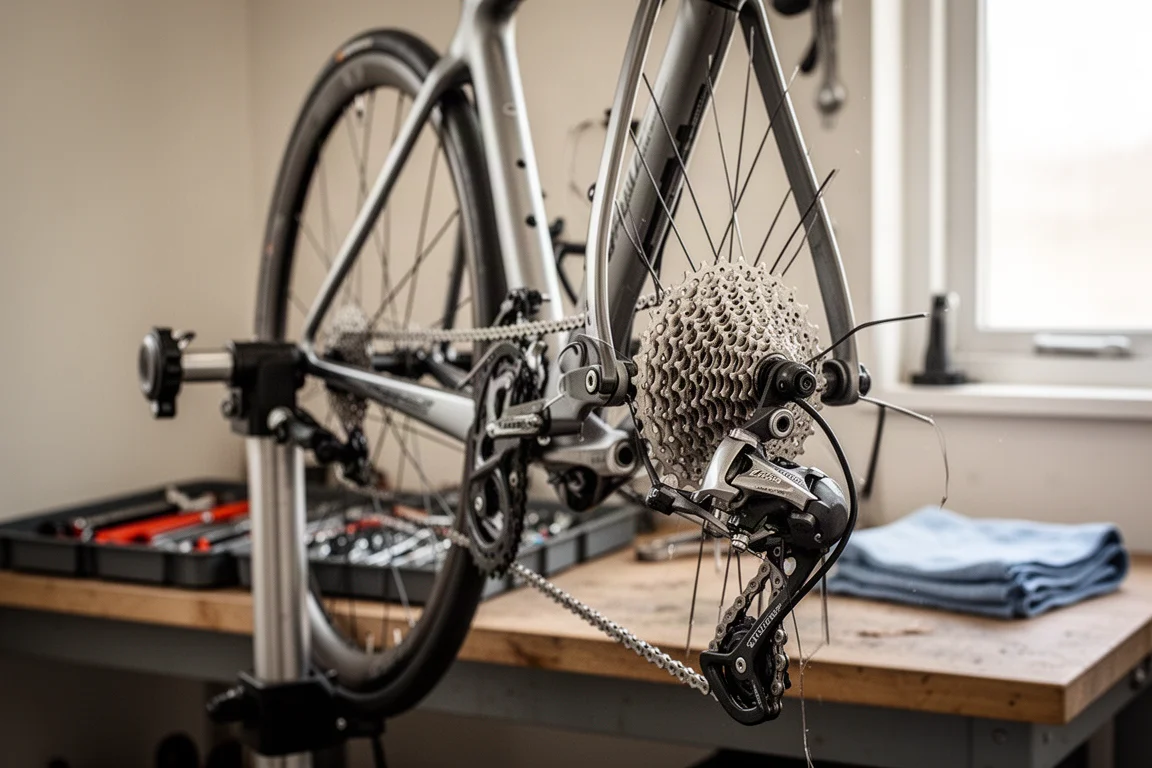
The other trade-offs are weight, at roughly 630 g more than Dura-Ace Di2, and a slight reduction in smoothness when shifting into harder gears. Both are small in isolation, and both become easier to accept once you look at the price.
Shimano Ultegra Di2: The Balanced Option
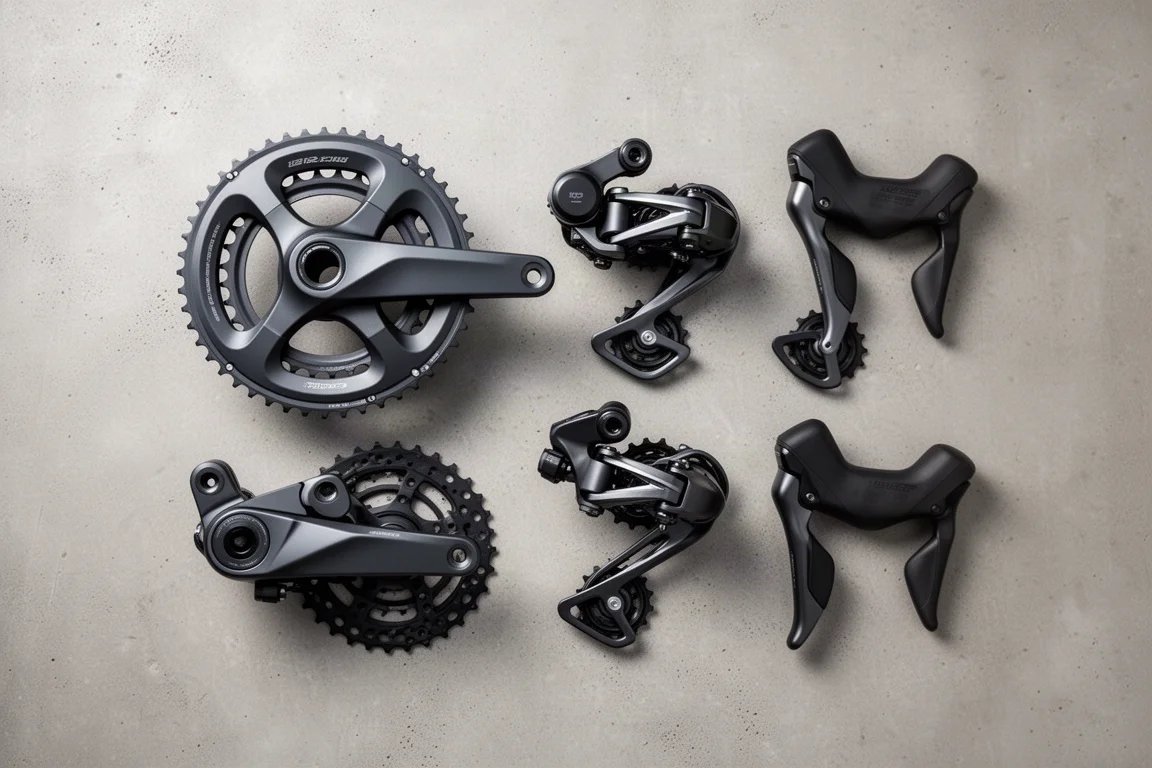
Ultegra Di2 takes the new derailleur motors, the Hyperglide+ cassette ramps, and the Servo Wave brakes from Dura-Ace Di2, so it inherits every one of the small performance advantages. What it does not take is the top-tier material spec and the associated price.
That makes it the quiet overachiever of the range. On an identically specced bike, an Ultegra Di2 build came in only around 700 above the equivalent 105 Di2 build, while delivering the same shift smoothness and the same braking character as Dura-Ace Di2.
If you want the majority of the flagship experience without paying flagship money, Ultegra Di2 is the groupset that gets closest to it.
What the Weight Difference Really Means
630 g sounds substantial when you quote it as a groupset figure, and it represents roughly a 25% difference between 105 Di2 and Dura-Ace Di2 in those terms. Put it into system mass, however, and the picture changes: with the bike, the rider, and everything needed to ride included, it works out to around 0.7%.
On a short climb, that is very hard to feel. Over a long climb, or in a race where the pace stays high all day, it becomes more relevant. The sensation riders describe is at the bottom of the pedal stroke, where the bike briefly slows through the dead spot; a lighter build feels like it surges forward again more readily.
There is a subtler effect too. On the lighter setup, riders tend to hold the big chainring for longer on rolling terrain, which changes how the bike feels as much as the weight itself.

None of this makes weight irrelevant. It means the number deserves to be weighed against the kind of riding you actually do.
Braking, Gearing, and Shifting Feel
Braking is the difference that announces itself first. Dura-Ace Di2 and Ultegra Di2 use Servo Wave, which gives a more progressive, easier-to-modulate lever feel, particularly on the first hard application into a corner. 105 Di2 brakes work well but feel different, and that gap is noticeable straight away when switching between bikes.
Shifting feel through the levers is much harder to separate. Blind comparisons produce very similar verdicts on lever shape and tactile feedback. The clearest divergence comes when shifting into harder gears, where the Hyperglide+ ramps on Dura-Ace Di2 and Ultegra Di2 make the change feel faster and smoother than on 105 Di2.
Gearing range splits the other way. 105 Di2 accepts a cassette up to 11-36, while Dura-Ace Di2 tops out at 11-34, so the less expensive groupset is the more flexible one for riders who want low climbing gears.
Which Groupset Should You Buy?
Start with the bike rather than the groupset. Complete Dura-Ace Di2 bikes cost roughly double a 105 Di2 build, but the groupset is only part of that gap: Dura-Ace builds usually come with a higher grade of carbon frame, carbon wheels, and often a power meter, so you are paying for the whole package rather than the shifting alone.
Buy the groupsets on their own and the same pattern holds. Dura-Ace Di2 costs close to twice what 105 Di2 costs, and it is not twice as good. If you are chasing the last few percent of shift speed and brake feel, and the budget allows, Dura-Ace Di2 delivers it. If value matters more, 105 Di2 brings electronic 12-speed shifting, a wider gear range, and only a small penalty in feel.
Ultegra Di2 is the option that splits the difference most convincingly. It costs less than Dura-Ace Di2 but carries the same motors, cassette ramps, and brake technology, which is where nearly all of the perceptible performance difference lives. Riders who are highly attuned to their equipment will notice the gap between 105 Di2 and the two higher groupsets quickly. Riders less focused on component detail may not notice it at all, especially without riding the bikes back to back.
Conclusion
There is a real difference between Dura-Ace Di2 and 105 Di2 in this generation, and it is a wider gap than existed between the mechanical versions of the two groupsets. It is simply concentrated in places that are easy to underestimate on paper: brake modulation, shift smoothness into harder gears, weight, and the presence of the lever top button.
Ultegra Di2 remains the most sensible answer for most buyers, because it captures the performance advantages without the flagship price. 105 Di2 is the value pick for anyone who wants electronic shifting and a wider gear range. Dura-Ace Di2 is for riders who want the lightest, sharpest version of the experience and are prepared to pay for it.
Further reading
Related Reviews
Cycling Components
A 20,000-Mile Budget Race Bike Build: Five Parts Worth Knowing
A rim brake race bike assembled from low-cost components and ridden for 20,000 miles. Here is what delivered real speed, what caused problems, and what to weigh before copying the formula.
Cycling Components
7 Bike Fit Products Fitters Avoid: What to Check Before You Buy
Seven bike components that regularly cause knee, foot and saddle problems, with the specific concerns behind each one and what to look for instead.
Cycling Components
Four Affordable Bike Upgrades That Improve Ride Feel
Four low-cost cycling products that make a real difference to ride feel, plus the free setup changes worth trying first.