Cycling Components
Shimano Dura-Ace 7700 vs Shimano Sora R3000: Does Modern Entry Level Beat the Old Flagship?
A 9-speed flagship from the late 1990s meets the current entry-level groupset. Here is where Dura-Ace 7700 still wins, and where Sora R3000 has quietly caught up.
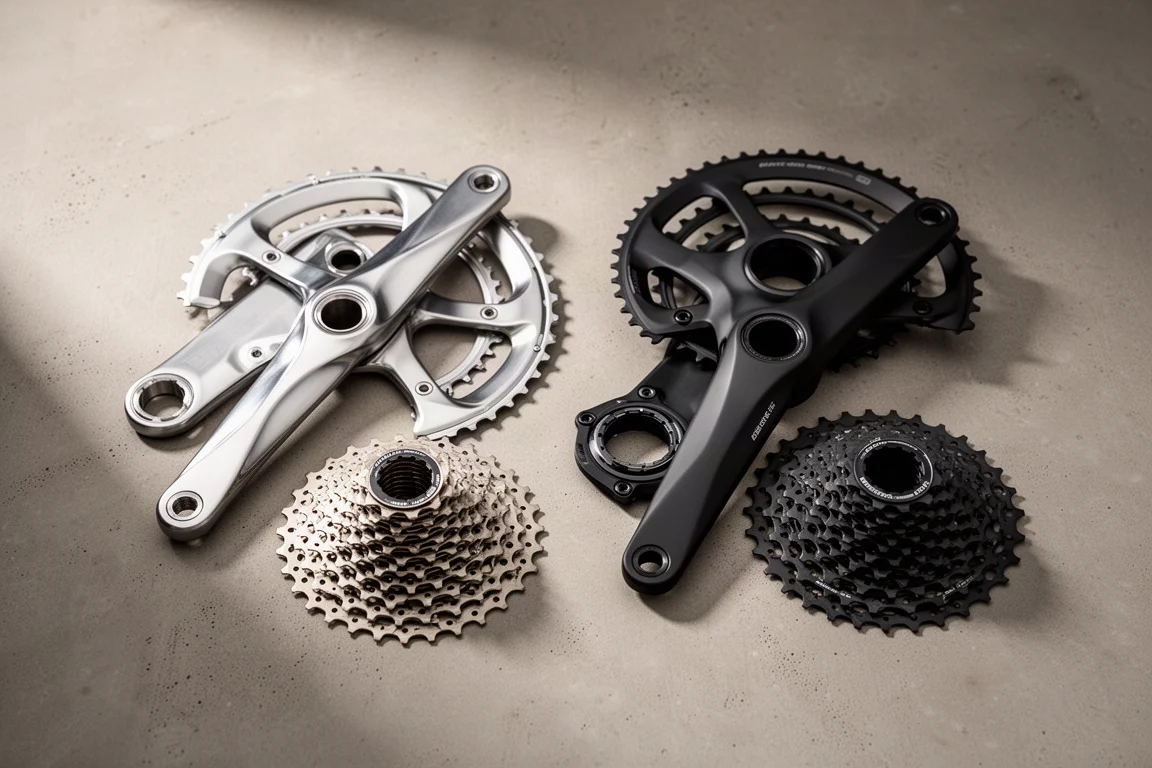
Introduction
Nine-speed road groupsets have been around for a long time, and these two sit at opposite ends of the same story. Shimano Dura-Ace 7700 was the flagship of its era, launched at the end of the 1990s with a polished finish, a titanium cassette and a price to match. Shimano Sora R3000 is the entry point of the current range, a 9-speed groupset introduced in 2000 that has spent more than two decades absorbing technology from the top of the line.
That raises an obvious question. How many years of trickle-down does it take before a new entry-level groupset is genuinely better than an old flagship one? A back-to-back comparison on the road, including a one-mile climb at roughly 8 percent gradient, suggests the answer is not quite yet, although Sora gets far closer than the price gap would suggest.
How These Two Groupsets Compare
Both groupsets are 9-speed, and both use dual pivot caliper brakes, so the comparison is tighter than a 23-year gap implies. The differences that matter come down to weight, gear ratios, bottom bracket design, lever hood shape, shifting refinement and brake feel.
The evaluation covered five areas: total groupset weight, gear range and the size of the steps between sprockets, pedalling stiffness through the bottom bracket, lever and brake feel, and measured performance. That last part included a timed climb ridden at a steady effort and a braking test from 15 mph, with stopping distances measured across the best of three runs on each setup.
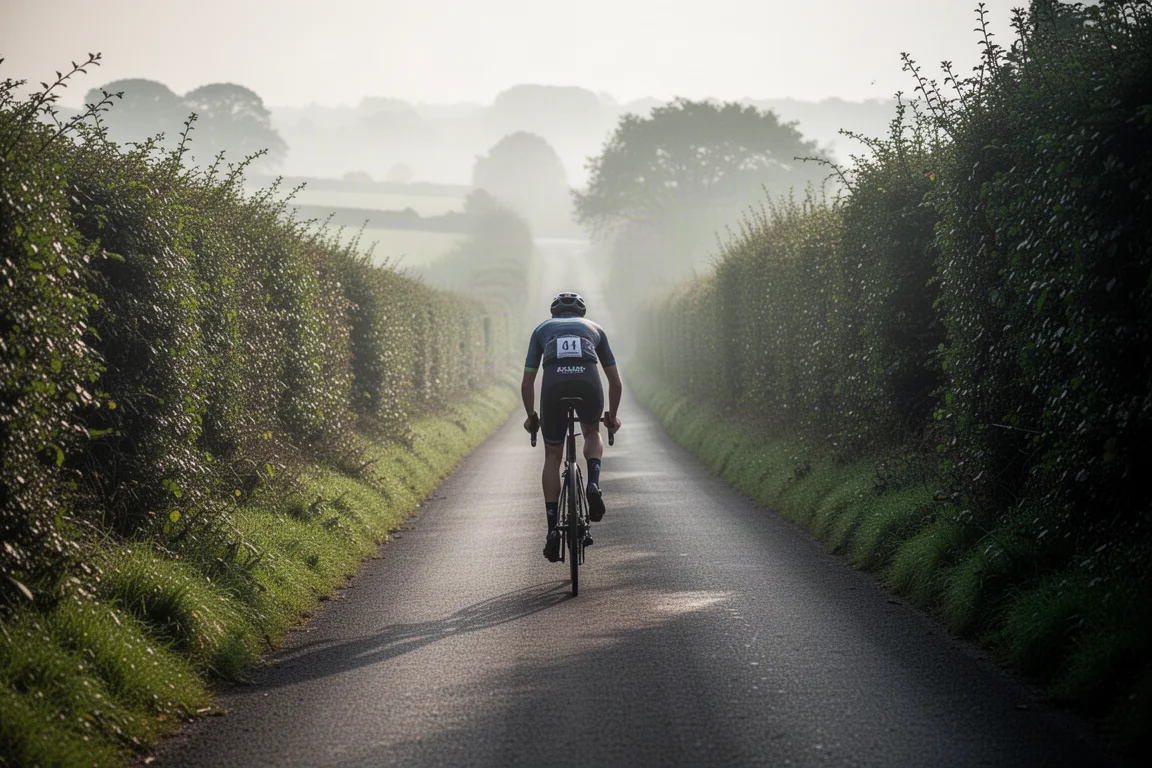
Looks were also part of the assessment, which is entirely subjective but hard to ignore on an older frameset.
Shimano Dura-Ace 7700: The Old Flagship
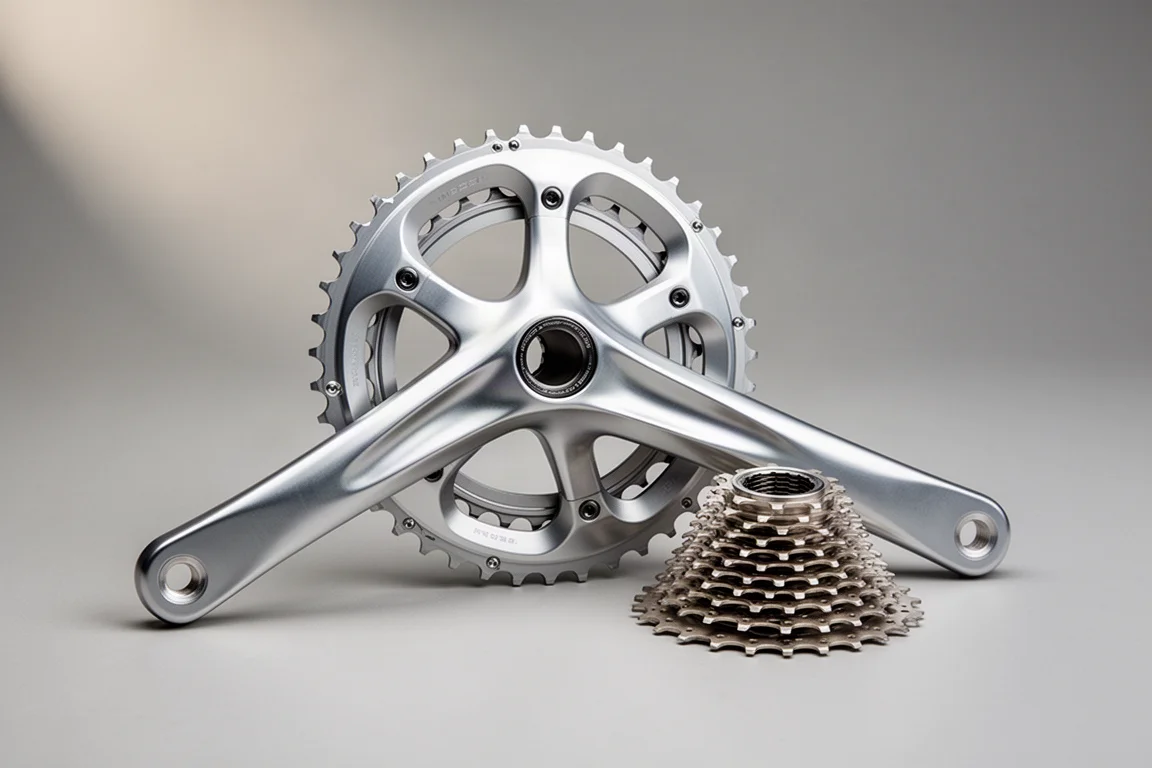
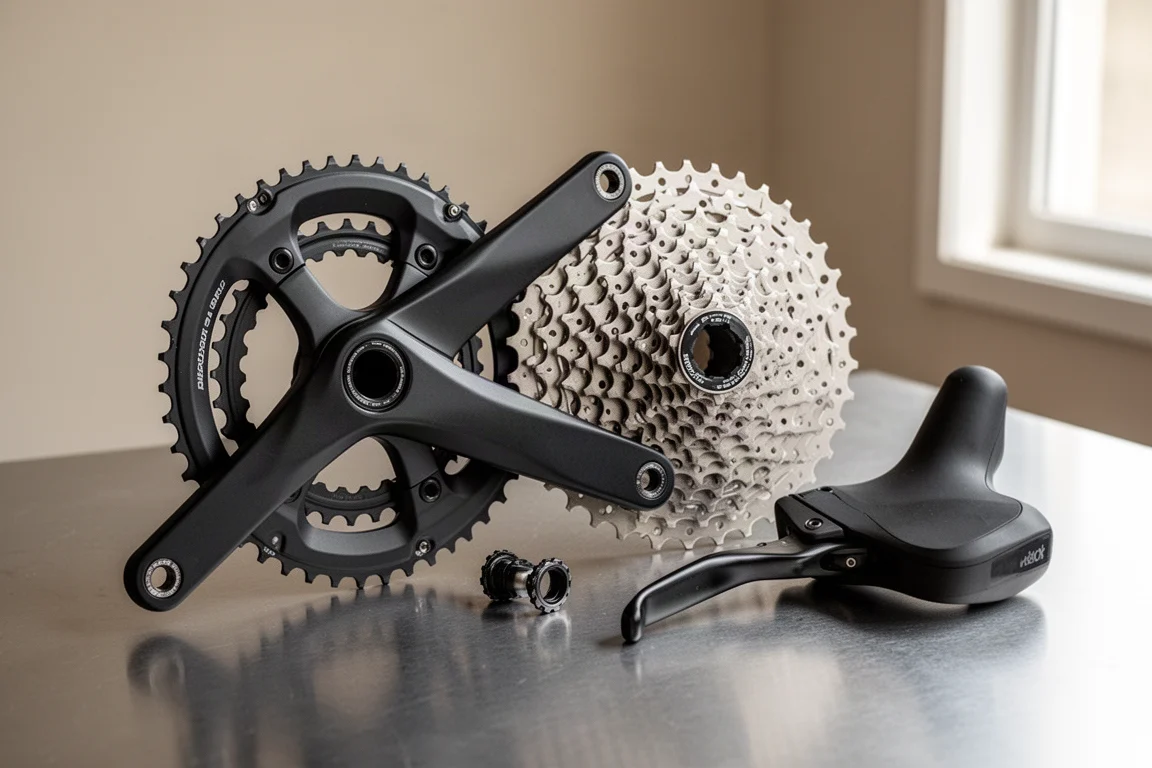
Dura-Ace 7700 is the lighter of the two by a wide margin. The complete groupset weighs 2,070 g, and every individual component is lighter than its Sora equivalent. The chainset alone is 690 g with 53/39 chainrings, the STI levers are more than 100 g lighter, and the titanium cassette comes in at 169 g in a close-ratio 12/25 configuration.
Its bottom bracket is the Octolink design, an evolution of square taper that used a hollow, oversized, splined spindle. It was stiffer than the older square taper system, but not a radical change. The real leap arrived later with Dura-Ace 7800 and its outboard bearings.
Finish is where 7700 still stands apart. The polished, sculpted surfaces look like a flagship groupset should, and a 25-year-old example that still works as it did when new makes a strong case for its durability. The weak point is the lever hood, which is small by modern standards and offers fewer hand positions, making long climbs feel cramped. Brake lever feel, though, is excellent: cushioned, smooth and almost frictionless.
Shimano Sora R3000: Modern Entry Level
Sora R3000 weighs 2,867 g as a groupset, nearly a kilogram more than Dura-Ace 7700. Its chainset is 979 g, almost 300 g heavier on its own, and the STI levers add more than 100 g. The comparison bike ran a Praxis chainset rather than the original Sora one, but with identical ratios and the same design, so the picture holds.
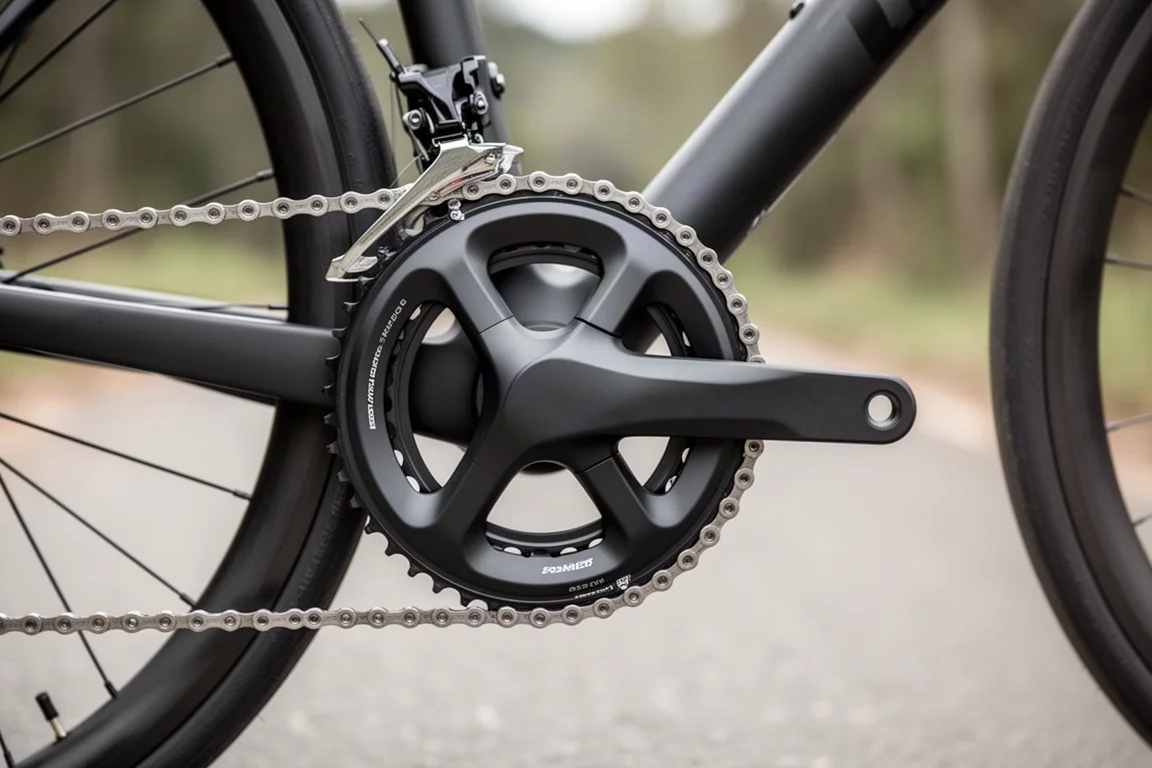
Where Sora moves ahead is usability. The compact 50/34 chainset and 11/32 cassette give a far wider spread of ratios than the old flagship, and the outboard bearing bottom bracket, first introduced on Dura-Ace 7800, delivers noticeably better pedalling stiffness than Octolink. The lever hoods are larger and more modern, with more hand positions and a shape that is easier to grip.
Brake levers are the compromise. They use molded brake blocks rather than cartridge pads seated in metal shoes, and the lever feel is clearly less refined: you can sense the cable and the caliper moving, with some friction and no damping. Sora is not ugly or cheap looking, but it is a groupset built to do a job rather than to be admired. Pricing reflects that, with a complete bike fitted with Sora noted at just over £1,000, against roughly 15 times that for the bikes winning the Tour de France.
Weight and Gearing Differences
Nearly a kilogram separates the two groupsets, and on a steep climb that matters. Gear ratios matter just as much, though in the opposite direction. Dura-Ace 7700’s bottom gear, 39/25, works out to 42.1 gear inches, which pushes most riders out of the saddle almost immediately on a sustained climb. Sora’s 34/32 bottom gear is 28.6 inches, small enough to sit and spin.
Top gear actually favours Sora: 50/11 measures 122.7 inches against 119.2 inches for Dura-Ace’s 53/12. The trade-off is spacing. A wide 11/32 cassette has larger jumps between sprockets, so cadence is harder to hold steady, while the close-ratio 12/25 keeps the steps small and predictable.
Shifting Feel and Braking Performance
Shifting quality is the clearest divide. Dura-Ace 7700 feels premium and smooth under load, including on the climb, and the difference is obvious the moment the lever moves. Sora is not agricultural, but less effort has gone into the user experience. It changes gear reliably and precisely, which is exactly what an entry-level groupset is for.
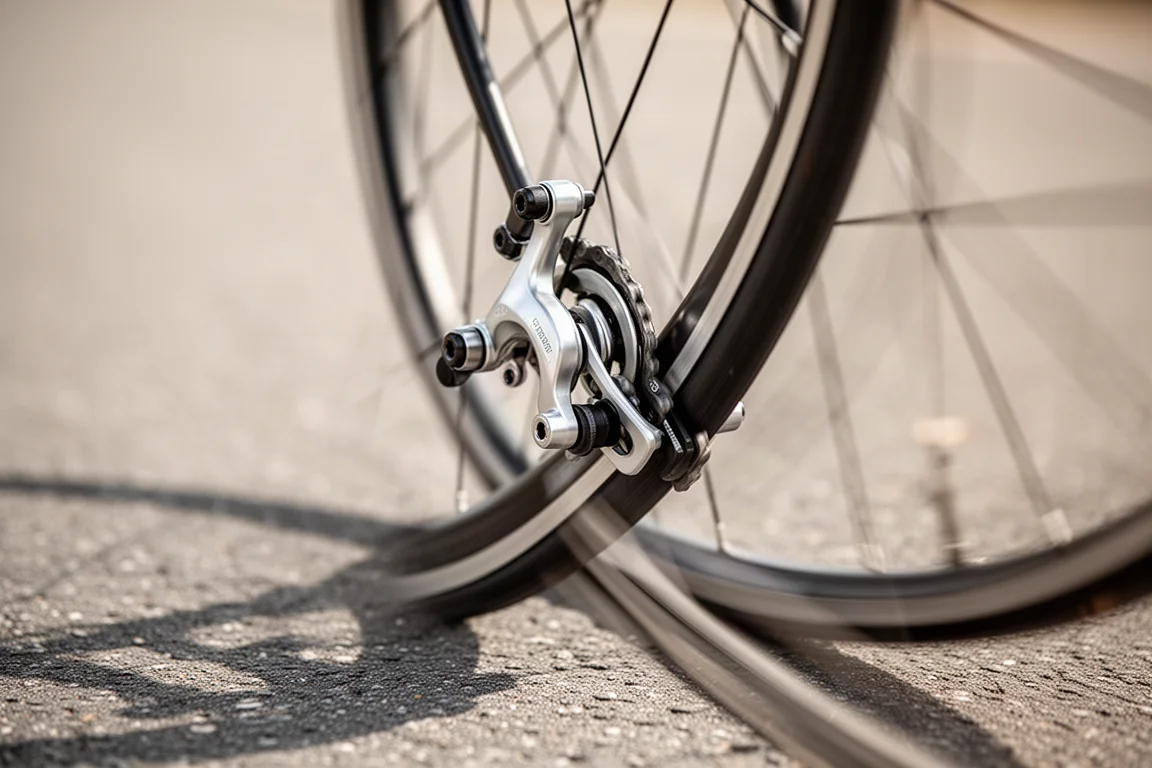
Braking is much closer than expected. Both use dual pivot calipers, and both proved surprisingly powerful in a stopping test from 15 mph, with enough bite to risk going over the bars. Measured across the best of three runs, the Sora-equipped bike stopped 53 cm shorter than the Dura-Ace bike, so on this measure the modern entry-level setup wins.
That result deserves perspective. It reflects one test, one set of conditions and one pair of bikes, not a universal verdict on rim brakes.
What the Hill Test Showed
On the timed climb, the Dura-Ace bike was faster at a slightly lower power output. On the longest segment it recorded 285 W against 290 W and finished in 509 seconds against 524, a 15-second gap. On a second segment both bikes were ridden at 298 W, and the Dura-Ace bike finished in 320 seconds against 331, an 11-second difference.
The bike weight difference was only around 300 g, which does not obviously explain a gap of that size, and seated versus standing climbing has been found to make little difference. The likelier explanation is a combination of small factors: differences in hubs and tyres between the two bikes, and the cumulative effect of many minor advantages.
Overall Buying Advice
If the goal is the fastest possible bike for a given effort, the old flagship still has the edge on a steep climb, and its lighter components and polished finish are hard to argue with. Dura-Ace 7700 remains a special groupset, and a well-kept example that still works after 25 years is a genuine long-term proposition.
Sora R3000 makes more sense for most riders buying new. Its wider gear range, stiffer bottom bracket and larger hoods make hilly riding easier and more comfortable, and its braking matched or beat the older groupset in testing. It is heavier and less refined, and nobody would call it beautiful, but it is fit for purpose at a fraction of the cost.
A practical way to decide is to pick the groupset that matches the riding you actually do. Close ratios and light weight suit strong riders on rolling terrain, while a wide cassette and comfortable hoods suit anyone facing long climbs.
Conclusion
Twenty-three years of trickle-down has not produced a clear upset. Sora R3000 has closed the gap in braking, gear range, bottom bracket stiffness and hood comfort, but Dura-Ace 7700 is still lighter, still smoother to shift and still faster up a steep hill. Which one is right depends on whether you want the best value on a new bike or a piece of cycling history that still performs.
Further reading
Related Reviews
Cycling Components
A 20,000-Mile Budget Race Bike Build: Five Parts Worth Knowing
A rim brake race bike assembled from low-cost components and ridden for 20,000 miles. Here is what delivered real speed, what caused problems, and what to weigh before copying the formula.
Cycling Components
7 Bike Fit Products Fitters Avoid: What to Check Before You Buy
Seven bike components that regularly cause knee, foot and saddle problems, with the specific concerns behind each one and what to look for instead.
Cycling Components
Four Affordable Bike Upgrades That Improve Ride Feel
Four low-cost cycling products that make a real difference to ride feel, plus the free setup changes worth trying first.