Astrophotography
Sharpstar SCA 310 Review: A Fast, Large-Format Cassegrain Astrograph
A 310mm f/3.8 Cassegrain astrograph with a 55mm image circle, built for demanding full-frame and medium-format deep sky imaging. Here is how it performed over months of testing.
Introduction
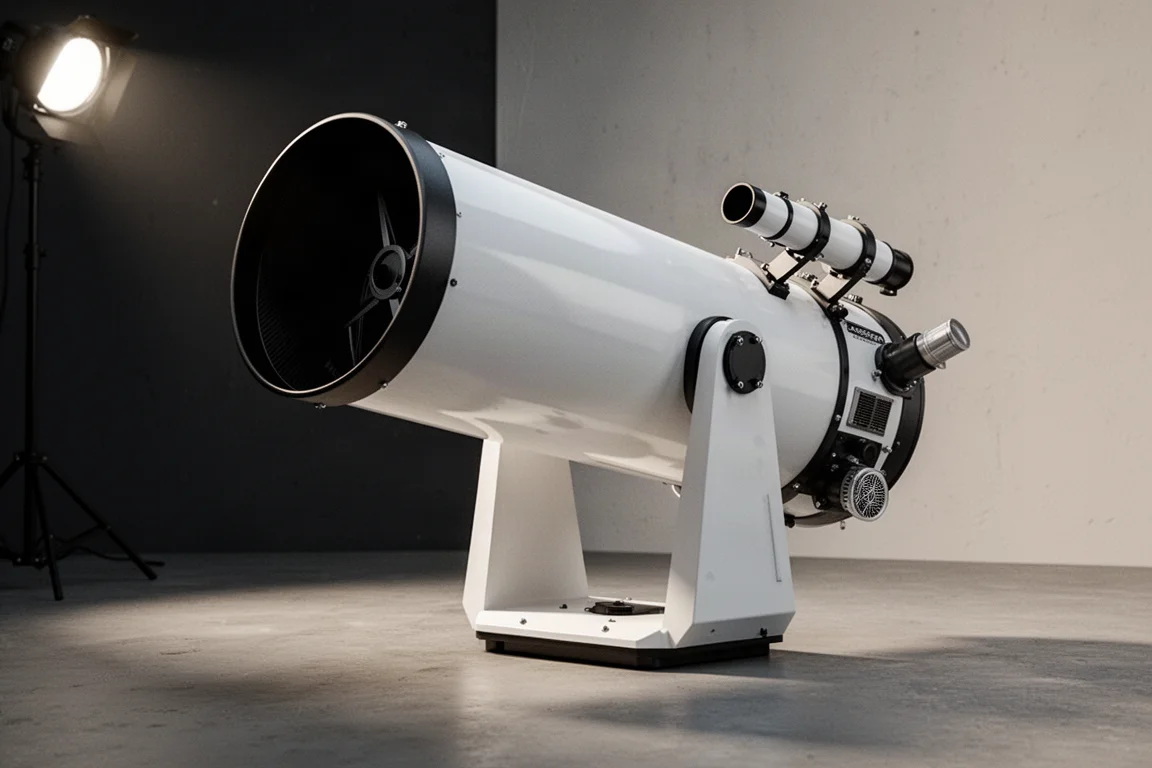
The Sharpstar SCA 310 is a 310mm modified Cassegrain reflector built as a dedicated astrograph, meaning it is designed from the ground up to deliver a flat, corrected field for photography straight out of the box. That is an ambitious promise, especially when the scope claims a 55mm image circle large enough for medium format sensors, all at a fast f/3.8. Over roughly a dozen nights of testing in a wide range of conditions, including full moon sessions, this telescope delivered some genuinely impressive deep sky results. It also comes with real practical demands: a serious mount, plenty of space, and a price tag around $7,995. This review walks through the design, the hardware details, the collimation experience, and the images it actually produces.
Who This Telescope Is For
This is a pure imaging instrument. Sharpstar designed it for deep sky astrophotography and deep sky astrophotography alone, and it makes the most sense for an imager who wants three things at once: a large, well-corrected field, plenty of resolution from serious aperture, and speed. The 1178mm focal length at f/3.8 is right at the sweet spot where fast optics and long focal length meet, and at 0.66 arcseconds per pixel with common 3.76 micron sensors, it rewards an accurate mount.
It is also a natural fit for observatory use. Given the size and weight, most buyers will likely set it up in a dedicated observatory, and it holds collimation well enough between sessions to make that a sensible home. Because it sits right at the maximum focal length where average seeing conditions stop wasting resolution, and because f/3.8 lets you assemble a decent image in just three to four hours on bright, popular objects, it works even for imagers without a huge number of clear nights.
Design and Optics
The SCA 310 is a modified Cassegrain. Light reflects off a 310mm parabolic primary mirror, then up to a spherical secondary mirror, then back down through the baffle in the center of the primary, through a 3-inch triplet coma corrector, and onto the camera sensor. The secondary is held by a four-vane spider just like a Newtonian, so bright stars show the classic four-spike diffraction pattern. This is worth knowing if you are comparing it to a Schmidt Cassegrain, where a glass corrector plate holds the secondary and no diffraction spikes appear.
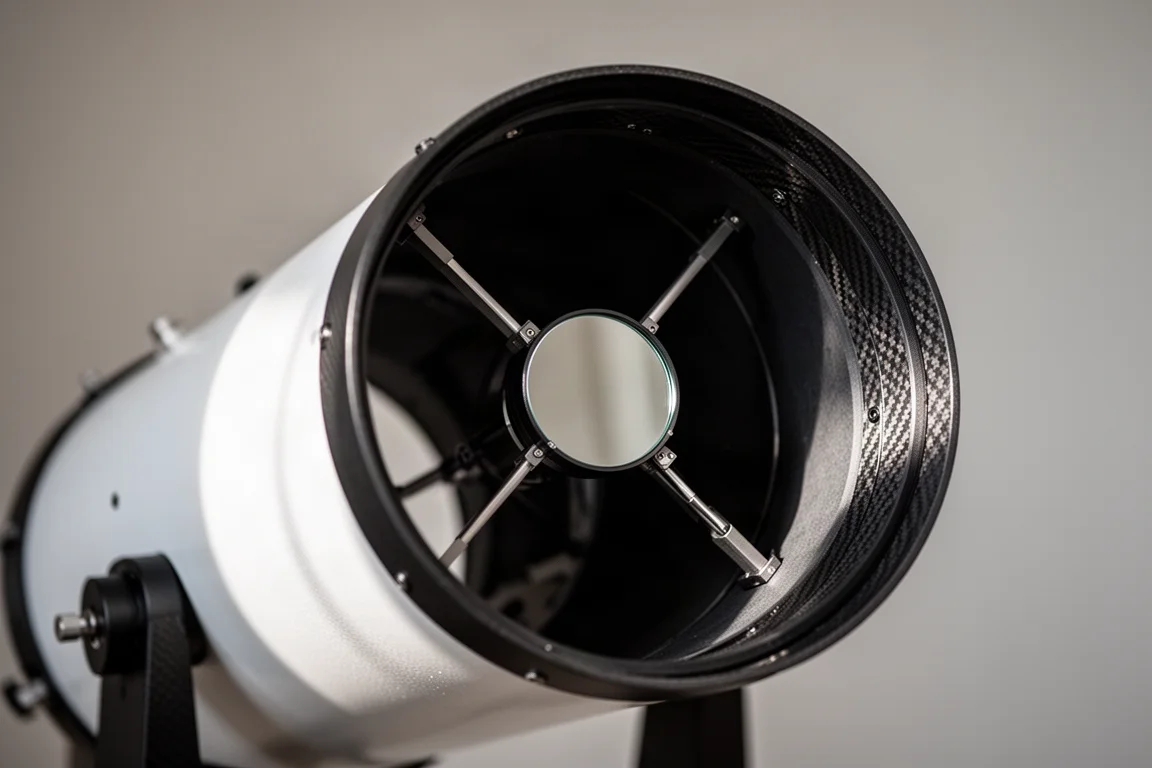
The headline spec is the corrected field. Sharpstar claims a 55mm image circle, which theoretically allows medium format cameras, and the company publishes example images taken with the IMX461 medium format sensor. Testing here covered full frame with the IMX455 sensor, which the large image circle should handle without trouble. Supporting that big corrected field requires a very large secondary: 184mm in diameter, which puts the central obstruction at 59% of the aperture. That sounds alarming, but the main downside of a large obstruction is reduced contrast for visual planetary observing, which is not what this telescope is for. As an astrograph, it is a non-issue in practice.
Sampling at 0.66 arcseconds per pixel demands a capable mount. On nights of good seeing, guiding errors in the 0.3 to 0.6 arcsecond range are needed to get the most from this resolution.
Physical Characteristics and Build
This is a big scope. The front aperture measures 396mm (15.6 inches), the tube is 721mm (28.4 inches) long, and without accessories or camera it weighs 23.5kg (51.6 pounds). One tester could carry and mount it solo, but only thanks to height and long arms; for many people this will genuinely be a two-person job. The awkwardness of the size matters more than the raw weight.
The tube is carbon fiber, which keeps weight down and helps thermal management. Inside, the tube is flocked with a black velvet-like material. One long-term concern: adhesive-backed flocking material can eventually loosen in humid climates, so buyers in damp regions may want to keep an eye on the seams. Matte black paint would be more durable, but the flocking works well for now.
Sharpstar has clearly thought about handling. There are handles on the back cell, and a thick metal bar on top doubles as a top handle and an accessory rail. The rail is one of the best-designed parts of the scope: long at 400mm, heavily built, with plenty of open channels and tapped holes plus clearance underneath for screw heads. A 60mm-class guide scope attached with two M6 screws worked without any play. The mounting rings and Losmandy dovetail plate are solid quality, though the rings appear permanently attached to the tube.
The Back End: Focuser, Fans, and Adapters
The focuser is a 3.5-inch rack-and-pinion in the familiar Sharpstar/Askar design, so adding an electronic focuser is straightforward. The entire focuser rotates manually for framing, though an electronic rotator is the better tool for that job. Rotation does play a role in Sharpstar’s written collimation procedure, where it is genuinely useful. Three cooling fans on the back help the primary mirror reach thermal equilibrium, powered by a standard 12V 2.1mm center-pin input with a speed control next to it.
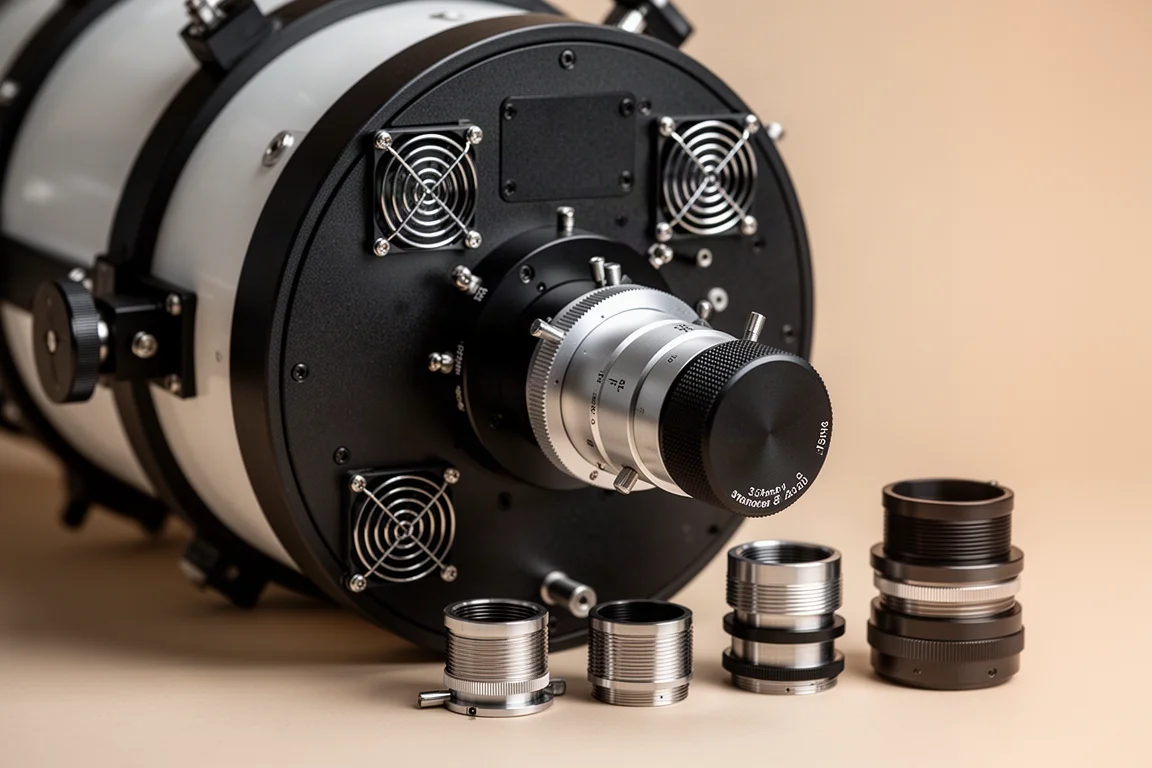
Camera attachment is where Sharpstar earns real credit. The scope ships with three adapters: M48, M54, and M68. If a manufacturer advertises medium format and full frame capability, supplying the adapters needed to avoid vignetting with those sensors is exactly what should happen, and these three thread sizes are the most common, making off-the-shelf spacers easy to find. Even better, there is no precise back focus requirement. The working distance from the adapter threads where focus is reachable spans 38mm to 66mm. That extra headroom beyond the standard 55mm makes room for filter wheels, off-axis guiders, tilt adapters, and electronic rotators without a fuss.
The only other included accessory is a heavy fabric front cap secured with Velcro. Darks taken at dawn showed no light leakage through it. There is no permanent case; the scope ships in heavy-duty custom foam inside two thick cardboard boxes. Keep that packaging, since it is the secure way to ship the scope to a remote observatory or to a buyer later.
Collimation
Sharpstar states in the manual that the scope is factory collimated, while acknowledging that shipping impacts may knock it out. Reality confirmed this: a couple of nights of data were shot before attempting collimation, and it was not perfect on arrival. Plan on collimating this telescope yourself.
The best tool for the job is an OCAL electronic collimation device, a calibrated camera with dedicated software that costs about $250. Sharpstar’s manual assumes you are using one, and the OCAL-related instructions are well written and easy to follow. The secondary mirror responds properly: using the OCAL and the manual’s procedure, collimation improved clearly from poor to acceptable using the central height screw and three tilt screws.
The primary mirror is a different story. Sharpstar states that the primary collimation screws fully tightened is the factory reference height, and every attempt to loosen them away from that reference made things worse. Leave the primary alone. The good news is that once collimated, the scope holds collimation very well; no recollimation was needed from night to night.
Price and Mount Requirements
At $7,995, this is a serious investment and the most expensive telescope in this class of testing. The obvious objection is that a 12-inch f/4 Newtonian with an upgraded focuser and 3-inch coma corrector offers similar on-paper specs for a fraction of the price. That comparison is tricky, though, because in actual use the mechanics and ease of use matter. With the SCA 310, you can collimate with an OCAL, attach a full-frame camera with filter wheel and accessories, and expect a well-corrected, clean image out of the box. The other genuine advantage over 12-inch Newtonian-style builds is medium format capability, which at 1178mm and f/3.8 would be a compelling combination.
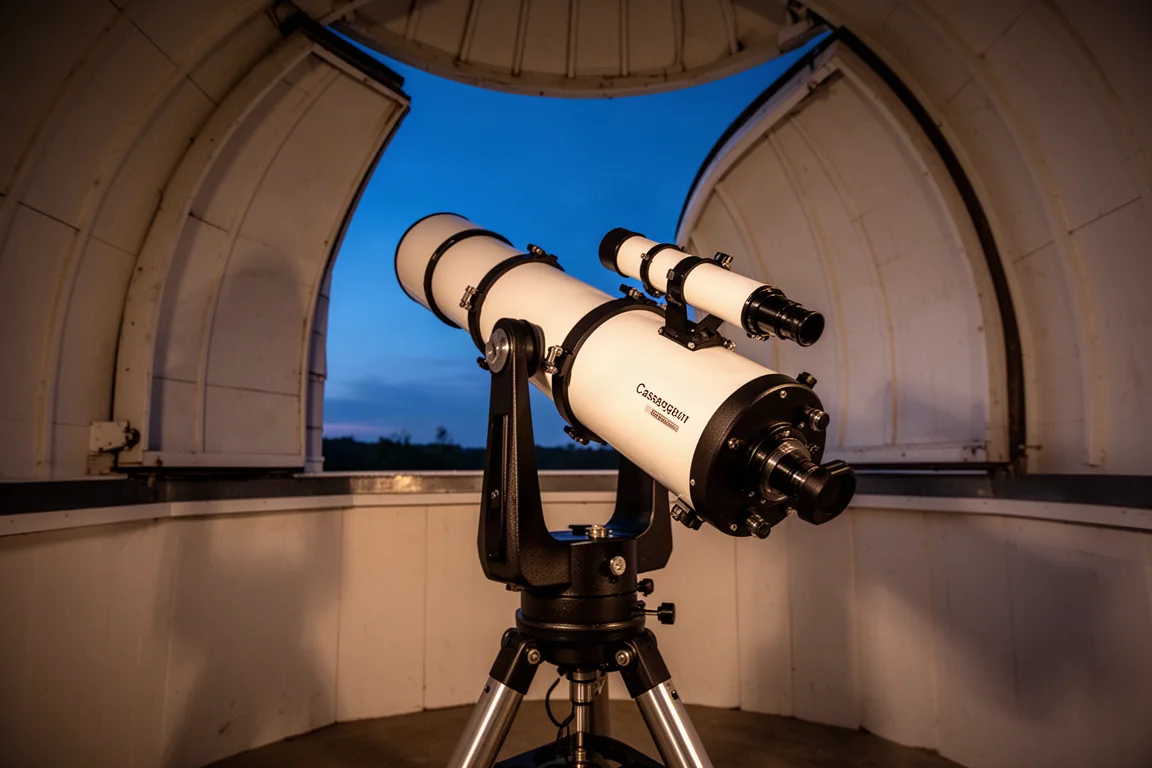
The mount question is critical and often underestimated. Weight is only half the story; the physical size of this telescope creates torque that smaller mounts cannot handle. Only a premium traditional equatorial mount was trusted here, using roughly 25kg of counterweights near the bottom of the shaft. Interestingly, the Warp Astron WD20P publishes load charts that account for both weight and height, and by those charts this scope exceeds the maximum torque even though the raw weight is within spec. That suggests most harmonic drive mounts in the 30kg class will not be suitable, and something like a Rainbow Astro RST300 would be the entry point in that category. In traditional equatorial mounts there are more options: the iOptron CEM120 and Sky-Watcher EQ8-R are more affordable choices, with premium options from Astrophysics, Losmandy, Software Bisque, Twinstar, JTW, and 10Micron above them.
Image Analysis and Real-World Results
A single unedited 3-minute one-shot-color sub of M81 on an APS-C sensor already looks good, and the aberration inspector shows reasonably sharp stars across the center, sides, and corners. Zooming in reveals the one optical quirk: star profiles are not perfectly crisp. There is a slight softness around stars, and in long integrations, bright stars show small extra spikes beyond the standard four-vane diffraction pattern. It is only visible at 100% zoom and disappears at 50%, so it is a minor issue, but it is consistent.
On full frame with narrowband, a single H-alpha exposure of the Crescent Nebula pulls in impressive detail, and stars look consistent across the entire full-frame field. A tilt adapter would likely clean up slight elongation on one side of the frame, but straight out of the camera the field is very even.
The finished images are where the value shows. A 4-hour M81 integration (83 three-minute subs, Bortle 3 sky) delivered real separation in the galaxy arms, dust lanes, and H-alpha pockets, plus resolved individual stars in the satellite dwarf galaxy Holmberg IX that usually appear as a blue blur through smaller instruments. M13, shot for 3 hours under a quarter moon, resolved into thousands of distinct stars, something smaller apertures simply cannot separate. The Cygnus Wall in 4 hours of full-moon narrowband showed fine dust streamers with well-behaved stars. And a 4-hour Crescent Nebula attempt on a night of terrible full-moon transparency still pulled out the full OIII shell, noisy when zoomed, but a testament to what the aperture gathers.
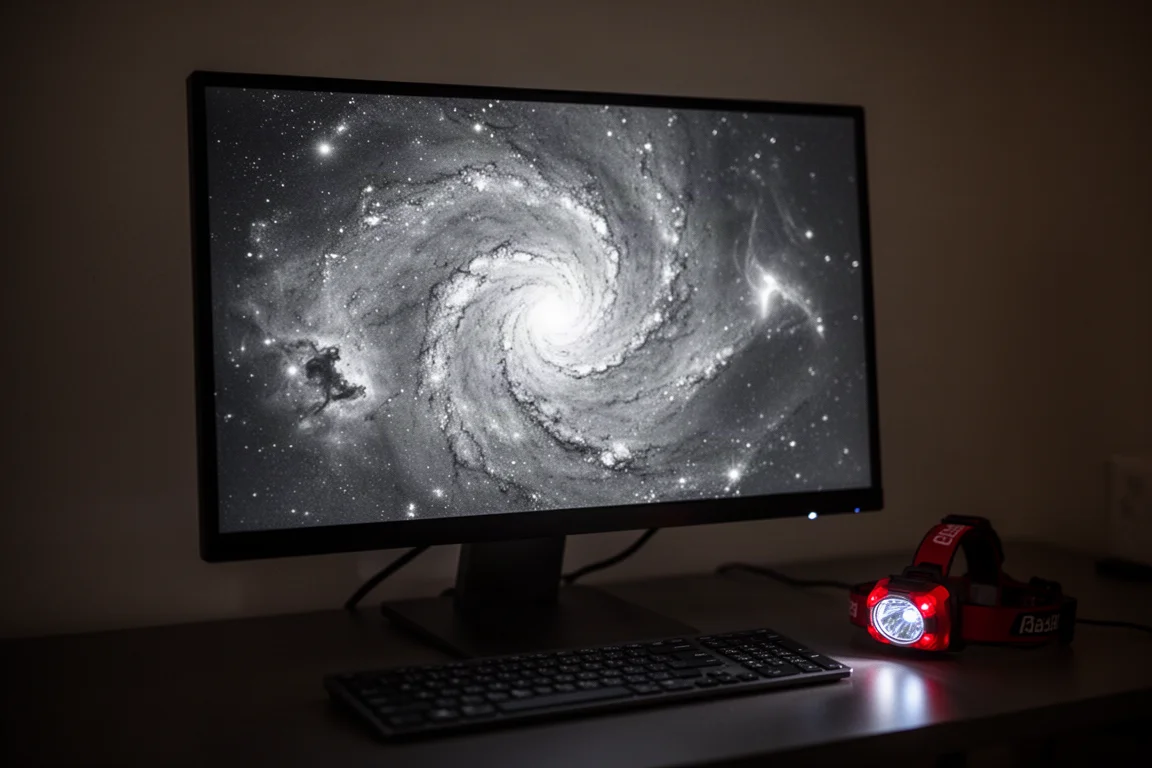
Across roughly 10,000-pixel-wide full-frame images, corner detail holds up remarkably well. The faint extra spikes on bright stars and slight softness in star profiles are the main optical criticisms, and neither is visible at normal viewing zooms.
Things to Consider Before Buying
The internal reflections found during early testing are worth understanding. A pre-production unit showed a reflection issue that Sharpstar fixed with an extension to the primary baffle, and that extension completely eliminated the problem across a dozen nights of varied conditions, including full moon. Sharpstar states the baffle extension ring will be factory installed in all future production runs, and will be sent for free to buyers of the first production run. It was the only major issue found in testing.
Beyond that, the honest considerations are practical: the price, the need for a genuinely capable mount, the two-person handling for many users, the near-certain need to collimate on arrival, and the flocking material’s long-term durability in humid climates. None of these are dealbreakers for the intended buyer, but all of them should be planned for.
Buying Advice
If you want a large, well-corrected field with real aperture, fast optics, and the headroom to eventually run medium format, the SCA 310 delivers the full package. Pair it with a heavy-duty traditional equatorial mount, budget for an OCAL for collimation, keep the original packaging, and plan for an observatory or some kind of wind blocking. For backyard observatories and remote installations alike, it is one of the most capable fast astrographs in this aperture class, provided your budget and mount can match its ambitions.
Conclusion
The Sharpstar SCA 310 is a specialized tool that does exactly what it promises: fast, flat, and well-corrected imaging across a very large field, with enough resolution to resolve globular clusters into thousands of individual stars and enough speed to build solid images in three to four hours. The collimation learning curve, the mount demands, and the price are real barriers, but for the dedicated deep sky imager with the infrastructure to support it, the results justify the investment.
Product link
View more details for Sharpstar SCA 310
This product is mentioned in the review. Check the specifications, options, and compatibility before buying.
View more details for Sharpstar SCA 310Further reading
Related Reviews
Astrophotography
ASKAR FRA400C Review: A Versatile 400mm Refractor for Astrophotography and More
The ASKAR FRA400C is a compact 72mm refractor that balances reach, versatility, and portability for astrophotographers and visual observers.
Astrophotography
Askar SQA106 Review: A Premium 106mm Astrograph With Exceptional Optics
The Askar SQA106 is a premium 106mm quintuplet astrograph with impressive sharpness across full-frame sensors, though its price and weight demand careful consideration.
Astrophotography
Astro Imaging Gear 2026: Eight New Products Worth Watching
A look at the most interesting new astrophotography and astronomy products announced this year, from fast telescopes to smart cameras and wireless accessories.