Hi-Fi Audio
Shanling SCD 3.3 Review: An R2R DAC and a True Tube Output in a Top-Loading CD Player
The Shanling SCD 3.3 pairs an R2R ladder DAC with a true tube output stage inside a CNC aluminium chassis. A close look at its sound, features, and trade-offs.
Introduction
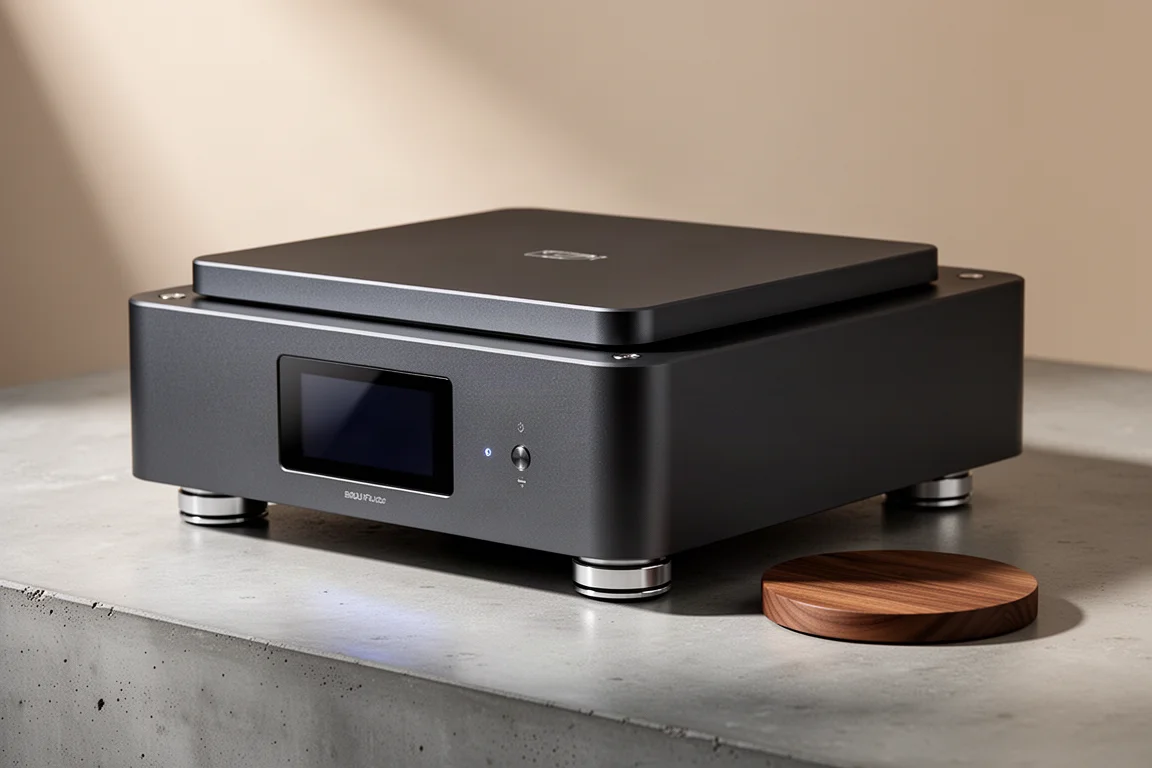
Disc playback still makes a persuasive case in high-end audio, and the Shanling SCD 3.3 makes that case in a very specific way. It is a full-size, top-loading CD player priced at $3,900, built around an R2R ladder DAC and a true tube output stage rather than a solid-state analogue section or a tube buffer.
That combination shapes everything about the player: how it is built, which formats it accepts, and above all how it sounds. The SCD 3.3 is not a neutral, analytical machine. It leans toward warmth, texture, and a three-dimensional presentation that listeners who know R2R and tube designs will recognise immediately.
It also does considerably more than spin discs. With USB input and output, the SCD 3.3 can serve as a standalone DAC for a streamer or a computer, and its I2S output lets it feed an external converter later on if you want to change that part of the chain. For a listener who wants one well-built hub for both physical and digital sources, that flexibility is a meaningful part of the value.
Who This Product Is For
This player suits listeners who still buy and keep CDs, and who want the format to sound as good as it possibly can without moving to a separate transport and converter. The R2R DAC and tube output stage are the core of the appeal, so the natural audience is someone who values tone, harmonics, and a room-filling presentation over the last word in analytical precision.
It is also a good fit for anyone who wants a single component to handle several jobs. Because the analogue output stage is available through the USB input, the SCD 3.3 can act as the DAC for a streaming setup while still playing discs. Owners who run long cable runs to a power amplifier will also appreciate the balanced XLR outputs, which are not always offered at this price.
It is less suited to listeners who want a very fast, clinical, tightly controlled bass presentation, or who plan to swap tubes frequently to chase a specific sound.
Design and Build Quality
The chassis is CNC-machined aluminium, and it feels it. Nothing about the unit comes across as lightweight or cost-engineered, from the panel work to the substantial isolation feet, which are proper machined supports rather than simple rubber pads.
The top-loading mechanism is one of the more appealing choices here. A lid-based design has fewer moving parts than a motorised tray and should hold up better over years of use. It also gives the player a deliberate, physical ritual that tray-loaders cannot match.
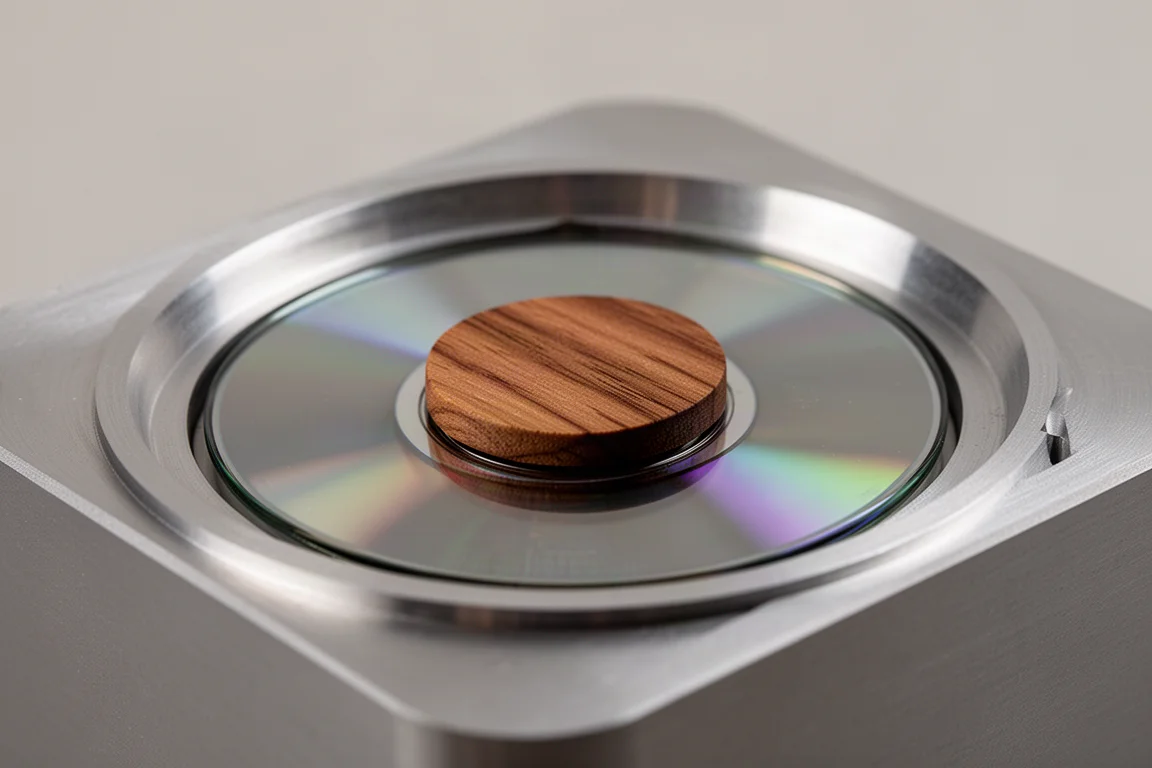
The disc stabiliser puck is wood on this model. Shanling uses wood components selectively and tunes them into the design, and the puck is where that treatment lands here. Whether or not you believe the material changes the sound, it is a nicely finished piece that sits well with the rest of the build.
Features and Connectivity
Format support is broad. The SCD 3.3 plays standard CDs, SACDs, and MQA CDs, so a mixed collection does not force you to keep a second player around. That matters, because dedicated SACD-only machines can be an expensive way to lock yourself out of most of your library.
The R2R DAC inside is a genuine ladder implementation rather than an off-the-shelf chip, and it is paired with a true tube output stage. The two tubes are not decorative: they were designed specifically to match this player and are rated for roughly 5,000 to 10,000 hours, which works out to about one to two years of normal playback before replacement. They are also a widely available type, so new stock and new old stock options exist, and only two are needed.
Around the back you get both RCA and XLR outputs, plus an I2S output with configurable pinouts, which helps avoid compatibility problems with converters that use a different pin layout. Native DSD playback over I2S reaches DSD512. There is no I2S input, and USB does not carry DSD, so DSD is an I2S-only path.
On the front, a 5-inch touchscreen handles the menu system, and the interface is simple and quick to learn. A remote is included, and physical buttons remain on the chassis, which is a welcome decision when so many touchscreen components abandon them.
Sound Quality
The bass is where the R2R and tube character is most obvious. It is full, textured, and warm, with a rounded analogue quality that makes acoustic instruments and low-register detail feel tangible. It is not a clean, fast, analytical bass. Listeners who want the tightest possible attack and decay should look elsewhere, because this player trades that for nuance and body. The rest of the system has to be capable of reproducing that low-frequency weight for it to come through.
The mid-range is the heart of the player. Tonally it sits just on the warm side of neutral, and its defining quality is layering: the harmonics that trail a plucked string, a saxophone line, or the final note from a vocalist. That elasticity is what makes instruments sound three-dimensional rather than flat, and it is delivered here with unusual realism. Vocals come across as sweet and emotionally engaging without being forward or bright.
High frequencies are airy, spacious, and refined, with good detail and no trace of harshness. If anything, there is room for a touch more airiness straight out of the box, though that is a minor point rather than a flaw.
The soundstage is the headline. A tube output stage paired with a well-implemented R2R DAC produces a holographic, three-dimensional image that fills the room and places instruments and performers with real presence. It is the quality that makes a system feel alive rather than merely accurate.
Tube rolling is possible but not rewarding in the way owners might expect. The stock tubes are tuned specifically for this player and strike a strong balance between layering, texture, and air. New old stock alternatives tend to smooth out and soften the mid-range, which may suit some jazz listeners but is not a clear upgrade. Even premium replacements that add airiness give up some of the stock tubes’ texture and layering. Given how much work is required to open the unit, the stock tubes are the sensible choice.
Things to Consider Before Buying
Changing tubes is the biggest practical annoyance. Replacing them requires removing a large number of screws and opening the entire chassis, with no service window or quick-access panel. If you like experimenting with tubes, that friction will wear thin quickly.
The preamplifier function is usable but not a highlight. Switching the output from fixed to variable in the menu turns the player into a preamp, and the result is decent rather than exceptional. In most systems, an external preamplifier or the preamp stage in a good integrated amplifier will sound better. The DAC and tube output stage clearly received more design attention than the preamp section.
The USB-A port for playing music from an external hard drive is on the front panel, and it accepts drives up to two terabytes. Functionally it works, but the placement interrupts the clean look of the front fascia, and a rear panel position would have made far more sense.
Bluetooth 5.0 is included, along with the antenna that supports it. It is reportedly popular in some markets, but it is hard to imagine many buyers of a player at this level using wireless streaming as a primary source.
Finally, long-term reliability deserves a cautious approach. Owners of other Shanling models have reported mechanical noise developing over time, and the standard warranty runs for one year, which is a narrow window for a component at this price. Some retailers offer a three-year warranty on the player itself, with one year of coverage on the tubes, and buying from a dealer with that extended coverage is a sensible way to limit the risk.
Buying Advice
At $3,900, the SCD 3.3 asks a serious sum, and it earns it in a specific way. You are getting a machined aluminium chassis with a durable top-loading mechanism, an R2R DAC implementation that would be credible as a standalone converter, a genuine tube output stage, and full playback of CD, SACD, and MQA CD. Balanced XLR outputs, I2S output with configurable pinouts, and USB DAC functionality round out a very complete feature set.
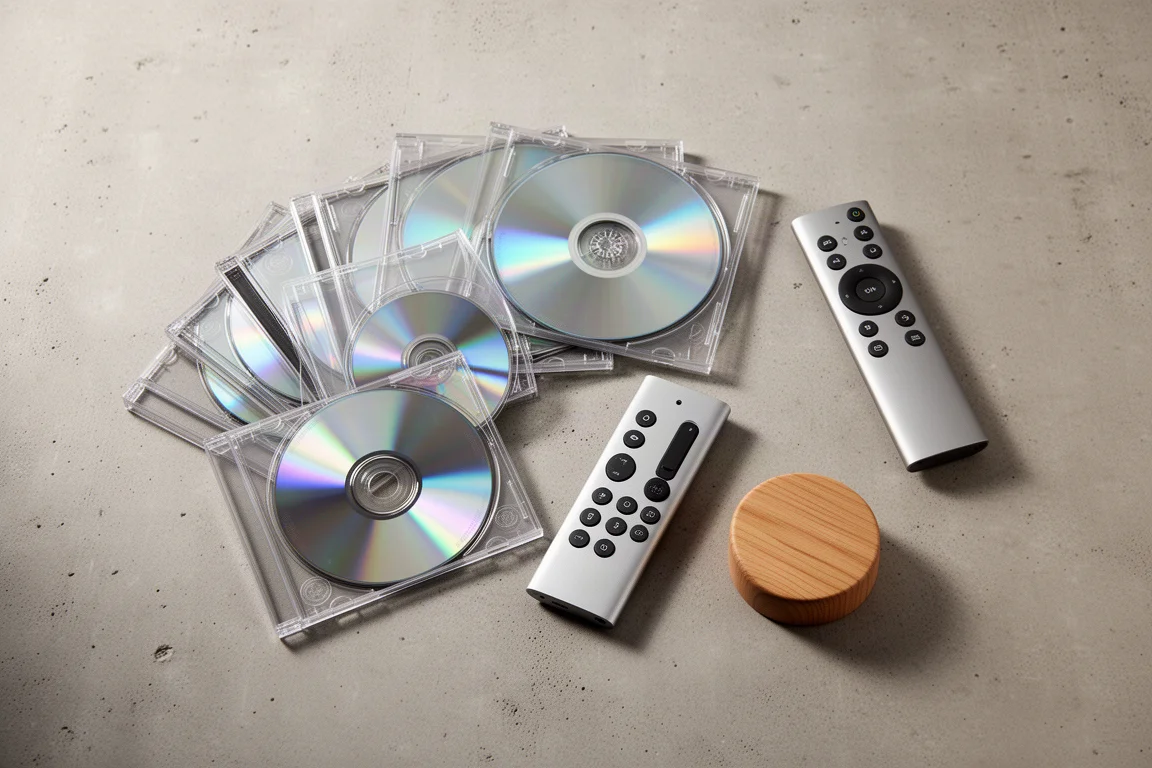
The value argument rests on priorities. If your goal is an emotional connection with a CD collection, and you want warmth, layering, and a large three-dimensional stage rather than clinical precision, this player delivers a great deal for the money. If you want maximum resolution and speed, or you intend to swap tubes regularly, the trade-offs will feel less favourable.
Before ordering, confirm two things: that your dealer offers extended warranty coverage on the player and the tubes, and that your amplifier and speakers can reproduce the low-frequency weight this player produces. Both make a real difference to how satisfying the purchase turns out to be.
Conclusion
The Shanling SCD 3.3 is a rare thing in the current hi-fi market: a full-size disc player with a clear sonic identity and a feature set that justifies its price. Its R2R DAC and true tube output stage produce a musical, textured, and holographic sound that is genuinely involving, and the format support means it can play almost any disc you own.
The compromises are real but narrow. Tube changes are laborious, the preamp mode is ordinary, the front USB port spoils the clean front panel, and the one-year standard warranty makes a well-covered purchase worthwhile. Buyers who accept those points and prioritise musicality over analysis will find a player worth keeping for a long time.
Product link
View more details for Shanling SCD 3.3 CD Player
This product is mentioned in the review. Check the specifications, options, and compatibility before buying.
View more details for Shanling SCD 3.3 CD PlayerFurther reading
Related Reviews
Hi-Fi Audio
Accuphase C-57 vs Allnic H-7000V: Two High-End Phono Stages Compared
A fully balanced solid-state phono stage with a pitch-black noise floor meets a tube design built for well-loved records. Here is how to choose between them.
Hi-Fi Audio
Active vs Passive Hi-Fi: Five Components for a Modern System
Five components that define modern active and passive hi-fi systems, with the strengths, trade-offs and setup details worth weighing before you buy.
Hi-Fi Audio
Advance Paris A10 Apex Review: A Hybrid Integrated Amplifier That Covers a Lot of Ground
A French hybrid integrated amplifier with a class A tube preamp stage, analogue power meters, and an internal DAC and phono stage good enough to make extra boxes unnecessary.