Hi-Fi Audio
Shanling ET3 vs Schiit Urd: Which CD Transport Fits Your System?
A practical look at the Shanling ET3 and Schiit Urd CD transports, plus the matching Shanling EH3 DAC and headphone amp, with clear guidance on features, sound, and value.
Introduction
A CD transport does one job: it reads the disc and passes the digital data to a DAC you already own. Neither the Shanling ET3 nor the Schiit Urd contains a DAC, and neither offers analog outputs. What separates them is how they connect, what they add on top of CD playback, and how much they ask you to spend.
The Shanling ET3 reached the market ahead of the Schiit Urd, arriving roughly two months earlier, and it remains the more feature-dense of the two. The Urd takes a different route, building its identity around a USB hub architecture. This guide covers both, explains where the Shanling EH3 DAC and headphone amplifier fits alongside them, and helps you decide which combination matches your system.
What Matters in a CD Transport Today
Because a transport has no DAC inside, the output section is the whole story. Every connection on the back panel defines which DACs you can use and how flexible the player will stay over time.
Coaxial, AES/EBU, and Toslink are the traditional options. USB is the modern one, and it is the reason these two players exist. I2S, usually written as I2S, is the connection many enthusiasts prefer above all others, since it can carry the highest sample rates and keeps clocking simple.
Compatibility is the detail that catches people out. Some USB outputs only work with USB Audio Class 2 DACs, which rules out compact stick-style designs. Others are more permissive. It is worth checking before you buy, especially if you already own a small DAC you like.
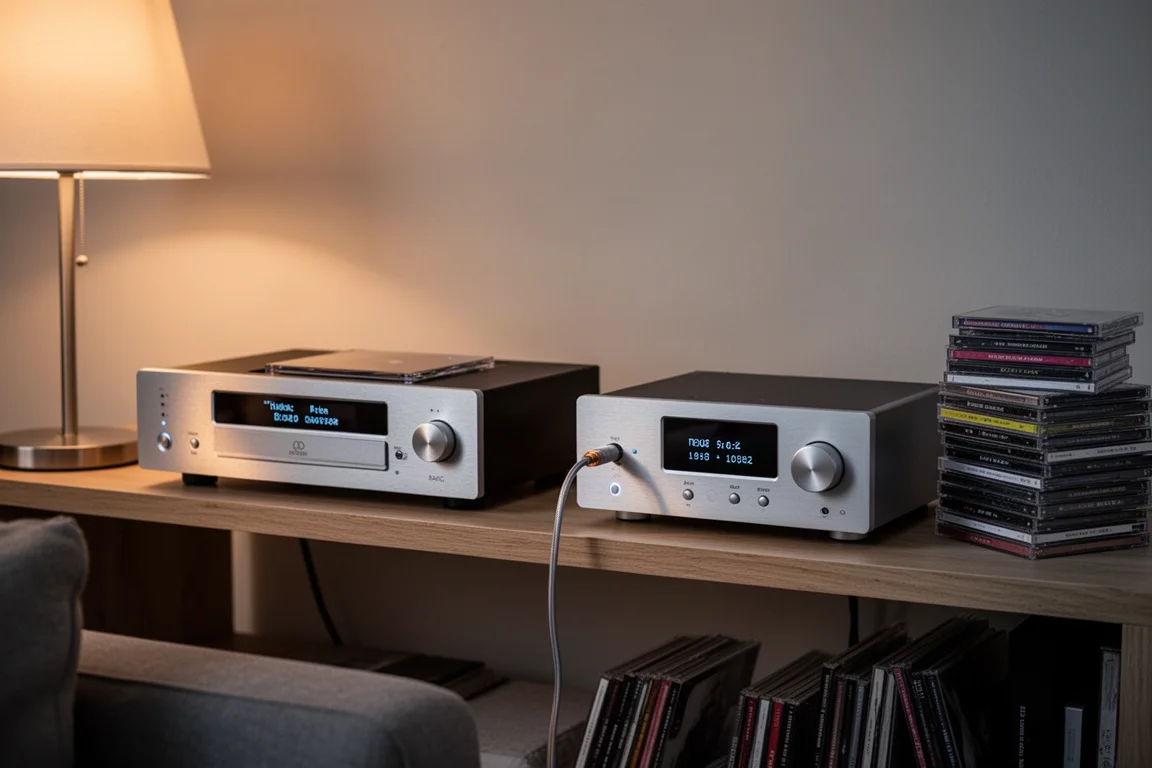
Two more factors separate a satisfying transport from a frustrating one. The first is what happens to the digital signal before it leaves the box, since some players can upsample a CD’s 44.1 kHz stream to much higher rates or to DSD. The second is ergonomics: how the disc loads, where the buttons sit, and whether the player fits the space you actually have.
Shanling ET3: The Transport That Does the Most
The ET3 is a CD transport with no analog outputs and no DAC inside. On the back panel it offers coaxial, AES/EBU, and USB outputs, and it adds Toslink, which the Urd does not provide. It also includes an I2S output.
Its USB output is not restricted to USB Audio Class 2 DACs, so a compact stick-style DAC such as the AudioQuest DragonFly can be connected. Note that such a DAC will run at full output, because the ET3 applies no digital volume attenuation. The USB output is managed by an Ingenic X2000 chip, which also runs the menu system and the small porthole display on the front panel and adds a Bluetooth input with LDAC and AAC support.
The menu unlocks Shanling’s internal upsampling engine. A CD’s 44.1 kHz stream can be upsampled as far as DSD512, and DSD512 is available only through the USB and I2S outputs; coaxial, AES/EBU, and Toslink are capped at DSD64. The player will also handle MQA CDs.
Streaming is built in as well, at a basic level. The internal network streamer is Wi-Fi only, with no Ethernet, and it supports UPnP and AirPlay. The porthole screen shows basic cover art and metadata, which is a genuinely useful touch. Network setup can be fiddly, so budget a little patience for onboarding.
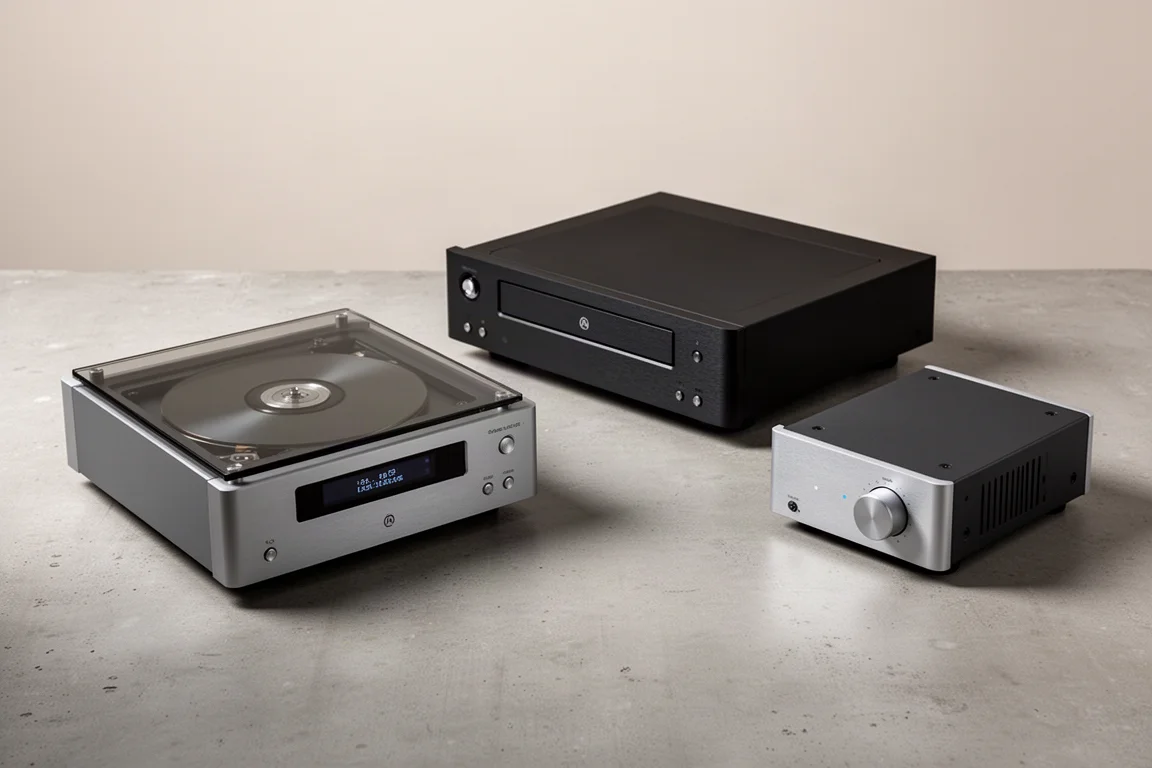
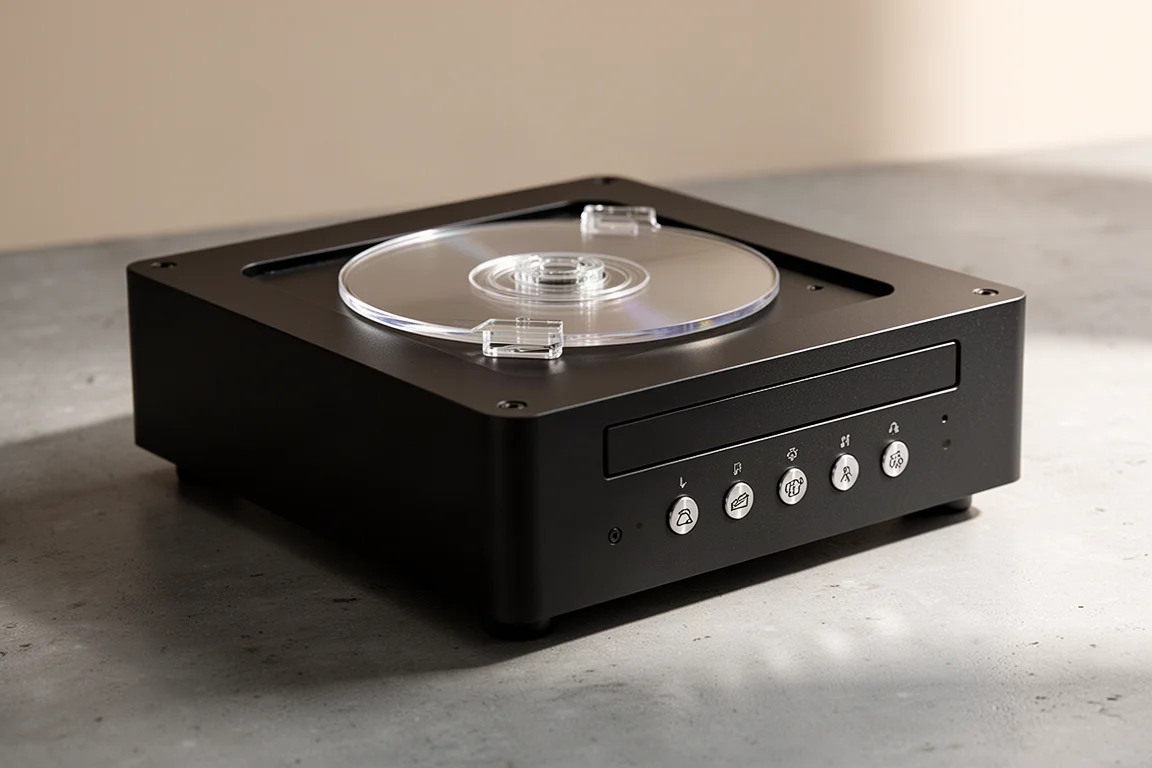
The CD mechanism is the most visible difference. There is no slot and no drawer. You drop the disc into the opening on the top panel and place a glass lid over it; the lid carries a puck on its underside to hold the disc in place, and a Philips CD drive sits inside. Playback controls are on the top of the unit, which makes sense if the player sits below eye level, and there is a supplied infrared remote that is fairly directional, plus the Shanling smartphone app for control.
The chassis is half width, so it suits tighter spaces and narrower sideboards. Shanling also notes that the digital outputs on the ET3 are more sophisticated than the simple Toslink output on its EC3 CD player, which is worth knowing if you are weighing those two models.
Schiit Urd: Built Around a USB Hub
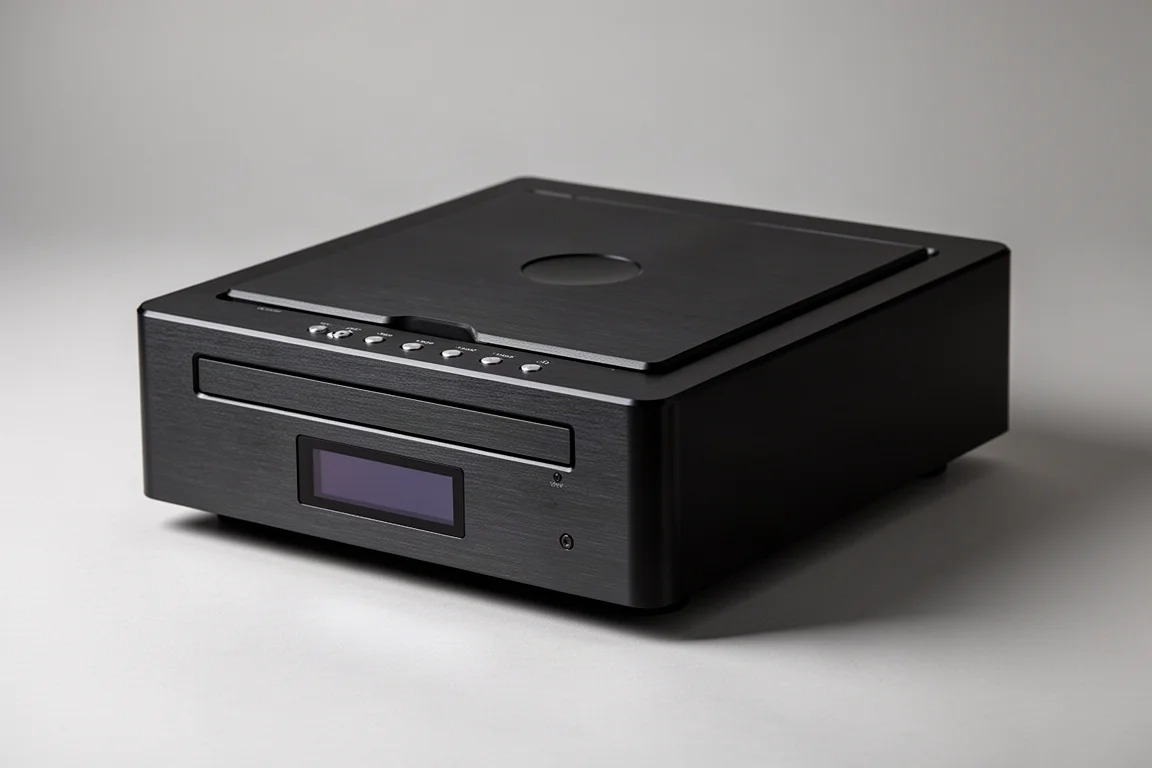
The Urd approaches the same job from a different angle. Its defining feature is USB hub functionality, which lets it manage multiple USB devices rather than acting as a single digital output.
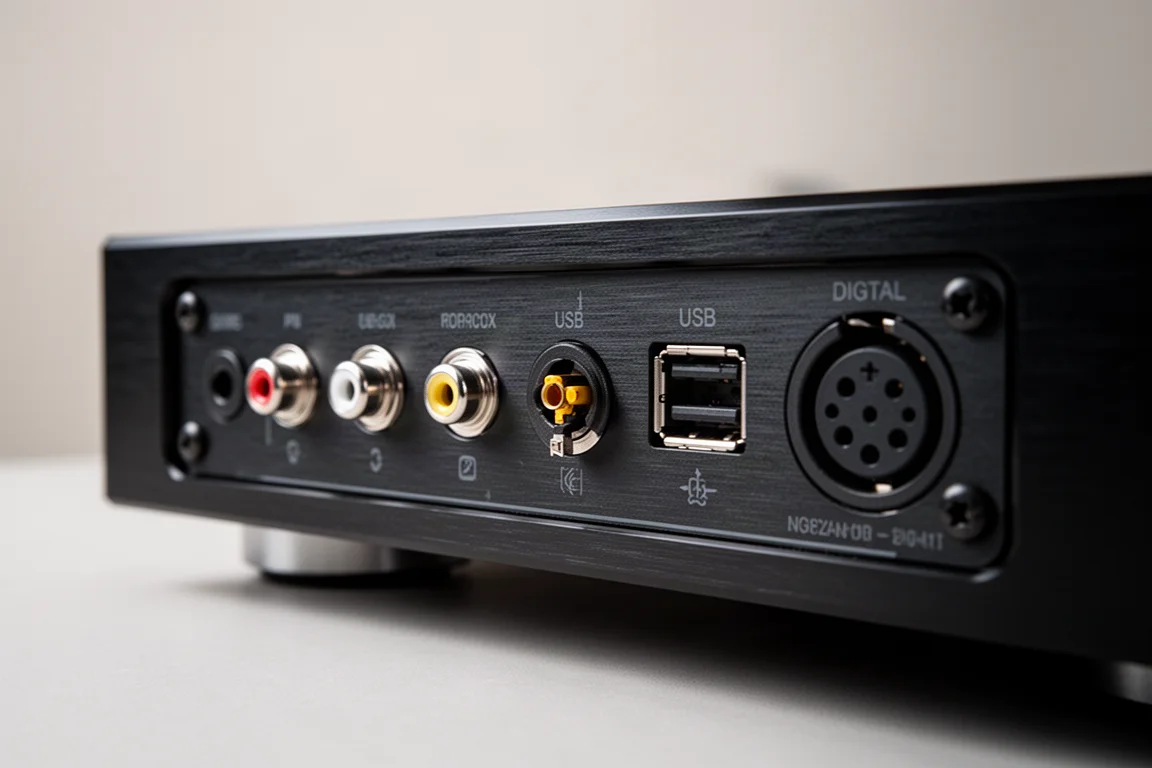
Its USB output is a Unison design developed in house and exclusive to the brand, and it works with USB Audio Class 2 DACs. Compact DACs that fall outside that class will not work here. The output set is also narrower than the ET3’s: there is no Toslink connection, so optical DACs need another source. The disc mechanism uses a drawer-style tray rather than a top-loading glass lid, which changes the feel of everyday use.
At $1,299, the Urd costs considerably more than the ET3, so the decision comes down to whether the USB hub architecture solves a problem you actually have.
Shanling EH3: The Matching DAC and Headphone Amp
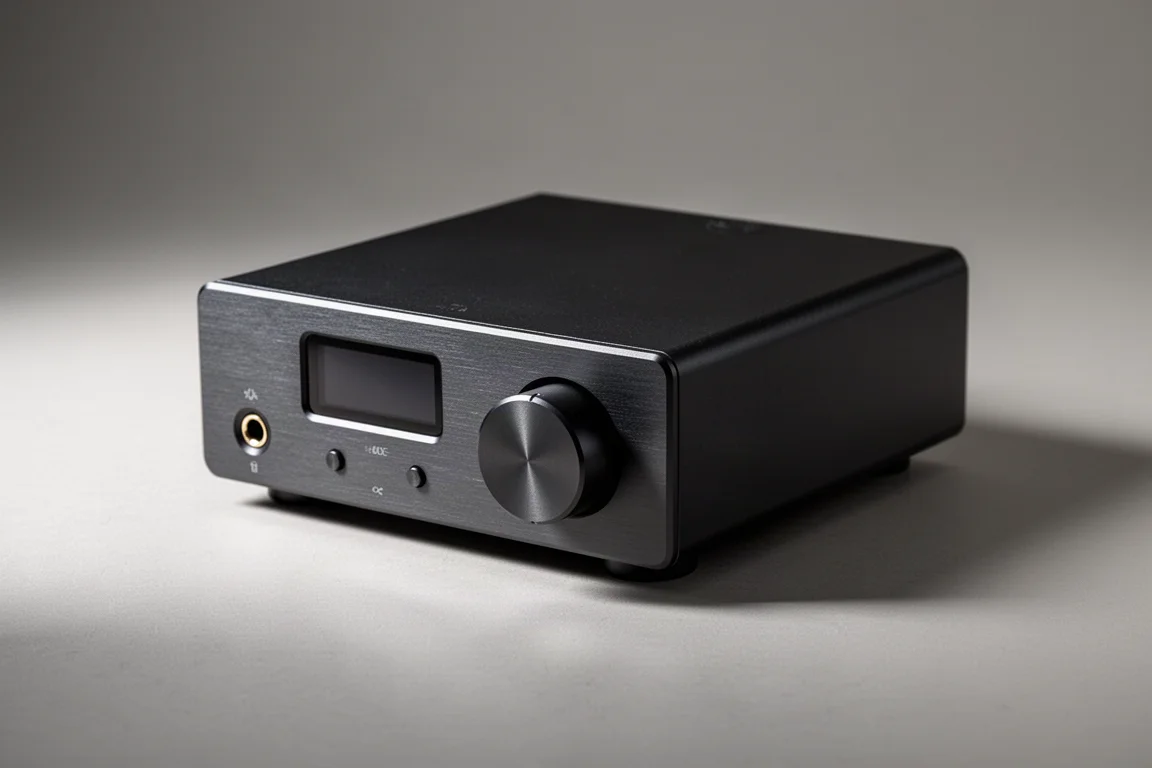
The EH3 is the natural partner for the ET3. It is a DAC and headphone amplifier in a similarly sized chassis, so the two stack neatly as a half-width pair. Its headphone amplifier is very powerful, which matters if you own demanding headphones.
The ET3 can feed the EH3 over USB or over I2S. Moving to I2S makes the most of the transport’s cleanest digital output, and the two units are designed to sit together both physically and functionally.
How the Two Transports Compare on Sound
This is where expectations need calibrating. The audible differences between the Urd and the ET3 are small, and in proper context they are tiny compared with the differences you hear between amplifiers, loudspeakers, or headphones.
Connected to a third-party DAC with a USB input module, the Urd’s USB output sounds a touch softer, while the ET3’s own USB output has its own character. That is a matter of taste rather than one clearly beating the other.
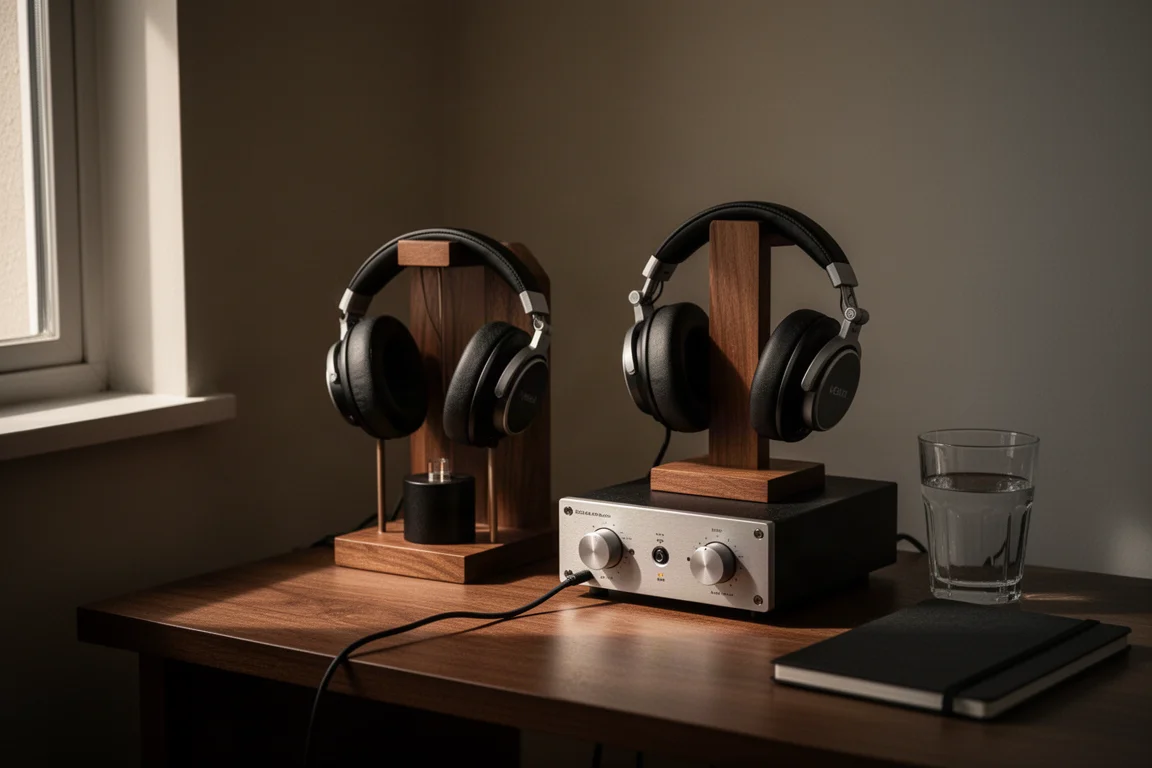
With the EH3 in the chain, the picture shifts slightly. The ET3 as a transport sounds a little more alive and more tonally colorful than the Urd over USB, and the gap widens marginally when the EH3 is fed over I2S. Even then, the difference stays narrow.
If you believe all digital streams sound alike, the choice comes down to aesthetics, haptics, functionality, and overall value. On those four counts, the ET3 is the stronger proposition.
Price, Availability, and Value
The ET3 sells for €699, which is significantly less than the Urd at $1,299. That gap leaves both physical and financial room to add the EH3 next to it.
Availability also differs by region. Shanling gear is generally easier to find in the EU than Schiit gear, which tends to arrive in smaller quantities. If you are shopping inside the EU, that practical detail may matter as much as the specification sheet.
Buying Advice: Which One Fits Your System?
Start with your DAC. If you own a compact USB DAC that is not USB Audio Class 2 compliant, the ET3 is the one that will work with it. If you need an optical connection, the same answer applies, since the Urd has no Toslink output.
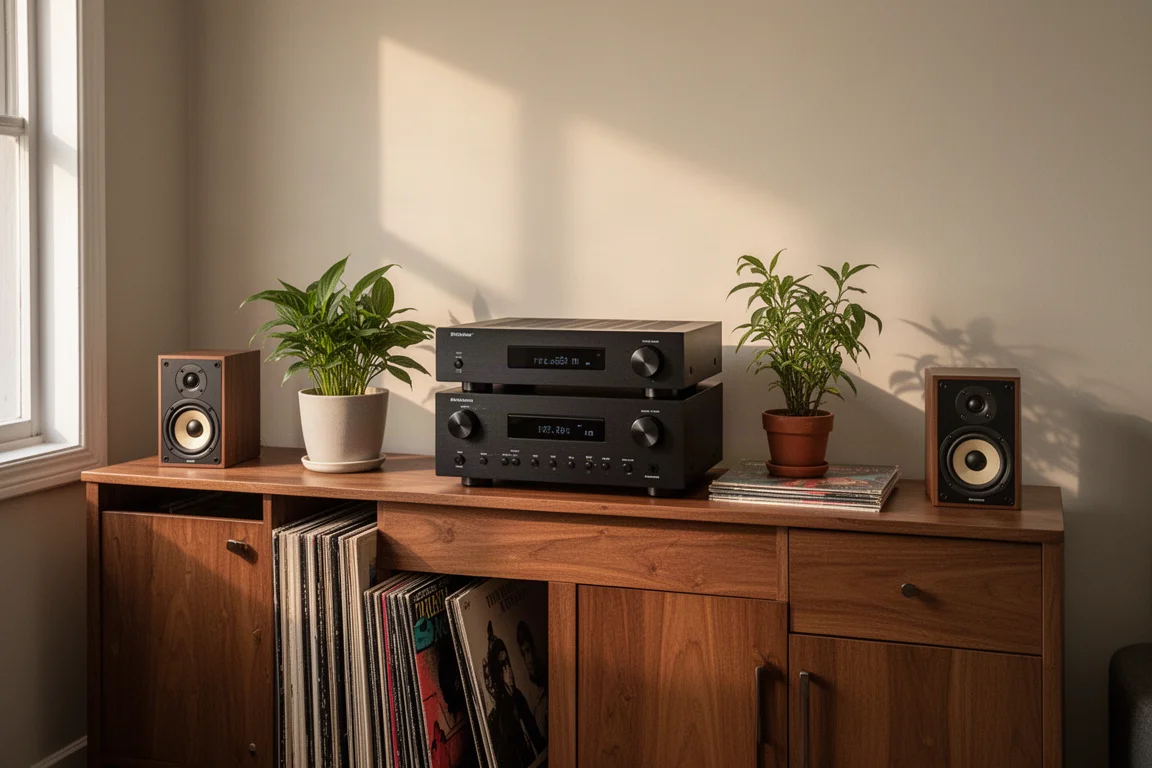
Next, decide whether you want features beyond CD playback. The ET3 adds Bluetooth with LDAC and AAC, a Wi-Fi network streamer with UPnP and AirPlay, an upsampling engine that reaches DSD512 over USB and I2S, and a top-loading mechanism with controls on the top panel. The Urd counters with USB hub functionality and its own Unison USB implementation.
Then consider space and budget. The half-width ET3 fits smaller rooms and narrower furniture, and its lower price leaves more room for a matching DAC and headphone amplifier. The Urd makes sense if its USB hub architecture is exactly what your setup has been missing.
Finally, keep sound quality in perspective. Both transports perform the same core task, and the differences between them are far smaller than the differences between the headphones or speakers you will actually listen through.
Conclusion
The Shanling ET3 and the Schiit Urd are both well-considered CD transports with USB outputs, but they are built for different priorities. The ET3 leans on flexibility: more output options, a built-in streamer, upsampling up to DSD512 over USB and I2S, a distinctive top-loading design, and a €699 price that leaves room for the matching EH3 DAC and headphone amplifier. The Urd leans on its USB hub architecture and its Unison USB output, at $1,299.
If compatibility, features, and value carry the most weight for you, the ET3 is the easier recommendation. If the Urd’s USB hub approach solves a specific problem in your system, it remains a capable alternative.
Further reading
Related Reviews
Hi-Fi Audio
Accuphase C-57 vs Allnic H-7000V: Two High-End Phono Stages Compared
A fully balanced solid-state phono stage with a pitch-black noise floor meets a tube design built for well-loved records. Here is how to choose between them.
Hi-Fi Audio
Active vs Passive Hi-Fi: Five Components for a Modern System
Five components that define modern active and passive hi-fi systems, with the strengths, trade-offs and setup details worth weighing before you buy.
Hi-Fi Audio
Advance Paris A10 Apex Review: A Hybrid Integrated Amplifier That Covers a Lot of Ground
A French hybrid integrated amplifier with a class A tube preamp stage, analogue power meters, and an internal DAC and phono stage good enough to make extra boxes unnecessary.