Cycling Components
Sensah Empire Pro and Juin Tech F1 Review: A Budget 12-Speed Groupset Tested
A long-term look at the Sensah Empire Pro 12-speed groupset and Juin Tech F1 hybrid disc brakes, covering shifting, durability, braking feel and what to check before buying.
Introduction
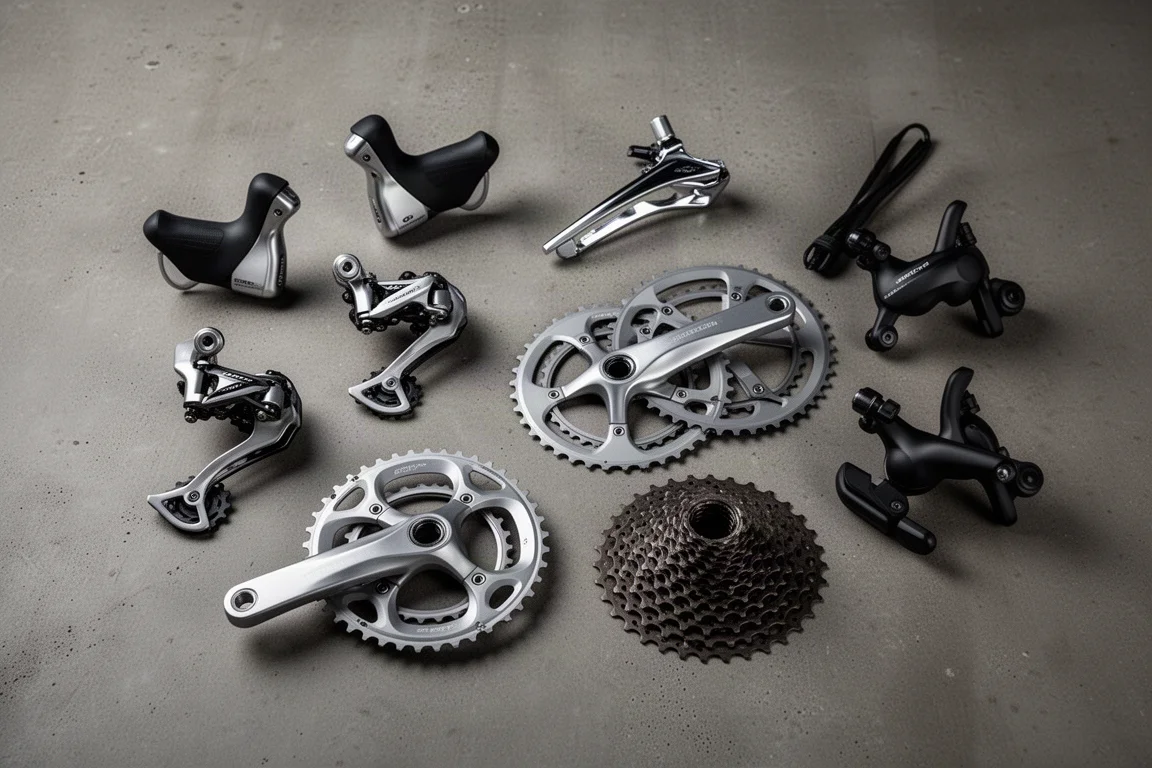
A 12-speed mechanical groupset for around the price of a decent wheelset is the kind of claim that usually falls apart after a few hundred kilometres. The Sensah Empire Pro is part of a growing wave of groupsets sold through Chinese online marketplaces, and it invites one obvious comparison: Shimano 105. The pitch is simple. Broadly comparable weight, the same 12-speed layout, roughly half the money.
This review covers the groupset as it has actually been used: more than 1,000 miles across four countries, including a long ride to Switzerland, with no cleaning along the way. It also covers the one component that was swapped out, the Juin Tech F1 hybrid disc brake calipers, because braking turned out to be the most complicated part of the whole build.
What This Setup Has Been Through
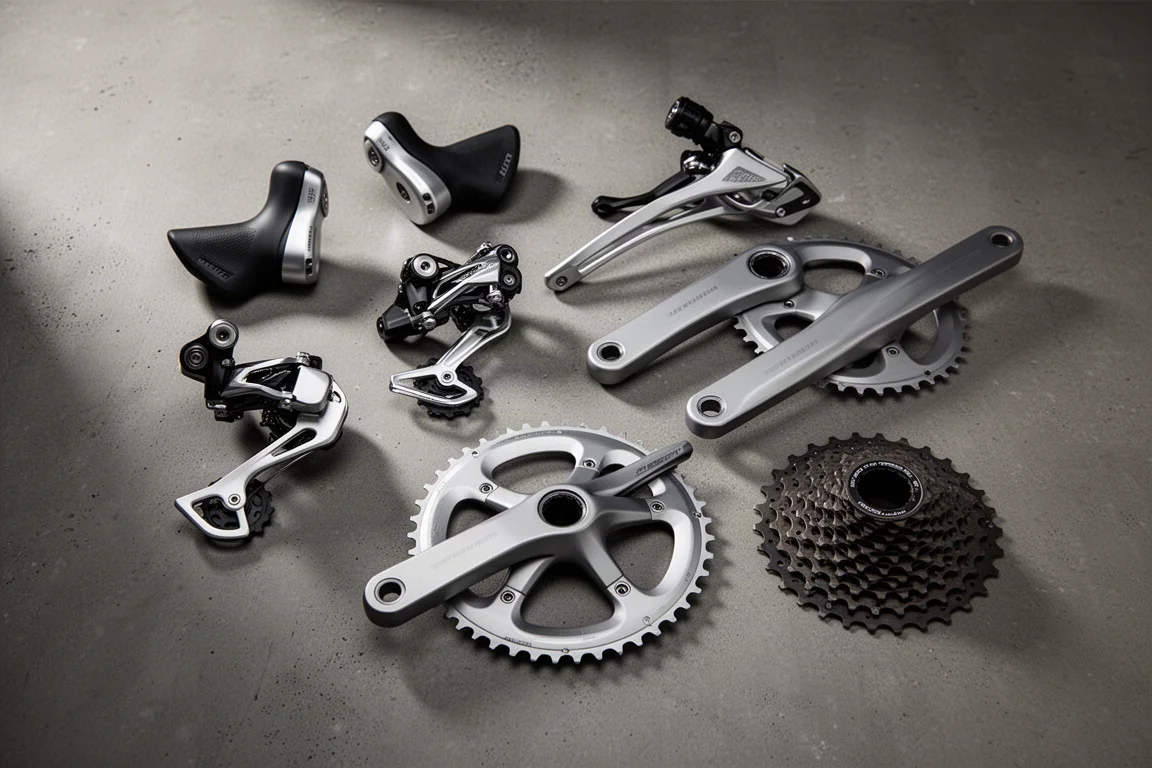
The groupset was bought for just over £300 and arrived as a package: shifters, front and rear derailleurs, crankset, cassette and chain. Orders from these marketplaces normally ship from China and take a few weeks to land, which is worth factoring in if you are building a bike around a specific date.
The only change made since purchase was the brakes. The calipers supplied in the package were cable-operated and did not perform well, so they were replaced after a few days with Juin Tech F1s. Everything else in the build is original equipment, fitted to a Scott Foil frameset.
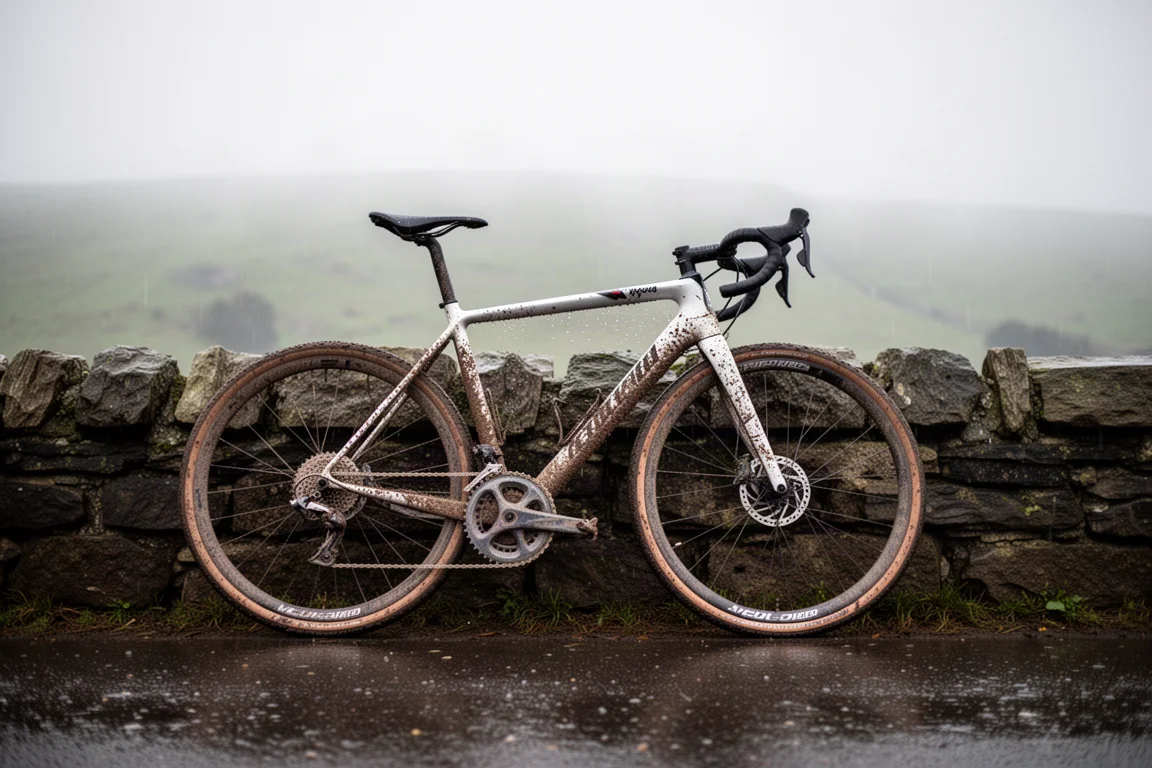
Over 1,000 miles the setup has covered four countries, including a loaded ride to Switzerland, and it has not been cleaned at all in that time. That matters for a value groupset, because it is a far harder test than a well-maintained bike on dry roads.
Sensah Empire Pro Shifters and Ergonomics
The most surprising thing about the groupset is how ordinary it looks. Nothing about the finish or the shape suggests a compromise.
The shifters are small, comfortable and well shaped. Riders used to hydraulic shifters may find them unusually compact at first, but that is simply a consequence of hydraulic designs carrying a reservoir inside the body. Against a Dura-Ace shifter, the size is roughly comparable, and the ergonomics hold up over long rides.
Lever reach adjustment is included, and it works the way it should: an Allen key goes into the adjuster and the lever winds in or out to suit hand size. This is a feature that has only recently filtered down to entry-level groupsets from the major brands, so finding it here is a genuine plus.
Two details are worth knowing about. First, the hoods on this particular set arrived with different rubber textures, one smooth and one noticeably rougher. The seller responded well when contacted and offered a replacement hood for a small fee. Second, there is a pivot point on the edge of the shifter body that can catch the hand, although it can be pressed inward to sit flush.
Shifting itself is clicky and positive. A long push on the whole lever shifts up, and a single small click shifts back down. After more than 1,000 miles with a drivetrain that was allowed to get genuinely dirty, shifting has stayed consistent throughout.
One thoughtful detail concerns the largest sprocket. At the end of the cassette travel the lever reaches a stop rather than forcing a shift back down. On a climb, that prevents the unpleasant surprise of suddenly dropping into a harder gear than you wanted.
Sensah Empire Pro Derailleurs and Crankset
The derailleurs behave exactly as derailleurs should, which is the highest compliment available here. The rear unit is 12-speed and the front is a double. The rear derailleur accepts a cassette up to 34 teeth, and the cage is long enough to handle that range comfortably. No indexing adjustment was needed at any point over those miles.
The front derailleur includes a trim function with around four positions. That is unusual at this price and genuinely useful: if cable tension is slightly off, or the ferrules have settled, a small extra push on the lever moves the cage to a position where the chain does not rub. In the big ring with the largest sprockets, the setup can be ridden without rub.
The crankset is aluminium, uses a SRAM DUB fitting, and caused no problems at all. Because of the DUB interface, standard SRAM-compatible bottom brackets work and replacement parts are easy to source. The double on this build is 50/34, with 53/39 and other standard sizes available when ordering. A 1x version of the same crank exists for single-ring builds.
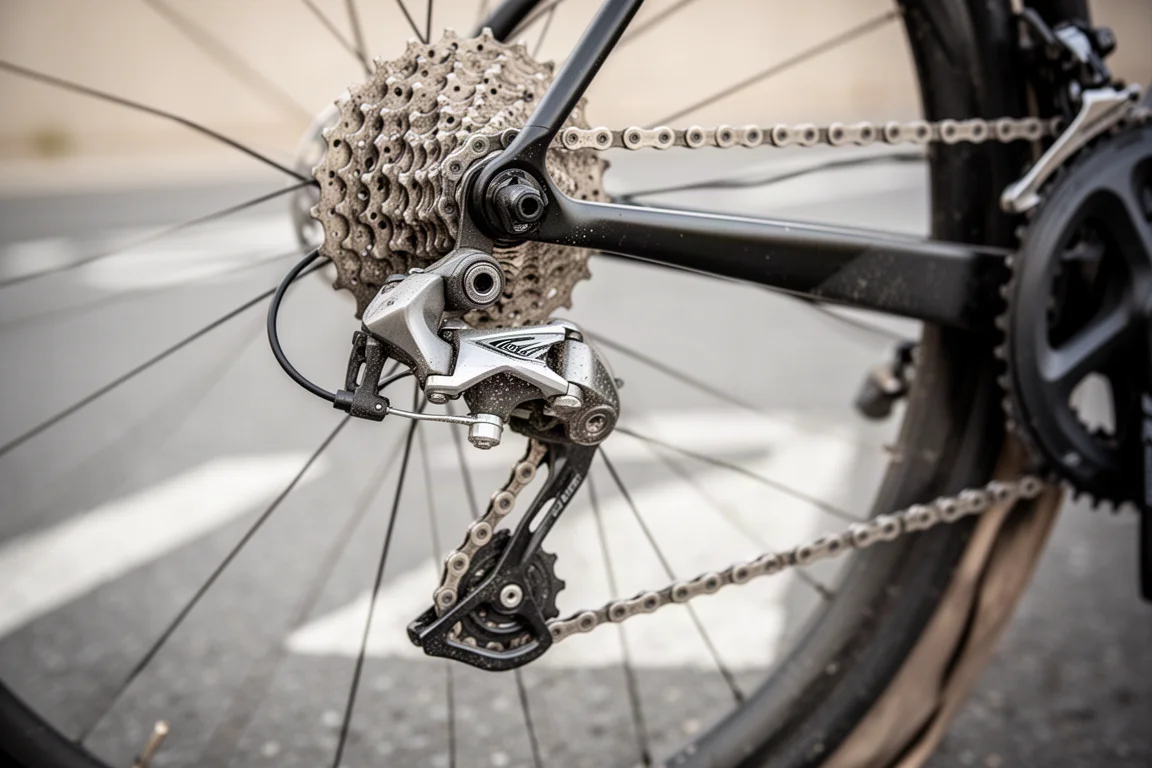
The cassette is heavy and built in essentially one piece apart from the last two sprockets. It ships with a lock ring and fits Shimano HG freehubs. It has shown no wear, and the extra material is arguably a benefit: very light aluminium cassettes from the same marketplaces wear out quickly, and a heavier steel unit is the more durable choice.
The chain is a YBN unit. The brand is not widely known, but it has a following among riders who wax their chains, because YBN chains are supplied without packing grease. This one arrived clean, ready for waxing straight out of the box. A second YBN chain bought separately did arrive with packing grease, so the specification is not always consistent between orders.
The bottom bracket is the one clear limitation of the package. Only a threaded version is supplied, with no press-fit option at the time of ordering. On a press-fit frameset, a separate bottom bracket has to be sourced.
Juin Tech F1 Hybrid Disc Brakes
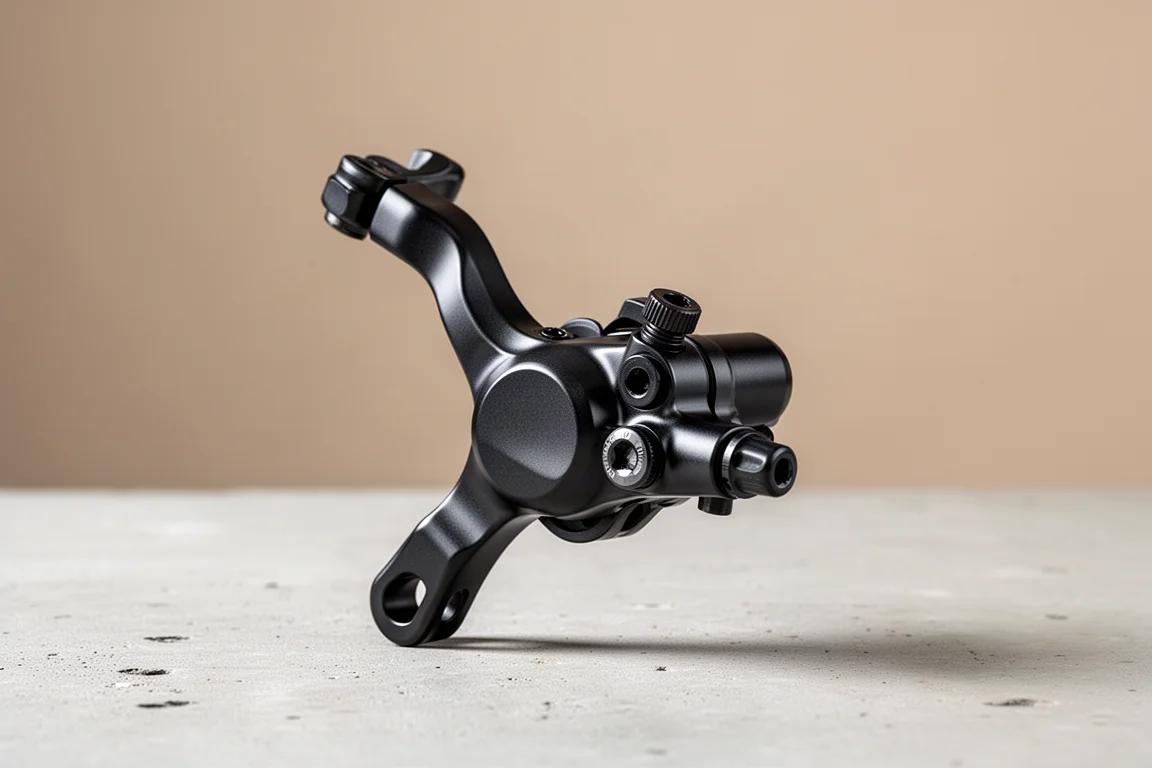
The calipers supplied with the groupset were cable-operated and did not perform well, which is why they were replaced almost immediately. The Juin Tech F1 takes a different approach: a cable-actuated caliper with a small hydraulic reservoir inside, so it works with cable shifters while delivering braking force closer to a full hydraulic system. It has a strong reputation, and on paper it is a significant upgrade over basic cable calipers.
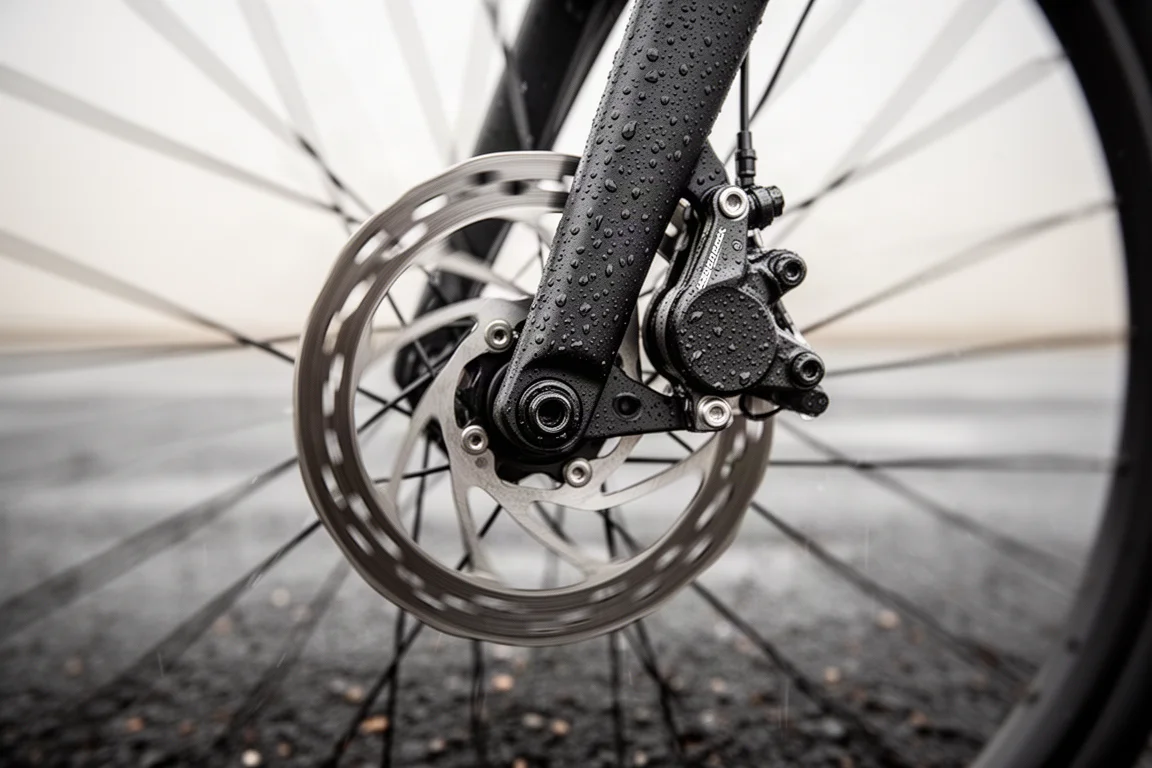
In practice, the result on this build was mixed. The calipers are fitted to a frame with fully internal routing, so the cable runs from the lever into the handlebar, through a small opening into the headset, down the fork and into the frame. That is a lot of tight bends for a cable to negotiate, and the result is a spongy, imprecise lever feel. The brakes were safe, and they worked in all weather, including on a heavily loaded ride to Switzerland, but they were not enjoyable to use.
The frame matters more than the caliper here. On a bike with external routing and smoother cable lines, these calipers would be far more usable. On an internally routed frame, the feel is difficult to recommend.
For riders who cannot stretch to a full hydraulic setup but still want working disc brakes, the Juin Tech F1 remains a reasonable budget solution, provided the cable route is clean. Where braking feel matters most, a rim brake bike with alloy rims is the simpler route to a nicer lever feel.
Improving Braking Feel on a Budget
There are a few ways to sharpen a hybrid caliper setup like this. Compressionless brake housing is one option, though it has not been tested on this build, and it may not fully overcome the effect of a twisty internal cable route. Floating rotors are another, since the standard steel rotors are basic and on the heavy side. The calipers also accept Shimano mountain bike brake pads, which use a softer compound and should improve braking performance. This setup was deliberately kept close to stock to show how the system behaves as delivered.
Overall Buying Advice
The fairest comparison for the Sensah Empire Pro is not hydraulic 105 but rim brake mechanical 105. That is the standard it actually meets: it functions well, it shifts consistently, and it costs roughly half as much as a rim brake 105 groupset.
That price gap is what makes the groupset interesting. It is cheap enough to experiment with, and cheap enough to race on. One rider has used it in elite criteriums in the UK, on the basis that a crash damages parts that cost far less to replace than Ultegra equivalents.
Two caveats are worth weighing before ordering. Part consistency can vary between orders, so a different buyer may have a different experience with hoods, chains or finishing details. And a press-fit frame adds the cost of a separate bottom bracket to the build.
If you want a 12-speed mechanical groupset on a tight budget, and you are comfortable sourcing parts online and waiting a few weeks for delivery, this setup is worth trying. If braking feel is a priority, budget for better rotors and pads, or plan around a frame with external routing.
Conclusion
The Sensah Empire Pro does what a value groupset needs to do: it shifts cleanly, it survives neglect, and it does not cost much. The shifters and derailleurs are the strongest parts of the package, and the crank and cassette are sensible, durable choices. The Juin Tech F1 calipers are a real upgrade over basic cable calipers, but they need smooth cable routing to feel their best. Buy the groupset for the drivetrain value, and treat braking as a separate decision.
Further reading
Related Reviews
Cycling Components
A 20,000-Mile Budget Race Bike Build: Five Parts Worth Knowing
A rim brake race bike assembled from low-cost components and ridden for 20,000 miles. Here is what delivered real speed, what caused problems, and what to weigh before copying the formula.
Cycling Components
7 Bike Fit Products Fitters Avoid: What to Check Before You Buy
Seven bike components that regularly cause knee, foot and saddle problems, with the specific concerns behind each one and what to look for instead.
Cycling Components
Four Affordable Bike Upgrades That Improve Ride Feel
Four low-cost cycling products that make a real difference to ride feel, plus the free setup changes worth trying first.