Road Bike Frames
Seeker Spear Review: A £2,600 Race Frameset Built to Challenge the Benchmark
The Seeker Spear pairs a distinctive Wind Eye frame design with a 6.65 kg complete build and a frameset price roughly half that of a flagship race bike.
Introduction
Seeker has built its reputation on a simple idea: rather than compete on price alone or imitate an established Western frame, the Chinese brand has pushed its own designs and manufacturing standards. The Spear is the clearest expression of that approach so far, and it arrived in 2024 as one of the more genuinely interesting new road framesets of the year.
On paper the package is straightforward. A UCI-compliant carbon race frameset with aerodynamic claims, a distinctive seat stay junction, and a complete build weight that lands in the same territory as far more expensive flagship bikes. In the UK the frameset retails for £2,600, roughly half the cost of the benchmark S-Works Tarmac SL8 at around £5,000.
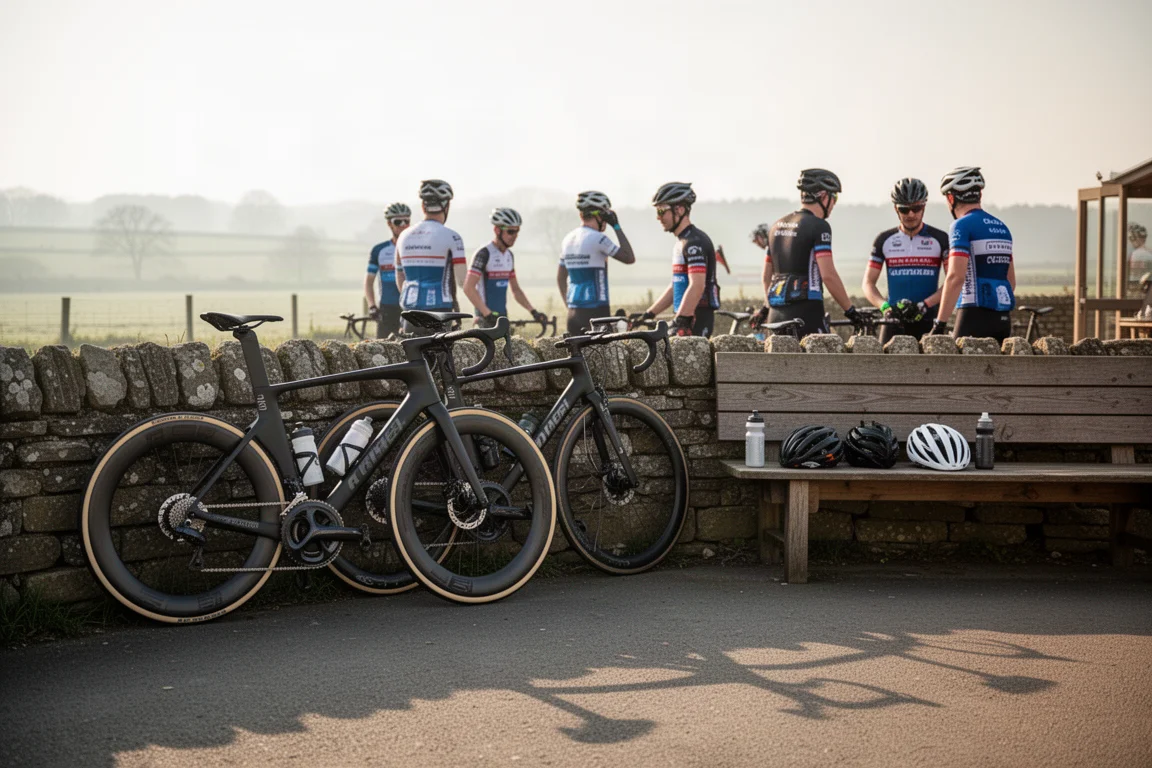
Availability is the part to plan around. Seeker has been expanding its dealer network worldwide, and at the time of writing the UK presence was a single shop in London. That shop reported considerable interest in the Spear alongside limited stock of certain colours and sizes. The frame carries a lifetime warranty, the handlebars and other parts carry five years, and the dealer acts as the point of contact for after-sales service. For a brand still establishing itself outside China, that dealer-backed support structure matters as much as the frame itself.
Who the Seeker Spear Is For
This is a frameset for riders who want flagship-adjacent race performance without the flagship invoice. The £2,600 asking price sits at roughly half the cost of the S-Works Tarmac SL8 it was benchmarked against, and the completed build weighed in at 6.65 kg for a size large, a figure Seeker and its dealers will happily repeat.
It also suits riders who are tired of frames that look increasingly alike. The Wind Eye junction is the talking point, the kind of detail people point at and ask about on a club ride, and Seeker offers a broad range of colours rather than the usual one or two.
Because the frame is UCI compliant, it is equally relevant to racers who need a legal frame for licensed competition. And the compliance claims around the seat post and Wind Eye, described as delivering up to 17 mm of seat post deflection, more than a Giant Defy and other endurance bikes, suggest it may appeal to riders who want race geometry with a little more give over long distances.
The less obvious fit is the rider who values a well-established dealer network above all else. Seeker is working hard on that front, but today the network is smaller than what the major brands offer, and buyers should be comfortable with that.
Frame Design and the Wind Eye
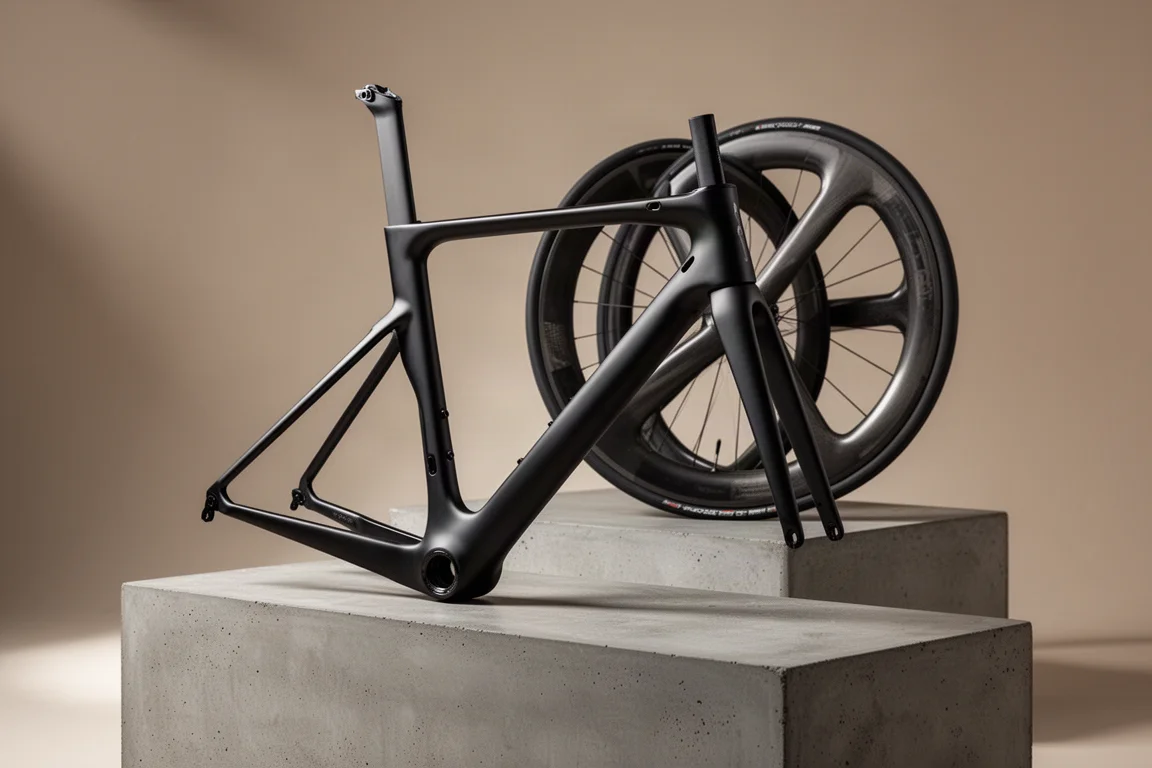
The defining feature sits where the seat stays meet the seat tube. Seeker calls it the Wind Eye, and claims it expels turbulent air created by the pedalling legs while reducing a low-pressure zone in that area. The company puts a figure of 2.6 watts against it. Those are manufacturer claims rather than independent findings, but the design does something more immediate: it makes the frame instantly recognisable.
Compliance is claimed from the same area. Combined with Seeker’s own slim, D-shaped seat post, the seat post and Wind Eye are said to contribute up to 17 mm of deflection, a figure Seeker positions above the Giant Defy and other endurance bikes. In other words, endurance levels of comfort from a race frame, at least by the company’s own measurements.
The rest of the frame follows a familiar aero template executed with care. A deep aero head tube, a top tube that is slender without being the skinniest in its class, and a deep D-shaped cam-tail down tube. There are three bottle cage mounts on the down tube and two on the seat tube. The frame is disc brake only, with no rim brake version offered.
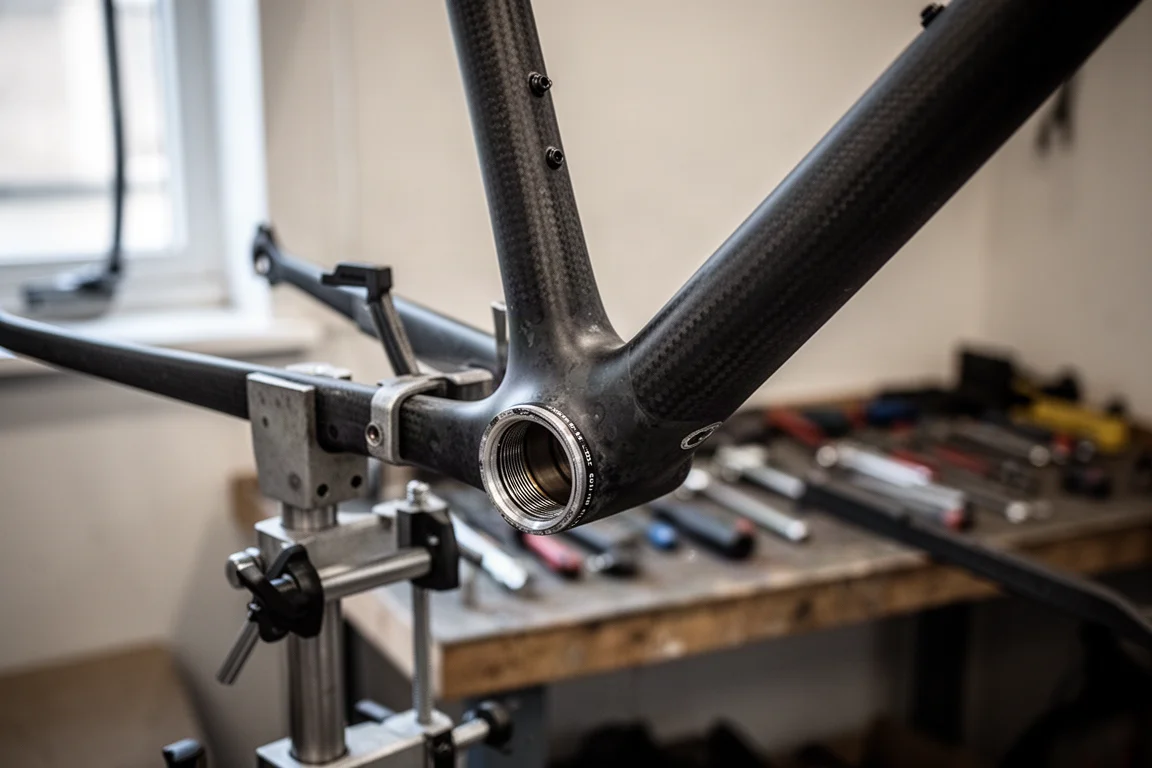
Two details stand out for anyone who works on their own bikes. The bottom bracket shell is 68 mm and threaded, with no press-fit and no T47. The dropouts are not UDH compatible, which is a reasonable omission on a road frame at this stage. Seeker states that around 350 pieces go into the construction of the frame, and an inspection through the head tube, around the seat tube and around the bottom bracket showed clean internal surfaces, no sharp edges, and neat metal threads ready for the bottom bracket.
Aerodynamic Testing and Weight Claims
Seeker took the Spear to the Silverstone wind tunnel and tested it against the Tarmac SL8 using the same wheels, the same tyres, the same protocol and a rider on the bike. The full dataset from that session has been published in a white paper, which means the numbers can be checked rather than taken on trust. That level of transparency is uncommon, and it is a point in the brand’s favour. The results themselves remain Seeker’s own claims.
The weight claims are similarly specific. Seeker quotes 685 g for an unpainted frame and 725 g with Shadow Black paint, which puts it on par with an S-Works Tarmac SL8. The measured weight of the size large frame used here, with no hardware attached, came in at 780 g. That is not super light, but it is certainly not heavy, and the fork, handlebar and seat post were weighed alongside it.
The finish is a highlight. The launch edition colourway shown here is frame 19 of 200, marked with a small plaque, and it is a strong argument for the frame on its own. Seeker also offers a wider colour range than most brands release at once, and the graphics are limited to the down tube and the seat tube, which keeps the look clean.
The Build: Components and Complete Bike Weight
Seeker’s new one-piece carbon handlebar is lighter than the previous version and offers up to 19 combinations of stem length and bar width, down to 36 cm at the hoods with a 25 mm flare in the drops. On this size large frame the setup is 37.5 cm at the hoods with a 110 mm stem. The bar shape sits somewhere between a Specialized Rapide and a bar with more sweep, with a distinctive profile of its own.
A professional mechanic handled the assembly. His verdict was that it went together well once the battery placement inside the frame was understood, and that the design makes life easier for riders who remove the seat post for travel. One caveat: seat post sizing needs care, because there are limits on how far it can travel in either direction. Beyond that, he rated the quality alongside the Specialized SL7 and SL8 generation and said he would buy one himself.
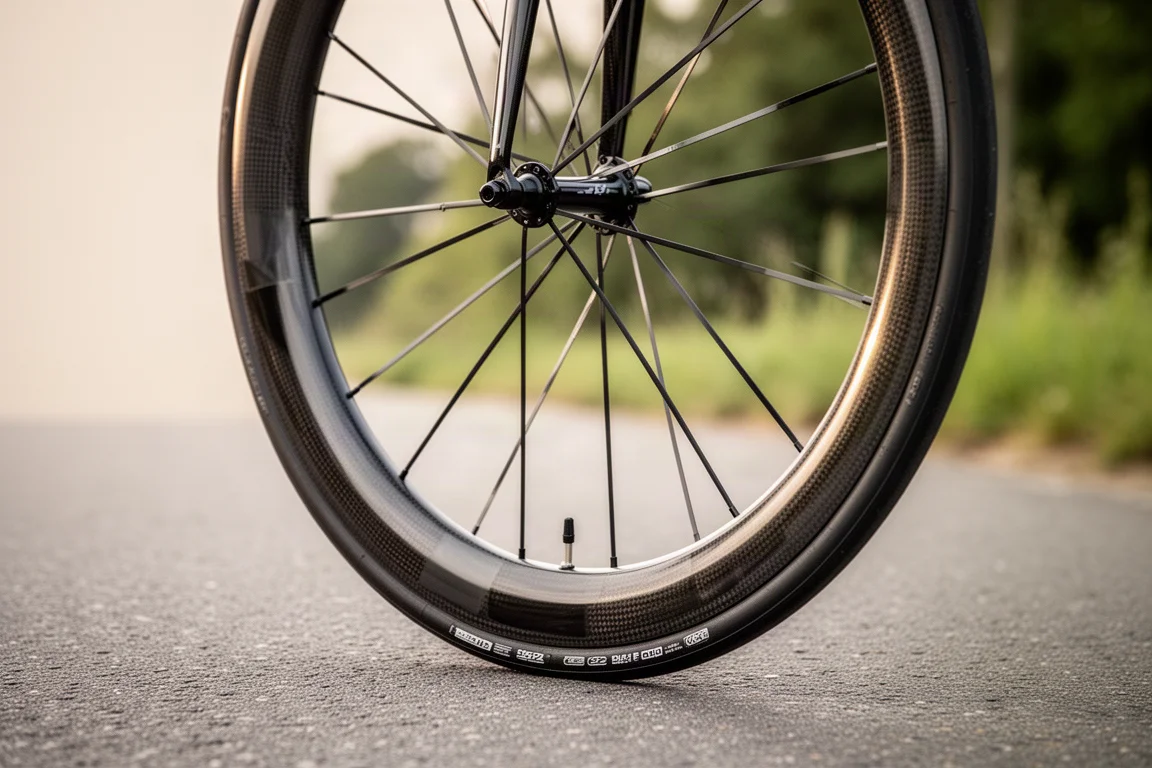
The complete build came in at 6.65 kg for a size large, which is the same weight recalled for an S-Works Tarmac SL8 with Roval wheels and a Dura-Ace groupset. This build uses Shimano Ultegra, chosen for its finish and a few hundred grams heavier than Dura-Ace, with the saving redirected into wheels. Those are Black Inc 48/58s: a 48 mm front rim and a deeper 58 mm rear for aerodynamic balance, weighing just under 1,300 g thanks in part to carbon fibre bladed spokes, the company’s own alloy hub shells and ceramic speed bearings. The large logos are bold, which is a matter of taste. Tyres are 28 mm Pirelli P Zero, set up tubeless, and the saddle is a well-used Specialized Mirror.
Things to Consider Before Buying
Dealer support and stock are the first practical questions. Seeker is actively recruiting dealers worldwide, but the network is not yet comparable to the major brands, and certain colours and sizes were in limited supply at launch. If you want to see a frame before committing, or you want a local shop for servicing, check what is available in your region first.
Seat post sizing deserves attention at the point of order. There are limits on how far the post can be inserted or raised, so riders near the edges of a frame size should confirm their fit rather than assume adjustability.
The measured frame weight of 780 g for a size large sits above the company’s unpainted figure of 685 g and above the painted claim of 725 g. It is a competitive number for a frame with this much aero shaping, but it is not the lightest option available, and anyone chasing the last few grams should factor that in.
Two design notes are worth weighing. The dropouts are not UDH compatible, and the frame is disc brake only with no rim brake option. Neither is likely to matter for most buyers, but they narrow the upgrade path slightly.
Finally, the aerodynamic figures and the 17 mm deflection claim come from Seeker’s own testing. The wind tunnel white paper makes the data checkable, which is more than most brands offer, but independent verification is still limited, and on-road ride assessment of this particular build is still to come.
Buying Advice
At £2,600 for the frameset against roughly £5,000 for the S-Works Tarmac SL8, the Spear asks a simple question: how much of the flagship experience do you actually need? The build weighed 6.65 kg, the frame is UCI compliant, the aero work was done in a real wind tunnel against a genuine benchmark, and the lifetime frame warranty plus five-year cover on the bars and other parts removes much of the risk of buying from a younger brand.
The buying decision comes down to three checks. Confirm your size and seat post range with a dealer. Confirm which colours and sizes are actually in stock, because supply is limited. And confirm who will service the bike locally, since the dealer network is still growing.
Riders who want a race bike that looks unlike anything else at the cafe stop, carries a genuinely competitive weight, and costs about half of the obvious alternative will find the Spear easy to justify. Riders who want the reassurance of a dense global service network may prefer to wait until Seeker’s dealer footprint is wider.
Conclusion
The Seeker Spear is the most convincing argument yet that a newer brand can compete on design and engineering rather than price alone. The Wind Eye junction gives it an identity, the wind tunnel work gives it credibility, and the 6.65 kg complete build gives it the numbers to sit alongside bikes costing twice as much.
The trade-offs are equally clear. A smaller dealer network, limited launch stock, a measured frame weight that trails the headline claim, and no UDH compatibility. None of those are deal-breakers for the right rider, but all of them are worth confirming before you order.
If a distinctive, UCI-compliant aero frameset at roughly half the benchmark price is what you have been looking for, the Spear is worth a serious look.
Product link
View more details for Seeker Spear
This product is mentioned in the review. Check the specifications, options, and compatibility before buying.
View more details for Seeker SpearFurther reading
Related Reviews

Backpacking Gear
Building a 10 lb Base Weight: An Ultralight Backpacking Gear List
A practical walkthrough of the ultralight pieces behind a 10 lb base weight, from a 765 g pack and a roomy one-person tent to a full camp chair and a dependable water filter.

Road Bikes
10 New Road Bikes Worth Watching: Aero, Titanium, Steel and Endurance Standouts
A practical roundup of 10 new road bikes, from aero flagships chasing single-watt gains to titanium, steel and endurance platforms built for real roads.
Bikepacking Gear
11 Bikepacking Essentials for Long-Distance Cycling
Eleven bikepacking essentials for long-distance cycling, from a steel gravel frame and a two-person tent to helmet lights, packable gloves, and a frame bag that puts weight in the right place.