Packing Cubes
Sea to Summit Packing Cubes Review: Premium Gear Organization That Keeps Water Out
A three-piece set of laminated ripstop packing cubes with welded seams and water-resistant zippers, built for hikers and backpackers who pack in wet conditions.
Introduction
Good gear organization rarely gets the attention that a new shelter or sleeping bag does, but it quietly determines how a trip feels. Knowing exactly which pouch holds the lighter, the stove, or the spare batteries removes a small but constant friction from camp life.
Sea to Summit packing cubes approach that job with an unusually serious set of materials. Instead of the thin nylon most organizers use, this set is built from laminated TPU over 70 denier ripstop nylon, with RF welded seams and water-resistant zippers. The result is a small family of cubes designed to keep water and dust away from the contents, not just keep them tidy.
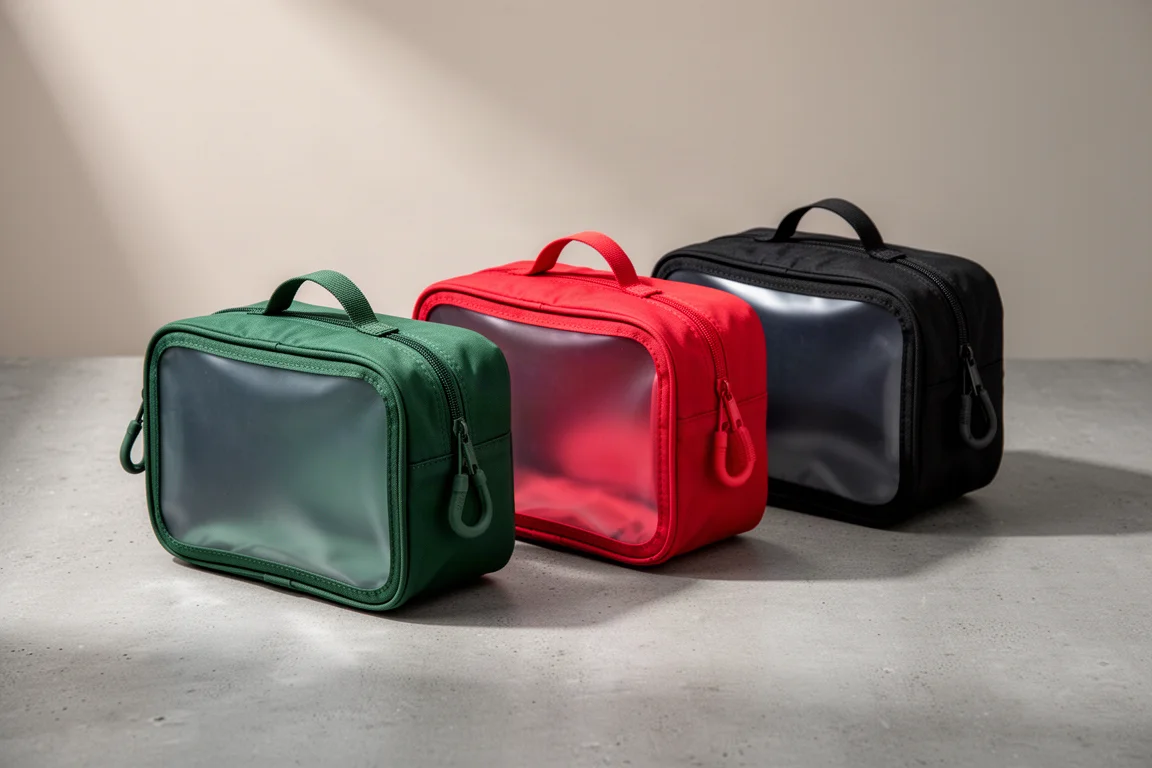
The three-piece set covers an extra small cube in green, a small cube in red, and a medium cube in black. Larger sizes exist, and every size can also be bought on its own, which matters if you only want one or two rather than the full assortment.
Who These Packing Cubes Are For
This set makes the most sense for people who pack in wet places. If rain is a regular part of your hiking, backpacking, bikepacking, or paddling routine, the value of a water-resistant cube goes up considerably. In consistently damp conditions, keeping a cook kit, a dry meal, or a power bank protected from moisture is not a luxury, it is basic trip insurance.
The cubes also suit anyone who dislikes hunting through a pack with many small pockets. Rather than remembering which of a dozen compartments holds the headlamp, you learn one system: cook kit in one cube, food and coffee in another, electronics in a third. That consistency is the real payoff, and it holds whether you are packing for a weekend or a longer outing.
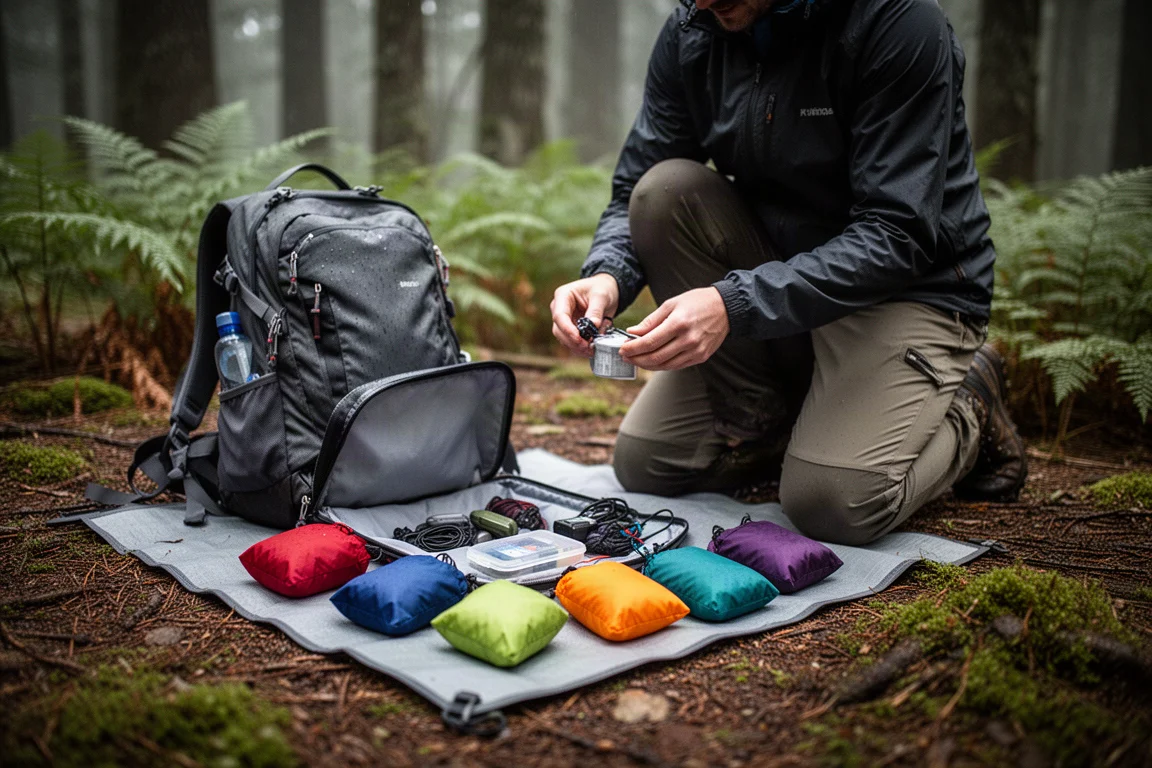
They are a reasonable fit for travel and vehicle-based camping as well, where the same logic applies to keeping small items grouped and identifiable. Anyone who wants the lightest possible solution and does not expect rain may find simpler mesh organizers adequate, since those cost considerably less and weigh almost nothing.
Main Strengths
The appeal here is not one standout feature but the combination of construction, low weight, and thoughtful detailing. Each of those pieces reinforces the others.
Water-Resistant, Dust-Resistant Construction
The laminated TPU and ripstop nylon build is the headline. Welded seams remove the stitched lines that normally let water through, and the water-resistant zippers close the remaining gaps. In practice this means the outside of a cube can be thoroughly wet while the contents stay dry.
That distinction matters when you compare it to a standard fabric pouch. This is a highly water-resistant design rather than a fully waterproof one, so it is not intended for submersion. For rain, splashes, wet pack interiors, and general damp, however, it does the job it was designed for, and it also keeps dust out of the contents.
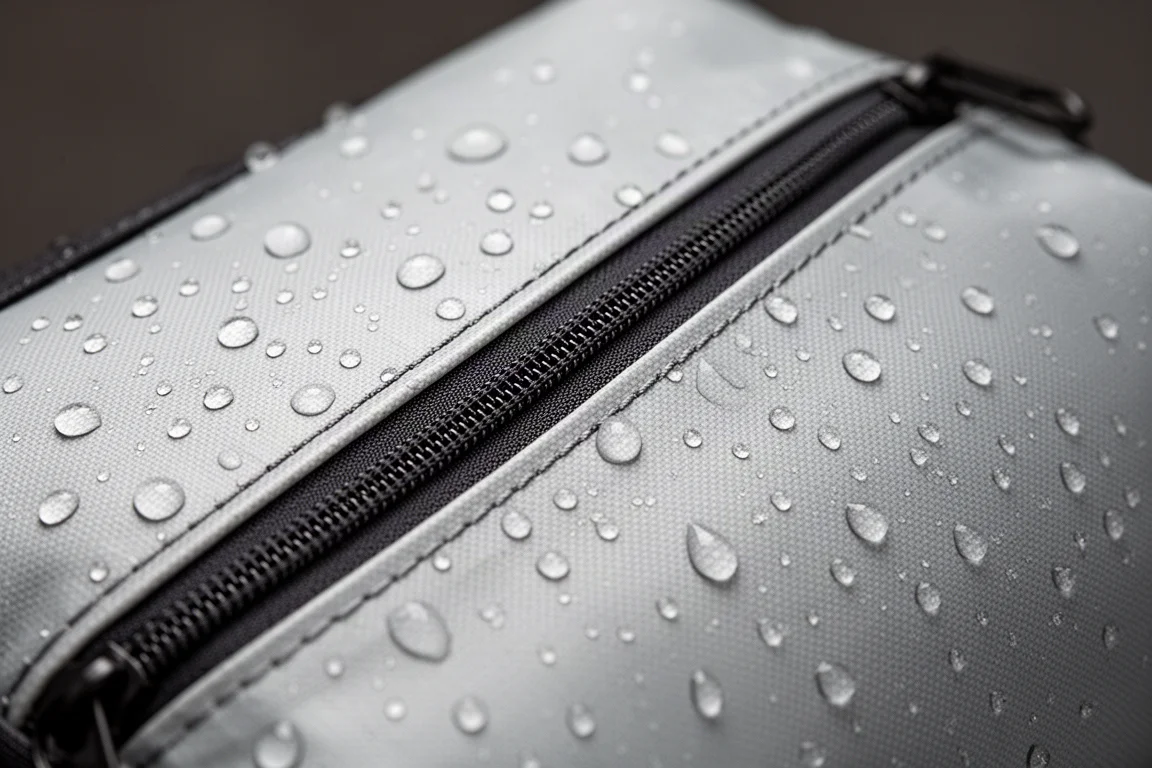
The execution matches the spec sheet. Seams are clean and consistent, the welds look correct, there are no loose threads, and the zippers run smoothly across their full length. Those are the details that separate a premium organizer from a cheap one.
Lightweight Design and Practical Details
Weight is impressively low across the range. The extra small cube comes in at under 1 oz, the small at 1.3 oz, and the medium at 2.2 oz. Packed into a backpack, the whole set adds essentially nothing you would notice.
Each cube shares the same feature set, with size and weight the only differences. A translucent front window lets you identify contents when they sit close to the panel, and you can at least make out the general shape of items further back. Two fabric loops allow lashing to a pack if you want to keep a cube accessible, and the rubberized zipper pulls are easy to grab with cold or gloved hands.
The medium cube and the larger sizes add an integrated handle, which makes pulling a full cube out of a packed bag noticeably easier. When the cubes are empty, they nest inside one another for storage.
Practical Features and Sizes
The kit covers the three sizes most people actually use. The extra small measures 5.7 by 3.7 inches with a 2.4 inch depth, the small measures 8.3 by 4.3 inches with a 2.8 inch depth, and the medium measures 10.4 by 5.5 inches with a 3.9 inch depth. A large and an extra large are available separately for anyone who needs more volume.
Real-world capacity is generous. The medium cube swallows a complete cook kit: a pot, stove, fuel canister, spoon, foil for a windscreen or lid, napkins, and a lighter, with room still left over. The small works well as a meal, snack, or coffee bag holding a freeze-dried meal, coffee, paper towels, and a snack. The extra small handles a power kit with a battery bank, charging cable, flashlight, headlamp, and an inflator.
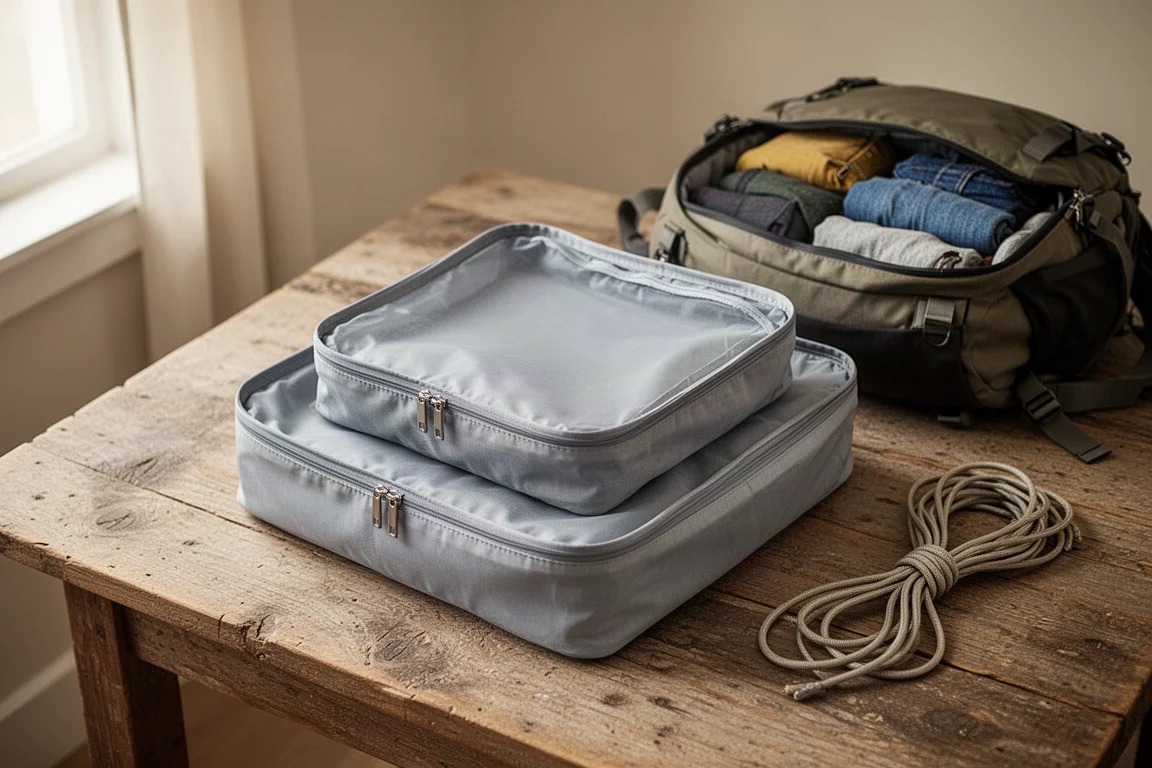
The cubes also hold a defined shape. They are not rigid, but they spring back to a cube form, which makes them predictable to stack and pack. That structure is a genuine advantage when you are fitting multiple cubes next to each other and around other gear in a main compartment.
Things to Consider Before Buying
The price is the obvious consideration. At $90 for the set of three, these sit at the top of the organization category, and the premium materials are the justification. Mesh organizers are the least expensive route and typically run around $40 for a set of three or four. Fabric pouches land roughly between $40 and $70 depending on the set.
Color choice is limited in the kit format. The extra small is green, the small is red, and the medium is black, and you do not choose those colors unless you buy the cubes individually. Buying separately is also the way to build a custom loadout, whether that means three of one size or a different mix entirely.
Finally, keep expectations aligned with the design. These are water-resistant, not submersible. If your trips involve pack rafts, river crossings, or gear that may end up fully underwater, a dry bag remains the correct tool. These cubes are for rain, spray, wet packs, and dust.
Buying Advice
If you pack in a wet climate or simply want your gear separated into clearly labeled, protected groups, this set earns its price. The laminated ripstop shell, welded seams, and water-resistant zippers are the reason to choose it over cheaper organizers, and the weight penalty for all that protection is negligible.
If your budget is tight or you rarely deal with rain, mesh or standard fabric pouches will organize your gear perfectly well for a fraction of the cost. The trade-off is straightforward: you give up the water and dust resistance, which is the whole point of this set.
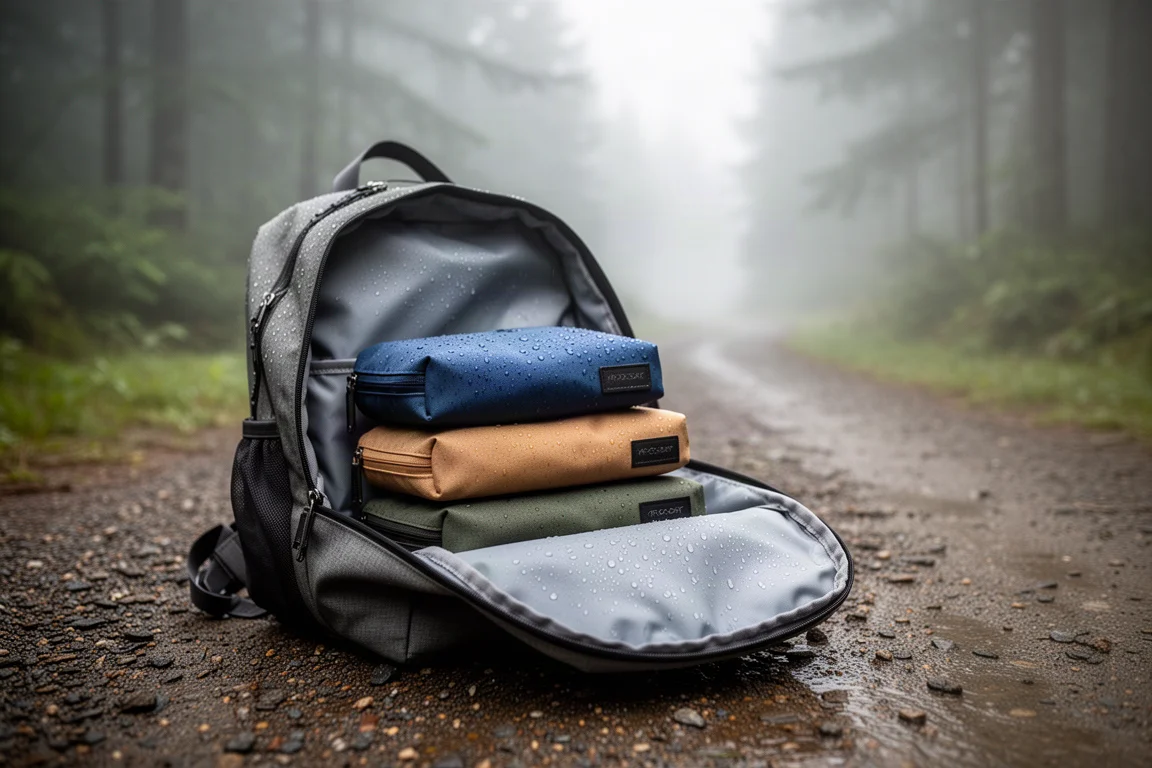
For most buyers, the small cube will become the workhorse and the medium the essential volume carrier, while the extra small handles electronics and small loose items. If that mix matches how you pack, the kit is a sensible starting point, and you can add individual sizes later as your loadout changes. It is a considered purchase rather than an impulse one, and it is built to justify that.
Conclusion
Sea to Summit packing cubes do exactly what they were designed to do: keep water out, keep dust out, and keep gear organized. The materials are genuinely uncommon in this category, the seams and zippers are executed well, and the weight is low enough to disappear into a pack.
The catch is the price. At $90 for three cubes, this is a premium choice in a category where cheaper options exist and work fine in dry conditions. For anyone who spends real time in wet environments and wants a durable, well-made organization system, the cost is easier to accept. For everyone else, it is worth weighing how much weather protection you actually need before committing.
Product link
View more details for Sea to Summit Packing Cubes
This product is mentioned in the review. Check the specifications, options, and compatibility before buying.
View more details for Sea to Summit Packing CubesFurther reading
Related Reviews

Backpacking Gear
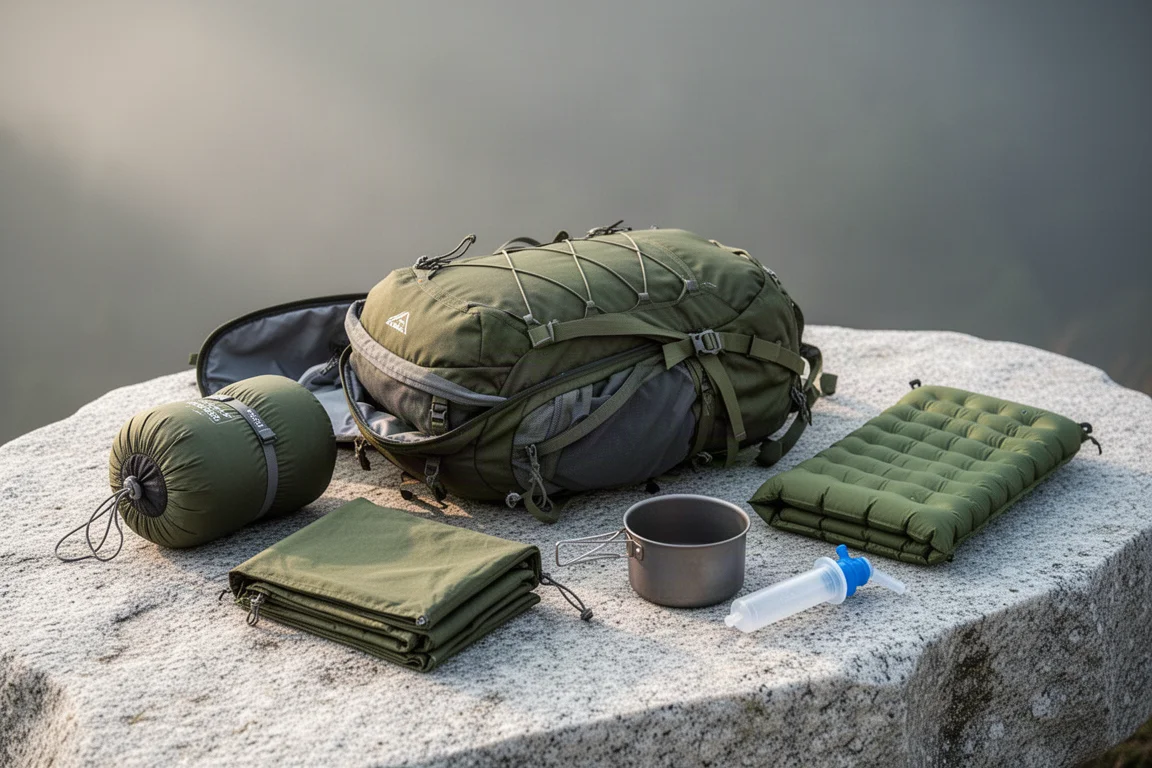
Building a 10 lb Base Weight: An Ultralight Backpacking Gear List
A practical walkthrough of the ultralight pieces behind a 10 lb base weight, from a 765 g pack and a roomy one-person tent to a full camp chair and a dependable water filter.
Backpacking Gear
A 15-Pound Lightweight Backpacking Gear List for Solo Trips
A beginner-friendly 15-pound backpacking setup built from easy-to-find gear, with notes on what each piece does, how it packs, and where to spend your attention.
Trail Running Gear
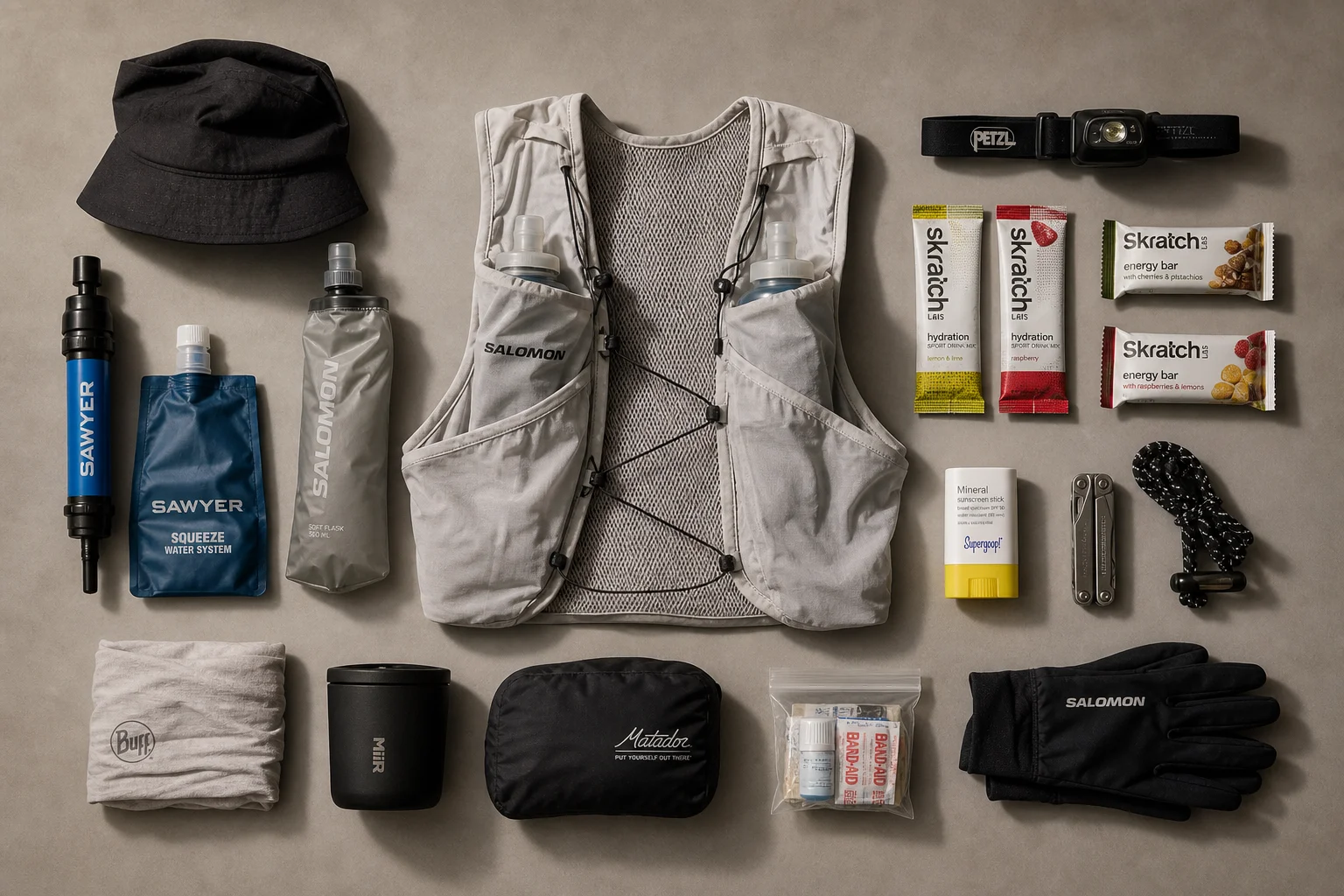
28-Mile Trail Run Pack Loadout: Ultralight Gear for High Alpine Self-Supported Running
A complete breakdown of gear, clothing, hydration, nutrition, and safety equipment for a 28-mile high alpine trail run with 7,800 feet of elevation gain.