Mountain Bikes
Scott Spark RC Review: An XC Race Bike Built for Technical Trails
The Scott Spark RC hides its shock inside the frame and pairs 120mm of travel with a wireless drivetrain. Here is how it climbs, how it descends, and who it suits.
Introduction
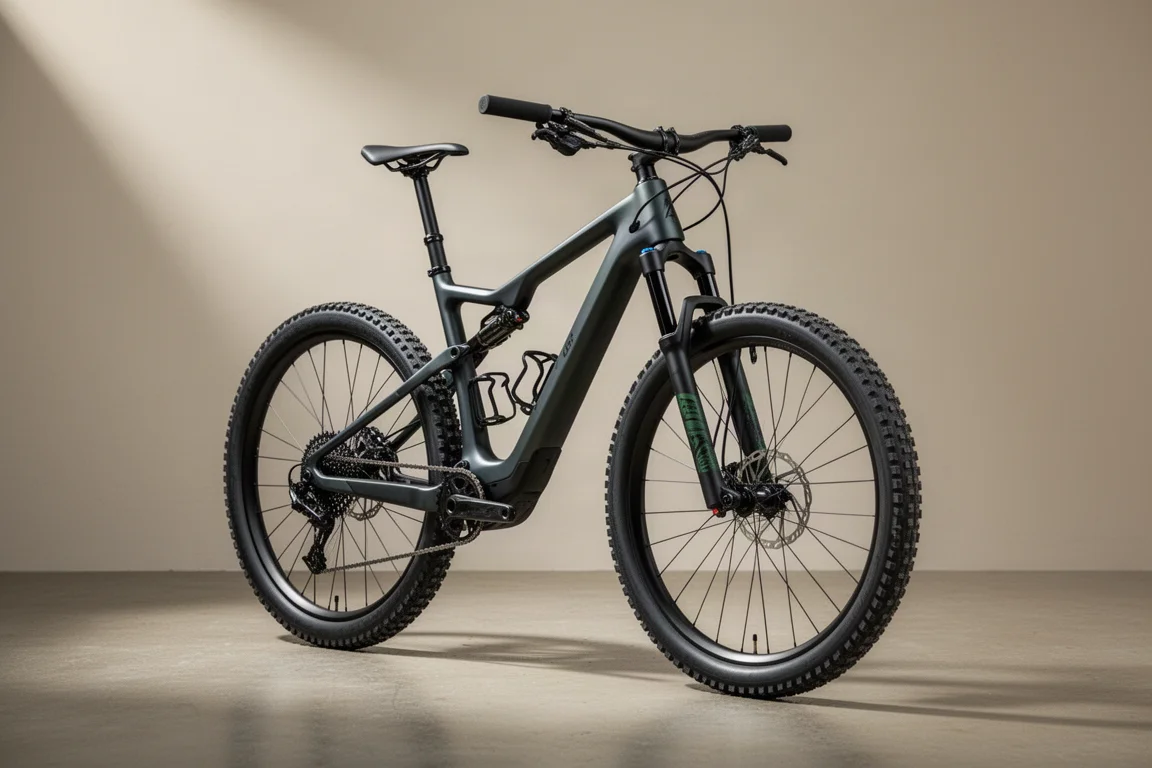
The Scott Spark RC has been a familiar sight on cross-country start lines for years, and the current generation pushes the platform further by moving the rear shock inside the frame rather than hanging it off the front triangle. On a cross-country race bike, 120mm of travel at both ends is a generous figure, and it shapes almost everything about how this bike behaves on real trails. The Spark RC combines that travel with a wireless SRAM drivetrain, RockShox suspension and an integrated Syncros cockpit. The result is a race bike that leans toward technical courses rather than smooth, wide-open grass criteriums.

Setup remains surprisingly approachable for a bike with so much hidden hardware. A small sag dial sits on the linkage and is readable from the saddle, so dialing in the rear suspension does not require guesswork. That matters, because the shock itself is not exposed to the elements in the usual way.
At 11.93kg the Spark RC is not the lightest bike in its class on paper, and the spec list explains where the weight sits: a stout fork, wide rims and broad 2.4 inch tyres all add substance. On paper that trade looks deliberate rather than accidental, and the trail is where it either pays off or does not.
Who the Scott Spark RC Is For
This is a bike aimed at riders who race, or ride like they race, on courses that include roots, rocks and steep loose climbs. The extra travel compared with a traditional cross-country machine makes it far less intimidating for anyone moving across from a longer travel trail or enduro bike, and the suspension feel has more in common with those bikes than with a stiff, short-travel racer.
It also suits riders who value a clean, quiet frame. With the shock tucked away, the front triangle stays uncluttered and two bottle cages are easy to fit. Brake hoses run through a shrouded stem and into the headset, which keeps the lines tight and the cockpit tidy.
Riders who prize outright reactivity above everything else, or who race mostly on smooth, fast, non-technical courses, may find the Spark RC softer and more trail-oriented than they expect.
Suspension and Frame Integration
The 120mm of rear travel comes from a vertically mounted shock that plugs into the bottom bracket shell area and extends up into the seat tube, where an internal linkage drives it. The suspension is a linkage-actuated single pivot, and flexible stays contribute to the way the bike controls its travel. Because the link that drives the shock is hidden inside the seat tube, nothing intrudes on the front triangle.
Adjustments are handled through an easily detachable door in the belly of the frame. Opening it exposes the air valve, the rebound dial and the cables for Scott’s remote lockout system. That access is more practical than the hidden layout might suggest.
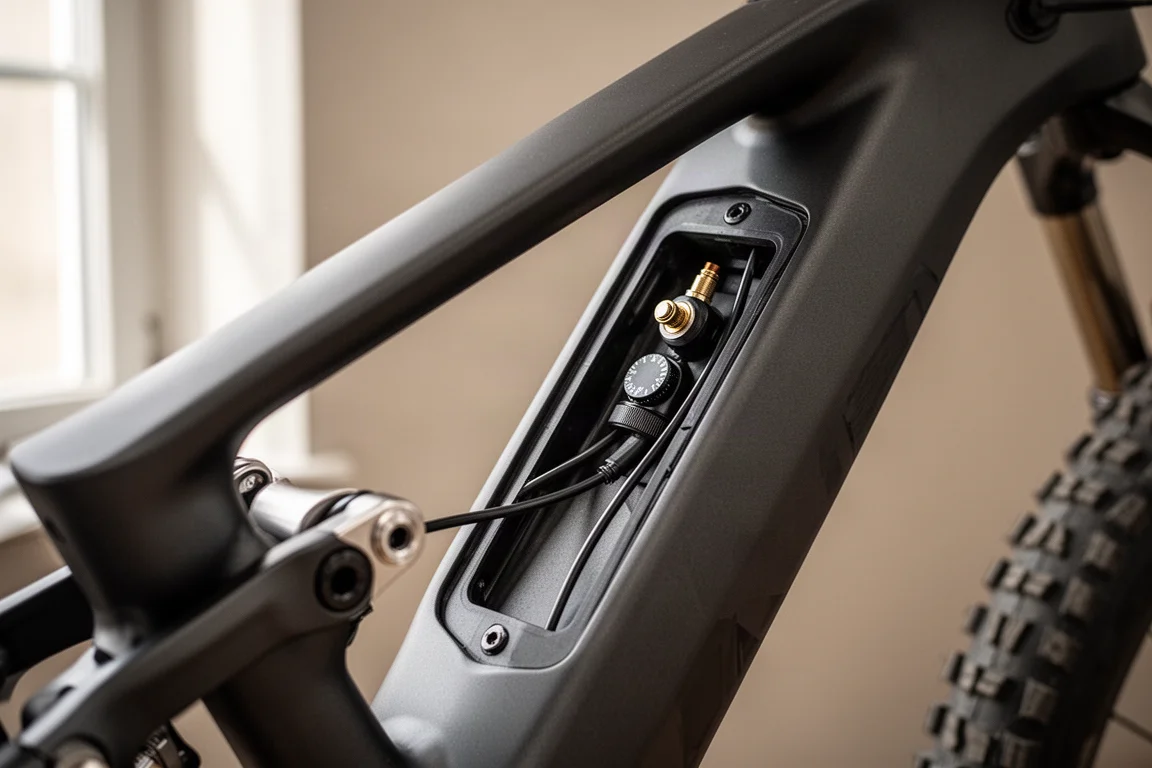
RockShox supplies the suspension at both ends. Up front is a SID fork with 35mm uppers, fitted here in the more affordable Select build. Inside the frame sits a custom Nude shock built by RockShox, with a trimmer construction and smaller dimensions that allow it to fit within the seat tube. Both fork and shock connect to Scott’s TwinLoc on-bar lockout levers, which switch between open, traction and firm modes. In traction mode, travel is effectively limited to 80mm and the bike sits higher in its travel, which sharpens the climbing position.
The wheels and cockpit come largely from in-house brand Syncros, with Maxxis Rekon Race tyres in a broad 2.4 inch width mounted on wide Silverton 2.0 30 rims.
Climbing Performance
In open mode the rear suspension is genuinely supple, and standing on the pedals produces more movement than a cross-country race bike might lead you to expect. Flicking the TwinLoc lever into traction mode tightens everything up, cuts travel to 80mm and makes the bike pedal noticeably better. On smooth climbs, that firmer setting also makes the bike feel more reactive because it soaks up less of each pedal input.
Traction on loose, technical climbs is a standout. At roughly 20psi, which is low for a race bike, the 2.4 inch tyres on 30mm rims stay composed and find grip. Rolling resistance from the Rekon Race tread is low thanks to its shallow pattern, so smoother sections still feel fast, and the combination of wide rubber and supple suspension means steep loose pitches rarely feel like a gamble.
The seated position is well judged for climbing. A fairly steep seat angle for a cross-country bike puts the hips nicely over the crank so it does not feel like you are pushing forward and over the pedals, and there is ample room in the cockpit without any stretched-out feeling.
Shifting is a highlight. The SRAM GX AXS drivetrain delivers light, accurate wireless electronic shifts, so there is no second-guessing lever pressure or whether a gear has engaged. Soft-pedaling through a technical section while dropping or adding a few gears simply works.
One recurring niggle is pedal strikes. Despite an average bottom bracket height for a cross-country bike, the pedals catch more often than expected on rocky, stepped climbs, which is likely a product of the extra travel and the 175mm cranks. There is also a sense that the chassis is not as laterally stiff as some rivals. In tight uphill corners that need a hard pedal stroke, the whole frame can feel like it twists slightly under power. It is not a major flaw, and it can even help flick the bike out of a corner, but it contributes to a slight lack of zip when pushing hard out of the saddle.
Descending Performance
This is where the Spark RC separates itself from the cross-country pack. The 66.5 degree head angle in its slack setting, a generous 471mm reach and confident, grippy tyres give it a composure on rough, rooty singletrack that does not feel like a short-travel race bike. Scott also supplies a 0.6 degree angle set for riders who prefer a steeper front end.
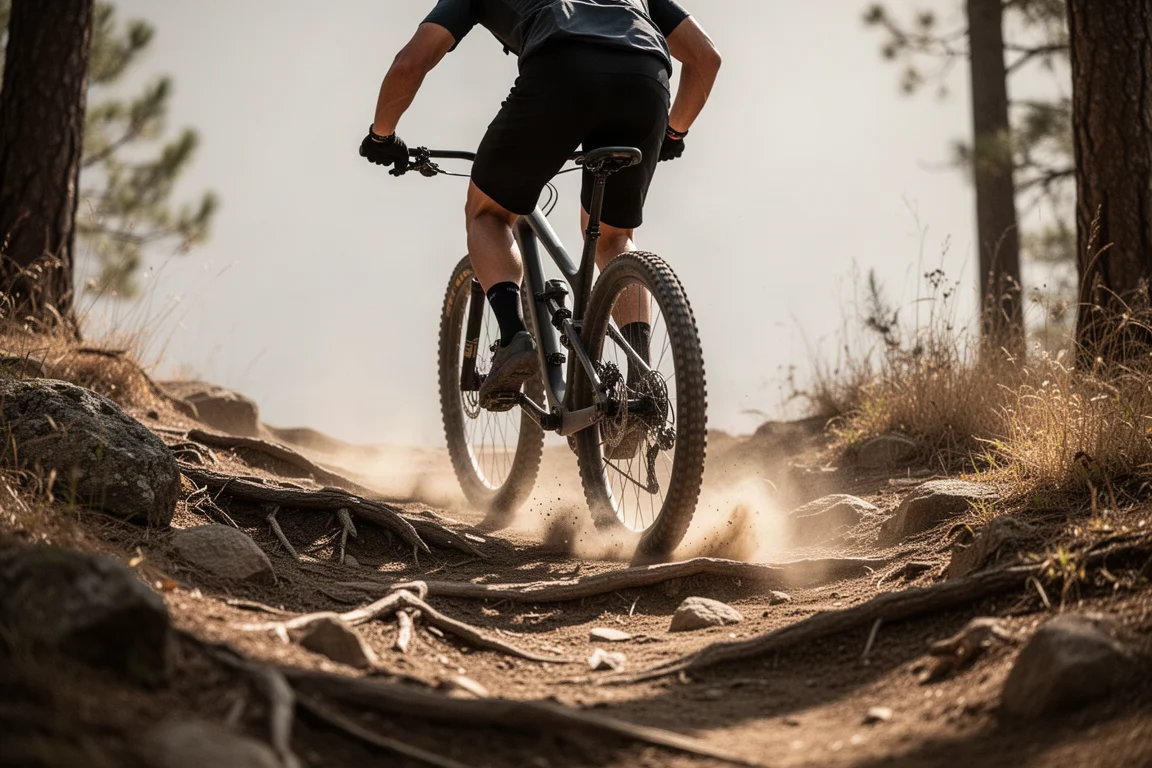
The fork is excellent. Even in its simpler Select specification, the SID with 35mm uppers provides good support and control, and there is clear progression toward the end of the stroke, so hard landings do not blow through the travel. The rear suspension is well controlled too, though it reaches the lower part of its mid-stroke a little sooner than more reactive cross-country bikes would. On pumpy, undulating trail that makes it harder to build speed from the bike’s platform, and pushing down deeper into the stroke becomes the natural response.
Through tight trees the bike is genuinely fun and easy to hustle, and in open, fast terrain it carries speed well. The bar could be a touch wider, and a dropper post would help on steeper descents. Fitting one is a little more involved than usual: the TwinLoc position on the bars means a vertically mounted dropper remote or a triple-lever cockpit is needed. Rear hub engagement is also unremarkable, with a slight delay when you get back on the power.
Things to Consider Before Buying
Maintenance is the main practical trade-off. With the linkage hidden inside the seat tube and cables routed through the headset, full servicing is a touch more involved than on a bike with an exposed shock. Nothing here is unreasonable, but it is worth knowing before committing.
The frame’s lateral stiffness is the other point to weigh. Riders who spend their time sprinting out of tight corners on smooth climbs may notice the flex, and those looking for the sharpest, most aggressive cross-country feel may find the Spark RC softer than its race numbers suggest.
Frame sizing deserves attention as well. The 490mm seat tube is long, so dropper post length should be checked carefully before ordering. A second set of faster-rolling tyres is also worth budgeting for if racing on smoother courses is the priority.
Buying Advice
Choose the Spark RC if your racing or riding involves technical descents and loose, steep climbs, and if you want a bike that carries trail bike confidence into a cross-country format. It is the easiest of the cross-country bikes in its class to move onto from a longer travel rig, because the suspension feel is closer to trail than to traditional race stiffness.
If your priority is maximum reactivity on smooth, fast, less technical courses, adding a little more air pressure to the shock and fork will sharpen the response and reduce the softness in open mode. TwinLoc still gives you the option to firm things up on demand.
For riders willing to add a dropper post, check compatibility carefully, and consider a second wheelset or tyre set. With those changes the Spark RC becomes a very convincing downcountry machine rather than a pure race bike. The integrated layout is not just a styling exercise, it delivers a quiet, clean frame with genuinely useful travel, and for the right rider that combination is worth the extra servicing effort.
Before ordering, confirm frame size and seat tube length against your preferred dropper travel, and decide whether the Select-level fork specification is enough for your terrain or whether a higher build suits your riding better.
Conclusion
The Scott Spark RC is a cross-country race bike that has been tuned toward the rougher end of the sport. The hidden shock layout keeps the frame clean and leaves room for two bottles, the 120mm of travel and stout fork make descents feel far more planted than the category usually allows, while traction mode and the wireless drivetrain keep climbing efficient. The compromises are real but specific: servicing takes more effort, the chassis is not the stiffest in its class, and pedal strikes are more frequent than expected. For riders whose courses reward control and grip over outright snap, those are reasonable trades to make.
Product link
View more details for Scott Spark RC
This product is mentioned in the review. Check the specifications, options, and compatibility before buying.
View more details for Scott Spark RCFurther reading
Related Reviews
Mountain Bikes
Atherton AM.130 Review: 3D-Printed Titanium Lugs and a 130mm Trail Bike That Descends Like a Bigger Machine
The Atherton AM.130 pairs 3D-printed titanium lugs with carbon tubes and a DW6 suspension platform. Here is how it rides, what the build delivers, and who it suits.
Mountain Bikes
Beginner Mountain Bike Buying Guide: What to Look For in a Trailworthy Hardtail
A practical framework for evaluating beginner mountain bikes, whether new or used, by examining key components that indicate real trail capability.
Mountain Bikes
Best Aluminum Mountain Bikes 2026: Five Alloy Bikes Worth Your Attention
Five aluminum mountain bikes that show how far alloy has come, from a 120mm trail bike and a versatile machined frame to a 180mm freeride machine.