Mountain Bikes
Scott Ransom Review: A Hidden-Shock Enduro Bike for Big Mountain Days
A detailed look at the Scott Ransom, including its hidden shock, six-link suspension, flip chip wheel options, and the build choices that shape how it rides.

Introduction
The Scott Ransom is the brand’s long-travel enduro platform, and the newest version makes its biggest statement by taking something away. The rear shock now lives inside the frame rather than hanging off the seat tube, which gives the bike an unusually clean silhouette and keeps the weight low in the chassis.
That low, centralised mass is the point. A lower centre of gravity helps a bike turn and settle, and Scott has paired the hidden shock with a six-link suspension layout that separates the axle path from the way the shock is driven. The result is a bike that climbs better than its travel suggests and stays composed when the terrain gets rough.
This review covers what the platform does well, the details that matter when you are choosing a build, and the trade-offs worth thinking through before you commit.
Who the Scott Ransom Is For
The Ransom is aimed at riders who want one bike for the steepest and roughest days rather than a quiver of specialised machines. In the build covered here, it serves as an enduro, freeride and big-mountain race bike, while shorter-travel bikes handle cross-country and trail duty. That division of labour says a lot: the Ransom is at its best when gravity is doing most of the work.
That makes it a natural fit for enduro racers, riders who spend weekends in bike parks, and anyone planning multi-day mountain events. It also appeals to riders who prefer a planted, stable front end over the quicker handling of a light trail bike.

If your riding is mostly mellow singletrack with the occasional technical section, the Ransom is more bike than you need. If a good day means long descents, chunky rock and lift-assisted laps, this platform is built for exactly that.
The suspension bearings are worth noting here. Every linkage runs on bearings across all models in the range, so the supple feel is not reserved for the most expensive build. The RC paint scheme, an off-white grey with fluorescent yellow accents, is shared across the top RC models, which keeps the look consistent from the flagship builds downward.
Hidden Shock and Six-Link Suspension
Storing the shock inside the frame is not new to Scott. It began with the Spark, moved to the Genius, and has now arrived on the Ransom. The benefit is twofold: the frame looks tidier than designs with an exposed shock, and the mass sits lower and more centrally in the bike.
The linkage behind that cover is a six-link design, which lets the designers separate axle path from shock actuation. In practice, the rear wheel can move along the path that suits traction while the shock is driven independently.
Shock choice matters. The stock arrangement is a Fox Float X with Twin Lock, offering climb, trail and descend settings. The build covered here uses a Fox Float X2 air shock aimed at harder freeride and downhill use, and a coil shock can be fitted as well. The frame uses a trunnion mount running on bearings, and the new track lock system works with a handlebar remote: closing a valve between two air chambers makes the shock noticeably more progressive, which sharpens climbing performance.
Riders who want the most efficient pedalling platform should keep the remote and the stock shock in the equation. Riders who prioritise descending can follow the freeride route and skip the lockout entirely, since the bike still climbs well without it.
Geometry, Flip Chip, and Wheel Options
Compared with the previous Ransom, the geometry is slightly slacker and slightly lower. The bigger story is the flip chip, which lets you run a full 29-inch setup, a full 27.5-inch setup, or a mullet mix of 29 up front and 27.5 at the rear. The same chip raises or lowers the bottom bracket to suit the configuration.

Rider preference plays a large part here. A mullet setup gives more clearance at the rear and a livelier feel over jumps, while a full 29 build rolls faster over rough ground. Because the chip makes switching straightforward, the Ransom suits riders who want to experiment with wheel size rather than commit to one configuration for the life of the bike.
Suspension, Brakes, and Contact Points
Up front, the build runs a Fox 38 fork with four volume tokens for a more progressive feel, paired with a rear shock set at 220 PSI. Those figures are personal setup choices rather than factory recommendations, but they illustrate how adjustable the platform is.
The brakes are Hayes Dominion in a limited purple edition carrying the older Hayes logo, and the lever pivot runs on a bearing. That bearing is what gives the lever its notably light action, and it is a real advantage on long descents where hand fatigue builds.
The cockpit uses a Deity BF800 aluminium bar with a 31.8mm clamp, cut to 780mm, matched to a Deity Copperhead stem with 42mm reach that is due to arrive soon. Aluminium was chosen deliberately for a little more flex and feel than a carbon bar. Grips are DMR Death Grips in the thicker white version, and the saddle is a Deity Speedtrap.
At the pedals, the build uses DMR Vault Brendog Edition platforms, available in black and in a silver finish. They run King pins, with a sharper Moto pin in the middle and slightly taller pins on the outside, which creates a concave platform that your foot settles into.
Drivetrain, Wheels, and Tyres
The drivetrain is a SRAM T-Type AXS group, fully wireless and 12-speed. The shifter is the newer design and is heavily adjustable, which matters for riders with limited thumb mobility or old hand injuries. Once it is dialled in, shifts are quick and clean. Cranks are DMR Ax units at 165mm, a short length chosen for ground clearance on rocky descents.
Wheels are a prototype Envy M Series set, the new M9. The rim is shallower than Envy’s deeper offerings, trading a little stiffness for more compliance and feel over rough, off-camber ground while keeping the lively pop out of turns. A new Envy hub is also in development.
Tyres come from Pirelli: an M series front tyre in DH casing, and a T type rear in DH casing with a more open tread pattern aimed at braking traction.
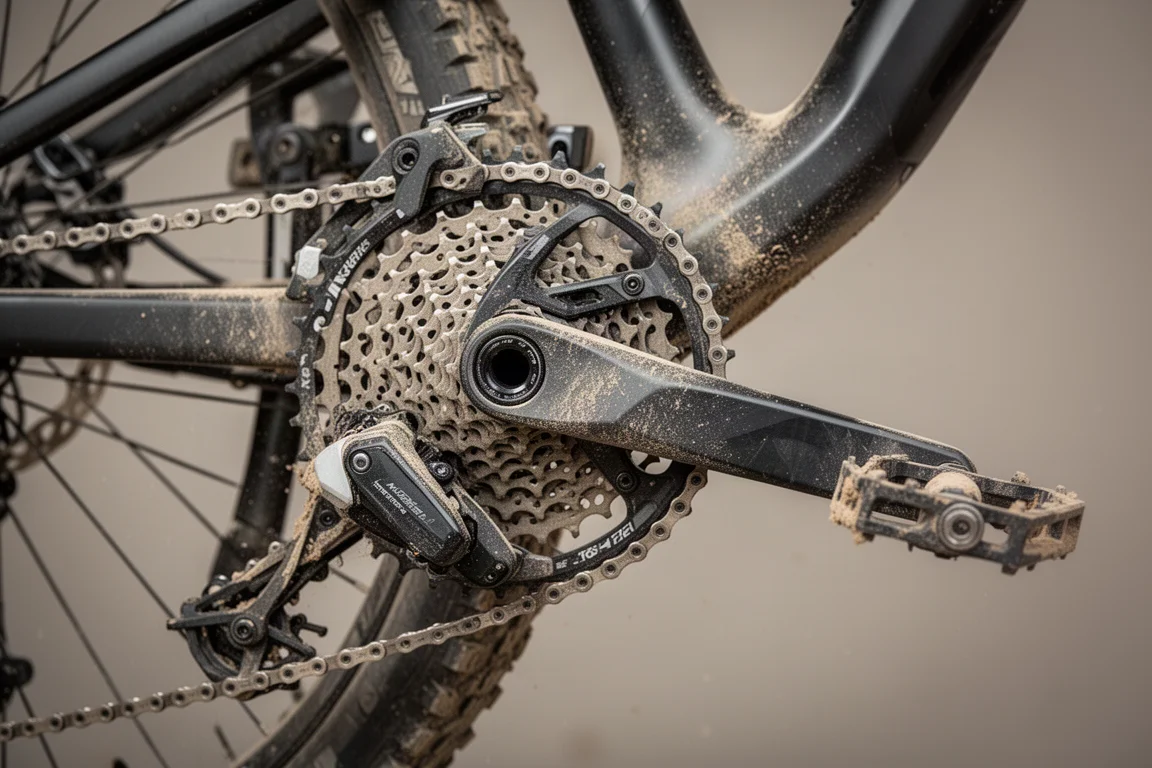
The finish is the off-white grey and fluorescent yellow RC scheme, the same combination used across the top RC models in the range, which keeps the Ransom recognisable next to the brand’s other race bikes.
Things to Consider Before Buying
First, the parts described above are one rider’s personal build, not the standard specification. Shock, fork, wheels, tyres and cockpit can all differ between models, so check the exact build you are considering.
Second, decide whether you want the remote lockout. The stock shock with Twin Lock and the handlebar remote delivers the most efficient climbing behaviour, while a freeride-oriented shock without a lockout suits riders who accept a little more movement in exchange for descending composure.
Third, think about wheel size. The flip chip makes it easy to change, but the choice affects how the bike feels more than any other single decision.
Finally, be honest about your riding. A long-travel enduro bike rewards commitment on steep terrain and asks for more effort on gentle, rolling trails.
Buying Advice
The Ransom makes the most sense for riders whose priority is descending performance with enough pedalling ability to reach the top under their own power. Enduro racers, bike park regulars and riders targeting big mountain events will find the platform well matched to their ambitions, and the bearing specification across all linkages means the suspension feel is consistent from the entry point of the range upward.

When choosing a build, start with the suspension. If you climb a lot and want the bike to feel efficient, the Twin Lock shock and handlebar remote are the combination to look for. If your riding sits closer to freeride or downhill, a stiffer air shock or a coil setup will suit you better, and the flip chip lets you fine-tune the rear end afterwards.
Also consider the finish. The RC paint scheme runs across the top RC models, so the look you see on the flagship bike is not limited to a single model.
Conclusion
The Scott Ransom is a considered piece of design. Hiding the shock keeps the frame clean and the mass low, the six-link layout separates axle path from shock actuation, and the flip chip makes 29, 27.5 and mullet setups genuinely practical rather than a workshop project.
It is not the simplest bike to buy, because the build and suspension choices change its character significantly. Riders who take the time to match the shock and wheel configuration to their riding will end up with a long-travel bike that climbs far better than its travel suggests and stays calm when the trail gets serious.
Product link
View more details for Scott Ransom
This product is mentioned in the review. Check the specifications, options, and compatibility before buying.
View more details for Scott RansomFurther reading
Related Reviews

Mountain Bikes
Atherton AM.130 Review: 3D-Printed Titanium Lugs and a 130mm Trail Bike That Descends Like a Bigger Machine
The Atherton AM.130 pairs 3D-printed titanium lugs with carbon tubes and a DW6 suspension platform. Here is how it rides, what the build delivers, and who it suits.

Mountain Bikes
Beginner Mountain Bike Buying Guide: What to Look For in a Trailworthy Hardtail
A practical framework for evaluating beginner mountain bikes, whether new or used, by examining key components that indicate real trail capability.

Mountain Bikes
Best Aluminum Mountain Bikes 2026: Five Alloy Bikes Worth Your Attention
Five aluminum mountain bikes that show how far alloy has come, from a 120mm trail bike and a versatile machined frame to a 180mm freeride machine.