Hi-Fi Audio
Schiit Wotan, Kara F and Forkbeard: A Two-Channel Amplifier Roundup
A close look at the Schiit Wotan power amplifier, the free Forkbeard control app and the Kara F preamp, plus how they compare with the Emotiva A1 monoblocks and the Monolith two-channel amplifier.
Introduction
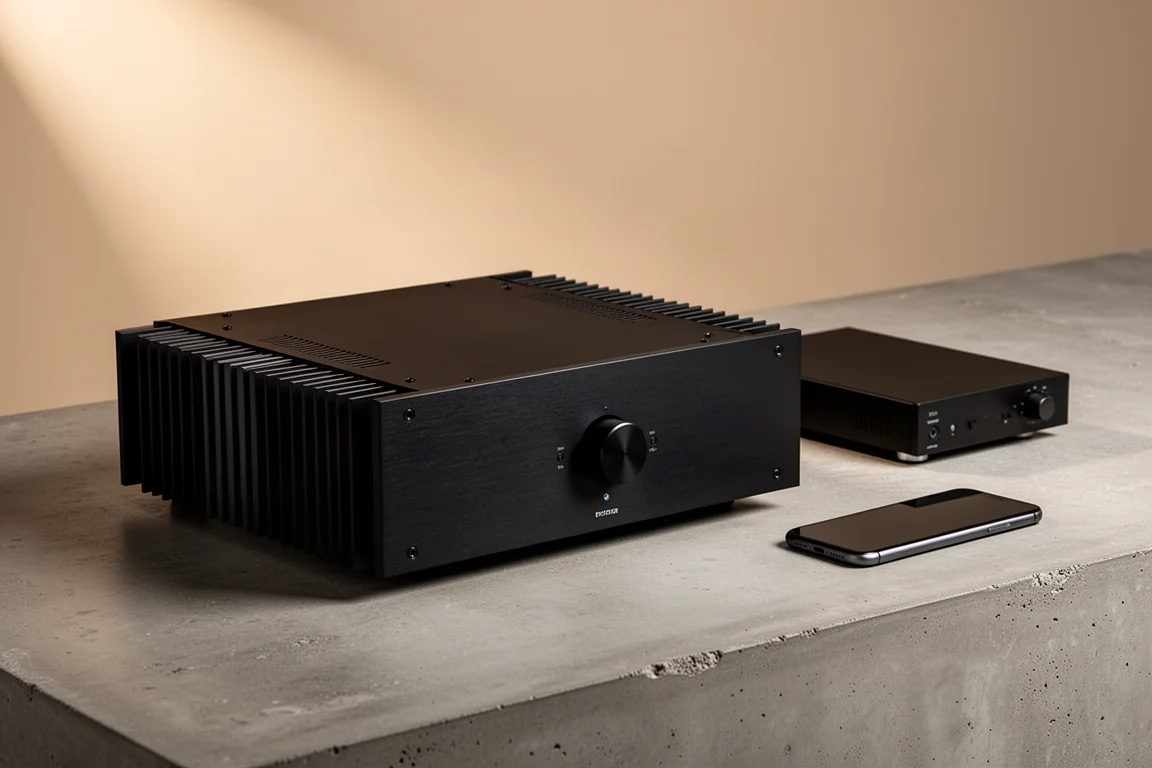
Schiit’s Wotan is a new two-channel power amplifier that pairs a dual-mono internal layout with the company’s Forkbeard control platform, and at $1,999 it sits firmly in premium territory. The same ecosystem includes the Kara F preamplifier at $799, a compact unit that adds balanced connections, three gain settings and a discrete headphone stage.
For buyers weighing that outlay, the obvious question is what the extra money actually buys. Two much cheaper amplifiers make that question concrete: the Emotiva A1 monoblocks, which retail around $500 with a 10 percent coupon frequently available, and the Monolith two-channel amplifier, which lists near $400 and often sells for about $300.
This roundup walks through what each product does, how the Wotan’s switchable feedback setting changes its presentation, and where the value options close the gap. It is written for listeners assembling a serious two-channel system and trying to spend deliberately rather than automatically.
How These Amplifiers Compare
Four things separate these amplifiers in practice. The first is power delivery into real speaker loads. The Wotan is rated at 200 watts into 8 ohms and 400 watts into 4 ohms, the Emotiva A1 monoblocks are rated at 200 watts into 8 ohms but do not reach 400 watts into 4 ohms, and the Monolith is a two-channel design built around a single transformer rather than a fully balanced topology.
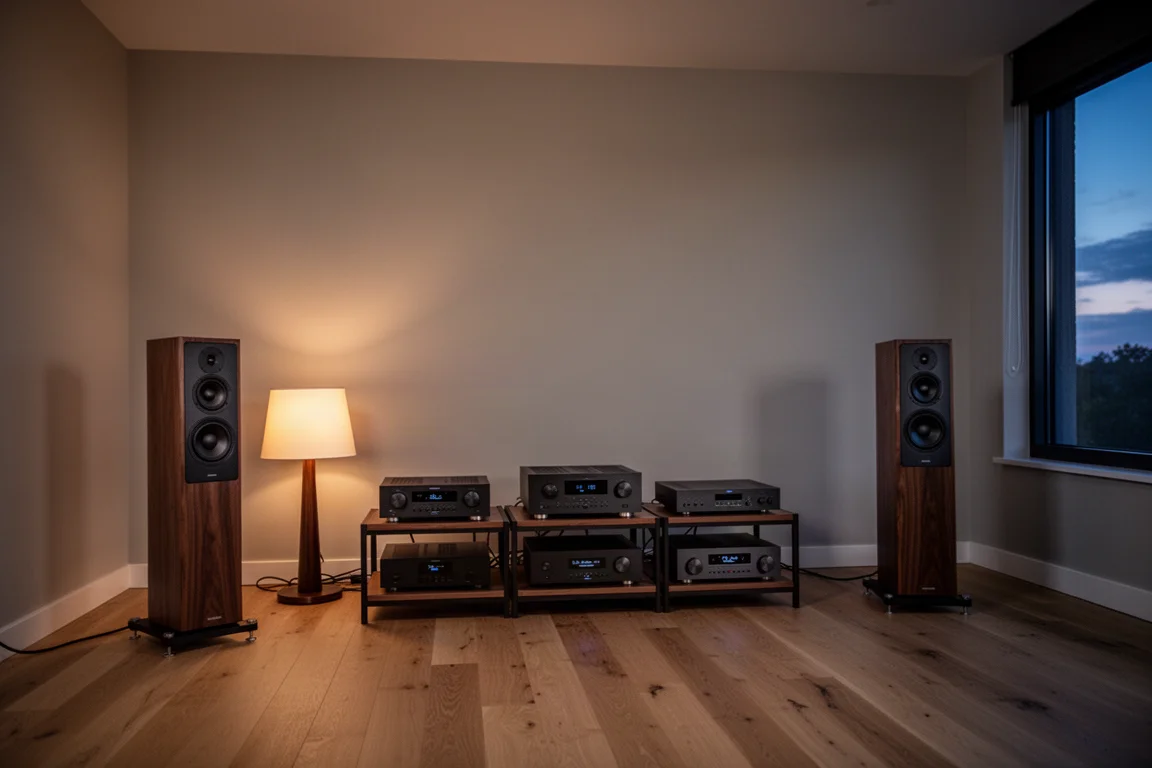
The second is power supply architecture. The Wotan uses two separate power supplies and two transformers inside one chassis, with 160,000 microfarads of filter capacitance and 24 Toshiba output devices rated at 150 watts each. That dual-mono approach is what allows it to behave like a pair of monoblocks while occupying a single enclosure.
The third is connectivity and control. Balanced XLR and single-ended RCA inputs, adjustable preamp gain and app-based control all shape how easily a component slots into an existing system. The fourth is cost, and here the spread is wide enough that a value amplifier can be genuinely competitive on tonality even when it gives ground on headroom and refinement.
Schiit Wotan: Flagship Two-Channel Power
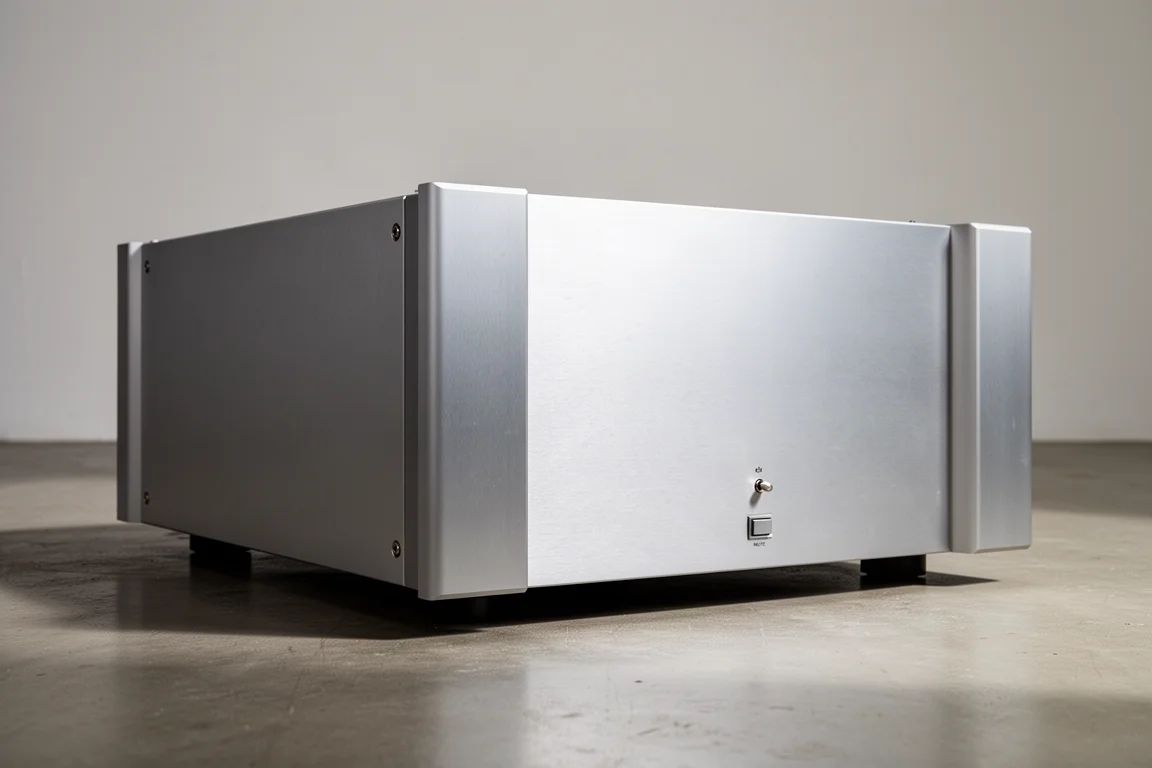
The Wotan is a two-channel power amplifier priced at $1,999. Each channel gets its own power supply and transformer, and the specification list includes 160,000 microfarads of filter capacity and 24 Toshiba output devices rated at 150 watts. It uses Schiit’s Nexus differential topology, and the feedback stage can be switched on or off either from a switch on the front panel or through the Forkbeard app.
Connections are straightforward: an RCA input or an XLR input for each channel, plus a pair of speaker binding posts. Two internal fans are fitted, and in practice they stayed off even with speakers that are neither especially easy nor especially difficult to drive. The chassis uses side-mounted heat sinks and weighs 54 pounds, so placement deserves some thought before it goes onto a shelf. It is designed and built in the United States and backed by a five-year warranty with a 15-day return policy.
Sonically, the Wotan keeps the midrange-forward character associated with Schiit amplifiers, with plenty of detail through the mids and real dynamic range when the material calls for it. Soundstage separation is a particular strength: instruments stay distinct rather than collapsing into a flat wall of sound, and the presentation is nuanced rather than relentless. The switchable feedback setting changes the character enough to be worth experimenting with, although it also shifts output level slightly, which makes a direct comparison tricky. With feedback engaged, the sound is more cleanly defined and more separated, with a slightly more intense quality. With it disengaged, the presentation relaxes and becomes more laid back, which can suit speakers that already lean bright.
Schiit Forkbeard: The Control App That Ties It Together
Forkbeard is Schiit’s new control app, and the simplest way to describe it is as a unified remote for a Schiit system. Compatible components can be grouped into stacks, and each stack is then controlled from a single screen. From there you can switch inputs, change preamp gain, adjust volume and toggle amplifier options such as the Wotan’s feedback setting.
The app reports more than settings, too. It includes a power meter, and depending on the speakers connected it can indicate when a speaker is clipping. It can monitor temperature as well. Schiit has indicated that further functionality is planned for the future, though the specific additions have not been detailed.
Two things make Forkbeard unusually easy to recommend. It is free, and it does not require an account. No email address is requested and there is no sign-in step, so the app simply detects connected products once they are powered on. The current feature set is modest, essentially input selection, a few toggles and volume control, but the convenience of one screen for a multi-box system is real. Compatibility currently covers components including the Saga 2 preamp, the Kara F preamp, the Gungnir 2, the Freya+ tube preamp, the Vidar 2F power amp, the Aegir 2F continuity power amp, the Wotan and the Kraken five-channel power amp.

Schiit Kara F: The Matching Preamplifier
The Kara F is the natural partner for the Wotan in a Schiit stack. It is priced at $799 and offers two balanced inputs and three single-ended inputs, one balanced XLR output and two sets of single-ended outputs, which means one pair can feed a power amplifier while the other handles a subwoofer.
Gain is adjustable across three settings: passive, low and high. That flexibility matters when matching a preamp to different sources and power amplifiers, and it is one of the reasons the Kara F pairs cleanly with the Wotan. The front panel also includes a headphone amplifier that uses the same discrete gain stage as the preamp’s outputs, combined with a protection system designed to guard against headphone mishaps. Forkbeard support is built in, so the preamp can be controlled from the same app as the rest of the stack.
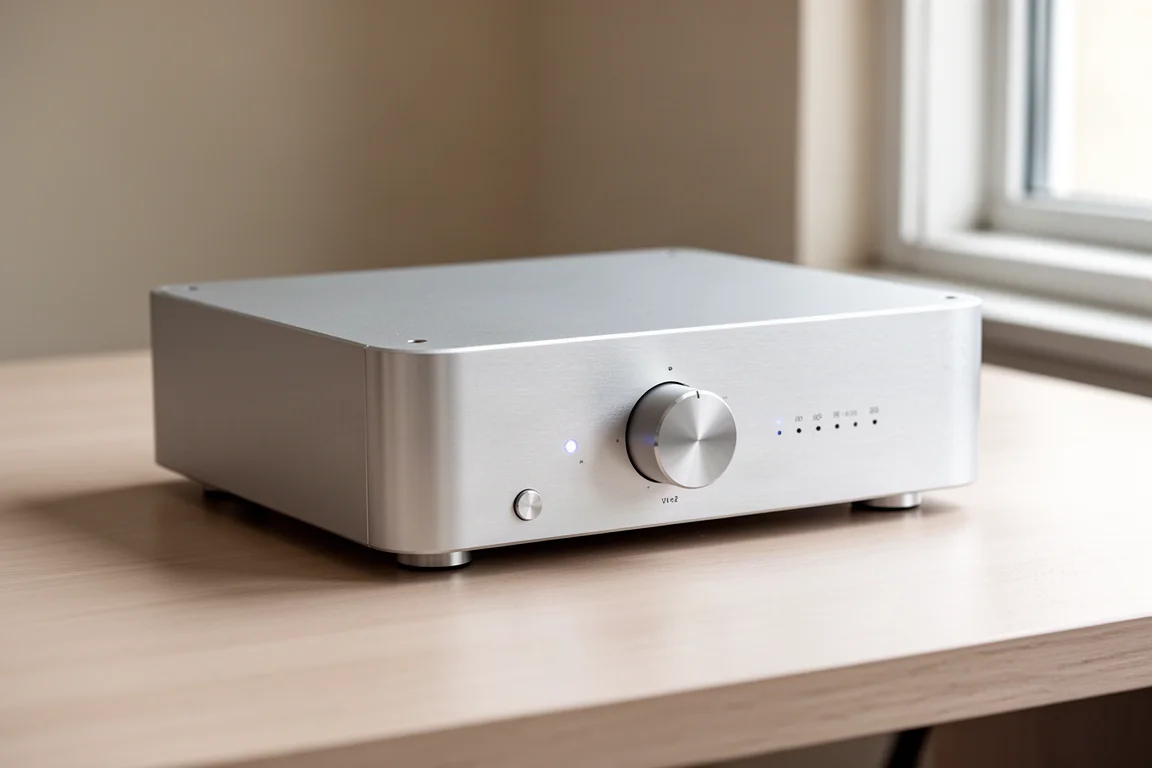
Emotiva A1 Monoblocks: The Value Alternative
The Emotiva A1 monoblocks are the comparison most buyers will make, because they are rated at 200 watts into 8 ohms and retail for around $500, with a 10 percent coupon frequently bringing the pair to roughly half the price of the Wotan.
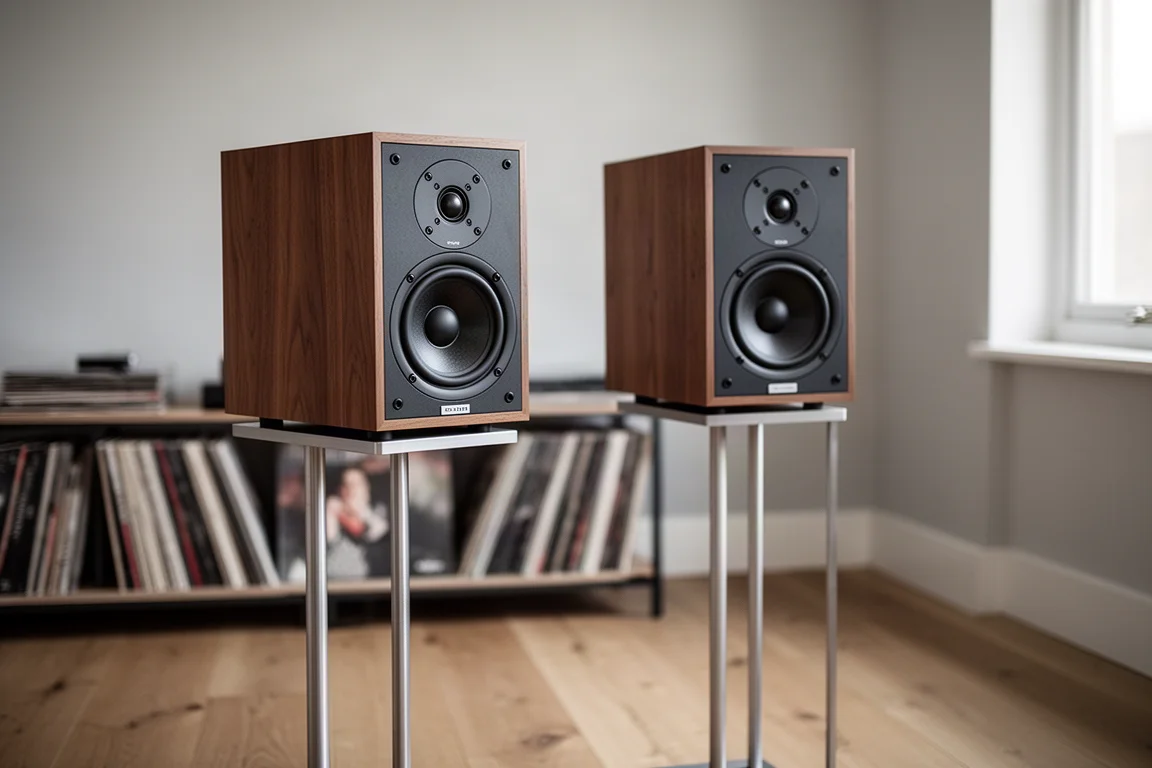
In direct listening comparisons, the A1 pair came across as more dynamic in the bottom end and fuller through the lower midrange. Vocals moved noticeably forward in the stage, and the amplifiers pushed enough air to move a curtain hanging behind rear-ported speakers. On denser material, the low end carried more punch than the Wotan managed.
The Wotan answered with cleaner mids, better separation and less smearing, and it resolved detail in drum recordings that the Emotiva pair flattened, including a more textured initial attack on bass drums and clearer tom work. Some tracks also revealed a hint of sibilance through the Wotan that was not present on the A1 monoblocks. Neither amplifier is strictly better across the board. They prioritise different things, and the A1 pair remains a serious option for anyone who values weight and drive over midrange clarity.
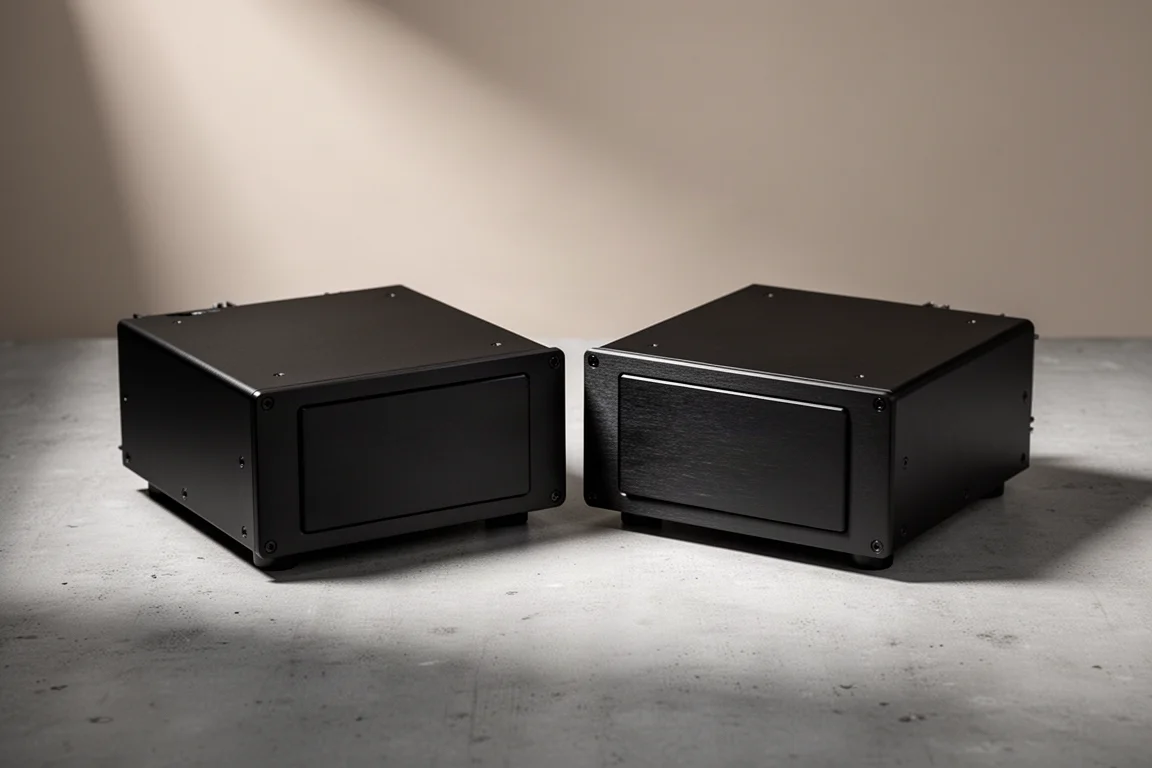
Monolith Two-Channel Amplifier: Neutral on a Budget
The Monolith two-channel amplifier lists at around $400 and is often discounted to about $300, and it has occasionally been seen lower still. It is not a fully balanced design, so it uses a single transformer rather than the dual-mono arrangement found in the Wotan.
Tonally it lands closer to the Wotan than the price difference suggests. Both lean neutral with a midrange focus, and the vocalist still steps forward in the stage relative to the Emotiva presentation. Where the Monolith gives ground is at the frequency extremes and in dynamic swing: it has less bottom-end weight than the A1 monoblocks and does not sound as forceful.
What stood out most was its detail reproduction. For an amplifier in this price band, it resolves more than expected, and the neutral character makes it easy to appreciate when the comparison is between similarly balanced designs. Buyers who want maximum punch should look at the Emotiva pair, but anyone chasing a clean, neutral presentation on a small budget has a genuinely interesting option here.
Buying Advice
Start with your speakers. The Wotan’s feedback switch is the most useful tuning tool in this group, and it changes the sound enough to matter. With feedback engaged, the presentation is more defined and more separated, which tends to suit speakers that are already forward or detail-heavy. With feedback disengaged, the character relaxes, which can take the edge off a brighter speaker. Since the setting also shifts output level slightly, level-match carefully before deciding which one you prefer.
Budget allocation matters as much as amplifier choice. A $1,999 power amplifier deserves a source that can keep up. Feeding it from an entry-level streamer’s onboard DAC is unlikely to show what it can do, and a better DAC between the source and the amplifier will usually return more than another amplifier upgrade. The Wotan also has enough power that speaker choice, not headroom, will be the limiting factor in most rooms.
If the total budget is tight, the value path is legitimate rather than a compromise. The Emotiva A1 monoblocks deliver more low-end drive for roughly half the price, and the Monolith two-channel amplifier gets surprisingly close to the Wotan’s neutral balance for a fraction of the cost. Buy the Wotan when you want the detail, separation and app integration, and buy the alternatives when you would rather spend the difference on speakers or sources.
Conclusion
The Wotan is an expensive amplifier at $1,999, and it earns that price with a dual-mono layout, substantial power delivery, switchable feedback and full Forkbeard integration. Its midrange detail and soundstage separation are the strongest arguments in its favour, and the app makes a multi-component Schiit system easier to live with. The Kara F complements it neatly at $799 with balanced connections, three gain settings and a discrete headphone stage, while Forkbeard costs nothing at all and removes the account and data-collection friction that usually comes with control apps.
The alternatives are not filler. The Emotiva A1 monoblocks trade midrange refinement for punch and cost roughly half as much, and the Monolith two-channel amplifier delivers a neutral, detailed presentation for around $400 or less on sale. Match the amplifier to your speakers and your source, and any of these three can be the right answer.
Further reading
Related Reviews
Hi-Fi Audio
Accuphase C-57 vs Allnic H-7000V: Two High-End Phono Stages Compared
A fully balanced solid-state phono stage with a pitch-black noise floor meets a tube design built for well-loved records. Here is how to choose between them.
Hi-Fi Audio
Active vs Passive Hi-Fi: Five Components for a Modern System
Five components that define modern active and passive hi-fi systems, with the strengths, trade-offs and setup details worth weighing before you buy.
Hi-Fi Audio
Advance Paris A10 Apex Review: A Hybrid Integrated Amplifier That Covers a Lot of Ground
A French hybrid integrated amplifier with a class A tube preamp stage, analogue power meters, and an internal DAC and phono stage good enough to make extra boxes unnecessary.