Hi-Fi Amplifiers
Schiit Vidar vs Schiit Aegir: Two Power Amplifiers, Two Different Jobs
A close comparison of the Schiit Vidar and Schiit Aegir power amplifiers, covering power ratings, Class A and Class AB character, and which speakers suit each one.
Introduction
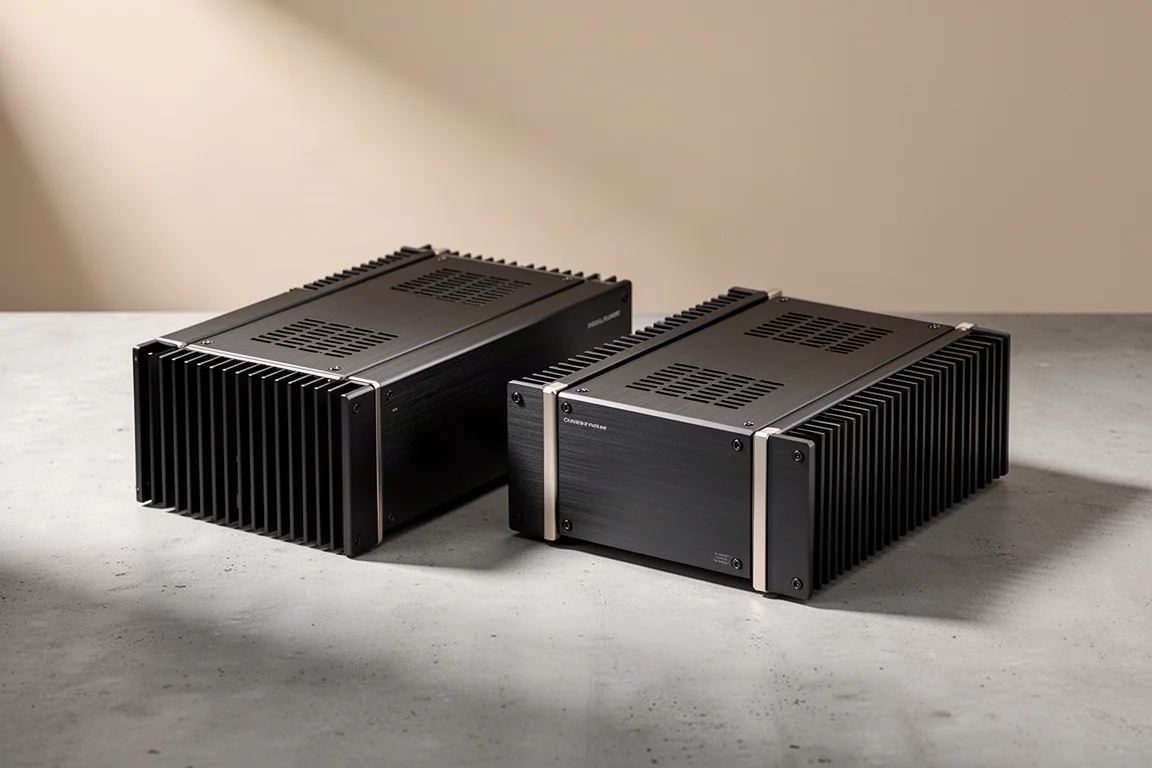
The Schiit Vidar and the Schiit Aegir sit close together in price and come from the same company, which makes them an obvious pair to compare. The Vidar is priced at $700 and the Aegir at $800, a gap of only $100. Both are pure power amplifiers with no volume control, no wireless connectivity, and no extra features. Each one needs a preamplifier, a DAC with variable output, or another volume-controlling source in front of it.
What separates them is not the feature list. It is the way they deliver power and the way they sound. The Vidar is a Class AB design with substantial output. The Aegir is a Class A design, and it behaves like one, running hot and concentrating its character in the middle of the frequency range. Neither is a compromise product, and both are worth understanding on their own terms before choosing.
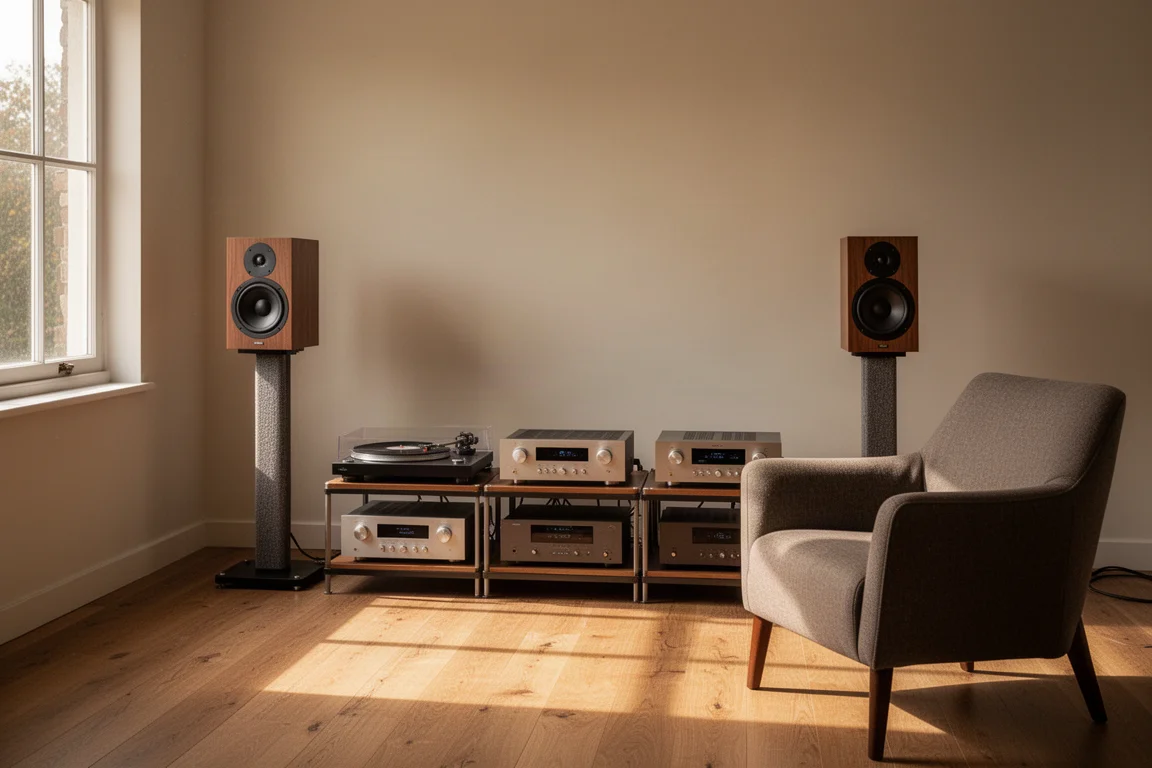
This comparison is aimed at listeners building a two-channel system who want a clear sense of which amplifier suits their speakers and their taste, rather than a verdict declaring one universally better.
Power Ratings and Class of Operation
The Vidar is rated at 100 watts into 8 ohms, 200 watts into 4 ohms, and 400 watts in mono into 8 ohms. Schiit does not publish a 4 ohm rating for mono operation, and the same is true of the Aegir, so it is unclear whether either amplifier should be run into a 4 ohm load when bridged to mono. Anyone planning that configuration should confirm it with the manufacturer first.
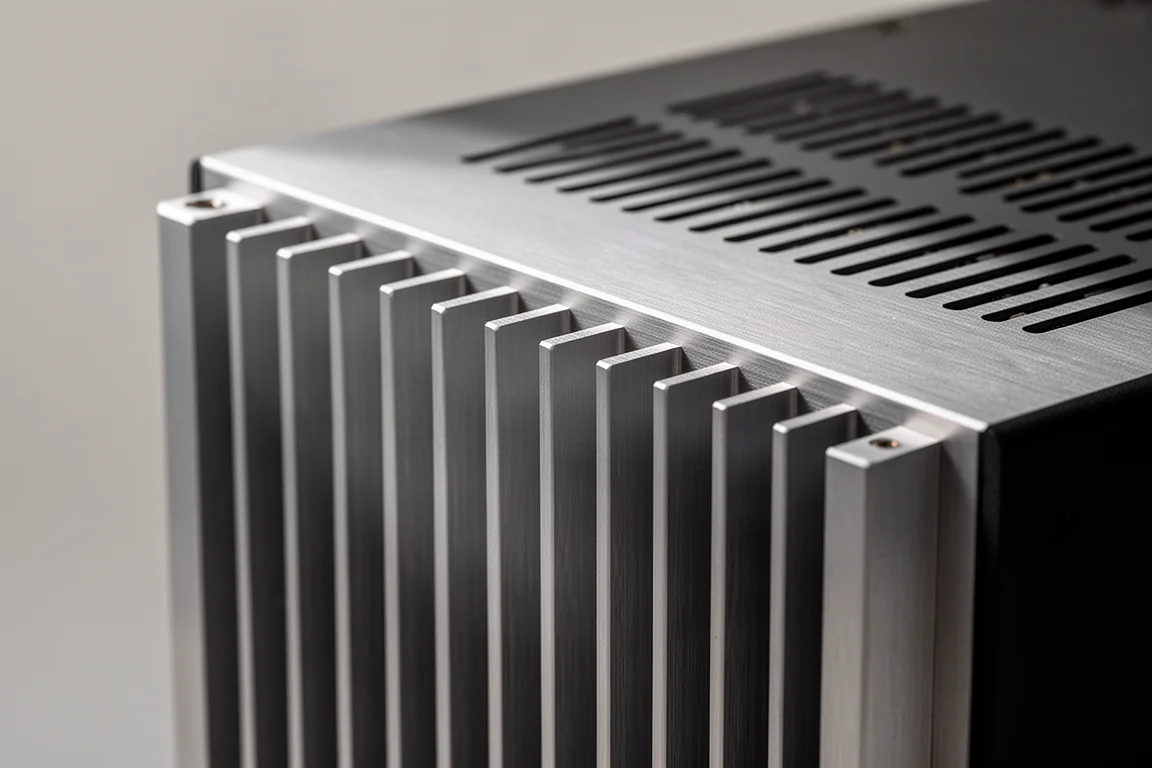
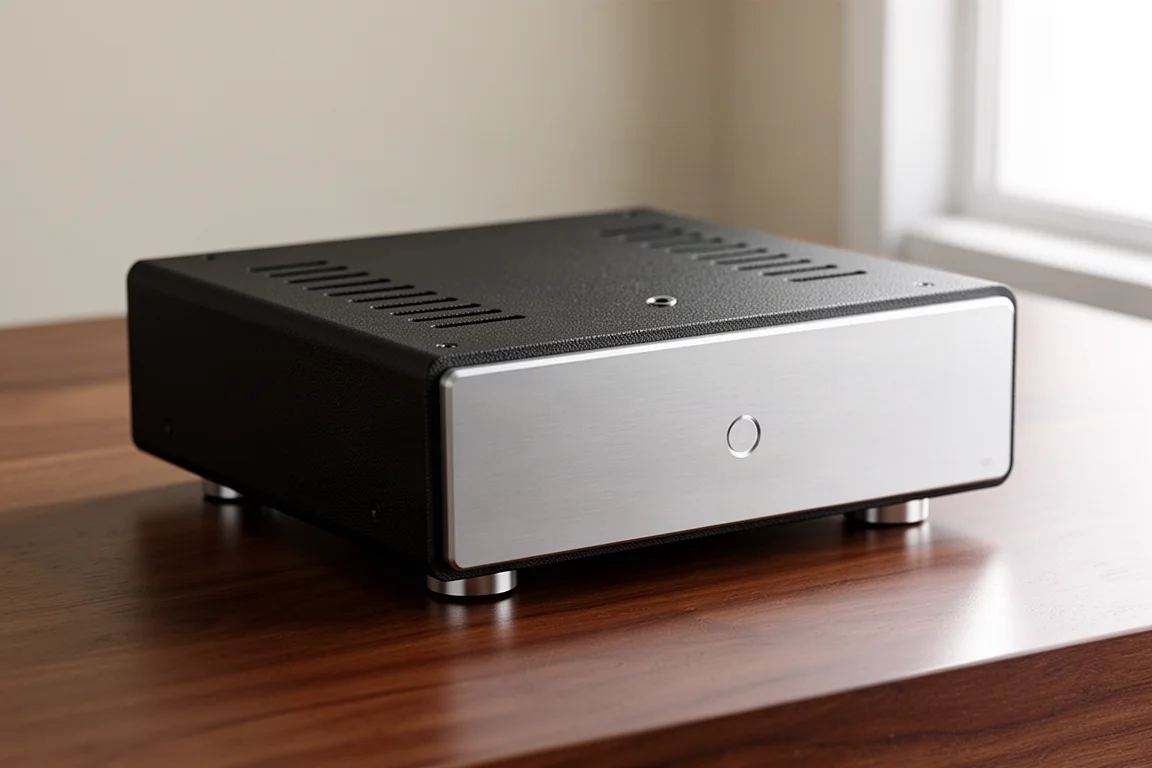
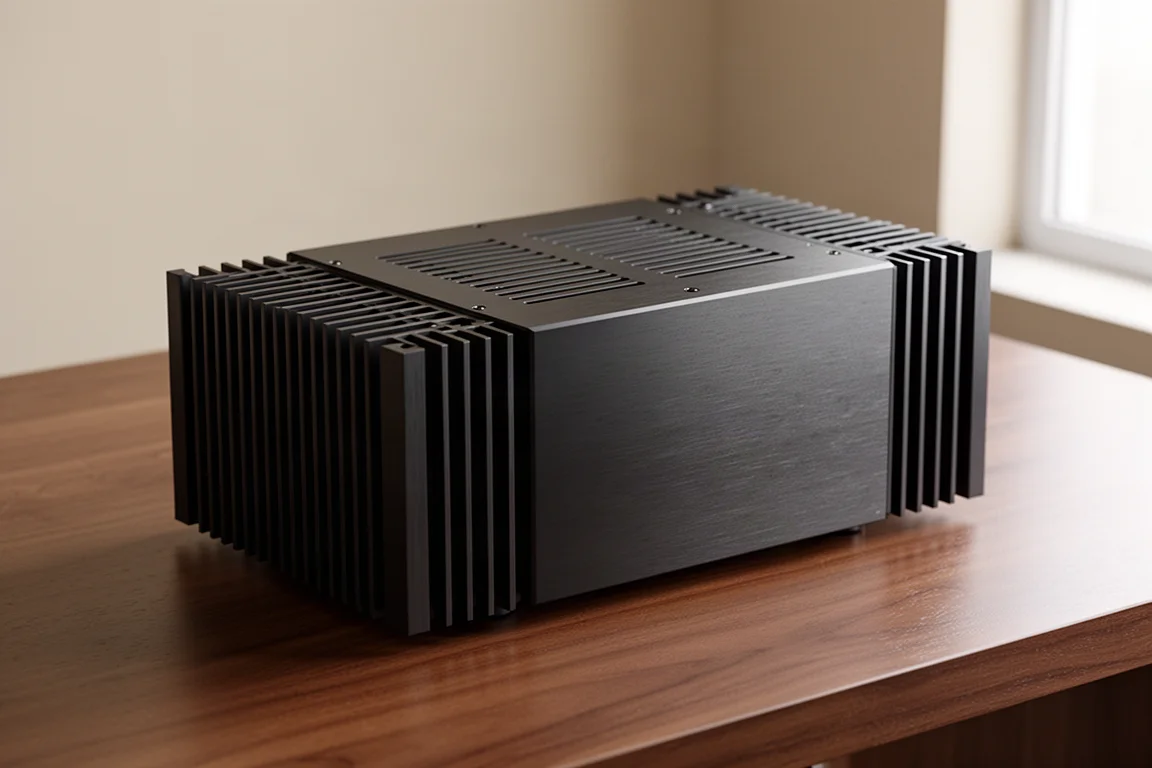
The Aegir is rated at 20 watts into 8 ohms, 40 watts into 4 ohms, and 80 watts in mono into 8 ohms. Its first 10 watts run in Class A, with the remainder handled by a continuity circuit, which gives it the behaviour and heat signature of a Class A amplifier. Both amplifiers run warm in use and both use large heat sinks along their side panels to manage that heat.
That difference in output is the single most important thing to understand before buying. The Vidar has enough power on tap to drive a wide range of speakers with authority. The Aegir trades output for a particular character, and it will reward efficient speakers far more than demanding ones.
Build, Styling, and Connections
Both amplifiers are built to a high standard, with a slim chassis, ventilation on the front and top panels, and substantial heat sinks running down the sides. The styling is distinctive and consistent across the two models.
The rear panel is deliberately simple on both. You get RCA inputs, a single XLR input, speaker outputs, and an IEC power inlet. That is the whole interface, because these are power amplifiers and nothing else. There is no volume control and no Bluetooth, so the volume has to be handled upstream by a preamp or a variable-output DAC.
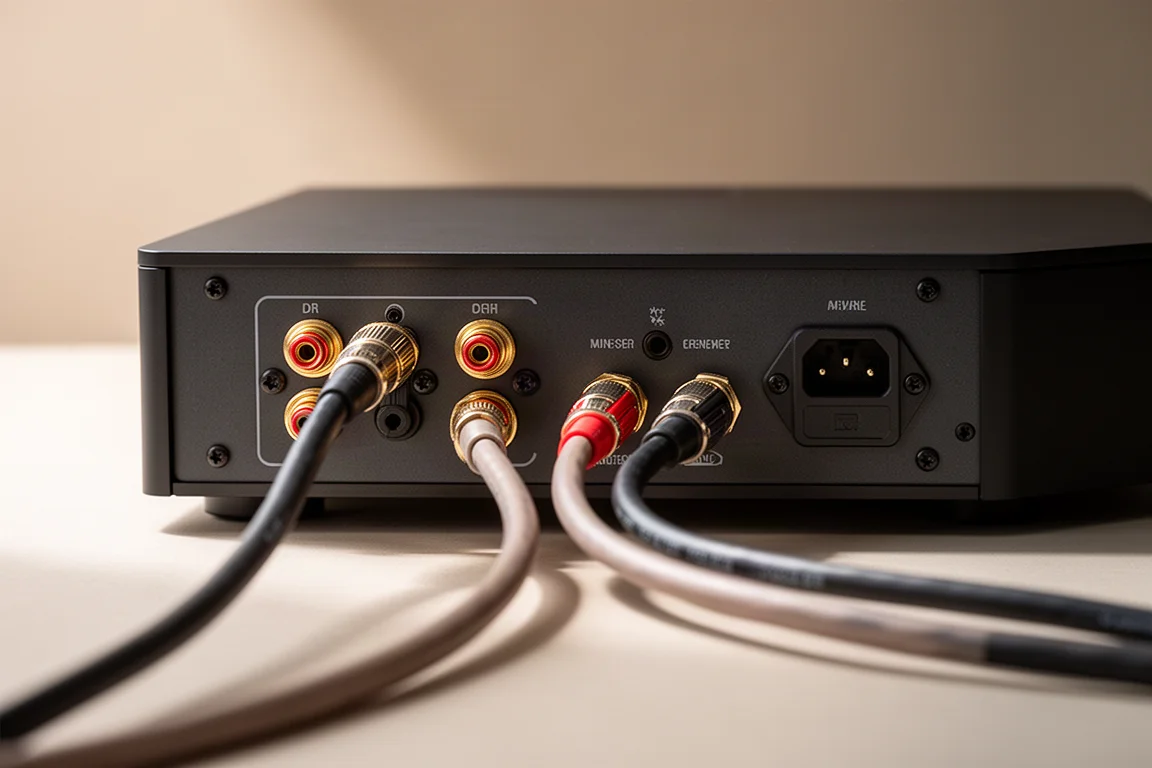
For anyone moving from an integrated amplifier, this simplicity is the main adjustment. It also means the amplifier is only one part of the chain, and the preamp in front of it will shape the final result just as much as the amplifier does.
Listening Notes: Vidar
The Vidar is the more exacting of the two. Its treble presentation is lifted relative to the Aegir, not in a harsh or fatiguing way, but noticeably present. The very top of the treble, such as cymbal crashes, sounded close to identical on both amplifiers, yet switching to the Vidar brought the rest of the treble range up and made the overall top end feel more complete.
Bass control is where the Vidar pulls clearly ahead. It keeps low frequencies tighter and better controlled, and it delivers noticeably more bass slam and impact. Snare drums were also more pronounced, and the whole top end came across cleaner and clearer. The overall impression is a more visceral, more forward presentation that pushes the listener back into the seat rather than drawing them in. For listeners who want drive and immediacy, that is exactly the appeal.

The Vidar can do essentially everything the Aegir can do in terms of powering speakers, and it has considerably more output in reserve. It is the more versatile choice for a wide range of speaker types.
Listening Notes: Aegir
The Aegir takes the opposite approach. It has a warmer midrange and a more relaxed way of retrieving detail. Bass is not as tight as the Vidar’s, but the Aegir concentrates its energy on the lower mids and upper bass, giving the sound a full and organic quality. On material with a strong melodic bass line, the Aegir made that line sound richer and more present, less finely etched but more alive.
The upper mids smooth out, and the top end stays detailed while remaining relaxed. The result is an amplifier that pulls the listener in and makes them want to lean forward, rather than one that overwhelms with force. It behaves like a tube amplifier in character while offering more power and a cleaner signature, which makes it appealing to anyone who wants that warmth without dealing with tube changes.
Bass performance is closely tied to speaker efficiency here. With higher-efficiency speakers, the Aegir’s bass control and punch should improve considerably, and some of the gap to the Vidar may close. On demanding speakers, the Vidar retains the advantage.
Matching Amplifier to Speakers
Speaker choice matters more with these two amplifiers than with most. The Aegir pairs best with higher-efficiency speakers, where its 20 watts go further and its warm, full character has room to work. On a harder-to-drive speaker with a neutral presentation, the Vidar’s extra power and tighter bass control are clearly audible, and its stronger impact is the more convincing result.
It is worth noting how the Aegir handled a demanding load. Paired with the same neutral, harder-to-drive speaker, the Aegir managed bass control far better than a separate 20 watt per channel amplifier, which could not handle that speaker at all. The Aegir was not embarrassed in that comparison, even though the Vidar still delivered better bass control and slam. That is a useful indication of how much the Aegir achieves from a modest power rating.
The practical guidance is straightforward. If your speakers are efficient and you value a warm, relaxed midrange, the Aegir is a natural match. If your speakers are harder to drive or you want grip and impact, the Vidar is the safer pairing.
Who Each Amplifier Suits
The Vidar suits listeners who want an aggressive, exacting presentation with strong bass control and impact. It rewards a taste for drive and detail, and it has the output to work across a broad range of speakers. At $700 it is the more affordable of the two.
The Aegir suits listeners who want warmth in the midrange, a relaxed treble, and a full lower-mid and upper-bass character. It suits efficient speakers and anyone drawn to a tube-like sound without the maintenance. At $800 it costs only slightly more, and it delivers a genuinely different flavour rather than a lesser version of the same thing.
Both are high-value options in their price bracket, and both represent a realistic destination for a two-channel system rather than an exotic purchase. If more power is ever needed, either amplifier can be doubled up with a second unit for mono operation, provided the speaker load is suitable.
Neither amplifier is a bad choice. The decision comes down to the speakers already in the room and the sound signature the listener is chasing.
Buying Advice
The Vidar is the more broadly capable amplifier. It has far more power, tighter bass control, and a more forward, detailed top end. It will work well with a wider variety of speakers and it is the easier recommendation if the rest of the system is unknown or likely to change.
The Aegir is the more specialised amplifier. Its strengths are a warm midrange, a relaxed but still detailed treble, and a full low-mid character. It needs efficient speakers to show its best bass behaviour, and it asks the buyer to know what they are getting into.
A useful way to decide is to start with the speakers. Efficient, easy-to-drive speakers plus a preference for warmth points to the Aegir. Harder-to-drive speakers or a preference for punch and clarity points to the Vidar. Both are fairly priced and both sound excellent, so the practical answer is to match the amplifier to the system rather than to rank one above the other.
Conclusion
The Vidar and the Aegir are different tools for different jobs. The Vidar delivers power, control, and a more forceful presentation. The Aegir delivers warmth, fullness in the lower mids, and a relaxed character that behaves like a Class A amplifier and sounds closer to a tube design than a solid-state one.
Both are well built, both are simple to integrate, and both sound excellent in their own way. The Vidar is the pick for listeners who want an aggressive, high-control sound and the flexibility to drive a range of speakers. The Aegir is the pick for listeners with efficient speakers who want warmth and a laid-back midrange without the fuss of tubes. Choose based on the speakers you own and the sound you are looking for, and either amplifier is a satisfying place to land.
Further reading
Related Reviews
Hi-Fi Amplifiers
Accuphase E-280 Review: Entry-Level Accuphase With Flagship Attention to Detail
A close look at the Accuphase E-280 integrated amplifier, covering its champagne build, AAVA volume control, sound quality, and the speakers and sources that suit it best.
Hi-Fi Amplifiers
Advance Paris A10 Classic vs Yamaha A-S301: Two Integrated Amplifiers Compared
A practical comparison of a $350 integrated amplifier and a $2,500 reference model, covering the differences that matter and the ones that do not.
Hi-Fi Amplifiers
Affordable Chinese Amplifiers Worth Buying: Five Budget Hi-Fi Amps Compared
A practical look at five affordable amplifiers, what each one does well, and the trade-offs to weigh before you buy.