Audio Amplifiers
Schiit Tyr vs Emotiva A1 Monoblocks: Power, Weight, and the Freya N Preamp
A close look at the Schiit Tyr and Emotiva A1 monoblocks and the Schiit Freya N preamplifier, including how they compare on power, gain, bass control, and price.
Introduction
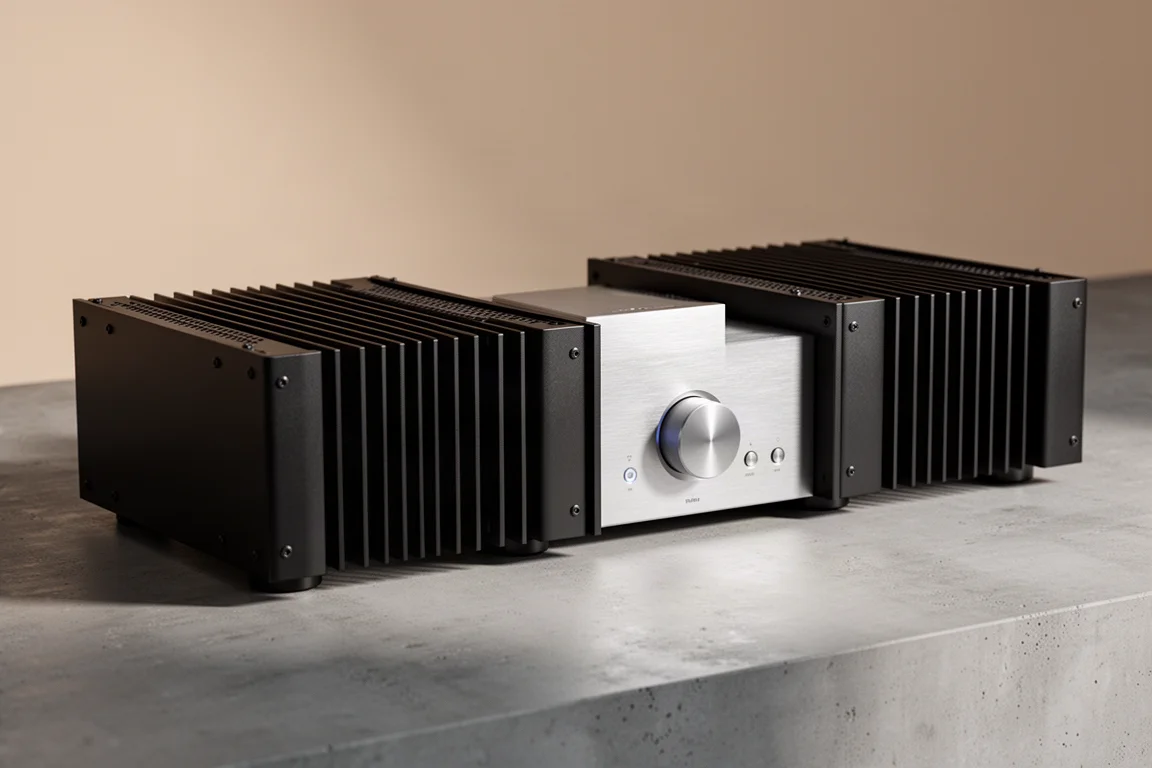
Monoblock power amplifiers and tube preamplifiers reward a careful look before you commit. Two well-made designs can post similar power figures and still behave very differently once they are driving real speakers. This comparison covers three pieces worth knowing: the Schiit Tyr monoblock, the Emotiva A1 monoblock, and the Schiit Freya N preamplifier. The Tyr and the A1 sit at very different price points yet share closely matched output ratings and gain figures, which makes them a genuinely informative pairing to study side by side. The Freya N works with either one, and it is the easiest of the three to overlook because of how it is listed.
What Sets These Amplifiers Apart
Three specifications shape how an amplifier behaves in a system: power output, gain, and circuit topology. The Tyr and the A1 line up closely on the first two. The Tyr is rated at 200 watts RMS into 8 ohms and 350 watts RMS into 4 ohms, while the A1 is rated at 200 watts into 8 ohms and 325 watts into 4 ohms. Gain is 28 dB on the Tyr and 29 dB on the A1, and that single decibel is audible when switching quickly between them. Topology is where they diverge. The Tyr uses a continuity design built around a choke, an approach that differs from most amplifiers and is part of the reason it weighs 55 pounds per unit.
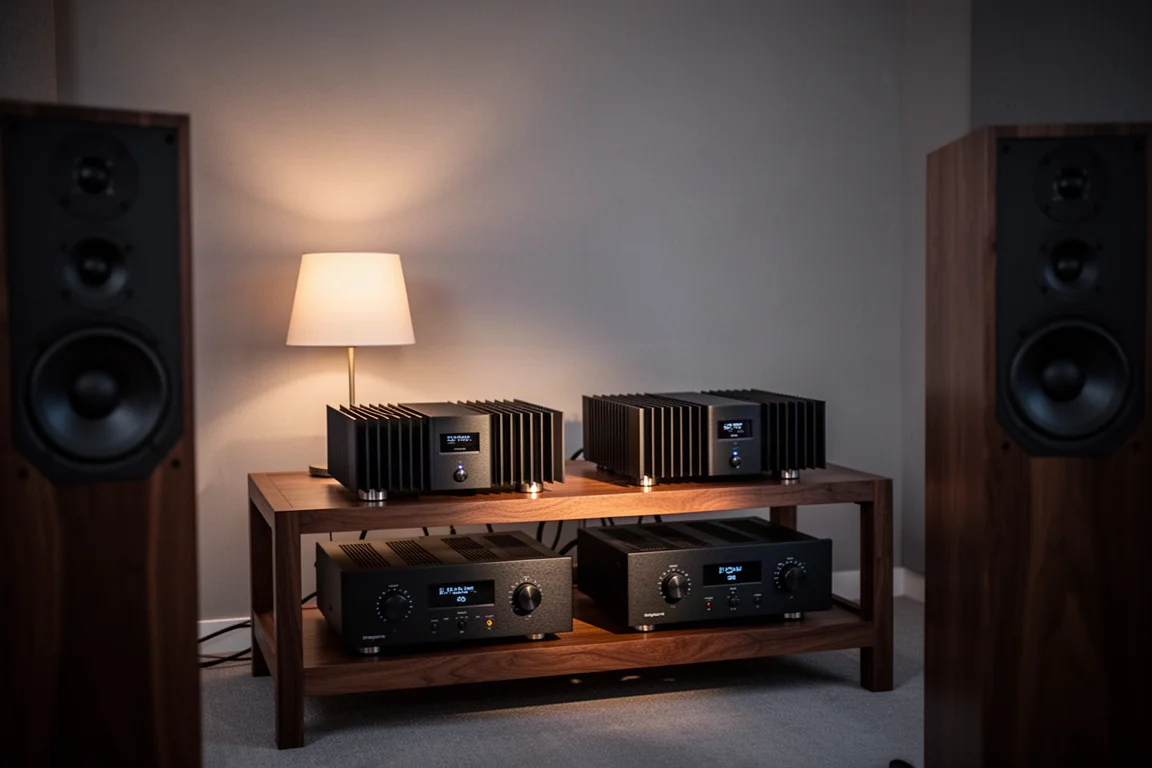
Weight and construction carry real information here. The Tyr’s large front heat sinks and heavy metal chassis are not decoration. They reflect a design built to run cool under load and to feel substantial on the shelf. Schiit sells direct to customers rather than through dealers, builds the Tyr in California, and backs it with a five-year warranty plus a 15-day satisfaction guarantee.
Schiit Tyr Monoblocks: Weight, Power, and Personality
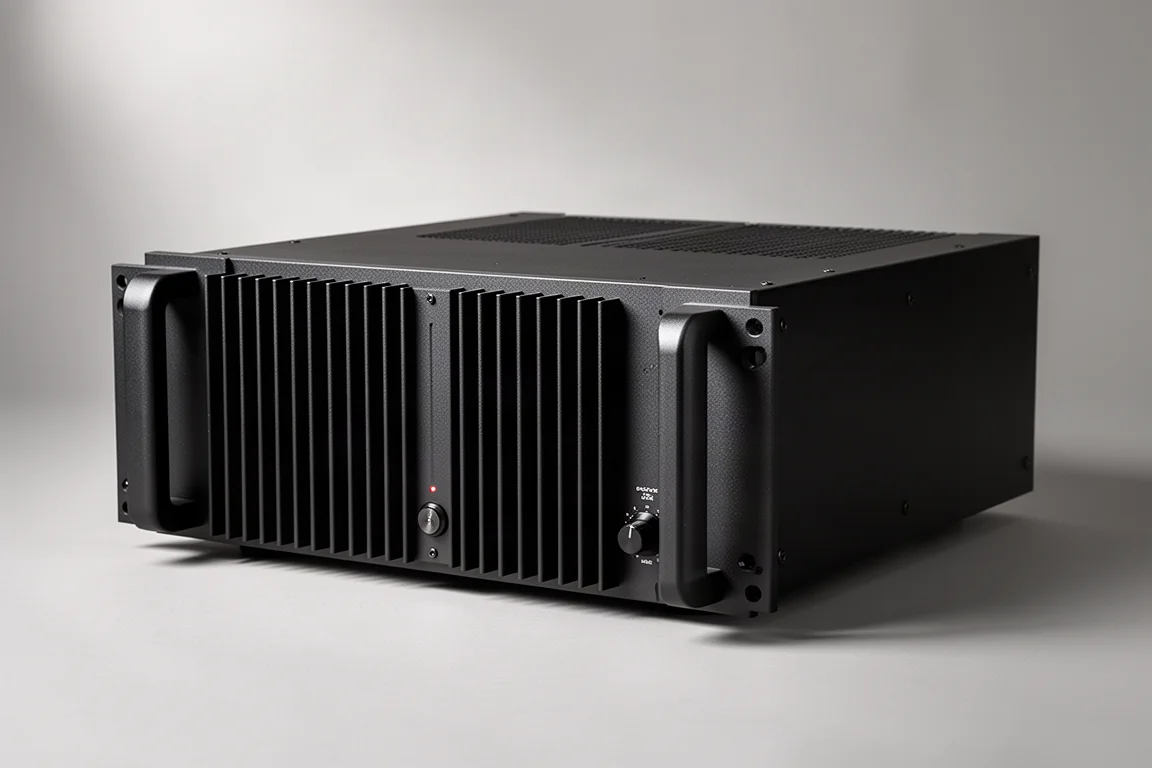
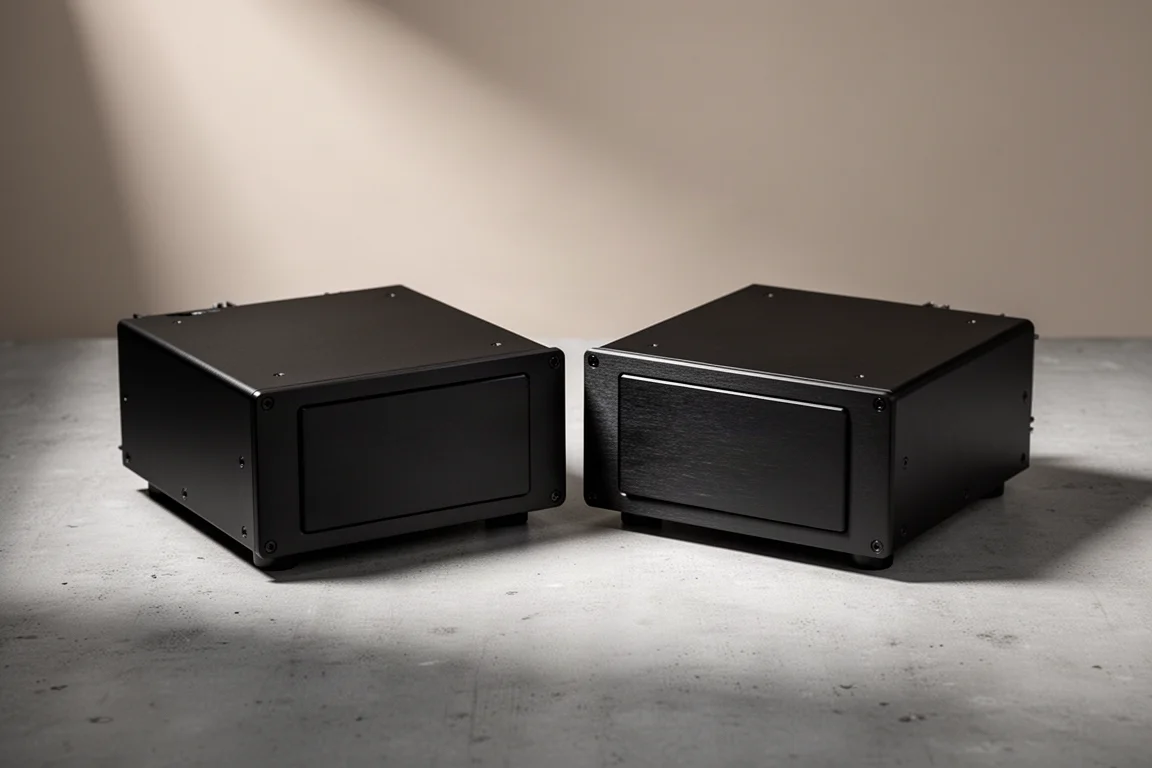
The Tyr is a 55-pound monoblock priced at $1,600 each, which means a stereo pair runs about $3,200. Each unit carries a single speaker output, plus either a balanced or a single-ended input selected by a switch on the underside, and a master power switch on the back. Operation is simple: standby or play.
Emotiva A1 Monoblocks: The Accessible Reference
The A1 is the more affordable route into monoblock amplification at $500 per unit, or roughly $1,000 for a pair. It offers a 29 dB gain stage and outputs of 200 watts into 8 ohms and 325 watts into 4 ohms, which keeps it close to the Tyr on paper. The practical difference is connectivity: the A1 has no balanced input, so it works from single-ended sources only.
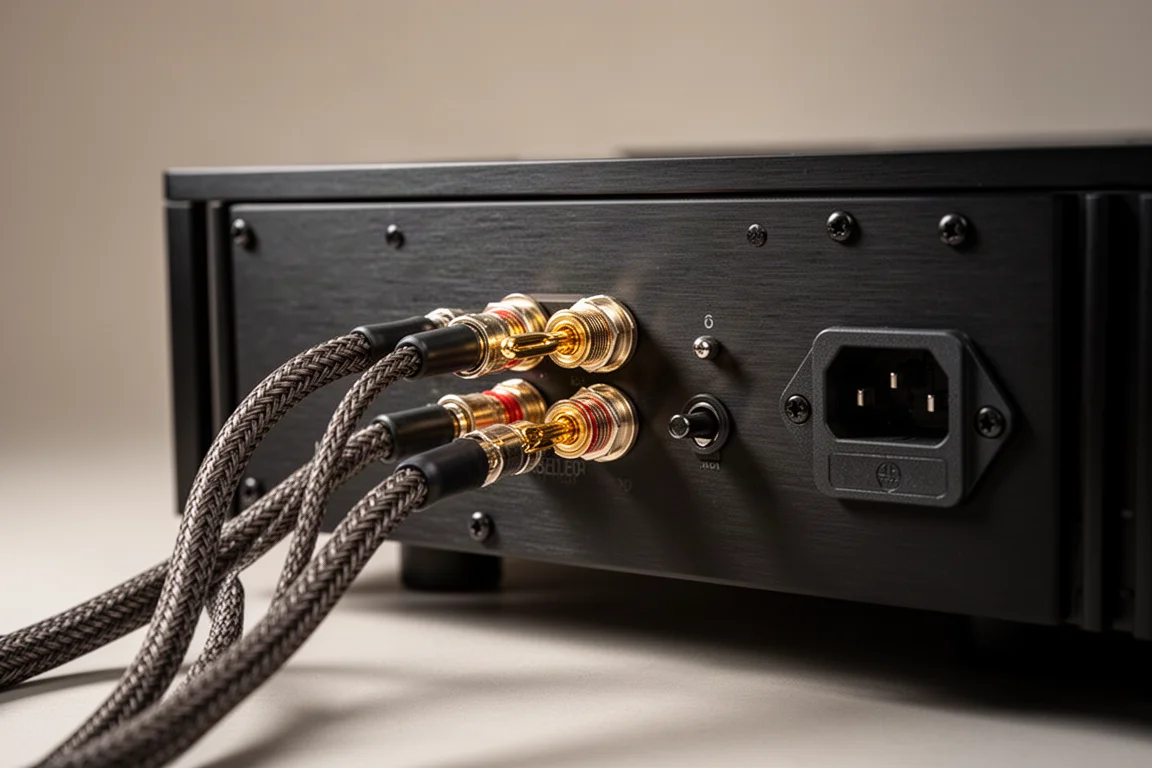
That limitation is worth planning around, but it is not a barrier in most systems. The A1 has served as a long-term reference here, and its combination of modest price and serious output makes it an easy recommendation for listeners who want monoblock separation without a four-figure-per-channel budget.
Schiit Freya N: A Flexible Tube Preamp on Closeout
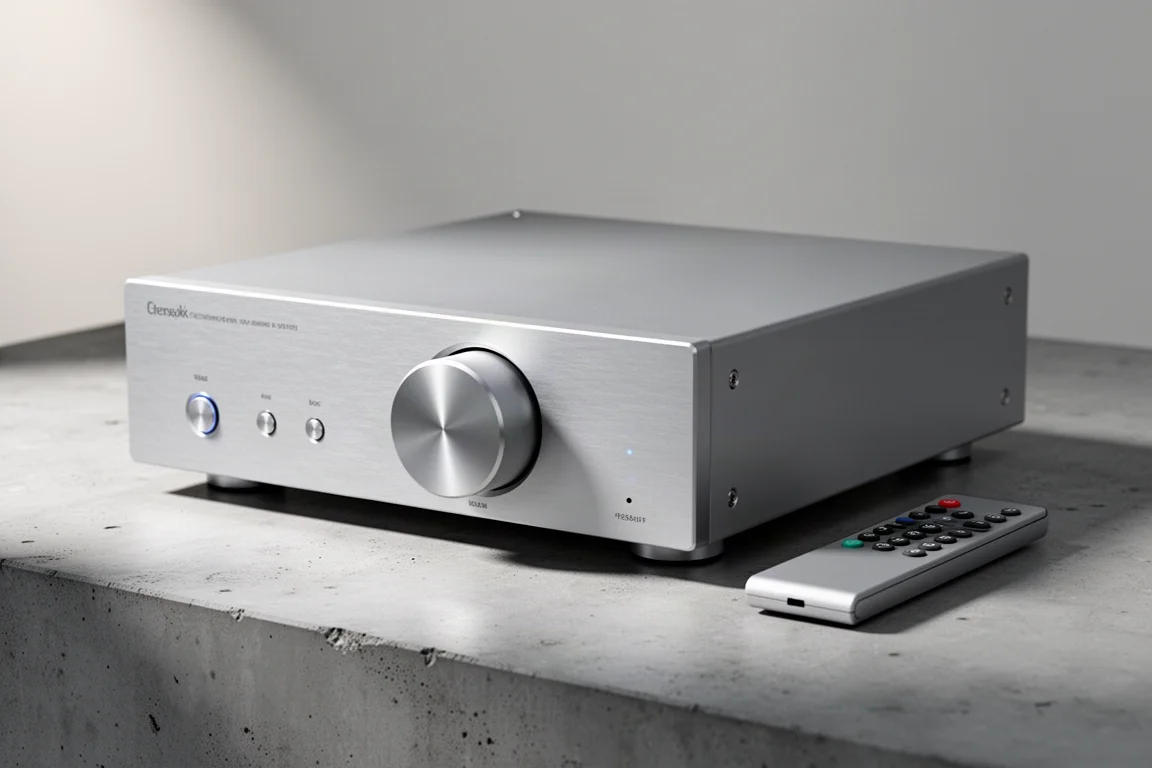
The Freya N is listed at $600 as a closeout item, and it sits at the bottom of the manufacturer’s product listings under b-stock and closeout rather than in the main lineup. That is worth knowing, because availability is limited and there is no indication the model will return to normal production.
The design is straightforward in use. Three gain modes cover passive operation, a mode that bypasses the tubes, and a mode that engages them. On the back there are two balanced inputs, several single-ended inputs, one balanced output, and two single-ended outputs. Those two single-ended outputs mean a single-ended amplifier and a subwoofer can run at the same time, and a subwoofer with speaker-level inputs can be connected directly at the speaker terminals. A ladder volume control handles attenuation, the supplied remote is a magnetic metal unit, and the tubes are a common type, so tube rolling is realistic for anyone who wants to experiment. Among the Freya, the Freya+, and the Freya N, this is the one we would reach for.
Listening Notes: Tyr vs A1 in Practice
Both amplifiers were fed from the same preamp and the same source chain: a streamer into a DAC with AKM conversion, connected to the Freya over balanced outputs, with the Freya’s single-ended outputs feeding both amplifiers. That arrangement kept input voltage as consistent as possible between a balanced and a single-ended connection. Three tracks did the work: Waffle by Sevendust, Over the Hills and Far Away by Led Zeppelin, and Demonoid Phenomenon by Rob Zombie. Each brings something different, from dense harmonies and heavy low-end hits to acoustic guitar detail to layered electronic ambience that tests soundstage depth.
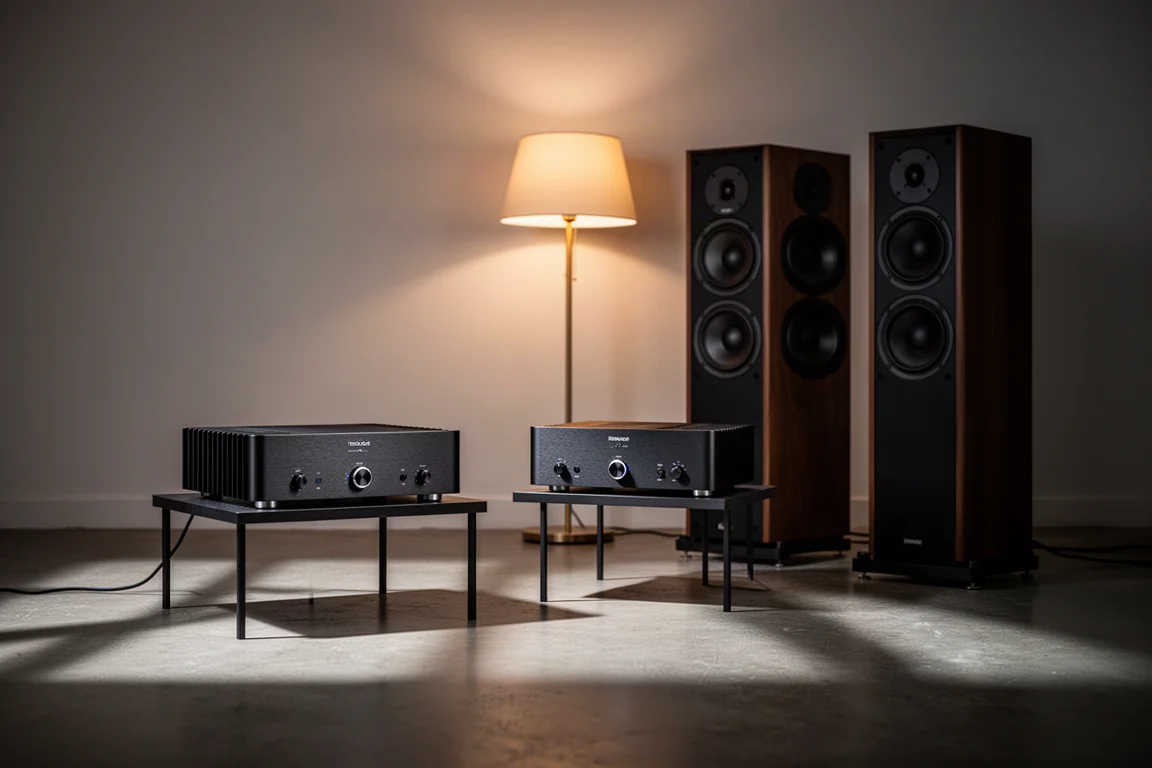
Both amplifiers handled all three tracks well, and they did not sound the same. The Tyr produced more bass, with greater control and clarity in the low end, and it sounded less veiled overall. Midrange instrument separation was stronger, acoustic guitar had a touch more pluck, and the soundstage was both wider and deeper. Vocals on the A1 sat slightly higher, which lines up with the one decibel of extra gain. The Tyr also carries a certain weight and warmth in its presentation that gives it a distinct personality rather than a purely clinical one.
Matching an Amplifier to Your System
The decision starts with your source and your speakers. If your DAC or preamp offers balanced outputs, the Tyr’s balanced input and its slightly lower gain give you a straightforward match. If your chain is single-ended throughout, the A1 is the simpler fit because it has no balanced input to leave unused. Power is unlikely to be the deciding factor between them, since both deliver 200 watts into 8 ohms and land within 25 watts of each other into 4 ohms. If you run a subwoofer, the Freya N’s pair of single-ended outputs lets you feed a power amplifier and a subwoofer simultaneously, and a subwoofer with speaker-level inputs can be connected without any dedicated subwoofer output at all.
Buying Advice
The Tyr is the better amplifier of the two, and a pair costs more than three times as much as a pair of A1s. It is more resolving in the bass, cleaner through the midrange, and wider in its staging, but it is not three times the amplifier in any measurable sense. Choose the Tyr if you have already built a system that can show the difference and you want the extra low-end grip and the sense of scale that comes with a 55-pound chassis. Choose the A1 if you want monoblock separation, strong power output, and reference-level performance at roughly $1,000 for the pair.
The Freya N sits outside that trade-off. At $600 on closeout it is the most flexible piece in this group, with passive and tube gain modes, two balanced inputs, and dual single-ended outputs. If you are curious about tube preamplification and want a preamp that can stay in the system after you upgrade amplifiers, it is the one to look at first.
Conclusion
Two monoblocks with nearly identical power ratings can still separate themselves once they are driving speakers, and the Tyr and the A1 make that clear. The Tyr wins on bass control, midrange clarity, and soundstage depth at a premium price, while the A1 delivers much of the way there for a fraction of the cost. The Freya N is the connective piece, and at its closeout price it is the least expensive way into this group.
Further reading
Related Reviews
Audio Amplifiers
AGD Audion Mark III Review: A Compact Class D Amplifier With Tube-Like Musicality
A gallium nitride Class D amplifier that delivers tube-like midrange warmth, serious bass grip, and a modular upgrade path in a very small chassis.
Audio Amplifiers
Best Class D Amplifiers Under $100: Douk Audio A5 vs Fosi Audio V3
Two sub-$100 Class D amplifiers built on the same 3255 chipset, compared on bass weight, midrange body, treble presence, and real-world speaker matching.
Audio Amplifiers
Best Power Amplifiers Under $500: Six Stereo Amplifiers From $74 to $579
A practical roundup of six stereo power amplifiers under $500, covering real-world power, connectivity, cooling, and which kind of system each one suits.