Hi-Fi Audio
Schiit Magni+, Modi+ and Loki Mini: An Affordable Hi-Fi Stack Worth Building
A headphone amp, a DAC and a four-band equalizer that together cost less than four hundred dollars, and what each piece adds to a desktop system.
Introduction
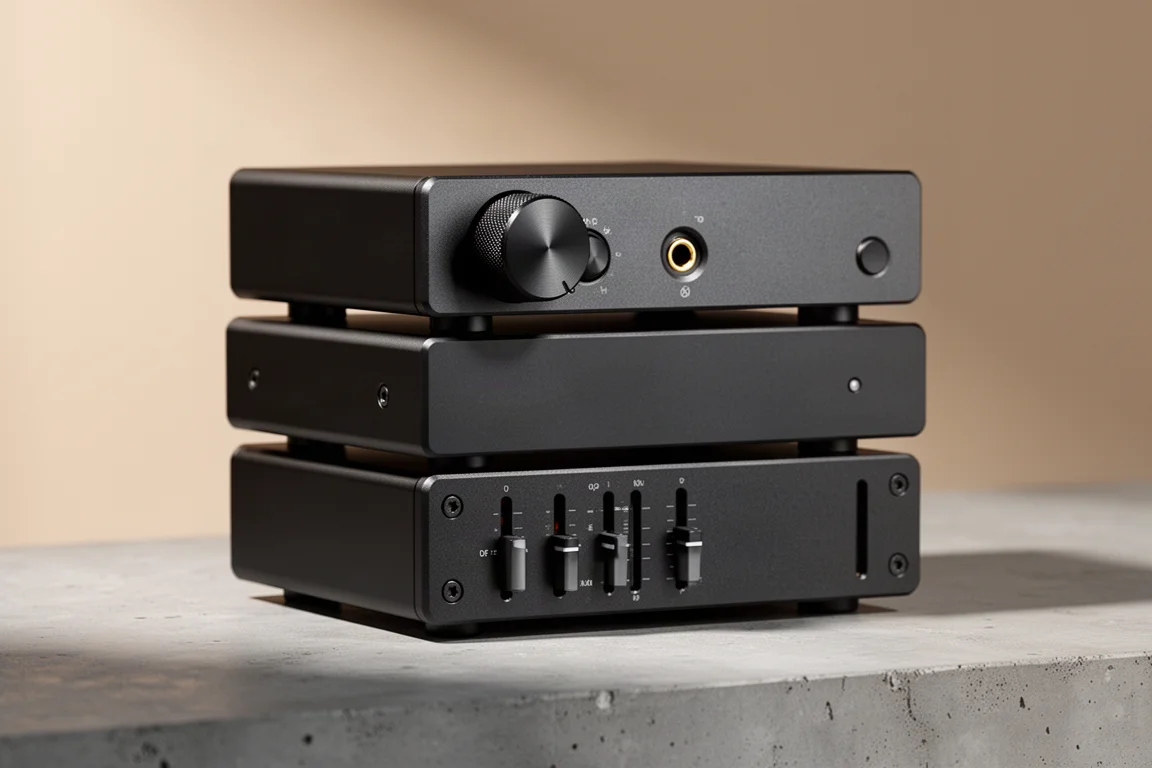
Three small black boxes, bought separately, add up to a little under four hundred dollars: the Schiit Magni+ headphone amplifier at $109, the Schiit Modi+ DAC at $130.29, and the Schiit Loki Mini four-band equalizer at $150. Each one solves a different problem, which is why they are usually discussed as a set rather than as isolated purchases.
The Magni+ gives headphones the power they need. The Modi+ gives a computer, streamer or television a cleaner digital starting point. The Loki Mini gives you tone control without reaching for software. Together they form a compact desktop stack that can also slot into a two-channel system or sit behind an AVR receiver.
What This Stack Has in Common
All three components follow the same design logic: a small aluminium chassis, a plain front panel, and almost no features beyond the ones that affect sound. There is no remote control, no display, no app and no room correction. What you get instead is a short signal path and a price that stays low because nothing else was added.
Schiit builds these in Corpus Christi, Texas, and the shared styling lets the three units stack neatly on a desk. Individually each is small enough to sit beside a keyboard; together they occupy a footprint closer to a paperback than to a rack component. That compactness is a large part of the appeal for anyone who wants better sound without rebuilding a desk around it.
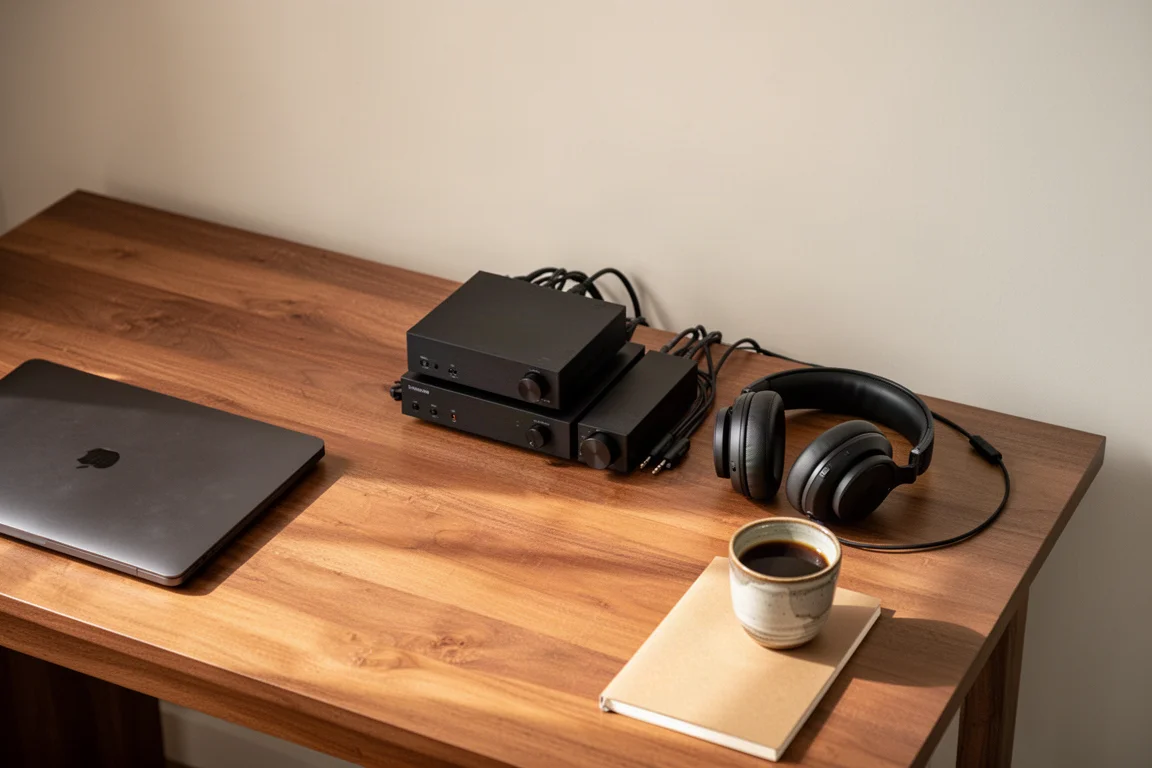
The practical consequence of the minimal approach is that you have to decide how the pieces connect before you buy them. None of the three combines a headphone output and a volume knob in one box, and none of them streams. They are building blocks, and the rest of the system supplies the remaining functions.
Schiit Magni+: The Headphone Amp
The Magni+ is the power stage of the trio, and its output figures are the reason it stands out at this price. It delivers 2.8 watts into 16 ohms, 2.4 watts into 32 ohms, 1.6 watts into 50 ohms, 410 milliwatts into 300 ohms and 215 milliwatts into 600 ohm loads. That is enough headroom for sensitive in-ear models and for planar magnetic headphones that demand serious current.
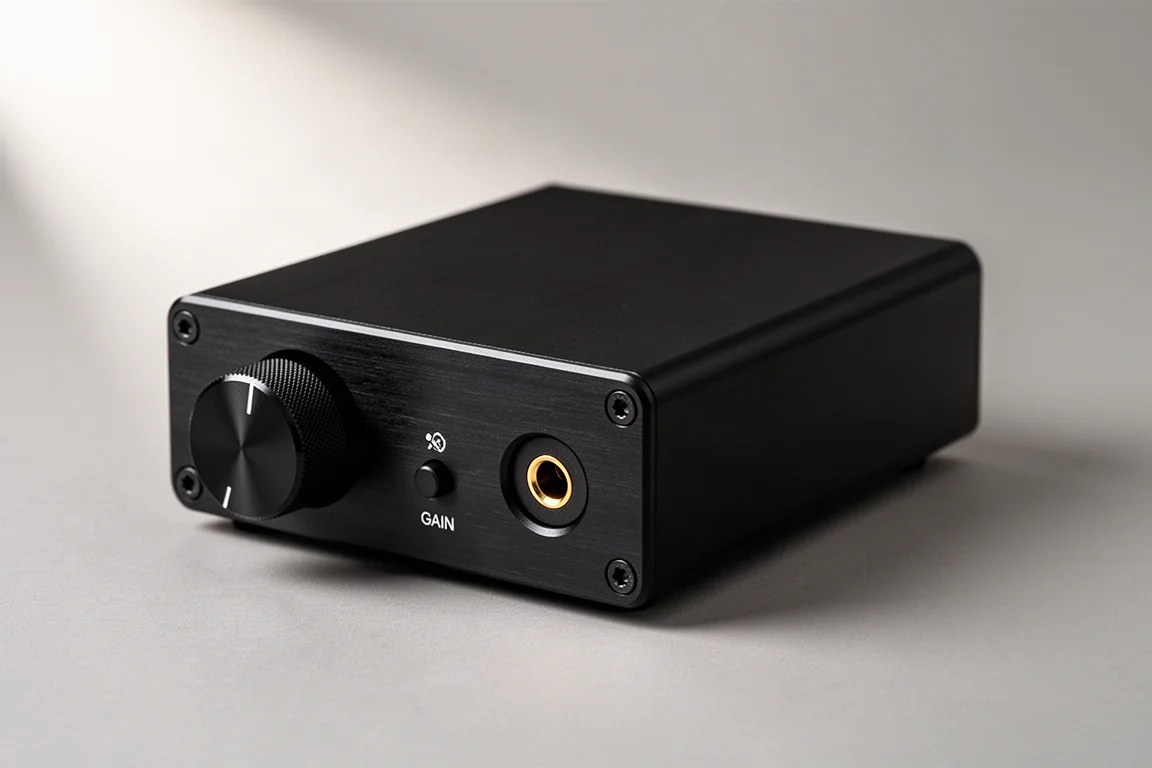
The front panel keeps things simple with a 6.35 mm single-ended headphone jack and three levels of gain, which makes it easier to match the amplifier to very sensitive or very demanding headphones without running out of usable volume travel. RCA inputs and RCA outputs are provided, so the Magni+ can also act as a preamplifier for powered speakers or a power amplifier. The power toggle sits on the back, which some listeners dislike on a desktop, though it is easy enough to leave the unit switched on.
Schiit Modi+: The DAC
The Modi+ is the digital entry point, and it is the piece most people will add first. Inside is a Sabre 9018 chipset, a change from the AKM converters used in earlier versions, along with USB Unison, Schiit’s own USB implementation. Analog summing and active filtering based on op-amps round out the design. The result is a converter that sounds noticeably more natural and more balanced than earlier Modi generations, with a larger sense of space, while still leaning slightly toward an exciting top end rather than a soft one.
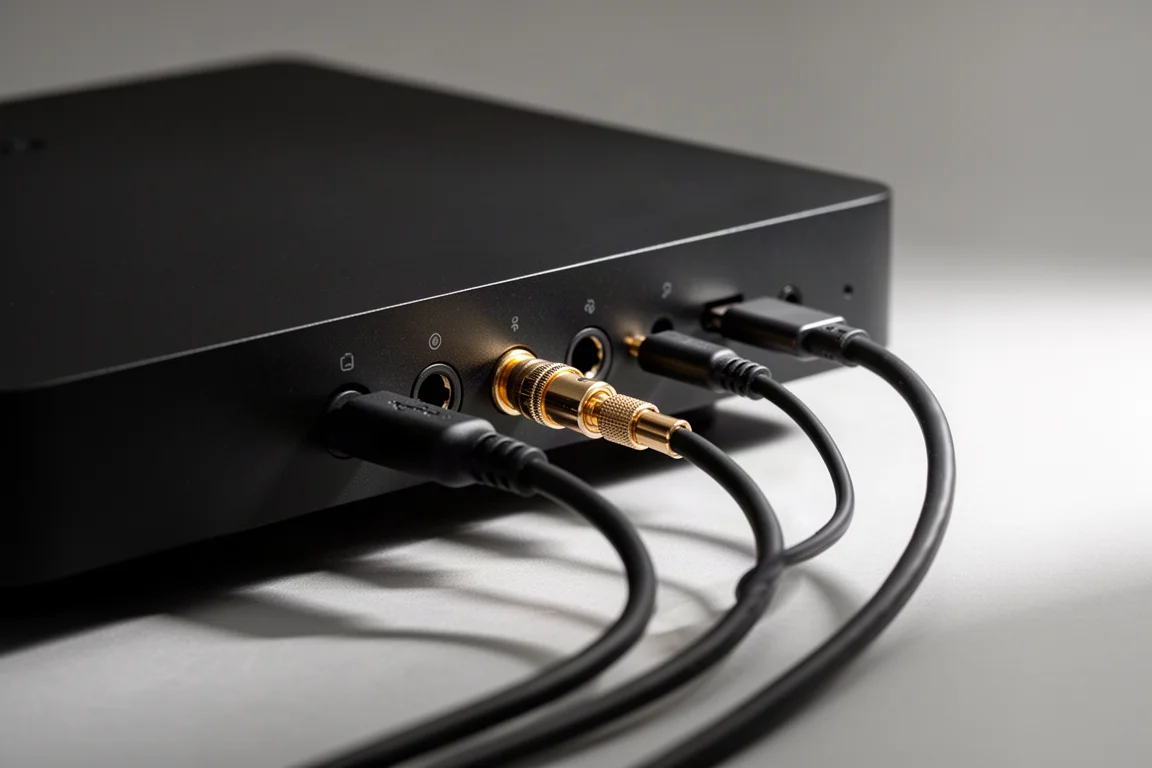
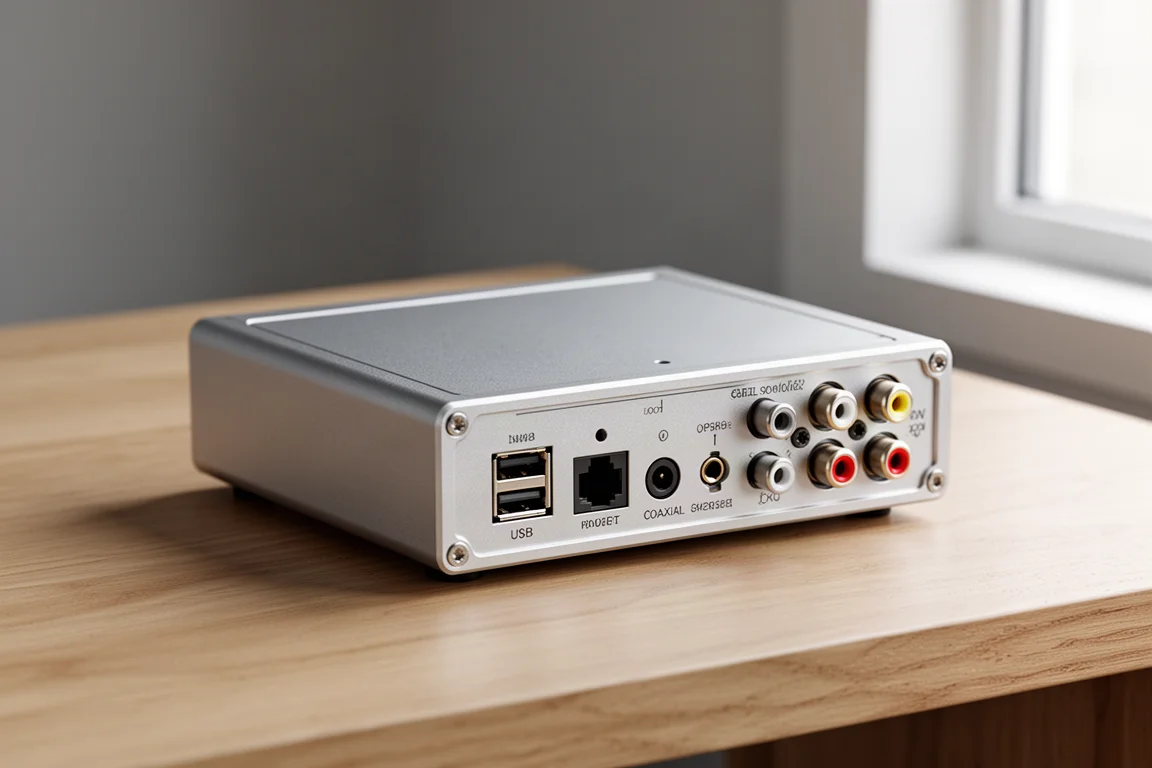
Connectivity covers the realistic use cases: one full-size coaxial input, one full-size optical input, one USB-C input and RCA outputs. Power comes from a USB-C socket running at 5 volts, which means you can use the supplied wall adapter or try a different supply later. On some recordings and with very revealing headphones, a little sibilance still comes through, so this is not a converter that flatters bright material.
That character matters when you choose headphones or speakers to pair with it. A slightly forward top end can sound thrilling with forgiving gear and tiring with the wrong match, which is exactly the gap the third component in the stack is designed to fill.
Schiit Loki Mini: The Four-Band EQ
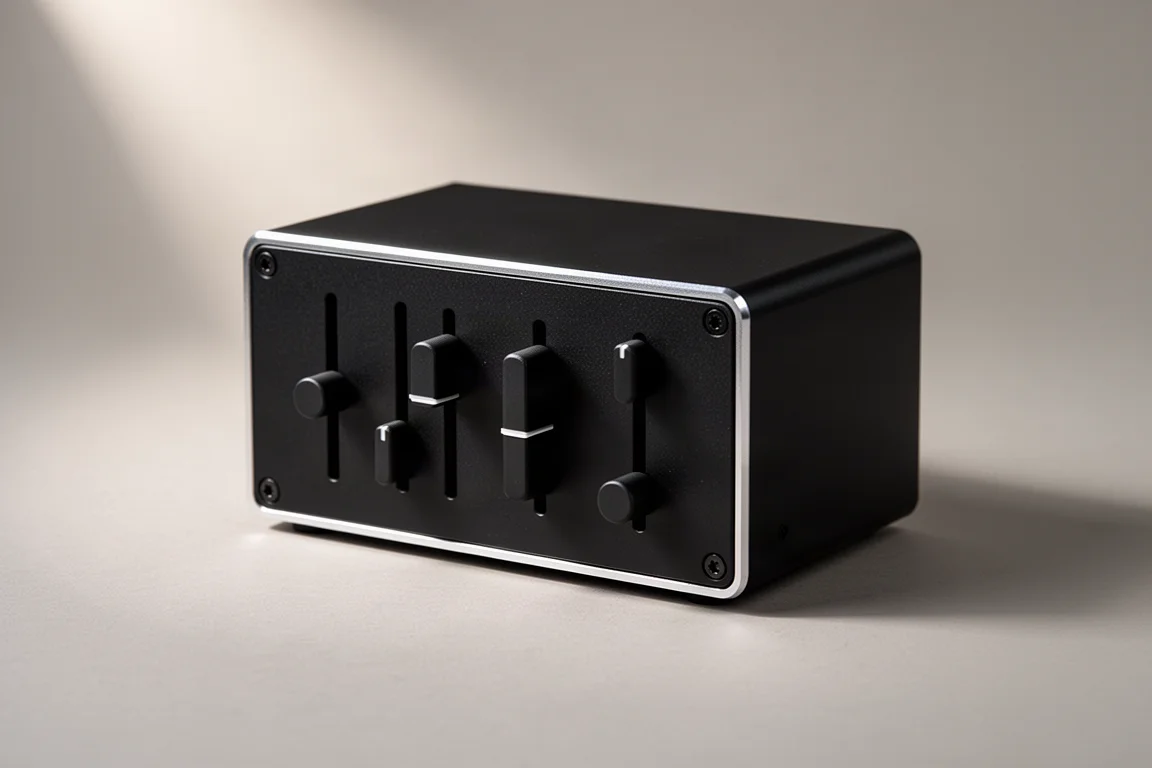
Affordable outboard equalizers have become rare, and the Loki Mini is one of the few remaining options. It offers four bands: 20 Hz for deep low end, 400 Hz for the lower midrange, 2 kHz for the presence region, and 8 kHz for treble. The outer bands adjust by plus or minus 12 dB, while the middle bands move plus or minus 6 dB.
The 2 kHz control is the most distinctive part of the design. That is the region where listening fatigue tends to set in, so a dedicated cut there is more useful than a broad treble shelf. The adjustment ranges are deliberately moderate, and that is a good thing: heavy boost on an analog equalizer can introduce distortion, so the sensible approach is to shape the curve you want and then bring the strongest boost back toward the center rather than piling on gain.
How the Three Components Work Together
The standard chain is straightforward: a source feeds the Modi+ through optical, coaxial or USB, the Modi+ sends analog signal out on RCA to the Loki Mini, and the Loki Mini passes it to the Magni+ and on to your headphones. If you would rather use speakers, the Modi+ and Loki Mini sit in a two-channel system or behind an AVR receiver just as easily, and the Magni+ can feed a power amplifier through its RCA outputs.
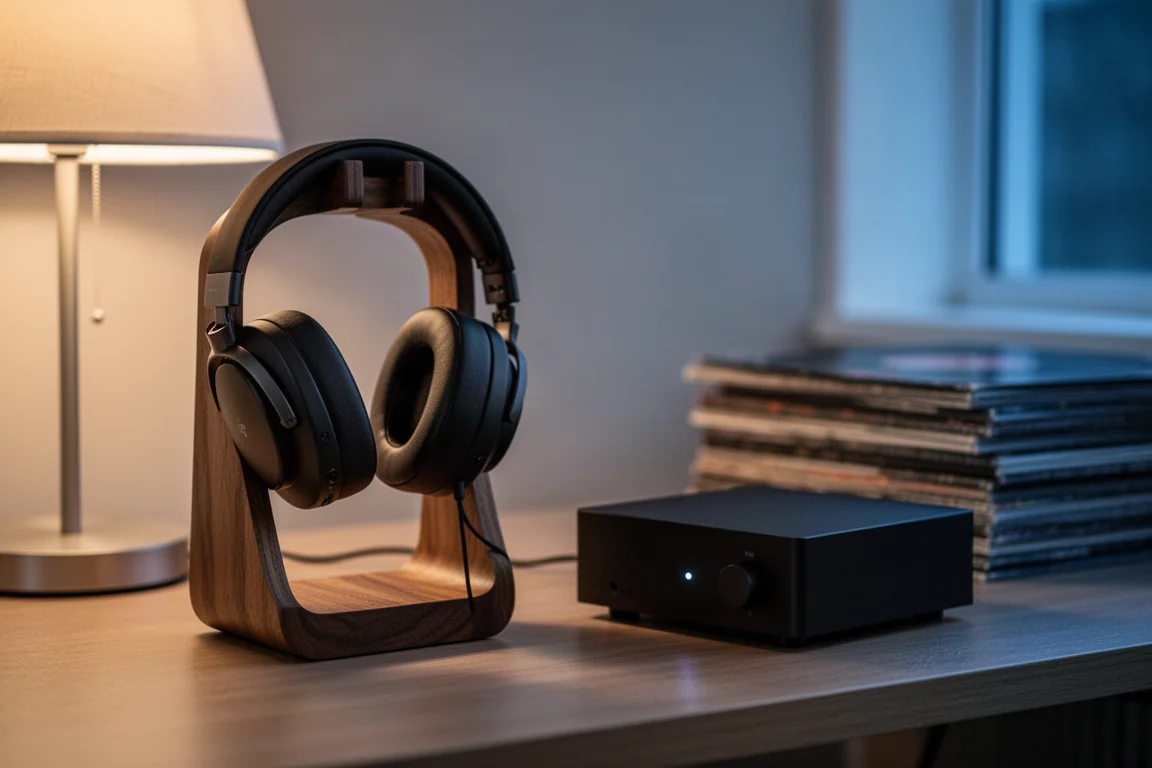
The one thing the stack does not provide is volume control in the digital stage. The Modi+ has no volume knob and no remote, so level has to come from somewhere else: an integrated amplifier, a receiver, or a streamer with digital volume control. Many desktop listeners use a network streamer as the source, feeding the Modi+ optically and adjusting level digitally, which keeps the whole chain to three small boxes and a pair of headphones.
Matching the Stack to Headphones and Speakers
Because the Modi+ still carries a touch of brightness, the headphones you pair with it do a lot of the final shaping. Planar magnetic models with a revealing treble can expose sibilance on difficult recordings, while warmer-sounding headphones smooth it out considerably. Neither result is wrong; it simply means the stack rewards a deliberate pairing rather than an impulse buy.
The same logic applies to speakers. Running the Modi+ and Loki Mini into a two-channel receiver and out to a pair of standmount speakers produced a presentation that was easier to listen to than through the most revealing headphones, and the 2 kHz band on the Loki Mini makes it simple to pull back a forward upper midrange without dulling the rest of the range. If your current setup already sounds slightly fatiguing, the equalizer is the cheapest fix in the stack.
Buying Advice: Building the Complete Stack
Buy in the order that matches the problem you actually have. If you are listening from a laptop, a phone, a tablet or a television, the Modi+ is the biggest single step up, because it replaces a compromised internal output with a proper converter. If your headphones sound thin or underpowered, the Magni+ comes next, since its output at 300 and 600 ohms is what keeps demanding models under control. The Loki Mini is the last piece, and it is the one that turns a good system into one you can tune to taste.
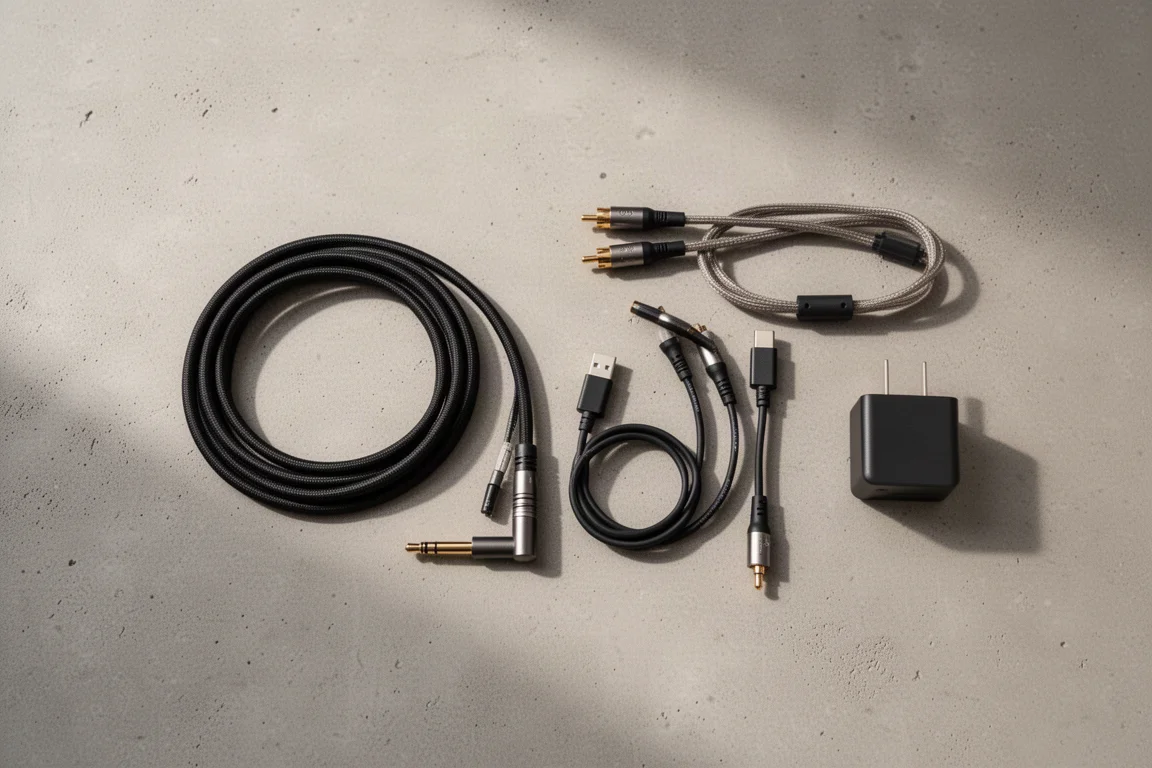
At $109, $130.29 and $150 respectively, the full set lands under four hundred dollars, which is unusual for three separate components built in the United States. Each piece is also useful on its own, so nothing is wasted if you stop after one or two purchases. That flexibility is why this combination works as a recommendation for someone entering the hobby as well as for an experienced listener who wants a second desktop setup.
Conclusion
The Magni+, Modi+ and Loki Mini do not try to be anything other than what they are: a headphone amplifier, a digital-to-analog converter and a four-band equalizer, each built to a price and each doing its job well. Bought together they cover power, conversion and tone control in a stack small enough to sit beside a keyboard, and they leave the door open to speakers or a receiver later. If you want to improve a desktop system without committing to a large investment, this is a sensible place to start.
Further reading
Related Reviews
Hi-Fi Audio
Accuphase C-57 vs Allnic H-7000V: Two High-End Phono Stages Compared
A fully balanced solid-state phono stage with a pitch-black noise floor meets a tube design built for well-loved records. Here is how to choose between them.
Hi-Fi Audio
Active vs Passive Hi-Fi: Five Components for a Modern System
Five components that define modern active and passive hi-fi systems, with the strengths, trade-offs and setup details worth weighing before you buy.
Hi-Fi Audio
Advance Paris A10 Apex Review: A Hybrid Integrated Amplifier That Covers a Lot of Ground
A French hybrid integrated amplifier with a class A tube preamp stage, analogue power meters, and an internal DAC and phono stage good enough to make extra boxes unnecessary.