Hi-Fi Preamplifiers
Schiit Kara Review: A $699 Balanced Preamp With a Discrete Headphone Amp
A closer look at the Schiit Kara, a $699 fully balanced preamplifier with a discrete headphone amplifier, three gain modes, and a 128-step attenuator.
Introduction
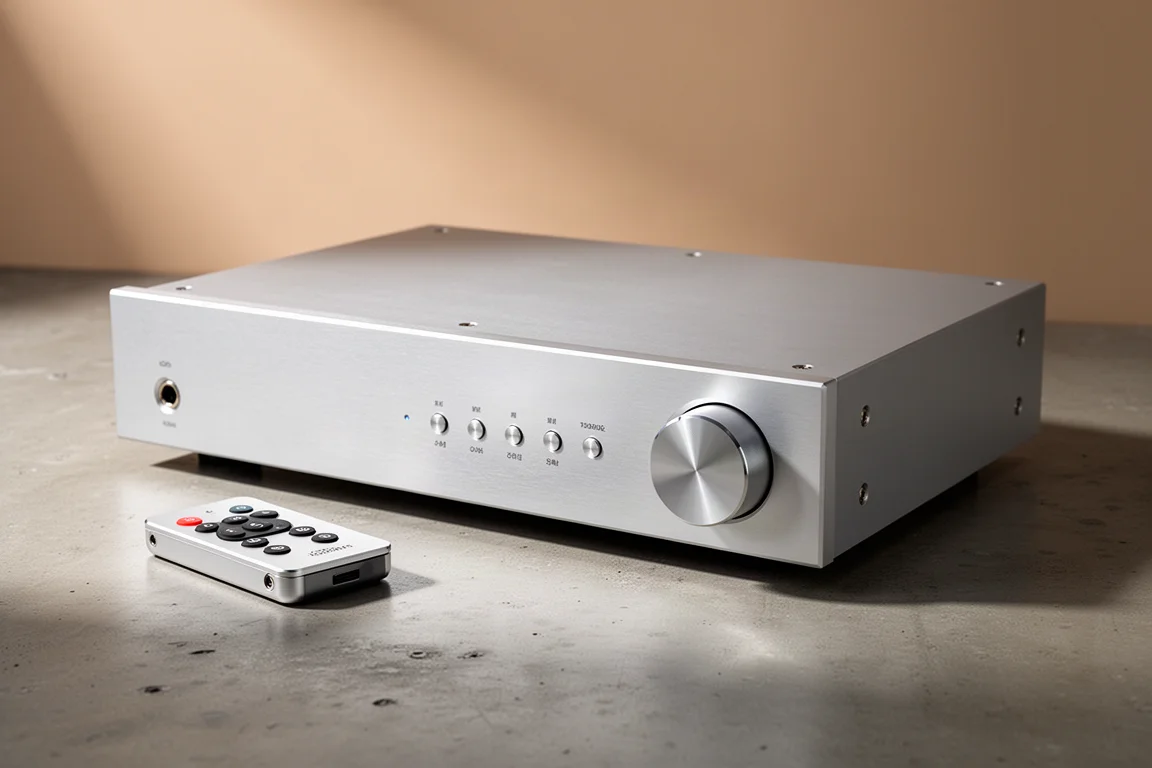
The Schiit Kara is a fully balanced, solid state preamplifier priced at $699, and it steps into the place of the Freya S in the lineup. The Freya+ remains in production. What separates the Kara from the model it replaces is a set of practical upgrades: a built-in, fully discrete headphone amplifier rather than an op-amp stage, a power transformer with twice the capacity, and higher voltage rails throughout. For anyone assembling a system around balanced sources and a serious pair of headphones, those changes are worth understanding before buying.
What the Schiit Kara Offers at $699
The defining feature is the balanced topology. The signal stays balanced from input to output, which is uncommon in a $699 component. A fully balanced preamp of this type is usually the reserve of considerably more expensive gear, and it makes the Kara a natural pairing with balanced digital-to-analog converters and balanced power amplifiers.
The second headline feature is the headphone output. It is not an afterthought built around a single op-amp chip. It is a full discrete headphone amplifier, which is a sensible move for a company whose very first product was a headphone amplifier.
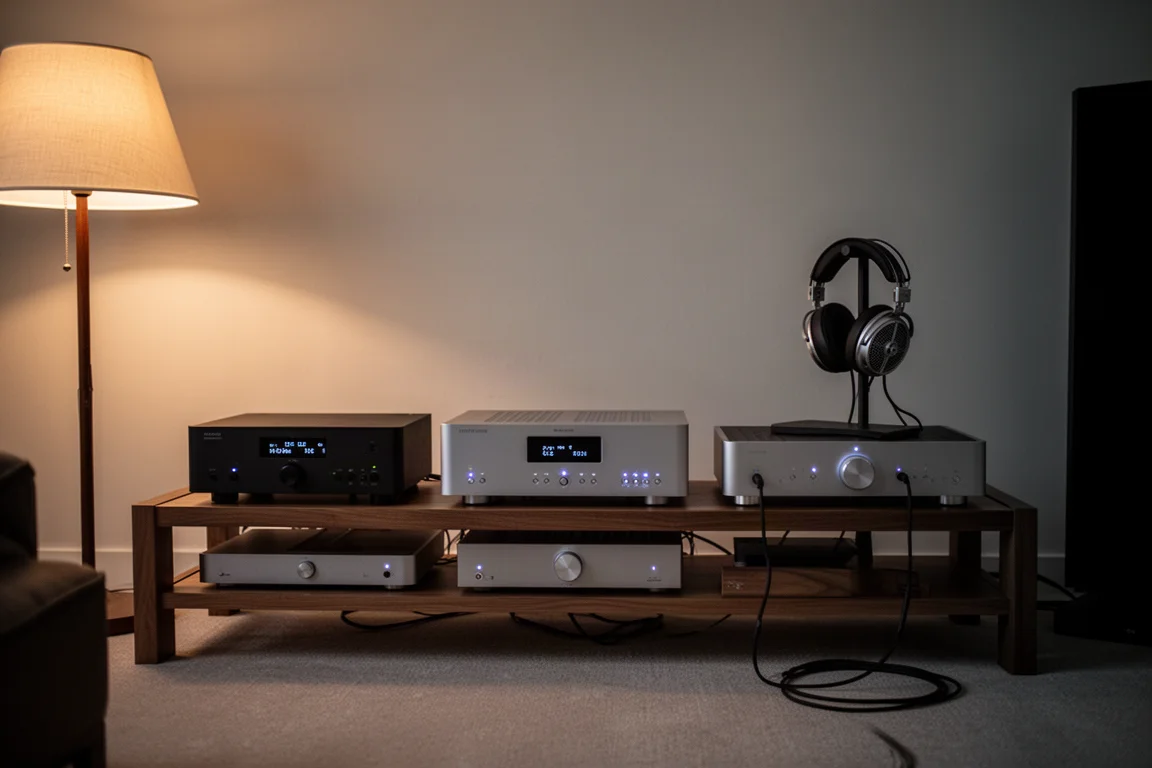
The power supply has grown as well. Transformer capacity doubles from 24 VA to 48 VA, and the voltage rails move from plus and minus 17 volts to plus and minus 32 volts. Buyers can order the Kara in a 115 volt version or a 230 volt version, so it can be used outside the United States without an external step-down transformer.
Build Quality and the 128-Step Attenuator
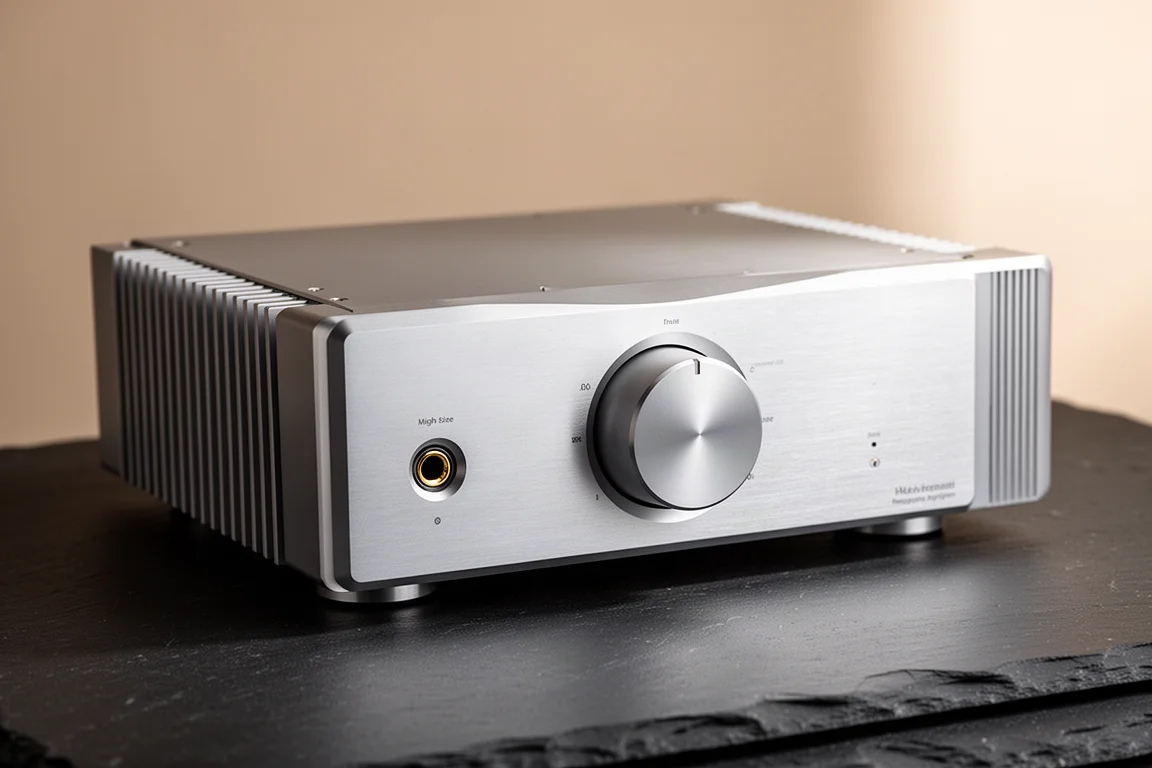
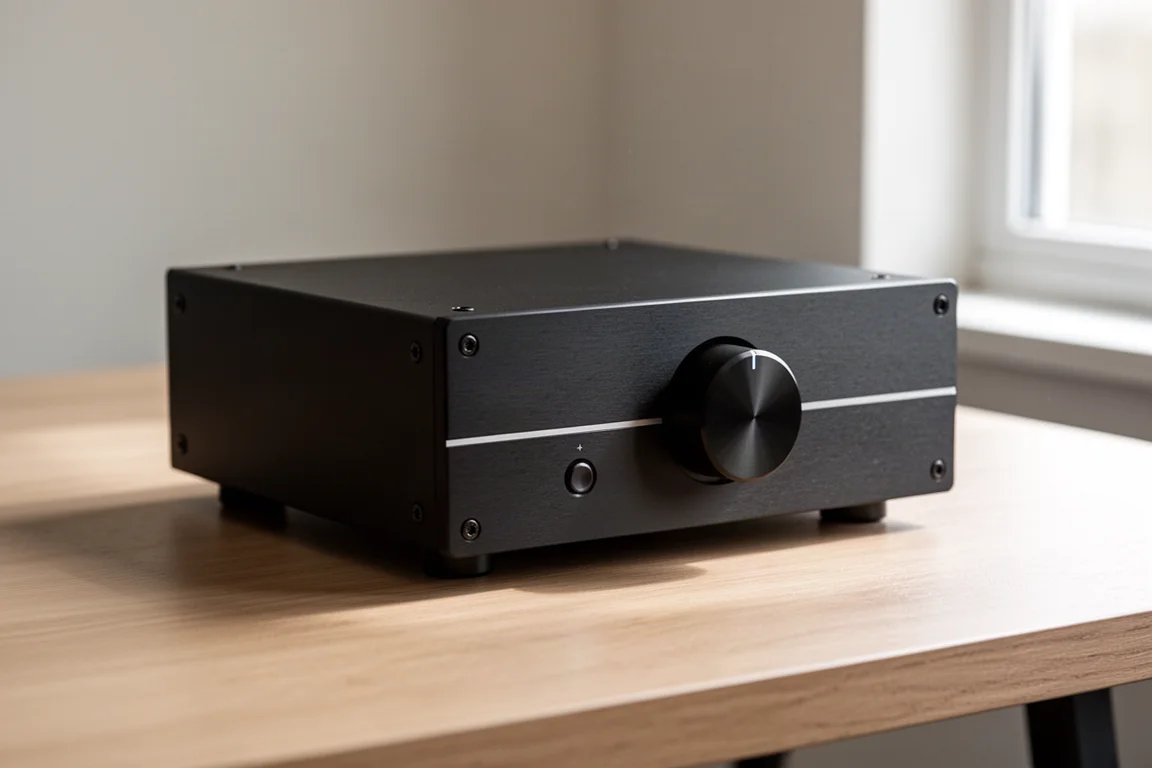
The Kara arrives in a textured black paint finish, and the build feels well put together. The volume knob has a reassuring weight that is well above what the price suggests. The volume control itself is a 128-step attenuator rather than an ordinary potentiometer, and it produces faint clicking sounds as it moves between steps. Stepped attenuators hold left and right channel levels more precisely than a typical volume pot, which is another feature rarely seen at this price.
The Kara is made in the United States, and most of its parts come from United States vendors. Warranty coverage runs to five years, and units sold in the United States carry a 15-day return policy.
Listening Notes: Passive, Low Gain, and High Gain
The Kara offers three ways to run the preamp stage, selected with a button: passive, with no active gain at all; low gain; and high gain. In a system built around a 100 watt per channel power amplifier that delivers 200 watts per channel into 4 ohms, a balanced DAC, and a pair of ELAC Uni-Fi Reference speakers, each mode had a distinct character.
Passive mode sounded clean and easygoing, with a relaxed presentation. Low gain added drive and immediacy, and it became the setting of choice for most listening. High gain pushed things further, sounding more incisive and forward, with extra edge that did not suit every recording. Source material ranged from a dense 1970s singer-songwriter production to a 1959 Duke Ellington big band session recorded in a large former church space, where brass and percussion came through with real weight.
Headphone Listening: The Discrete Amp in Action
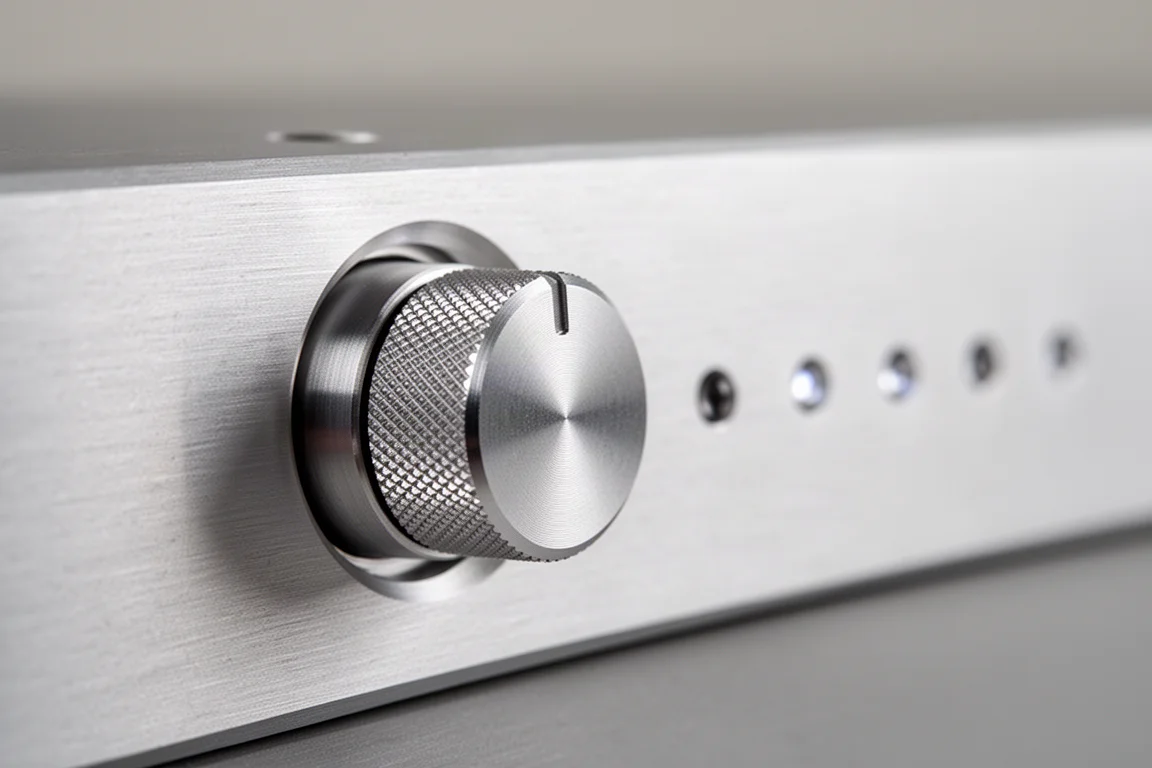
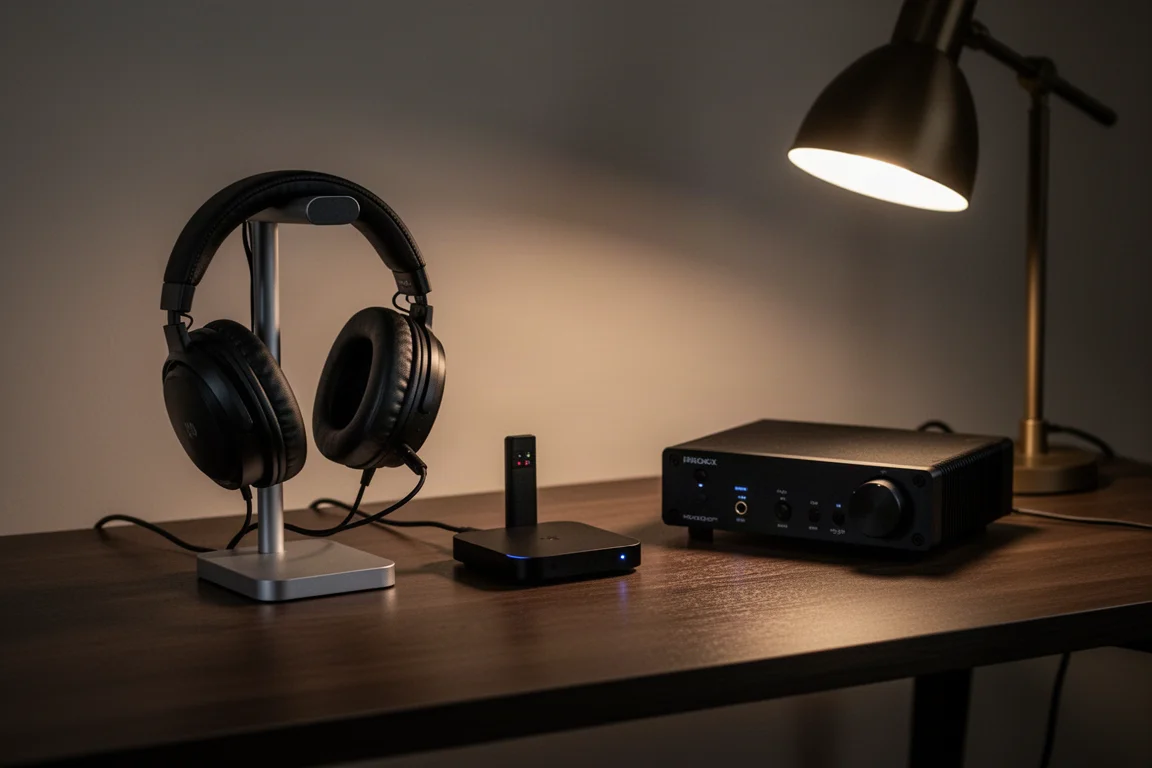
The headphone stage holds up well against dedicated amplifiers. With a pair of planar magnetic headphones and a much more affordable dynamic pair, the presentation was open and spacious, with vocals placed naturally and brass carrying genuine presence and power. Detail retrieval was strong enough to hear into the recording, which is exactly what headphones do best: they take the room out of the equation and let the listener hear the source more directly.
Balanced vs Single-Ended: A Matter of Taste
Balanced XLR connections are the headline feature, but they are not automatically the better choice. In practice, the balanced output sounded a touch clearer, while the single-ended RCA output was marginally less so, with a slightly more relaxed character that may appeal more depending on taste. A higher quality interconnect cable is likely to make a bigger difference than the connection type alone, which is worth remembering before investing in new cables.
How the Kara Compares to the Pass Labs HPA-1
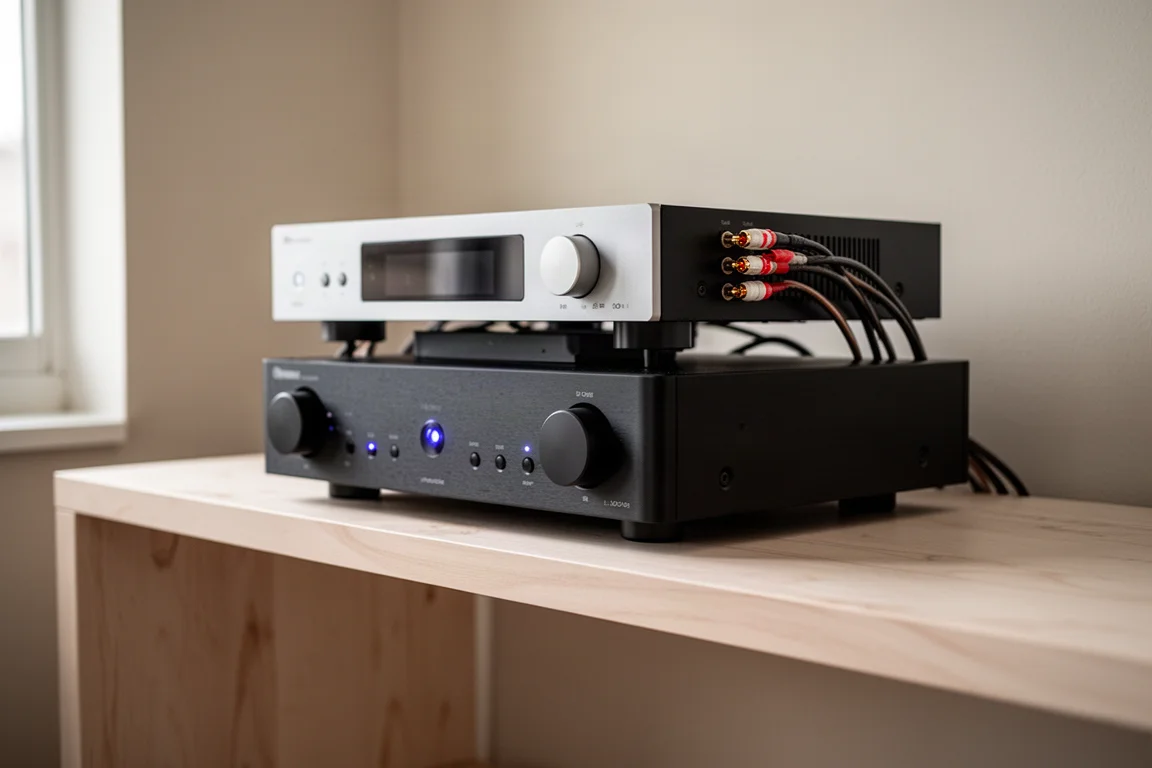
The obvious reference point for a preamp with a built-in headphone amplifier is the Pass Labs HPA-1, which serves as both a preamplifier and a headphone amplifier. It is the better sounding device, with advantages in tonality, soundstage, and dynamics, and it improves on the Kara in nearly every respect. It also costs $3,675, roughly five times as much, so the gap is best understood as a difference in price class rather than a flaw in the Kara.
Who Should Buy the Schiit Kara
The Kara suits listeners who want balanced connections, a genuinely capable headphone output, and the flexibility to choose between passive, low gain, and high gain operation. That combination is difficult to find at this price, and the five-year warranty and United States assembly add to the value.
One behavior is worth knowing about. Twice during extended use, the unit muted itself and entered a protection state after the volume was lowered quickly, with the front panel lights blinking in sequence for about a minute. Powering it off and back on restored normal operation both times.
If those priorities match your system, the Kara covers an unusual amount of ground for $699, and it does so without the compromises that usually come with an entry-level preamplifier.
Conclusion
The Schiit Kara is a fully balanced preamplifier with a discrete headphone amplifier, a 128-step attenuator, a larger power supply than its predecessor, and three selectable gain modes, all at $699. It will not outresolve a $3,675 reference like the Pass Labs HPA-1, and it is not meant to. What it offers is a well-built, flexible foundation for a balanced system and a headphone setup in a single chassis, and at this price that is a compelling combination.
Further reading
Related Reviews
Hi-Fi Preamplifiers
Advance Paris XP700 Review: A Purist Two-Channel Preamplifier
A close look at the Advance Paris XP700, a $1,999 balanced preamplifier with a flexible phono stage, a Burr Brown DAC, and a deep set of sound-shaping options.
Hi-Fi Preamplifiers
Amps and Sound Badlands Review: A Tube Preamplifier Built for Drive
A compact, hand-built tube preamplifier that adds weight, punch, and dynamic contrast to a system, with three inputs and no remote to weigh against it.
Hi-Fi Preamplifiers
Aric Audio Motherlode XL Review: Handcrafted Tube Sound With Real Definition
A handcrafted two-box tube preamplifier with premium parts, textured low bass, and vivid imaging, plus the trade-offs to weigh before buying.