Hi-Fi Preamplifiers
Advance Paris XP700 Review: A Purist Two-Channel Preamplifier
A close look at the Advance Paris XP700, a $1,999 balanced preamplifier with a flexible phono stage, a Burr Brown DAC, and a deep set of sound-shaping options.
Introduction
Advance Paris has been steadily building a following among two-channel listeners, and the XP700 is the brand’s dedicated preamplifier. At $1,999 it is a serious purchase, and Advance Paris has treated it as one: a fully balanced, analog-first design with an onboard phono stage, a built-in DAC, and the thick-fronted, uncluttered styling that has become the brand’s signature.
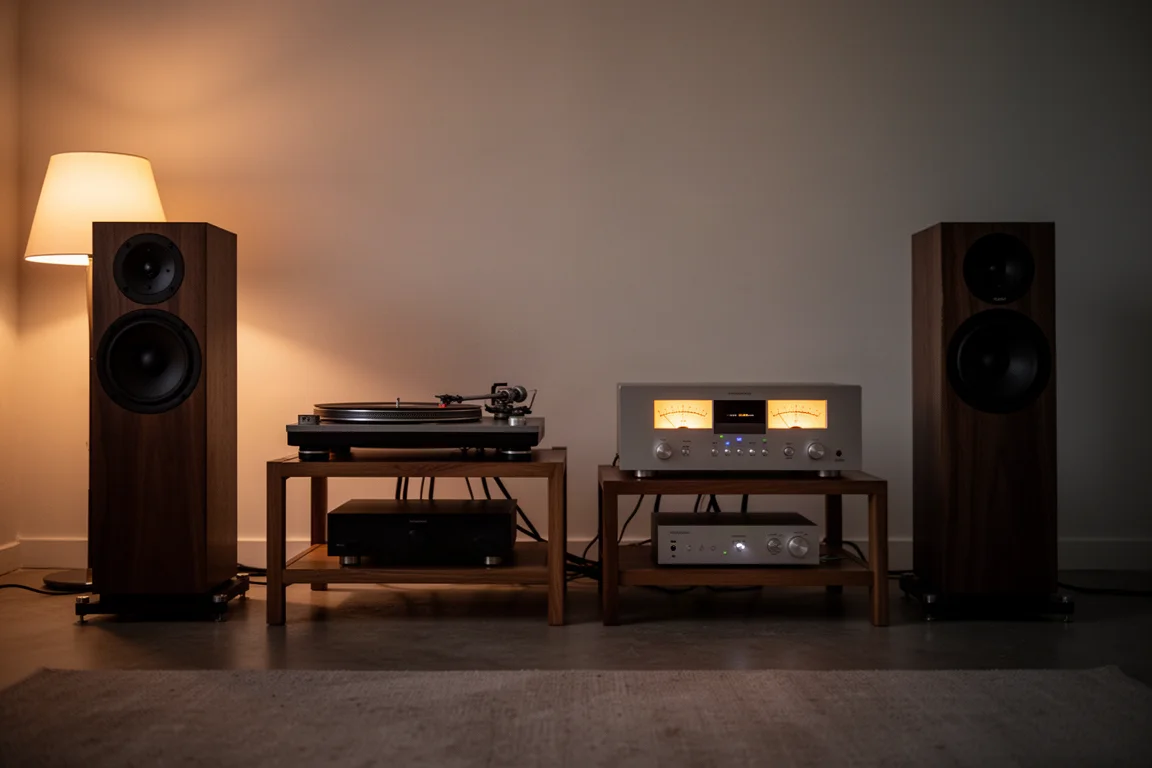
The XP700 is built to sit at the centre of a system rather than at its edge. If you already own an Advance Paris power amplifier, the preamp is designed to stack with it, both visually and functionally. If you are starting from scratch, the XP700 asks you to commit to a separates approach rather than an all-in-one.
Who This Preamplifier Is For
The XP700 makes the most sense for listeners who care about analog sources first. Its phono stage handles both moving magnet and moving coil cartridges, and the moving coil section offers low and high settings along with adjustable loading. That is a level of flexibility usually reserved for dedicated phono stages, and it signals who Advance Paris had in mind.
It also suits anyone who wants a single box to handle a large collection of sources. Seven analog inputs, a record output, and a digital section covering coaxial, optical, and USB mean most systems can be routed through it without an external switcher.
Finally, it is a natural fit for owners of Advance Paris amplification. Pairing the XP700 with one of the brand’s power amplifiers, particularly one with VU meters, produces a coherent and attractive stack.
Design and Build Quality
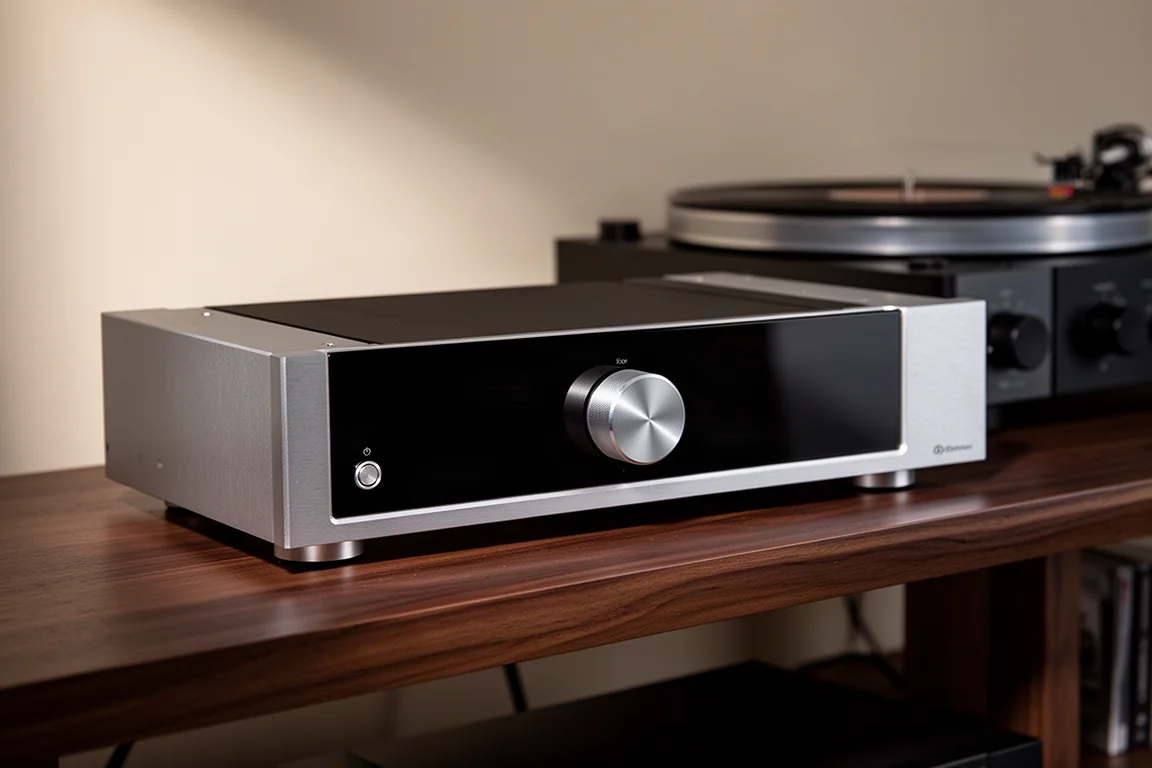
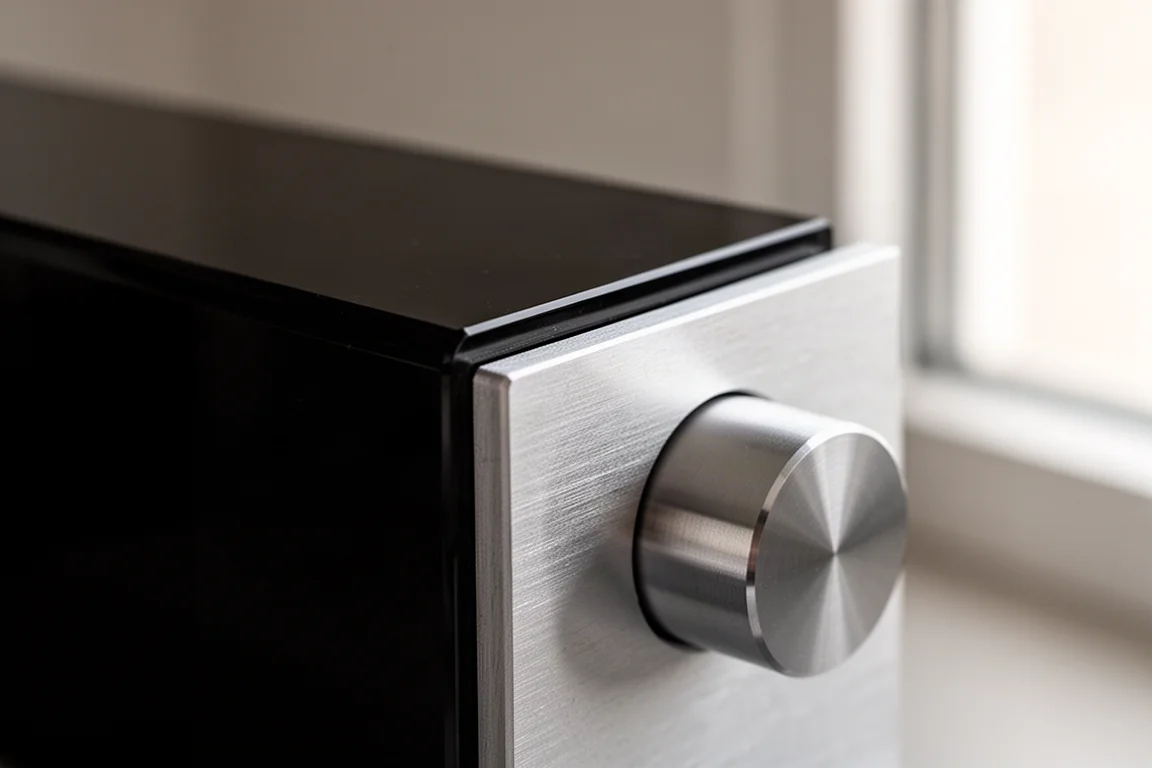
The front panel is the first thing you notice. It is thick and glossy, closer to a heavy acrylic than to glass, and it is almost empty: a single power button on the left and one large multi-function knob in the centre that also serves as the volume control. Nothing else competes for attention.
Under the hood the story is more technical. The XP700 uses two toroidal transformers, one per channel, in a genuinely balanced differential layout. That dual-mono approach mirrors the design of the A12 Classic, which also uses two toroidal power supplies and sells for $3,700. Combining the XP700 with an XA160 power amplifier lands roughly $300 above the A12 Classic, which makes the preamp and power amp route worth pricing out carefully.
Sound Quality
Tonally, the XP700 is easy to live with. The onboard DAC uses a Burr Brown chip and comes across as accurate rather than clinical. There is no harshness at the top, and the presentation does not tip into softness either. Instruments and voices carry convincing timbre, and the sense of depth and layering is one of the preamp’s strongest traits, with individual instruments holding their own space instead of smearing together.
The menu settings meaningfully change the character. One high-bias mode sounds richer and warmer, with a slightly more relaxed feel, while the standard mode is cleaner and more analytical. Both are enjoyable, and the choice comes down to mood and material.
Notably, the XP700 does not use a tube buffer, unlike some other Advance Paris designs, yet it still has a smooth, unhurried quality. The phono stage is a particular highlight, performing on a level with a two-box external phono stage.
Connectivity and Features
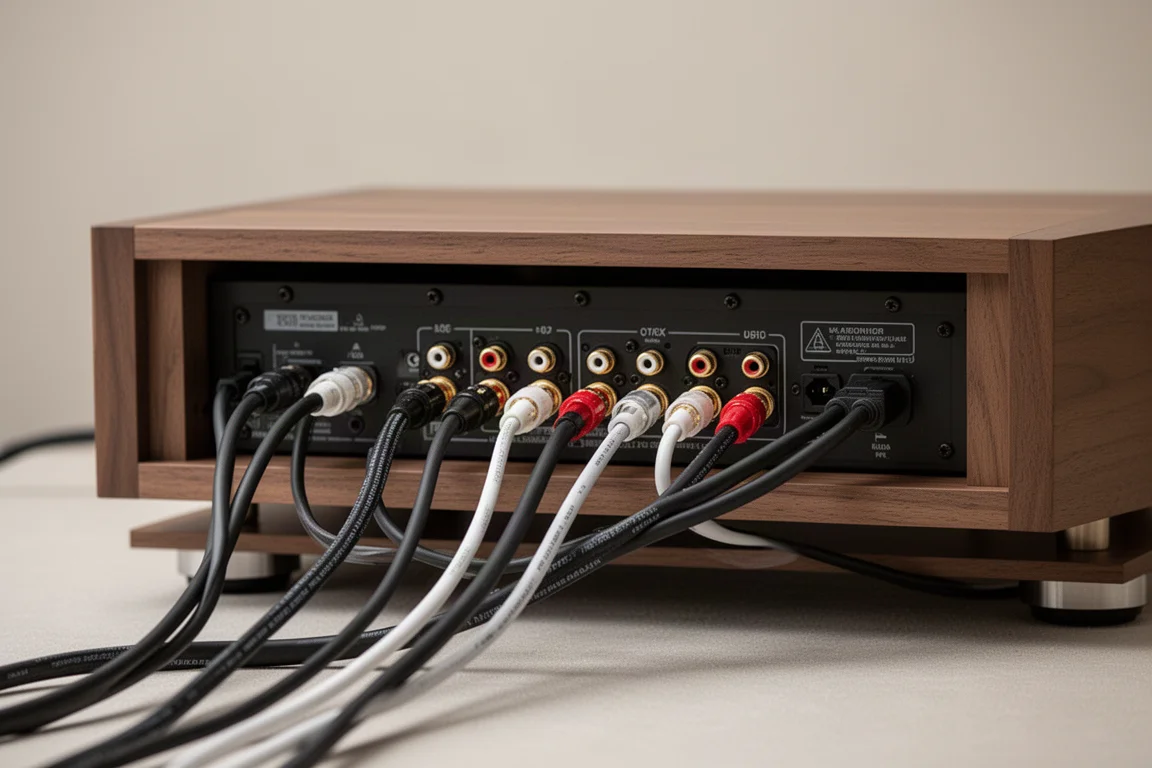
The rear panel is dense with options. Alongside the seven analog inputs and record output, there is a phono section with moving magnet and moving coil support, two moving coil gain settings, and adjustable loading.
Digital inputs cover two coaxial, two optical, and one USB connection. There are also two trigger outputs, a USB-A input, and an update switch.
On the output side you get a single XLR input, balanced XLR outputs, a regular preamp output, a high-pass preamp output, and two subwoofer outputs. The selectable high-pass filter is a genuinely useful addition for anyone running a subwoofer.
Up front, the XP700 offers two headphone jacks, one 3.5mm and one 6.35mm, both single-ended, each with gain and impedance settings. A Bluetooth module is available as an add-on rather than included at this price.
Control runs through the central knob. Pressing it opens a menu covering input selection, tone controls, automatic power down, loudness, balance, and a bypass that takes the tone controls out of the signal path. There is also an additional option labelled TR that is not documented in the manual but clearly affects the sound. The knob takes a little getting used to, though the logic is simple once learned: press, turn to the setting you want, and it locks in after a moment.
Things to Consider Before Buying
The most significant omission is HDMI ARC. Without it, television duty requires an external processor or a different digital path, which is a real limitation for anyone who wants one system for both music and television.
Bluetooth is another consideration. It is available as a module rather than built in, which is defensible on a preamplifier at this level but still worth factoring into the total cost.
The headphone section may also be more than many buyers need. Two single-ended jacks with separate gain and impedance settings is an unusual arrangement, and while it allows two listeners at once, that scenario will not apply to everyone. Some listeners would prefer a simpler version with one headphone output, HDMI ARC, and single-ended outputs only.
Finally, the multi-function knob is the sole control point. It works well, but anyone who prefers a front panel covered in dedicated switches should spend time with it before committing.
Buying Advice
The XP700 is best understood as a purist two-channel preamplifier with a strong analog heart. Its case rests on the dual-mono balanced architecture, the flexible phono stage, the broad input count, and the number of ways it lets you shape the sound. If those priorities match yours, the asking price is easier to justify than the specification list alone suggests.

Owners of Advance Paris power amplifiers have the clearest case, since the XP700 completes a stack that is designed to work together and looks the part. Buyers who need HDMI ARC, or who would rather not pay for a headphone section they will not use, should weigh the alternatives at this price before deciding.
Conclusion
The XP700 is a well-executed preamplifier with a distinct point of view. It favours analog sources, offers a deep set of adjustments, and delivers a clean, tonally satisfying sound that changes character with its settings. It also leaves out a feature many modern buyers expect in HDMI ARC. For the right system, that trade-off is an easy one to accept.
Product link
View more details for Advance Paris XP700
This product is mentioned in the review. Check the specifications, options, and compatibility before buying.
View more details for Advance Paris XP700Further reading
Related Reviews
Hi-Fi Preamplifiers
Amps and Sound Badlands Review: A Tube Preamplifier Built for Drive
A compact, hand-built tube preamplifier that adds weight, punch, and dynamic contrast to a system, with three inputs and no remote to weigh against it.
Hi-Fi Preamplifiers
Aric Audio Motherlode XL Review: Handcrafted Tube Sound With Real Definition
A handcrafted two-box tube preamplifier with premium parts, textured low bass, and vivid imaging, plus the trade-offs to weigh before buying.
Hi-Fi Preamplifiers
Doge 8 Tube Preamplifier Review: High-End Parts at a Sub-$2,000 Price
A dedicated tube preamplifier under $2,000 with Clarity Audio capacitors, a built-in MM and MC phono stage, and a warmer RCA tuning worth knowing about before you buy.