Hi-Fi Audio
Schiit Gungnir 2 Stack Review: Gungnir 2, Kara F and Wotan in One System
A three-box Schiit system built around the Gungnir 2 DAC, Kara F preamp and Wotan power amplifier, with listening notes on the PSB Imagine B50 and comparisons against the Geshelli Labs Daisy and Denafrips Ares.
Introduction
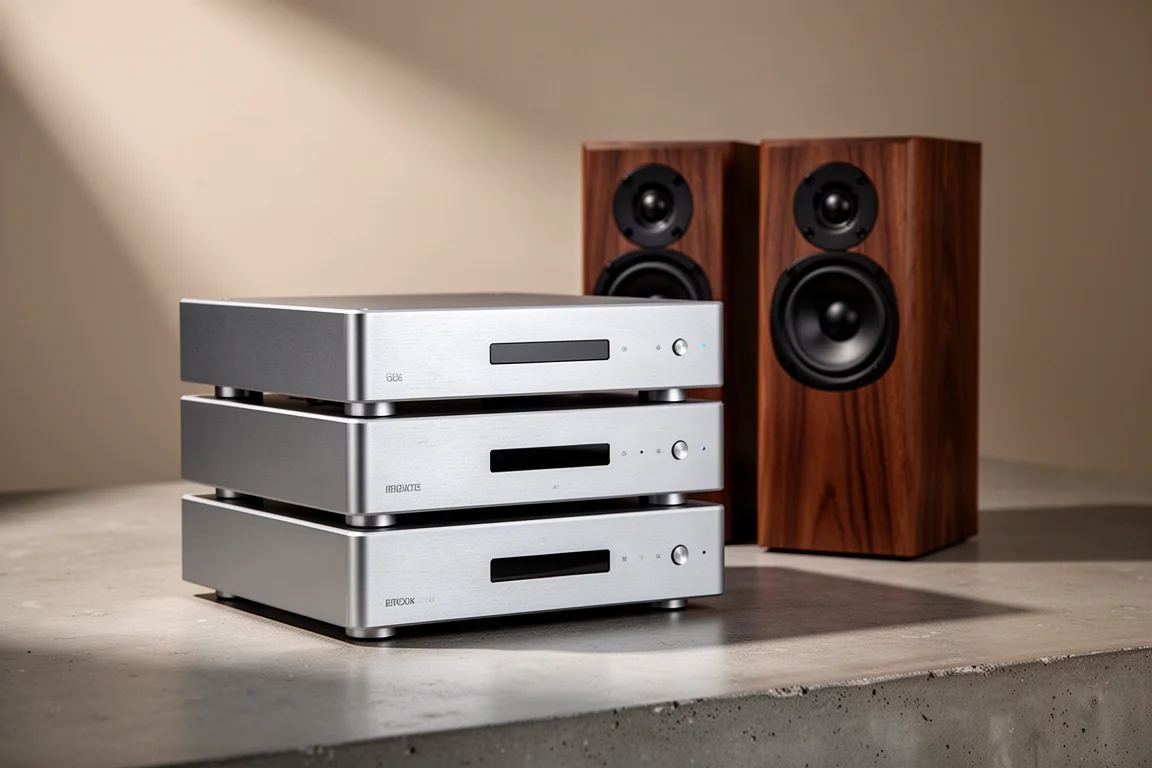
Some systems are assembled one box at a time, and some arrive as a matched set. The Schiit stack covered here falls into the second category: the Gungnir 2 DAC at $1,599, the Kara F balanced preamplifier and headphone amplifier at around $799, and the Wotan two-channel power amplifier at $1,999. Three separate components, one control app, and a shared design language that makes them read as a single piece of equipment.
This guide walks through each component, then looks at how the system performs with the PSB Imagine B50 bookshelf speakers at $800, which were the pair used for listening. It closes with a comparison against two converters that buyers often cross-shop: the Geshelli Labs Daisy and the Denafrips Ares.
What This Three-Box Stack Includes
Each box does one job. The Gungnir 2 converts digital sources, the Kara F selects inputs, controls volume and drives headphones, and the Wotan takes a line-level signal and delivers speaker power. Because the Kara F offers both balanced and single-ended outputs and the Wotan accepts both, the system can be wired either way, though a balanced connection between the two is the more natural pairing.
All three components support Forkbeard, Schiit’s control app. Once each device is added to a stack inside the app, volume and input switching can be handled from a phone, and the app mirrors what the supplied remote control can do. The app does not require an account, an email address or any personal details. Unofficially there are hints of broader plans for the platform, but for now the value is straightforward control without hunting for a misplaced handset.
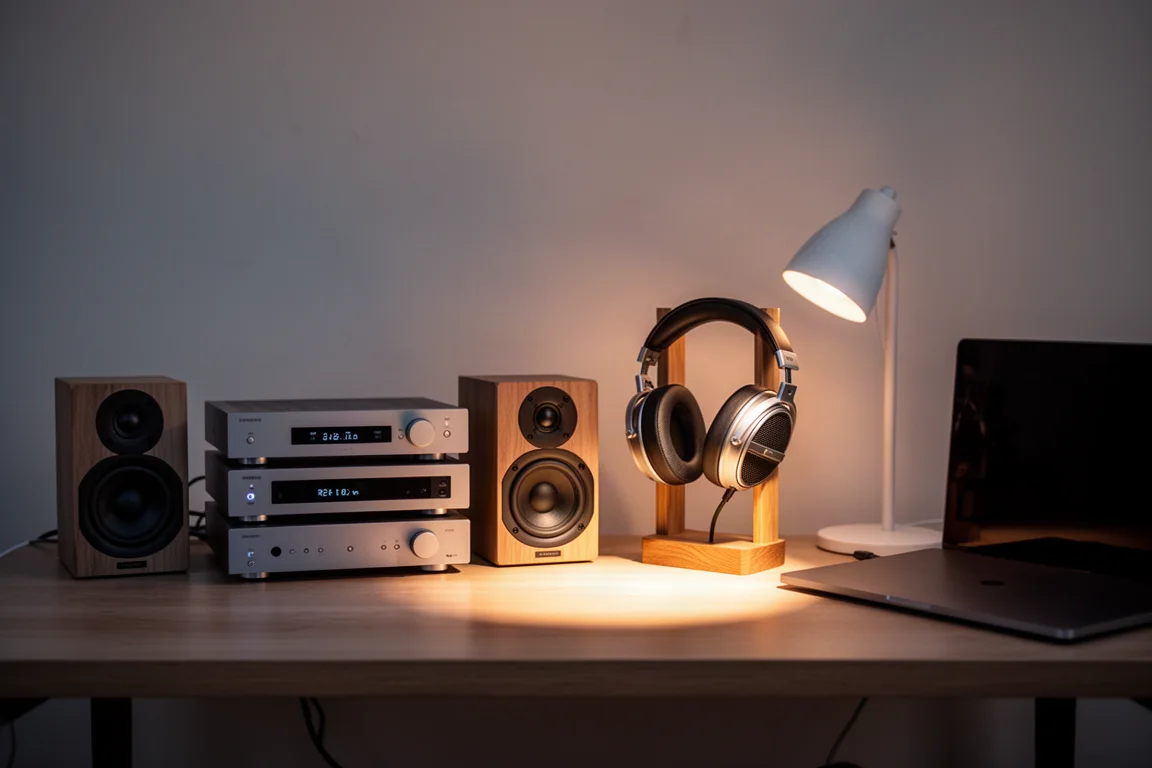
Both Schiit and Geshelli Labs manufacture their products in the United States, with production split between Texas and Florida. The appeal of a stack like this is that each component can be evaluated, replaced or upgraded on its own terms, while the shared app keeps day-to-day operation simple enough for anyone to use.
Schiit Gungnir 2: The DAC at the Center
The Gungnir 2 is the digital hub of the system. It carries two USB-C inputs, one supporting up to 32-bit/384 kHz for computer-based upsampling and DxD or DSD material, and a second with more modest sample-rate support. Optical, coaxial and AES inputs are provided for disc transports and streamers, and Schiit’s own Unison USB implementation handles the computer connection.
The design is modular. Analog and processing cards slide in, so the converter can be adapted over time rather than replaced, and firmware updates arrive over the air or from an SD card. A mode button on the front panel toggles inverted phase with a short press and non-oversampling mode with a two-second press. Indicator LEDs confirm phase inversion, NOS operation, the active input, mute status, and an out-of-range or high-jitter warning that the company’s programmable oscillators are intended to make a rarity. A remote control is included.
Schiit Kara F: Balanced Preamp and Headphone Amp
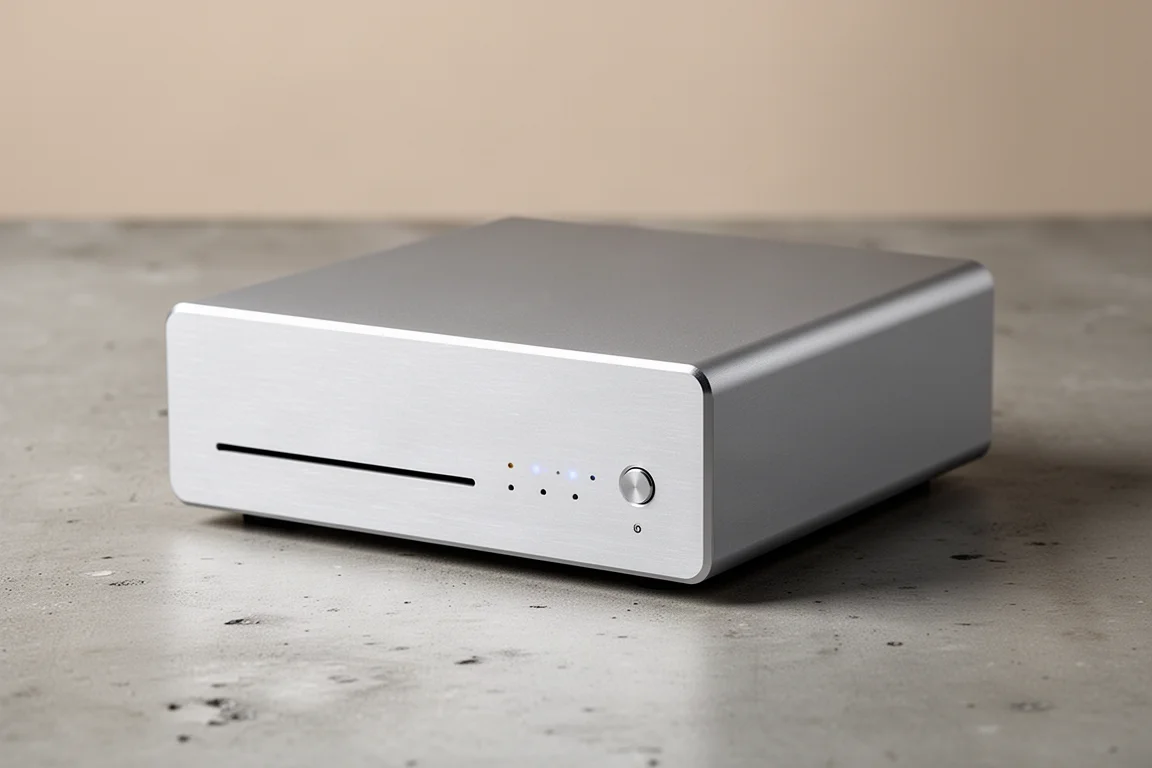
The Kara F is described as a Nexus balanced preamplifier and headphone amplifier. On the back you get two balanced inputs, three single-ended inputs, one balanced output and two single-ended outputs. There is no dedicated subwoofer output, but the second set of single-ended outputs can be used to feed a subwoofer, which is a practical workaround for a two-channel system that needs low-frequency reinforcement.
Volume is handled by a 128-step relay-switched control, which produces an audible series of clicks as it moves. Three gain settings are available: passive, low and high. A small remote is included, and it is magnetic, so it can be parked on the side of the chassis rather than lost in a drawer.
Schiit Wotan: Dual-Mono Power for Demanding Speakers
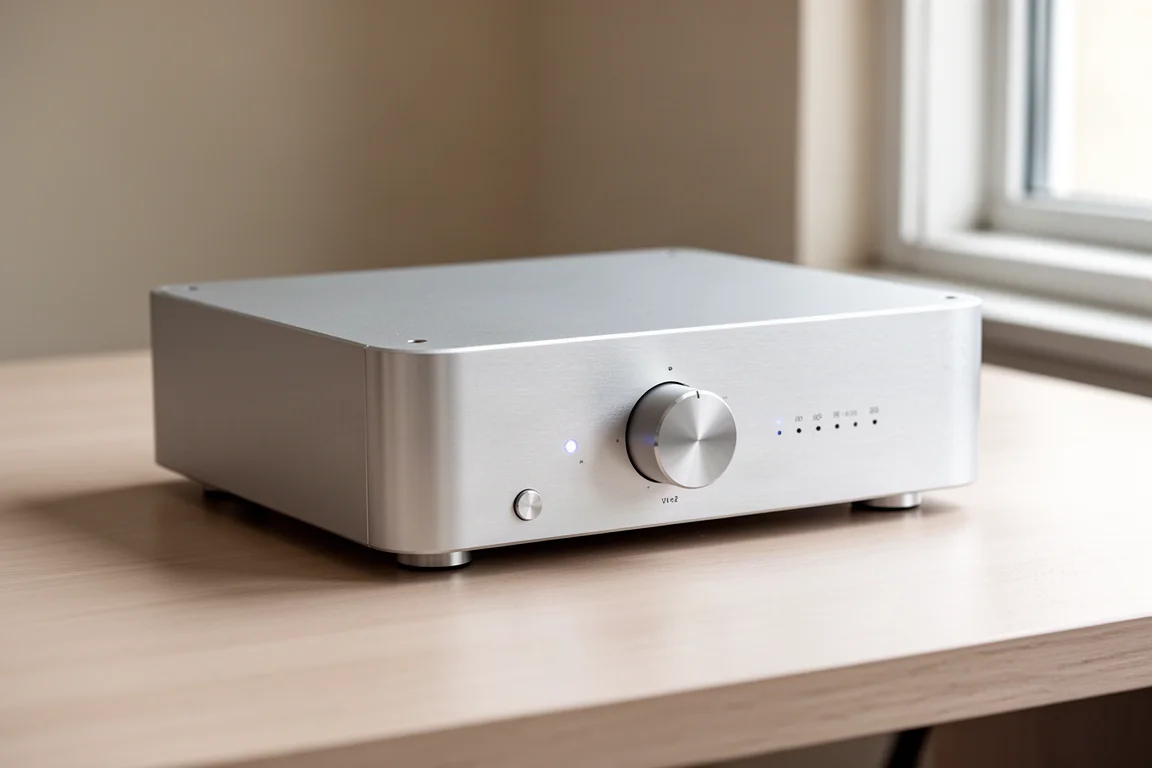
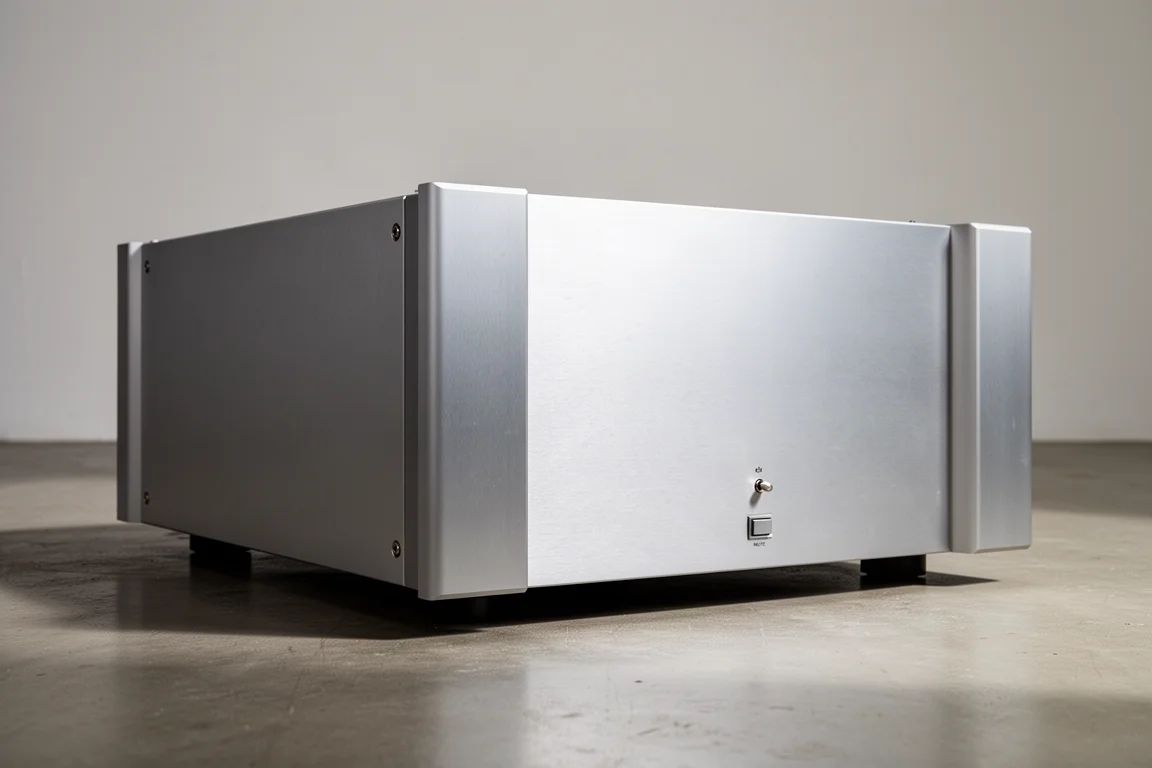
The Wotan is rated at 200 watts into 8 ohms and 400 watts RMS into 4 ohms. It is a dual-mono design with a separate power supply for each channel, built around what Schiit calls a differential Nexus current feedback topology that is inherently balanced. Filter capacitance totals 160,000 microfarads, which goes some way to explaining the weight of the chassis.
Connectivity is deliberately simple: a pair of balanced inputs, single-ended inputs, and speaker binding posts in the middle of the rear panel, along with a slot for the Forkbeard module and two cooling fans. A single switch selects between balanced and single-ended operation, and there is a mute button on the front. There is no volume control, which is why a preamp such as the Kara F is required.
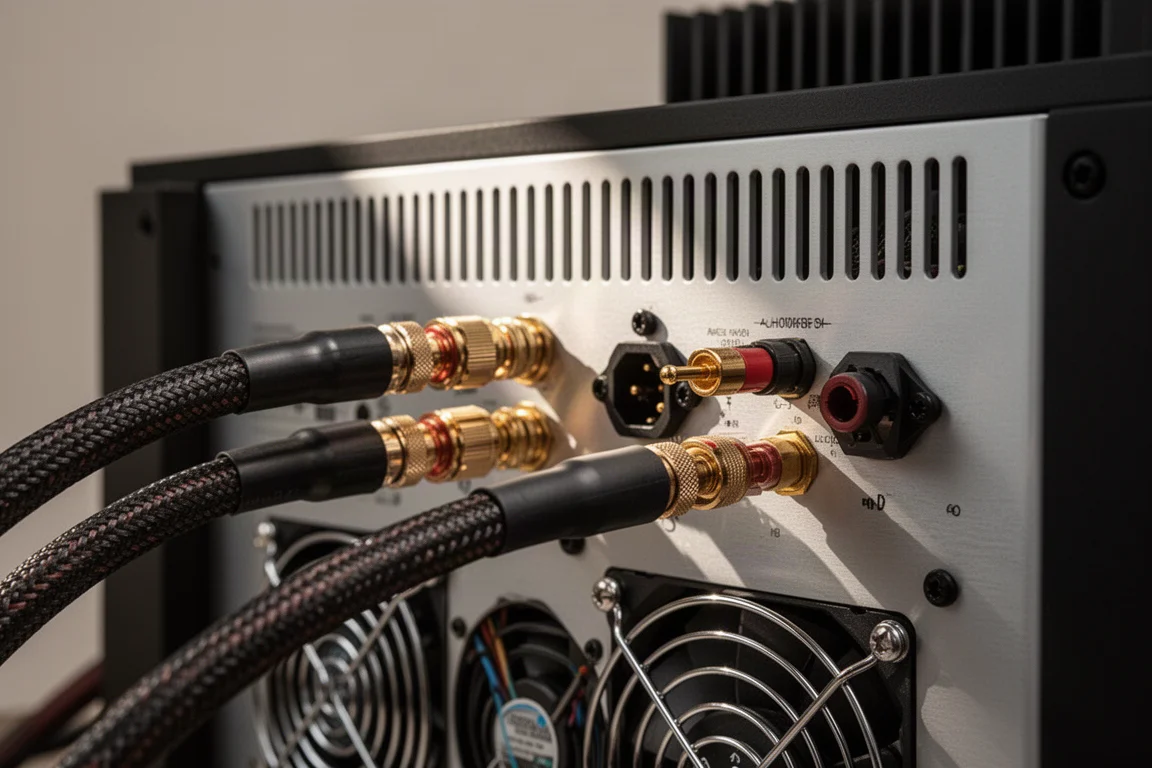
Matching this amplifier to the rest of a system is mostly a question of speakers and room size. Its reserves mean it stays composed when the music asks for sudden dynamic swings, and running it balanced from the Kara F keeps the signal path consistent from source to speaker. Buyers with efficient speakers in a small room will not need this much power, but the headroom is what allows a system to stay relaxed at higher volumes.
PSB Imagine B50: The Speakers Used for Listening
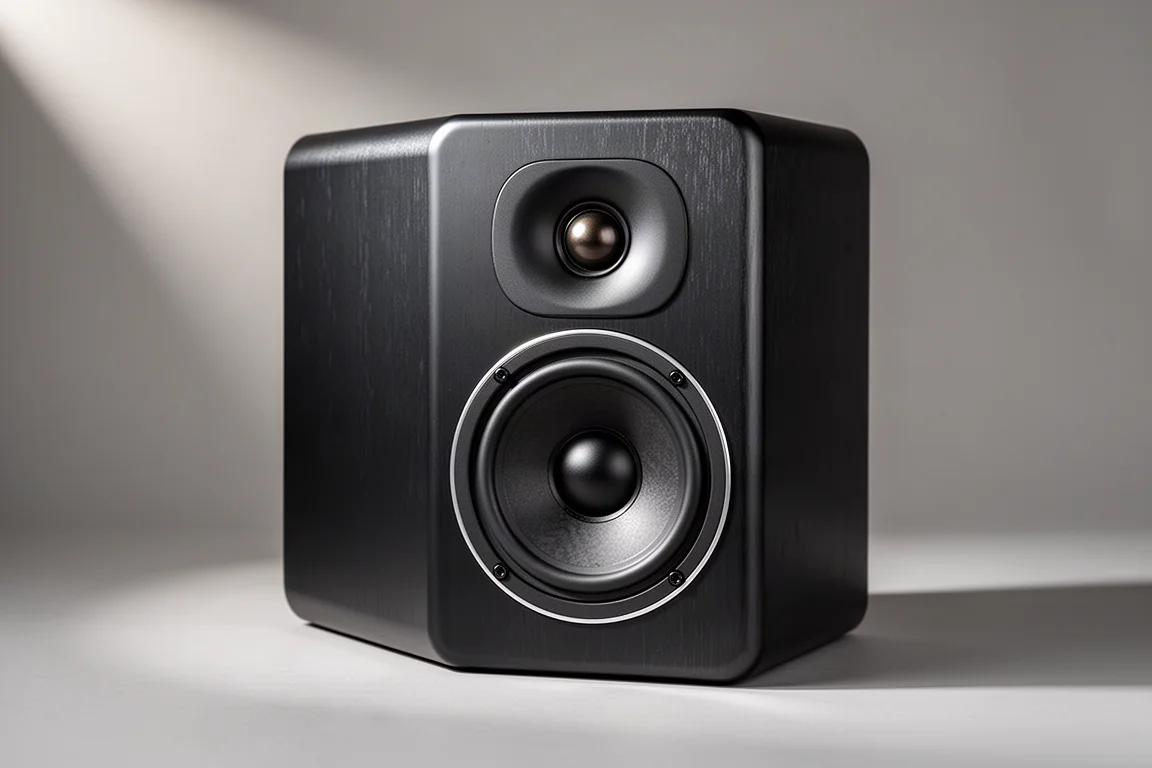
The PSB Imagine B50 is a compact bookshelf speaker priced at $800, and it was the pair used throughout listening. It brings a lively character to the mid-range and is genuinely fun to listen to, with enough attitude to keep energetic material engaging rather than polite. At $800 it sits at the pricier end of the small bookshelf category, so it is worth comparing against other compact options at that budget before committing.
How the Stack Handles Complex, Dynamic Music
With the Imagine B50s connected, the stack produced a clearly defined soundstage. Voices and instruments had specific, stable positions, and even dense mixes kept their internal structure. A useful test is a track built from roughly a dozen layered elements; on a less revealing system those layers merge into a pleasant blur, while here each one stayed audible on its own.
Dynamic material fared just as well. Songs that begin quietly and build toward loud, harmony-heavy passages kept their shape, with acoustic instruments and layered vocals rendered accurately, including the small details of breath and air in a performance. A track that opens with electric guitar, then a drum roll, then a high, ethereal vocal, hung together as separate events in space rather than one wash of sound.
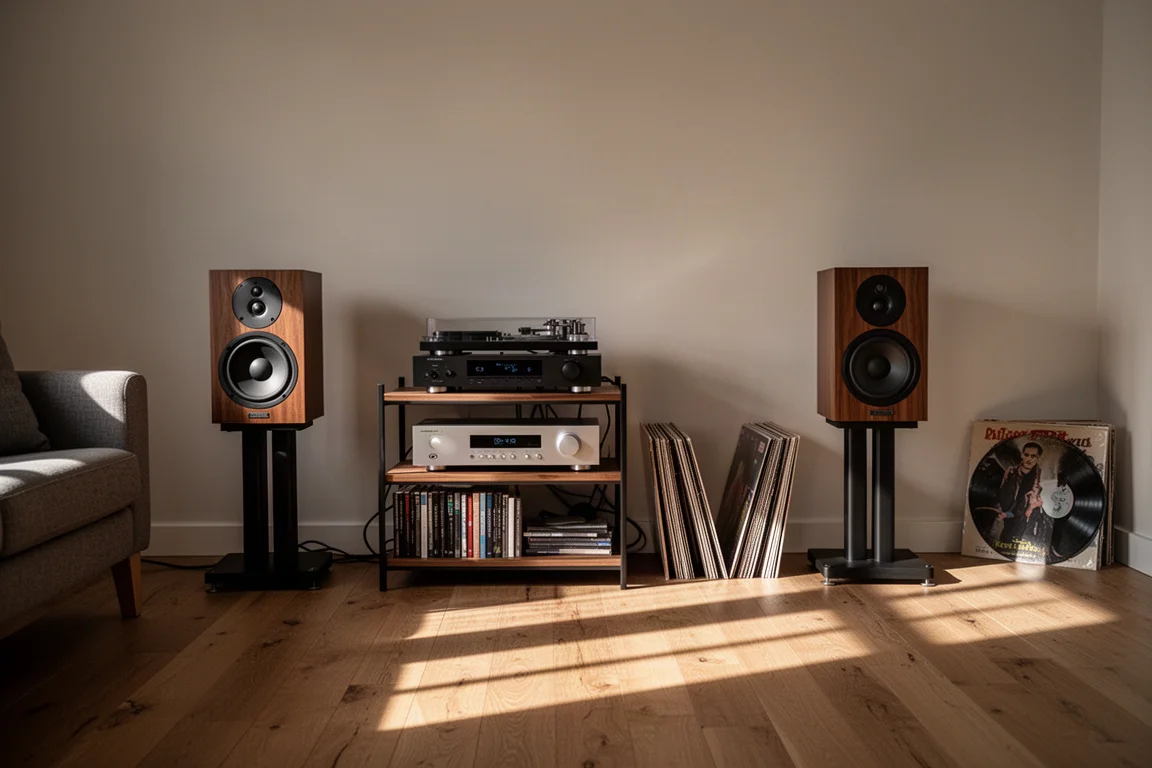
The practical effect is a system that encourages long listening sessions with singer-songwriter material, acoustic instruments and anything with texture and complexity in the voice. Heavier material holds up too, but tonal balance is where the stack stands apart: Schiit components have historically leaned mid-range focused, and this combination keeps some of that character while sounding more dynamic, organic and inviting than the brand’s earlier designs.
Geshelli Labs Daisy: The Closest Comparison
The Daisy from Geshelli Labs is the natural point of comparison, priced in the region of $1,300 to $1,500 depending on how it is specified. It is known for placing instruments and voices in space with unusual precision, and the Gungnir 2 matches that trick. In a blind comparison, the two would be very difficult to tell apart. Both lean very slightly cool, and both are dynamic.
The differences are practical rather than tonal. The Daisy offers more inputs, with two optical, two coaxial and one USB, along with more outputs. It can be ordered with a wood case, and the op-amps inside can be rolled, so its sound can be tuned further. Stock op-amps are Texas Instruments parts. The Gungnir 2 counters with two USB inputs, a modular card architecture and app control.
Denafrips Ares: A Warmer Voicing
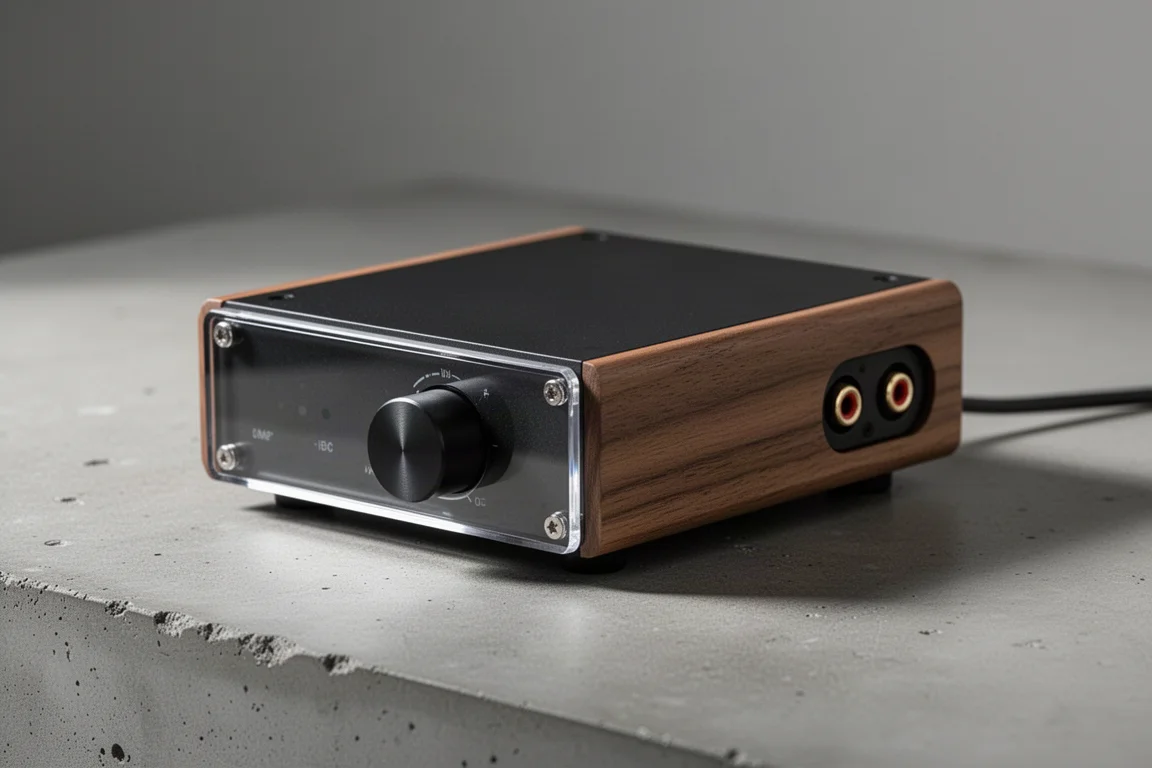
The Denafrips Ares takes a different approach. Where the Gungnir 2 and the Daisy represent the best of a clean, solid-state presentation, the Ares has a warmer, more tube-like character, closer in feel to a really good valve amplifier than to either of the other two converters.
If that warmth is what you are after, it remains an enjoyable option. In direct comparison, though, the Gungnir 2 holds the edge on the qualities that make a system feel transparent, particularly separation between instruments on busy recordings.
Buying Advice for a Similar System
Build the system around the job each component does. If headphones and speakers share one desk, the Kara F is the natural starting point, since it handles both and accepts balanced and single-ended sources. If the source is a computer or a streamer, the Gungnir 2 adds flexibility through its modular cards and app control. The Wotan only makes sense if the speakers in question benefit from high power and the budget stretches to $1,999.
For listeners who want a similar character at a lower price, a Geshelli Labs converter built around an AKM 4499 chip is available at around $575, and it is a sensible entry point if the Gungnir 2 and the Daisy are out of reach. Whatever the budget, the priorities stay the same: a preamp that matches the sources you own, a DAC with the inputs you actually use, and an amplifier with enough headroom for the speakers in the room.
Conclusion
The Gungnir 2, Kara F and Wotan work as a system rather than three unrelated boxes, and the Forkbeard app ties them together without asking for an account or personal information. The Gungnir 2 stands out for matching the imaging of a converter in a similar price bracket, the Kara F is a flexible balanced preamp with headphone support, and the Wotan supplies enough power for demanding speakers. Paired with the PSB Imagine B50, the result is a revealing, dynamic system that is easy to keep listening to.
Further reading
Related Reviews
Hi-Fi Audio
Accuphase C-57 vs Allnic H-7000V: Two High-End Phono Stages Compared
A fully balanced solid-state phono stage with a pitch-black noise floor meets a tube design built for well-loved records. Here is how to choose between them.
Hi-Fi Audio
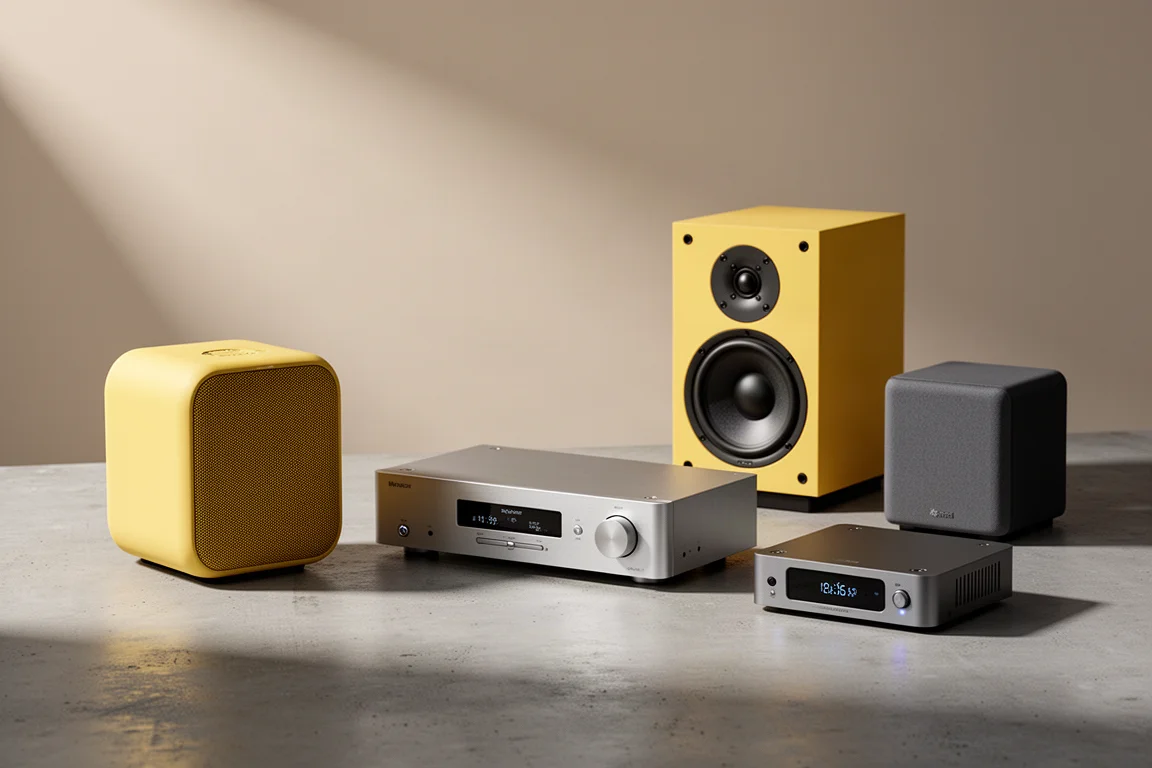
Active vs Passive Hi-Fi: Five Components for a Modern System
Five components that define modern active and passive hi-fi systems, with the strengths, trade-offs and setup details worth weighing before you buy.
Hi-Fi Audio
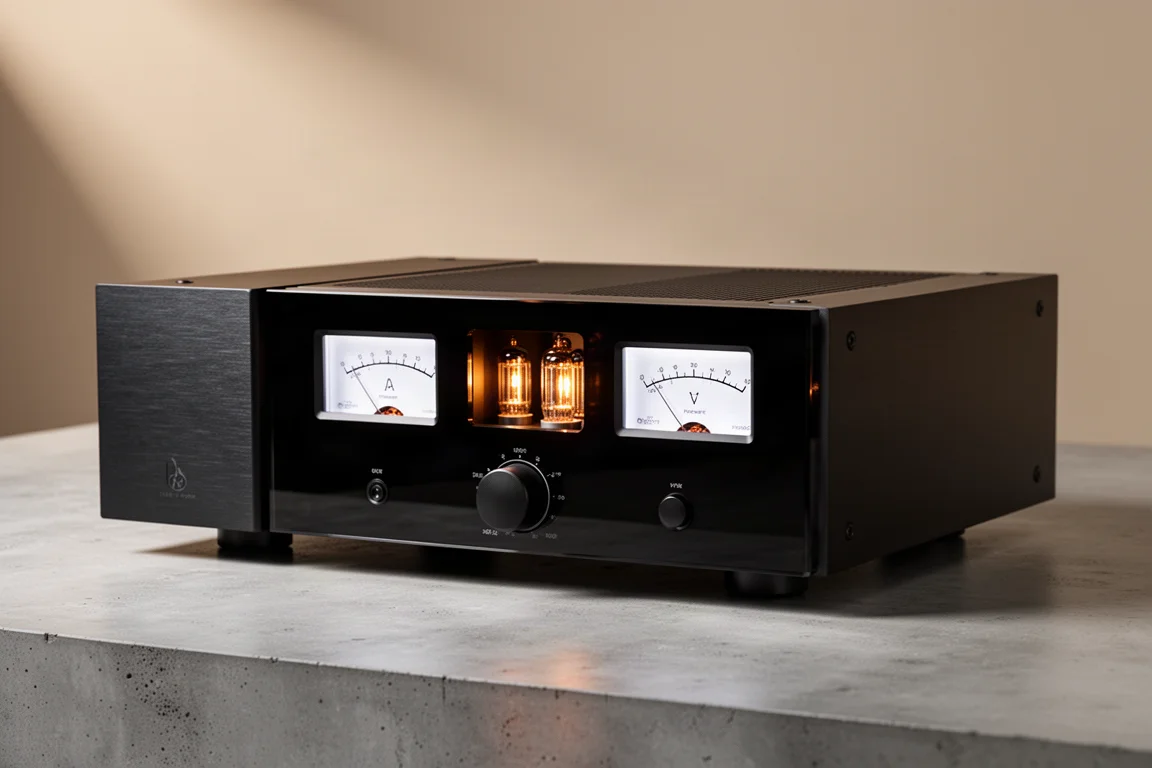
Advance Paris A10 Apex Review: A Hybrid Integrated Amplifier That Covers a Lot of Ground
A French hybrid integrated amplifier with a class A tube preamp stage, analogue power meters, and an internal DAC and phono stage good enough to make extra boxes unnecessary.