Ebike Conversion Kits
Scarper Ebike Drive System Review: A Conversion Kit That Turns Your Bike Electric in Minutes
A disc-rotor based ebike conversion kit that skips hub motors and wheel swaps entirely. Here is how it installs, how it rides, and where the real trade-offs sit.
Introduction
Ebike conversion kits usually ask for something significant in return: a new wheel, a hub motor laced into it, and a bundle of cabling to route around the frame. They can work well, but they also introduce failure points, and a kit that locks a wheel when the battery dies is not a theoretical problem.
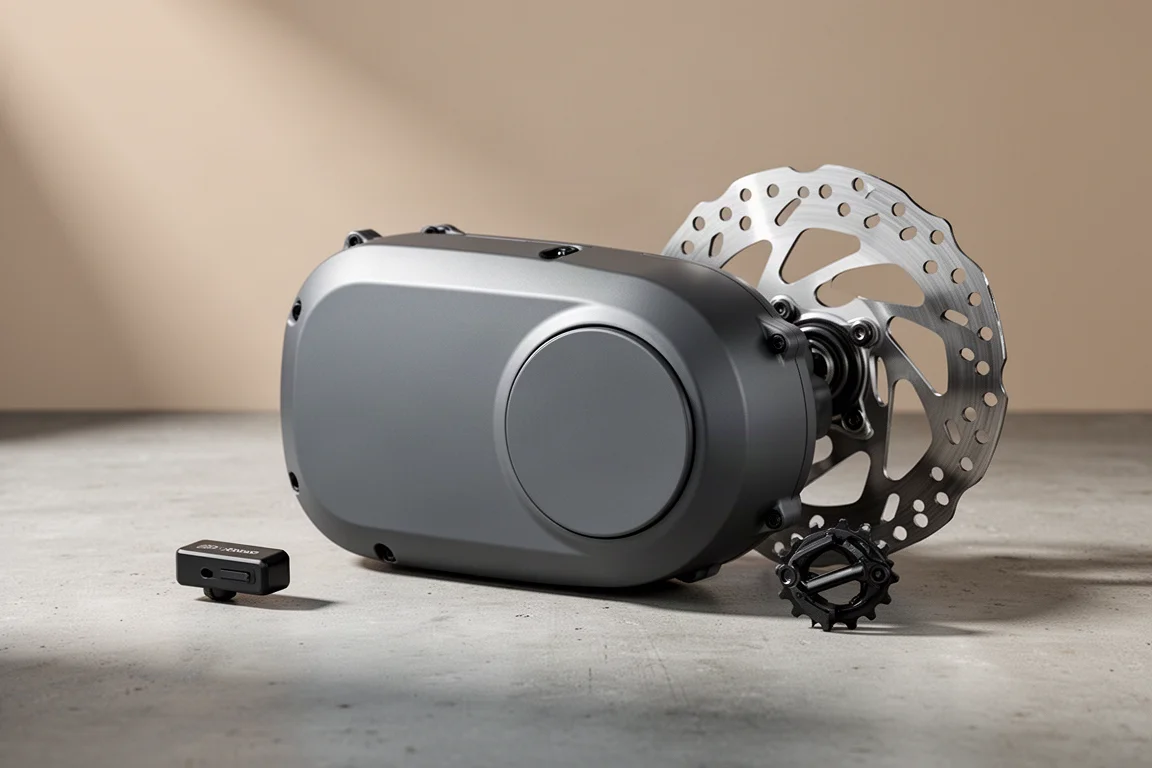
The Scarper ebike drive system takes a different approach. There is no hub motor, no replacement wheel, and no wiring loom to hide. The kit is a drive unit, a purpose-built disc rotor, and a small crank-mounted pedal sensor. Everything mounts at the rear brake and the left crank, and the wheel you already own stays where it is.
This review covers what the system is, how installation actually goes, how it feels to ride, what the battery delivers in practice, and the ownership questions worth settling before spending the money.
What the Scarper Drive System Actually Is
The kit has three physical parts. The first is the drive unit itself, a grey, rounded, box-shaped housing roughly the size of a large water bottle that mounts low at the rear of the bike. The second is a stainless steel disc rotor, which is noticeably heavy at a measured 774 g on its own. The third is a small pedal sensor that straps to the inside of the left crank arm, along with a separate speed sensor.
Because the drive unit pushes against the rotor rather than driving a wheel hub, there is no need to rebuild or replace anything structural. The trade-off is weight: the drive unit measured about 4.68 kg on the bench, which is a meaningful addition to a bike that may weigh less than 8 kg to begin with. Most of that mass is battery, and the housing is deliberately chunky to fit it.
The finish and app design are a step above most of the conversion kits on the market. The housing feels rubbery and well put together, and the accompanying app looks like it was designed by an actual designer rather than assembled by an engineer at the last minute.
Installation and Compatibility
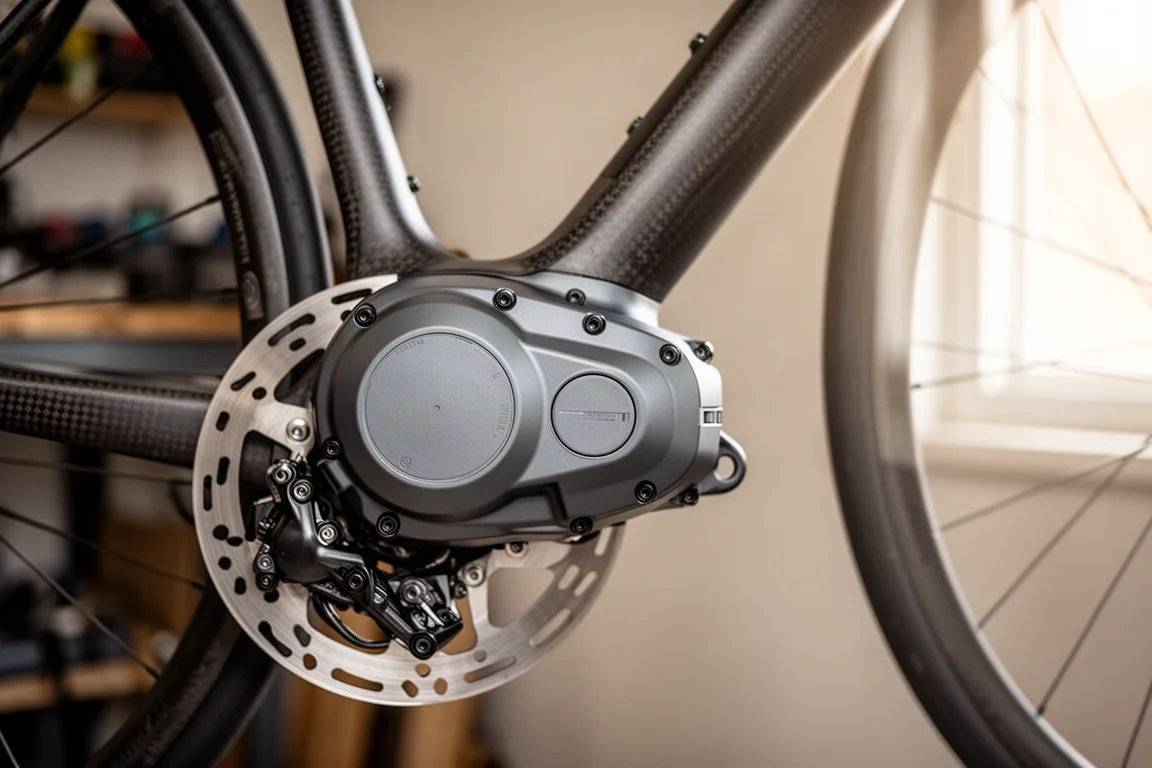
The advertised pitch is a transformation “in seconds.” A more realistic expectation is a few minutes of straightforward work, plus a bit of fiddling. The sequence runs: remove the rear wheel, swap in the Scarper rotor using either a centre-lock adapter or six-bolt fitting, refit the wheel, mount the drive unit, strap the pedal sensor to the left crank, and calibrate.
The rotor is the part that demands attention. Its rear face is bulbous, and once fitted it sits extremely close to the brake caliper. It clears, but the margin is tight enough that it is worth checking carefully. Lining up the four locating holes on the drive unit is fiddly, and the locking handle needs to be pulled out before there is any chance of seating the unit properly.
Calibration must be done before riding. The bike needs to be held upright on level ground, with the drive unit and pedal sensor both switched on, then the on/off and mode buttons held together for about five seconds until an amber rotating ring appears. A double amber flash followed by blinking amber means the calibration failed and needs repeating.
Compatibility is limited to disc brake bikes with wheel sizes between 26 and 29 inches, which covers a broad slice of modern bicycles. The unit was installed on a 700c carbon road bike, which is about as tight and aggressive a platform as the kit is likely to see.
Riding Experience and Power Delivery
In the lowest power mode, the assist arrives early and feels genuinely strong. Power delivery is smooth and balanced rather than snatchy, and the bike never feels like it is about to be pushed out from underneath the rider. On rough gravel that would otherwise be unpleasant on a stiff race bike, the kit makes the ride feel easy and composed.
The main physical complaint is heel rub. On a compact racing frame, the back of the shoe can catch the unit on every pedal stroke, which means pedal washers or a change of foot position. This is far less likely on a hybrid or a longer-wheelbase gravel bike, and riders without an aggressive inward heel position may never notice it.
The more consequential gap is a brake sensor. Some dedicated ebikes cut motor power the instant the brake lever is touched, which makes low-speed manoeuvring through gates and over kerbs far more predictable. This kit does not have that, and it is a genuinely useful safety feature rather than a nice-to-have.
One important behaviour deserves credit: when the battery runs flat, the bike stays rideable. There is a mild sense of resistance, but there is no applied brake and the bike still freewheels and rolls. That is not something every conversion kit manages.
Range and Real-World Battery Life
The stated figure is human power plus up to 50 km of pedal assist, which is vague enough to be difficult to hold anyone to. The best way to test it was to ride the battery to zero in eco mode on hilly, windy terrain.
The result was 28 km before the system cut out completely, in conditions that included a deliberate effort to keep the route as flat as possible and failed. On flatter, less exposed roads, the same battery would very likely stretch past 40 km. A rider using one of these regularly reported roughly 40 km on a typical day, without specifying which power mode was in use.
There is a second battery in the system that is easy to forget about. The pedal sensor is a separate unit with its own charge and its own USB connection, and the app reports the drive unit’s remaining charge but not the sensor’s. Forgetting to top up the sensor is the most common way to be caught out.
Charging, App, and Everyday Ownership
The charging claim is an 80 percent top-up in 30 minutes, with a full charge taking about two and a half hours. Measured from empty, 30 minutes produced 38 percent, 88 percent arrived at one hour and 31 minutes, and the battery reached 100 percent in one hour and 53 minutes. So the fast-charge headline does not hold up, but a full charge in under two hours is a genuinely useful result.
The app itself is clean and clearly designed. It shows the drive unit’s remaining battery, which makes it easy to check status before heading out. The sensor gap is the annoying part, and it is the kind of omission that turns into a dead assist halfway through a ride.
On the legal side, the system is configured to comply with the ebike rules of the market it is supplied in, and there is no user-facing way to override the speed limit. In a market with a higher permitted limit, a unit can be supplied with the appropriate factory settings. Speed limits are not something to work around.
There is also a practical note about the bike underneath. Hanging roughly five kilograms off the rear of a very expensive carbon race frame is a decision worth thinking through, and the kit makes far more sense on a steel frame than on a lightweight race build.
Price, Warranty, and Value Considerations
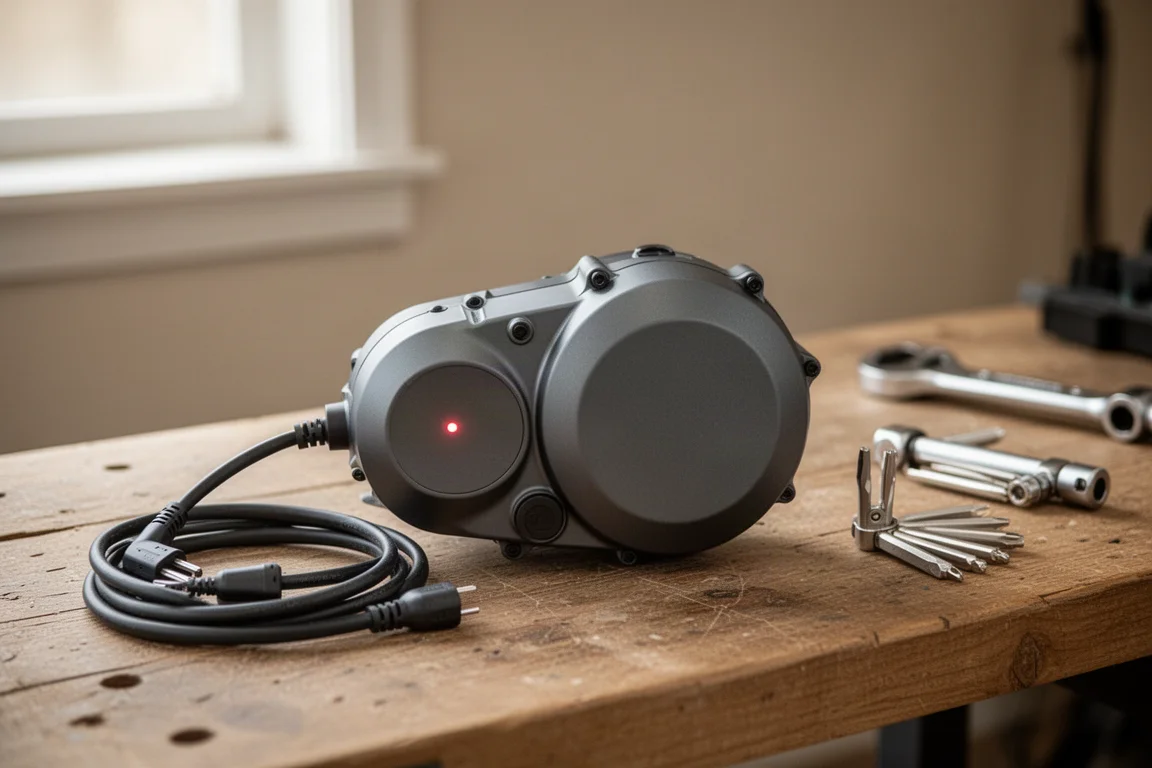
The main kit is £1,495 and includes the drive unit, the disc rotor, the pedal sensor, and the charger. Free professional installation is included, but only at participating retail partner locations. If you want to set up a second bike, an additional disc rotor can be bought separately for £295.
That price puts the kit above the cost of many well-reviewed dedicated electric bikes, which is the central tension. Other conversion kits with a similar premise sit lower, around £400 to £500 for one and about £650 for another, but both require swapping wheels, which is precisely the complication this system avoids.
Warranty is the murkiest area. Scarper’s position is that fitting the kit does not automatically void a frame warranty, and that claims are assessed on whether the accessory caused or contributed to the specific problem. Bike brands, when asked directly, generally answered that fitting the kit will void the warranty. Treat that as the working assumption.
Who This Kit Suits
The clearest use case is commuting. On a route with steep climbs in both directions, a system that takes the sting out of the hills and can be switched on or off depending on the day is genuinely appealing. On a 15 to 20 km each-way commute, the battery should cope in a moderate mode, though a hard, hilly route will drain it faster than the headline figure suggests.
It also suits solo rides where the goal is arriving without a full effort. It is a poorer fit for group rides with faster riders, because the low-speed power control is not precise enough to sit comfortably in a bunch. Riders who want fine control at walking pace will miss the brake-sensor cut-off.
Two practical limits shape the decision. The kit is designed for disc brake bikes with 26 to 29 inch wheels only, and the heel clearance question matters most on compact, aggressive frames. On a longer-wheelbase hybrid or gravel bike, it should be a much easier fit.
Conclusion
This is the most refined ebike conversion kit of its type. It installs without touching the wheels, delivers smooth and strong assistance, stays rideable when the battery is empty, and comes with an app that feels like someone cared about it. Charging from empty to full in under two hours is better than the fast-charge claim suggests, even if the 80 percent in 30 minutes figure does not survive testing.
The reservations are real. It weighs about five kilograms, it costs more than a number of complete electric bikes, it lacks a brake sensor, the pedal sensor needs separate charging, and bike manufacturers are likely to treat it as a warranty-voiding modification. On a compact race frame, heel rub is a genuine concern.
On a steel commuter or a relaxed gravel bike, where the weight matters less and the warranty stakes are lower, the case is much stronger. Riders who want the flexibility of an assist they can add and remove around their existing bike will find a lot to like here, provided they go in with clear eyes about the price and the trade-offs.
Product link
View more details for Scarper Ebike Drive System
This product is mentioned in the review. Check the specifications, options, and compatibility before buying.
View more details for Scarper Ebike Drive SystemFurther reading
Related Reviews
Cycling Accessories
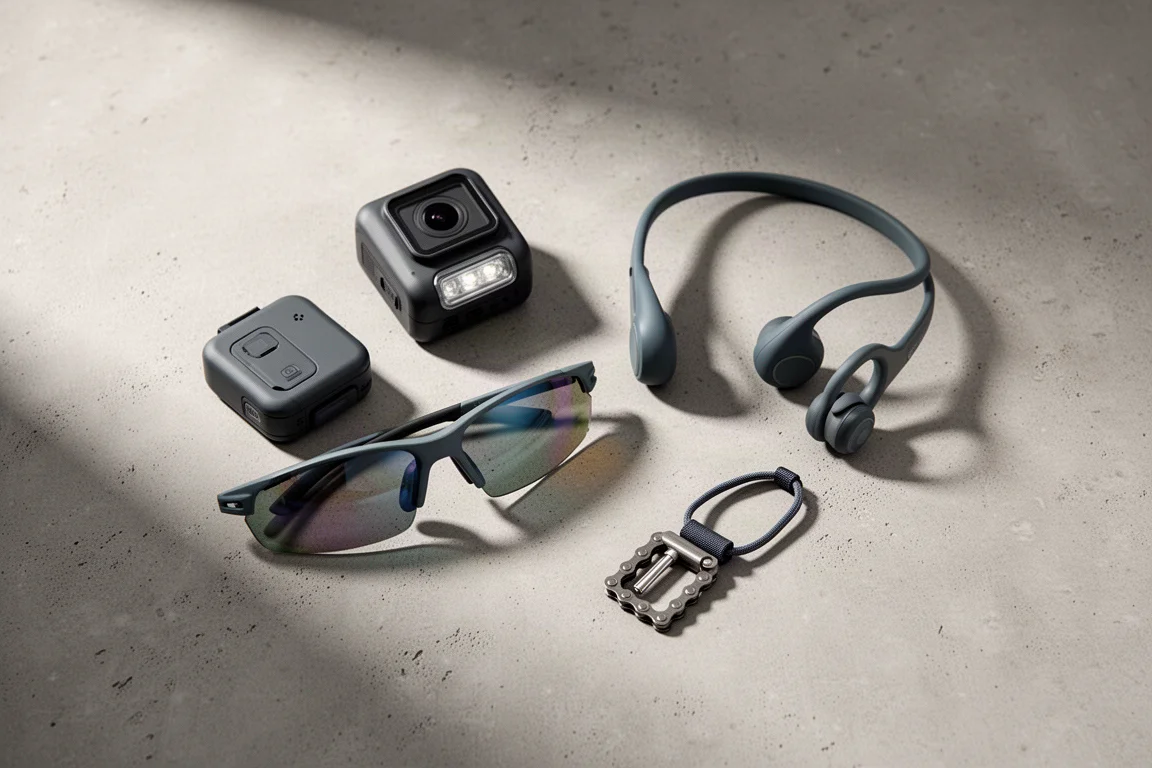
Amazon Cycling Accessories Worth Buying: Five Practical Picks
A basket of low-cost cycling accessories judged on real-world use, from a dash cam style camera and light combo to bone conduction headphones and one tool best left on the shelf.
Cycling Accessories
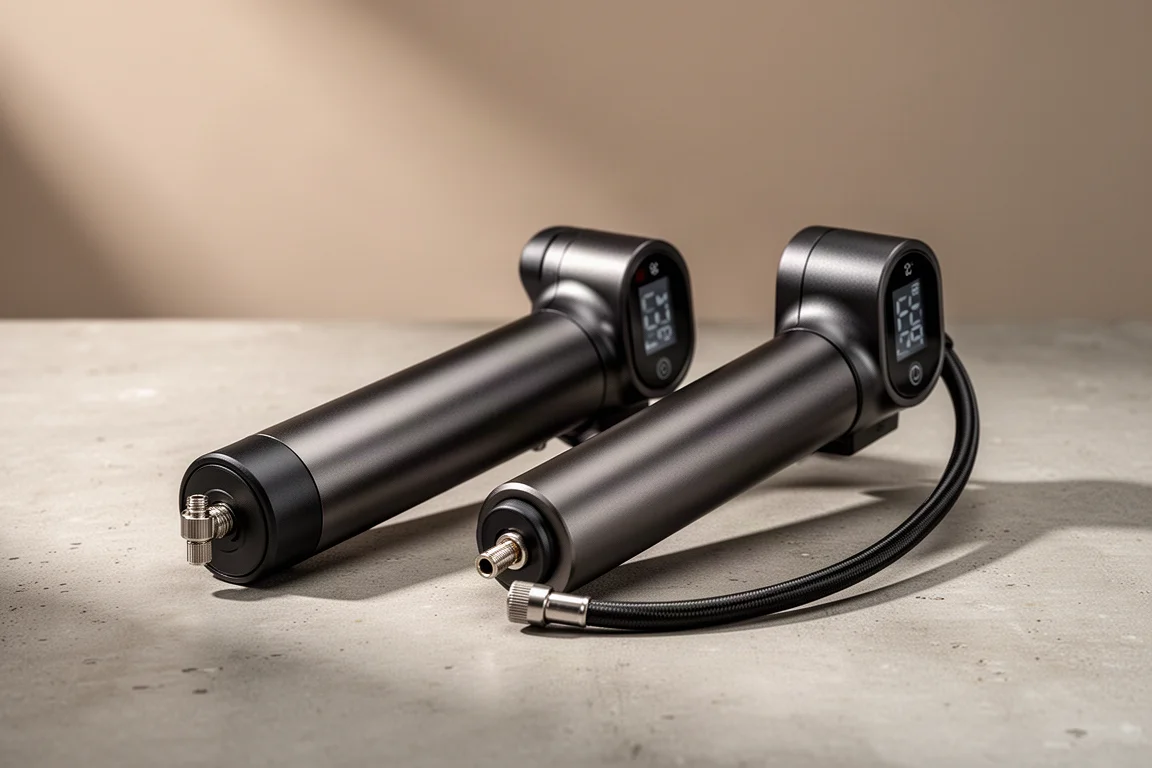
Electric Bike Pumps Compared: AS2 Pro Tiny Pump vs AS2 Pro Max
A practical look at two battery-powered bike pumps: what they do well, where they fall short, and which one suits which kind of rider.
Cycling Accessories
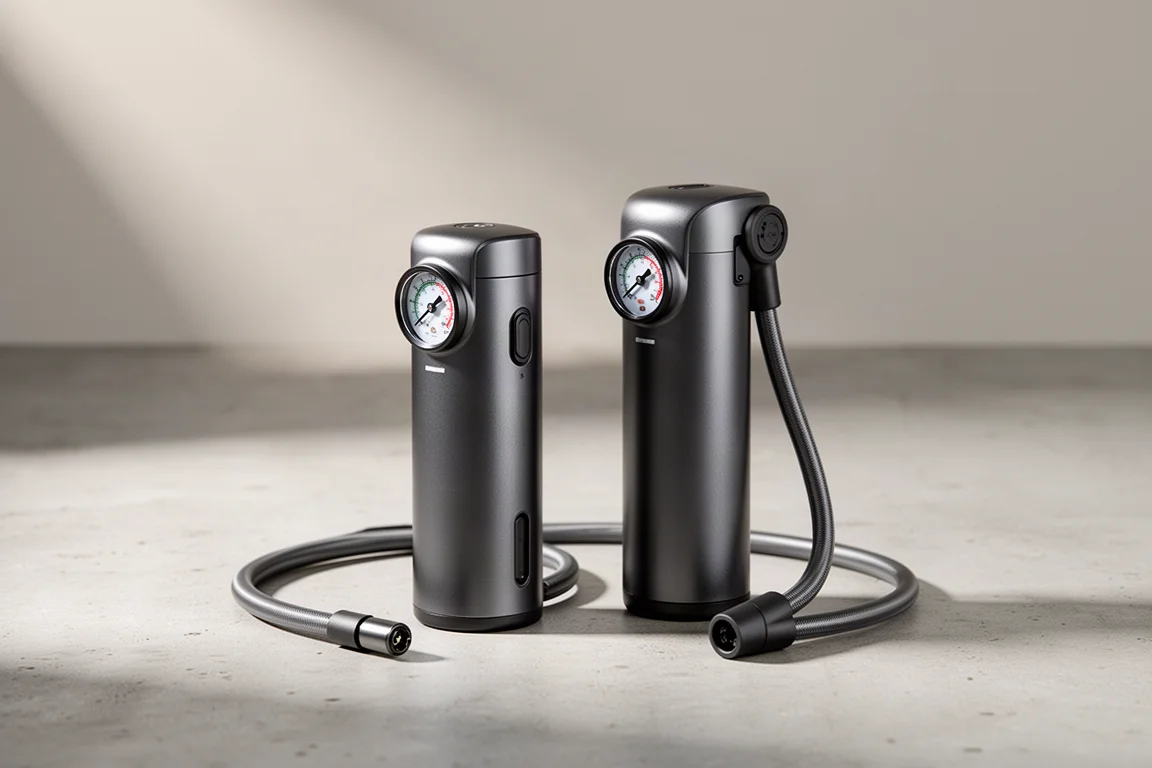
AS2 Pro Tiny Pump vs AS2 Pro Max: Two Electric Pumps Tested Over Six Months
A practical comparison of the AS2 Pro Tiny Pump and the AS2 Pro Max after six months of real riding, covering pressure control, runtime, noise, and what they cannot do.