Cycling Accessories
Electric Bike Pumps Compared: AS2 Pro Tiny Pump vs AS2 Pro Max
A practical look at two battery-powered bike pumps: what they do well, where they fall short, and which one suits which kind of rider.
Introduction
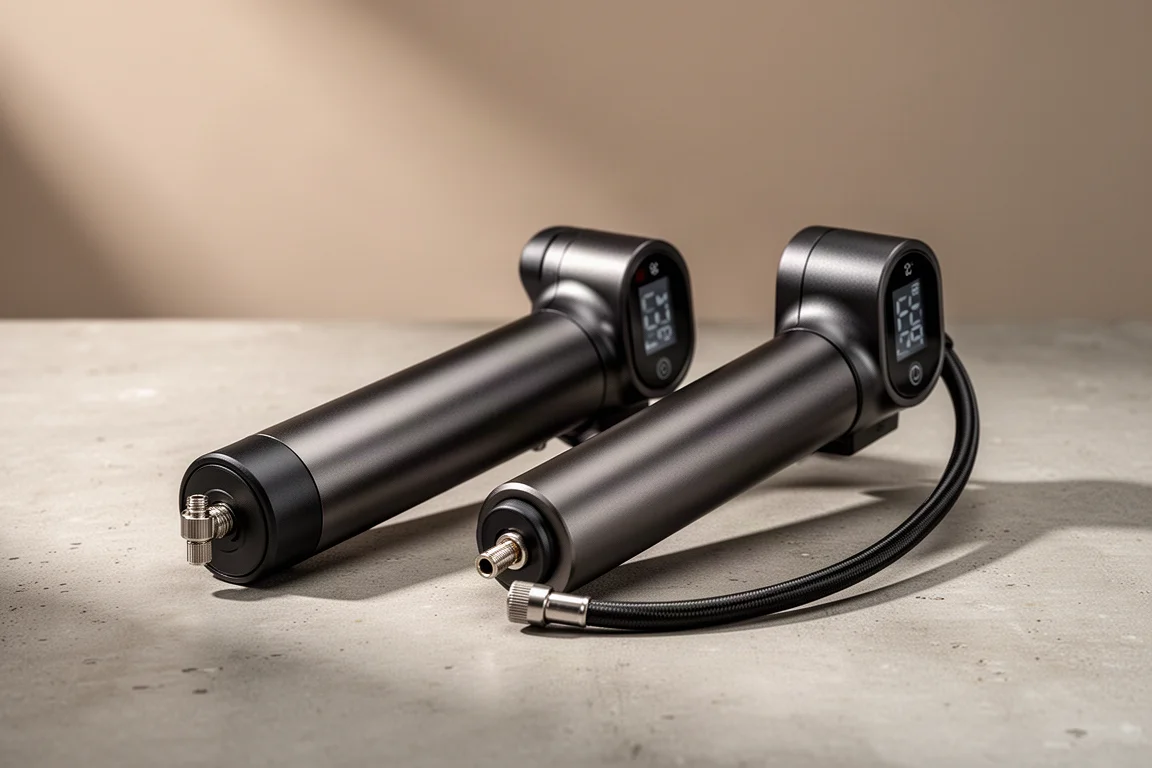
Battery-powered pumps have quietly become serious cycling kit. The AS2 Pro range covers two of the most common sizes: the AS2 Pro Tiny Pump at $109 and the AS2 Pro Max at $129. Both are handheld, both inflate at the press of a button, and both sit somewhere between a manual mini pump and a workshop track pump.
The appeal is straightforward. A manual mini pump never runs out of battery, but it is slow, tiring on the arms, and it leaves you guessing at pressure. An electric pump is quicker, easier, and on the models with a gauge it lets you set an exact target. The trade-offs are real too: there is a battery inside, it is not replaceable, and the pump is not waterproof.
This guide looks at what each model does well, what it cannot do, and which one makes more sense depending on how you ride.
What to Look For in an Electric Bike Pump
Four things matter most.
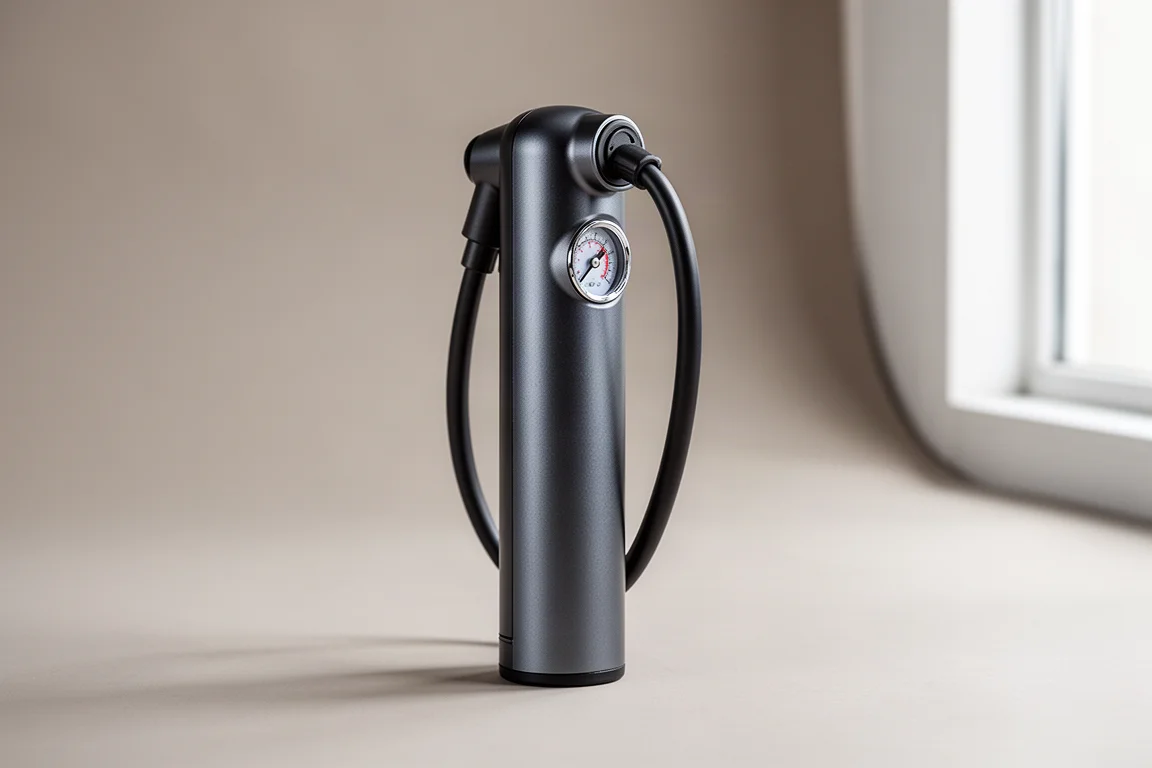
Pressure gauge. This is the feature that changes how the pump feels in use. With a mini pump, you finish a roadside repair with no real idea whether the tyre is at 40, 50 or 60 PSI. With a gauge, you dial in a number, for example 58 PSI, attach the pump and let it work. Versions of these pumps without a gauge cost less, but the gauge is a large part of the value.
Runtime and charging. Batteries are built in and cannot be swapped, so the practical questions are how many inflations a charge delivers and whether the pump holds its charge between rides.
Portability. Size and weight decide whether a pump lives in a saddle bag, a jersey pocket, a down tube or a travel case.
Weather protection. None of these pumps are waterproof, so the ability to stash one inside a plastic bag or a sealed compartment matters more than it sounds.
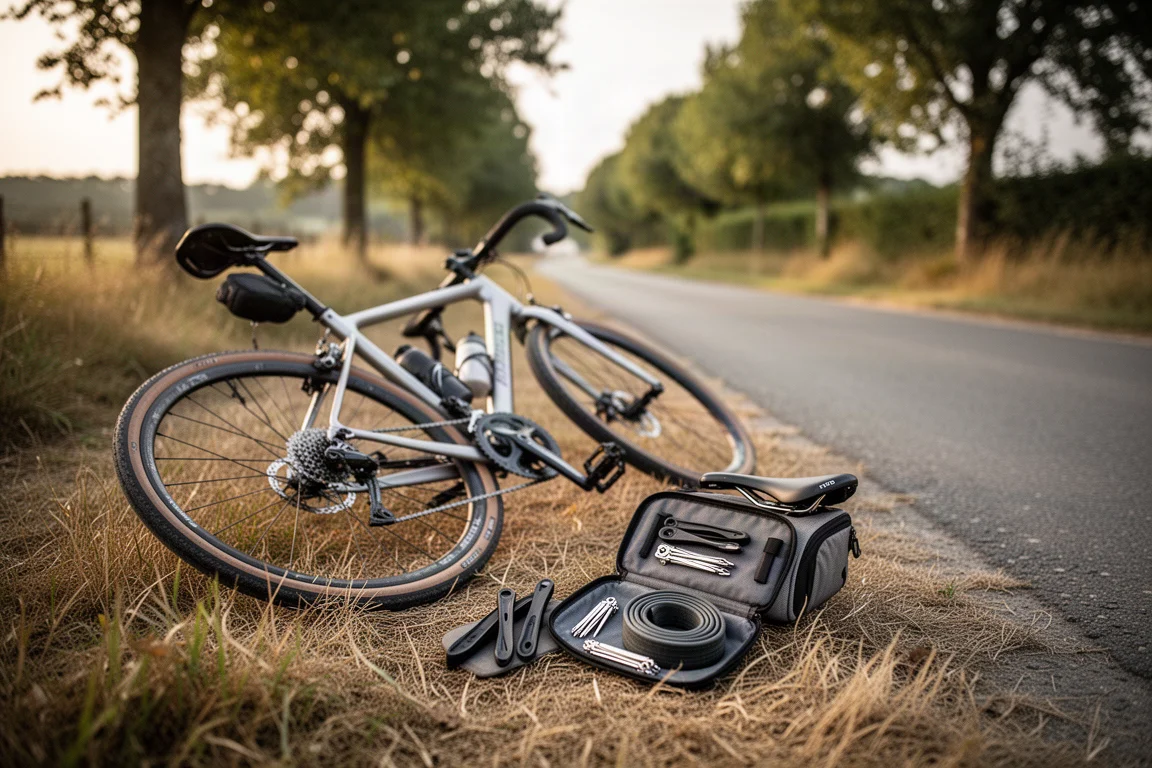
In use, the process is simple: push the head onto the valve, press the button and hold it there. There is no arm ache afterwards, and for most riders it is faster than working a mini pump by hand. The pump is noticeably noisy while running, which is the one part of the experience that takes getting used to.
AS2 Pro Tiny Pump: Compact Enough for a Saddle Bag
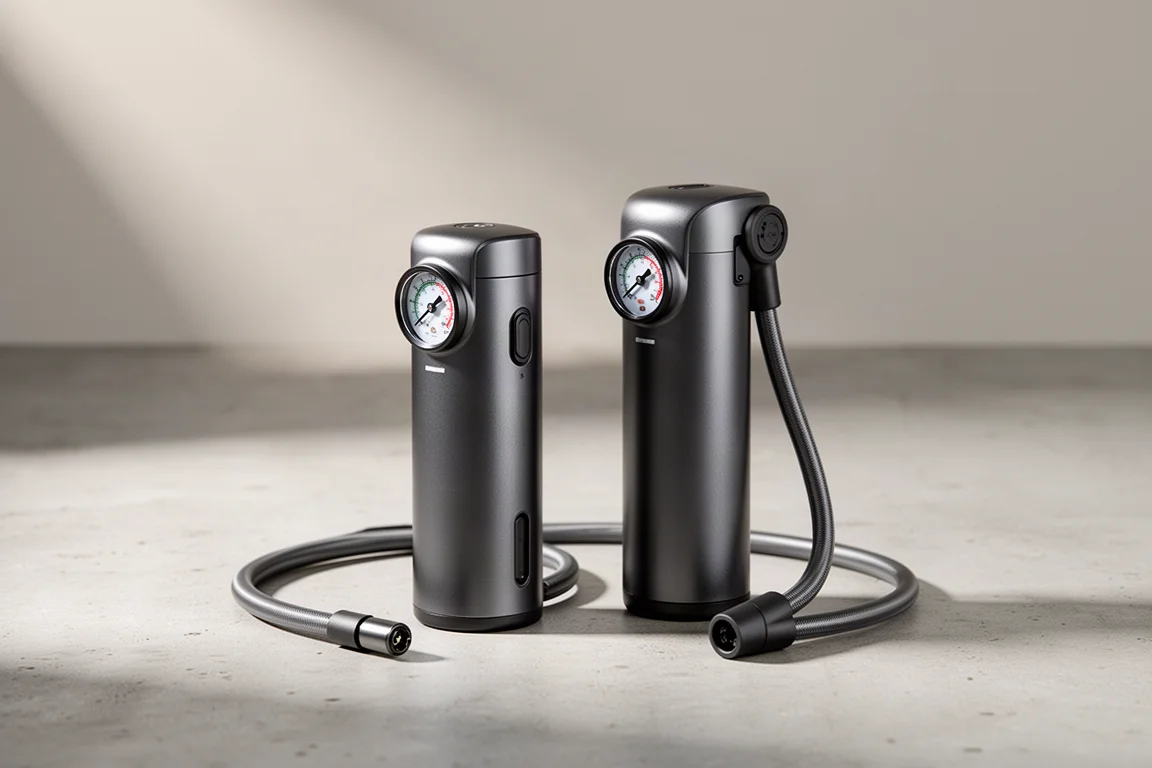
The Tiny Pump is the smaller of the two at $109, and its size is the point. It fits inside a saddle bag, sits in a down tube, and disappears into bike packing luggage. It carries the pressure gauge on the back, so you can set a target pressure and inflate to it rather than guessing.
The manufacturer claims one charge will fill three 28 mm wide tyres from zero to 80 PSI. In practice, many punctures do not start from zero: if you plug or patch the hole before the air escapes, you may only need to go from around 20 PSI back up to your riding pressure, which stretches the runtime further. Lower target pressures, common on wider gravel and mountain bike tyres, help as well.
A short hose extender is included. It is worth taking care with plastic valves on TPU inner tubes, where heat from the pump head could be a problem; metal valves connect without issue.
AS2 Pro Max: More Capacity for Travel and Home Use
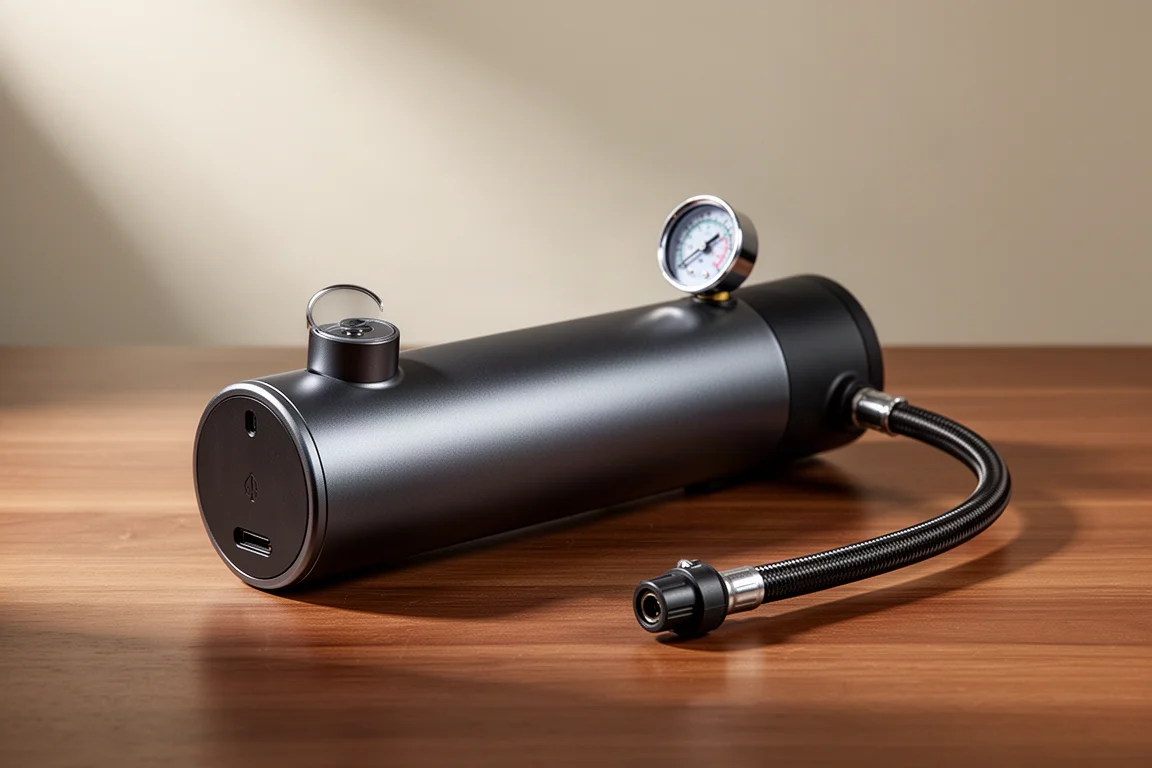
The AS2 Pro Max is the larger model at $129 and the one to choose when runtime matters more than pack size. The manufacturer claims a single charge will fill the same 28 mm tyre ten times from zero to 80 PSI, which puts it in a different category of usefulness.
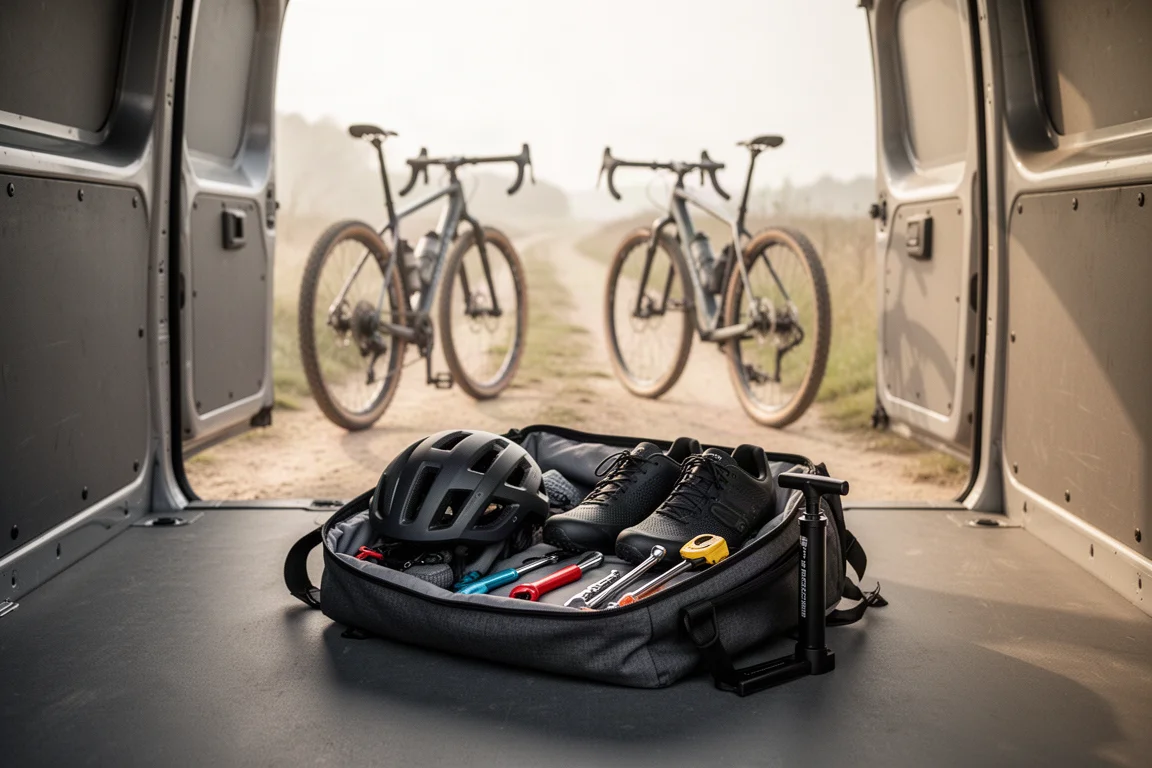
That extra capacity makes it a practical stand-in for a track pump. It works well in a kit bag in the back of a car or van, in a bike bag when travelling, and at home in a workshop where a floor pump would otherwise take up space. It is heavier and bulkier than the Tiny Pump, so it is less appealing as permanent on-bike luggage.
Battery Life, Charging, and Runtime
Both pumps run on built-in batteries that cannot be replaced. Charging is a top-up routine rather than a daily task: use the pump for a roadside repair, recharge it at home, and it can then sit for months without losing meaningful charge. That is the behaviour that matters most, because the failure case people worry about is a flat pump in the middle of nowhere.
Runtime in real use is comfortable. One or two punctures on a ride are well within range, and if you are fixing three, four or five flats in a single outing, you will usually run out of tubes, plugs or patches before the battery becomes the limiting factor. Judged against a single CO2 cartridge, which delivers one inflation and then goes in the bin, a charged electric pump clearly offers more.
The battery itself is worth a moment’s thought. Built-in, non-replaceable cells raise questions about waste and recycling, and there is no universal answer. If that matters to you, it is a legitimate reason to weigh the alternatives.
Noise, Heat, and Weather Protection
The pump is loud. It is the one downside that every rider notices immediately, and there is no way around it: moving air that quickly is noisy.
During extended use the body warms up noticeably. A silicone sleeve is available for these pumps, but it adds bulk and weight, and many riders leave it at home. Handling the pump with care after a long inflation run is enough.
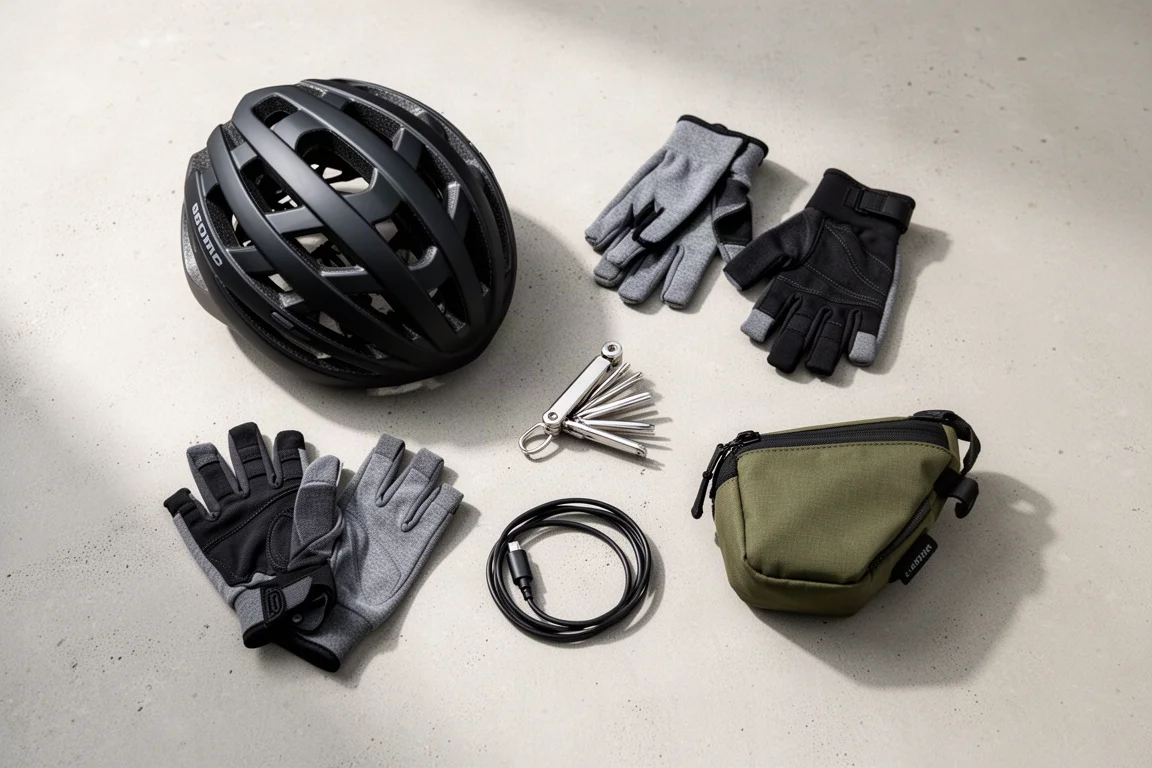
Water is a bigger issue. Neither model is waterproof, so the sensible approach is to keep the pump inside a plastic bag or a fully sealed compartment in a saddle bag, kit bag or bike bag. Protected that way, it handles rain, mud and dust without drama.
What These Pumps Cannot Do
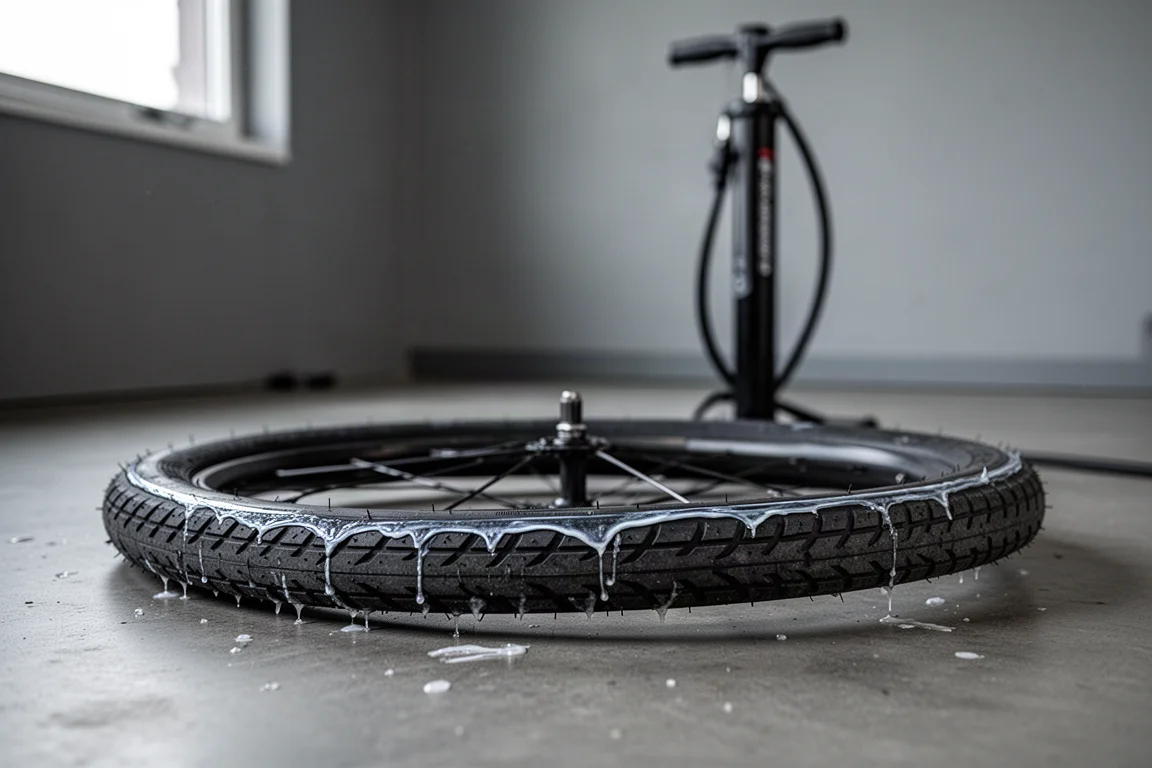
Seating a new tubeless tyre is not part of the job. These pumps cannot move air fast enough, or in large enough volume, to push a tubeless bead onto a rim, and removing the valve core does not change the outcome. A tubeless track pump is still needed for that first inflation.
That limitation is worth knowing before buying, because it defines the boundary of what an electric pump replaces. It is excellent for topping up a tyre that is already seated, and for repairing punctures on the road. It is not a substitute for the workshop tool that inflates a fresh tubeless setup.
Price and Value
At $109 and $129, these pumps are an investment rather than an impulse buy. There are cheaper electric pumps on the market, versions of these models without a pressure gauge cost less, and there are premium options that cost considerably more. A good manual mini pump remains the least expensive way to carry inflation.
The case for paying more rests on convenience and consistency. The pump is quicker than working a mini pump by hand, it removes the guesswork about pressure, and it does not leave your arms sore. Whether that is worth the money depends on how often you ride, how far from home, and how much you value arriving at the correct pressure without thinking about it.
Buying Advice: Which AS2 Pro Pump Suits Your Riding
Choose the AS2 Pro Tiny Pump if the pump needs to live on the bike. It is the better fit for a saddle bag, a down tube or a jersey pocket, and it covers the typical one or two punctures of a normal ride with room to spare.
Choose the AS2 Pro Max if you want a pump that stays off the bike: in a kit bag, in a van, in a bike bag for travel, or on a workshop bench as a track pump replacement. The larger battery turns a roadside tool into something you can rely on for repeated inflations without recharging.
Either way, pick a version with the pressure gauge. It is the feature that turns a clever gadget into a genuinely useful piece of kit, and it is the single biggest practical advantage over a manual mini pump.
Conclusion
Electric pumps have earned their place. The AS2 Pro Tiny Pump and the AS2 Pro Max are easy to use, quick to deploy, dependable in storage, and they take the guesswork out of tyre pressure. They are not waterproof, they are noisy, they cannot seat a tubeless tyre, and their batteries are not replaceable, so they are not a straight swap for every pump in the workshop. For puncture repairs and accurate top-ups, though, they are a genuinely better experience than the mini pump they replace.
Further reading
Related Reviews
Cycling Accessories
7 Inexpensive Everyday Products That Are Brilliant for Cyclists
Seven cheap household products that solve real problems for cyclists, from portable bike washing and dry shoes to clean bottles and protected paintwork.
Cycling Accessories
Amazon Cycling Accessories Worth Buying: Five Practical Picks
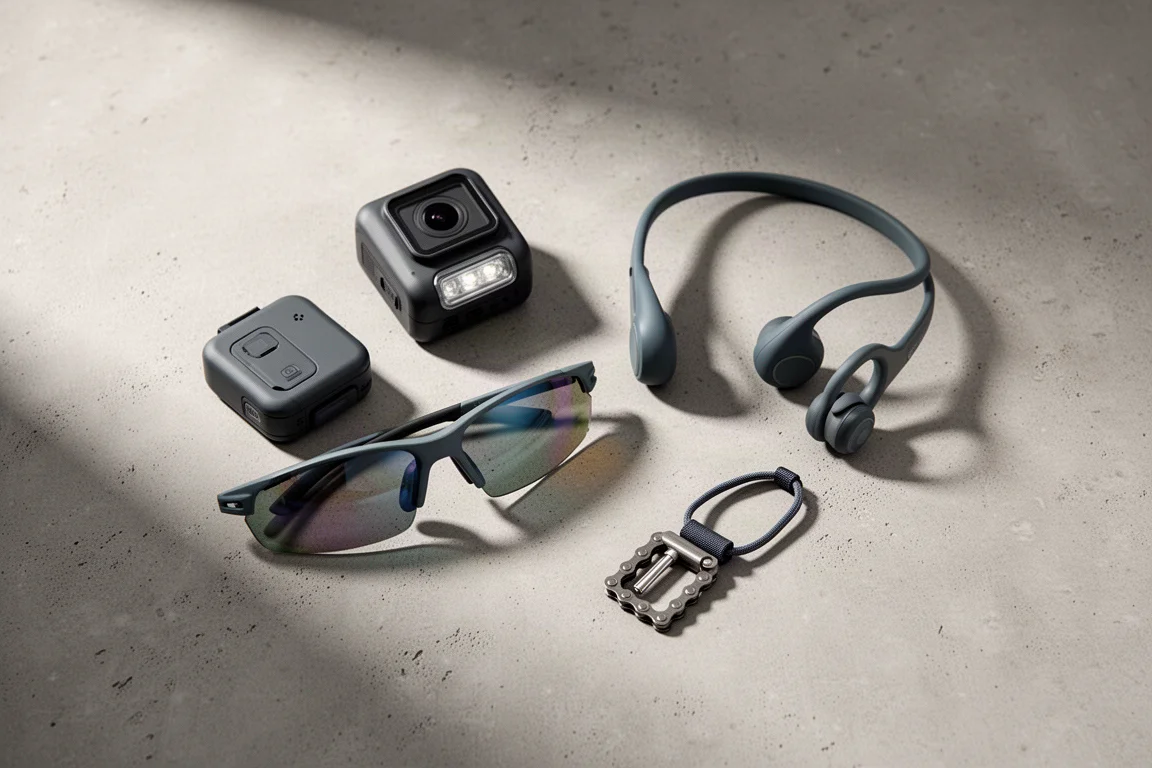
A basket of low-cost cycling accessories judged on real-world use, from a dash cam style camera and light combo to bone conduction headphones and one tool best left on the shelf.
Cycling Accessories
AS2 Pro Tiny Pump vs AS2 Pro Max: Two Electric Pumps Tested Over Six Months
A practical comparison of the AS2 Pro Tiny Pump and the AS2 Pro Max after six months of real riding, covering pressure control, runtime, noise, and what they cannot do.