Satellite Communicators
iPhone 14 vs iPhone 14 Pro vs Garmin inReach Mini 2: Which Satellite Communicator Fits Your Pack?
A practical comparison of satellite emergency communication on the iPhone 14 and iPhone 14 Pro against the purpose-built Garmin inReach Mini 2, covering coverage, speed, ruggedness, and long-term cost.
Introduction
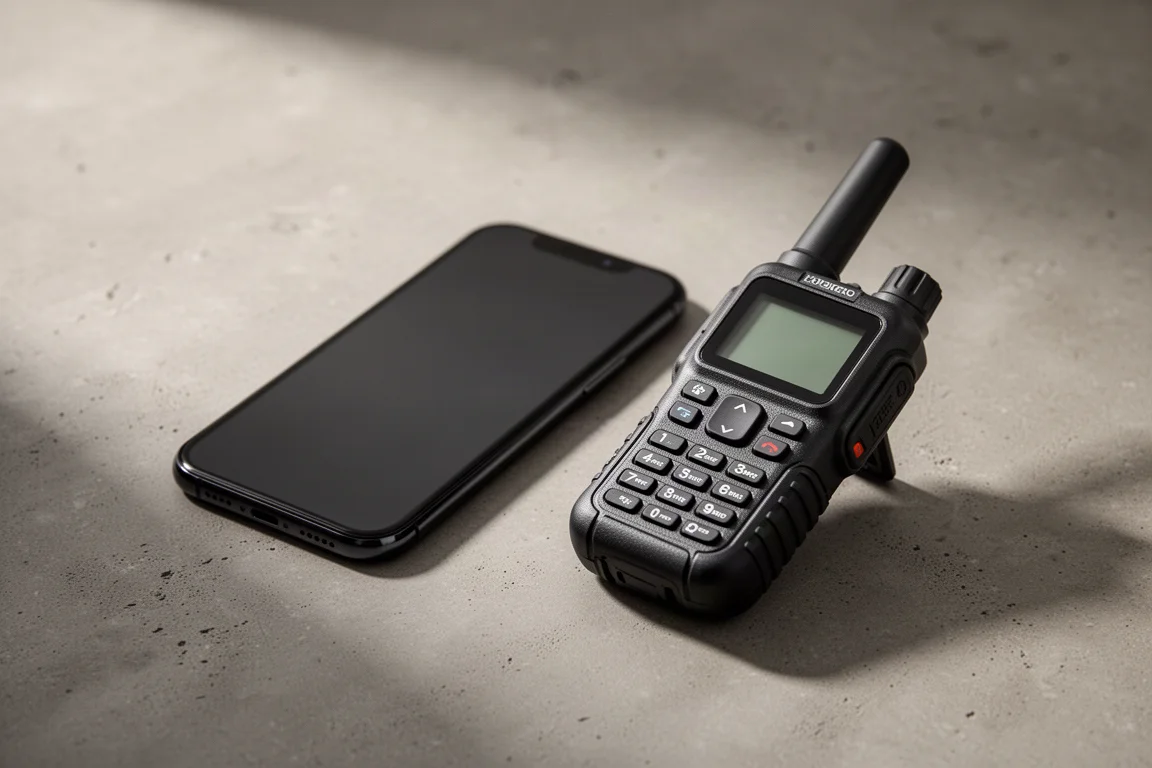
Satellite messaging has traditionally meant carrying a separate device, registering it, and paying a subscription before you ever reach the trailhead. The iPhone 14 and iPhone 14 Pro changed part of that equation by adding satellite-based Emergency SOS and satellite location sharing to a phone many people already carry. Garmin’s inReach Mini 2 takes the opposite approach: a purpose-built, rugged communicator with worldwide coverage and a subscription model from the first day.
Both routes can get help to you when there is no cell signal. They differ in where they work, how they are triggered, how quickly messages move, and what they cost over time. This guide breaks down those differences so you can decide which one belongs in your pack.
What to Look For in a Satellite Communicator
Coverage footprint matters first. The satellite service on the iPhone 14 and iPhone 14 Pro operates in the United States and Canada and in some central European countries, with a stated northern limit of 62 degrees north for the United States and Canada. The inReach Mini 2 works worldwide through the Iridium network, and it has been used successfully in places as remote as Antarctica and the open ocean.
Ruggedness and battery life come next. The inReach is waterproof, dustproof, and built to be dropped, sat on, and soaked. Its tactile buttons click under your fingers so you can operate it with gloves in rain or snow, and its battery is designed to last a number of days. A phone’s battery is designed to last about a day, and satellite transmission draws power at a rate comparable to the heaviest continuous use a phone can handle.
How help gets triggered is the third factor. The iPhone can start an emergency call through crash detection, through fall detection on a paired Apple Watch, or by holding two buttons for five seconds, which means the touchscreen is not required. The inReach has a dedicated, physical SOS control.

Two-way communication and cost round out the picture. On the iPhone, two-way texting is limited to emergency SOS, and emergency contacts receive a transcript of what was sent but cannot reply. The inReach supports non-emergency two-way texting, weather reports, and automatic tracking on a paid plan. Apple’s satellite service is free for two years after activation, while the inReach requires a subscription from the start.
Apple iPhone 14: Emergency SOS in the Phone You Carry
Dial your local emergency number and the phone works out how to connect. With a carrier signal, the call goes through normally. Without one, the phone may still reach emergency services through a reciprocal agreement with another carrier, and if there is no signal at all, an SOS indicator appears at the top of the screen to show that an emergency call is still possible. When satellite service is available, a satellite icon appears instead, and the phone offers to try a satellite connection.
The emergency interface was designed with 911 call centers and emergency responders so that the questions asked are the ones that matter most. Text and buttons are large and the flow is deliberately simple. Medical ID details, allergies, and conditions stored in the Apple Health app are included, along with your emergency contacts. Latitude, longitude, elevation, and battery level are sent as well, so responders know roughly how long communication can continue. Messages are compressed with a dedicated algorithm so they transmit as quickly as possible.
The phone uses its onboard GPS and motion sensors to work out where it is pointing, then tells you which direction to aim while a progress bar tracks the transmission. It also knows when no satellite is overhead and will tell you to wait a few minutes. A demo mode in Settings lets you rehearse the whole sequence before you need it.
Once a message reaches the satellite, it is relayed to a ground station and forwarded to a public safety answering point. Some centers accept the text automatically, while others are handled by Apple’s Emergency Response Center, which relays the message to a 911 center. From there, a two-way text conversation with responders begins. Emergency contacts receive a copy of the communication and can follow what is happening, but they cannot text you back.
Automatic triggers add a further layer. Crash detection can initiate a satellite emergency call on its own, and a paired Apple Watch with fall detection can start an emergency call through the phone. Holding the two side buttons for five seconds opens the emergency screen, so a cracked or unresponsive display is not necessarily a barrier.
Apple iPhone 14 Pro: The Same Satellite Safety Net
The satellite capabilities are identical across the two models. Emergency SOS via satellite, satellite location sharing through Find My, and crash detection work on the iPhone 14 Pro in the same way as on the iPhone 14, so the decision between them is about the phone itself rather than the safety feature.
Find My location sharing over satellite follows a different set of rules from an emergency call. Before you leave cellular coverage, you need to invite the people you want to share with, and they have to accept, because new contacts cannot be added once you are out of range. When cellular signal drops, the option to share your location via satellite becomes available, and the phone then runs through the same pointing and progress sequence used for an emergency message.
Recipients do not receive a push notification when you share over satellite; they have to open the map and look. Only your location is sent, with no accompanying message, and there is no two-way texting with contacts outside an emergency. For a long-distance hiker, a fixed daily check-in time still gives family a dependable way to follow progress.
Garmin inReach Mini 2: A Purpose-Built Backcountry Communicator
The inReach Mini 2 is designed for the outdoors first. It is waterproof, dustproof, and built to survive being dropped, sat on, or soaked. Its buttons give tactile feedback, so you can feel each press through gloves in rain or snow, and its battery is designed to run for days rather than about a day.
Coverage is global. The device uses the Iridium satellite network, which includes more than 70 satellites, and it can be used from the United States to Africa, South America, or Asia. Satellite communicators of this type are illegal in a small number of places, such as Afghanistan and Syria, but otherwise the device simply works wherever you travel.
Emergencies are handled by the International Emergency Response Coordination Center, an organization Garmin acquired, which manages backcountry emergencies worldwide and can coordinate with the relevant land manager, whether that is a national park, a forest service, or a military jurisdiction. InReach devices have been credited with more than 10,000 rescues.
Beyond emergencies, the inReach supports two-way texting on a paid plan using either preset or custom messages. It can also deliver weather reports by text and share your location automatically to an online map with a breadcrumb trail of where you have been, either password-protected or public. Some inReach models, such as the GPSMAP 66i, include full mapping, while the Mini’s navigation is more limited but still usable if responders ask you to move to a point where a helicopter can land.
The trade-off is cost. The device itself runs from a couple of hundred dollars to several hundred, and a subscription is required before you head into the field. The most basic annual plan costs under $150 and includes worldwide SOS and unlimited preset messages, with activation fees and personal or professional tiers available if you need more.
How the Two Systems Compare in Real Conditions
Message speed is where the iPhone has a clear edge in practice. In roughly nine out of ten attempts, satellite messages went through in about 20 to 40 seconds, with occasional outliers stretching to five minutes. The inReach is generally closer to five minutes, sometimes a couple of minutes, and messages can fail entirely even from a high peak under clear skies.
Terrain affects both systems. In a steep canyon outside Las Vegas, the iPhone transmitted relatively quickly while the inReach took about five minutes. Both got the message out, which was not expected in that setting.

The iPhone also transmits without being held or aimed, which matters if the display is cracked or you cannot interact with it. Pointing the phone at the satellite gives the best result, but leaving it to send on its own also works.
The two services rely on different networks. Globalstar operates 26 satellites for the iPhone service, while Iridium operates more than 70 for the inReach, although satellite count alone does not determine performance. The practical difference is feedback: the iPhone shows exactly which direction to aim and a progress bar as the message goes out, while the inReach offers only a small sending indicator.
Coverage, Cost, and Subscriptions
The iPhone service is currently available in the United States, Canada, and some central European countries, with more regions expected over time. The stated northern limit for the United States and Canada is 62 degrees north, although at least one emergency activation outside that boundary reportedly worked. If you buy the phone in one supported country, you can use the satellite service in the others that support it, regardless of which carrier you use.
Cost is the biggest structural difference. Satellite features on the iPhone 14 and iPhone 14 Pro are free for two years after activation, and Apple has not said what happens after that period. Emergency SOS is likely to remain available, while paid tiers for non-emergency texting, weather, and regular check-ins would be a natural next step. Carriers have also announced plans to bring satellite communication to standard phones without additional hardware, so the landscape will keep shifting.
The inReach requires a subscription from day one, but that subscription buys worldwide coverage and services the iPhone does not currently offer, including non-emergency texting and automatic tracking. The most basic plan costs under $150 a year and includes worldwide SOS and unlimited preset messages.
Rescue teams generally prefer that people carry a way to communicate at all. A two-way conversation lets them understand the situation, the location, and the conditions before they deploy, and the alternative, a hiker who simply never returns, is far harder to resolve. If you head out, share your plan and a cut-off time with someone at home, and do not wait 24 hours to call the sheriff if a hiker is overdue.
Which Option Fits Your Trips?
If you are a casual or fair-weather hiker who already navigates and takes photos with a phone, the iPhone 14 makes the most sense. You keep the device you know, and you gain satellite Emergency SOS, crash detection, and satellite location sharing without adding hardware or a subscription.

Thru-hikers who treat a phone as a primary device, with navigation apps, reading, and podcasts, also get a straightforward upgrade path. Adding satellite communication to something already in the pack removes the need for a second device in many cases.
If you want the most dependable backcountry communicator, travel outside the iPhone’s supported regions, or want two-way non-emergency messaging, the inReach Mini 2 is the stronger tool. It is rugged, it works worldwide, and its battery lasts for days. A personal locator beacon is another option worth knowing about: it sends a one-way distress signal, carries no subscription, and needs a battery change roughly every five to ten years, though it cannot hold a two-way conversation.
Carrying redundancy is also reasonable. An iPhone 14 plus an inReach provides two satellite communicators, while an iPhone 14 plus a personal locator beacon adds a backup layer without ongoing fees. Whichever combination you choose, the goal is the same: a reliable way to call for help when there is no cell signal.
Conclusion
The iPhone 14 and iPhone 14 Pro bring satellite emergency communication to a device that is already in your pocket, with fast message delivery, a simple interface, and a two-year window of free service. The inReach Mini 2 answers a different question: what is the most dependable tool for the backcountry, anywhere in the world, with messaging and tracking that go well beyond emergencies. For casual trips close to home, the phone is often enough. For remote or international travel, the dedicated device remains the safer bet.
Further reading
Related Reviews
Satellite Communicators
Garmin inReach Messenger vs inReach Mini 2: Which Satellite Communicator Belongs in Your Pack
A practical comparison of two compact Garmin satellite communicators, covering navigation, screen size, battery life, reverse charging and price.
Satellite Communicators
Garmin inReach Messenger vs Zoleo: Which Satellite Communicator Is Right for You?
A practical comparison of two satellite communicators, covering price, battery life, messaging, apps, satellite coverage, and standalone SOS use.
Satellite Communicators
Garmin inReach Mini 2 vs inReach Mini: Is the Newer Satellite Communicator Worth It?
A practical comparison of the Garmin inReach Mini 2 and the original inReach Mini, covering battery life, USB-C charging, navigation, app support, and upgrade advice.