Satellite Communicators
Garmin inReach Messenger vs Zoleo: Which Satellite Communicator Is Right for You?
A practical comparison of two satellite communicators, covering price, battery life, messaging, apps, satellite coverage, and standalone SOS use.
Introduction
Two satellite communicators come up again and again for backcountry messaging and emergency SOS: the Garmin inReach Messenger and the Zoleo. Zoleo earned its following by making a clean, easy to use device that many outdoor users adopted as an alternative to the inReach line. Garmin’s inReach Messenger and its companion app are a direct response to the things Zoleo did better.
The result is a genuinely close call. The inReach Messenger is simpler and cleaner than earlier inReach hardware and adds features Zoleo does not offer, but Zoleo still leads on the app you will open every day. Which one makes sense depends on how you use a communicator, how long you activate it each year, and whether you are willing to depend on your phone in an emergency.
What Sets These Two Satellite Communicators Apart
Both devices cover the same basics. They send and receive messages over satellite, share your position, and trigger an SOS that routes to emergency responders. The real differences sit in how you operate them and what they cost over time.

The split is essentially hardware against software. The inReach Messenger carries a small screen, a larger battery, USB-C charging, and deeper integration with Garmin watches. Zoleo keeps its hardware minimal, with no screen at all, and puts its effort into an app that is noticeably cleaner and more intuitive.
Garmin inReach Messenger: Compact, Capable, and Long Lasting
The inReach Messenger costs $300 US. That is less than the inReach Mini 2 at $400, but still about 50 percent more than the Zoleo at $200.
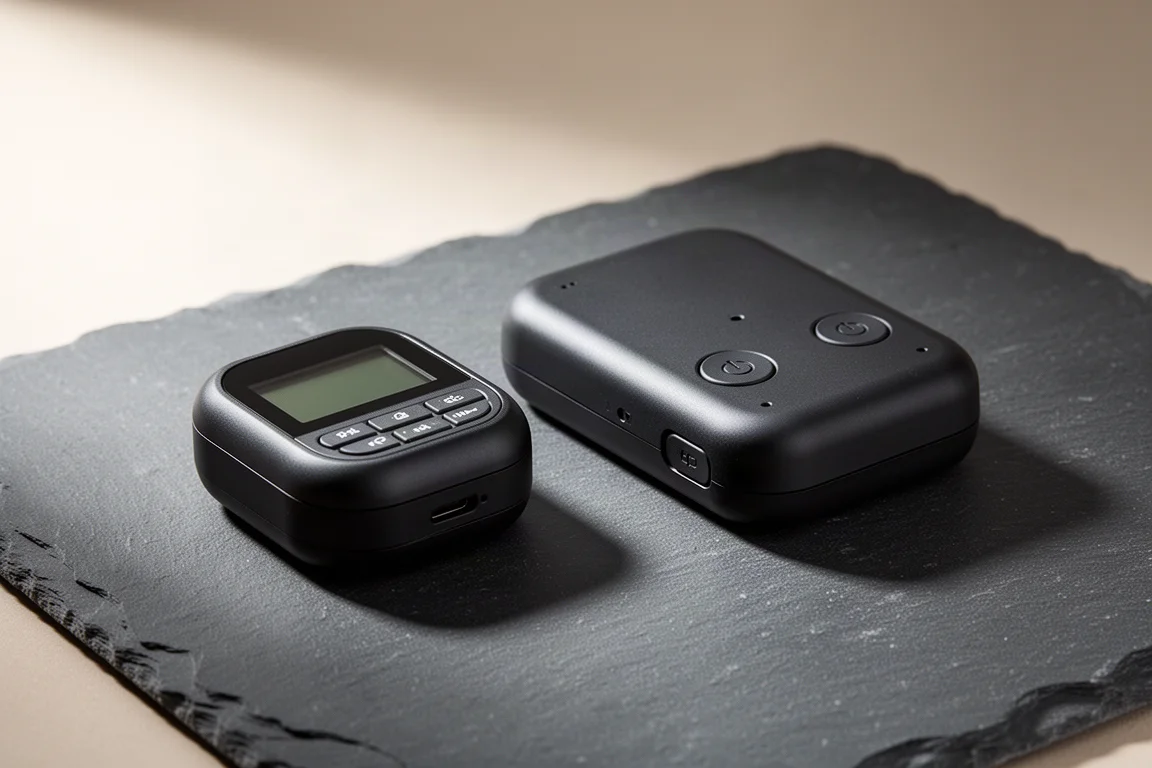
The hardware is the smaller of the two. It weighs 114 grams against Zoleo’s 150 grams, and it is sleeker despite carrying a larger battery: 1,800 mAh compared with Zoleo’s 1,430 mAh. That translates into real world endurance of roughly 12 or more days, where Zoleo runs about six to seven days.
Charging is where the inReach Messenger pulls further ahead. It uses USB-C, which matches most current devices, and it charges faster than the micro USB equipped Zoleo. USB-C also enables reverse charging: if your phone is dead or nearly dead, you can plug the phone into the Garmin, switch on reverse charging, and draw power from the communicator’s battery. The feature only works when the inReach Messenger is above 25 percent charge, and it runs for about 20 minutes before shutting off, but in an emergency that window can matter.
The small screen is the other major difference. It is not a pleasant typing surface, but you can read messages, send messages, check the weather, and use TrackBack to follow a breadcrumb trail back along the route you came. Paired with a Garmin watch, the device also lets you read messages, send preset messages, and trigger an SOS without pulling anything out of your pocket.
Zoleo: Simple Hardware with a Refined App
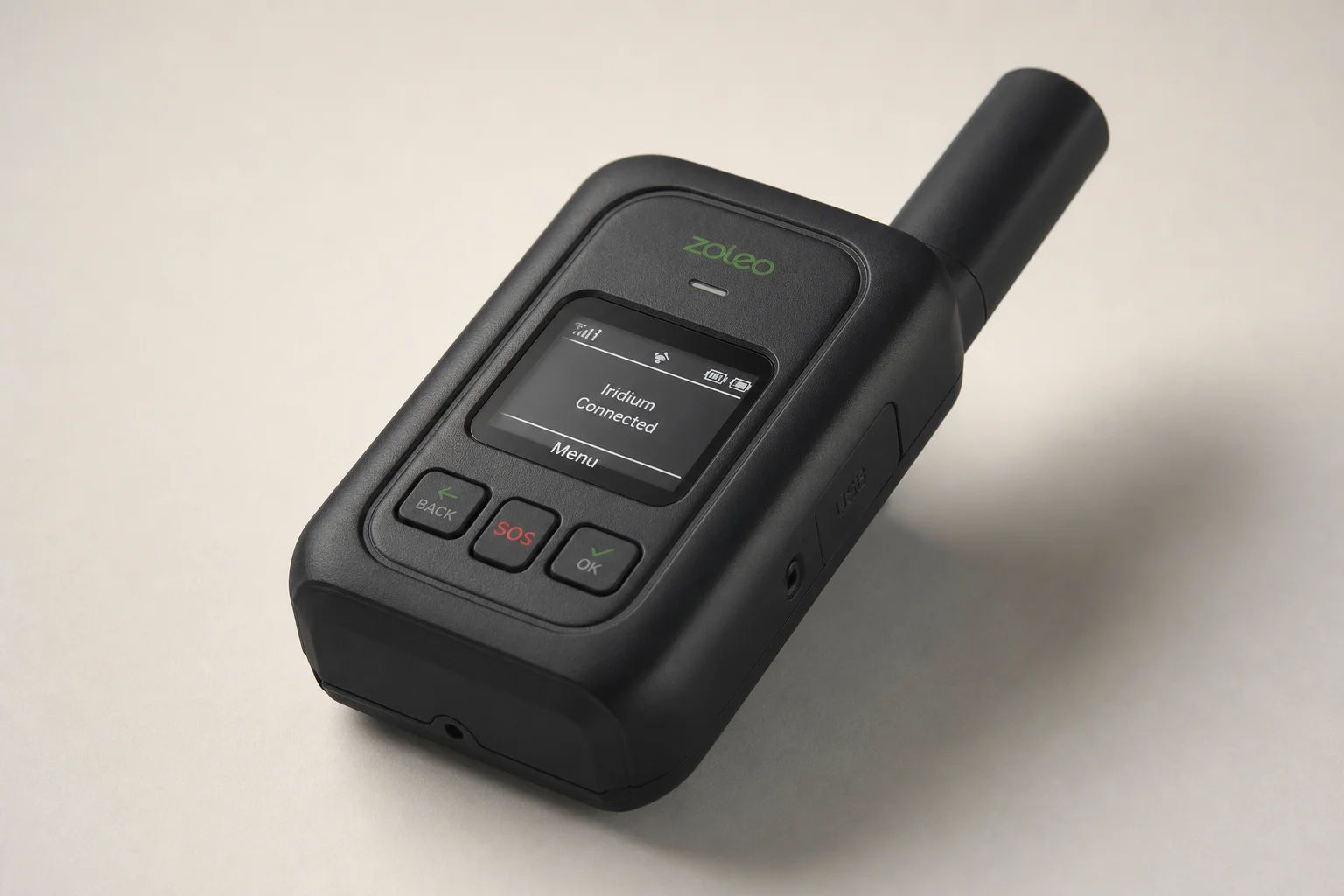
Zoleo costs $200 US, roughly half the price of the inReach Messenger. The device weighs 150 grams, charges over micro USB rather than USB-C, and carries a 1,430 mAh battery that delivers about six to seven days of real world use.
There is no screen. The hardware is limited to a check-in button and an SOS button, and everything else runs through your phone. That design keeps the device simple, and it is also the reason Zoleo’s app matters so much to the overall experience.
Subscription Plans and Real Running Costs
Both devices require a monthly subscription on top of the purchase price.
Plan pricing shifts depending on the tier. On the cheapest plan, the inReach Messenger is less expensive whether you pay annually or month to month. On the middle tiers, Zoleo is cheaper unless you pay annually, in which case the inReach Messenger comes out ahead. On the most expensive tiers with unlimited messaging, the two are roughly a wash.

Activation terms matter just as much. Zoleo requires a minimum three month activation and charges a fee each time you reactivate the device. If you only use a communicator for one or two months a year, that structure works against Zoleo and favors the inReach Messenger.
Messaging and App Experience
Both devices send messages to phone numbers and email addresses, and both offer apps for back and forth conversations with friends and family. Both also choose between Wi-Fi, cellular, and satellite depending on what is available, a capability Zoleo once had exclusively.
Number handling differs. Zoleo gives you a dedicated number that stays the same, so contacts always reach you in the same place. The inReach Messenger uses a number that changes, but once you initiate a conversation the number for that thread stays consistent, so replies keep working.
Presets are another difference. The inReach Messenger includes three preset messages with unlimited sending, so routine check-ins do not consume your monthly message allowance. Zoleo includes unlimited check-ins but only one preset message, which is less versatile. Zoleo has also removed the $6 monthly charge that used to apply to unlimited check-ins and now bundles that into its plans.
The app comparison still favors Zoleo. Its app is cleaner and more intuitive overall. You can see when messages were last checked and manually trigger a message check directly from the messages screen, while the inReach Messenger sends you to the settings page for the same task. SOS also has its own dedicated tab, so there is no confusion about where to go in an emergency.
Garmin has closed much of the gap with the Messenger app, a major improvement over the older Explore app. It is focused on messaging, simpler to navigate, and it adds group messaging when everyone in the conversation uses the Messenger app, which is useful when several groups are out in different parts of the backcountry.
Satellite Coverage, Navigation, and Weather
Both devices run on the Iridium network, which offers strong worldwide coverage. Both send and receive messages reliably across varied conditions, including tree cover, canyons, and from inside a tent. Connection speed depends heavily on conditions and terrain, and neither device has a clear advantage.

Navigation constellations differ slightly. Zoleo connects to GPS and GLONASS. The inReach Messenger connects to GPS, Galileo, QZSS, and BeiDou.
Weather checks are supported on both, but through different platforms. Zoleo uses Aeris weather, while the inReach Messenger uses Dark Sky. In simultaneous checks the forecasts are not dramatically different, and any edge tends to depend on your location. Published forecast accuracy data for 2021 put Dark Sky slightly ahead in New York, while Aeris performed better in Denver.
One small but real difference: Zoleo displays weather in Fahrenheit only. The inReach Messenger lets you choose Fahrenheit or Celsius.
What Search and Rescue Teams Value Most
Both devices trigger an SOS either from a button on the device or through the app. The request routes to the IERCC, which directs it to the most appropriate search and rescue or emergency responders for your location. Both Zoleo and Garmin use that service, and Garmin owns the organization. Once connected, both apps support two-way communication with responders.
The distinction is what happens if your phone is unavailable. The inReach Messenger can display messages from emergency responders and let you reply directly from the device, because it has a screen. Zoleo must be connected to a phone to do the same. Search and rescue teams describe two-way communication as essential for quick and efficient rescues, so losing that channel when a phone dies or breaks is a meaningful risk for some users and a non-issue for others.
Buying Advice: Matching the Device to Your Trips
The inReach Messenger is the stronger choice if you want a device that works on its own. A screen, three unlimited preset messages, roughly 12 or more days of battery life, USB-C with reverse charging, and Garmin watch integration all point the same direction, and its entry-level plan pricing is lower whether you pay monthly or annually. It also suits anyone who activates a subscription for only one or two months a year, since Zoleo’s three month minimum and reactivation fees add up.

Zoleo remains the better pick if the app experience is what you care about most. It costs less upfront, its messaging and SOS screens are cleaner and more intuitive, and the dedicated number keeps your conversations in one place. If you are comfortable keeping a charged phone with you on every trip, that trade-off is reasonable.
If messaging and the app are your priority, Zoleo is the natural fit. If you want a screen, unlimited presets, and cheaper base plans, the inReach Messenger earns the recommendation.
Conclusion
Garmin has closed much of the gap that Zoleo opened. The inReach Messenger is smaller, lighter, longer lasting, and far more capable on its own than a device without a screen can be, and its plan structure is friendlier for short seasonal use.
Zoleo still wins the part you touch most often. Its app is the better messaging experience, and the lower upfront price is real. The decision comes down to whether standalone capability and battery life outweigh app polish and a lower entry price. Both are capable satellite communicators, and either one will get a message out when it matters.
Further reading
Related Reviews
Satellite Communicators
Garmin inReach Messenger vs inReach Mini 2: Which Satellite Communicator Belongs in Your Pack
A practical comparison of two compact Garmin satellite communicators, covering navigation, screen size, battery life, reverse charging and price.
Satellite Communicators
Garmin inReach Mini 2 vs inReach Mini: Is the Newer Satellite Communicator Worth It?
A practical comparison of the Garmin inReach Mini 2 and the original inReach Mini, covering battery life, USB-C charging, navigation, app support, and upgrade advice.
Satellite Communicators
Garmin inReach Mini 2 vs ZOLEO: Which Satellite Communicator Fits Your Trip?
A practical comparison of two satellite SOS communicators covering weight, battery life, charging, on-device messaging, and the subscription costs that matter over the life of the device.