Satellite Communicators
Garmin inReach Messenger vs inReach Mini 2: Which Satellite Communicator Belongs in Your Pack
A practical comparison of two compact Garmin satellite communicators, covering navigation, screen size, battery life, reverse charging and price.
Introduction
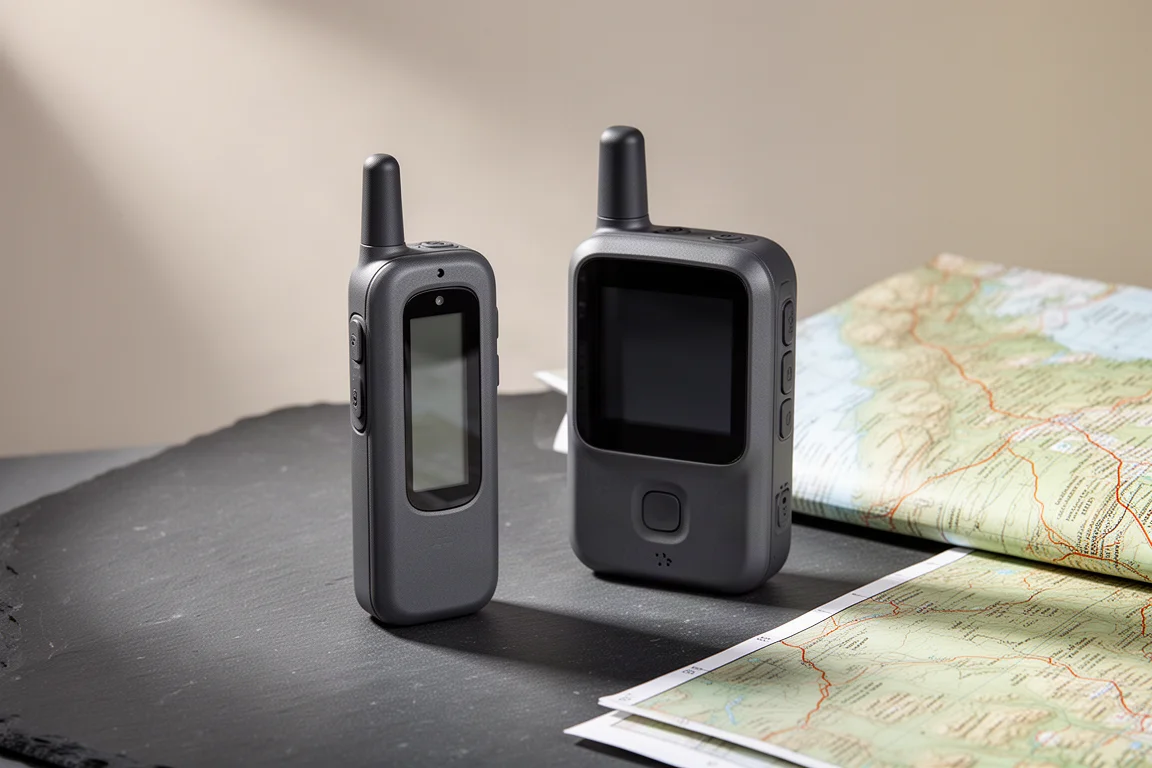
A satellite communicator is the one piece of backcountry gear that earns its place by being small enough to forget about until you need it. Garmin builds several models, and two of them suit most outdoor adventures thanks to their lightweight, compact builds: the inReach Messenger and the inReach Mini 2.
The two devices share a lot of DNA. They connect to the same satellite constellations, charge over USB-C, and both pair with a Garmin watch. Where they diverge is in three areas that decide which one belongs in your pack: navigation features, screen size, and battery life.
What Sets These Two Satellite Communicators Apart
Both communicators connect to multiple satellite constellations, including GPS, QZSS, Galileo and BeiDou, so satellite accuracy and connectivity are broadly similar between them. The decision is not about which one gets a signal and which one does not. It is about what happens after the signal arrives.

The differences show up in how you navigate with each device, how much information the screen can present at once, and how long each unit lasts between charges. Those three factors line up with three different kinds of trips, so the choice usually comes down to the way you travel rather than a clear winner.
Garmin inReach Messenger: Long Battery Life and Reverse Charging
The Messenger leans toward endurance and simplicity. Its battery is rated at 1,800 mAh, and it manages that capacity efficiently, which translates to up to 28 days of use under clear skies. With moderate tree cover, or when the device rides inside a pack without a clear view of the sky, that figure drops to around 14 days. In mixed conditions with some cloud, some tree cover and time spent inside a tent, real-world use has landed at roughly 16 days.
Navigation is deliberately basic. Track Back creates a breadcrumb trail that leads you back to your starting point if you lose your way. It is a genuinely useful safety net, but it does not extend much beyond that.
The screen measures just 2.5 by 1 centimetres, yet it still provides access to the device settings, incoming messages, replies and preset messages, all handled through the display and the physical buttons. The Messenger also has a trick the Mini 2 does not: reverse charging. When the device holds more than 25 percent battery, you can plug a phone into it and draw power. That yields around 20 minutes of phone charge, or continues until the communicator falls below 25 percent. If you have triggered an SOS and your phone is running low, that extra power lets you keep sending messages quickly through the phone instead of typing them out on a small screen.
Garmin inReach Mini 2: On-Device Navigation in a Compact Body
The Mini 2 trades some battery capacity for a more capable interface. Its screen measures 2.3 by 2.3 centimetres, and the extra space makes the user interface and the widget system noticeably easier to work with. Widgets let you scroll through messages, tracking information, navigation details with breadcrumbs, a compass, elevation data and weather reports once a forecast has been requested. A message check can also be triggered from the home screen.

Navigation goes further than the Messenger’s breadcrumb trail. Routes and waypoints can be loaded onto the device and followed on screen, so you can see when you are approaching each waypoint. What you will not get is detailed topographic or satellite mapping of the kind found on a dedicated GPS unit or in phone apps. For waypoint-to-waypoint navigation, the Mini 2 is the more capable of the two.
The trade-off is battery. The Mini 2 carries a 1,250 mAh battery, rated at up to 14 days under clear skies. With moderate tree cover or the device stored in a pack, that falls to around four days. Across mixed real-world conditions with cloud, tree cover and tent time, usage has worked out to roughly seven days.
Battery Life and Satellite Connectivity in Practice
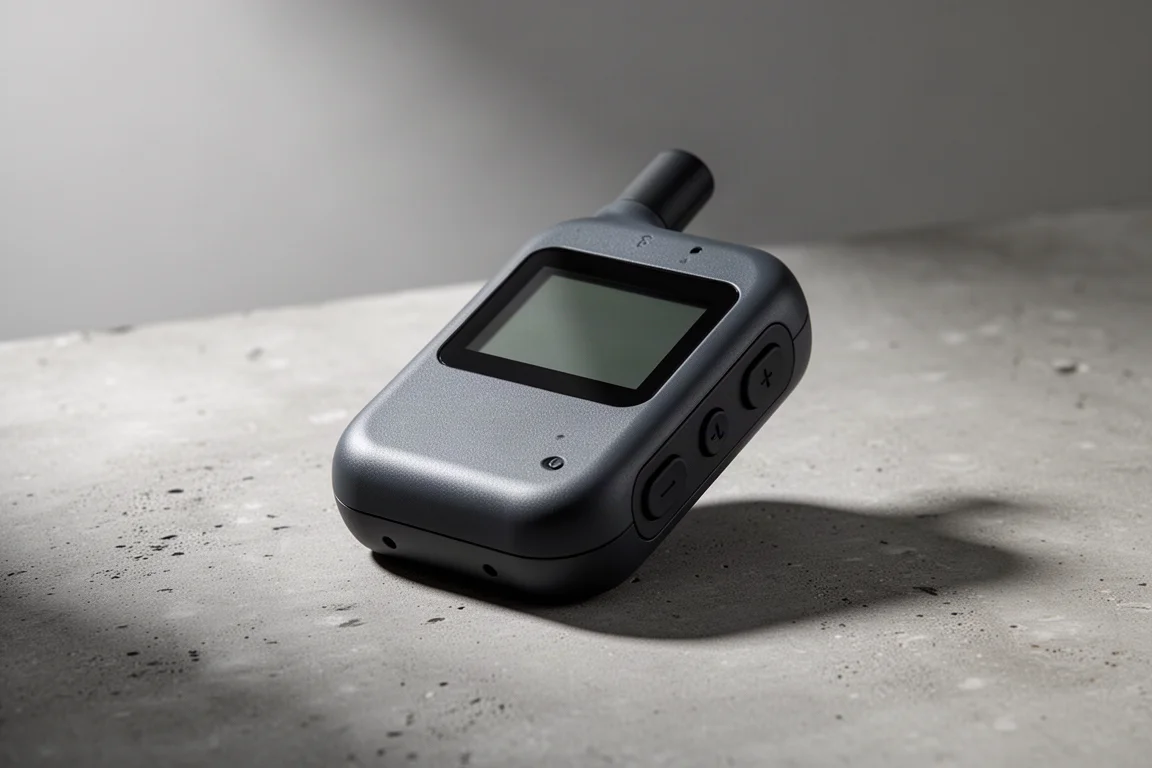
Put side by side, the numbers tell a clear story. Under clear skies the Messenger is rated for 28 days against 14 for the Mini 2. With moderate tree cover or the device kept inside a pack, the gap widens to roughly 14 days versus four. In everyday mixed conditions, that becomes about 16 days against seven.
Both devices charge over USB-C, which keeps cable clutter down. Both also pair with a Garmin watch, so SOS triggering, preset messages and message viewing are available from the wrist while the communicator stays in a pack.
Standalone Messaging When Your Phone Fails
Typing directly on either device is slow, even though both offer solid autocomplete. Most people will pair the communicator with a phone and handle messages there, which is why screen size matters less than it first appears.

The reason the screens still matter is independence. Because both devices can be operated on their own, you can reach settings, read messages, reply and send presets without a phone at all. More importantly, if you trigger an SOS, you retain two-way communication with search and rescue even if your phone is lost, broken or out of battery. That standalone capability is the core of what makes a satellite communicator worth carrying.
Price and Buying Advice
Price is the final difference. The inReach Mini 2 sits at around $400, while the inReach Messenger comes in at around $300.

If your trips involve following routes and waypoints, and you want the larger screen and easier widget navigation, the Mini 2 justifies its higher price. If you mainly want reliable messaging, SOS coverage and long battery life at a lower cost, and you are happy to rely on Track Back for the occasional wrong turn, the Messenger is the more economical choice. The reverse charging feature also makes it the more reassuring option for anyone who depends on a phone for navigation and messaging.
Conclusion
Both communicators cover the essentials: multi-constellation satellite connectivity, USB-C charging, standalone operation and Garmin watch pairing. The Mini 2 wins on navigation and screen usability, while the Messenger wins on battery life, price and the ability to top up a phone in an emergency. Match that trade-off to the way you actually travel, and either one will earn its place in your pack.
Further reading
Related Reviews
Satellite Communicators
Garmin inReach Messenger vs Zoleo: Which Satellite Communicator Is Right for You?
A practical comparison of two satellite communicators, covering price, battery life, messaging, apps, satellite coverage, and standalone SOS use.
Satellite Communicators
Garmin inReach Mini 2 vs inReach Mini: Is the Newer Satellite Communicator Worth It?
A practical comparison of the Garmin inReach Mini 2 and the original inReach Mini, covering battery life, USB-C charging, navigation, app support, and upgrade advice.
Satellite Communicators
Garmin inReach Mini 2 vs ZOLEO: Which Satellite Communicator Fits Your Trip?
A practical comparison of two satellite SOS communicators covering weight, battery life, charging, on-device messaging, and the subscription costs that matter over the life of the device.