Vintage Audio
Sansui G-9000 vs Pioneer SX-1250: Two Monster Receivers Compared
Two 160 watt per channel vintage monster receivers compared on build, controls, sound character, and what to check before buying used.
Introduction
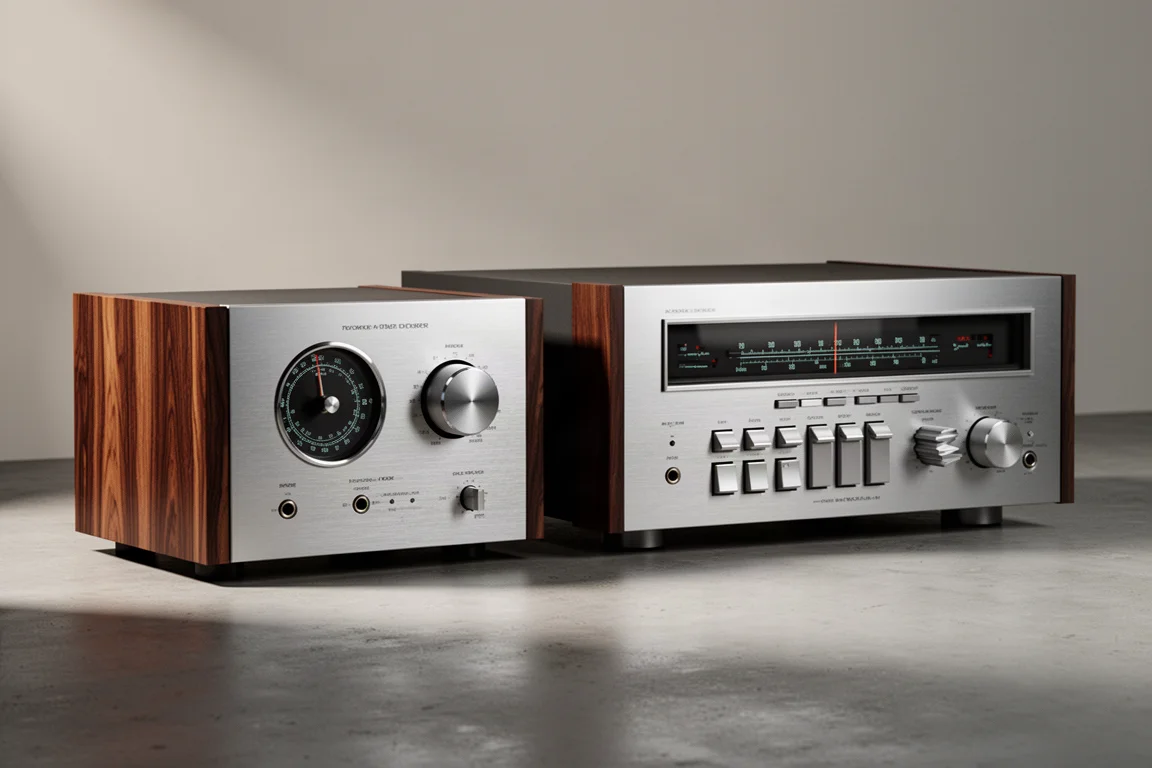
In the late 1970s, hi-fi manufacturers raced each other toward higher and higher power output, a period now remembered as the receiver wars. The beneficiaries were listeners, because the era produced the models collectors call monster receivers: very large, very heavy amplifiers with tuners built in and enough current to drive demanding speakers. Two of the most interesting mid-weight examples are the Sansui G-9000 and the Pioneer SX-1250.
Both are rated at 160 watts per channel into 8 ohms, both measure about 22 inches wide, and both trade used in a similar price band. They were also priced within roughly $100 of each other when new. Despite that, they sound noticeably different, which means the decision comes down to character and features rather than specifications.
This comparison covers what each receiver is like to own, where each one asks for compromises, and which kind of listener is likely to be happier with which.
What Made the Monster Receiver Era Special
The receiver wars pushed output far beyond what a normal room needs. The same era produced models rated at 270 and 300 watts per channel, and even brands not usually associated with high-power amplification joined in with designs around 200 watts per channel. Those flagships are the ones that command the highest prices today, and they are also the biggest and heaviest to house.
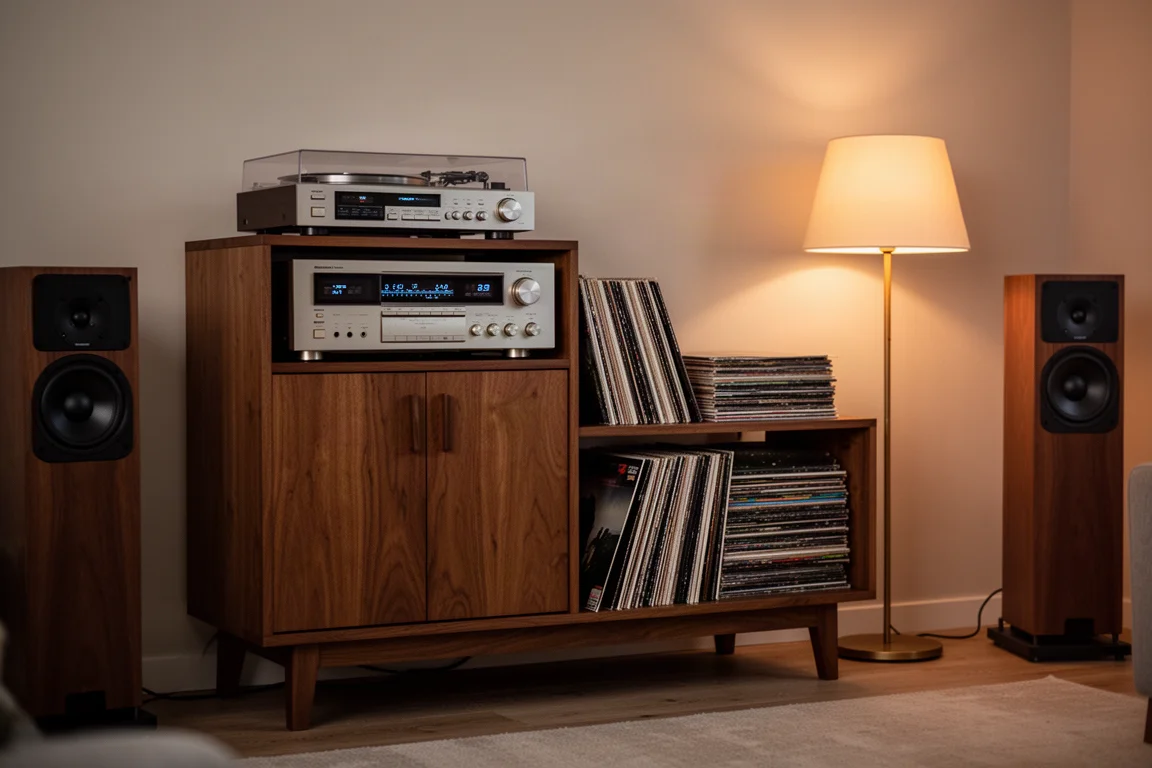
At 160 watts per channel each, the Sansui G-9000 and the Pioneer SX-1250 sit in the middle of that range. That is still far more headroom than most modern integrated amplifiers provide, and it is enough to drive large floorstanding speakers without audible strain. Both also carry the design language of the period: brushed metal faces, substantial machined knobs, and wood-grain cabinets that make them as much furniture as electronics.
What matters more than the wattage figure is the engineering intent. These were built as serious flagship products rather than budget components, which is why clean examples still hold real value decades later.
Sansui G-9000: Build and Controls
The Sansui G-9000 was produced from 1978 to 1979 and sold new for around $1,000. It measures roughly 22 inches wide, 7.5 inches tall, and 16.5 inches deep, so it needs a genuinely large shelf or the top of a sturdy console.
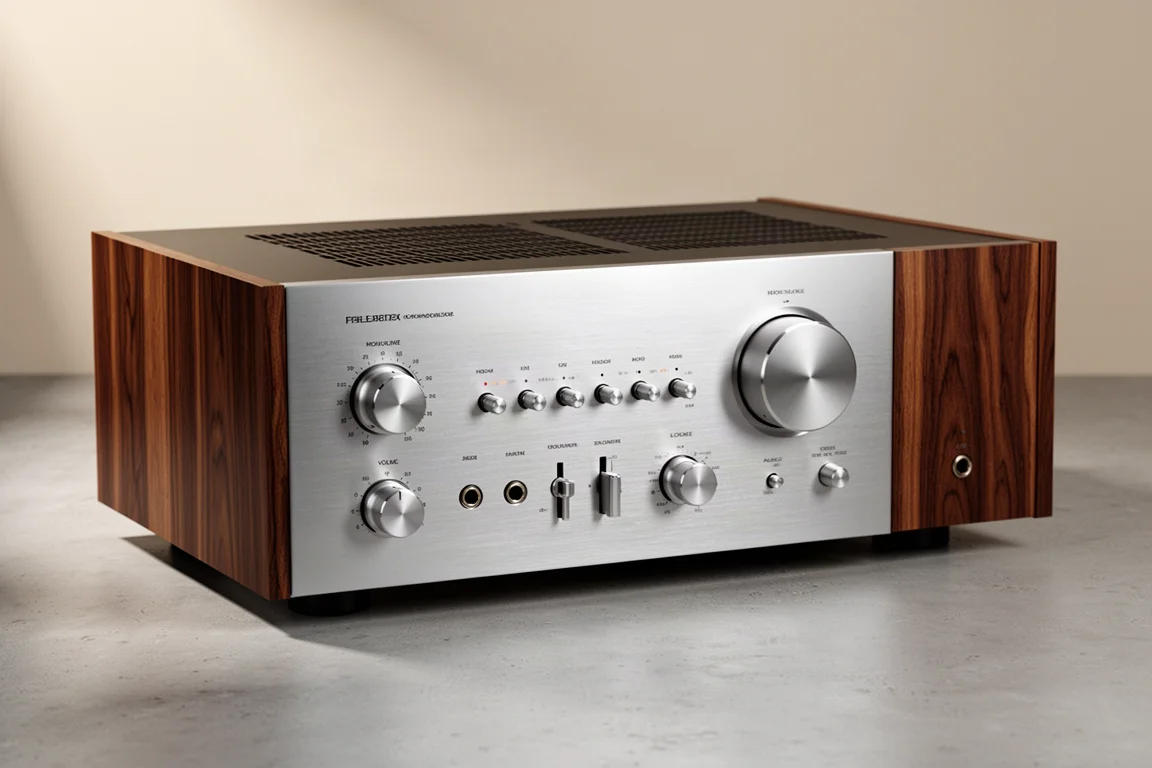
The face is symmetrical, with the volume control on the left and a large tuner knob on the right. The power switch and the speaker A and B switches sit on the left side. Tone shaping is unusually flexible: separate bass, midrange, and treble controls, plus turnover switches that change the frequencies the bass and treble controls act on. A tone defeat switch bypasses the network entirely when you want the shortest signal path.
The volume control has clickable detents and includes a maximum level setting, a practical feature for anyone who wants to stop other household members from pushing the amplifier into speaker-damaging territory. There is a loudness control, a subsonic filter for the phono stage, and a high-pass filter. Inputs cover one auxiliary, two phono inputs, AM and FM tuners, a four-channel noise reduction adapter, two tape loops, and a microphone input with its own mixing level. FM facilities include muting, stereo or mono selection, Dolby FM de-emphasis, an auto noise filter, and a wide or normal IF band setting.
Two details stand out. First, the inputs, speaker outputs, and antenna connections are on the side of the chassis rather than the rear, with a molded channel for cable routing, which makes a tidy installation much easier to achieve. Second, the cabinet uses simulated wood veneer rather than real wood, though it remains convincing in person. Large heat sinks on the top and rear handle the thermal load, a switch on the back allows the unit to serve as a preamplifier or a power amplifier, and the speaker terminals are spring-loaded.
Sansui G-9000: How It Sounds
The G-9000 leans toward the midrange. Bass is present but less forceful than the Pioneer’s, and the overall balance is linear and flat, which many listeners would call a more neutral or audiophile-style presentation. Its loudness control, by contrast, is heavy-handed and adds far more low-frequency boost than most rooms need. With small speakers that produce almost no bass it might be useful, but with full-range speakers it is easy to leave switched off.
With Klipsch Cornwall III speakers, the G-9000 produced a wide and clearly defined soundstage, and the tone controls are flexible enough to shift the balance toward a warmer presentation if that is what you want.
Pioneer SX-1250: Build and Controls
The Pioneer SX-1250 arrived earlier, in 1976, at $900. Like the Sansui, it is rated at 160 watts per channel into 8 ohms, and it occupies the same generous footprint.
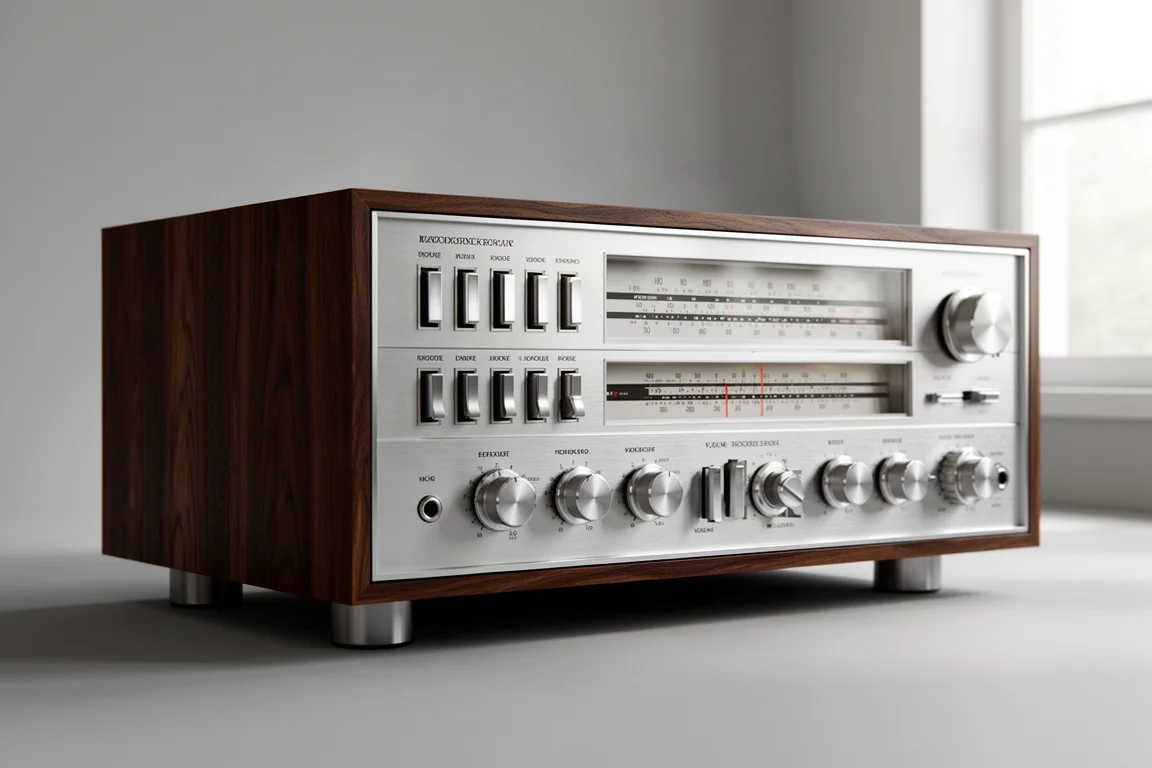
Its tone controls take a different approach. Rather than a midrange control, the SX-1250 gives you two bass controls, one at 50 Hz and one at 100 Hz, plus two treble controls, one at 10,000 Hz and one at 20,000 Hz. That arrangement is arguably more useful than the Sansui’s turnover system, but it also means there is no dedicated midrange adjustment, which is the region many listeners would actually want to boost. A tone defeat switch is provided.
Elsewhere the Pioneer offers a subsonic filter, a high-pass filter, and switching for three pairs of speakers, A, B, and C. Input selection uses push buttons and covers AM and FM tuners, two phono inputs, a microphone input, and an auxiliary input. The volume control is stepped, and the knobs and switches are metal rather than plastic, which gives the front panel a solid, precise feel.
Pioneer SX-1250: How It Sounds
The SX-1250 is the punchier of the two. Its bass response is strong enough that you may find yourself backing the bass control down rather than boosting it, and the loudness control is far less heavy-handed than the Sansui’s, which makes it genuinely usable at low listening levels.
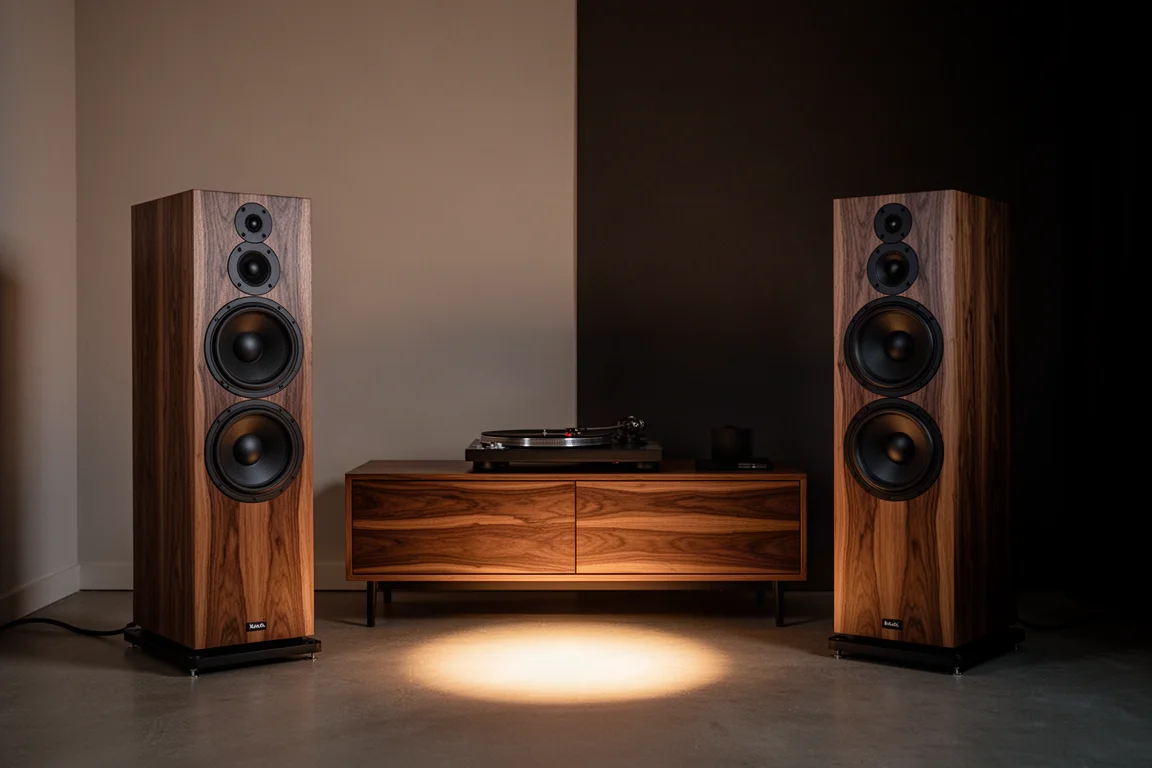
With tone controls flat, the SX-1250 sounds close to the balance many listeners want from the start, which is a real advantage if you prefer to keep the signal path simple. The lack of a midrange control is the one obvious gap, since the midrange is the region where a little adjustment is most often welcome. Like the Sansui, it threw a large and clearly defined soundstage through Klipsch Cornwall III speakers, and the two receivers were an equally good match for that speaker.
How the Two Receivers Compare
On paper these two are nearly twins: 160 watts per channel each, similar dimensions, similar original pricing, and similar used pricing. In practice they are the opposite of interchangeable.
The Sansui G-9000 is the more flexible instrument. Its midrange control, turnover switches, side-mounted connections, and cable routing channel make it easier to tailor and easier to install neatly. Its sound is linear and midrange-forward, and its loudness control is best left alone in most systems.
The Pioneer SX-1250 is the more immediate listen. It delivers more weight in the low end, needs less correction from its tone controls, and its loudness control is more useful. It trades midrange adjustment for bass and treble precision, and its stepped volume control and metal switchgear give it a particularly satisfying feel.
Neither is objectively better. The right answer depends on whether you value adjustability and a neutral balance, or a fuller low end that sounds right without any fiddling.
Buying Advice for Vintage Monster Receivers
Used examples of both receivers turn up in a range of conditions, with prices running from roughly $2,500 up to about $3,700. A clean SX-1250 at under about $2,000 would be worth serious consideration if you come across one.
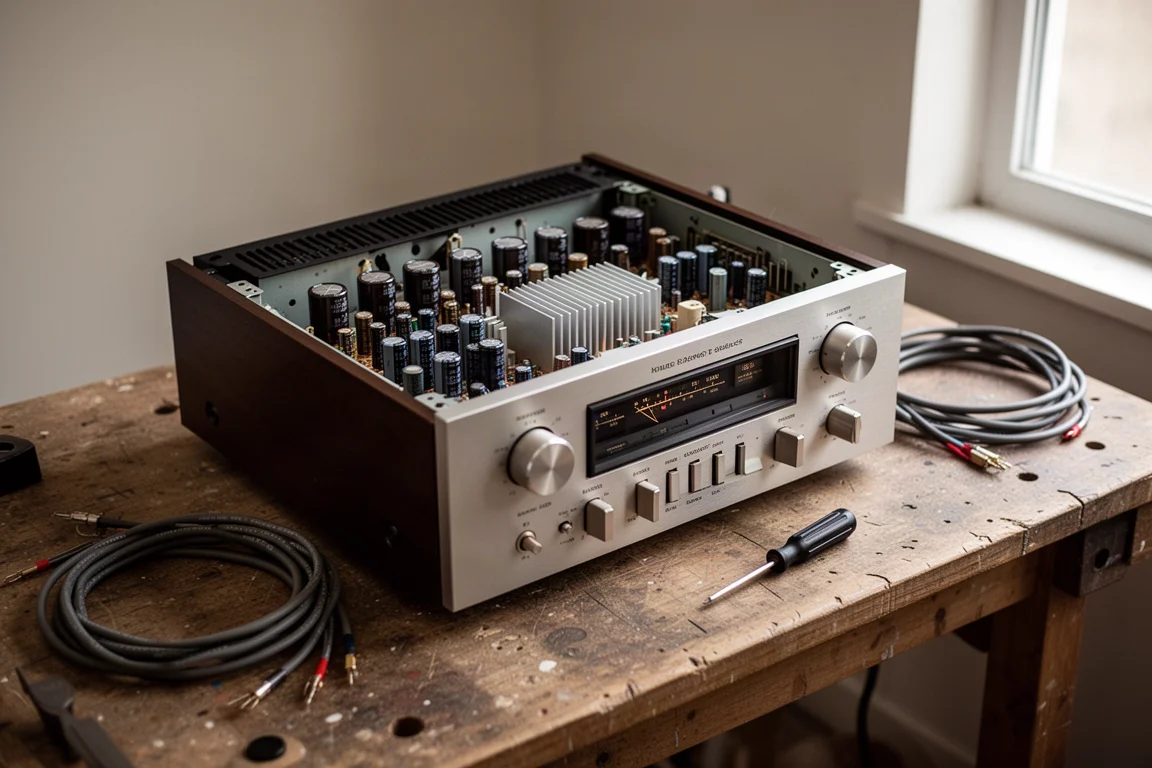
Before buying either model, plan the space first. Both are about 22 inches wide and both run warm, so they need open ventilation around the heat sinks and a surface that can carry the weight. Check that every input, both speaker outputs, and the tuner can be demonstrated, and confirm that the switches and knobs operate without crackle. Because these are 1970s designs, condition matters far more than the model name, and a well-kept example of either receiver will be the better purchase over a rough example of the other.
Conclusion
The Sansui G-9000 and the Pioneer SX-1250 are evenly matched on power, size, and price, and they solve the same problem in two different ways. The Sansui is the more adjustable, more neutral receiver, with a control set that rewards patient tuning. The Pioneer is the more energetic one, with a bass-forward balance that needs almost no adjustment and a loudness control that stays usable at low volumes. Buy on condition and on the sound you prefer, and either will serve as a genuine piece of audio history.
Further reading
Related Reviews
Vintage Audio
Affordable Vintage Receivers: 8 Overlooked Models Worth a Second Look
A practical guide to eight vintage stereo receivers that stay under the collector radar, with real strengths, honest trade-offs, and what to check before you buy.
Vintage Audio
Conrad Johnson PV8 Review: A 1988 Tube Preamplifier With Real Character
A vintage tube preamplifier with a built-in phono stage, six tubes, and a warm, sweet presentation that makes long listening sessions effortless.
Vintage Audio
Dynaco PAS-3 and Krell PAM-1: Two Vintage Preamplifiers Worth Knowing
A restored 1964 all-tube preamplifier and a dual mono solid-state classic from the mid 1980s, compared on sound, usability and restoration quality.