OLED TVs
Samsung S95F vs LG C5: Two 4K OLED TVs Compared
A practical comparison of the Samsung S95F QD-OLED and the LG C5 OLED, covering picture accuracy, brightness, viewing angles, room light, and value.
Introduction
Television testing is refreshingly objective. Contrast, colour, brightness, and signal tracking either land where they should or they do not, and the measurements settle the argument. That objectivity is part of what makes the Samsung S95F OLED interesting: Samsung’s OLED output has been quiet lately, its recent LED models were less convincing, and its earliest OLEDs were perhaps overhyped. This one is a genuine step forward, and its matte, glare-free screen is a real departure from most current OLEDs.
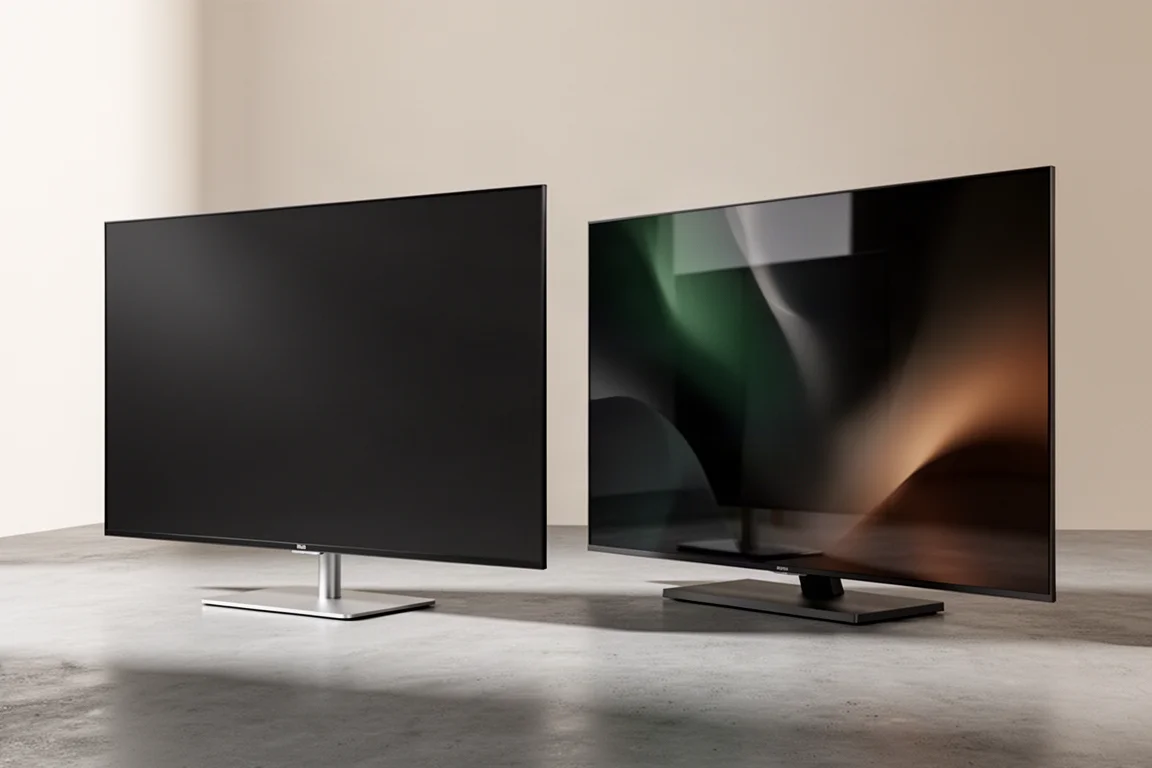
The S95F is a 4K QD-OLED available in four sizes from 55 to 83 inches. The LG C5 is the more familiar benchmark for most buyers: a 4K OLED that arrives accurate out of the box and costs far less. This comparison covers where each panel is strongest, what each one asks you to live with, and which room suits which television.
Both are serious televisions, and neither is a compromise on picture fundamentals. The differences show up in how they handle room light, how much setup they demand, and how much they cost.
What Both OLEDs Get Right
Both sets deliver the core OLED advantages: deep blacks, high contrast, and per-pixel control that gives dark scenes real weight. Both are 4K panels, and both handle standard dynamic range and HDR content without difficulty. Motion is smooth on each, and both are comfortable for long viewing sessions in a darkened room.
From there, the two take different routes. Samsung builds around a QD-OLED panel with a matte finish, wide colour coverage, and a feature set aimed at gamers and bright rooms. LG builds around factory accuracy, a slightly brighter picture, and a lower price, with a glossier screen that shows more of the room around it.
Samsung S95F OLED TV: QD-OLED Colour With a Matte Screen
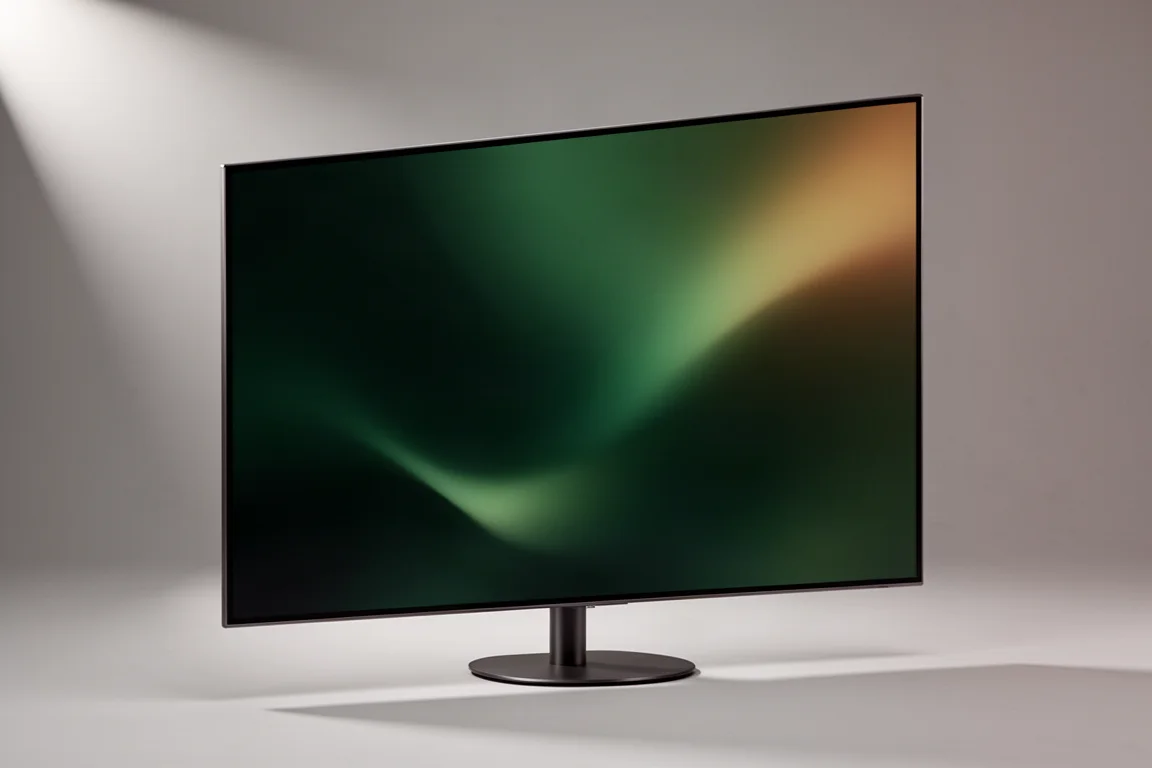
The S95F’s QD-OLED panel covers nearly all of the P3 and REC 2020 colour spaces, and the result is colour that holds together through subtle gradations of shadow and light. Blacks and whites contrast beautifully, blooming is very well controlled, and colours look almost three-dimensional in the way they separate from one another.
Absolute black is the one nuance. Out of the box, the darkest parts of a scene are ever so slightly lifted, which is most visible in wide aspect ratio content. A few adjustments after calibration get it to true black, so it is a setting to know about rather than a deal breaker.
Uniformity is where this panel leads. Across colour and light uniformity and dirty screen effect, it is the most consistent display in its class, and the viewing angles are the widest available: clear edge to edge, with no falloff in brightness and no colour shift even far off axis.
Picture modes matter more than usual here. The default eco profile is dim with a noticeable blue tint, and its grayscale and colour error measured around 16 and 10. The standard and vivid profiles are similarly off target. The movie and filmmaker profiles are the ones to use: colour measured accurate at 2.8, with grayscale around 5. A short calibration brought both below 1 with textbook EOTF tracking, and the corrections needed were minor.
Brightness is strong for an OLED at roughly 800 nits sustained in standard dynamic range, with peaks a little over 1,000 nits on HDR test patterns. Pushing it to the maximum brings the blue shift back, so the better approach is to sit slightly below the ceiling, where the white point and colour accuracy stay in alignment.
For most buyers, professional calibration is not worth the effort or expense. The filmmaker profile with brightness adjusted to taste gets very close, and that is an easy recommendation.
Living With the Samsung S95F: Tizen, One Connect, and Gaming
Tizen remains the least appealing part of the Samsung package. It feels slow and cluttered, and the bundled remote does not make setup any easier, which is presumably why the SmartThings app is pushed so hard on first power-up. Dolby Atmos is supported, including wirelessly with Samsung soundbars, but Dolby Vision is still missing.
The One Connect box is a matter of taste. It houses the television’s electronics and all four HDMI 2.1 inputs, which keeps the panel itself remarkably thin, but it adds cable routing and a bulky box to accommodate when wall mounting. The payoff is that there is no choosing between HDMI 2.0 and 2.1, and no need to give up a 2.1 port for ARC, which matters if you own more than one console.
Gaming is a clear strength. ALLM, VRR, Game Motion Plus, and FreeSync Premium Pro are all on board, and motion holds up beautifully in fast, chaotic scenes, with vivid colour and convincing depth. The set can be wall mounted or placed on its included stand.
Two quirks are worth knowing before buying. The matte finish can make content look a little more like a large monitor than a television, and most viewers adjust to it quickly, but the adjustment period is real. The matte surface also does the processing no favours: subtle artefacts such as jaggies or banding are slightly more visible than they would be behind a glossier coating, and upscaling of streaming and non-4K content trails what LG and Sony achieve.
LG C5 OLED TV: Factory Accuracy at a Lower Price
The C5 makes a different case. It arrives accurate in its cinema, movie, and filmmaker profiles, meeting the standard for a calibrated-out-of-the-box picture with no adjustment at all. It also gets a little brighter than the S95F, and it reaches absolute black without any tweaking.
Price is the headline. A 65-inch C5 costs roughly half of a comparable S95F, which makes it the better value by a wide margin, and it is the simpler television to live with from day one. If accuracy on first power-up and ease of use matter most, this is the one to choose.
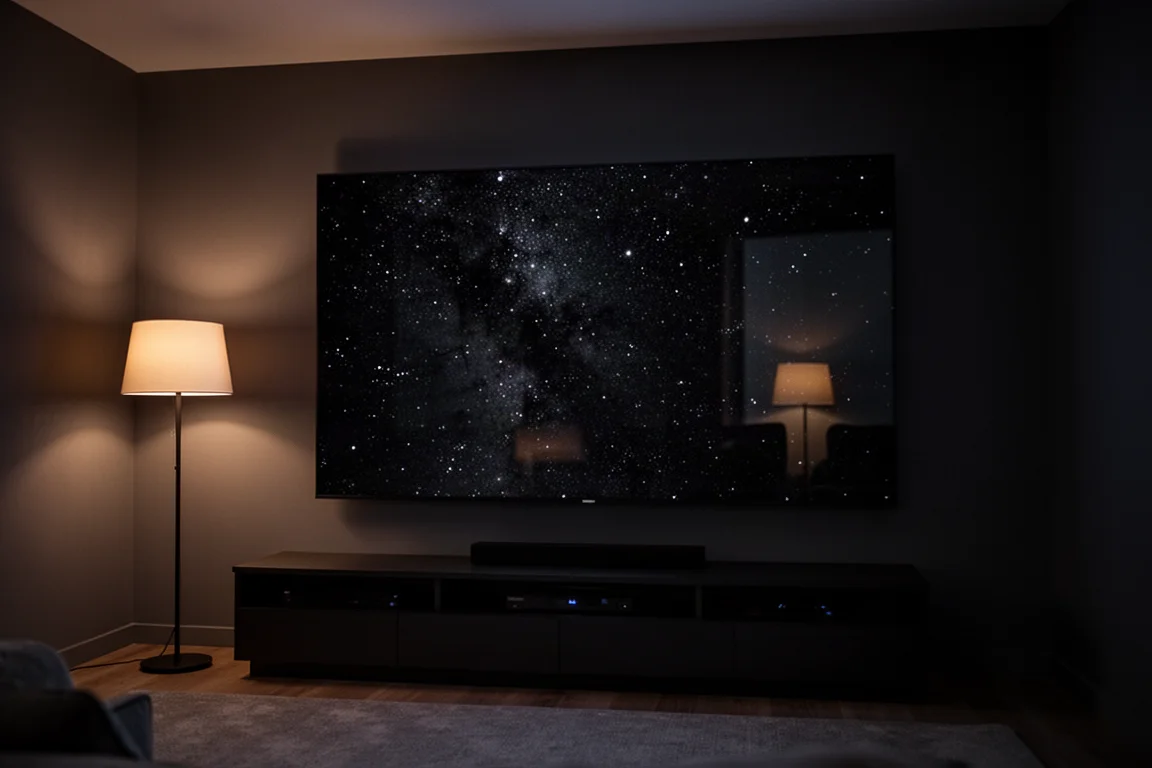
For buyers who want an accurate picture without a calibration session or a deep menu dive, the C5 is the straightforward answer.
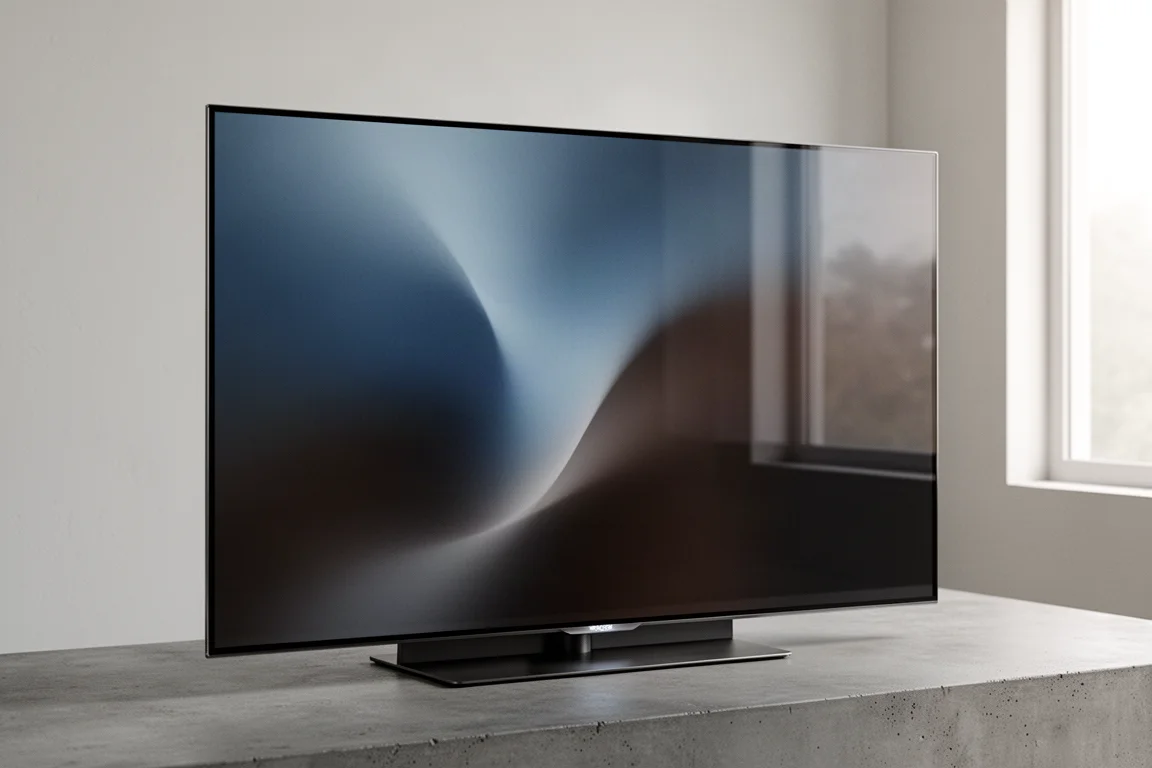
Living With the LG C5: Screen Finish and Room Light
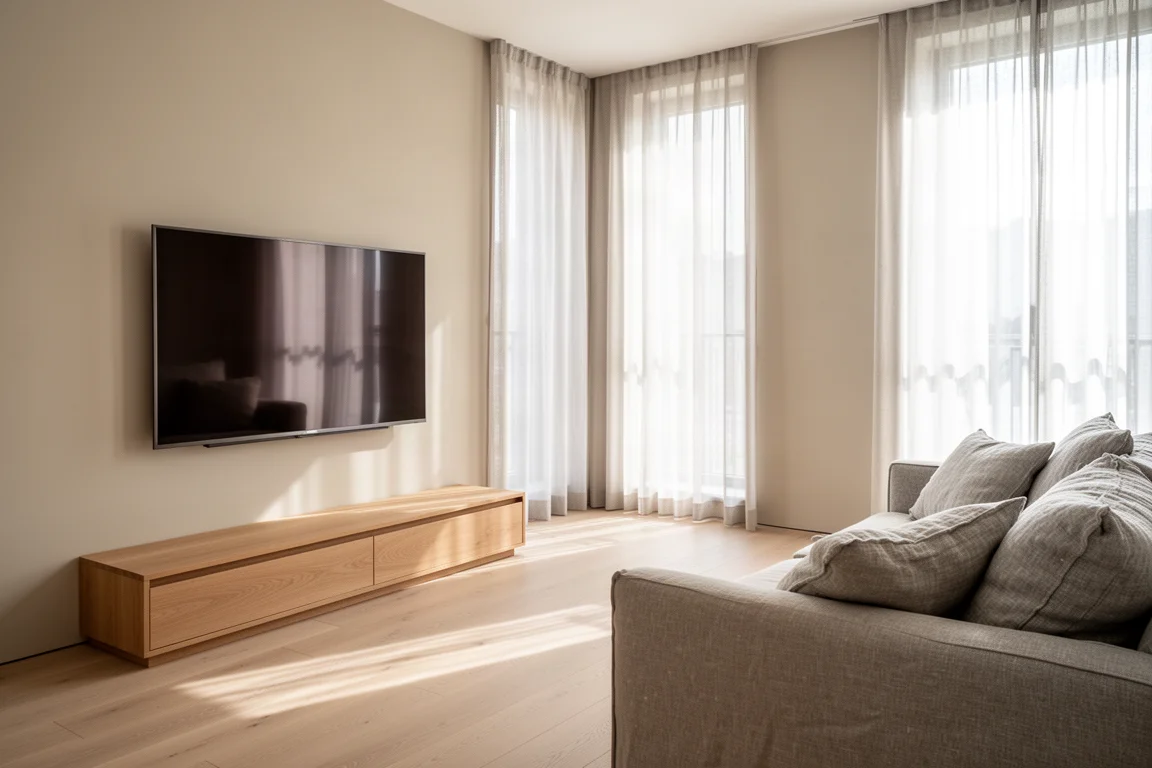
The C5’s glossier finish is the main thing to plan around. In a living room with large windows and no way to dim them, reflections sit on top of the picture, and the effect becomes more obvious as you move away from centre. Seating that sits off axis in a bright room is where the C5 is least comfortable.
Control the light and the picture is excellent, with absolute black available immediately and no calibration required to get there. In a dedicated room, or one with blinds and curtains, the C5 is the more forgiving of the two televisions.
Which OLED TV Should You Buy?
Choose the Samsung S95F if your room is bright, your seating is spread wide, or you want the matte, reflection-resistant screen. It also makes more sense for gamers juggling multiple consoles, thanks to four HDMI 2.1 inputs and no ARC compromise. Wider colour coverage and near-perfect uniformity are the strongest arguments for the higher price, though it is worth noting that the S95F sits closer in price and pedigree to LG’s G series than to the C series, so the value comparison with the C5 is not quite like for like.
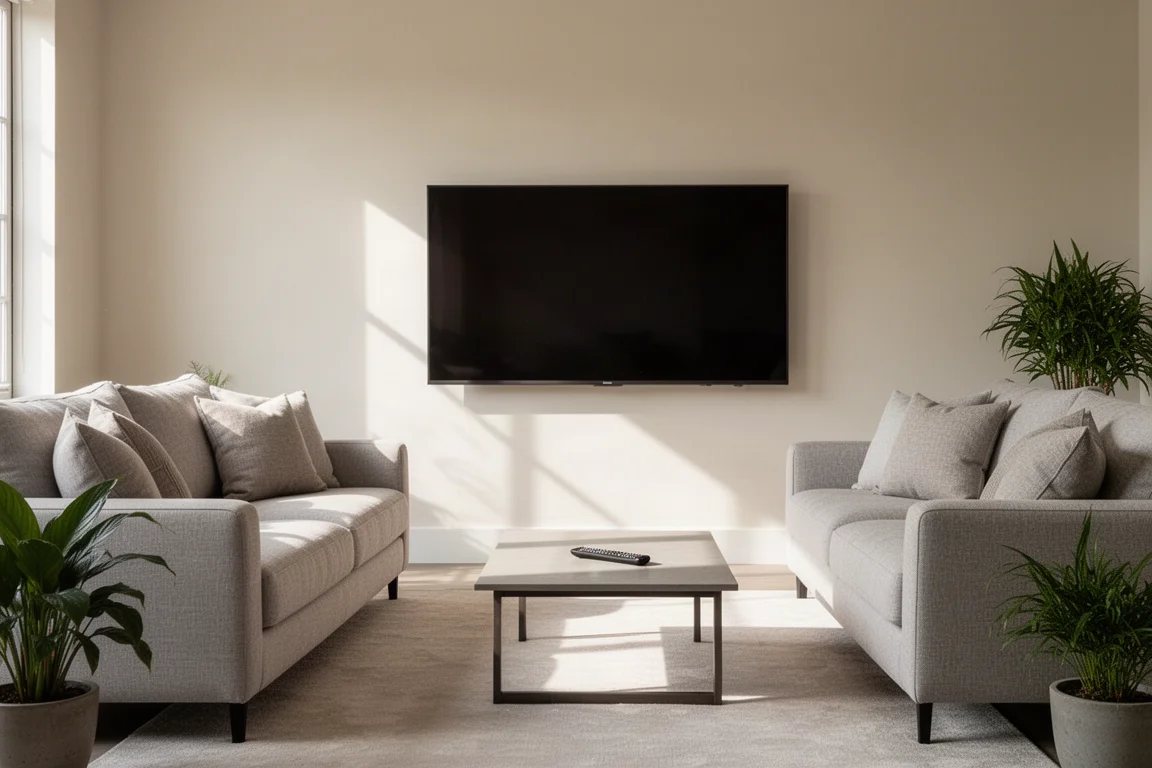
Choose the LG C5 if you want an accurate picture straight out of the box, a simple setup, and the better value, and if you can control the light in your room. It is a little brighter, it reaches absolute black without adjustment, and it costs roughly half of a 65-inch S95F.
If you are still undecided, the tiebreaker is usually the room rather than the specification sheet. A matte screen and the widest viewing angles solve problems that a glossy panel cannot, while a glossy panel’s reflections stop mattering the moment you close the curtains.
Conclusion
The Samsung S95F and the LG C5 are both excellent 4K OLEDs, and the choice between them comes down to priorities rather than quality. The S95F brings a matte, glare-free screen, the widest viewing angles available, outstanding uniformity, and a gaming feature set that suits a multi-console setup, at the cost of a higher price, an imperfect operating system, and no Dolby Vision. The C5 arrives accurate out of the box, reaches absolute black with no adjustment, and costs roughly half as much, with a more reflective screen as the trade-off.
Match the television to the room: the S95F for bright, busy spaces with viewers spread across the sofa, and the C5 for light-controlled rooms where value and factory accuracy matter most.
Further reading
Related Reviews
OLED TVs
Sony A95L Review: A QD-OLED Flagship Built for Bright Rooms
The Sony A95L pairs a second-generation QD-OLED panel with Sony's Cognitive Processor XR. Here is what stands out, what to watch for, and who should buy it.
Room Correction
Anthem ARC Genesis Beta Review: Smarter Speaker and Subwoofer Integration
A practical look at Anthem's ARC Genesis beta, including phase-aware speaker calibration, all-pass subwoofer blending, and the settings worth adjusting.
AV Processors
Anthem AVM 90 8K Review: A Reference-Grade AV Processor for Music and Movies
A close look at the Anthem AVM 90 8K AV processor: measured performance, two-channel and immersive listening notes, bass control, and what to weigh before buying.