Aviation Gear
Sakari Air Ride Helicopter Trailer and Powered Trolley: Two Smarter Ways to Move Your Helicopter
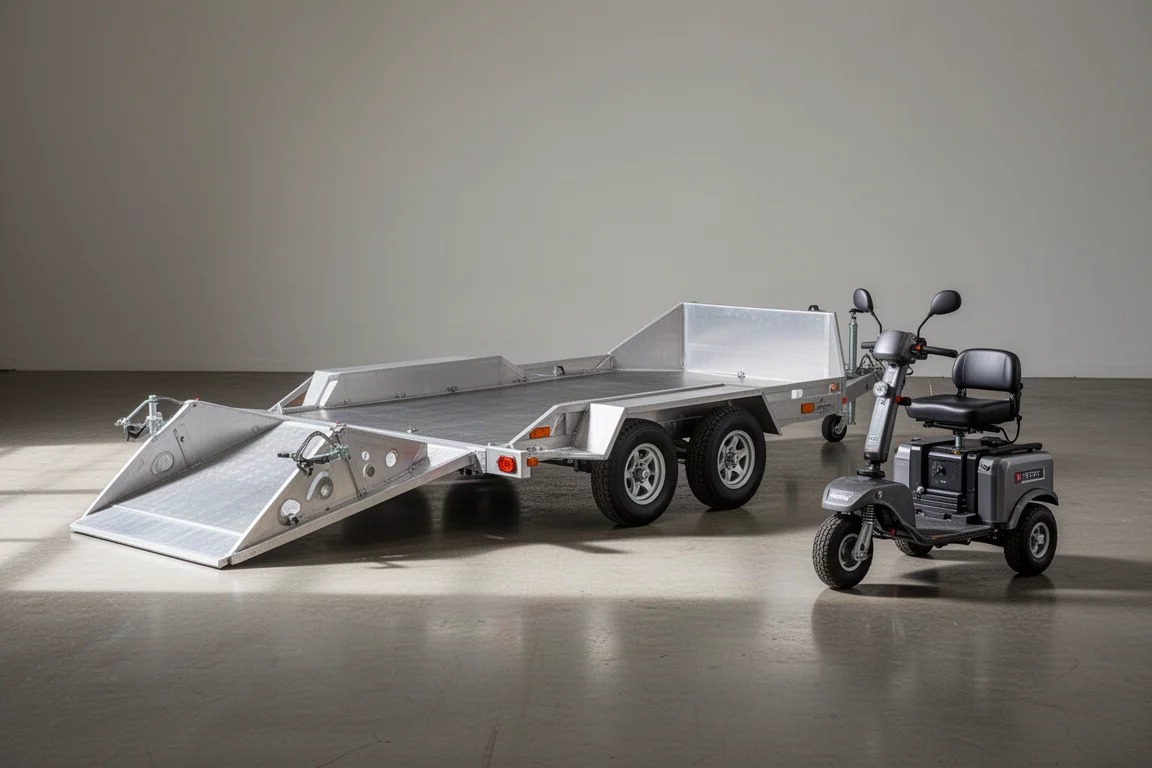
A low-slung air ride trailer with per-wheel airbags and a powered trolley driven by a mobility scooter, both built by Sakari USA for helicopter owners.
Introduction
Hauling a helicopter is one of those problems that sounds simple until you actually try it. Highways are never as smooth as you would like, helicopters are awkward at ground level, and most purpose-built transporters cost more than a decent used car. Sakari USA has built two products that tackle the job from both ends: an air ride trailer for the highway, and a powered trolley for moving the aircraft around the hangar.
Both were developed by people who actually use them for off-road camping trips and events, and that practical starting point shows in the details.
Sakari Air Ride Helicopter Trailer
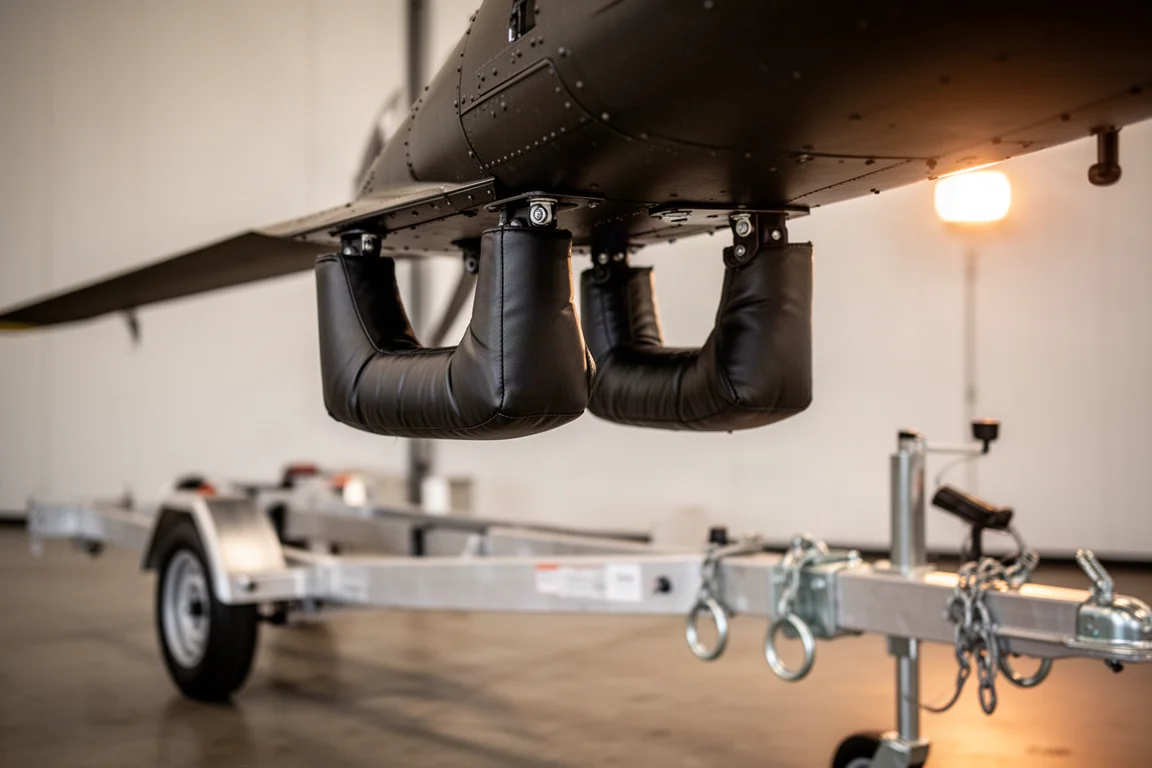
The first thing you notice about the Air Ride trailer is how low it sits. That is deliberate. The deck sits at ground level with a tapered rear, so the helicopter can be rolled on and off using a set of handling wheels or a powered trolley without any ramp gymnastics.
The ride quality is where this trailer earns its name. There are four airbags, one at each wheel, plus an additional airbag in the hitch at the front. A controller in the forward toolbox offers preset ride heights: one that raises the trailer to empty height for traveling, and another for when it is loaded. That matters because helicopters do not enjoy vibrating down the highway.
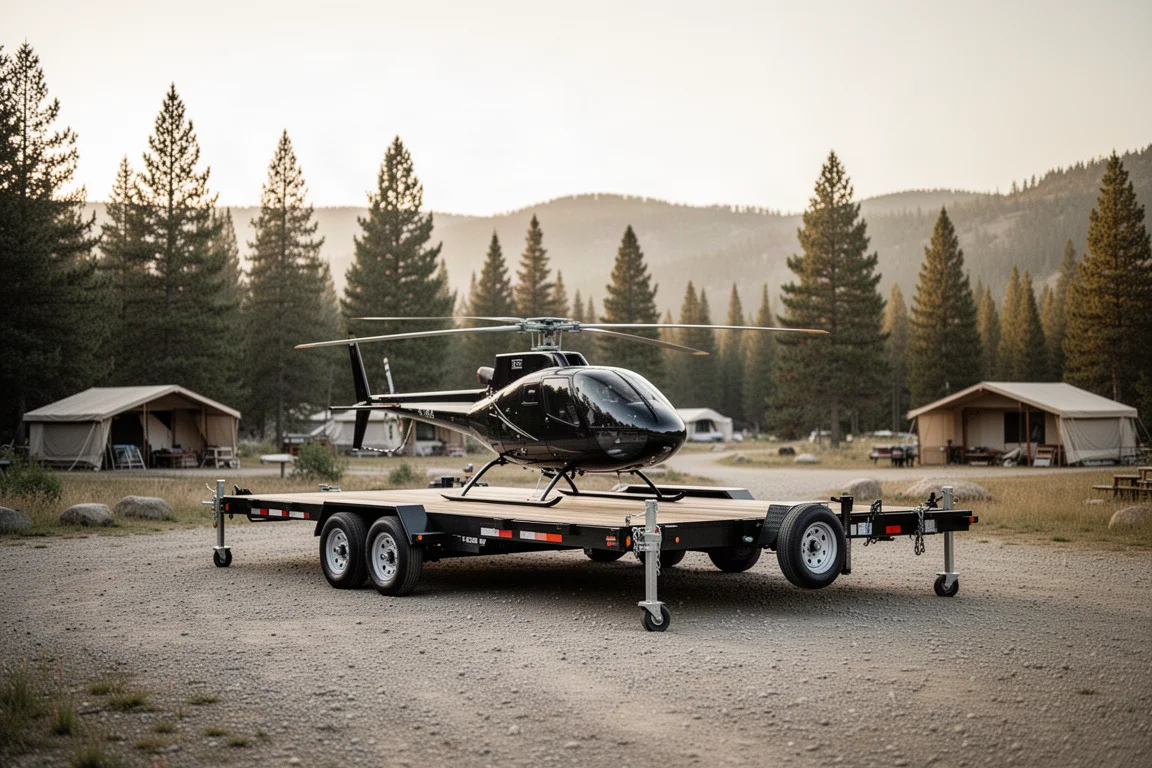
The toolbox across the front houses a compressor, an air tank, and a four-channel controller, one channel per wheel airbag. If a bag or a line fails, the remaining airbags can still support the trailer to a safe place, and there is a way to rotate the frame down and lock it if needed. Small red bumpers act as up stops to limit upward travel over bumps, addressing the bounce reaction that airbag systems otherwise tend to have on the highway.
Other practical touches include tie-down rings along the frame for securing an aircraft cover or extra cargo, dedicated slots for the helicopter’s quick locks, and blade supports for both the main rotor and tail rotor. The blade supports take the weight off the droop stop and hold the rotors where they are not likely to flex, which means the blades do not need to be removed for transport. With quick locks, loading and unloading the helicopter and removing the blade supports takes about 10 to 15 minutes.
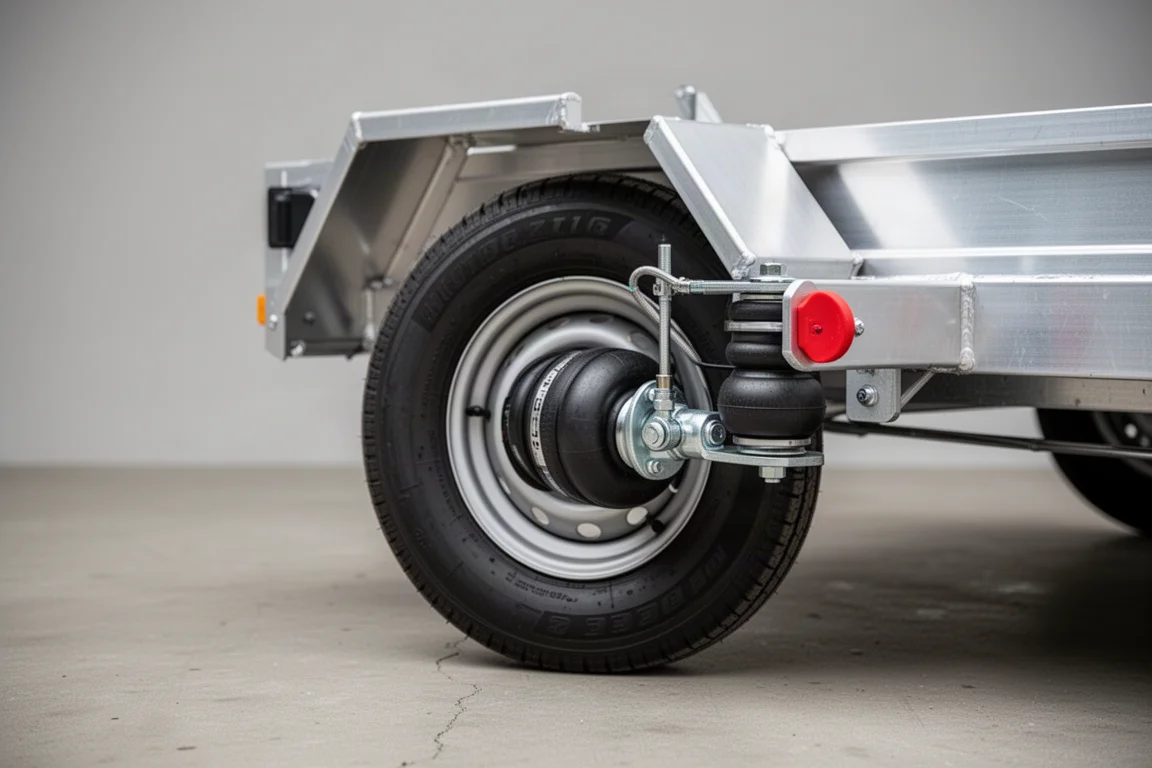
The whole trailer weighs about 1,690 lbs empty, and with the helicopter on board it stays under 3,000 lbs, so anything with a trailer hitch can tow it. Tongue weight is kept deliberately light so it does not exceed the hitch limit of a normal car or SUV.
Sakari builds these to order and can adjust details per customer, within DOT width limits. The trailer is priced at $29,500, comparable to a high-end car trailer.
Sakari Powered Trolley with Mobility Scooter
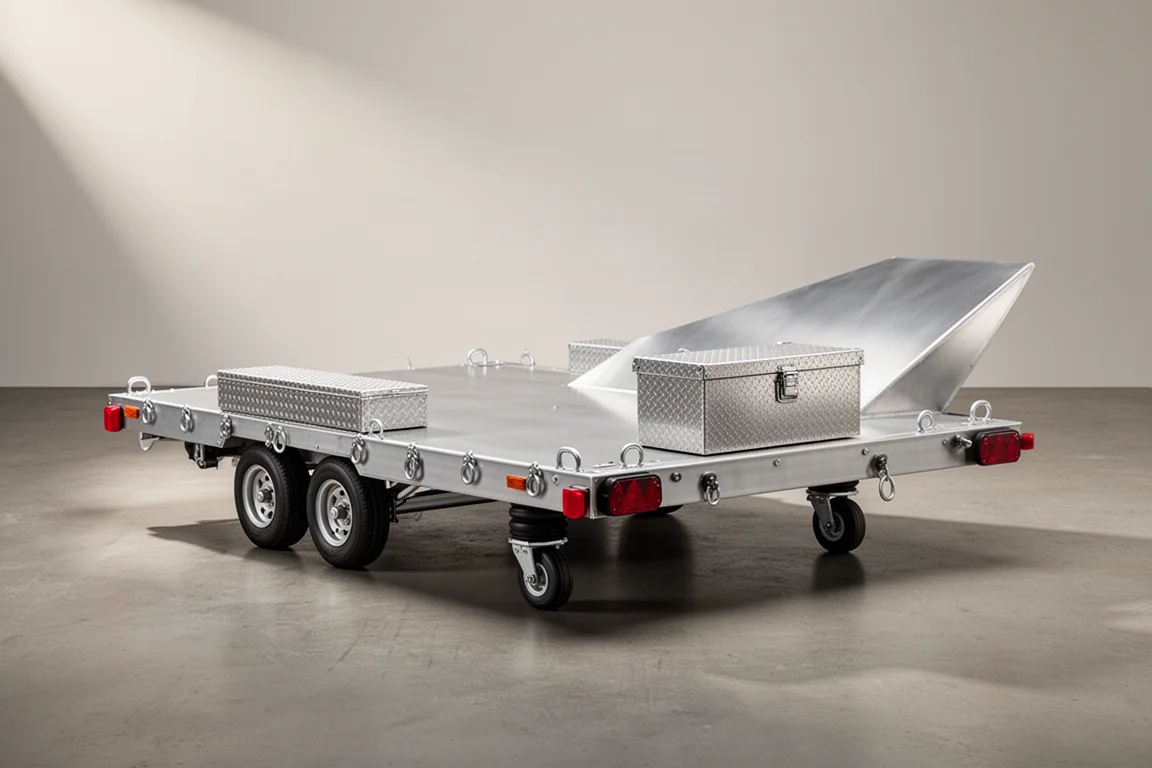
Many helicopter trailers solve the loading problem with a winch on the front. Sakari took a different route with a powered trolley that doubles as hangar ground-handling equipment.
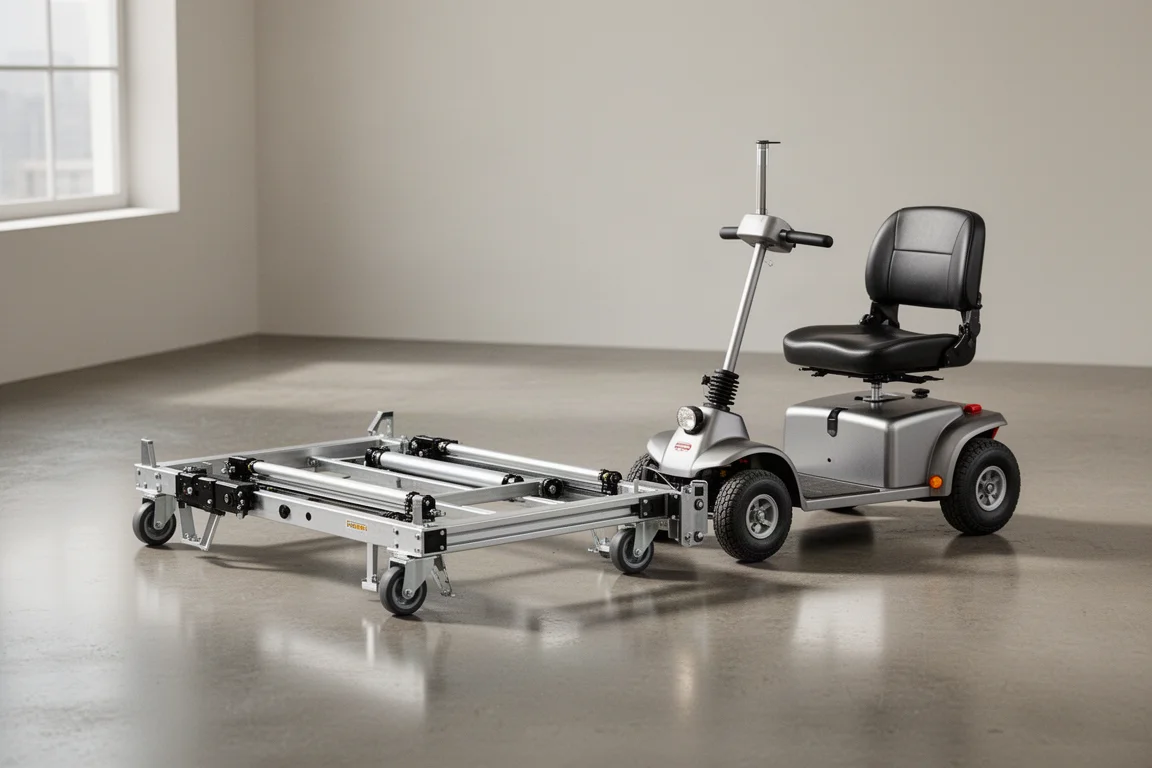
The trolley fits inside the skid crossover tubes of the helicopter and uses linear actuators to lift the aircraft off the ground. Raising the helicopter takes about 10 to 15 seconds. Power comes from an unconventional but clever source: a small mobility scooter. The seat comes off, a pin with a ball replaces the seat post, and that connects to the front of the trolley. The scooter’s battery also powers the actuators.
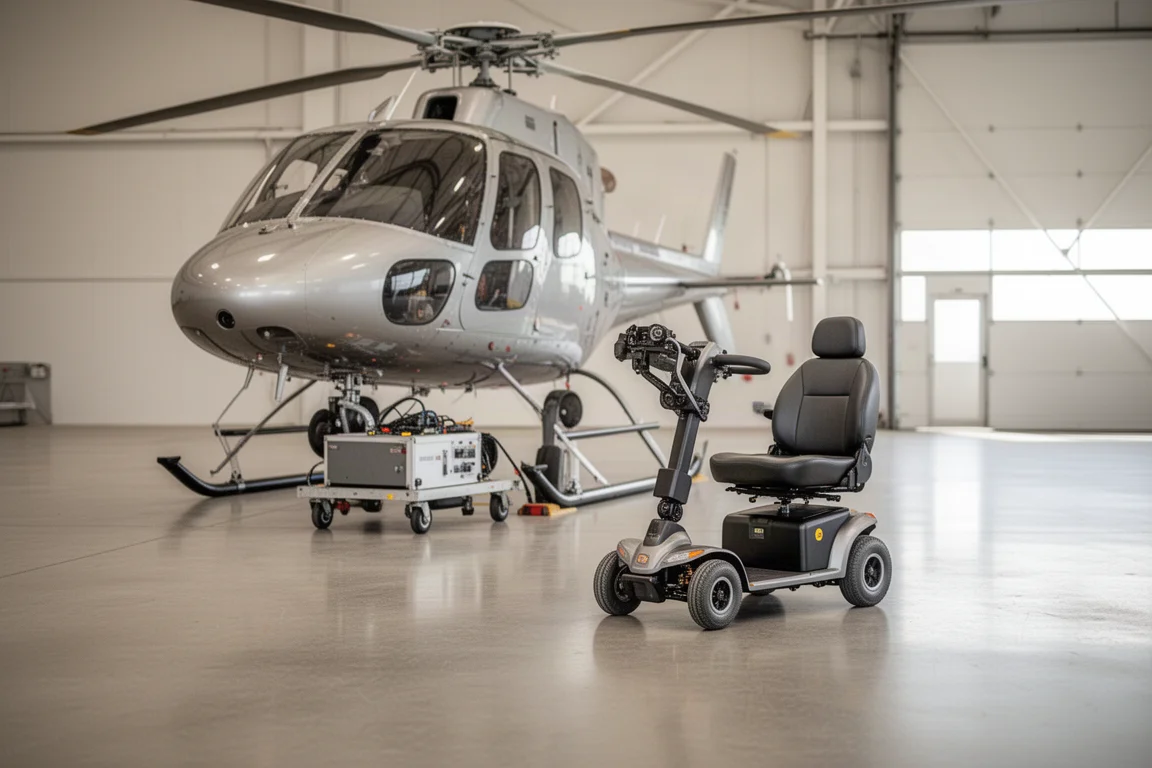
Once connected, the scooter’s regular handlebar controls drive the trolley and helicopter around the hangar. The handlebar tips forward so you can walk in front and pull it along like a wagon, which the builder describes as easy for anyone who grew up pulling a four-wheel wagon around a farm. Going forward is easy; backing up takes some practice since the drivers are at the front and the wheels are behind.
What the Setup Solves Day to Day
Together, the two products cover the full journey: the trolley moves the helicopter inside the hangar, rolls it onto the trailer, and the trailer carries it down the highway without shaking it apart. The trolley is designed to fit the skids of Sakari’s helicopter models, with adjustments possible for other configurations.
The trolley with the scooter sells for just over $5,000, around $5,200. That is a fraction of the $80,000 to $110,000 typically seen for dedicated helicopter transporters, and it replaces the winch approach entirely.
Both products are sold through Sakari USA, whose website offers a quoting tool where you pick your helicopter and options. The company emphasizes transparency and ongoing customer support, building each trailer to order and staying in close dialogue with buyers.
Buying Advice
If you already own a suitable helicopter and tow vehicle, the question is really about scale. The trailer is the bigger investment and makes sense for owners who regularly travel to events or remote destinations. The trolley is a more affordable entry point that solves hangar mobility on its own, and it also removes the need for a winch if you pair it with a different trailer.
For anyone comparing against traditional helicopter transporters, the price difference alone is worth a close look, provided the trolley fits your aircraft’s skid configuration.
Conclusion
Sakari’s Air Ride trailer and powered trolley are thoughtful, owner-built solutions that address the two hardest parts of helicopter ownership: moving the aircraft around the hangar and getting it to your destination in one piece. With sensible weights, light tongue weight, and pricing well below conventional helicopter transporters, both are worth considering if you need to take your helicopter on the road.
Further reading
Related Reviews

Ultralight Aircraft
Badland Aircraft Ultralight and Polini 303: A Practical Path Into Ultralight Flying
A closer look at the Badland Aircraft Ultralight and the Polini 303 engine that powers it, from folding wings to kit options.
Aviation
Badland Ultralight Kit and Thump Air 420cc: A Practical Backyard Aircraft Combo
A true 247-pound ultralight kit that hits the advertised weight, plus a new four-stroke engine option built for torque and lighter fuel burn.
Aircraft Engines
Corvair 2850 Aircraft Engine: A Builder-Friendly Conversion Worth Knowing
The Corvair 2850 is a horizontally opposed, air-cooled six-cylinder conversion engine with a flexible build path, honest weight, and support for experimental aircraft builders.