Aviation
Sakari 8 Helicopter Kit: A Buildable Two-Seat Helicopter Worth Understanding
A kit-built helicopter with a turbocharged Rotax engine, carbon fiber cabin, and a 200-hour build aimed at private owners.
Introduction
Helicopters hold a special place in aviation, and the Sakari 8 is one of the more interesting ways to get into one. It is a two-seat light helicopter sold as a kit you assemble yourself, powered by a turbocharged Rotax 915 engine, and it has recently been introduced to the North American market. The key question for any prospective owner is simple: is a buildable helicopter a practical way to fly? Based on the design, the flight qualities, and the kit structure, the answer is more approachable than you might expect.
What the Sakari 8 Is
The Sakari 8 is the latest design from Sakari SA in Argentina, a company founded by designer Gustavo Sakari, a self-taught engineer and pilot who started the business at 19 and led it until his passing in his mid-eighties. His two sons now run the factory near Buenos Aires, and a US company has been formed to bring the helicopters to North America. The Sakari 8 is one of four models the factory builds.
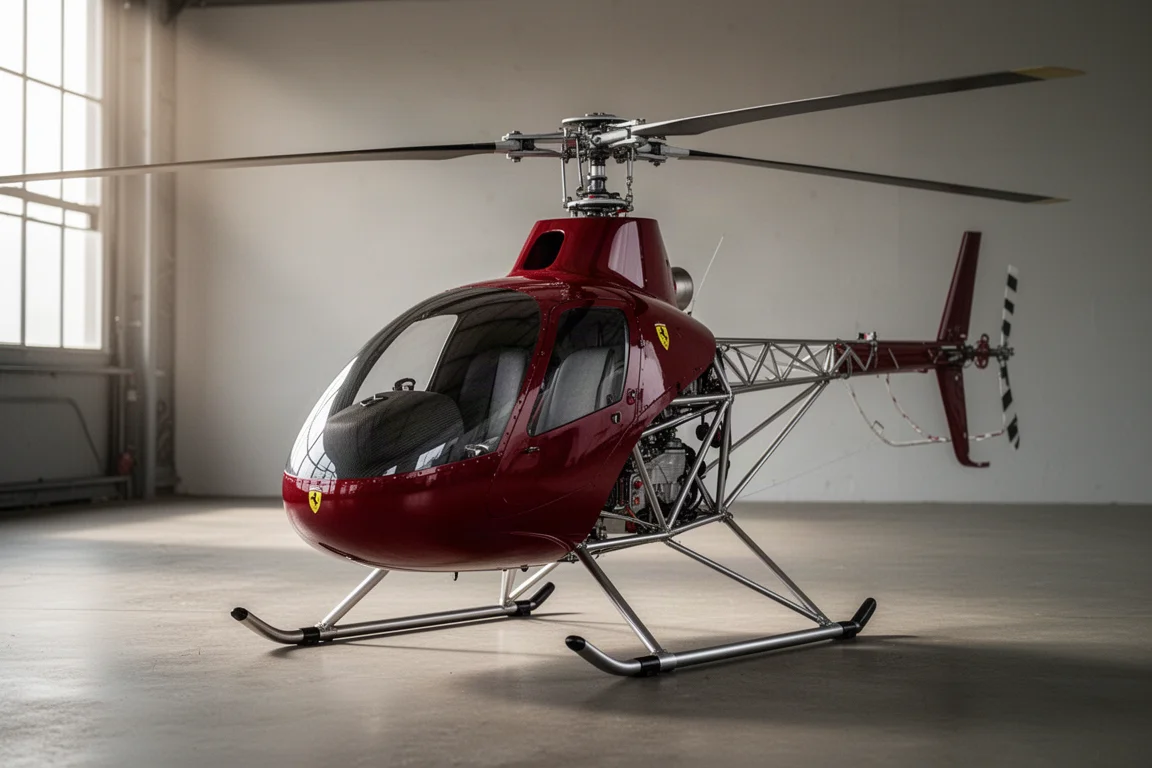
It flies from the right seat, hovers, climbs, cruises around 80 knots (roughly 90 mph), and offers about two and a half hours of endurance, which translates to roughly a 200 nautical mile range. The example shown is painted in a deep red that draws immediate comparisons to a certain Italian sports car, and buyers can choose from most PPG automotive colors along with several graphic options.

Engineering and Construction
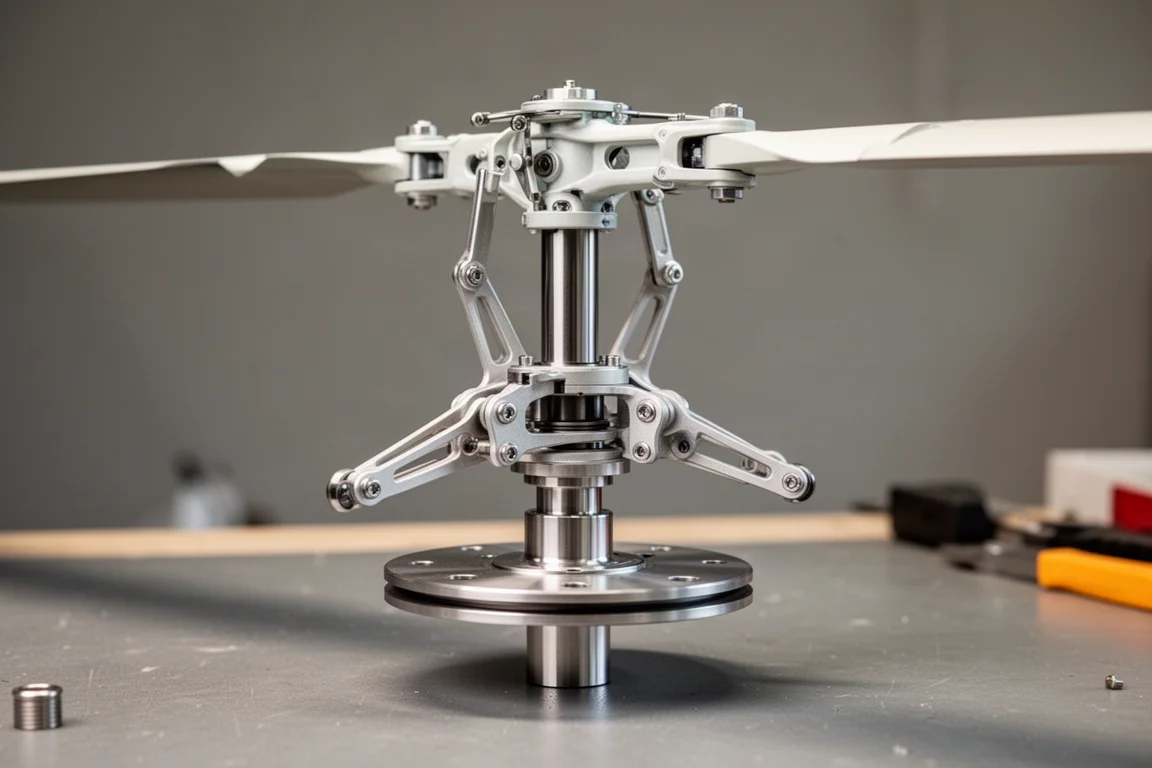
The airframe is a 4130 chrome-moly steel tube frame, with the cockpit wrapped in carbon fiber. The tail rotor and tail boom are aluminum, and the main and tail rotor transmissions are purpose-built helicopter gearboxes that the Argentine supplier has been producing for around 40 years. One of the most distinctive features is a rotor head patent from roughly 45 years ago that places the swash plate below the transmission, allowing control inputs to pass through a hollow main shaft. That makes the head lighter and stronger than a solid smaller shaft design.
The drive system uses two redundant belts from the Rotax’s gear reduction into the transmission, engaged through a centrifugal clutch that locks around 2400 engine RPM. A sprag, or overrunning, clutch in the final drive allows safe autorotation if the engine fails or the drive locks up. The tail drive is a solid shaft with a flex coupling using redundant bolts and pins, so tail rotor authority is retained even if a bolt breaks. Vertical stabilizers keep the tail behind you in a tail rotor failure at 30 to 40 knots of forward speed, while the horizontal stabilizer is admittedly more about looks than aerodynamics.
Flying Characteristics
The most comparable flight characteristics are to the Robinson R22, with similar control sensitivity, but the Sakari 8 uses weighted carbon fiber rotor blades that make autorotation feel more forgiving because the rotor does not decay as quickly when power is cut. It glides a little farther than a 300 in an autorotation and has no tendency to pitch the way a Robinson can.
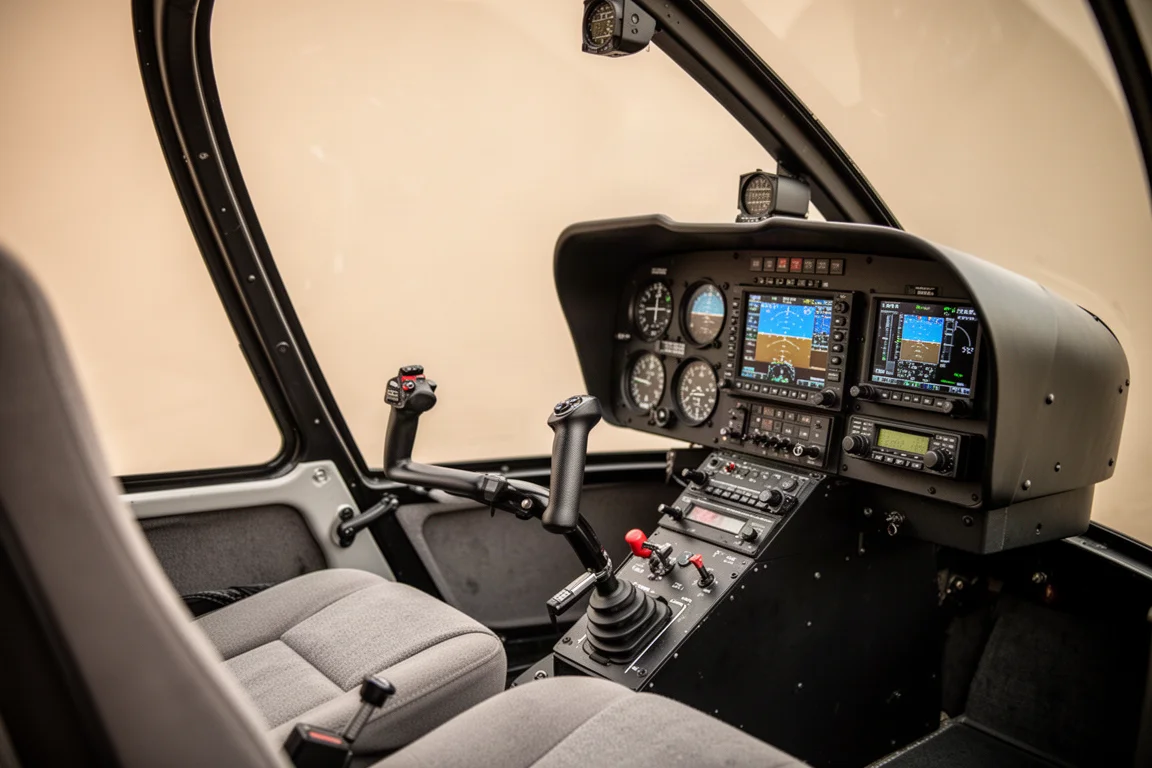
The Rotax 915 is fully automated for fuel and ignition. Startup is guided by the engine management unit, which tells you the correct throttle setting before you crank. A governor switch on the collective manages engine RPM, and preflight checks include Lane A and Lane B Rotax failover tests plus two fuel pump checks. Hover height is typically about four feet, and after a pedal turn to verify control authority, you tip the cyclic forward to accelerate through translational lift, staying low at 4 to 6 feet until about 55 knots.
Burns run about 4.5 to 5 gallons per hour on pump autogas with up to 10 percent ethanol, far cheaper and easier on the engine than avgas, and roughly half the consumption of an R22. Optional 360-degree cameras display on the left MFD so you can confirm the tail rotor is clear before pulling pitch.
Building It: Hours, Tools, and Support
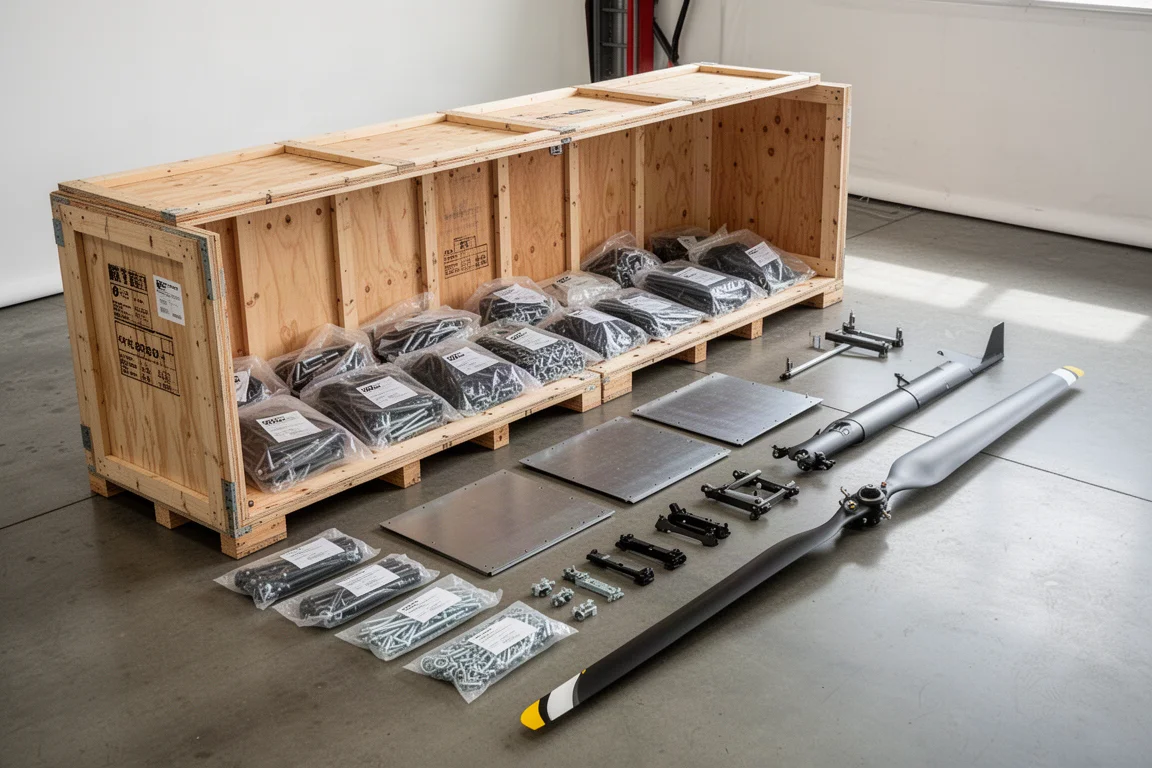
The airframe kit arrives in a crate about 12 feet long and 5 by 5 feet, with the blades, skids, sheet metal, tail boom, and transmission all disassembled. The cockpit does come assembled with the glass installed, and the factory paints it in your chosen color before shipping. Hardware is bagged and clearly marked, and the quick build kit includes the wiring harness mounted in the airframe with adel clamps pre-positioned.
The manual calls for a 200-hour build; the first English-instruction assembly reportedly took 165 hours for someone familiar with aircraft hardware. Tools are mostly common: a drill with a single bit size, a pop rivet tool for the Cherry rivets, Loctite, and marking paint, which is used on every fastener so preflight inspections can reveal any movement. The trickiest part of the build is routing the Rotax engine wiring harness correctly, particularly around heat and vibration concerns near the rear. A jig and gauge set the tail rotor shaft length so that critical step cannot be done wrong. Weight and balance can be completed either by lifting from the mast fixture or by using two scales under the skids plus a tail scale.
Buying Advice
The kit sold in mid-2024 at $220,000, which includes the airframe kit, a new Rotax 915 engine in the correct configuration, instruments, and a comm radio. The company describes it as one of the most complete kits available, since most kits do not include the engine, instruments, paint, and interior. You will still need fluids: gear oil for the transmission, gas in the tank, and coolant for the engine. Payments for North American customers are held in escrow in the United States and only released as materials are purchased for your production slot, which is a meaningful consumer protection in the kit industry. All raw materials and hardware come from US aerospace suppliers and are shipped to the 65-person factory in Saladillo, outside Buenos Aires, for fabrication, with kitting completed in the US.
If you are a pilot priced out of the modern helicopter market, comfortable with a multi-hundred-hour project, and drawn to a machine that flies like a go-kart with real power margins at high density altitude, the Sakari 8 deserves a close look.
Conclusion
The Sakari 8 stands out because it combines a proven Argentine design, a well-regarded turbocharged Rotax powerplant, autogas economics, and a genuinely complete kit with realistic build hours. It is not a casual purchase at this price, but for the right builder-pilot it offers one of the most complete and characterful paths to helicopter ownership available today.
Product link
View more details for Sakari 8 Helicopter Kit
This product is mentioned in the review. Check the specifications, options, and compatibility before buying.
View more details for Sakari 8 Helicopter KitFurther reading
Related Reviews
Aviation
Aero Technics ACH 212 Solo Review: A Carbon Fiber Solo Kit Aircraft You Can Build Fast
A nearly 30-year-old Czech design still offered only as a kit: 90% carbon fiber, quick-release wings, a 350 to 400 hour build, and performance that surprises.
Aviation
Aeropilot: The 80% Scale Cessna-Style Light Sport Aircraft Winning Over Flight Schools
A full-carbon, two-seat light sport aircraft modeled after the Cessna 182, with a larger cabin, big climb performance, and fuel burn that flight schools love.

Aviation
Aeropro A22 and A32: Two Light Sport Aircraft Worth a Close Look
A side-by-side look at the Aeropro A22 and A32, covering performance, pricing, customization, and what buyers should know before ordering.