Hi-Fi Amplifiers
Sabaj A5 Review: A Compact Class D Amplifier With Impressive Imaging
A $190 class D amplifier built around ICEpower modules, with two RCA inputs, no tone controls, and a spacious, three-dimensional presentation that is rare at this price.
Introduction
The Sabaj A5 is a compact class D stereo amplifier priced at $190, and it arrives with a very specific design brief: it is an amplifier and nothing more. Two RCA inputs, one large volume knob, one power switch. There is no DAC inside, no tone controls, no remote, and no subwoofer output.
What makes it more interesting is what sits under the lid. The A5 uses ICEpower modules, a class D platform that also appears in amplifiers costing many times more. That combination of a very simple control surface and a well-regarded amplification platform shapes everything about this amplifier, from the way it sounds to the kind of system it suits.
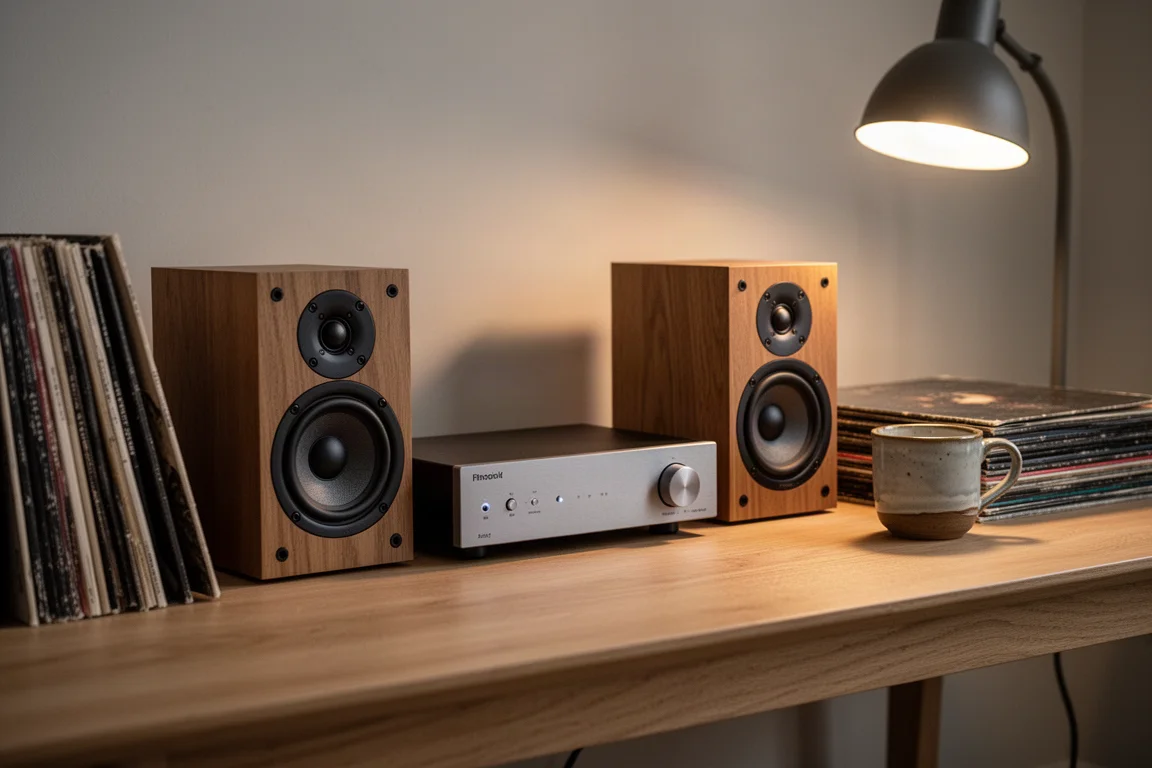
At $190 it sits in a crowded field of budget amplifiers, so the real question is not whether it works, but what it does better than the alternatives. The answer turns out to be narrower and more specific than most budget amplifiers can claim.
Design, Connections, and Controls
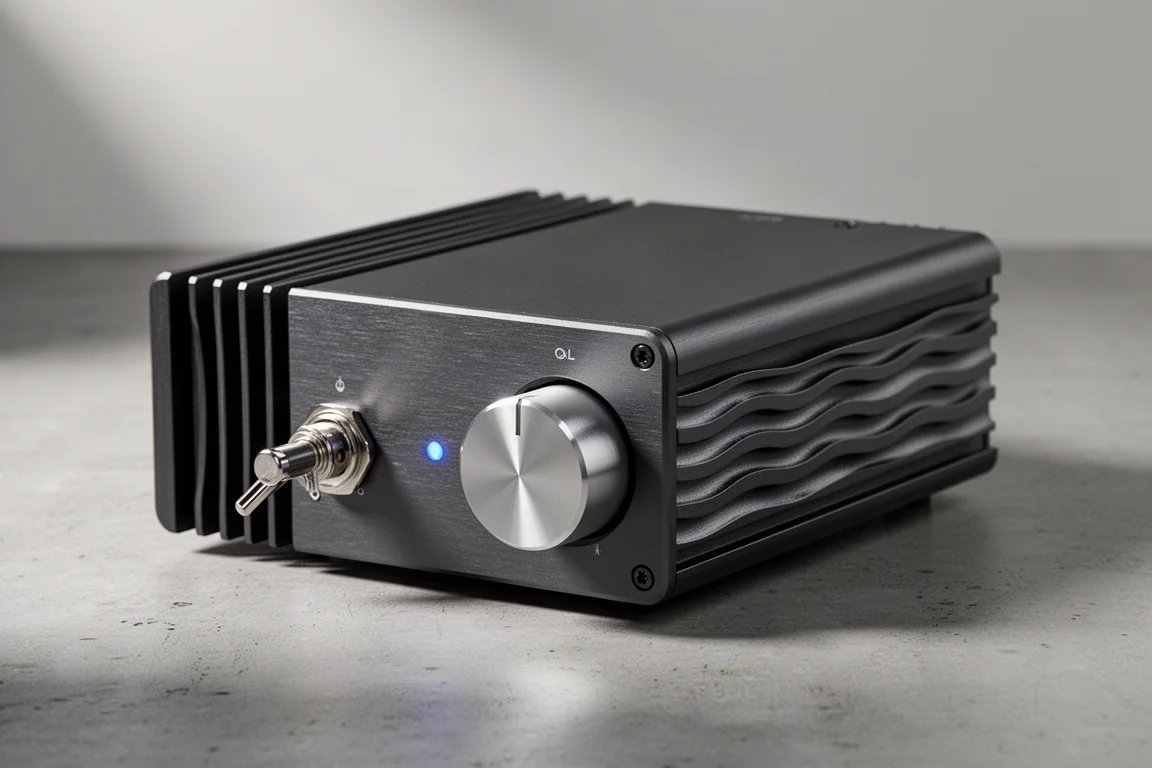
The A5 is small and light, with a metal chassis that rests on four feet at roughly two pounds. Two handles sit on either side of the front panel, and the side panels are formed into wavy ridges that serve as heat sinks. Ventilation is limited to a small area on the back, and the amplifier does not run especially warm in normal use.
The front panel is deliberately blunt: a power toggle that protrudes about an inch, a single blue indicator light, a large volume knob that turns smoothly without detents, and the brand logo. The knob does not feel like metal, but it moves cleanly and never grates.
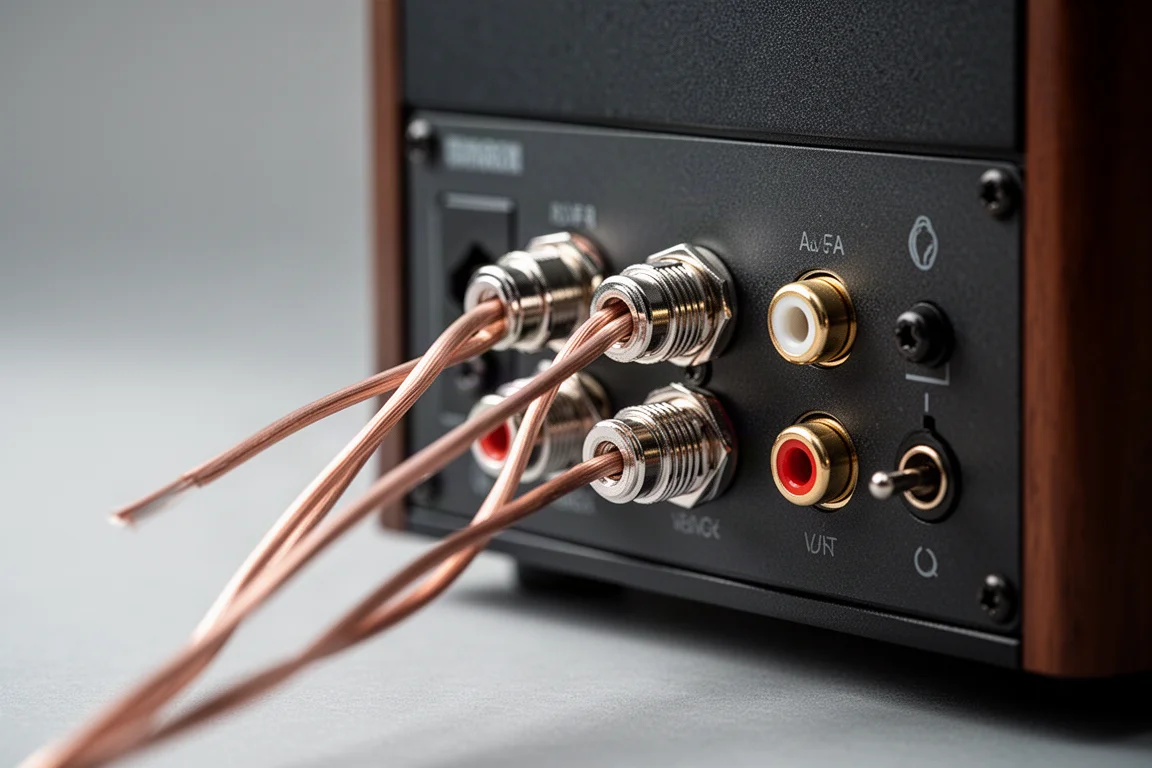
Around the back, the layout runs from left to right: a very small two-position input selector, two RCA inputs, speaker binding posts, a 110/220V voltage selector, a fuse, and an IEC power inlet. There are no balanced inputs and no digital connections of any kind. The rear input selector is the one element that feels fragile, small enough that it behaves like a switch you set once and then leave alone.
How the Sabaj A5 Sounds
Power output is rated at 50 watts into 4 ohms and 32 watts into 8 ohms, both at 0.002 percent total harmonic distortion. Those are usable figures. Distortion stays far below the one percent threshold that generally marks the limit of usable power, and in practice the amplifier drove a pair of Polk R100 speakers with enough authority to make bass felt in the chest. If anything, the power ratings read as conservative.
Tonally, the A5 is even rather than expressive. Bass is clear but not oversized. There is no added warmth, and the midrange can sound dull at times. Treble is fine without drawing attention to itself. Against the Aiyima A07, which costs considerably less, the A5 comes across as less warm and less dynamic. Against the SMSL DA9, it also gives up some dynamics and a little definition at the top end. The A5 also comes across as more balanced than the NAD C338, an amplifier built around Hypex modules. As a whole, the music feels slightly less lively.
What the amplifier does not do is lean in any direction. Nothing about the presentation is sterile or overtly analytical, and nothing is exaggerated either. The most useful description is that the A5 is balanced to the point of having no personality of its own, which makes it unusually easy to match with different speakers and sources.
Who This Amplifier Is For
This is an amplifier for listeners who already own, or plan to own, the rest of the signal chain. A separate DAC, a preamp, a streaming preamp, or an outboard equalizer all make sense ahead of the A5, and each one lets you shape the tone that the amplifier itself refuses to shape.
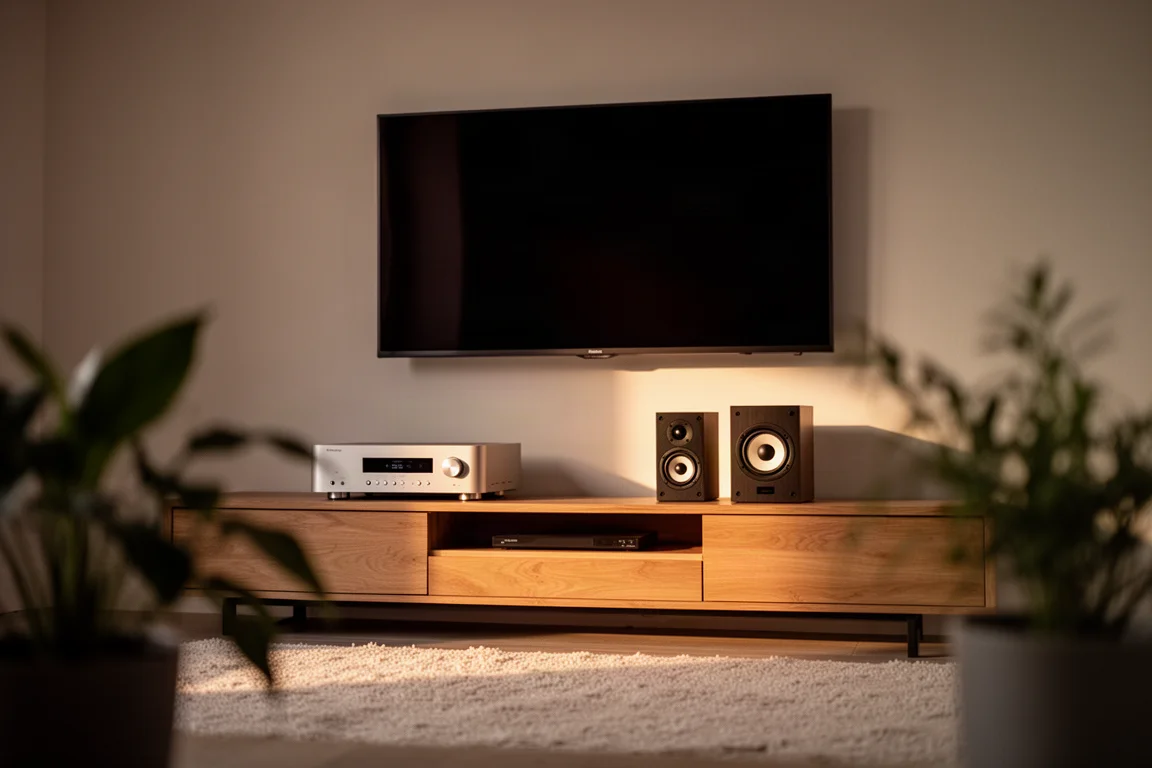
It also suits anyone who wants a small power source in a secondary system: on a desk, on a shelf behind a television, or as a replacement for a soundbar, where the compact chassis and low weight make placement easy.
It is not the right choice for anyone who wants one box to do everything. There is no remote, no internal DAC, no tone controls, no subwoofer output, and only two line-level inputs. Buyers who need any of those features will have to look elsewhere or add components.
Main Strengths: Space, Imaging, and Balance
The reason to consider the A5 at this price is not its tone. It is the sense of space. Instruments and performers are placed with a width and depth that is genuinely rare in a budget class D amplifier, and the effect is large and three-dimensional enough to recall the impression a tube amplifier can make in a room, without any of the warmth usually associated with tubes.
That quality is the single strongest argument for the amplifier. It also pairs well with the A5’s even tonal balance: with a balanced speaker like the Polk R100, no tone controls were needed at all, which is fortunate because the amplifier does not have any.
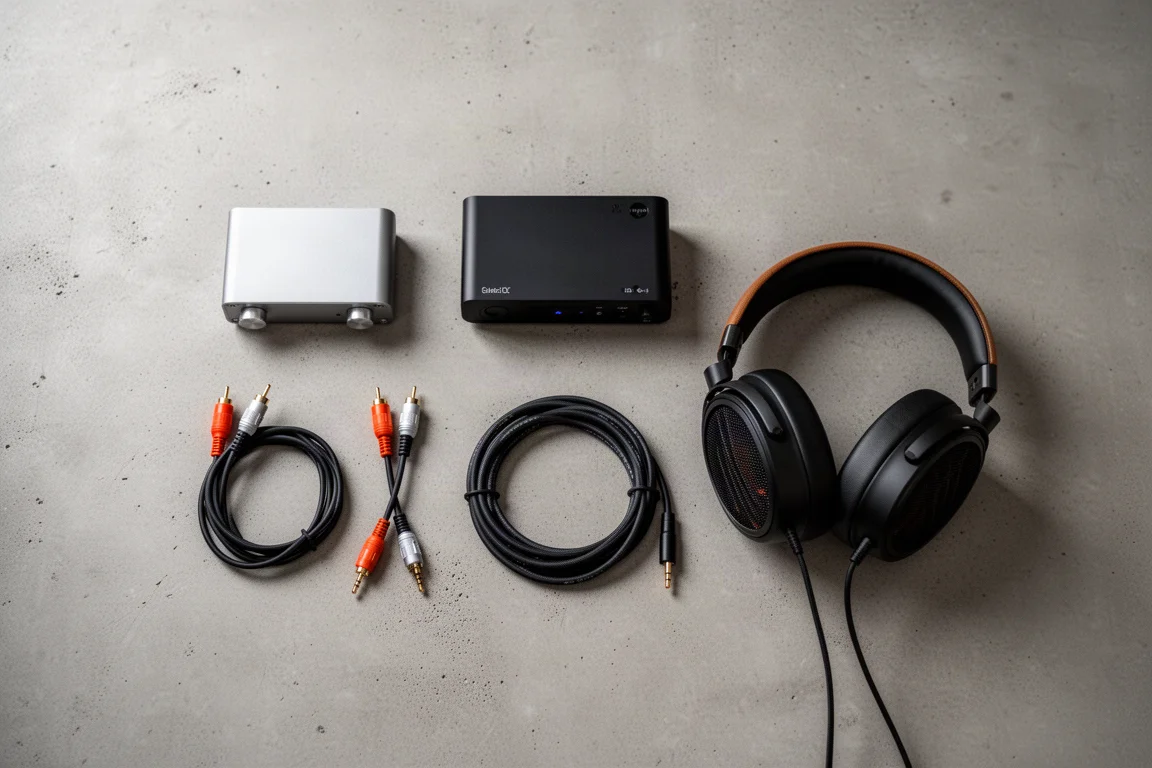
There is a practical benefit to the stripped-back design as well. Because there is no built-in DAC making decisions on your behalf, the A5 works as a clean foundation. Adding a DAC, a streamer, or an equalizer such as a Loki, Loki S, or Bellari unit lets you dial in the bottom or the top end exactly as you prefer, and the amplifier simply passes that character through.
Things to Consider Before Buying
The limitations are worth stating plainly. The feature set is minimal: two RCA inputs, no balanced connections, no remote, no DAC, no tone controls, and no subwoofer output. Anyone who wants convenience built in will find the A5 frustrating.
The sound itself is unremarkable in tonal terms. It is less dynamic than several rivals, including cheaper ones, and the midrange can feel flat on some material. Buyers looking for warmth or a lively, energetic presentation will likely prefer something else.
The styling is also a matter of taste. The oversized power toggle, the side handles, and the wavy heat sink ridges give the amplifier a look that some will find charming and others will find odd. The tiny input selector on the back panel is the least convincing detail of the whole design, both in size and in placement.
Buying Advice
At $190, the Sabaj A5 makes sense for a specific buyer: someone who wants a pure amplifier with strong spatial presentation and is willing to supply the DAC, the source, and any tonal shaping separately. In that role it is a strong value, because the imaging and three-dimensionality it delivers are not something budget amplifiers typically offer.
The practical path is to budget for a DAC or a streaming preamp alongside the amplifier, and to consider an equalizer if you want to add weight at the bottom or openness at the top. Pair it with balanced speakers and the A5 will hold up its end of the bargain without asking for attention. If you want a single box with tone controls, a remote, and digital inputs, this is not that product, and no amount of setup work will change it.
Conclusion
The Sabaj A5 is not the most dynamic amplifier at its price, and it does not try to be. Its value lies in the space it creates, the evenness of its presentation, and the honesty of its design. For listeners who understand that they are buying a foundation rather than a complete system, the A5 delivers something that is difficult to find under $200: a wide, three-dimensional stage and a clean platform to build on.
Product link
View more details for Sabaj A5
This product is mentioned in the review. Check the specifications, options, and compatibility before buying.
View more details for Sabaj A5Further reading
Related Reviews
Hi-Fi Amplifiers
Accuphase E-280 Review: Entry-Level Accuphase With Flagship Attention to Detail
A close look at the Accuphase E-280 integrated amplifier, covering its champagne build, AAVA volume control, sound quality, and the speakers and sources that suit it best.
Hi-Fi Amplifiers
Advance Paris A10 Classic vs Yamaha A-S301: Two Integrated Amplifiers Compared
A practical comparison of a $350 integrated amplifier and a $2,500 reference model, covering the differences that matter and the ones that do not.
Hi-Fi Amplifiers
Affordable Chinese Amplifiers Worth Buying: Five Budget Hi-Fi Amps Compared
A practical look at five affordable amplifiers, what each one does well, and the trade-offs to weigh before you buy.