DACs & Headphone Amps
Sabaj A20D Review: A Balanced DAC and Headphone Amp With Real Personality
A desktop DAC and headphone amplifier with a truly balanced output, generous connectivity, and a chassis that stands apart from the usual black box.
Introduction
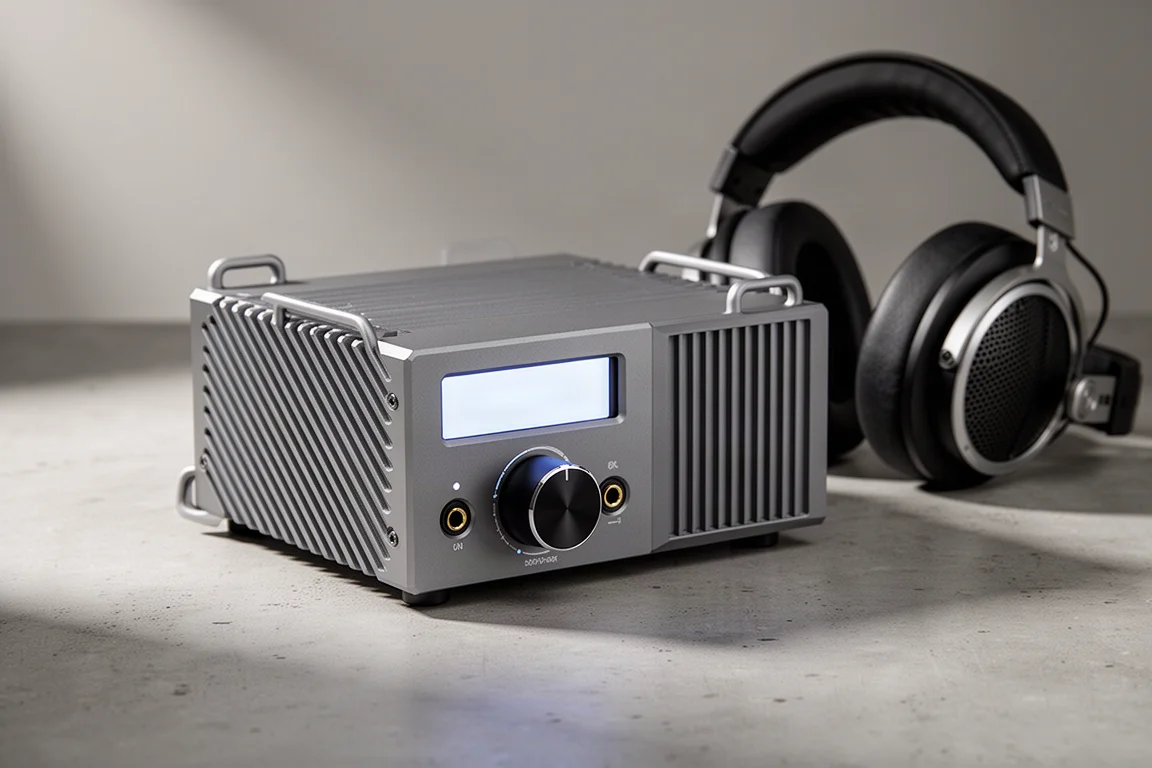
The Sabaj A20D is a compact desktop digital-to-analog converter and headphone amplifier with a genuinely balanced headphone output, a remote control, and a chassis that looks nothing like the usual black box. It sells for around $377, which places it in a crowded field of desktop DAC and amplifier combinations. What separates it is not the specification sheet so much as how it feels to use: a clear, colourful display, a satisfying volume knob, and a physical design that gives it the presence of a full-size component scaled down.
It is aimed at people who listen at a desk, and it works equally well driving headphones or feeding a power amplifier and passive speakers.
Who This Product Is For
The A20D makes the most sense for listeners who want one box to handle both headphone listening and a speaker system. Its front panel carries a 4.4mm balanced headphone output alongside a standard 6.35mm single-ended jack, and the rear panel offers both balanced XLR and unbalanced RCA outputs, so it can sit at the centre of a simple desktop setup.
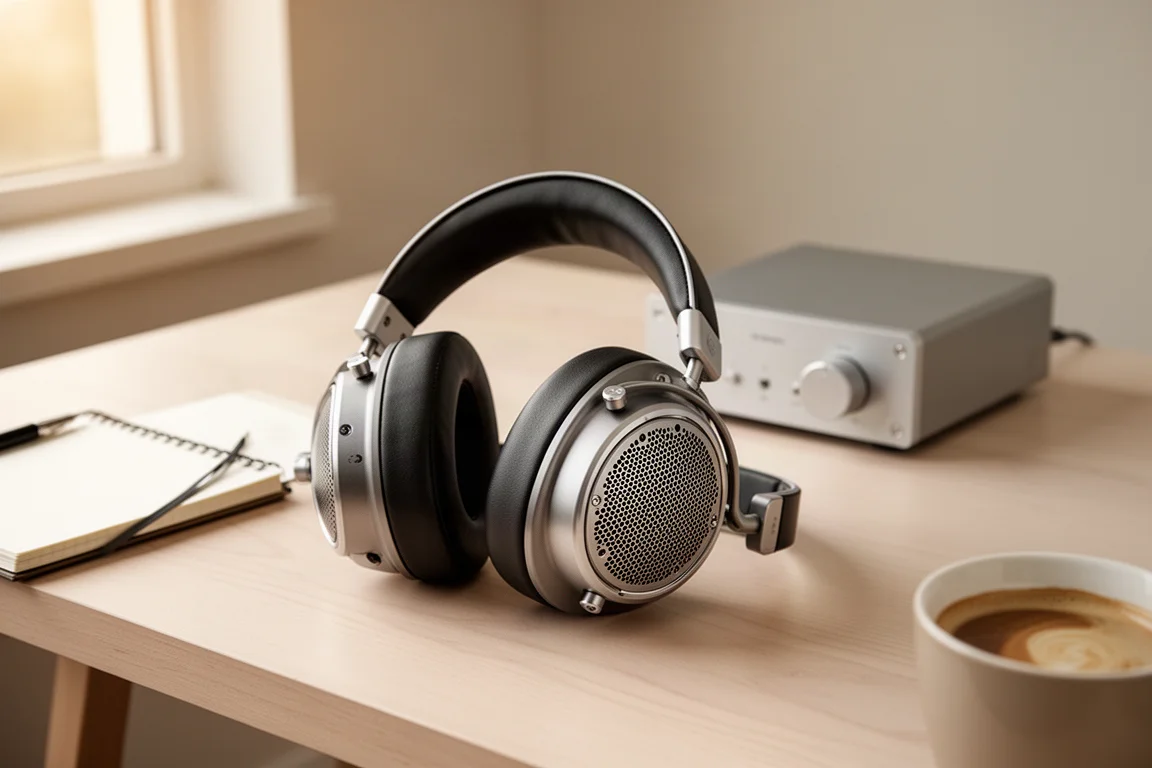
It also suits owners of demanding headphones. Rated at two watts into 16 ohms and one watt into 32 ohms, it drove every headphone connected to it, including the hard-to-drive Fostex T40RP. The open-back planar magnetic HiFiMan Edition XS, itself a fairly demanding load, was driven without any strain.
If your headphones are easy to drive and your system is already sorted, the A20D is more of a luxury than a necessity. For anyone building a desk setup around a single converter and amplifier, it is a very tidy answer.
What Stands Out in Daily Use
Design is where this unit separates itself. The chassis uses a two-tone grey finish, with wavy grey detailing along the sides that reads like a heatsink even though there is little heat to dissipate. Small handles sit at the front corners, and the whole thing rests on sturdy feet. It is angular and industrial rather than retro, and it feels like a real component rather than a generic box.
The display is arguably the best part. The layout and colour choices make information easy to read at a glance, and while the typeface will not please everyone, legibility is excellent. The volume knob, finished in black with silver accents, is pleasant to use. There is a remote in the box as well, a standard multi-device type that requires pressing the C button before it will control the A20D.
Inputs and Outputs
Connectivity is generous for the price. On the back you get two balanced XLR outputs, a pair of RCA outputs, one coaxial digital input, one optical S/PDIF input, one USB Type-C input, a Bluetooth antenna, and an IEC power connector. The USB-C port means no bulky printer-style cable is required.
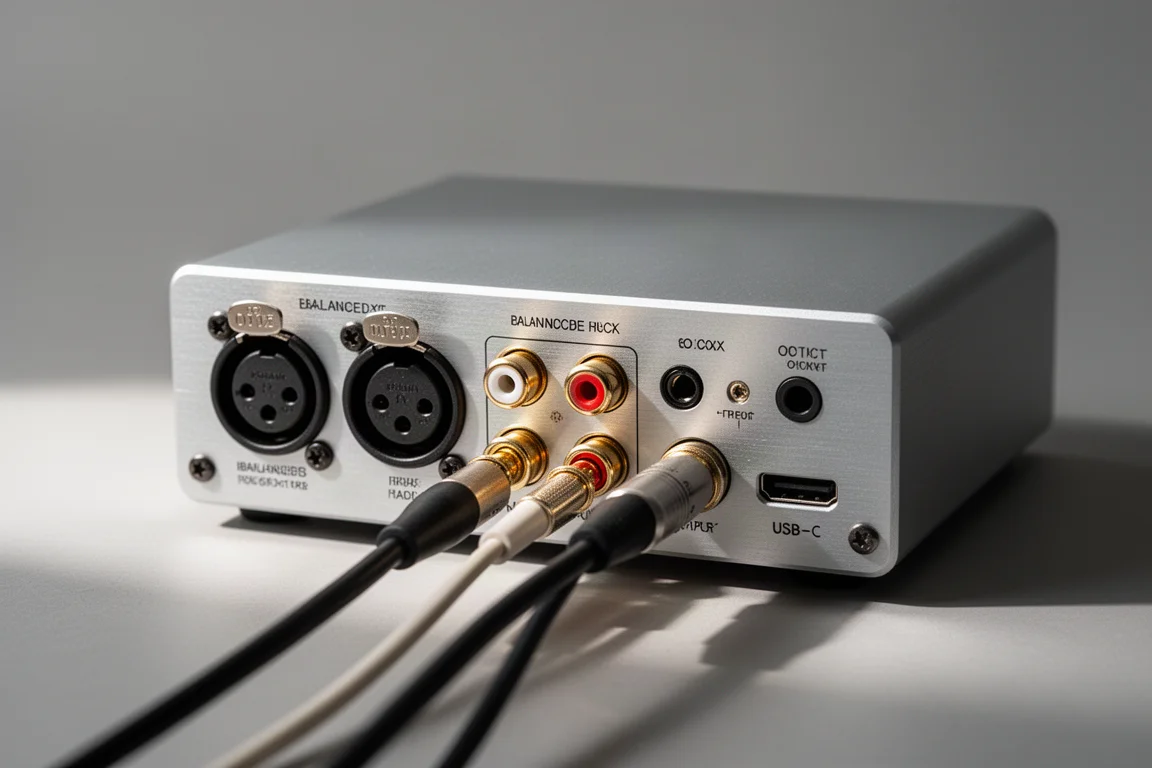
The menu lets you decide how those outputs behave. You can run XLR and RCA simultaneously, use the headphone amplifier alone, or send signal to XLR only or RCA only. Preamp mode is the other useful control: switch it off for a fixed, full-volume output, or switch it on to control volume with the remote, which is handy when feeding a power amplifier or a vintage receiver that has no remote of its own. A separate optical mode can route the signal either straight to the DAC chip or through the USB interface, which may help in systems with clocking quirks.
Bluetooth and Wireless Playback
Wireless support covers LDAC, aptX HD, and AAC, which between them account for most high-end Android phones and all Apple devices. Wireless is not the last word in fidelity, but this is about as good as Bluetooth gets today, and a dedicated function button switches to it quickly. One less common codec is missing, though it is rarely used.
Sound Quality and Headphone Power
Under the hood sits an ES9038 Pro Sabre converter and an XMOS USB interface, hardware that is typical of considerably more expensive designs. The result is a clean, neutral presentation with very high signal-to-noise ratio and dynamic range figures.
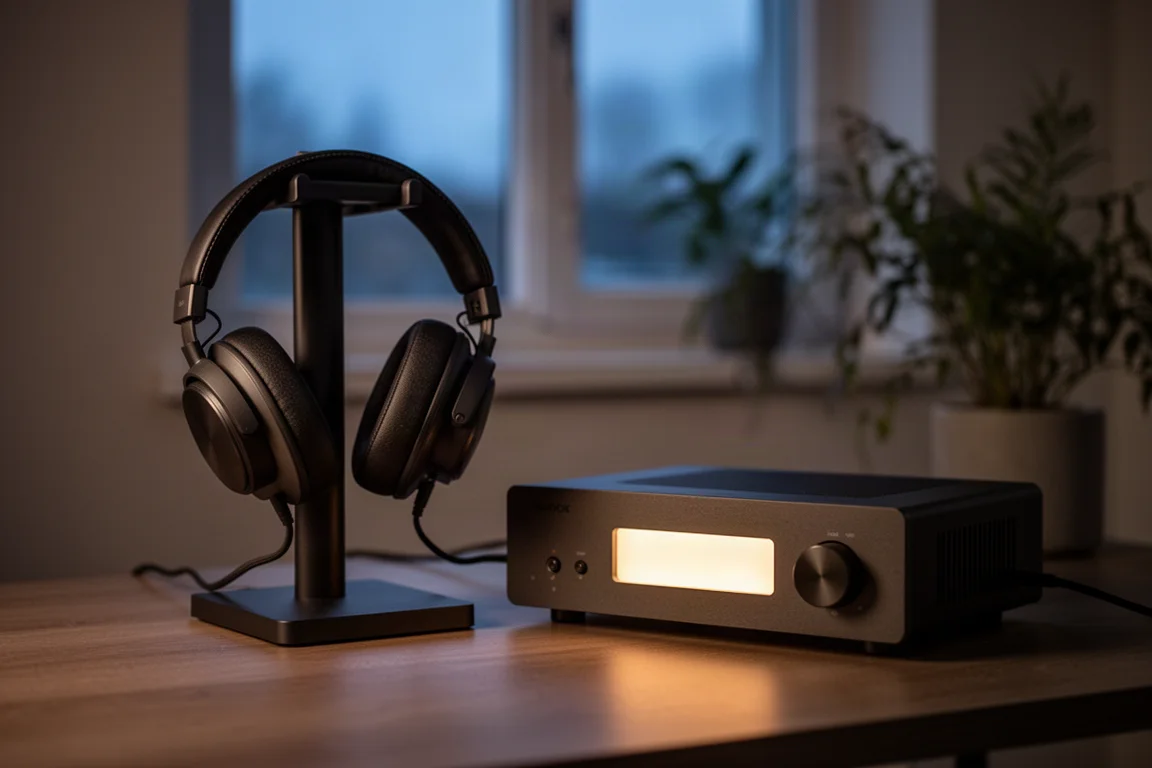
The menu system is deep, and it follows the layout conventions used across closely related designs. You can choose from a long list of PCM filters, including fast and slow linear, fast and slow minimum phase, apodizing, fast hybrid, and brick wall, plus DSD filter cutoffs at 47, 50, 60, and 70 kHz. In practice these filters rarely produce an audible difference, but they are there for anyone who wants to experiment. The same menu offers headphone gain in high or low, a DPLL setting to help with older sources that have clocking issues, and display controls for dimming after 5, 10, or 30 seconds, or staying on permanently, along with adjustable brightness.
Things to Consider Before Buying
Two versions of this unit exist. The 2022 version is the one with the distinctive chassis described here. The other version sold through retailers uses a more conventional, box-shaped enclosure, so it is worth confirming exactly which one you are ordering before you buy.
Availability has also been uneven, and stock has not always been easy to find. If the design is what attracts you, check that the listing matches the photographs you have seen.
The menu is another consideration. It is genuinely deep, and while the options are useful, some buyers will never touch most of them. The display typeface is also a matter of taste. None of this affects sound quality, but it is worth knowing before you commit.
Buying Advice
At around $377, the A20D is priced in line with its competition, and the combination of a balanced headphone output, dual XLR and RCA outputs, preamp mode, broad Bluetooth codec support, and a remote makes it strong value.
Buy it if you want a single desktop unit that handles both headphones and speakers, you own headphones that benefit from real power, or you simply want a component that looks as good as it measures. Look elsewhere if you already have a capable DAC and amplifier, or if you would rather have a simpler menu and a plainer chassis. For a first serious desktop converter and amplifier, it is an easy recommendation.
Conclusion
The Sabaj A20D gets the fundamentals right: clean sound, ample headphone power, balanced connections, and flexible outputs. What makes it memorable is everything around them, from the readable display to the two-tone chassis that refuses to look like every other converter on the shelf. If the design appeals and the feature set matches your system, it is a confident choice.
Product link
View more details for Sabaj A20D
This product is mentioned in the review. Check the specifications, options, and compatibility before buying.
View more details for Sabaj A20DFurther reading
Related Reviews
Hi-Fi Audio
Affordable Hi-Fi Upgrades Worth Doing: Four Practical Improvements
Four affordable hi-fi upgrades, from a dedicated DAC to speaker isolation and a proper phono stage, with notes on what each one actually changes.
Hi-Fi Accessories
Five Affordable Hi-Fi Upgrades to Modernize a Vintage or Budget System
Five inexpensive add-ons that bring HDMI, extra inputs, phono support, and CD playback to a modest hi-fi setup.
Hi-Fi Amplifiers
AIYIMA A70 Review: A Compact Class D Amplifier With Real Headroom
A compact two-channel amplifier built around the Texas Instruments 3255 chipset, with a smaller GaN power supply, better speaker terminals, and a few features worth understanding before you buy.