Hi-Fi Amplifiers
AIYIMA A70 Review: A Compact Class D Amplifier With Real Headroom
A compact two-channel amplifier built around the Texas Instruments 3255 chipset, with a smaller GaN power supply, better speaker terminals, and a few features worth understanding before you buy.
Introduction
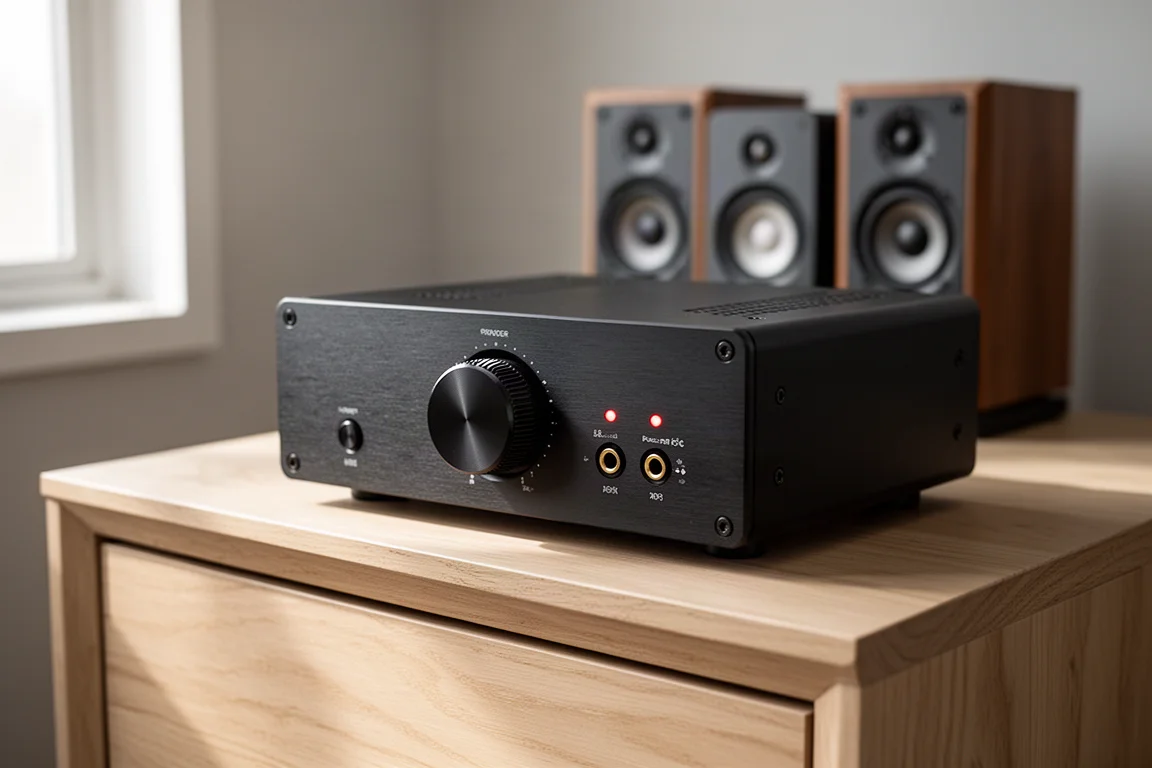
Class D amplification has settled into a comfortable groove, and the Texas Instruments 3255 chipset sits at the centre of it. The AIYIMA A70 is the company’s latest take on that formula, and it arrives at a price point that makes it worth a serious look for anyone building a compact two-channel system.
What separates the A70 from the crowd of similar boxes is not the chip itself. It is the power supply that ships with it, a 48V 5A GaN unit that is dramatically smaller than the traditional 48V 5A supplies that usually accompany amplifiers in this class. The amplifier is priced under $200 and lands at around $180 with that supply, and it can also be bought on its own if you already own a suitable power brick.
Who This Amplifier Is For
The A70 makes the most sense in a setup where something else handles the volume. Pair it with a streamer or DAC that has its own volume control and the amplifier becomes a pure power stage: you set the level once and the front end does the rest. That is exactly the use case the A70’s controls are built around, and it is why the multi-function knob on the front panel stops being an issue in daily use.
It also fits nearfield desktop systems and small rooms where a full-size integrated amplifier would be overkill. Two channels, XLR and RCA inputs, and a compact footprint make it easy to tuck onto a desk or a shelf. If you need mono or bridged operation for extra power, this is not the amplifier for that, and there are alternatives that cover it.
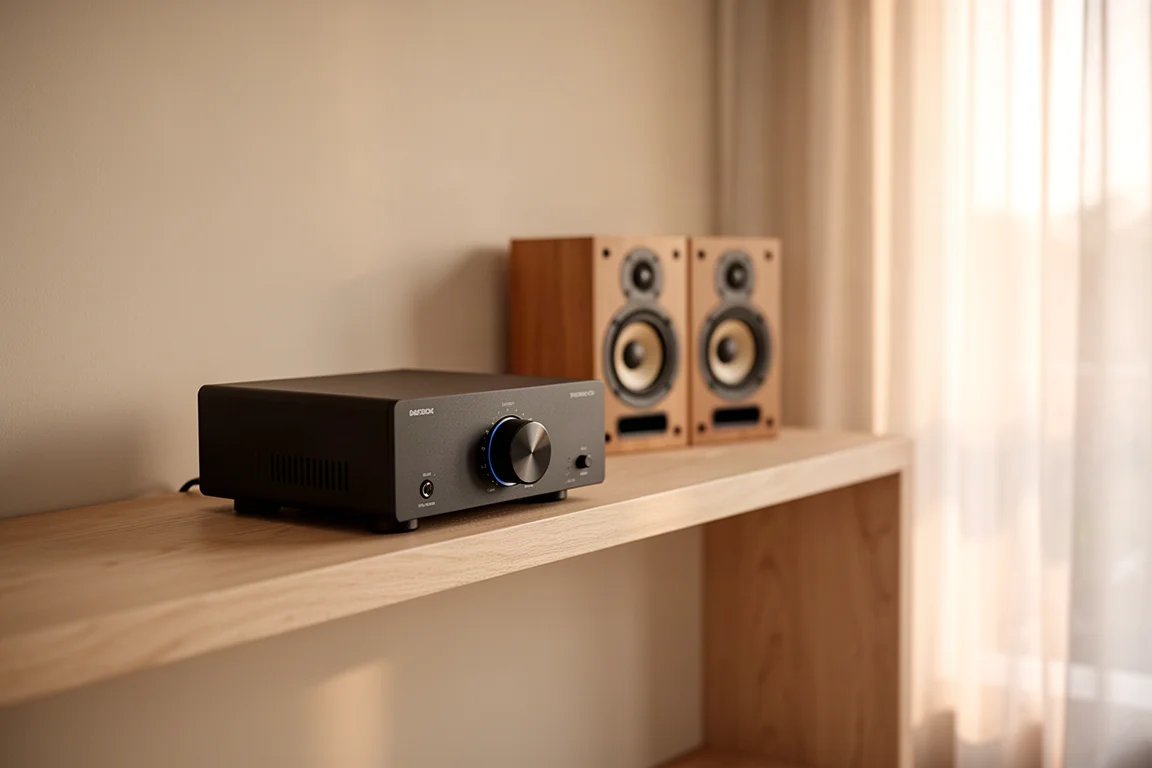
Buyers who want a single box that also handles source switching, streaming, or headphone duties will need to add those pieces separately. That is not a flaw so much as a description of the category, and the A70 is honest about what it is.
Main Strengths
Sound Quality and Power
The A70 uses the same amplifier chip as several of its closest competitors, and the family resemblance carries through to the sound. Set against the Fosi Audio ZA3, the two are fundamentally the same, which is a compliment to both.
Where the A70 makes its case on paper is headroom. It is built to sustain higher output levels for longer while keeping something in reserve. Driving a pair of ELAC Debut 3.0 bookshelf speakers, it handled peaks in the high 80s and even touched 90 dB without strain, well above the 75 to 80 dB that most nearfield listening actually needs.
In practice that reserve matters more than any single specification. It means the amplifier stays composed when a track asks for a sudden burst of energy, rather than compressing or hardening as the demand rises.
Features That Actually Matter
The compact GaN power supply is the headline. It delivers the same 48 volts and 5 amps as a conventional supply while taking up far less space, which is a genuine advantage on a desk or in a tight rack. Buying the amplifier without a supply is an option, so anyone who already owns a suitable 48V unit can save some money.
The speaker terminals are another practical improvement. They are larger and feel more substantial than the binding posts on the Fosi Audio ZA3, and they are easier to work with when you are connecting and reconnecting cables.
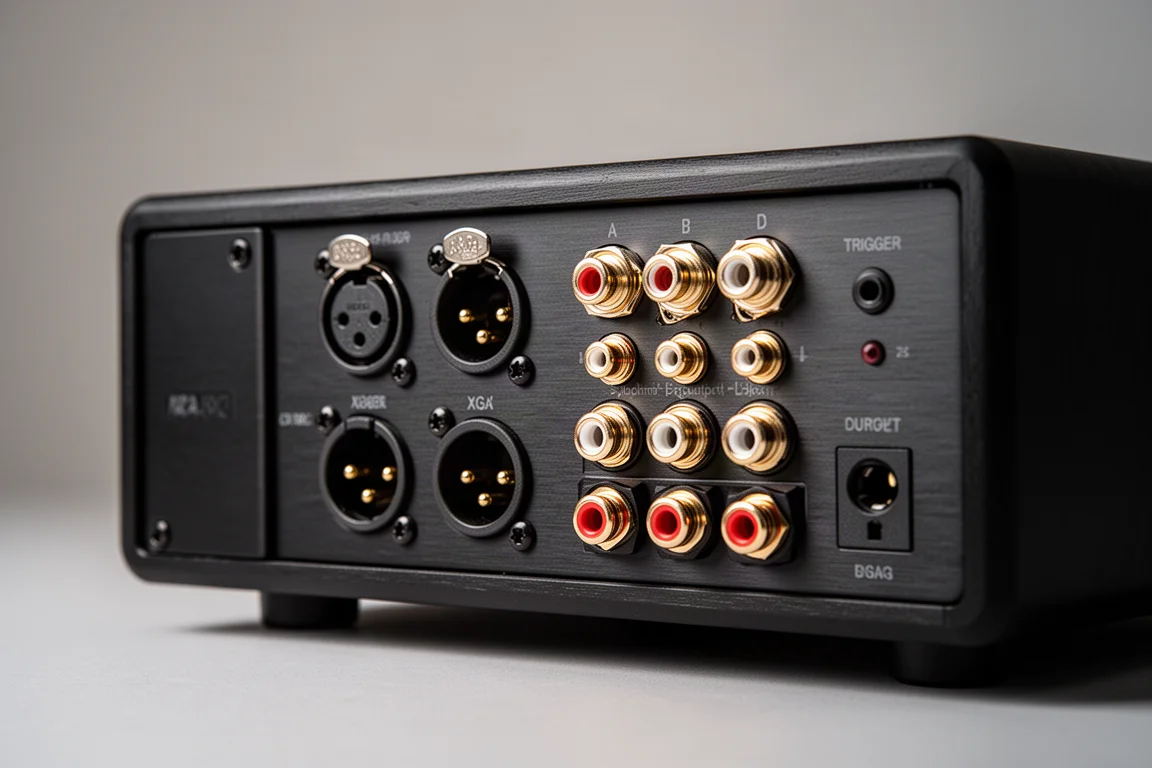
A 12V trigger input rounds out the useful additions. Because power and input switching are handled by a single multi-function knob, the trigger lets a source turn the amplifier on and off automatically, which keeps the whole system down to one remote. There is also a switchable +3dB gain boost on the RCA inputs, handy when a source output runs a little quiet.
Things to Consider Before Buying
The Subwoofer Filter Question
The rear panel includes a subwoofer output with an adjustable filter that spans roughly 15 Hz to 600 Hz. The catch is that it is a low-pass filter, not a high-pass filter. It shapes what reaches a subwoofer, not what reaches your main speakers.
For most buyers that makes it close to redundant, because active subwoofers already have their own low-pass controls. A high-pass filter for the main speakers would have been far more useful in a minimalist two-channel system, since it would let small bookshelf speakers play louder by removing deep bass from their workload. The RSL IA255.1 shows how simple that can be, with a single 90 Hz high-pass switch on the back.
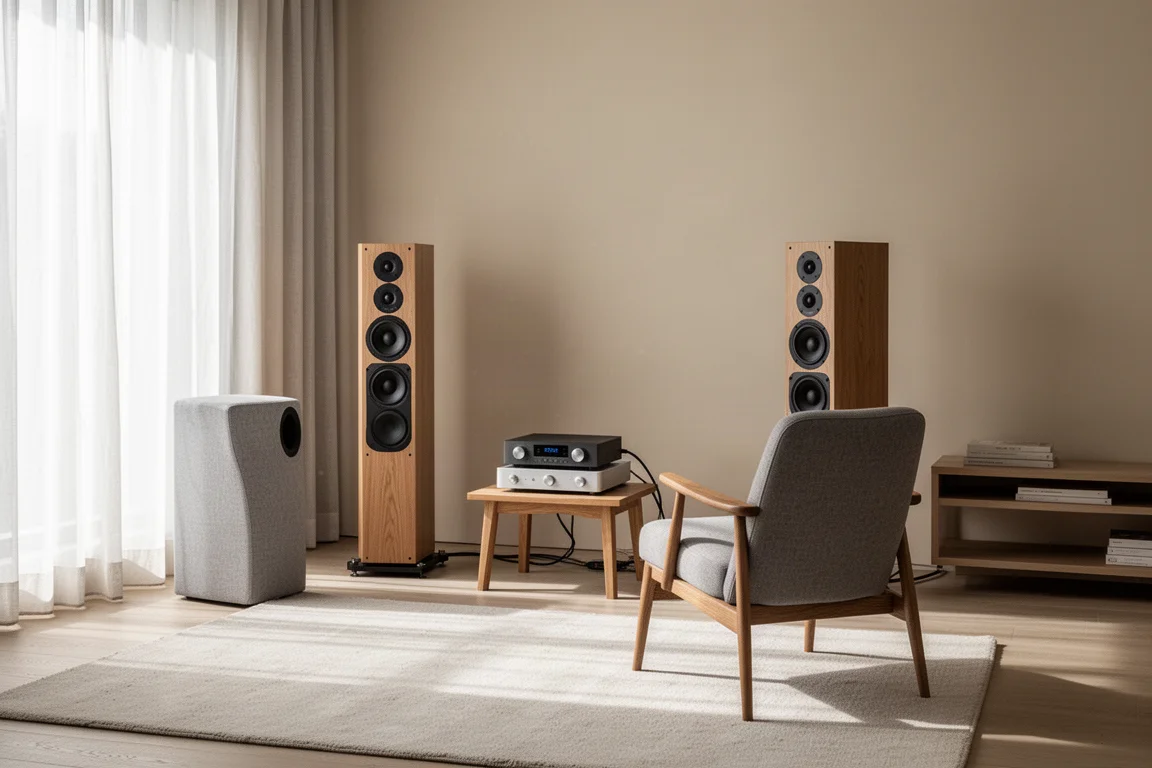
If you plan to run the A70 with a streamer that handles bass management, this question disappears entirely. The filter simply goes unused and the amplifier’s other strengths carry the system.
What Is Missing
There is no mono or bridged mode. The Fosi Audio ZA3 and the AIYIMA A07 Max, which share the same chipset, can both be run as single-channel amplifiers for better channel separation or more power into one speaker. The A70 cannot, and that limits how far it can grow with a system.
Swapping op-amps is possible but more involved than on some rivals. The A70 stacks two circuit boards inside its case, so reaching the op-amps means opening the amplifier, dealing with thermal paste, and potentially separating the boards. It is a one-time job rather than a regular activity, but it is worth knowing before you buy. The side panels can be removed and refinished if you want a different look, which is a small but welcome touch.
Buying Advice
At around $180 with the power supply included, the A70 sits in a crowded and increasingly competitive part of the market. If space is the priority, it is a strong choice: the small GaN supply, the solid speaker terminals, and the 12V trigger make it easy to live with day to day.
If you want mono operation, or you already own a suitable 48V power supply, the Fosi Audio ZA3 or the AIYIMA A07 Max may suit you better, and the ZA3 typically comes in at a lower price. If you can stretch to around $300, a full-size two-channel amplifier with a linear power supply moves you into a different category of component, with a toroidal transformer and the current delivery that comes with it. That is a real step up in both cost and footprint, and for a desktop system the A70 remains the more sensible buy.
Conclusion
The AIYIMA A70 is a well-executed compact amplifier with a genuinely useful power supply and better connections than most of its direct competition. Its weak points are specific rather than fundamental: a subwoofer filter that most people will never use, no mono mode, and a slightly awkward op-amp swap. For a small two-channel system built around an external streamer or DAC, it is an easy recommendation.
Product link
View more details for AIYIMA A70
This product is mentioned in the review. Check the specifications, options, and compatibility before buying.
View more details for AIYIMA A70Further reading
Related Reviews
Hi-Fi Amplifiers
Accuphase E-280 Review: Entry-Level Accuphase With Flagship Attention to Detail
A close look at the Accuphase E-280 integrated amplifier, covering its champagne build, AAVA volume control, sound quality, and the speakers and sources that suit it best.
Hi-Fi Amplifiers
Advance Paris A10 Classic vs Yamaha A-S301: Two Integrated Amplifiers Compared
A practical comparison of a $350 integrated amplifier and a $2,500 reference model, covering the differences that matter and the ones that do not.
Hi-Fi Amplifiers
Affordable Chinese Amplifiers Worth Buying: Five Budget Hi-Fi Amps Compared
A practical look at five affordable amplifiers, what each one does well, and the trade-offs to weigh before you buy.