Hi-Fi Power Amplifiers
Sabaj A20a Review: A Compact $200 Class D Amplifier With Real Bridge Mode
The Sabaj A20a pairs a modern Infineon Class D chip with balanced inputs, a passive subwoofer low-pass filter, and a bridge mode that unlocks serious output for around $200.
Introduction
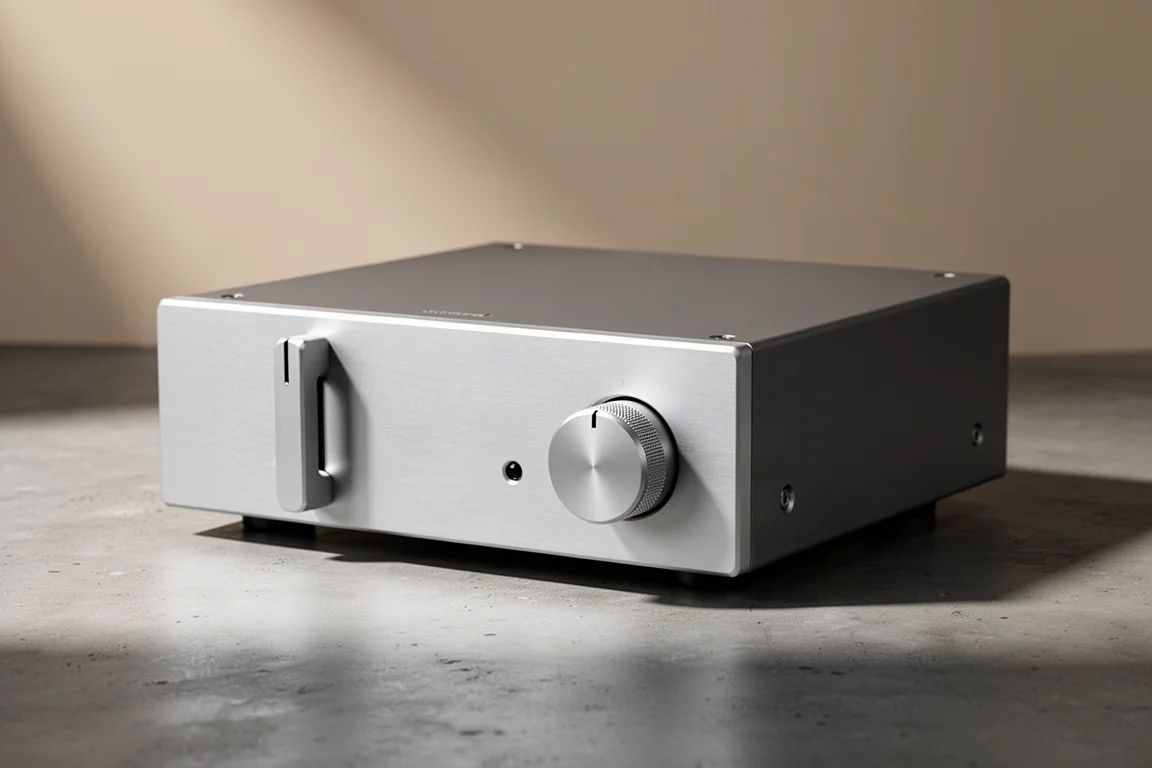
The Sabaj A20a is a compact Class D power amplifier built around the Infineon MA5332M switching chip, a newer device than the widely used Infineon 12070. It runs as a normal two-channel amplifier or can be bridged into a single, much more powerful channel, and it sells for around $200. A matching DAC sits alongside it in the same chassis size, which makes the A20a an easy piece to add to a small separates stack rather than a one-box system.
That mix of low price, flexible operating modes, and a compact footprint is what makes it interesting. This review covers what it does well, where it asks for a little patience, and how to decide whether it belongs in your setup.
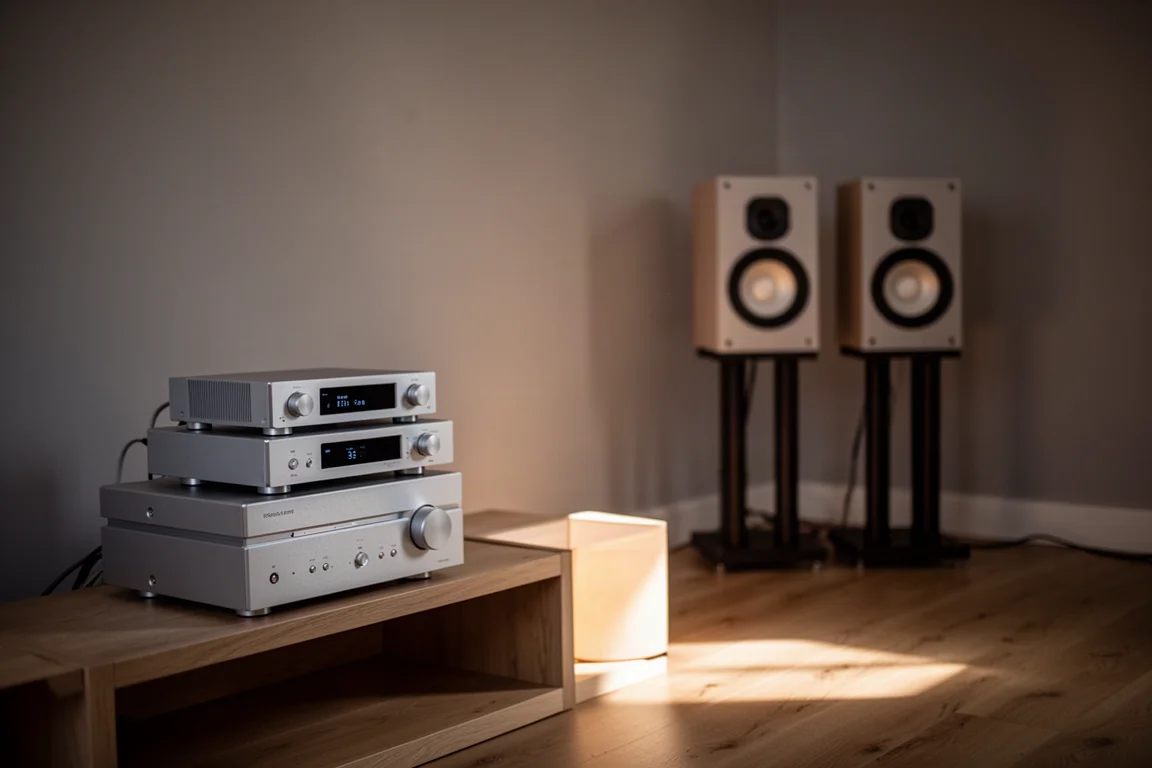
The A20a is not trying to be a do-everything integrated amplifier. It is a power amplifier with a specific set of jobs, and it does those jobs well when the rest of the system is chosen with care.
Who this product is for
The A20a makes most sense for listeners building a compact separates system who want a lot of usable power for the money. It is also a natural fit for anyone who wants to run a passive subwoofer from the same amplifier, thanks to an onboard low-pass filter that adjusts from 70 Hz to 200 Hz.
It suits desktop and small-room systems where a full-size amplifier would be impractical, and it suits DIY subwoofer builders who need an affordable amplifier with a variable low-pass. Balanced XLR inputs and RCA inputs give it flexibility with a range of sources.
It is less suited to anyone who wants a remote control, a balance control, tone controls, or a single box that handles streaming, conversion, and amplification together. It is also not the obvious first choice if your speakers already lean bright.
Main strengths
Power and flexibility
Sabaj quotes 170 watts per channel into 4 ohms and 90 watts per channel into 8 ohms at a claimed 0.004 percent THD, with bridged output rated at 350 watts into 4 to 8 ohms. Those figures are generous for the price, and in practice there is more than enough output on tap. Driving a 6 ohm bookshelf pair in stereo, the amplifier had power to spare. In bridged mode it would be far too much for those same speakers.
Sound quality in stereo mode
The MA5332M implementation sounds fuller than the older Infineon 12070 designs, with a more substantial bottom end and detailed mids. There is no baked-in equalisation, so the character you hear is close to what your source and speakers give you. Even with no EQ applied, the low end is better filled out than most affordable Class D amplifiers manage.
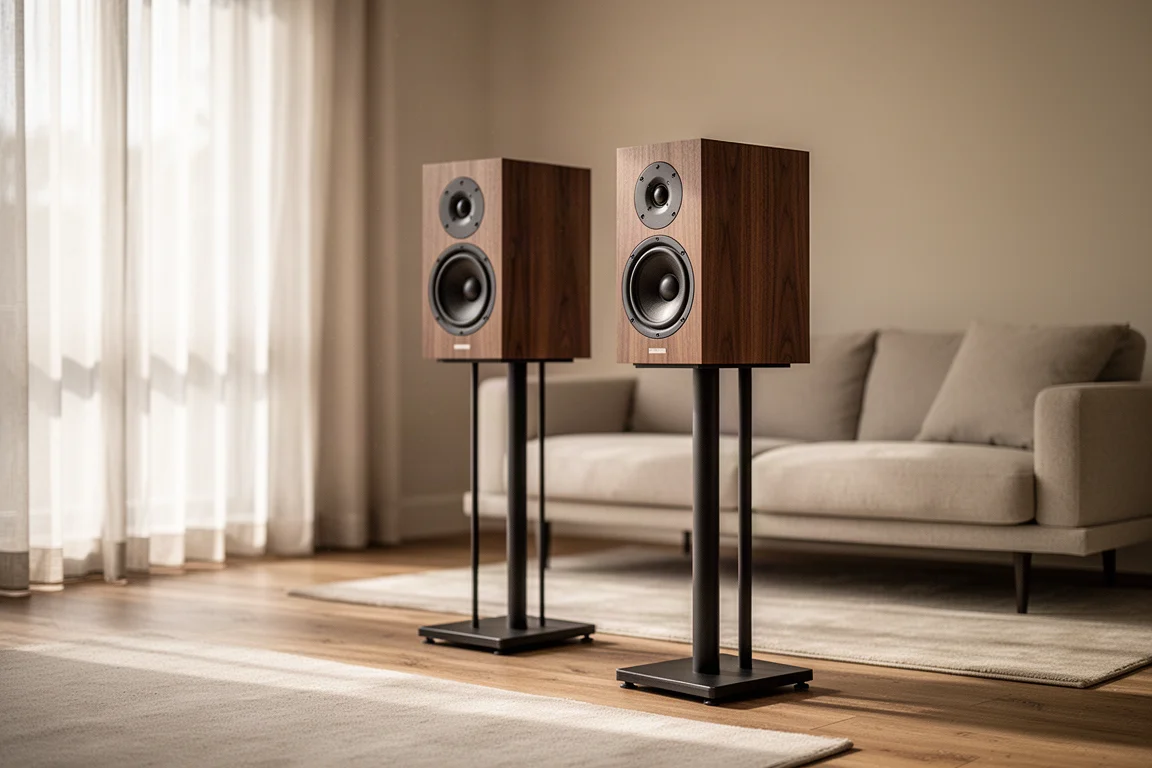
Detail retrieval through the midrange is a particular strength, and vocals come across with a clean, unforced quality on well-recorded material. The presentation is balanced rather than warm, which is why the amplifier responds so clearly to the speakers you connect to it.
Bridged mode and imaging
Bridging adds output and weight, and it noticeably improves the sense of impact, with more presence in the lower registers. Imaging is a genuine strength as well: instruments lock into place with unusual precision for this price, and bridged operation sharpens that further. It is an enjoyable amplifier to listen to once it is configured.
Things to consider before buying
Top-end character
The one consistent caveat is a slight hardness in the upper midrange and top end on some material. It shows up on brighter recordings and is more obvious with forward-sounding speakers, and it largely settles down with warmer speakers. The behaviour is track dependent and speaker dependent, and a modest EQ cut in the 6 kHz to 8 kHz region tames most of what remains. If your system already errs on the bright side, budget for different speakers or a source with EQ.
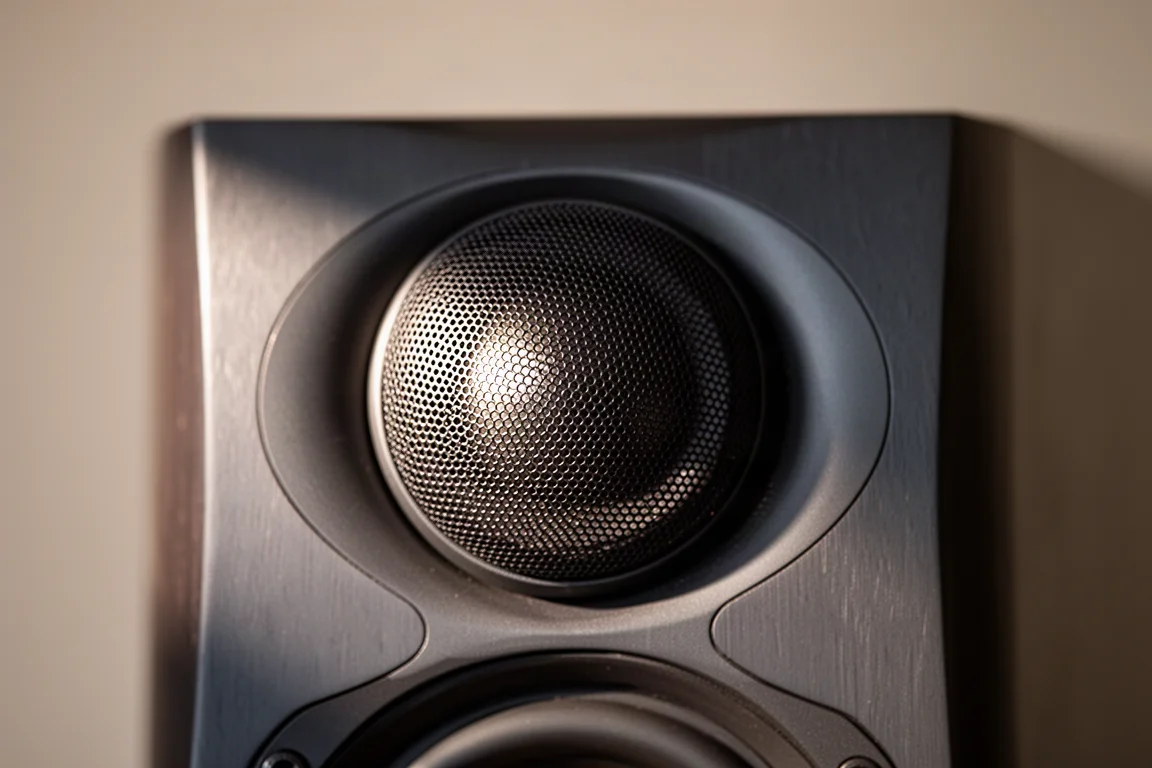
The good news is that this is a narrow band of behaviour rather than a blanket character. On well-recorded tracks the top end is clean, and the hardness appears mainly where the recording itself is aggressive or the speaker has a rising treble response.
Setup, controls, and matching
The front panel is minimal: a large power lever, a single indicator light that starts red and turns blue once the amplifier is ready, and a volume knob. There is no balance control, so in bridged mode the volume knob effectively becomes a balance control between the two channels. There is no remote either, which means volume has to be adjusted on the unit unless your DAC or preamplifier has its own volume control.
The rear panel is where the flexibility lives, and it takes a few minutes to learn. From left to right you get a variable low-pass filter for passive subwoofers, a bank of dip switches, RCA inputs, an RCA and XLR selector, an XLR input, a Bluetooth antenna, and speaker binding posts. The dip switches cover line versus Bluetooth input, low-pass engagement, and stereo versus bridge operation, and the correct positions are printed on the panel below them. It is a set-once-and-forget arrangement rather than something you adjust often.
Note that the filter is a low-pass, not a high-pass, so it cannot be used for bass management on your main speakers. A switch-mode power supply sits inside, and the amplifier takes a standard IEC power cable.
Buying advice
At around $200 for a single unit, the A20a is an affordable way into balanced-input Class D amplification. A pair costs about $400, the matching DAC is around $420, one amplifier plus that DAC comes to roughly $620, and two amplifiers plus the DAC lands near $820. If you do not need bridged operation, starting with a single unit and the matching DAC is the more sensible path, and you can add a second amplifier later if you want to bridge into a pair of mono blocks.
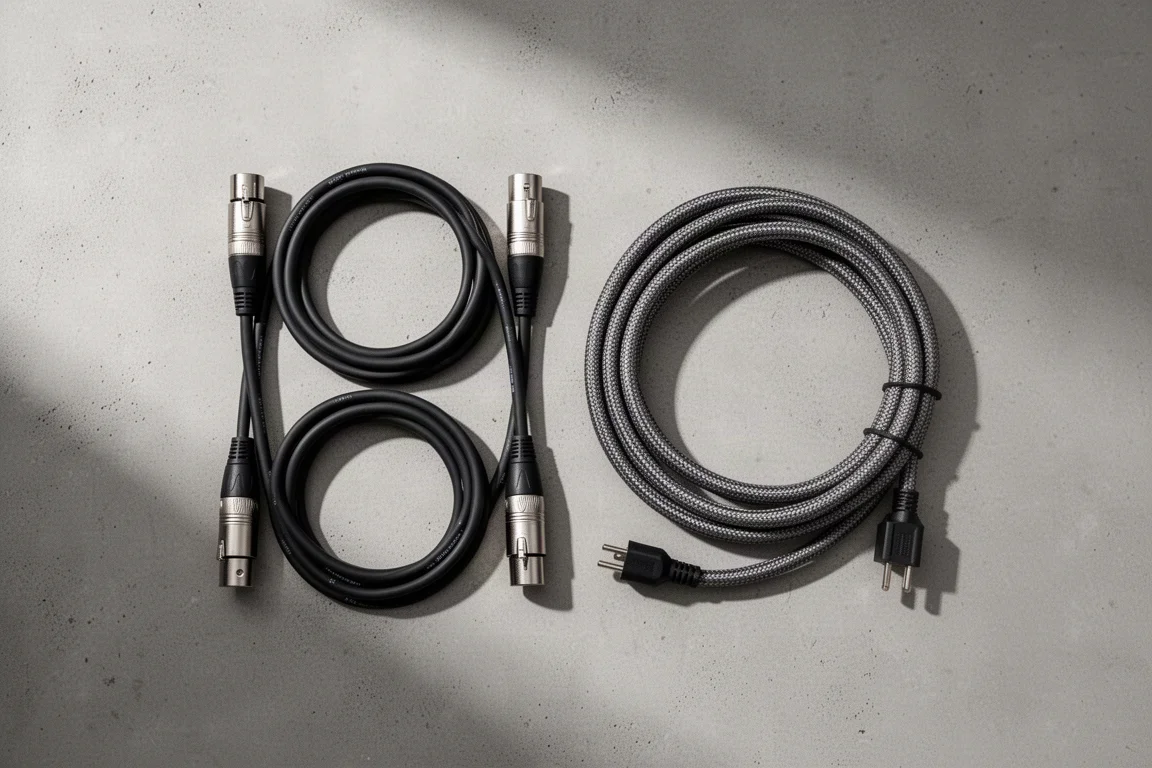
Because the amplifier has no remote and no volume control beyond the front knob, plan around a DAC or preamplifier with variable output. If your source is fixed-level only, you will be walking over to the amplifier every time you want to change the volume.
It is also worth weighing the A20a against conventional integrated amplifiers that bundle a DAC and a more familiar form factor. Those alternatives may suit your taste better, particularly if you prefer a warmer tonal balance. Where the A20a stands out is power per dollar, balanced inputs, bridged flexibility, and a small chassis that stacks neatly with the rest of the line. One sensible use case pairs it with a processor that has balanced outputs for an immersive system, where compact amplifiers are easier to place than full-size ones.
Conclusion
The Sabaj A20a is a strong value in affordable Class D amplification. It looks good, it delivers plenty of power, its imaging is precise, and its bridge mode turns it into something more substantial than its price suggests. The residual hardness at the top end is real, but it is manageable through speaker choice or a small EQ adjustment, and for many listeners it will not be an issue at all. If you want a compact, flexible power amplifier with balanced inputs and you do not mind adjusting volume at the unit, this is a sensible place to put your money.
Product link
View more details for Sabaj A20a
This product is mentioned in the review. Check the specifications, options, and compatibility before buying.
View more details for Sabaj A20aFurther reading
Related Reviews
Hi-Fi Power Amplifiers
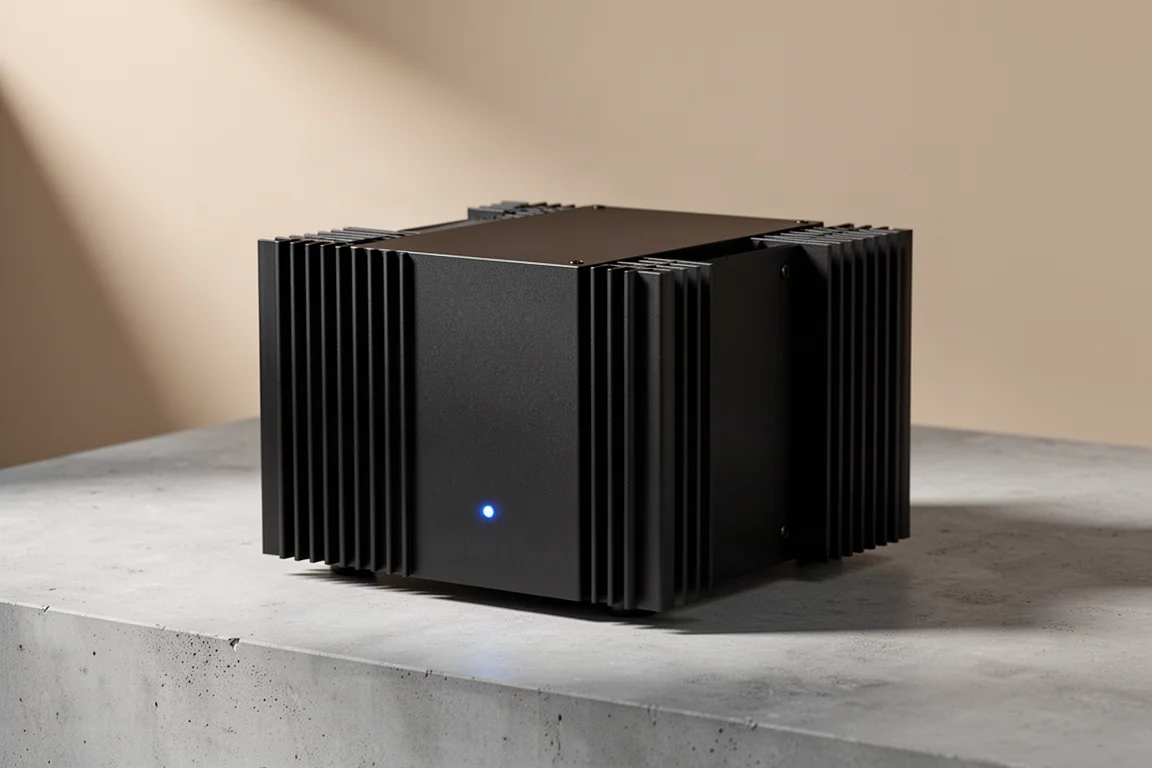
First Watt SIT-4 Review: Class A Dimensionality in a 10-Watt Amplifier
A close look at the First Watt SIT-4, a limited-production Class A single-ended amplifier built around a larger Tokin static induction transistor.
Hi-Fi Power Amplifiers
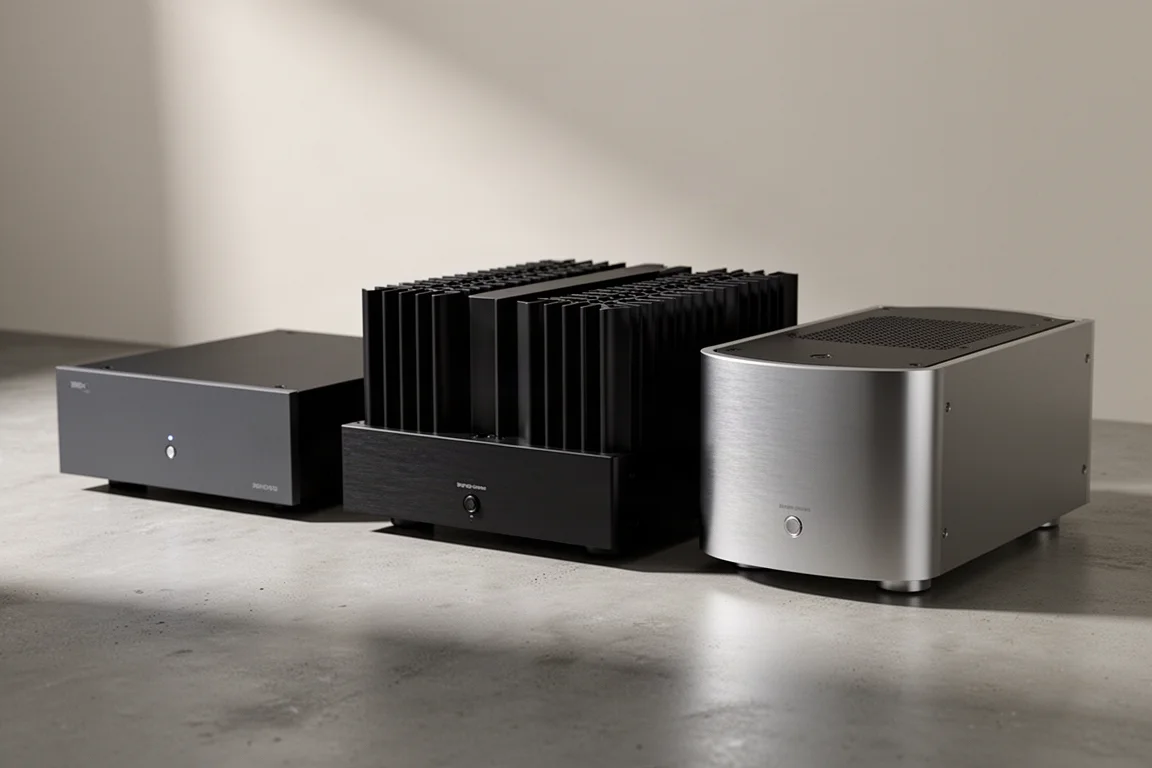
High-End Power Amplifiers Compared: Mola Mola Perca, Pass Labs XA25, and Gato Audio PWR-222
Three high-end power amplifiers with distinct characters: a compact Dutch Class D design, a pure Class A classic, and a powerful Danish monoblock pair.
Hi-Fi Power Amplifiers
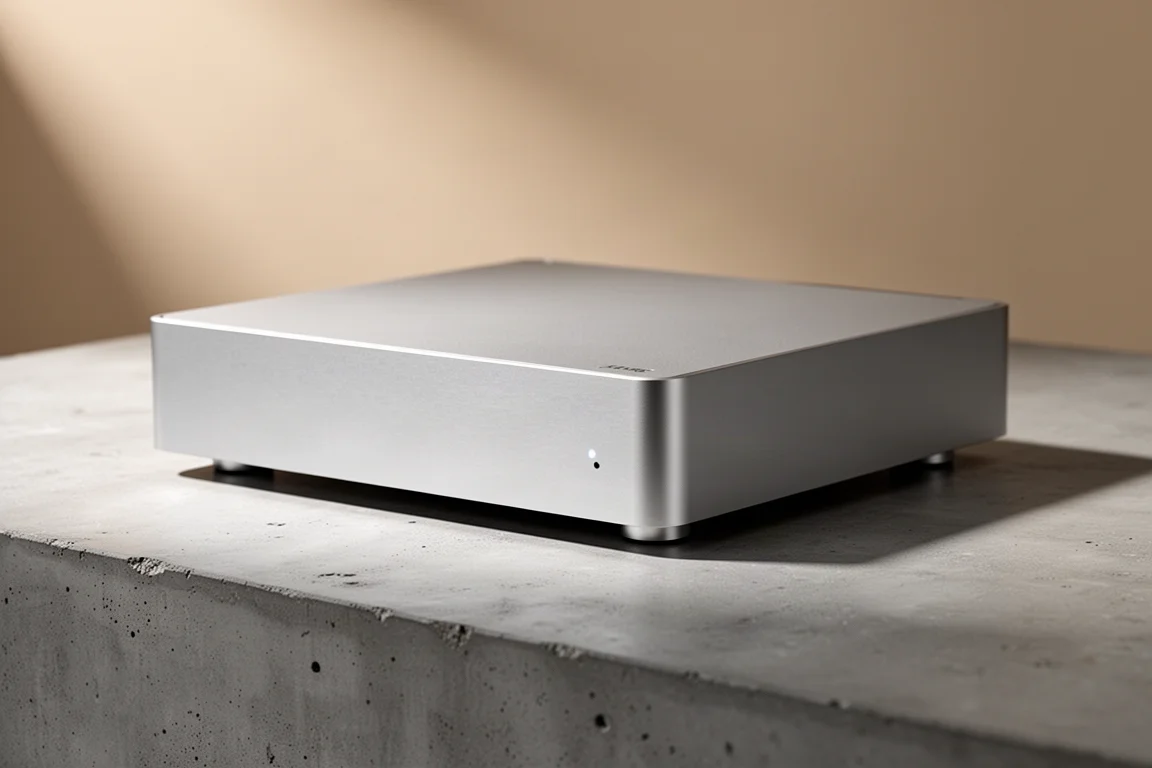
Peachtree Audio GaN One Review: A Digital Power Amplifier Built Around GaNFETs
A digital power amplifier with a single coaxial input, a GaNFET output stage, and a relaxed, refined character that sets it apart from typical class D designs.