Hi-Fi Power Amplifiers
High-End Power Amplifiers Compared: Mola Mola Perca, Pass Labs XA25, and Gato Audio PWR-222
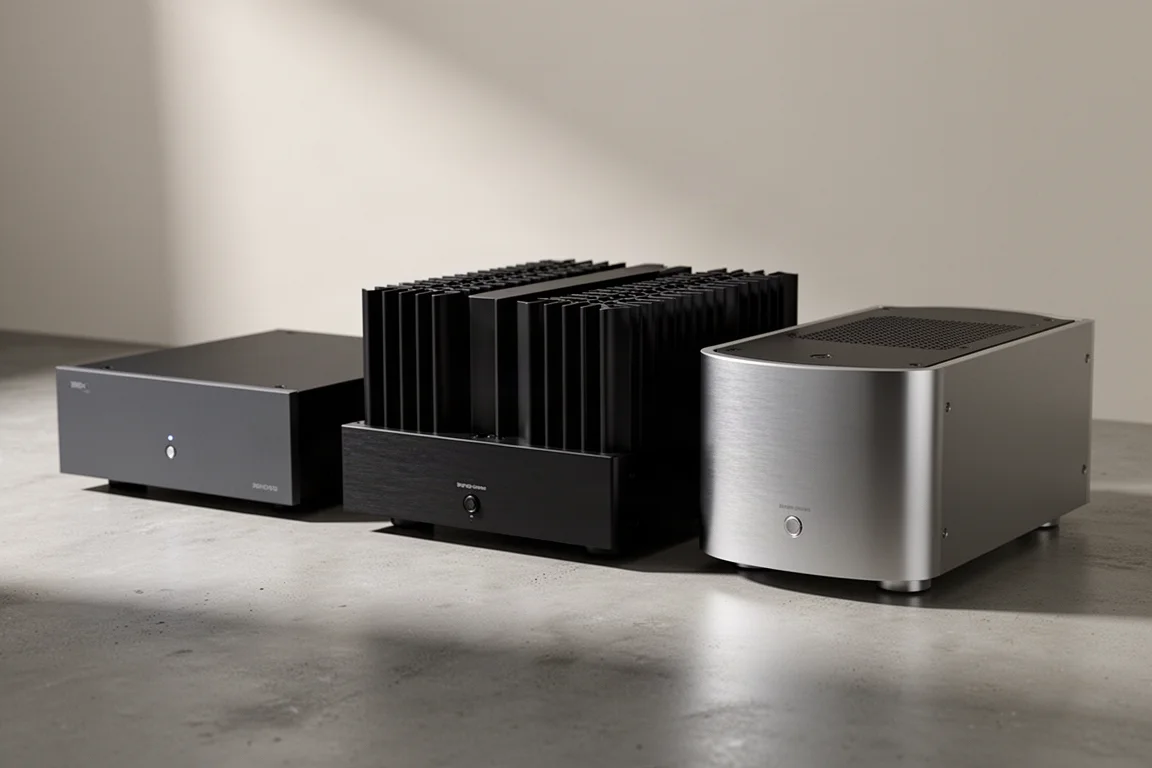
Three high-end power amplifiers with distinct characters: a compact Dutch Class D design, a pure Class A classic, and a powerful Danish monoblock pair.
Introduction
Three power amplifiers, three very different design philosophies, and one shared price bracket. The Mola Mola Perca is a compact Class D stereo amplifier built in the Netherlands. The Pass Labs XA25 is a pure Class A design rated at 25 watts per channel into 8 ohms. The Gato Audio PWR-222 is a Danish monoblock pair rated at 250 watts per channel into 8 ohms.
Prices sit between $5,150 for the XA25 and $9,800 for the Perca, with the Gato pair at $8,200 in the US. At this level, wattage tells you very little about how an amplifier will actually behave in a room. Character, noise floor, and the way each design handles real speakers matter far more.
The differences between these three designs show up most clearly across three very different speaker types: compact stand-mounts, high-sensitivity horn speakers, and large open-baffle designs. That spread matters, because an amplifier that shines with one kind of load does not automatically shine with another.
What Matters in a High-End Power Amplifier
Power delivery into low-impedance loads matters more than the headline 8-ohm figure. An amplifier that stays composed at 4 ohms and below will handle difficult speakers without sounding strained or shut in.
Noise floor matters just as much. A design that stays silent with an ear pressed against the driver removes a layer of grit from quiet passages and late-night listening, and it lets you hear deeper into the recording.
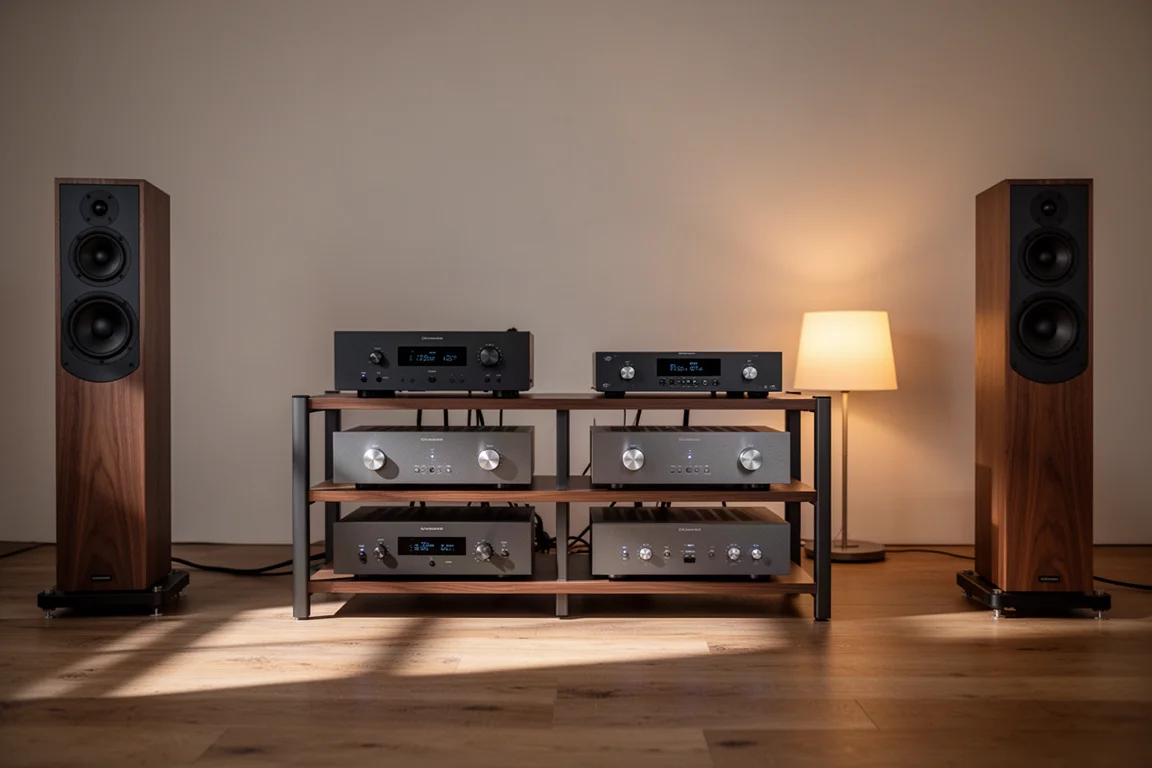
Transparency to upstream components is the third factor. Some amplifiers impose a sound of their own, while others pass along what the preamplifier, DAC, and phono stage are doing. Which behaviour you prefer is a matter of taste rather than correctness, and it is the single biggest reason three amplifiers at similar prices can feel so different.
Mola Mola Perca: A Compact Class D Design From the Netherlands
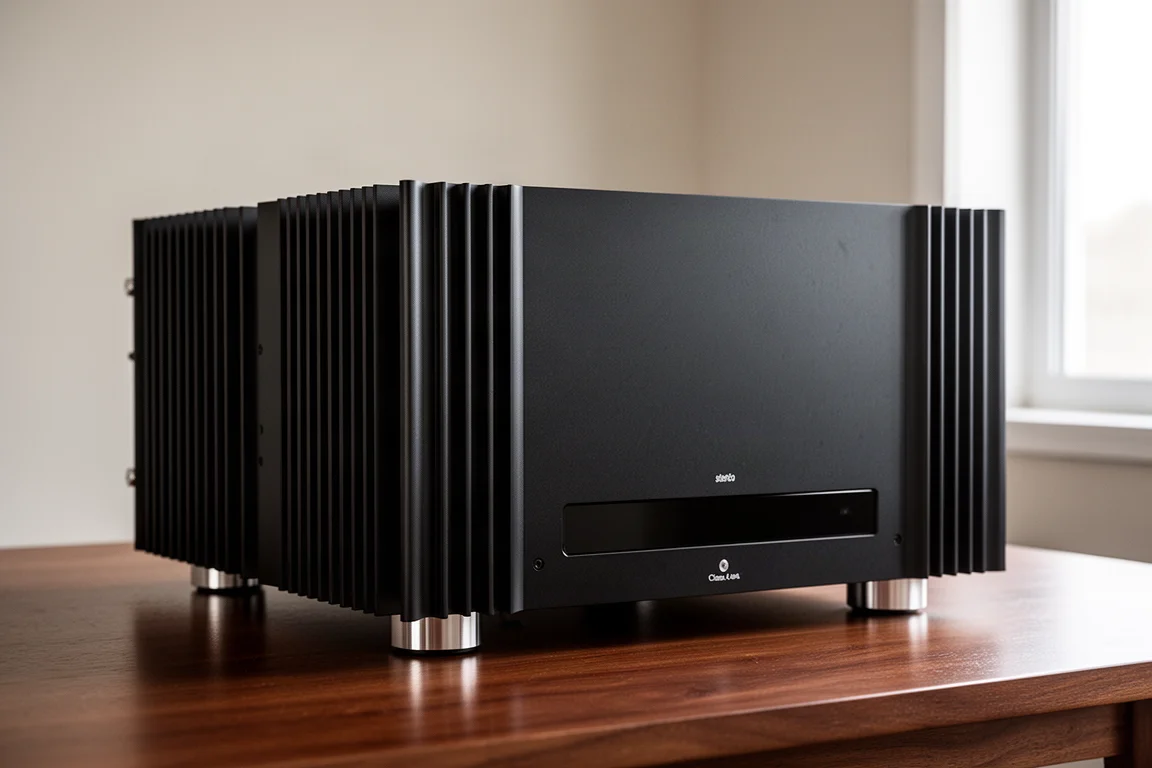
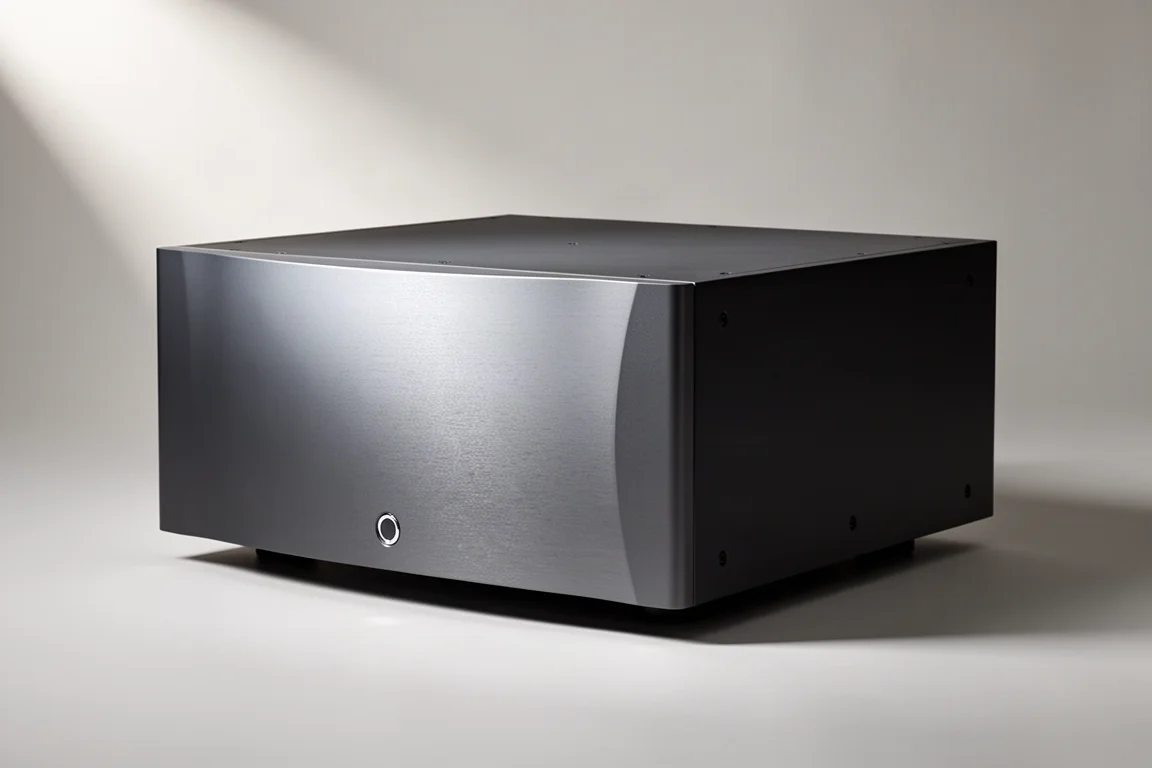
The Perca follows the same design language as the rest of the Mola Mola range: restrained, simple, and elegant, with nothing showy about it. The chassis feels like a solid brick, and the build quality holds up wherever you rap your knuckles on the casework.
It is a genuinely compact amplifier. At 8.5 inches wide it is roughly half the width of a conventional full-size power amplifier, and about 13 inches deep. It is light enough to move and position without help, which is worth more than it sounds when you are reorganising a rack.
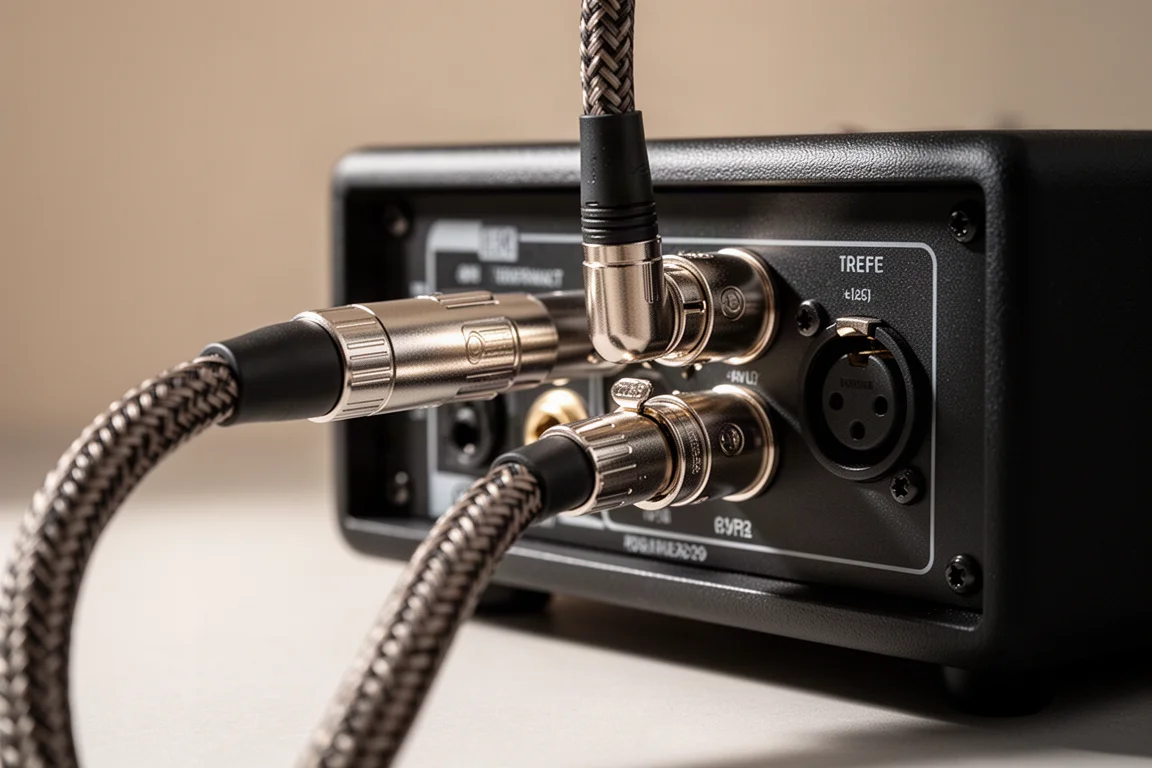
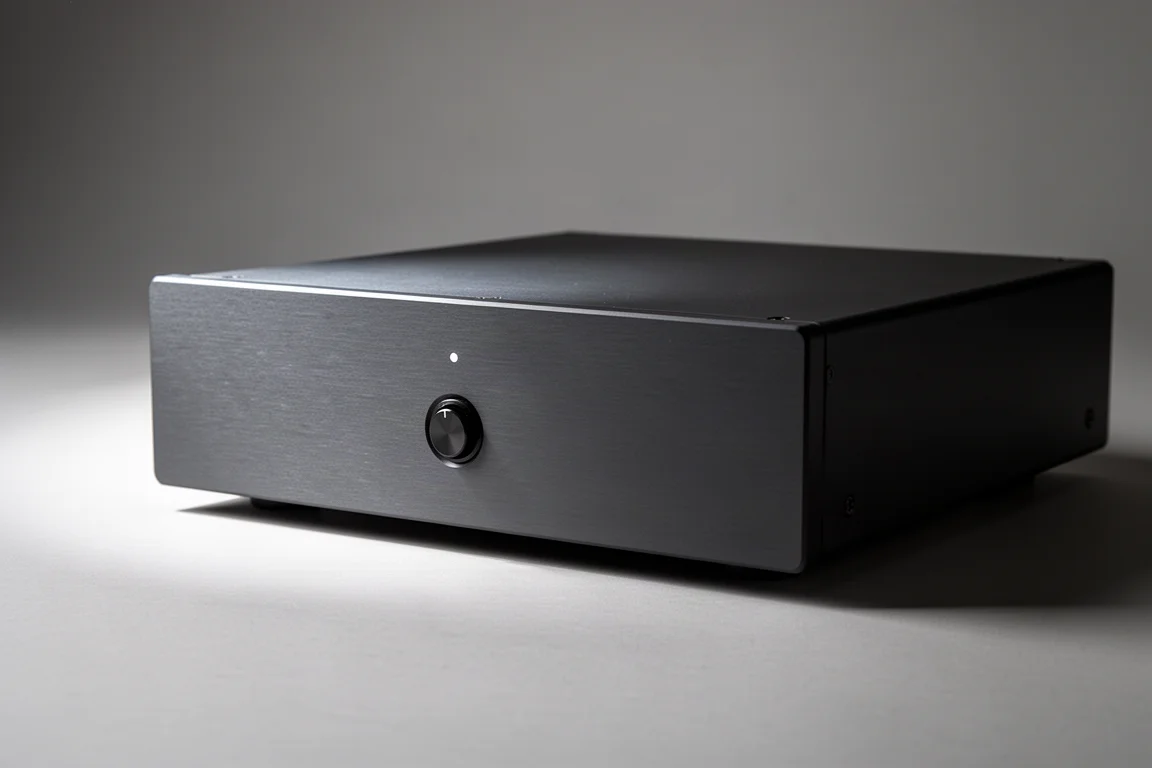
The front panel is almost empty. A small power switch sits in the centre, and just above it a tiny white LED that stays dim enough to ignore during late-night listening. Around the back you get RCA and XLR inputs with a switch to select between them, a high and low gain switch rated at 28 dB and 22 dB respectively, a set of beautifully finished binding posts, and an IEC power inlet.
On paper the numbers are straightforward: 150 watts per channel into 8 ohms, 300 watts into 4 ohms, and stability down to 2 ohms. That is enough to drive almost any speaker. What it will not do is bridge into mono operation, so a single Perca cannot be turned into a monoblock.
Mola Mola sells through dealers in North America and worldwide rather than direct, and the Perca is $9,800 in the US. It ships in a normal carton, but the amplifier itself sits inside a heavy-duty protective case that could survive a drop or a kick.
Mola Mola Perca: Sound, Inputs, and System Matching
The Perca’s output stage is a proprietary Class D design developed in house rather than an off-the-shelf module, and the input stage is a fully discrete Class A circuit. The result is a sound that leans neutral, accurate, and clear rather than warm and rich.
That neutrality is paired with an unusually low noise floor. With an ear pressed against the tweeter, midrange, or woofer, there is nothing to hear: no hiss, no hum, no background texture at all.
One practical detail is worth knowing before you buy. The Perca sounded noticeably more like itself through its XLR inputs than through RCA. The qualities that define it, the openness and the sense of a live performance, came through more clearly with a balanced connection.
The amplifier is also unusually revealing of everything upstream. Swapping between preamplifiers, and between DACs and phono stages, made differences easier to hear than expected, which makes it a strong match for a system whose source components are already sorted.
With compact stand-mounts it lifted the performance of the speakers well beyond their price point. With high-sensitivity horn speakers it delivered dynamics, life, and tonality in equal measure. With large open-baffle speakers playing dense, distorted material, it kept the crunch and edge of the recording intact without turning fatiguing, which is a difficult trick to pull off.
What stands out most is that the Perca does not add a signature of its own. It behaves like a truthful messenger for the rest of the chain, and that is the main reason it is worth considering at this price.
Pass Labs XA25: Pure Class A Weight and Body
The XA25 takes the opposite approach. It is a pure Class A design rated at 25 watts per channel into 8 ohms and 50 watts into 4 ohms, and it costs $5,150.
Its presentation is more reserved than the Perca’s. Where the Perca pushes clarity and immediacy to the front, the XA25 holds back slightly and adds substance, giving instruments more body and a little more weight.
With high-sensitivity speakers that difference becomes obvious. On large open-baffle speakers the XA25 hit hard, and on dense analog recordings it softened the harshest edges of the distortion without losing the drive of the music. Listeners who find very revealing systems tiring may prefer exactly that behaviour.
In a direct comparison, though, the Perca came out ahead on transparency, dynamics, and that sense of a live performance, while the XA25 remained the more relaxed of the two. It is a genuinely different flavour rather than a lesser amplifier, and it costs considerably less.
Gato Audio PWR-222: The Balanced Middle Ground
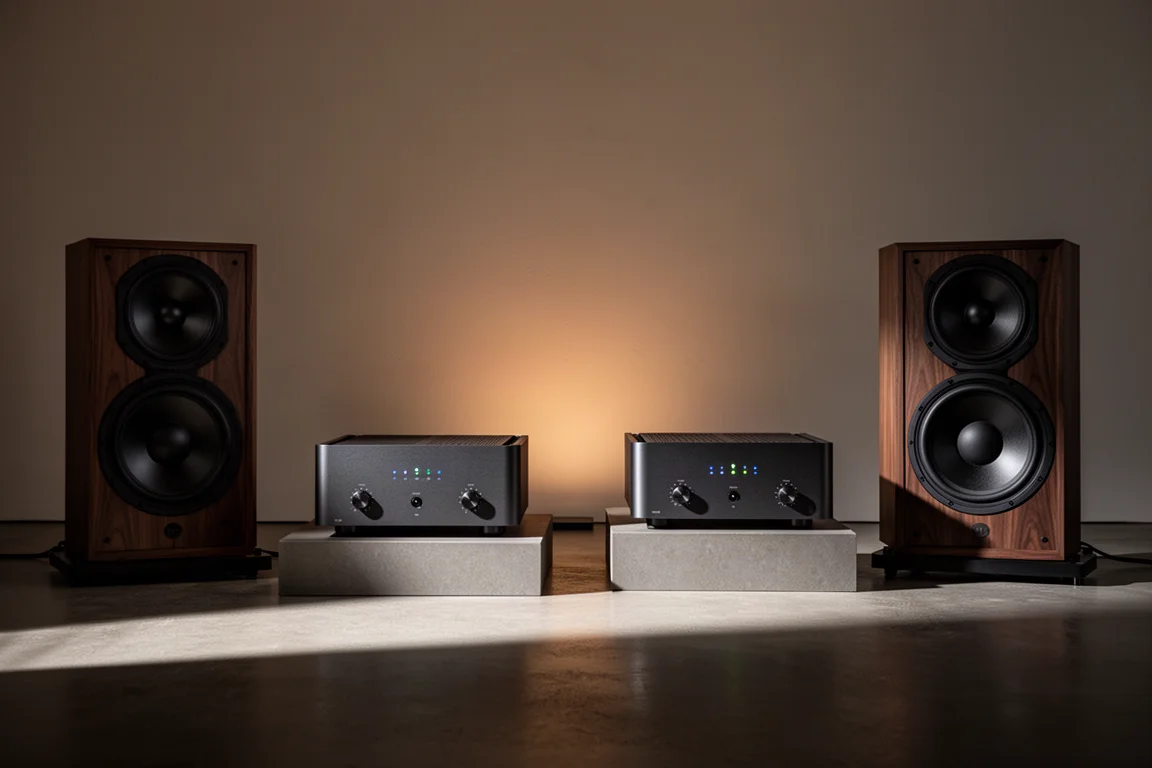
The PWR-222 is a monoblock pair designed and made in Denmark, rated at 250 watts per channel into 8 ohms and priced at $8,200 per pair in the US. It is a genuinely powerful design, and it needs to be: the open-baffle speakers used here are not especially sensitive and take real current to come alive.
Tonally, the Gato sits between the other two. It has some of the Perca’s immediacy and some of the XA25’s body, which makes it an easy amplifier to live with across a wide range of recordings.
Where it gives ground is in the final degree of resolution. On detail, clarity, and the sense of hearing into a recording, the Perca retained the edge, while the Gato stayed the more forgiving and more evenly balanced of the three.
Matching an Amplifier to Your Speakers and Room
Speaker sensitivity and impedance shape which of these three makes the most sense in a given system.
High-sensitivity speakers, such as horn designs, reward an amplifier’s weight and body, which plays to the XA25’s strengths. Large open-baffle speakers that like to be played loud, in the high 80s to low 90 dB range, demand current and composure, and all three amplifiers handled that job without strain.
Compact stand-mounts are the surprise of the group. A pair of revealing stand-mounts costing around $1,500 lit up when fed by any of these amplifiers, which is a reminder that the amplifier often sets the ceiling on a system.
Practical details matter too. The Perca’s half-width chassis and manageable weight make it easy to place in a smaller rack, and its low-gain setting of 22 dB gives useful flexibility with sensitive speakers. The XA25’s Class A operation and the Gato’s monoblock pair both ask for more space and more planning.
Which Amplifier Is Right for You?
Choose the Mola Mola Perca if resolution, clarity, and transparency to upstream components are your priorities, and if you want a compact, silent, half-width amplifier that will drive almost any speaker. It is the most revealing of the three and the most expensive at $9,800.
Choose the Pass Labs XA25 if you want Class A body and weight, a slightly more relaxed presentation, and a lower price of $5,150. It is the better match for high-sensitivity speakers and for listeners who find ultra-revealing systems tiring.
Choose the Gato Audio PWR-222 if you need high power in a monoblock pair and want a tonal balance that borrows from both of the others, at $8,200 per pair.
If the Perca’s price is out of reach but its approach appeals, it is worth auditioning a more affordable Class D design first. The NAD M23 costs roughly a third of the Perca’s price and gives a useful reference point before you decide how much resolution you actually want.
The other consideration is your upstream chain. The Perca rewards good source components more than the other two, so if your preamplifier, DAC, or phono stage is the next upgrade on your list, one of the warmer alternatives may keep you happier in the meantime.
Conclusion
Each of these three amplifiers solves the same problem differently, and none of them is simply better than the others across the board.
The Mola Mola Perca is the most transparent and the most expensive, with a compact, near-silent Class D design that reveals everything ahead of it. The Pass Labs XA25 trades some of that transparency for Class A body and weight at the lowest price here. The Gato Audio PWR-222 sits in the middle, with high power and a character that borrows from both.
Match the character to your speakers and to the way you actually listen, and any of the three will serve a good system well.
Further reading
Related Reviews
Hi-Fi Power Amplifiers
First Watt SIT-4 Review: Class A Dimensionality in a 10-Watt Amplifier
A close look at the First Watt SIT-4, a limited-production Class A single-ended amplifier built around a larger Tokin static induction transistor.
Hi-Fi Power Amplifiers
Peachtree Audio GaN One Review: A Digital Power Amplifier Built Around GaNFETs
A digital power amplifier with a single coaxial input, a GaNFET output stage, and a relaxed, refined character that sets it apart from typical class D designs.
Hi-Fi Power Amplifiers
Sabaj A20a Review: A Compact $200 Class D Amplifier With Real Bridge Mode
The Sabaj A20a pairs a modern Infineon Class D chip with balanced inputs, a passive subwoofer low-pass filter, and a bridge mode that unlocks serious output for around $200.