Hi-Fi Power Amplifiers
Peachtree Audio GaN One Review: A Digital Power Amplifier Built Around GaNFETs
A digital power amplifier with a single coaxial input, a GaNFET output stage, and a relaxed, refined character that sets it apart from typical class D designs.
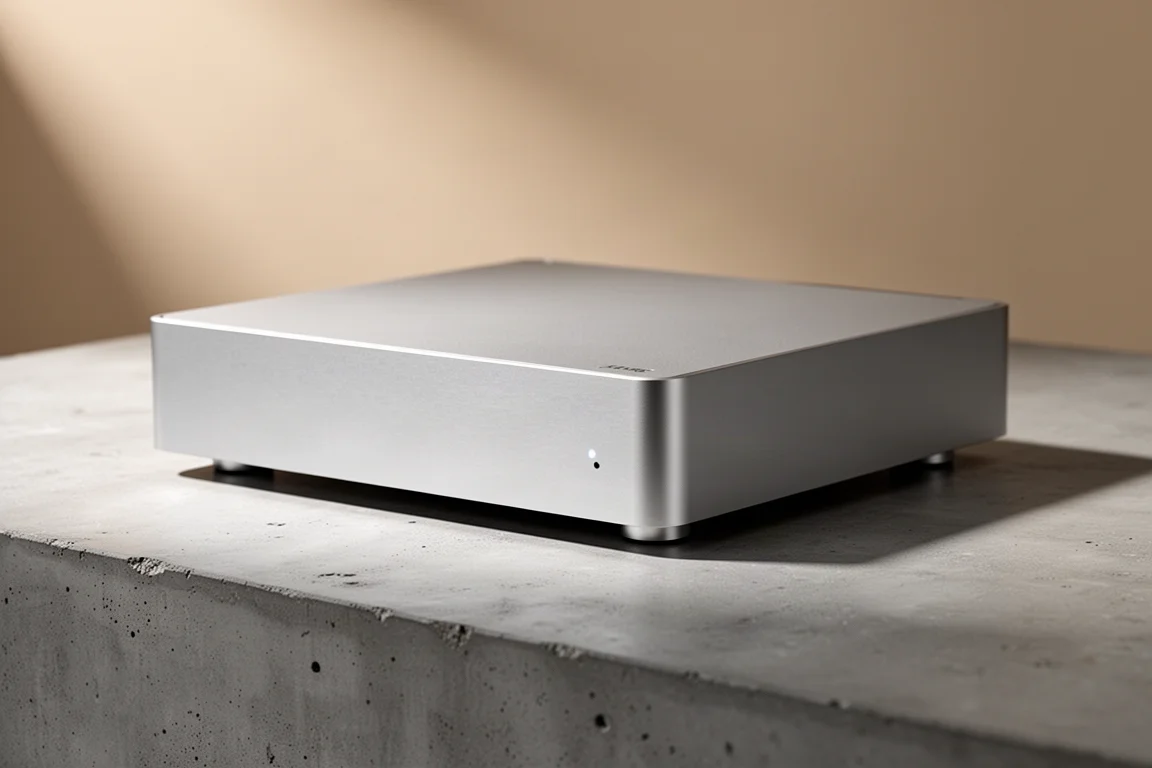
Introduction
Peachtree Audio has travelled a long way from the class A/B designs that built its reputation, the ones with the small window and the tube buffer behind it, and a few years on from its move to class D amplification. The GaN One goes somewhere else again. It is a digital power amplifier with a single coaxial digital input, no analog input, and no DAC chip inside.
That makes it a niche component by design. It also makes it one of the more compelling ways to build a digital-first system, provided the rest of the chain can feed it properly.
What Makes the GaN One Different
In a digital amplifier of this kind, the signal arrives in the digital domain and stays there for almost the whole journey. Only just before the output stage does a DSP chip convert it from PCM to PWM, a pulse-based format with something in common with DSD. That PWM signal then drives the output devices, switching them on and off extremely quickly. Amplifiers built this way are sometimes described as power DACs, and there is no DAC chip inside the GaN One, unlike a typical class D design.
The output stage is where the GaN One separates itself from digital amplifiers such as those from Lyngdorf and Bluesound. It does not use MOSFETs. It uses GaNFETs, chosen because they can be switched on and off far more quickly than a MOSFET, which lowers the amount of dead time and, as a result, reduces signal distortion. Peachtree states that the GaN One uses no negative feedback in the signal path. Negative feedback is generally treated as essential in class D amplifiers, but not in a digital amplifier built around GaNFET output devices.
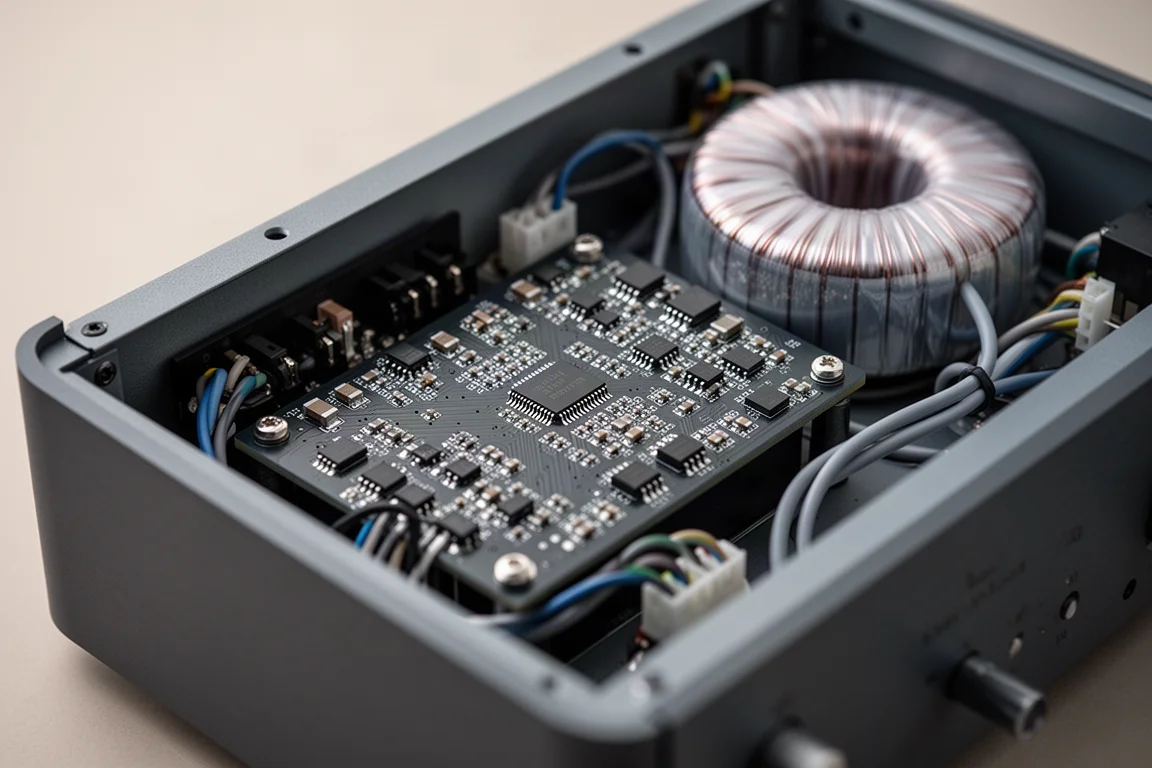
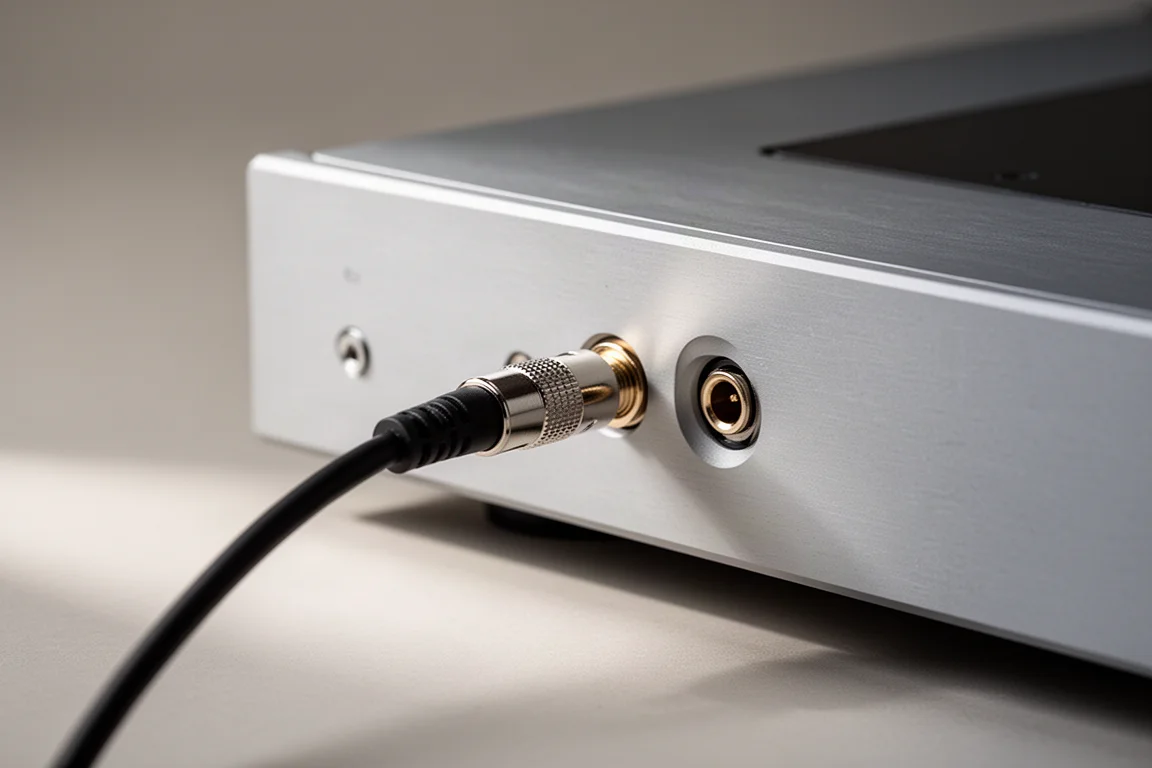
The practical consequence is a power amplifier with one coaxial digital input socket, accepting PCM up to 24-bit/192 kHz. There is no analog input, and there is no digital front end preloaded as there is on the Lyngdorf, Bluesound and Technics digital amplifiers. Whatever feeds the GaN One has to be digital.
Who This Amplifier Is For
Because the only input is coaxial digital, the GaN One needs a source that can supply one. A computer with a USB to S/PDIF converter will do the job. A network streamer is the more practical route, and a Bluesound Node is a natural partner: it adds streaming services, a top panel touch control, a subwoofer output, analog to digital conversion for older sources, and, in the 2021 version, HDMI ARC so a television can join the system.
That pairing is what makes the GaN One workable in a modern setup. It is not the amplifier for someone who wants to connect a turntable directly, and it is not the amplifier for someone who wants everything under one lid. It suits a listener who is happy to choose a digital front end deliberately and keep power amplification separate.
Main Strengths: Sound Quality
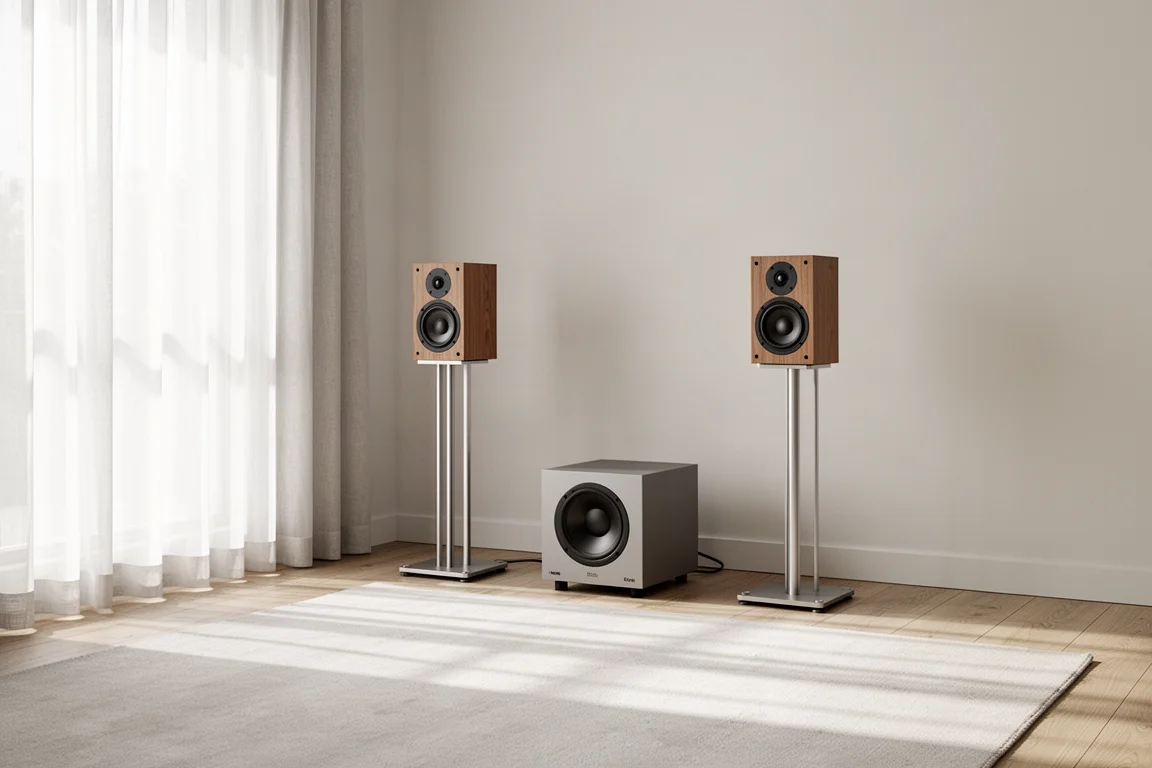
Driving a pair of Vivid Audio Kaya S12 stand-mount loudspeakers, with an earlier Bluesound Node as the front end and the television connected through the Node’s optical input, the GaN One sounded clean and precise without any of the spiky, pins-and-needles edge that can come with precision. It is an elegant sounding power amplifier rather than an aggressive one.
The Kaya S12 benefit from a subwoofer, which is where the Node’s bass management and subwoofer output earn their place. Adding a KEF KC62, with the high-pass and low-pass filters applied through the Node, produced a genuinely glorious result from a compact stand-mount system.
Set against the Bluesound Powernode and Powernode Edge, which can perform a similar role from a single box and for less money, the Node and GaN One combination offers a more substantial, fuller midrange, better low-end control, and slightly more speed in rhythmic transient attack. The power supply numbers explain part of that. The GaN One uses a regulated 400 watt power supply and delivers 200 watts per channel into 8 ohms, more than twice the Powernode and over five times the Powernode Edge.
Detail retrieval is another strength. On Last Train to Lhasa, a dense and rhythmically charged album with a great deal happening at once, the GaN One and Node combination took the listener further into the mix and made for a more immersive listen than the single-box alternative.
Pairing and System Setup
Volume matching is less delicate than it might appear. Running the Bluesound Node down at roughly 20, 30, 40 and 50 percent produced no noticeable loss of quality. For anyone worried about a stray finger pushing the slider into speaker-destroying territory, the BluOS app allows maximum and minimum volume limits to be set.
The chassis deserves a mention too. The GaN One is built into a smoothly finished aluminium case that feels strong, and it survived a trip in hand luggage, wrapped in a t-shirt, without any trouble. That is not something to attempt with other Peachtree amplifiers or with the NAD M10 V2.
There is also the question of which digital sources can feed it directly. An older CD player with a volume control on the front may or may not apply that control to its digital output, and a Squeezebox might work in the same way, but neither is certain. Anyone planning to use a variable output S/PDIF source should confirm with the manufacturer of that device first.
Things to Consider Before Buying
The single coaxial input is the first thing to weigh. There is no analog input and no streaming or conversion built in, so the GaN One always needs a separate digital source, and the cost of that source belongs in the budget alongside the amplifier.
There is also no room correction and no display. The NAD M10 V2 offers Dirac Live room correction and a color display; the GaN One offers neither. In a small room where correcting the bass matters, that difference can be decisive, and the same is true if a display on the front panel is something you value.
Character is the other consideration. Against the NAD M10 V2, the GaN One comes across as the more micro-dynamically relaxed of the two, and less urgent. That is an advantage for a listener who leans back rather than leans in, and less of one for anyone who wants the NAD’s sense of drive.
Finally, this is a niche component, and its value depends heavily on the rest of the chain. Its strengths show up most clearly in a system that is already sorted, with speakers that suit it and a source that feeds it cleanly.
How It Compares With Alternatives
In a direct comparison against the NAD M10 V2 with Zu Soul 6 loudspeakers, the GaN One and a 2021 Bluesound Node came across as the more dynamically relaxed pairing, while the NAD sounded more urgent. Neither approach is automatically better; it depends on how you listen.
Over long sessions the difference becomes clearer. With indie rock, the Peachtree is easier to live with for several days in a row. On The Hold Steady’s The Price of Progress, a record that is not the finest recording in the world, the GaN One adds a little polish and smoothness, where the NAD can be spikier at times.
Electronic music shows the same tendency from a different angle. On Regis’s In This Light That You Miss, where the NAD can feel a touch too brilliant at the top, the GaN One dials that back by a smidge. The album’s slower, spacious industrial broken beat gives the amplifier room to shine, because it leaves space around the instruments without thinning them out.
That last point is where the GaN One differs from some digital amplifiers. The Lyngdorf TDAI-1120 is impressive in many respects, but its tonal mass can sometimes sound a little skeletal, which is why a subwoofer tends to resolve the issue. The GaN One does not thin the tonal weight of instruments in the same way.
Taken together, the Node and GaN One make a more relaxed, more refined, more detailed and more easeful alternative to the NAD M10 V2 on sound quality alone.
Buying Advice
The GaN One makes sense for a listener whose room is already sorted, who runs floorstanding speakers, or who uses a stand-mount speaker and subwoofer arrangement. It also makes sense for anyone who already owns, or intends to buy, a streamer such as the Bluesound Node. In features and price, the Node and GaN One combination lands close to the NAD M10 V2, minus the room correction.
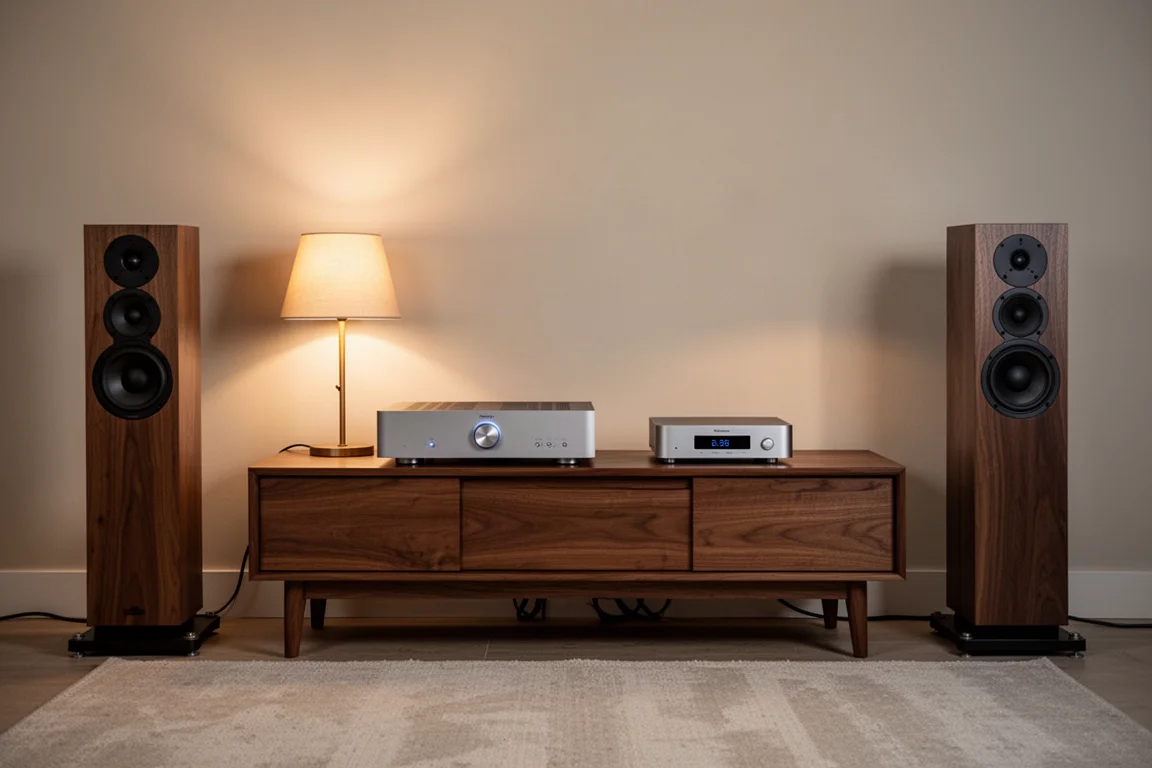
There are two clear reasons to choose the NAD M10 V2 instead. The first is Dirac Live room correction, which is genuinely useful in a small room where bass needs taming. The second is the color display, which the GaN One simply does not have. Neither is a criticism of the Peachtree; they are different design priorities.
If your room is already in good shape, if you are running floorstanders, or if you have a stand-mount and subwoofer setup that you are happy with, the GaN One is a very solid alternative from a sound quality perspective. It is worth buying for what it is: a digital power amplifier that expects a digital front end and rewards one.
Conclusion
The GaN One is a niche product, and it is honest about that. One coaxial digital input, no analog connectivity, no DAC chip, and a GaNFET output stage with no negative feedback in the signal path make it a very specific tool rather than a universal amplifier. For the right listener, that specificity is the appeal. Feed it properly, match it with speakers that suit it, and it delivers a relaxed, refined and detailed performance that holds its own against more feature-heavy rivals.
Product link
View more details for Peachtree Audio GaN One
This product is mentioned in the review. Check the specifications, options, and compatibility before buying.
View more details for Peachtree Audio GaN OneFurther reading
Related Reviews
Hi-Fi Power Amplifiers
First Watt SIT-4 Review: Class A Dimensionality in a 10-Watt Amplifier
A close look at the First Watt SIT-4, a limited-production Class A single-ended amplifier built around a larger Tokin static induction transistor.
Hi-Fi Power Amplifiers
High-End Power Amplifiers Compared: Mola Mola Perca, Pass Labs XA25, and Gato Audio PWR-222
Three high-end power amplifiers with distinct characters: a compact Dutch Class D design, a pure Class A classic, and a powerful Danish monoblock pair.
Hi-Fi Power Amplifiers
Sabaj A20a Review: A Compact $200 Class D Amplifier With Real Bridge Mode
The Sabaj A20a pairs a modern Infineon Class D chip with balanced inputs, a passive subwoofer low-pass filter, and a bridge mode that unlocks serious output for around $200.