Desktop Amplifiers
Sabaj A1 Review: A Tiny Desktop Amplifier With Tone Controls
The Sabaj A1 pairs Bluetooth and RCA inputs with an Infineon MA12070 chip and practical tone controls in a very small, very light desktop chassis.
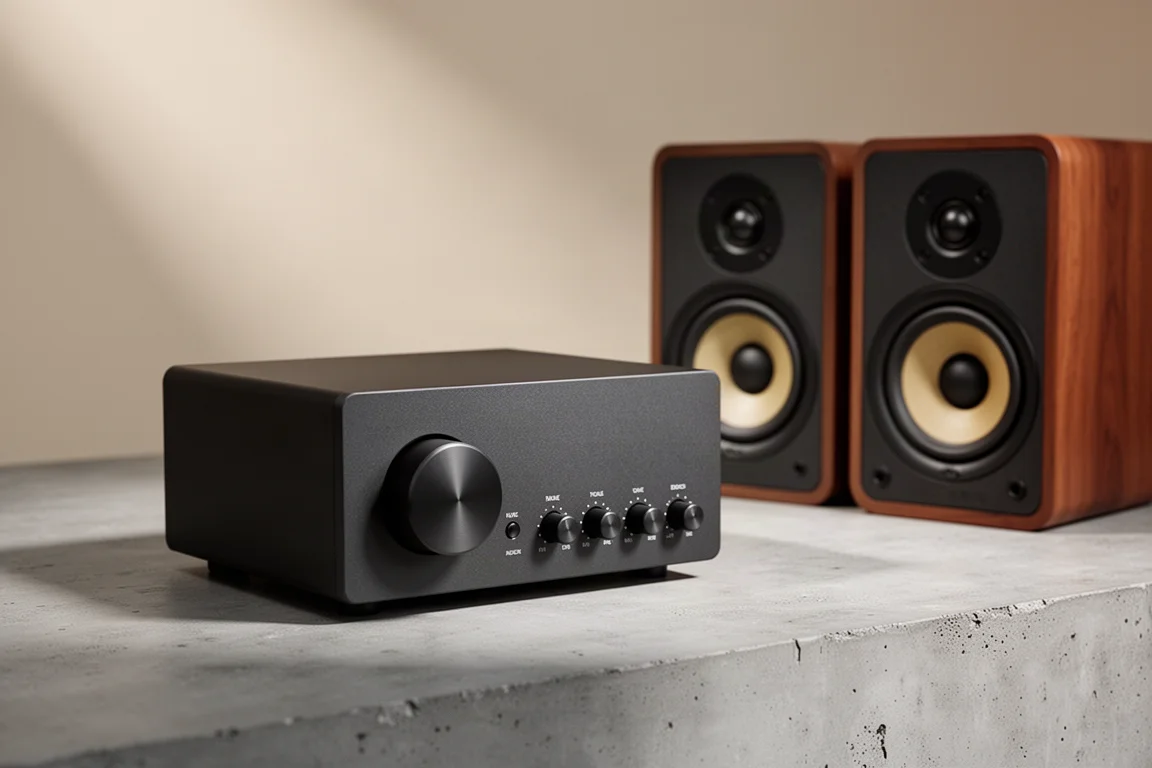
Introduction
The Sabaj A1 is a very small desktop amplifier built for simple, compact setups. It sells for around $70, and sometimes closer to $60, and it keeps things deliberately basic: Bluetooth, a single stereo RCA input, one pair of speaker binding posts, and a 24 volt DC power input.
That simplicity is the point. The A1 is designed to sit on a desk or a shelf, drive a pair of modest bookshelf speakers, and stay out of the way while it does it.
Who the Sabaj A1 Is For
The A1 makes the most sense in nearfield desktop systems and small rooms, where a pair of compact bookshelf speakers sits within arm’s reach. It can also work as a soundbar replacement when it is paired with a DAC that has a remote control, since the amplifier itself has no digital inputs and no remote of its own.
It is a good fit if you want tone controls in a tiny footprint and you are comfortable running a source straight into it. It is a less obvious fit if you need several digital inputs, a dedicated subwoofer output, or high continuous power for large or hard-to-drive speakers.
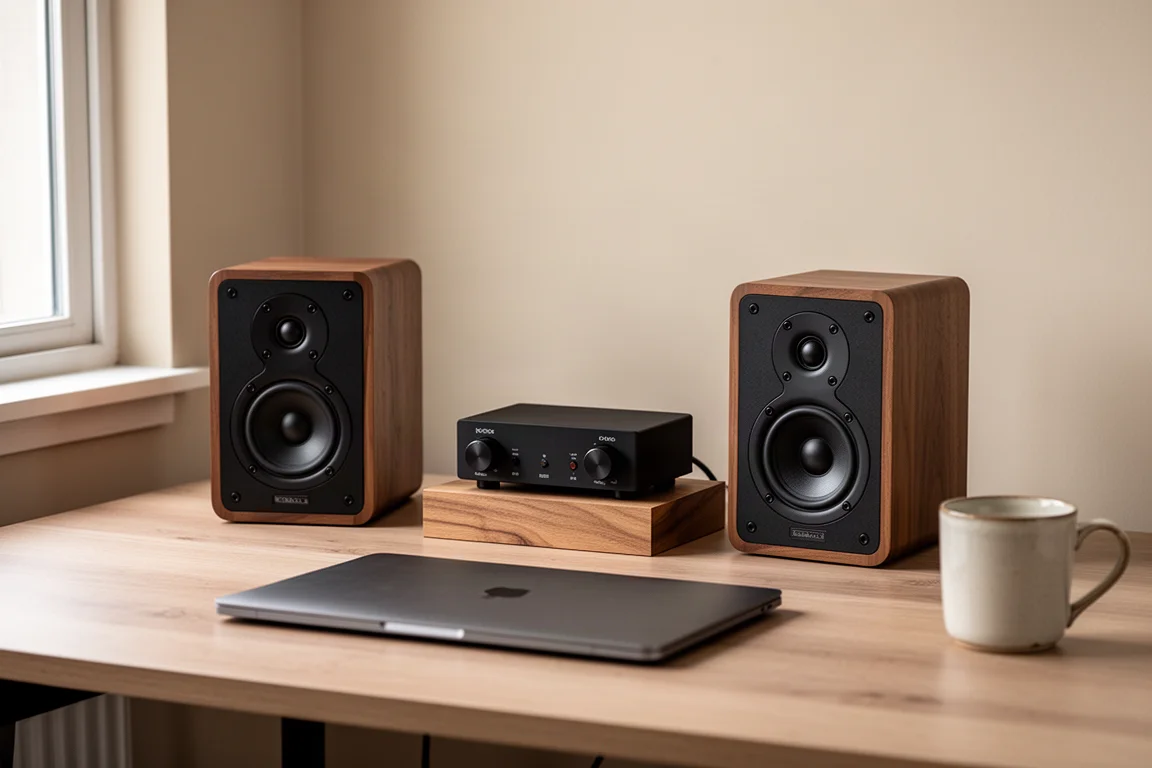
Because the chassis is so light, stiff RCA or speaker cables can pull it out of position, so it helps to decide where it will live before you run cables behind a desk. A stable shelf, or even a small weight on top, keeps everything tidy.
Design, Connections, and Build Quality
Around the back you get a stereo RCA pair, a Bluetooth antenna that can be unscrewed and removed, the speaker binding posts, and the 24 volt DC input. Space is tight back there, so the antenna can crowd the binding posts if you leave it attached.
The included power supply is a 24 volt, 6.75 amp brick labelled with the Sabaj name. It is most likely a generic unit with a sticker on it, but that labelling is a small plus in a category where completely unbranded bricks are common.
Build quality is fine for the money. The chassis is very light, which is worth knowing before you buy: with heavier cables attached, the amplifier can be dragged around, so placement matters more than it would with a heavier unit.
Bluetooth is the convenient input, but it uses the SBC codec, so you give up some resolution compared with a wired connection. A toggle switch handles Bluetooth on and off, and that is a genuinely useful detail, because it lets you cut the connection cleanly instead of fighting a device that keeps latching back on.
Sound Quality in Practice
Inside, the A1 uses the Infineon MA12070 amplifier chip, the same chip family found in a number of popular compact amplifiers, including SMSL models such as the SA300 and the DA9. Those amplifiers share a recognisable personality, and the A1 follows it: a slightly dry, analytical presentation that leans toward detail rather than warmth.
At lower volumes that character is most noticeable. The midrange can seem a little thin, and the overall sound can feel dry when you are listening quietly at a desk.
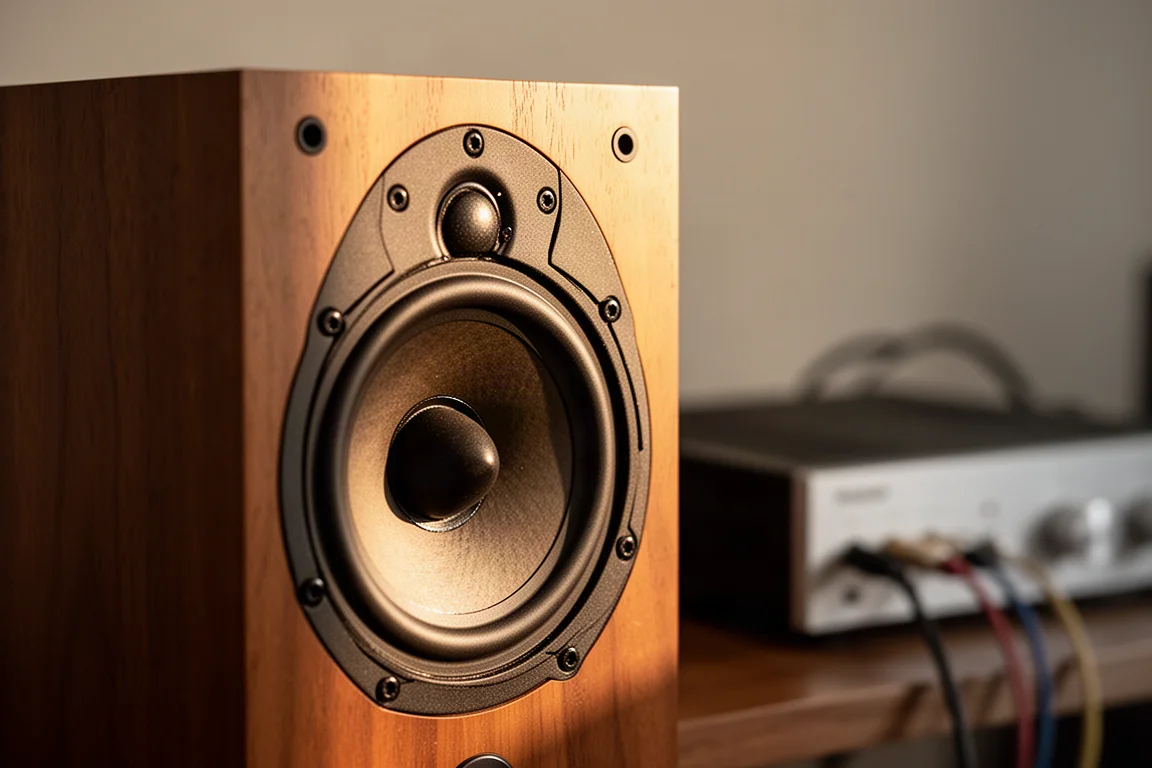
Turn it up and the picture changes. Above roughly 80 dB the A1 comes together: the sound becomes more cohesive, less clinical, and genuinely enjoyable to listen to. Driving a pair of Pro-Ject Speaker Box 5 speakers, which are rated at about 86 dB sensitivity, the amplifier reached around 90 dB without distorting, and the speakers held their composure instead of turning jumbled and sloppy. That is a meaningful result for a small amplifier pushing relatively inefficient speakers.
Tone Controls and How It Behaves at Volume
The A1 includes bass and treble tone controls, which is one of the clearest points of difference at this price. They are effective but heavy-handed: even a small turn produces an obvious change, so gentle adjustments go a long way. Used sparingly, they can fill in the midrange at low volumes or soften the dry character of the amplifier.
It is worth being realistic about what tone controls can do. They shape the sound to taste, but they do not change the fundamental character of the amplifier underneath.
Volume behaviour is the other thing to understand. This amplifier sounds better the harder you push it, which is not ideal if you mostly listen quietly in the nearfield. If your typical listening happens above 80 dB, or if you are using it in a room rather than at a desk, that trait works in your favour.
Things to Consider Before Buying
There is no dedicated subwoofer output. You can feed a subwoofer from the speaker level outputs, but there is no line level sub connection, so a simple 2.1 setup takes extra care.
Power ratings are difficult to pin down. The chip specification lists figures such as 2 x 30 watts continuous into 8 ohms at 1 percent total harmonic distortion measured at 22 volts, and 2 x 80 watts into 4 ohms. Those numbers come with caveats, and the 24 volt supply plus the internal heat sink mean real world output is a moving target. In practice, the amplifier has enough power to drive modest speakers to loud levels without distorting.
Inputs are limited to Bluetooth and one RCA pair. If you plan to use it with a television, you will probably need a DAC unless your TV has a 3.5 mm output. And because Bluetooth runs on SBC, wired sources will sound better.
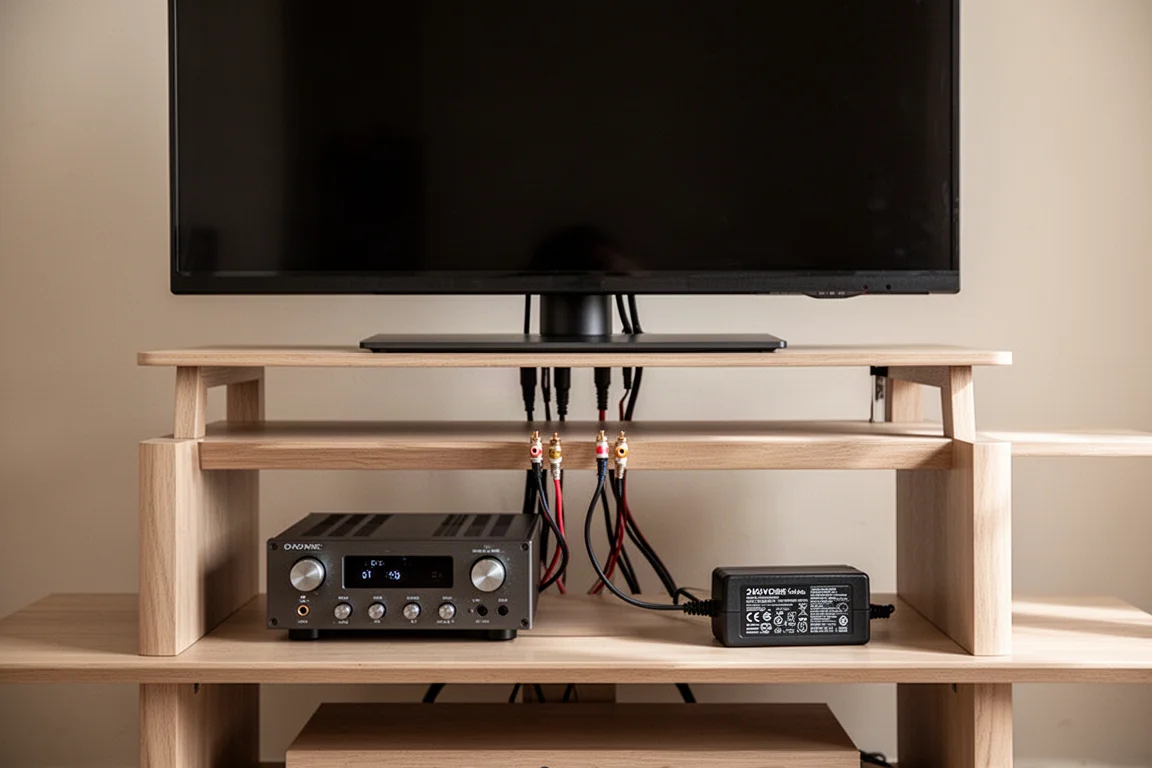
It is also worth noting that this is a nearfield-first design. If you need to fill a large room at high volume for long sessions, a bigger amplifier will be the safer choice.
Where the Sabaj A1 Fits Among Compact Amplifiers
Set against the Fosi Audio BT20A, which uses a Texas Instruments TPA3116 chip and is remembered for a more balanced, organic tone, the Sabaj A1 gives up some of that warmth in exchange for a cleaner, more detailed top end, plus tone controls that the Fosi does not offer.
Set against the Aiyima A07, which costs a little more and offers a slightly larger chassis with swappable op amps, the Sabaj A1 makes its case on its smaller footprint and its tone controls. The A07 leans more organic, which is why it does not need tone shaping to sound good, but that is also the reason the A1’s tone controls are worth having if your speakers or your room need a nudge.
Buying Advice
At around $70, the Sabaj A1 is a sensible buy if your priorities are a tiny footprint, a simple two input setup, and tone controls that let you shape the sound. It is at its best driving modest bookshelf speakers in a desktop or small room system, or standing in for a soundbar when paired with a DAC.
Before you buy, decide three things: whether your speakers are efficient enough to hit satisfying levels with a small amplifier, whether you can live without a subwoofer output, and whether you are willing to run a wired connection for the best sound quality. If those answers line up, the A1 delivers more than its size suggests.
If you mostly listen at low volume and want warmth straight out of the box, this amplifier’s dry character may not suit you. If you listen at moderate to loud levels and like the idea of tuning the sound yourself, it is strong value for the money.
Conclusion
The Sabaj A1 keeps things simple and does the important things well. It is small, light, and easy to place, it offers both Bluetooth and a wired RCA input, and it has enough power on tap to drive modest speakers louder than its dimensions suggest. Tone controls give you a way to shape the sound, and above 80 dB it becomes genuinely enjoyable to listen to.
Choose it for a compact desk system or a simple television setup with a DAC, and go in knowing that its best sound arrives at higher volumes rather than at a whisper.
Product link
View more details for Sabaj A1
This product is mentioned in the review. Check the specifications, options, and compatibility before buying.
View more details for Sabaj A1Further reading
Related Reviews
Desktop Amplifiers
Burson Audio Funk Review: A Speaker Amp and Headphone Amp in One Compact Box
The Burson Audio Funk packs a Class A headphone amplifier and a 45W speaker amplifier into one desktop enclosure, with op amp upgrades left open to the owner.
Desktop Amplifiers
Fosi Audio MC101 vs Fosi Audio V3: Which Compact Amplifier Fits Your Desk?
A side-by-side look at two compact Fosi Audio amplifiers: the retro MC101 and the higher-powered V3, with the strengths, trade-offs, and use cases that matter most.
Audio Components
Advance Paris ACD Apex vs Onkyo Icon C-30: Two CD Players, Two Very Different Paths
A $1,400 tube-equipped CD player against a $400 deck. Where the extra money goes, what you actually hear, and which one suits your system.