Desktop Amplifiers
Fosi Audio MC101 vs Fosi Audio V3: Which Compact Amplifier Fits Your Desk?
A side-by-side look at two compact Fosi Audio amplifiers: the retro MC101 and the higher-powered V3, with the strengths, trade-offs, and use cases that matter most.
Introduction
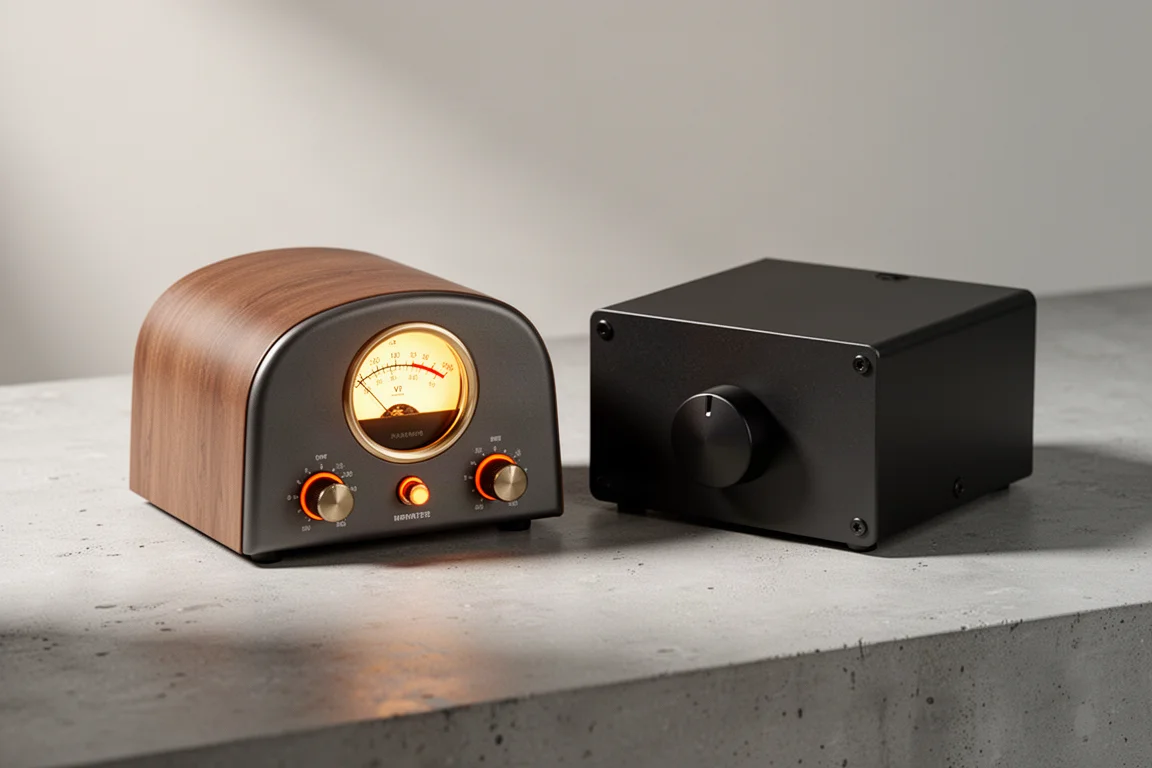
Small Class D amplifiers have become one of the most practical ways to build a serious desktop hi-fi system, and two models from Fosi Audio sit at the centre of that conversation. The MC101 wraps a modest amplifier in a curved retro case with a moving VU meter and real tone controls. The V3 is a plainer box built around a bigger chipset and a higher voltage ceiling. Both are affordable, both take up very little space, and both sound considerably better than their prices suggest.

This comparison covers what actually separates them: the chipsets and power supplies inside, the features on the front and back panels, and how each one behaves with real speakers at real listening levels. By the end you should have a clear idea of which one belongs on your desk.
How These Two Amplifiers Compare
Both amplifiers use Texas Instruments Class D chipsets, but not the same one. The MC101 runs a TPA3116, while the V3 uses a TPA3255. The sonic difference between the two chips is modest; the bigger difference is the power supply each amplifier will accept. The V3 can be paired with a 48V supply, while the MC101 is limited to the 24V supply it ships with.
That ceiling shapes everything else. The MC101’s published figures list 100W per channel into 4 ohms, total harmonic distortion around 0.35%, and a signal-to-noise ratio above 100dB. In practice it drove a pair of 4-ohm bookshelf speakers with fairly low sensitivity without complaint, reaching the low 90s in the nearfield before it ran out of clean headroom.
Cooling is the other structural difference. The V3 has noticeably better heat dissipation, while the MC101 relies on its curved case as a heatsink. Even under hard use the MC101 never ran more than warm, so this is more of a design note than a daily concern.
Fosi Audio MC101: Retro Style and Punchy Sound
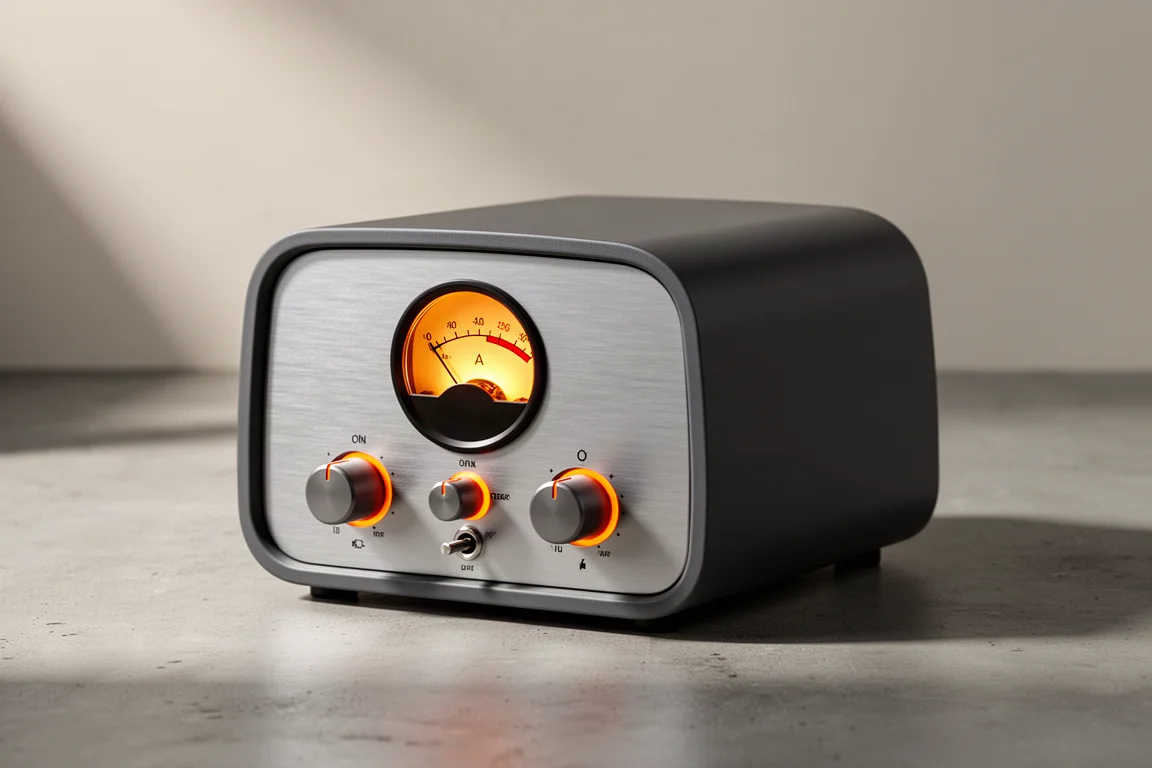
The MC101 is the more characterful of the two. Its front panel carries a VU meter that moves with the music, framed by an orange accent around the volume knob. Treat the meter as a visual flourish rather than a measuring tool: it can sit well into the red while the amplifier is still playing cleanly.

Three knobs handle volume, bass, and treble. The bass control is tuned to a useful range, and even a small turn adds real weight to the low end without smearing the rest of the mix. The treble control is there when a recording needs it, though most listeners will leave it alone.
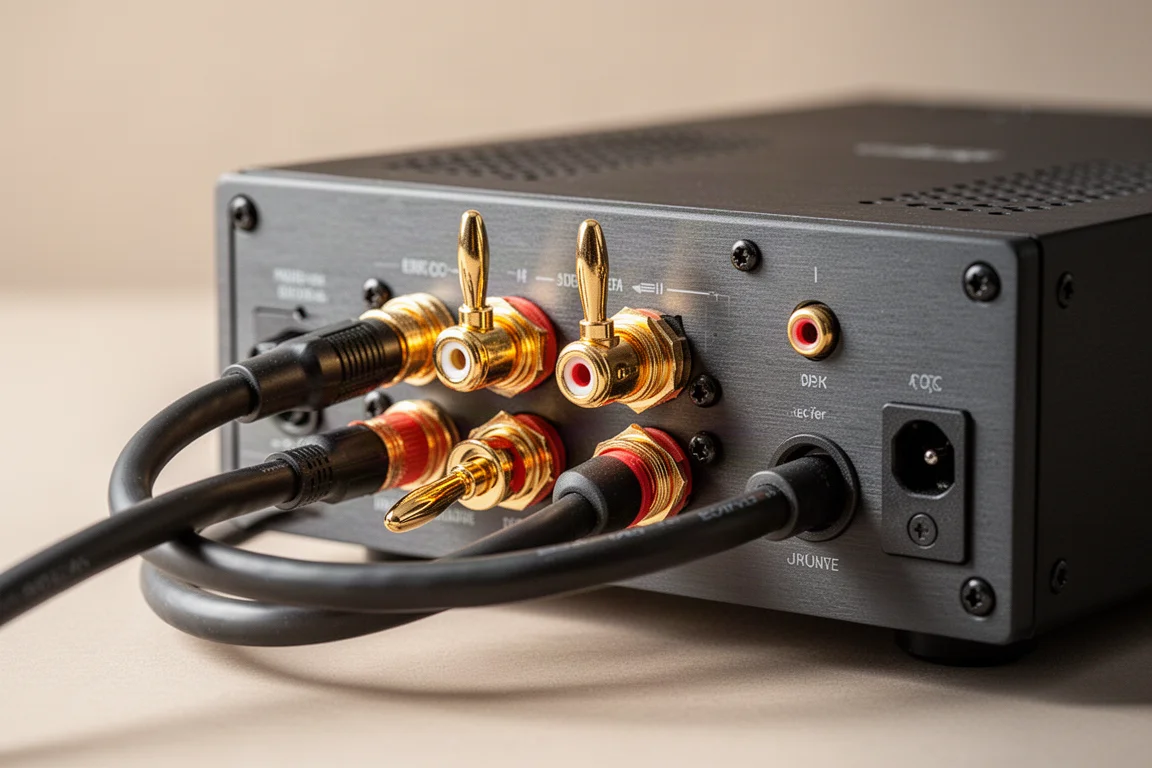
A small toggle on the front switches between off, Bluetooth, and RCA. Bluetooth is handy to have, but the wired RCA input is the better path for sound quality. Around the back there are RCA inputs, a 3.5mm preamp output for a subwoofer, speaker binding posts, and a standard power barrel input. The binding posts are the one cramped spot, since thicker speaker cable fills the available space quickly.
Sonically, the MC101 is clean and punchy, with a slightly sweeter, more forgiving character than the V3 and a gentle lift at the frequency extremes that makes it enjoyable at lower volumes. Feed it a good source and it holds up well beyond its price. At the very top of the volume range the last fraction of the dial introduces some audible distortion, so it is worth backing off slightly rather than running it wide open. In the nearfield, backed off just a touch, it still plays comfortably in the 80s and into the 90s.
Fosi Audio V3: More Power and Greater Clarity
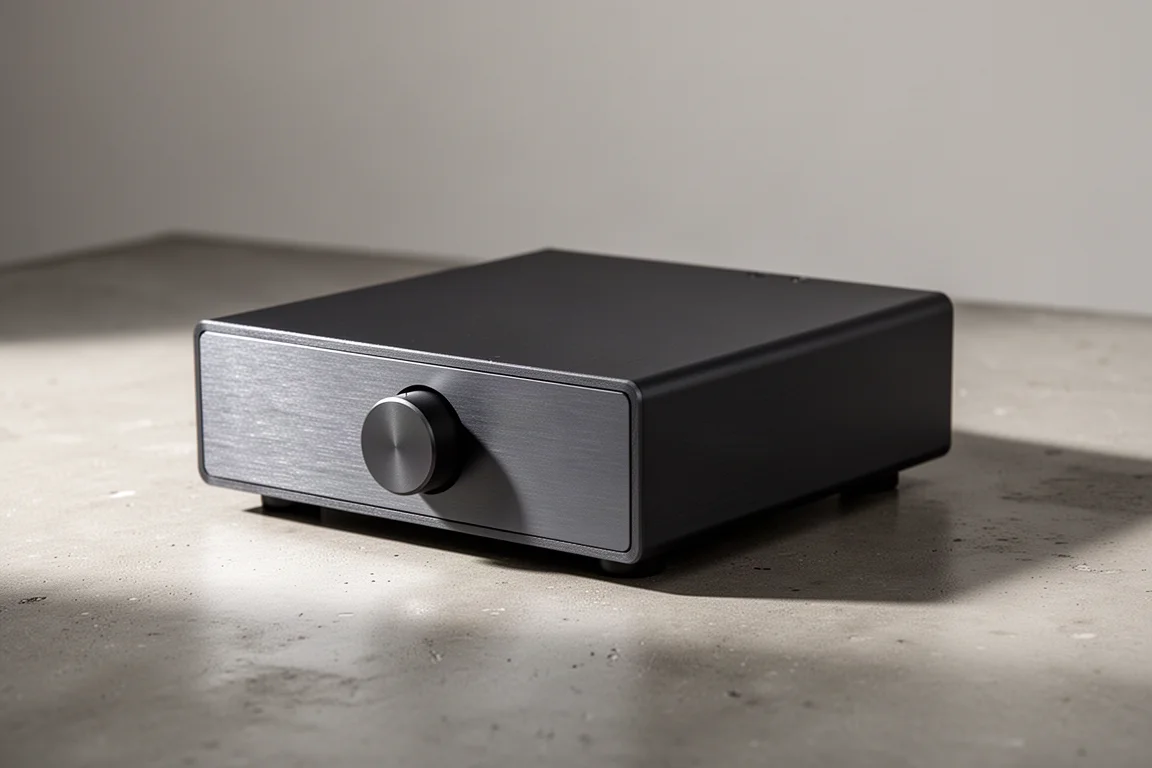
The V3 takes the opposite approach. Its TPA3255 chipset and 48V power supply option give it substantially more voltage and headroom than the MC101, and the difference shows up in the dynamics. Where the MC101 sounds warm and easygoing, the V3 sounds more transparent, letting you hear further into a recording.
Vocals sit further forward on the V3, and on acoustic material with prominent percussion and bass the extra power translates into more control and a stronger sense of scale. That is why this amplifier can stand in for a much larger piece of equipment in a small system, provided you give it the bigger supply.
The trade-off is character. The V3 does not have quite the bass punch of the MC101, and it is the less playful of the two at low volumes. If your listening is mostly quiet background music at a desk, the MC101’s tuning may be the more enjoyable choice. If you want the extra oomph and a cleaner window into the mix, the V3 delivers it.
Sound Quality: Warmth vs Clarity
Listen to the two side by side and their personalities separate quickly. The MC101 leans toward a gentle V-curve, with a little more weight at the bottom and a slightly sweeter top end. It sounds like a small vintage receiver in the best sense: friendly, full, and easy to sit with for hours.
The V3 is the more analytical of the pair. Detail is easier to pick out, vocals are pushed forward, and busy passages stay organised when the volume climbs. Neither presentation is more correct than the other. The MC101 flatters casual listening, while the V3 rewards attention and gives more insight into the recording.
Both amplifiers respond well to a good source. A clean external DAC feeding either one makes an audible difference, and it is the simplest upgrade to make before spending more on the amplifier itself.
Power, Volume, and Realistic Expectations
The gap between these two amplifiers is easiest to understand in decibels. Going from 85dB to 95dB takes roughly ten times the power, and that is the kind of jump the V3’s higher voltage supply makes possible. If your speakers are insensitive, if you listen from further back, or if you simply like it loud, that headroom is not a luxury.
For a desk setup the MC101 has plenty in reserve. Driving moderately sensitive speakers at close range, it reaches the low 90s before the top of the dial introduces distortion, and it stays clean well below that point. The realistic expectation is that the MC101 will run out of steam before the V3 does, and it is not designed to match it. Most people buying the MC101 are building a small desktop system, and in that role it does a wonderful job.
Which Amplifier Suits Your Setup
Choose the MC101 if you want a small, good-looking amplifier for a desk or a secondary system, and if you value tone controls and a bit of warmth over outright power. At $85, and around $70 when it goes on sale, it is an easy recommendation, and a complete nearfield system does not have to cost much: an inexpensive external DAC, the MC101, and a pair of budget bookshelf speakers can come in near $300 all together.
Choose the V3 if you want more headroom, a clearer midrange, and the ability to drive a small system with real authority. It asks more of your budget once you account for the larger power supply, but it is the one that can genuinely stand in for a full-size amplifier in a compact setup.
Both are worth buying. The decision comes down to whether you want character and convenience, or power and clarity.
Conclusion
The MC101 and the V3 are both excellent small amplifiers, and choosing between them is less about quality than about priorities. The MC101 wins on personality: a retro VU meter, useful tone controls, a punchy low end, and a price that makes it an easy entry point into a desktop system. The V3 wins on capability: more voltage, more headroom, better heat dissipation, and a clearer, more forward presentation that holds together when the music gets demanding.
If you have reasonable expectations and a modest nearfield setup, the MC101 will not disappoint. If you want the extra oomph and cleaner insight into your recordings, the V3 is the one to buy.
Further reading
Related Reviews
Desktop Amplifiers
Burson Audio Funk Review: A Speaker Amp and Headphone Amp in One Compact Box
The Burson Audio Funk packs a Class A headphone amplifier and a 45W speaker amplifier into one desktop enclosure, with op amp upgrades left open to the owner.
Desktop Amplifiers
Sabaj A1 Review: A Tiny Desktop Amplifier With Tone Controls
The Sabaj A1 pairs Bluetooth and RCA inputs with an Infineon MA12070 chip and practical tone controls in a very small, very light desktop chassis.
Hi-Fi Audio
Accuphase C-57 vs Allnic H-7000V: Two High-End Phono Stages Compared
A fully balanced solid-state phono stage with a pitch-black noise floor meets a tube design built for well-loved records. Here is how to choose between them.